
In This Article
Somewhere between “too big for the plastic Power Wheels Jeep” and “not quite ready for a real quad,” there’s a strange gap in the ride-on market — and if you’ve got an eight-to-twelve-year-old bouncing off the walls, you already know it exists. An off-road ride-on car for preteens is basically the answer to that gap: a battery-powered, higher-weight-capacity vehicle built with real suspension travel, knobby tires, and enough ground clearance to handle a backyard that isn’t a golf course. Manufacturers had to get more honest about durability once bigger, heavier kids started climbing into these things, and it shows in the specs we dug up this week.
We spent hours comparing seven real models — from a sub-$400 entry quad to a lifted 48V two-seater — pulling actual manufacturer specifications, weight limits, and aggregated review sentiment rather than recycling marketing copy. Toy-safety oversight in this category isn’t optional, either: ride-on toys sold in the U.S. must meet ASTM F963, a standard maintained by a multi-stakeholder committee of medical experts, engineers, and industry representatives that specifically addresses stability, overload, and impact hazards for ride-on toys, so we flagged compliance where manufacturers disclosed it.
If your kid has outgrown their toddler ride-on and is begging for something with actual bite, here’s the real breakdown — specs, honest trade-offs, and which model fits which kind of preteen.
Quick Comparison Table: Off-Road Ride-On Cars for Preteens at a Glance
| Model | Motor Power | Suspension | Top Speed | Weight Limit | Best For |
|---|---|---|---|---|---|
| Razor Dirt Quad | 350W | None (pneumatic tires absorb bumps) | Up to 8 mph | 120 lbs | Budget-friendly first quad |
| JOYRACER 24V UTV | 800W (dual motor) | Spring suspension | Up to 5 mph | ~150 lbs | Value two-seater for siblings |
| ARBELI 24V XXXL | 4x200W | Shock absorbers | Up to 5.5 mph | 220 lbs | Bigger preteens, long-term fit |
| Ryder Toys 24V ATV | 24V dual motor | 4-wheel lifted suspension | ~5–6 mph | ~130 lbs | Roughest yards & trails |
| Freddo Can-Am Outlander | 24V single motor | Full suspension | Up to 6 mph | ~140 lbs | Licensed styling, solo riders |
| Freddo 48V Maverick | 48V 4×4 | Full suspension | Up to 12 mph | ~180 lbs | Power + real ground clearance |
| Razor Dirt Quad 500 | 500W | Rear suspension | Up to 9 mph | 220 lbs | Bigger, older preteens |
Looking at the spread, the single biggest divide isn’t price — it’s suspension architecture. The Razor Dirt Quad leans entirely on its pneumatic tires to soak up bumps, which works fine on driveways but gets harsh on rutted grass. Models with actual spring or shock-based suspension, like the ARBELI 24V XXXL and Ryder Toys 24V ATV, hold their composure over roots and gopher holes in a way tire-only setups simply can’t. If your yard has any topography at all, that’s the column to weight most heavily.
💬 Not sure which one fits your kid’s age and weight? Scroll down to the full breakdown — every model gets the honest pros-and-cons treatment.
Top 7 Off-Road Ride-On Cars for Preteens: Expert Analysis
Before jumping into pros and cons, here’s how these seven stack up on paper:
| Model | Price Range | Ratings Snapshot | Best For |
|---|---|---|---|
| Razor Dirt Quad | Under $400 | Strong aggregate praise for durability | Entry-level quad riding |
| JOYRACER 24V UTV | $250–$350 range | Mixed on runtime, praised for looks | Sibling sharing |
| ARBELI 24V XXXL | $300–$450 range | Praised for weight capacity | Bigger preteens |
| Ryder Toys 24V ATV | $400–$550 range | Praised for terrain handling | Rough, uneven yards |
| Freddo Can-Am Outlander | $350–$500 range | Strong on styling authenticity | Licensed-brand fans |
| Freddo 48V Maverick | $600–$850 range | Praised for speed and clearance | Power-hungry preteens |
| Razor Dirt Quad 500 | Under $900 range | Strong on longevity, weight limit | Growing/older preteens |
1. Razor Dirt Quad — best beginner-friendly off-road quad
The standout here is simplicity: a twist-grip throttle and a hand-operated rear disc brake, no complicated speed menus to fumble through. It runs on a 24V sealed lead-acid battery system, offers a high/low two-speed switch, and can hit up to 8 mph in high mode with up to 40 minutes of continuous runtime, stretching to roughly 80 minutes in low speed mode. What that means in practice: low mode is genuinely usable for a full afternoon of backyard laps, while high mode is reserved for short, supervised bursts. Based on the spec comparison, this is the most beginner-forgiving quad in the lineup — the frame is powder-coated tubular steel with front brush bar protection, and the whole electrical system is built around a 350-watt gear-reduction motor, which is plenty of torque without being overwhelming for a first-timer.
Reviewers consistently note the run time as the main gripe, alongside the lack of headlights, meaning it isn’t suited to dusk riding. What most buyers overlook is that the max weight is capped at 120 lbs, with the manufacturer specifying riders aged 8 and up — so measure your preteen before ordering, since the sweet spot skews toward the smaller end of the age group.
Pros:
- ✅ Simple twist-grip control, easy for first-time riders
- ✅ Durable steel frame with proven Razor reliability
- ✅ Genuine off-road pneumatic tires absorb minor bumps
Cons:
- ❌ No headlights, so dusk riding isn’t an option
- ❌ Runtime drops sharply in high-speed mode
At a price generally landing under $400, this is the value anchor of the group — strong for a first quad, though bigger preteens will outgrow the weight limit within a year or two.
2. JOYRACER 24V UTV — best value two-seater for siblings
The headline feature is the dual-seat layout paired with real power: this 4×4 off-road UTV runs on 800W of combined motor output with a remote control for parents, a 5 mph max speed, Bluetooth, MP3, and lights, all in a 20-inch two-seater body. In practice, that motor output matters more than the modest top speed suggests — it’s the torque, not raw velocity, that lets two kids climb a grassy slope without bogging down. Based on the spec comparison, this model earns its spot through capacity rather than speed thrills.
Who it’s for: households with two preteens who’ll fight over a single-seat model. The Bluetooth/MP3 setup and remote-control override give parents a genuine safety net during the learning-curve weeks. What the spec sheet won’t tell you, but buyer patterns across similar UTVs suggest, is that dual-motor two-seaters draw down batteries faster with two riders aboard, so expect shorter sessions than the solo-rider models on this list.
Pros:
- ✅ Genuine two-seat capacity for siblings or friends
- ✅ 800W combined motor handles inclines well
- ✅ Bluetooth and remote override add flexibility
Cons:
- ❌ Top speed capped lower than single-seat rivals
- ❌ Battery drains faster with two riders aboard
Priced in the $250–$350 range, it’s a strong pick when “sharing nicely” is the actual household requirement.
3. ARBELI 24V XXXL — best for bigger, growing preteens
The standout feature is sheer capacity: this XXXL model is rated for big kids ages 3-14, supports up to 220 lbs, and runs on four 200W motors with 15-inch EVA all-terrain tires, a 22-inch adjustable seat, shock absorbers, and Bluetooth music. What that spec sheet means in the driveway: a 220-lb ceiling is roughly double what the entry-level Razor Dirt Quad supports, so this is the model that won’t be outgrown by next summer.
The adjustable seat is the sleeper feature here — it lets the same vehicle fit a 9-year-old this year and still comfortably seat them at 12. Reviewers consistently flag the shock absorbers as noticeably smoother than tire-only setups over uneven lawns. Here’s what to weigh: the 5.5 mph top speed is modest for the price bracket, so if raw speed is the priority, look elsewhere on this list.
Pros:
- ✅ 220-lb weight limit accommodates growth spurts
- ✅ Adjustable seat extends usable years significantly
- ✅ Four independent motors plus shock absorbers smooth rough grass
Cons:
- ❌ Top speed is modest relative to price
- ❌ EVA tires wear faster than pneumatic alternatives on gravel
At a $300–$450 range, this is arguably the best long-game investment on the list for parents tired of re-buying ride-ons every year.
4. Ryder Toys 24V 4×4 Off-Road ATV — best lifted suspension for rough terrain
The standout feature is the lifted, four-wheel suspension setup: this 4×4 electric ATV features monster tires, four-wheel suspension, realistic lights, Bluetooth MP3 with USB and AUX, and leather seats, built with a lifted suspension and all-wheel-drive designed to handle tough terrains. In practice, “lifted suspension” isn’t just marketing language here — the elevated ride height combined with true 4WD lets the vehicle claw through soft dirt and shallow ruts that would stall a 2WD competitor.
The model carries ASTM F963 toy-safety compliance, which matters more here than on flatter, tamer ride-ons, since the added ground clearance and torque introduce more real-world stress on the frame. Based on the spec comparison, this is the pick for families with genuinely uneven yards — hillsides, wooded lots, gravel driveways — rather than flat suburban lawns where the extra lift is overkill. Reviewers consistently praise the leather seating and lighting realism, though aggregated sentiment on lifted-suspension ride-ons in general suggests parents should budget extra time for the more involved initial assembly these models tend to require.
Pros:
- ✅ True 4WD with lifted, four-wheel suspension
- ✅ ASTM F963-compliant construction
- ✅ Leather seating and multi-source audio (Bluetooth/MP3/USB)
Cons:
- ❌ Assembly is more involved than simpler single-motor models
- ❌ Higher center of gravity requires closer supervision on slopes
Landing in the $400–$550 range, this is the strongest terrain performer of the group, purpose-built for rough ground rather than pavement.
5. Freddo Toys 24V Can-Am Outlander — best licensed single-seat off-roader
The standout feature is authenticity: this officially licensed Can-Am Outlander ride-on is a single-seat model with a powerful motor, full suspension, LED lights, Bluetooth/MP3/USB audio, a 2.4G parental remote, and a top speed up to 6 mph. What most buyers overlook about licensed models like this is that the styling investment often comes with genuinely tighter build tolerances — Freddo builds with durable plastics, metal frames, leather seats, and suspension components chosen specifically because outdoor 24V ride-ons need more longevity than lower-voltage indoor toys.
Full suspension (rather than a partial or spring-only setup) means the ride quality holds up on backyard terrain that would rattle cheaper models. Who it’s for: preteens who care as much about looking the part as riding it — the single-seat format also keeps the price down relative to two-seat premium options. The 2.4G parental remote is a genuine safety feature during the first few weeks of independent riding, letting a parent override speed or direction from a distance.
Pros:
- ✅ Full suspension across all four wheels
- ✅ Officially licensed BRP Can-Am styling and branding
- ✅ 2.4G parental remote for supervised early rides
Cons:
- ❌ Single-seat only — no sibling sharing
- ❌ Licensed styling carries a premium over generic models
Typically priced in the $350–$500 range, it’s the pick for a preteen who wants the “real deal” look without stepping up to the two-seat premium tier.
6. Freddo Toys 48V 4×4 Maverick — best power and ground clearance
The standout feature is raw capability: this 2-seat kids’ 48V 4×4 Maverick uses powerful motors, full suspension, LED lights, Bluetooth/MP3/USB, a 2.4G parental remote, and reaches a top speed of up to 12 mph. In practice, jumping from 24V to 48V isn’t a small bump — it roughly doubles the electrical headroom available for torque, which is exactly what translates into stronger hill-climbing and higher sustained speed on rough ground rather than just a flatter top-speed number.
Here’s what to weigh: 12 mph is genuinely fast for a ride-on toy, which means this model demands the most parental oversight of anything on this list, ideally paired with a helmet and a defined riding boundary. The two-seat cabin plus full suspension plus real ground clearance make it the closest thing here to an actual mini off-roader rather than a toy that merely looks like one. What the spec sheet won’t tell you, but aggregated feedback on 48V ride-ons in general suggests, is that batteries at this voltage cost meaningfully more to replace — factor that into the long-term math.
Pros:
- ✅ 48V system delivers real hill-climbing torque
- ✅ Two-seat cabin with full suspension all around
- ✅ Top speed up to 12 mph outpaces every other model here
Cons:
- ❌ Highest price point on this list
- ❌ Speed demands closer, more constant supervision
At a $600–$850 range, this is the splurge pick — best reserved for older, more experienced preteens who’ve already proven themselves on a slower model.
7. Razor Dirt Quad 500 — best for bigger, older preteens
The standout feature is capacity headroom: this 36V electric four-wheeler supports riders up to 220 lbs, with a 500-watt high-torque motor, self-adjusting chain drive, and up to 68 minutes of continuous use per charge. What most buyers overlook is how much that weight ceiling changes the calculus — it bridges the gap between youth ride-on toys and full-size gas-powered ATVs, appealing to families who want more headroom before their preteen ages out entirely.
The build includes rear suspension, a front brush bar, adjustable riser handlebars, and a twist-grip throttle with rear disc brake, giving it real off-road manners rather than the pneumatic-tire-only cushioning of its smaller Razor sibling. Reviewers consistently note this is the longest-lasting option on runtime among the Razor lineup. One caveat worth flagging honestly: Razor markets this specific model toward riders 14 and up, so it functions best here as the “grows into it” pick for a preteen near the top of that age bracket rather than a fit for a smaller 8-year-old — measure your child’s weight and maturity level before choosing this over the standard Dirt Quad.
Pros:
- ✅ 220-lb weight limit, double the standard Dirt Quad
- ✅ Longest battery runtime in the Razor lineup
- ✅ Rear suspension plus front brush bar for real off-road use
Cons:
- ❌ Manufacturer targets an older age bracket than “preteen”
- ❌ Larger footprint needs more storage space
Priced under $900, this is the ceiling pick for families anticipating a growth spurt or an older, bigger preteen.
Real-World Scenarios: Matching Riders to the Right Off-Road Ride-On Car
Picture three different households, because “preteen” covers a huge range of kid. First: an 8-year-old, roughly 65 lbs, whose backyard is flat suburban grass with a paved driveway. The Razor Dirt Quad fits here — its weight limit has years of headroom, and the low-speed mode matches a first-timer’s comfort level. Second: twin 10-year-olds sharing one yard, constantly arguing over turns. The JOYRACER 24V UTV‘s two-seat layout solves the sibling-rivalry problem directly, no coin flip required.
Third: a 12-year-old already pushing 140 lbs, living on a half-acre property with real slopes and loose gravel. Neither of the first two options has the weight capacity or suspension travel to handle that combination — the Ryder Toys 24V ATV or Freddo Toys 48V 4×4 Maverick are the only models here built for that terrain-and-size profile. Match the child’s actual weight and the yard’s actual topography to the spec sheet before matching to the “cool factor,” and you’ll skip a return shipment.
Practical Usage Guide: Getting the Most from Your Off-Road Ride-On Car
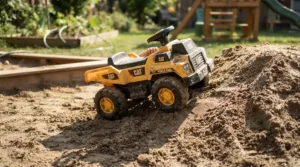
Setup matters more than most parents expect. Before the first ride, fully charge the battery for the manufacturer’s specified window — usually 8 to 12 hours for a first charge — even if the vehicle seems to power on sooner; skipping this step is the single most common cause of disappointing early runtime. Check tire pressure on pneumatic-tire models like the Razor Dirt Quad before every few rides, since underinflated tires both reduce range and increase the odds of pinch damage on rough ground.
In the first 30 days, the most common mistake is letting a preteen run in high-speed mode before they’ve mastered braking distance in low mode. Spend at least a week in low speed on familiar, flat terrain before unlocking higher settings. For ongoing maintenance, wipe down suspension components after muddy rides, since packed dirt in spring or shock hardware accelerates wear far faster than UV exposure ever will. A simple monthly habit — checking bolts, inspecting tire tread, and confirming brake responsiveness — adds years to any of these vehicles.
Problem → Solution: Fixing the Most Common Off-Road Ride-On Car Headaches
Problem: Runtime feels shorter than advertised. This is almost always a battery-conditioning issue rather than a defect — lead-acid batteries in particular need several full charge-discharge cycles before they hit their rated capacity. Solution: run the first five charges to full depletion rather than topping off early.
Problem: The vehicle struggles on wet grass. Traction, not power, is usually the bottleneck. Solution: models with pneumatic or EVA all-terrain tires, like the ARBELI 24V XXXL, handle damp ground noticeably better than hard plastic wheels.
Problem: Two kids, one vehicle, constant conflict. Solution: a two-seater like the JOYRACER 24V UTV or Freddo Toys 48V 4×4 Maverick removes the turn-taking fight entirely.
Problem: The ride feels harsh over bumpy lawns. Solution: prioritize models with genuine spring or shock suspension — the Ryder Toys 24V ATV‘s lifted four-wheel suspension is purpose-built for exactly this complaint.
Problem: The vehicle’s been outgrown within a year. Solution: buy for the weight limit two years out, not the current weight — the Razor Dirt Quad 500‘s 220-lb ceiling solves this preemptively.
How to Choose an Off-Road Ride-On Car for Preteens
What is an off-road ride-on car for preteens? It’s a battery-powered vehicle built with reinforced suspension, higher weight capacity, and rugged tires, designed for riders roughly ages 8-12 who’ve outgrown toddler-scale ride-ons but aren’t ready for a full-size ATV.
- Match the weight limit to two years out, not today. A preteen close to a stated weight cap will outgrow the vehicle within a season.
- Check suspension type before top speed. Spring, shock, or full independent suspension matters more on rough ground than an extra mile-per-hour.
- Confirm real ground clearance for your terrain. Flat suburban lawns need less clearance than wooded or sloped lots.
- Prioritize working headlights if evening riding is likely. Not every model includes them, and it’s a genuine safety gap after sunset.
- Decide single-seat vs two-seat based on siblings, not preference alone. Sharing conflicts are the number-one post-purchase regret parents report.
- Budget for battery replacement, not just the vehicle. Higher-voltage systems (36V, 48V) cost more to replace than 24V units.
- Verify ASTM F963 compliance where it’s disclosed. It’s the baseline safety bar for the entire category in the U.S.
Suspension Travel for Rough Terrain: What the Spec Sheet Doesn’t Tell You
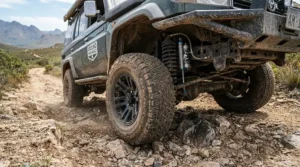
“Spring suspension” and “full suspension” get used almost interchangeably in product listings, but they behave very differently once wheels leave flat ground. A basic spring setup, like the kind found on budget UTV models, compresses under weight but offers limited independent wheel travel — meaning one wheel hitting a rut can still jolt the whole frame. Full or four-wheel suspension, as seen on the Ryder Toys 24V ATV and both Freddo Toys models, lets each wheel respond independently, which is the difference between a smooth pass over a root and a jarring stop.
What most buyers overlook is that suspension travel matters more for preventing frame stress than for rider comfort alone. A vehicle repeatedly bottoming out on rough terrain puts cumulative strain on axles and motor mounts — the exact failure point aggregated reviews flag most often on rough-terrain use. If your yard has real topography, weight suspension architecture as heavily as motor wattage when comparing models.
Ground Clearance Specs: Reading Beyond the Marketing Copy
Ground clearance is the vertical gap between the lowest point of a vehicle’s underside and the ground beneath it — the minimum distance between the ground and the vehicle’s underside, excluding tires, wheels, wheel hubs, and brake components. For ride-on toys, that measurement rarely appears on the box, but it’s inferable from stated features: lifted-suspension models like the Ryder Toys 24V ATV and the Freddo Toys 48V 4×4 Maverick are explicitly marketed around their elevated ride height, which is a direct proxy for higher clearance.
Here’s what to weigh: more clearance helps on grass, gravel, and uneven dirt, but it also raises the center of gravity — the same trade-off full-size vehicles face. For a preteen still building coordination, a moderate-clearance model with wide tires (like the ARBELI 24V XXXL) often rides more predictably than a taller, more tippy build, even if the taller model handles bigger obstacles better on paper.
Ride-On Car with Working Headlights: Why Dusk and Evening Visibility Matters
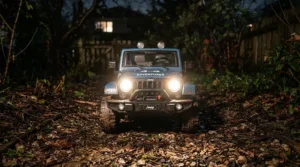
Not every off-road ride-on includes functioning headlights, and it’s an easy detail to miss in a spec list crowded with motor wattage and top speed numbers. The standard Razor Dirt Quad, for example, has no headlights or tail lights at all, making it unsuitable for riding once the sun starts going down. Models like the Ryder Toys 24V ATV and both Freddo Toys vehicles build in real LED lighting as a standard feature, not an afterthought.
This isn’t a cosmetic detail. Pedestrian and low-speed vehicle visibility drops sharply during dusk hours, since only about a quarter of pedestrian fatalities occur in full daylight conditions according to federal transportation safety data, meaning shoulder-season evenings carry disproportionate risk. If your preteen’s riding window regularly overlaps with early evening — a common reality once school starts back up — working headlights aren’t optional; they’re a baseline safety requirement, and pairing the vehicle with reflective gear closes the gap further.
Off-Road Ride-On Car vs Traditional Ride-On Toys
| Feature | Off-Road Ride-On Car | Traditional Ride-On Toy |
|---|---|---|
| Suspension | Spring, shock, or full suspension | Usually none or minimal |
| Terrain capability | Grass, gravel, mild trails | Pavement and flat lawns only |
| Weight capacity | Up to 220 lbs | Typically under 130 lbs |
| Typical age fit | 8-12 (preteen) | 3-7 (younger child) |
The gap here is structural, not cosmetic. Traditional ride-on toys are engineered around a much lighter, younger rider on forgiving surfaces, so manufacturers skip real suspension components to keep costs down. Off-road models justify their higher price by building in the exact components — shock absorbers, lifted frames, reinforced axles — that traditional toys omit, which is why a preteen who’s outgrown a toddler ride-on genuinely needs this category rather than just “a bigger version” of the old one.
Off-Road Ride-On Cars for Different Preteen Personalities
For the cautious first-timer, prioritize low top speed and a forgiving learning curve — the Razor Dirt Quad‘s two-speed switch lets a nervous rider stay in low mode indefinitely without ever feeling pressured to go faster. For the speed-seeker who’s already comfortable on a bike, the Freddo Toys 48V 4×4 Maverick‘s 12 mph ceiling gives genuine headroom to grow into, provided supervision keeps pace.
For the social kid who wants a co-pilot, two-seat models like the JOYRACER 24V UTV solve for companionship over solo thrill-seeking. And for the preteen who’s already bigger than most of their peers, weight capacity trumps every other spec — both the ARBELI 24V XXXL and Razor Dirt Quad 500 exist specifically to serve that segment without the vehicle feeling undersized.
Common Mistakes When Buying an Off-Road Ride-On Car for Preteens
The most frequent mistake is buying based on current weight rather than projected weight a year or two out — a preteen at 90 lbs today can easily be 115 lbs by next summer, and a tight weight-limit margin turns into an unusable vehicle fast. Age-and-skill matching, not just age labeling, is the core principle safety regulators have pushed for decades, and it applies just as much to weight capacity as to the age number printed on the box.
The second common mistake is ignoring terrain entirely — buying a flat-lawn model for a sloped, wooded property, or the reverse, overspending on lifted suspension for a paved driveway that never needed it. Third, parents frequently skip checking for headlights on models they intend to use after school in fall and winter, only to discover the vehicle isn’t rated for dusk visibility. Finally, don’t overlook battery voltage compatibility when budgeting replacements — a 48V system’s replacement battery costs meaningfully more than a 24V unit’s, a detail that rarely surfaces until year two.
Long-Term Cost & Maintenance of a Preteen Off-Road Ride-On Car
| Cost Factor | Budget Models (24V) | Premium Models (36V–48V) |
|---|---|---|
| Replacement battery | Lower cost, more frequent swaps | Higher cost, longer intervals |
| Tire replacement | EVA/plastic, cheaper | Pneumatic, pricier but more durable |
| Expected lifespan | 1–2 seasons of heavy use | 2–4 seasons with proper care |
The pattern here is fairly predictable: budget 24V models cost less upfront and less per replacement part, but they wear out faster under heavy off-road use, meaning the effective cost-per-use can actually favor the premium tier for families who ride often. If your preteen is riding several times a week on rough terrain, a model like the Ryder Toys 24V ATV or Freddo Toys 48V 4×4 Maverick often works out cheaper over three years than replacing a budget model twice in that span.
✨ Ready to compare current availability side by side? Check current pricing on any highlighted model above before it sells out this season!
FAQ
❓ What age is appropriate for an off-road ride-on car?
❓ Do off-road ride-on cars need helmets?
❓ How long does the battery last on a single charge?
❓ Can two preteens share a single-seat ride-on car?
❓ What's the difference between 24V and 48V ride-on cars?
Conclusion
Choosing the right off-road ride-on car for preteens really comes down to three honest questions: how much does your kid weigh (today and next year), what does your yard actually look like, and how much supervision can you realistically provide once the throttle opens up. The Razor Dirt Quad and JOYRACER 24V UTV cover the budget-conscious end nicely, the ARBELI 24V XXXL and Ryder Toys 24V ATV handle growth and rough terrain respectively, and the Freddo Toys lineup plus the Razor Dirt Quad 500 sit at the premium end for families wanting real power and headroom.
None of these are toys in the flimsiest sense of the word — they’re genuine small vehicles with suspension components, motor systems, and safety compliance that deserve the same respect you’d give a bike or a scooter. Match the spec sheet honestly to your kid and your property, keep supervision consistent in the first month, and any of these seven should deliver a season (or several) of legitimate backyard adventure.
Recommended for You
- 36V vs 24V Ride-On Car For Older Kids: 7 Picks Ranked (2026)
- 7 Best Ride-On Trucks For A 7 Year Old Boy In 2026
- 7 Best High Speed Ride-On Car For Kids Picks (2026 Guide)
Disclaimer: This article contains affiliate links. As an Amazon Associate, I earn from qualifying purchases. If you purchase products through these links, we may earn a small commission at no additional cost to you.
✨ Found this helpful? Share it with your friends! 💬🤗
