
In This Article
Every teenager eventually wants wheels. Not a bike. Not a bus pass. Something with a motor, a little attitude, and zero pedaling. The default answer has been the electric scooter, but scooters come with sidewalk bans, age minimums, and a folding stem that loves to pinch fingers. That’s why the electric scooter alternative ride-on for teens category is booming: hoverboards, e-skateboards, go-karts, drift carts and mini dirt bikes that scratch the same itch with a different shape.
What Is an Electric Scooter Alternative Ride-On for Teens?
An electric scooter alternative ride-on for teens is any battery-powered vehicle that carries a rider but isn’t a stand-up kick scooter. Think self-balancing hoverboards, electric skateboards, teen-sized go-karts, drift carts and mini dirt bikes. They’re built for riders roughly 13 and up, top out between 7 and 17 mph, and are meant mainly for yards, driveways and private property.
Here’s the catch most listings skip: “fun” and “safe” are not the same spec. The Consumer Product Safety Commission runs a micromobility information center that tracks injuries and lithium-ion battery fires across hoverboards, e-bikes and scooters. It’s worth a skim before you buy anything with a battery pack.
This guide covers seven real products, from budget skate decks to a 240-pound-rated drift cart. It also covers what the spec sheets leave out: yard-fit, storage, upkeep and the rules that apply where you live. Every spec below gets translated into what it means on an actual Tuesday afternoon.
Quick Comparison: 7 Teen Ride-Ons at a Glance
| Product | Type | Age Guidance | Top Speed | Best For |
|---|---|---|---|---|
| Meepo Campus | E-skateboard | Teen-oriented (per Meepo) | 12.5 mph | First-time riders on a budget |
| Hover-1 Titan | Hoverboard | 8+ on retail listing | 7-8 mph | Grass and gravel yards |
| Backfire G2 | E-skateboard | Adults and teens | Mid-20s mph class | Confident skaters |
| Segway Ninebot S2 | Hoverboard | 16-50 (Segway) | 11.2 mph | Campus and neighborhood trips |
| Razor Ground Force Elite | Go-kart | 13+ | 14 mph | Younger teens at home |
| Razor MX650 Dirt Rocket | Dirt bike | 16+ | 17 mph | Off-road backyard riding |
| Razor Crazy Cart XL | Drift cart | 16+ | 14 mph | Teens who want tricks |
Notice how the speed column splits into two camps. The skate and hoverboard options are quick to store and hard to master. The Razor options are easy to ride and hard to tuck away. Which camp wins depends on your yard and your garage, so this table is a starting filter, not a verdict. For a compact electric ride-on for teens in small yards, the top half of the table makes the most sense. Pay attention to the age column too, because manufacturers often rate faster models higher than their weight limits alone would suggest.
💬 Just one click — help others make better buying decisions too!😊
Top 7 Electric Scooter Alternative Ride-On for Teens Picks: Expert Analysis
1. Meepo Campus — gentle 12.5 mph cap for first-timers
The standout feature is restraint. Meepo caps this board’s speed so a nervous 13-year-old isn’t handed a rocket on day one.
Meepo lists a 12.5 mph top speed, about 10 miles of range from a small 63Wh pack, a 205W motor and a 13.2-pound build with a 7-ply maple deck. In practice, that’s a few neighborhood laps plus a school run. At 13 pounds, a teen can carry it up stairs without complaint. Based on the spec comparison, this is the lowest-risk way into powered riding. It’s still a skateboard, though, so balance skills decide everything. One flag: retail listings for “Campus” and “Campus V3 Series” advertise very different top speeds (the V3 listing claims up to 29 mph), so confirm exactly which model you’re buying.
Review sentiment is mixed in a useful way. One ten-board beginner roundup found the Campus V3 Series had the largest review base in its group (451 reviews). Another roundup flags Meepo battery reliability and slow customer service as recurring weak spots.
Pros:
- ✅ Speed-capped design suits first-time teen riders
- ✅ Light enough to carry up stairs
- ✅ UL 2272-certified hardware and battery
Cons:
- ❌ Short range from a small battery
- ❌ Listing specs vary between Campus models
Expect an entry-tier price, well under $500 (check current price). Strong value as a trial run.
2. Hover-1 Titan — big air-filled tires for grass and gravel
Most hoverboards are happiest on a gym floor. The Hover-1 Titan wears 10-inch air-filled tires, which is why it’s the rare board that tolerates a real backyard.
Dual 250W motors, a 36V battery, Bluetooth speaker and a 264-pound weight rating are the headline specs. Claimed range is up to 8 miles, and top speed lands between 7 and 8 mph depending on the source. The 264-pound rating matters for teens who’ve shot up in size, because many kid-oriented boards cap far lower. The spec sheet won’t tell you this, but independent testing with a 175-pound rider recorded about 6.4 miles against an 8.4-mile claim. Plan on short sessions, not all-day roaming. Listings suggest ages 8 and up, but the board suits teens better than small children because of its weight and size.
A retail reviewer reported it performed well with both a 230-pound and a 150-pound rider, and handled hard grassy ground as easily as indoor floors.
Pros:
- ✅ Large pneumatic tires soften uneven yards
- ✅ High 264-pound weight rating
- ✅ UL 2272 certified per the maker
Cons:
- ❌ Tested range fell short of the claim
- ❌ Heavy for a hoverboard, sources say mid-20s to low-30s pounds
The $250-$500 bracket is typical. Fair value if grass is your terrain.
3. Backfire G2 — Hobbywing-controlled ride for confident skaters
The Backfire G2 is the step up for a teen who already skates and wants a motor that doesn’t feel jumpy.
The G2 Black is listed with a 187Wh battery, about 12.5 miles of range, a Hobbywing speed controller and remote, UL 2272 certification and a 265-pound capacity. A good speed controller is the part you feel most: smooth acceleration and braking beat raw top speed for anyone sharing a driveway with a basketball hoop. A sibling model, the G2z, is listed at 26 mph with a belt drive, so make sure you know which version you’re ordering. Analysis from one testing outlet found the G2’s deck comfortable but its beginner mode weak, making it better for riders with some board time. Treat it as a second board, not a first.
Aggregated impressions across roundups put Backfire as a consistent performer for the money. Reviewers praise the controller’s response and flag fewer app and customization options than premium rivals.
Pros:
- ✅ Smooth Hobbywing acceleration and braking response
- ✅ Roughly 12-mile claimed range
- ✅ 265-pound capacity suits growing teens
Cons:
- ❌ Weak beginner mode for true first-timers
- ❌ Belt-drive siblings need periodic belt replacement
Expect roughly $300-$450, so check current price. Good value for the experienced.
4. Segway Ninebot S2 — longest range and a knee bar for control
If one board could convince a skeptical parent, it’s the Segway Ninebot S2. It adds an adjustable knee control bar, which gives a new rider something to lean on.
Segway rates it at 11.2 mph, about 21.7 miles typical range from a 335Wh battery, 10.5-inch tubeless pneumatic tires, a 15° climb and IP54 splash resistance. It weighs about 30 pounds and carries 88 to 220 pounds. That range is nearly triple the Hover-1 Titan‘s claim, which matters for a teen using it as campus transport. The footprint is also a tidy 10.4 by 21.8 inches. Segway lists riders as ages 16 to 50, so it fits older teens best. The S2 also works with a GoKart Kit sold separately, though one customer review on Segway’s own store page said the kit wasn’t actually available to buy. Verify before you count on it.
Reviewers on roundups call it the premium pick for range and build quality.
Pros:
- ✅ Class-leading claimed range of 21.7 miles
- ✅ Knee bar makes steering easier to learn
- ✅ Compact footprint stores in a closet
Cons:
- ❌ Costs more than most hoverboards
- ❌ GoKart Kit availability is unclear
It sits in the $500-$800 bracket Segway’s hoverboard line typically occupies. Worth it for 16-plus riders who’ll use it daily.
5. Razor Ground Force Elite — teen-sized kart with a reverse switch
This is Razor’s first 36-volt kart built explicitly for teens, and the reverse switch is the feature that matters in a small yard.
Razor lists a 350-watt brushless hub motor, up to 14 mph, about 40 minutes of run time, a foot-pedal throttle, a rear drum brake, solid rubber tires and a 200-pound limit. It’s recommended for ages 13 and up. A hub motor means no chain to oil, and Razor says it needs virtually no maintenance. That makes this one of the more low-maintenance electric ride-on for teenagers options in the lineup. The trade-off is lead-acid power: three 12V batteries add weight, and the assembled kart is 67.5 pounds. Electrek noted the same trade-off at launch.
A large, consistent pool of owner reviews couldn’t be verified at the time of research, so treat this section as spec-driven analysis. Check retailer review counts yourself before buying.
Pros:
- ✅ Forward and reverse for tight yards
- ✅ Hub motor needs minimal maintenance
- ✅ Foot-pedal throttle feels like real driving
Cons:
- ❌ Heavy lead-acid batteries, 67.5 pounds assembled
- ❌ Plastic unibody frame won’t suit rough terrain
Roughly $650-$750 at list. Strong value for 13-to-15-year-olds who want driving, not balancing.
6. Razor MX650 Dirt Rocket — real dirt-bike geometry in an electric package
For a teen who wants a motorcycle without the gas and noise, the Razor MX650 Dirt Rocket is the honest answer.
Razor lists up to 17 mph, up to 40 minutes of use, a chain-driven high-torque motor, dual suspension, hand-operated dual disc brakes, 16-inch and 14-inch knobby tires, a 220-pound rating and ages 16 and up. Independent reviewers cite a 650-watt motor and a long charge time of around 12 hours. At 98 pounds, it’s the heaviest solo ride here, and a twist throttle with a 17 mph ceiling is genuinely quick for a beginner. Don’t let a younger teen borrow it just because the weight limit allows. One parent reviewer did buy it for a 10-year-old, but Razor’s age guidance exists for a reason, and the manual warns that weight limits aren’t fit charts.
On one major retailer, the listing showed about 4.4 out of 5 across roughly 200 ratings at the time of research, with reviewers mentioning easy assembly and good battery life.
Pros:
- ✅ Dual suspension and disc brakes
- ✅ Authentic dirt-bike frame geometry
- ✅ 17 mph top speed
Cons:
- ❌ Roughly 12-hour charge time
- ❌ 98 pounds is hard to maneuver in storage
Listings have ranged from the $500s to nearly $900 depending on retailer, so shop around. Good value if your yard has dirt.
7. Razor Crazy Cart XL — adult-sized drift machine with a 240 lb limit
The Razor Crazy Cart XL is the one a teen shows friends. A drift bar, 360-degree-plus steering and caster rear wheels make it spin and slide in ways no other pick here can.
Razor lists a 500-watt motor, up to 14 mph, 40 minutes of run time, a 36V lead-acid battery, a 240-pound limit and ages 16 and up. At 42.9 by 30.1 by 26.2 inches and about 112 pounds, it’s large for a small yard, though its 1:1 steering lets it turn nearly in place. The owner’s manual says it’s for private property and closed courses, not public streets or sidewalks. It also notes lighter riders may find it accelerates faster, which is one reason for the 16-plus guidance.
Parents in a Best Buy Q&A thread described moving up to the XL when a 15-year-old outgrew the original Crazy Cart, and a Walmart reviewer said their son loves it.
Pros:
- ✅ Drift bar enables spins and slides
- ✅ 240-pound limit fits taller teens
- ✅ Quick-change battery compartment
Cons:
- ❌ Largest and heaviest footprint on this list
- ❌ Premium price for a recreation-only ride
List pricing runs around $1,200-$1,300, so check current price. Value depends on how often it’s ridden.
How to Choose an Electric Scooter Alternative Ride-On for Teens
Short answer: match the machine to your teen’s size, skill, surface and storage space, then confirm safety certification and local rules. Here’s the order that avoids regret.
- Check weight and height limits, not just age. Razor’s own manuals stress that rider weight alone doesn’t mean a vehicle fits. A teen under the limit can still be too short to control it.
- Pick your surface first. Smooth concrete suits skateboards and S2-style boards. Grass and gravel need big air-filled tires or a kart.
- Measure your storage real estate. A 112-pound cart doesn’t disappear into a closet.
- Demand UL 2272 on the box. It’s the electrical and fire-safety certification that reputable hoverboard roundups treat as non-negotiable.
- Understand the battery. Sealed lead-acid packs are heavy and slow to charge, while lithium is lighter and pricier.
- Read your local rules before you click buy. More on that below.
- Budget for a helmet and pads. Gear isn’t optional, and it’s the cheapest insurance in this guide.
Compact Electric Ride-On for Teens in Small Yards
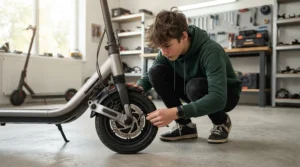
Small yards punish speed. A 14 mph kart covers roughly 20 feet every second, and a 17 mph dirt bike covers about 25. In a 30-foot yard, that’s barely a second and a half before something has to give. So for a compact electric ride-on for teens in small yards, the honest hierarchy runs from smallest to largest.
The Meepo Campus and Segway Ninebot S2 are the true space-savers. The Hover-1 Titan is nearly as compact and the only one here with tires that tolerate grass. Among the Razor models, the Razor Ground Force Elite is the pick for tight spaces because of its reverse switch, which turns a three-point turn into a one-lever fix. The Razor Crazy Cart XL surprises on this list: its 1:1 steering and caster rear wheels let it rotate nearly in place, so it can feel at home on a patio even though it’s big.
The Razor MX650 Dirt Rocket is the outlier. It needs open ground and a path with long straight runs. If your outdoor space is a standard suburban backyard, treat it as a weekend-field machine, not a daily driver. Match your yard to the slowest ride that still excites your teen, and you’ll keep both the fence and the joy intact.
Storage Footprint Compared to Scooters
Folding scooters set the benchmark: collapse the stem and slide it behind a door. So how do these alternatives stack up on storage footprint compared to scooters? Honest answer: hoverboards and skateboards match or beat them, and karts and bikes don’t come close. Exact scooter dimensions vary by model, so this comparison is qualitative.
| Product | Format | Approx. Size / Weight | Storage Style | Best For |
|---|---|---|---|---|
| Meepo Campus | Skate deck | 13.2 lb | Leans in a closet corner | Dorm rooms and apartments |
| Hover-1 Titan | Hoverboard | 26 x 11 x 11 in | Fits under a bed or bench | Shared bedrooms |
| Segway Ninebot S2 | Hoverboard | 10.4 x 21.8 in footprint, about 30 lb | Stands in a closet | Dorms and townhouses |
| Razor Ground Force Elite | Kart | 41.4 x 29 x 17.6 in, 67.5 lb | Needs garage floor | Homes with a garage |
| Razor Crazy Cart XL | Drift cart | 42.9 x 30.1 x 26.2 in, about 112 lb | Needs garage floor | Dedicated garage space |
| Razor MX650 Dirt Rocket | Dirt bike | 98 lb, bike-length | Kickstand, garage | Garage or shed owners |
The pattern is clear. If storage is your bottleneck, the first three products are the answer, and the Segway Ninebot S2 has the smallest floor footprint of any rider here. The karts and bike are lawn-mower-sized commitments. Ask where it will live on a wet Tuesday before you ask where it will ride on a sunny Saturday.
Low-Maintenance Electric Ride-On for Teenagers
A low-maintenance electric ride-on for teenagers wins by removing parts that wear out. Consider the drivetrain first. A hub motor, like the one in the Razor Ground Force Elite, has no chain or belt to adjust, and Razor describes it as needing virtually no maintenance. Solid rubber tires on that kart also mean no flats. The Meepo Campus uses a small motor and sealed battery with little for a teen to service.
Chain-driven models like the Razor MX650 Dirt Rocket and Razor Crazy Cart XL are tougher: chains stretch, need lubrication and tension checks, and that’s real chore territory. Belt-drive skateboards add belt replacement; one review of a Backfire belt-drive model put it at every 500-1,000 miles. Pneumatic tires on the Hover-1 Titan, Segway Ninebot S2 and Razor MX650 Dirt Rocket mean checking pressure and occasional puncture repair.
Battery chemistry is the other half. Sealed lead-acid packs (Razor’s choice) are simple but heavy and slow to charge. Lithium packs are lighter but demand more careful charging habits.
Maintenance Requirements: Your First 90 Days
Maintenance requirements sound boring until a tire goes flat on day nine. This is a practical schedule any parent can follow.
Week one. Read the manual, check every bolt, and confirm the battery charger is the original one. CPSC warns against aftermarket universal chargers, and federal regulators have proposed a lithium-ion battery safety standard for micromobility products after hundreds of incidents, which tells you how seriously fires are taken.
Every ride. Check tire pressure on pneumatic models. Segway’s listing for the Segway Ninebot S2 gives 45-50 psi. Wipe down, inspect the brake, and confirm the helmet fits.
Every charge. Stay present. CPSC notes many home fires start at night while batteries charge and families sleep. Charge on a hard surface, away from beds and exits.
Monthly. Lubricate chains on chain-driven models, check belts on belt-drive boards, and look for cracked fairings or loose pegs.
Common first-30-day mistakes:
- Exceeding the weight limit “just once”
- Charging in a bedroom overnight
- Skipping the helmet because the speed seems low
- Storing a drained battery for weeks
Local Ordinances on Electric Ride-Ons
Here’s where recreation meets the law, and where parents get surprised. This isn’t legal advice, and rules change, so verify with your city clerk.
Start with the maker’s own language. Razor’s manual for the Razor Crazy Cart XL says it’s intended for private property and closed courses, not public streets or sidewalks, and retailer listings for the Razor Ground Force Elite carry an “always check local laws” notice. State frameworks mostly target stand-up scooters. The NCSL’s overview of state e-scooter laws shows definitions built around weight, wheel count, handlebars and a standing floorboard, plus minimum ages, helmet rules and local sidewalk authority in many states. Karts and dirt bikes don’t fit those definitions neatly, which usually means public-road use isn’t an option.
Local codes add another layer. One Colorado city’s code restricts motorized toys on public property and requires owner permission on private property such as parking lots. Add HOA covenants, school-campus policies and homeowner’s insurance questions, and the checklist grows. For local ordinances on electric ride-ons, search your state’s vehicle code on a .gov site, then your city’s municipal code for “motorized toy” or “unlicensed vehicle,” then read your HOA documents.
Electric Scooter Alternative Ride-On for Teens vs. Scooters: An Honest Head-to-Head
Scooters win one category outright: legal public-road mobility, within limits. Roundups of state rules show most states setting a 16-year minimum, helmets for minors and a patchwork on sidewalks. Ride-ons mostly live on private ground, so a scooter is the better tool when the goal is getting to school.
Alternatives win on fun, variety and feel. A teen who’d roll a scooter to the corner and back can spend an hour drifting a Razor Crazy Cart XL or hauling a Razor MX650 Dirt Rocket across a field. Hoverboards like the Segway Ninebot S2 fall in the middle: portable and capable, but still micromobility products CPSC tracks and many cities regulate.
Safety is a wash with different shapes. Scooters mean falls onto pavement, while karts and bikes mean speed on varied ground. The honest recommendation: pick scooter if commuting matters, ride-on if recreation matters, and avoid pretending one replaces the other. Many families end up with both, and that’s fine.
Long-Term Cost and Value
Sticker price isn’t the whole bill. Sealed lead-acid batteries in Razor’s kart and bike lines are replaceable parts, and general battery guidance suggests they wear with use, so budget for a replacement eventually. Lithium boards trade that for pricier packs and careful charging.
| Product | Typical Price Range | Value Verdict | Best For |
|---|---|---|---|
| Meepo Campus | Entry tier, well under $500 | Cheap trial run | First-time teen skaters |
| Hover-1 Titan | $250-$500 bracket | Strong for grass | Yards with lawns |
| Backfire G2 | Roughly $300-$450 | Good for skaters | Experienced riders |
| Segway Ninebot S2 | $500-$800 bracket | Premium range | Older teens, daily use |
| Razor Ground Force Elite | Roughly $650-$750 | Solid kart value | Ages 13-15 |
| Razor MX650 Dirt Rocket | $550-$900 by retailer | Fair if dirt is nearby | Ages 16+ with space |
| Razor Crazy Cart XL | Around $1,200-$1,300 | Premium, high thrill | Teens who love drifting |
Run a quick cost-per-use check. A kart in the mid-$600s ridden 150 times a year for two years works out to roughly $2 per session before gear. The S2 spreads its higher price over more miles, while the Crazy Cart XL needs enthusiasm to justify its tag. The cheapest ride is the one a teen actually uses.
Real-World Scenarios: Three Teen Profiles
Maya, 14, townhouse patio. Budget around $300, a small concrete patio, riding three times a week. The Hover-1 Titan handles patio and nearby grass, folds into a closet, and carries her growth spurts to 264 pounds. Add a helmet and wrist guards.
Jordan, 15, half-acre suburban yard. Budget $650-$800, grass and dirt, weekend riding. The Razor Ground Force Elite matches his age (13+) and lets him learn throttle and brake control. The Razor MX650 Dirt Rocket can wait until his 16th birthday, per Razor’s guidance.
Sam, 17, college-bound. Budget $500-$800, dorm storage, daily campus trips. The Segway Ninebot S2 has the range and a closet-sized footprint. Check campus policies first, since many schools restrict powered devices on walkways.
Problem → Solution Guide
“The battery dies fast.” Heavier riders, hills and top speed all cut range. Independent testing of the Hover-1 Titan recorded about 6.4 miles against an 8.4-mile claim. Plan sessions around 75% of the listed number.
“The neighbors are complaining.” Electric rides are quiet, but speed and hours still matter. Local codes vary; the MRSC’s guide to e-bike and e-scooter codes shows localities setting their own age, sidewalk and parking rules. Ask your city before assuming anything.
“There’s no garage space.” Choose the Meepo Campus, Hover-1 Titan or Segway Ninebot S2, which stash in closets.
“The board feels twitchy.” Use the beginner mode, but know testers found jerky starts in one Meepo board’s beginner setting. Practice on grass first.
“My teen outgrew it.” Parents describe upgrading from the original Crazy Cart to the Razor Crazy Cart XL once teens hit full size. Check weight and age labels before you move up.
FAQ
❓ What is the best electric scooter alternative ride-on for teens under $500?
❓ Are hoverboards or e-skateboards better for riders who want a low-maintenance electric ride-on for teenagers?
❓ Where can I buy a Segway Ninebot S2 safely?
❓ Do local ordinances on electric ride-ons require a permit or insurance?
❓ How much does a compact electric ride-on for teens in small yards cost?
Conclusion
The best electric scooter alternative ride-on for teens isn’t the fastest one. It’s the one that fits your teen’s size, your yard, your storage and your local rules. For apartment dwellers, the Meepo Campus, Hover-1 Titan and Segway Ninebot S2 deliver real fun in a closet-sized footprint. For families with a garage, the Razor Ground Force Elite is the safest step into driving-style fun, while the Razor MX650 Dirt Rocket and Razor Crazy Cart XL suit older teens with open ground. The Backfire G2 belongs to teens who already skate.
Before you click anything, run through the same short list: confirm weight and age ratings, look for UL 2272, plan realistic maintenance requirements, measure storage footprint compared to scooters, and read the local ordinances on electric ride-ons. A helmet isn’t optional. Neither is charging the battery when you’re awake.
Recommended for You
- Ride-On Vehicle For Teens: 7 Epic Picks Worth It In 2026
- Off-Road Electric Vehicle For Teenagers: 7 Best Picks 2026
- Go-Kart Vs Mini Electric Car For Teens: 7 Best Picks (2026)
Disclaimer: This article contains affiliate links. As an Amazon Associate, I earn from qualifying purchases. If you purchase products through these links, we may earn a small commission at no additional cost to you.
✨ Found this helpful? Share it with your friends! 💬🤗
