
In This Article
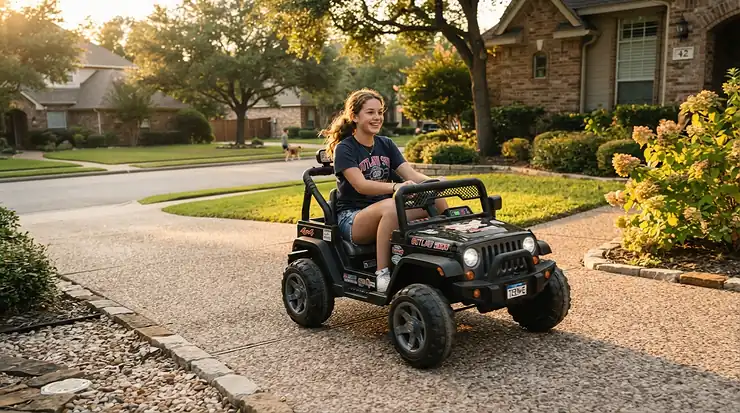
A ride-on vehicle for teens is a battery-powered kart, drift cart, or mini dirt bike built for riders roughly 13 and older. Top speeds run from about 12 to 27 mph, and weight limits run from 140 to 240 pounds. Think of an electric go-kart for the driveway generation: faster than a toddler’s Power Wheels, far tamer than a motorcycle.
Here’s the awkward truth about shopping for a ride-on vehicle for teens: the category is a mess. The same virtual shelf holds a $300 hand-throttle kart sized for an 8-year-old and a $2,000-plus performance kart with a four-stage speed ramp. Labels say “teen,” specs say otherwise, and your 15-year-old may be taller than the product page assumes.
So this guide skips the hype. I researched seven real models across budget, mid-range, and premium tiers, pulled specs from manufacturer pages, and looked at what reviewers consistently report. Nothing here is hands-on testing. It’s spec analysis and aggregated review themes, translated into plain English: what a 36V system means on a gravel driveway, why a weight limit matters more than an age label, and where your money actually goes.
You’ll also find dedicated sections on a ride-on vehicle for teens on a budget, price-to-performance by vehicle class, financing or layaway options, and gift-giving occasions for teens. Prices appear as ranges at the time of research (October 2026). They shift constantly, so check current price before you buy.
Quick Comparison: Seven Ride-On Vehicle for Teens Options at a Glance
Before the deep dives, here’s the lay of the land. The “Best For” column is the fastest way to find your teen’s lane.
| Product | Class | Age / Max Rider | Top Speed | Best For |
|---|---|---|---|---|
| Razor Ground Force Drifter | Hand-throttle drift kart | 8+ / 140 lb | 12 mph | Lighter teens on flat driveways |
| Razor MX500 Dirt Rocket | Mini dirt bike | 14+ / 175 lb | 15 mph | A first dirt bike on trails |
| Razor Ground Force Elite | Pedal-throttle kart | 13+ / 200 lb | 14 mph | A realistic driving feel |
| Razor MX650 Dirt Rocket | Mini dirt bike | 16+ / 220 lb | 17 mph | Older, taller riders |
| Razor Crazy Cart XL | Full-size drift cart | 16+ / 240 lb | 14 mph | Drift fans and bigger riders |
| HYPER GOGO M5 | App-connected dirt bike | 14+ (teen listing) / 177 lb | Up to 15 mph | Tech-loving riders |
| Segway Ninebot GoKart Pro | Premium kart | 14+ / 220 lb | Up to 23 mph | Long-term, growing teens |
Looking at the table, the Razor Ground Force Drifter is the clear entry point, but its 140 lb ceiling means it suits smaller or younger teens only. If your teen is taller or heavier, the Razor MX650 Dirt Rocket and Razor Crazy Cart XL offer the most headroom, at 220 lb and 240 lb. The Segway Ninebot GoKart Pro is the outlier. It costs several times more, but it’s the only one here with an adjustable chassis and speed modes that let a 14-year-old start slow and grow into 23 mph.
💬 Just one click — help others make better buying decisions too!😊
Top 7 Ride-On Vehicle for Teens: Expert Analysis
Every pick below follows the same logic: what the spec means in practice, who it suits, and what reviewers keep saying. Where review data is thin, I say so rather than pad the gap.
1. Razor Ground Force Drifter — cheapest ticket to real kart fun
The Razor Ground Force Drifter wins on sideways-for-less: slick rear wheels and a thumb-tab throttle turn any smooth driveway into a drift pad.
A 24V system (two 12V sealed lead-acid batteries) pushes it to 12 mph for up to about 40 minutes, and the whole kart weighs roughly 55 pounds. At ground level, 12 mph feels quicker than the number suggests. The catch is the 140 lb rider limit and the “8+” label, which tell you who it’s really for.
Based on the spec sheet, this suits a smaller 12-to-14-year-old, or a younger sibling you’ll share it with, riding on flat pavement or packed ground. Thumb throttle plus a hand-operated rear brake keeps the controls simple. A growing teen will bump into the weight cap fast, though.
Reviewers consistently describe it as a fun, sturdy steel-frame kart. The most repeated frustration is the 140 lb ceiling for bigger riders.
Pros:
- ✅ Lowest entry price in this lineup
- ✅ Simple thumb throttle and hand brake
- ✅ Slick rear wheels enable easy drifting
Cons:
- ❌ 140 lb limit excludes many older teens
- ❌ Sized and labeled for ages 8 and up
Expect around $300–$350 at the time of research (check current price). For a lighter teen, it’s the lowest-cost route into a ride-on vehicle for teens on a budget.
2. Razor MX500 Dirt Rocket — real dirt-bike geometry without the top-tier bill
The Razor MX500 Dirt Rocket borrows motocross styling and, more importantly, motocross-style bones: a steel frame, a double-crown fork, and dual suspension.
It runs a 36V sealed lead-acid system to a top speed of 15 mph, with up to 40 minutes of continuous use. The 16-inch front and 14-inch rear pneumatic knobby tires matter more than they look. Air-filled rubber soaks up ruts and gravel that would rattle a solid-tire kart. Dual disc brakes and a twist-grip throttle give a teen the same control layout they’ll meet on a larger bike later. Retail listings disagree on motor wattage (500W versus 650W), so lean on Razor’s own page for the official claims.
Rated for ages 14 and up and 175 lb, it fits a mid-sized teen who wants dirt rather than driveway. At roughly 94 to 98 pounds, it’s heavy to pick up after a tip-over.
Reviewers frequently mention easy assembly, with one buyer reporting about 15 minutes. A recurring caveat is the long recharge, which one retailer lists at up to 12 hours.
Pros:
- ✅ Dual suspension and knobby pneumatic tires
- ✅ Dual disc brakes for confident stopping
- ✅ Authentic dirt-bike layout and ergonomics
Cons:
- ❌ Long recharge on lead-acid batteries
- ❌ Heavy to right after a tip-over
Prices ranged from roughly $550 to $900 depending on seller and promotion. At the lower end, it’s strong value for a dirt-focused teen.
3. Razor Ground Force Elite — pedal throttle and a reverse gear
The Razor Ground Force Elite is the kart that behaves like a kart: foot-pedal throttle, a foot-activated rear drum brake, and a forward/reverse switch.
A 350-watt brushless hub motor on a 36V pack reaches up to 14 mph for about 40 minutes. A hub motor has no chain to tension or lube, which cuts routine upkeep. The adjustable-height steering wheel and padded seat with lap belt help it fit a teen rather than a child. It is rated 13+ and 200 lb, a meaningful step up from the Razor Ground Force Drifter.
On paper, the reverse gear is the underrated feature. Backing out of a tight garage or fence corner without climbing off is the kind of practical detail younger-skewing karts skip. Solid rubber tires and a one-piece molded body mean it’s a pavement-and-flat-lawn machine, not an off-roader.
Reviewer coverage here is thinner than for the dirt bikes, so I can’t point to a large verified review pool. What is consistent is praise for the driving feel and the 14 mph speed for the money.
Pros:
- ✅ Pedal throttle mimics real driving
- ✅ Reverse switch for tight spaces
- ✅ Low-maintenance hub motor
Cons:
- ❌ Solid tires limit rough-terrain use
- ❌ Smaller review pool than the dirt bikes
At around $650, it’s fair value for a 13-to-16-year-old who prefers four wheels.
4. Razor MX650 Dirt Rocket — most headroom for taller riders
The Razor MX650 Dirt Rocket is the top of Razor’s Dirt Rocket line, built for riders who’ve outgrown the smaller bikes.
Its 650W chain-driven motor reaches up to 17 mph, backed by a 36V pack and about 40 minutes of continuous use. That’s two miles per hour beyond the Razor MX500 Dirt Rocket, and the extra torque shows up on slopes rather than flat ground. The 220 lb rider limit is its real selling point. Teens up to roughly 5’11” and 200 lb don’t have to fight the frame, and a parent can occasionally ride along.
It’s rated 16+, so respect that label. Seventeen miles per hour on a 95 lb bike with hand-operated disc brakes demands judgment and gear.
One Walmart listing shows about 4.4 stars from 195 ratings, with buyers highlighting sturdy construction for its size. Editorial reviewers note the battery runtime and long charging time as the main trade-offs.
Pros:
- ✅ Highest weight limit among the Dirt Rockets
- ✅ Extra torque for hills and rougher ground
- ✅ Dual suspension, dual disc brakes
Cons:
- ❌ Lead-acid battery means slow recharging
- ❌ Priciest of the Razor dirt bikes
Prices run roughly $750 to $1,050 across sellers. It’s best value for larger teens who’d outgrow cheaper bikes within a year.
5. Razor Crazy Cart XL — full-size drifting for older teens
The Razor Crazy Cart XL is the adult-sized version of Razor’s drift cart, and it’s all about controlled chaos: 1:1 steering, a drift bar, and caster rear wheels.
A 500-watt motor on a 36V pack delivers up to 14 mph and about 40 minutes of runtime. The 240 lb rider capacity is the highest in this guide, and Razor rates it for ages 16 and up. Notably, Razor’s international spec page describes variable-speed pedal acceleration with no conventional brake. You slow by easing off the pedal and using the cart’s steering and drift behavior. For a younger or nervous teen, that learning curve is worth weighing carefully.
This isn’t a pick for rough terrain. The small front tire suits smooth concrete, parking lots, and driveways. One parent’s Q&A answer on a retail site noted their 15-year-old, about 5’9″, moved up to the XL after outgrowing the original, and mentioned the tires deflating easily.
Pros:
- ✅ Highest rider capacity here
- ✅ Drift bar gives precise slide control
- ✅ Variable-speed pedal for fine throttle
Cons:
- ❌ No conventional brake demands skill
- ❌ Small tires struggle off smooth surfaces
Listings cluster around $1,000, with Razor’s own site listing higher. Value is best for drift-obsessed, bigger teens who’ll truly use the 240 lb capacity.
6. HYPER GOGO M5 — lithium power with app-based speed limits
The HYPER GOGO M5 swaps heavy lead-acid for a lithium pack and adds an app, which lets a parent cap speed before handing over the keys.
Its 36V 500W motor is paired with a 36V 7.8Ah lithium battery (about 280 Wh), a listed range near 18.6 miles, and about six hours to recharge. It lists three speed modes, dual disc brakes, 14 × 3.0 inch tires, and a 177 lb load limit. A teen-focused listing caps it at 10 mph out of the box and unlocks 15 mph afterward. That’s a useful parental control.
Here’s the part the spec sheet won’t tell you. One listing recommends riders up to about 5’5″, and age labels vary wildly across sellers, from 3-and-up to 14-and-up. Taller teens may find the frame small, so measure before buying.
I couldn’t verify a large, independent review pool for the M5, so treat the manufacturer’s numbers as claims rather than lab results.
Pros:
- ✅ Lithium pack recharges faster than lead-acid
- ✅ App lets parents set speed limits
- ✅ Light at about 54 pounds
Cons:
- ❌ Frame may be too small for tall teens
- ❌ Inconsistent age labels across listings
Pricing swings with promotions, so check current price. It’s best value for smaller teens whose parents want control.
7. Segway Ninebot GoKart Pro — a speed ramp that grows with the rider
The Segway Ninebot GoKart Pro is the premium pick: a rear-drive, rear-engine-style kart with an adjustable chassis and steering for riders from roughly 4’3″ to 6’3″ (Segway lists 51.2 to 74.8 inches).
Four speed modes climb from about 5 mph to 11, 17.4, and 23 mph, driven by dual motors and a 432 Wh battery for roughly 15.5 miles typical range. Braking combines electronic and mechanical handbrake systems, with Segway quoting around 20 feet to stop. The frame carries 220 lb and weighs about 113 pounds. Segway recommends ages 14 and up and notes that riders 14 to 17 need adult supervision.
This is where price-to-performance gets interesting. The adjustable fit and speed ramp mean the same kart can serve a 13-year-old and an adult for years. Its newer sibling, the Segway Ninebot GoKart Pro 2, pushes top speed to about 26.7 mph.
Owner chatter on enthusiast forums skews enthusiastic, and the main caution is cost rather than capability.
Pros:
- ✅ Adjustable fit extends useful life
- ✅ Four speed modes for gradual progression
- ✅ Electronic plus handbrake braking
Cons:
- ❌ Costs several times more than rivals
- ❌ Heavy at about 113 pounds
Expect around $2,200–$2,400, with higher prices for the newer model. It’s worth it only if the kart will be used for years and shared.
Here’s the whole field in one scannable view, including rating signals where I could verify them.
| Product | Max Rider | Top Speed | Price Range | Rating Signal | Best For |
|---|---|---|---|---|---|
| Razor Ground Force Drifter | 140 lb | 12 mph | Around $300–$350 | Limited public data | Lighter teens, tight budgets |
| Razor MX500 Dirt Rocket | 175 lb | 15 mph | Roughly $550–$900 | Limited public data | First dirt bike |
| Razor Ground Force Elite | 200 lb | 14 mph | Around $650 | Limited public data | Realistic kart feel |
| Razor MX650 Dirt Rocket | 220 lb | 17 mph | Roughly $750–$1,050 | About 4.4 stars, 195 Walmart ratings | Taller, older riders |
| Razor Crazy Cart XL | 240 lb | 14 mph | Around $1,000 | Limited public data | Drift fans |
| HYPER GOGO M5 | 177 lb | Up to 15 mph | Check current price | Not independently verified | Parental speed control |
| Segway Ninebot GoKart Pro | 220 lb | Up to 23 mph | Around $2,200–$2,400 | Forum sentiment positive | Long-term value |
The table makes the trade-off obvious: dollars buy either weight capacity and speed or features and longevity. The Razor MX650 Dirt Rocket is the only entry with a visible rating count, so don’t over-read the “limited data” cells. They signal a thin public record, not poor quality. If your teen is under 140 lb, the Razor Ground Force Drifter is the clear bargain. Over 200 lb, only the Razor MX650 Dirt Rocket, Razor Crazy Cart XL, and Segway Ninebot GoKart Pro make sense.
Your First 30 Days: A Setup and Maintenance Guide for a Ride-On Vehicle for Teens
The first month decides how long the machine lasts, and Amazon listings rarely say so. Here’s the routine I’d follow, grounded in the manufacturer specs above.
Day one: assemble and charge fully. Razor lists “some assembly required” on most of these, and one buyer reported roughly 15 minutes for the Razor MX500 Dirt Rocket. Charge before the first ride. Lead-acid packs can take up to 12 hours, per one retailer listing, so don’t promise a same-day ride at a birthday party.
Week one: slow practice. Use an empty, flat, traffic-free area. Practice starting, stopping, and turning at the lowest speed available. On the Segway Ninebot GoKart Pro that’s the 5 mph mode; on the HYPER GOGO M5, it’s the app-limited setting.
Every ride: check tire pressure on pneumatic tires, test the brakes, and glance for loose bolts.
Charging habit: recharge after each session. One review estimated roughly 250 recharge cycles on lead-acid packs, which can mean a year or two of regular use before capacity fades.
Weekly: inspect and lubricate chains on the dirt bikes, since both Dirt Rockets are chain-driven. Keep everything dry, because moisture is a known enemy of small motors and electronics.
Common first-month mistakes: ignoring the weight limit, riding through puddles, and leaving a drained pack sitting for weeks.

Real-World Scenarios: Matching a Ride-On Vehicle for Teens to Your Teen
Specs are abstract until you put a real kid on them. Here are three profiles.
Scenario 1: The 13-year-old with a $350 ceiling. Mia is 5’1″ and about 105 lb. She’ll ride a flat cul-de-sac on weekends, maybe twice a week. The Razor Ground Force Drifter fits her size and budget cleanly. If the family can stretch toward $650, the Razor Ground Force Elite adds a pedal throttle and reverse, and its 200 lb rating gives her room to grow.
Scenario 2: The 15-year-old on acreage. Jordan is 5’9″, about 150 lb, with gravel paths and a dirt field. Knobby pneumatic tires and suspension matter here, so the Razor MX500 Dirt Rocket is the logical pick. If he’s heading toward 180 lb, jump to the Razor MX650 Dirt Rocket, because the MX500’s 175 lb rating would be tight.
Scenario 3: The 17-year-old drift fan. Sam is 6’0″, about 190 lb, with access to an empty parking lot and a $1,000 budget. The Razor Crazy Cart XL was built for exactly this rider, with its 240 lb capacity. If Sam’s family wants a kart that adults will also enjoy for years, the Segway Ninebot GoKart Pro deserves a long look despite the price.
Problem → Solution: Fixing the Most Common Teen Ride-On Headaches
Most regrets in this category trace back to a handful of predictable problems.
“My teen outgrew it in six months.” Check weight and height limits before age labels. The Razor Ground Force Drifter tops out at 140 lb, while the Segway Ninebot GoKart Pro adjusts to taller riders.
“The battery dies too fast.” Lead-acid packs lose capacity with age and misuse. Charge after every ride and avoid deep drains. If runtime matters most, the lithium-based HYPER GOGO M5 lists roughly 18.6 miles of range.
“It keeps going flat.” Pneumatic tires need pressure checks, and one parent flagged tire deflation on the Razor Crazy Cart XL. Check pressure before each ride and keep a small pump handy.
“It bogs down on grass or hills.” Karts with solid tires and small motors struggle off-pavement. Move up to a dirt bike such as the Razor MX650 Dirt Rocket, built for uphill and off-road conditions.
How to Choose a Ride-On Vehicle for Teens: 6 Steps
Short on time? Here are the steps in order.
- Measure your teen first. Height and weight matter more than age. The Segway Ninebot GoKart Pro publishes a height range, and the HYPER GOGO M5 has been listed for riders up to about 5’5″.
- Match the class to the terrain. Karts excel on pavement; dirt bikes handle trails. Don’t buy a drift cart for a gravel yard.
- Match speed to experience. Variable throttle and speed modes let beginners start slow. Treat top speed as a ceiling, not a starting point.
- Check the brakes and controls. Hand brakes, pedal brakes, and the drift-bar approach on the Razor Crazy Cart XL all feel different. Make sure your teen can handle them.
- Understand the battery. Lead-acid is heavier and slower to charge, while lithium is lighter but demands careful charging. Federal regulators have been scrutinizing lithium packs; the CPSC’s proposed micromobility battery rule describes thermal-runaway fire risks. Whether a given ride-on falls inside it is a regulatory question, so treat the proposal as a signal to buy from reputable brands and charge responsibly.
- Budget for the whole package. Helmet, gloves, and eventually a replacement battery belong in the total.
Ride-On Vehicle for Teens on a Budget: Where to Save and Where Not To
Shopping for a ride-on vehicle for teens on a budget means choosing your compromises deliberately. You can save on speed, styling, and tech features. You shouldn’t save on braking, fit, or safety gear.
The cheapest honest option here is the Razor Ground Force Drifter, provided your teen sits under its 140 lb limit. Stretch to the Razor Ground Force Elite or Razor MX500 Dirt Rocket if you can, and watch for retailer promotions without assuming any particular deal is real. Be wary of no-name listings that claim teen suitability without published certifications; Razor’s pages cite UL 2272 electrical certification, which is the kind of detail worth looking for.
| Option | Typical Cost | Upkeep | Best For |
|---|---|---|---|
| Entry electric kart (Razor Ground Force Drifter) | Around $300–$350 | Charging, occasional bolt checks | Lighter teens, flat ground |
| Mid electric kart (Razor Ground Force Elite) | Around $650 | Charging, low drivetrain upkeep | Realistic driving feel |
| Used pedal BMX (traditional alternative) | Varies widely | Tires and chain | Fitness-first teens |
| Gas mini bike (traditional alternative) | Varies widely | Fuel, oil, engine upkeep | Longer runtime, mechanical teens |
The electric options trade runtime for simplicity: no fuel, no oil changes, and quiet operation for neighbors. A used bike costs less upfront but delivers a very different experience. If your teen specifically wants a motorized ride, the Razor Ground Force Drifter remains the most affordable path, while the Razor Ground Force Elite is the smarter choice if your teen is closer to 15 than 12.

Price-to-Performance by Vehicle Class: Where Your Dollars Work Hardest
Price-to-performance by vehicle class is simply asking: what does each tier of spending buy? I used rough dollar-per-mph figures based on the midpoints of the price ranges above. These are comparisons, not exact numbers.
| Class | Example | Approx. Price Range | Top Speed | Rough $ per mph | Best For |
|---|---|---|---|---|---|
| Entry kart | Razor Ground Force Drifter | $300–$350 | 12 mph | About $27 | Lowest cost |
| Pedal kart | Razor Ground Force Elite | Around $650 | 14 mph | About $46 | Driving realism |
| Mini dirt bike | Razor MX500 Dirt Rocket | $550–$900 | 15 mph | About $48 | Trails |
| Mini dirt bike (large) | Razor MX650 Dirt Rocket | $750–$1,050 | 17 mph | About $53 | Bigger riders |
| Drift cart | Razor Crazy Cart XL | Around $1,000 | 14 mph | About $71 | Drift fans |
| Premium kart | Segway Ninebot GoKart Pro | $2,200–$2,400 | 23 mph | About $100 | Years of use |
I left out the HYPER GOGO M5 because its price wasn’t stable enough to pin down. The table shows a clear sweet spot: the dirt bikes and the Razor Ground Force Elite deliver the most speed per dollar once you pass the entry tier. The Segway Ninebot GoKart Pro looks expensive per mph, but that metric ignores its adjustable fit and speed ramp. If your teen will use it for four or five years, the math softens considerably.
Financing or Layaway Options: Paying Over Time Without Regret
I’m not a financial advisor, so treat this as a map rather than advice. When a $1,000-plus purchase feels heavy, financing or layaway options can spread the cost, but they work very differently.
Buy now, pay later. Walmart’s financing page says Affirm is available on eligible purchases from $144 to $4,000, including tax, in categories like toys and sporting goods, with terms from 3 to 24 months. Interest on these plans can range from 0% to 30%, depending on credit and promotions. Walmart also offers OnePay Later, powered by Klarna, for purchases between $25 and $6,000. Terms vary and approval isn’t guaranteed.
True layaway. Walmart removed its classic layaway program ahead of the 2021 holiday season, though some websites still describe seasonal layaway. Confirm with the store before relying on it.
DIY layaway. Set up an automatic weekly transfer into a savings account for 8 to 12 weeks. For a roughly $650 Razor Ground Force Elite, that’s about $55 to $80 per week. No interest, no credit check, and your teen can contribute.
A quick illustration: a 12-month plan at 20% APR adds roughly 11% to what you pay. Always read the total, not just the monthly figure.
✨ Ready to Pick Your Teen’s Ride?
🔍 Click any highlighted product name above to check current pricing and availability. A carefully chosen ride-on vehicle for teens can turn into years of outdoor memories your whole family will love! 🚀
Gift-Giving Occasions for Teens: Timing the Perfect Ride-On
Gift-giving occasions for teens come with natural deadlines, and a ride-on vehicle for teens is the rare present that doesn’t get outgrown in six weeks.
Milestone birthdays. The 13th and 16th birthdays line up neatly with age labels: the Razor Ground Force Elite starts at 13+, the Razor Crazy Cart XL and Razor MX650 Dirt Rocket at 16+.
Holidays. December gifting means competing with shipping delays. Order early, and plan for assembly and a first full charge before the big reveal.
Graduations and achievements. Finishing 8th grade, making honor roll, or earning a reward through chores all pair well with a larger purchase.
Summer kickoff. A late-spring gift gives a teen the entire riding season.
Ride-On Vehicle for Teen Birthday Gift: Practical Tips
For a ride-on vehicle for teen birthday gift, logistics beat surprise. Confirm weight and height first. Assemble the day before, charge overnight (some Razor battery packs can take up to 12 hours), and bundle a helmet and gloves. If the kart is a family gift, split it between relatives, which makes mid-range models like the Razor MX500 Dirt Rocket much easier to afford. Keep the receipt, because fit problems are common.
Safety, Rules, and Compliance Guide for Teen Ride-Ons
Safety is where this category stops being a toy conversation. The Consumer Product Safety Commission has warned that injuries and deaths involving e-scooters, e-bikes, and hoverboards are rising. Its advice there applies directly: always wear a helmet, follow the manufacturer’s weight and age limits, never ride impaired, and stay present while lithium batteries charge.
Gear. At minimum, a properly fitted helmet. Add gloves, closed shoes, and knee and elbow pads for dirt bikes like the Razor MX650 Dirt Rocket.
Where to ride. These are generally private-property vehicles. Razor’s listings tell buyers to check local laws, and the Razor Ground Force Drifter is described as meant for controlled areas free of traffic hazards.
Supervision. Segway specifically requires adult supervision for riders aged 14 to 17 on the Segway Ninebot GoKart Pro.
Certifications. Razor lists UL 2272 electrical certification for several models, while the CPSC has argued existing battery standards don’t cover every hazard. Buy from established brands and use only the supplied charger.

FAQ: Ride-On Vehicle for Teens
❓ Is a ride-on vehicle for teens street legal?
❓ Can adults ride a ride-on vehicle for teens?
❓ How long does a ride-on vehicle for teens take to charge?
❓ What gear does a teen need for a ride-on vehicle?
❓ Where can a teen safely ride a ride-on vehicle?
Conclusion
The best ride-on vehicle for teens isn’t the fastest or the priciest. It’s the one that matches your teen’s height, weight, terrain, and temperament, with room to grow.
If your budget is tight and your teen is lighter, the Razor Ground Force Drifter is the smartest entry point. For a realistic driving feel, the Razor Ground Force Elite earns its mid-range place. Dirt-minded teens will enjoy the Razor MX500 Dirt Rocket, and bigger riders should look at the Razor MX650 Dirt Rocket. Drift fans with room to play will love the Razor Crazy Cart XL. If you want parental speed control and a lithium pack, the HYPER GOGO M5 is worth a look, as long as your teen fits its frame. And if this is a multi-year purchase, the Segway Ninebot GoKart Pro is the premium pick.
Whatever you choose, buy the helmet in the same cart, respect the weight limit, and read the total cost of any payment plan before you click. Do that, and you’ll give your teen something better than a gadget: real outdoor time.
Recommended for You
- Off-Road Electric Vehicle For Teenagers: 7 Best Picks 2026
- Go-Kart Vs Mini Electric Car For Teens: 7 Best Picks (2026)
- Ride-On Car For Tall 12 Year Old: 7 Big-Kid Picks For 2026
Disclaimer: This article contains affiliate links. As an Amazon Associate, I earn from qualifying purchases. If you purchase products through these links, we may earn a small commission at no additional cost to you.
✨ Found this helpful? Share it with your friends! 💬🤗
