
In This Article
Somewhere between the tricycle years and the “can I have the car keys” years sits a very specific kind of kid: seven years old, too big for baby toys, too young for anything with a real motor, and absolutely convinced he should be driving something. A ride-on truck for 7 year old boy shoppers land on is, at its core, a battery-powered vehicle — usually 24V, sometimes still 12V — styled after a real pickup or off-roader, built to carry a rider up to roughly 130 pounds across grass, gravel, and driveway at a walking-to-jogging pace. The good ones come with working headlights, a horn, a bit of engine growl, and enough suspension travel to survive a summer of backyard laps. The bad ones die by July.
I went digging through actual product listings, spec sheets, and the kind of unfiltered parent reviews that mention broken hood latches and battery replacement drama, because that’s the stuff Amazon’s glossy photos never show you. What follows is a real comparison of seven trucks currently sold for this age group — no invented reviews, no manufactured “we tested it for six months” claims, just honest analysis of what the specs and aggregated feedback actually say. If your kid has been eyeing the neighbor’s ride-on truck for backyard play with the kind of longing usually reserved for ice cream trucks, this guide should save you from an expensive guessing game.
Quick Comparison Table
| Truck | Battery / Speed | Seating | Standout Feature | Best For |
|---|---|---|---|---|
| First Ride On Ford F-150 Raptor | 24V, licensed design | 1-seat | 110-min runtime, safety extras | Premium single-rider pick |
| Kid Trax Ram 3500 Dually | 12V, 2.5–5 mph | 1-2 kids | Working dump bed & tailgate | Classic budget favorite |
| ANPABO 24V Dump Truck | 24V, EVA tires | 1-seat | Functional electric dump bed | Construction-loving kids |
| ENYOPRO Bronco Raptor | 24V 7Ah, 4.4 mph | 2-seat | Dual motors, parent remote override | Siblings/friend duo |
| Track Seven 24V Truck | 24V 7Ah, up to 6.21 mph | 2-seat | Extra-wide 20.4″ bench seat | Budget two-seater |
| Okybaby 24V Truck | 24V, 400W, 1.86–4.35 mph | 2-seat | Bright LED headlights + rear searchlights | Best working-lights truck |
| Wisairt Chevrolet Cheyenne | 24V | 2-seat | Big-kid sizing, classic pickup looks | Ages 3-8 all-rounder |
Looking at the spread above, the First Ride On Ford F-150 Raptor wins on pure polish and safety extras, while the Kid Trax Ram 3500 Dually proves that a beloved, well-reviewed 12V truck still has a place in this lineup for families on a tighter budget. If working lights are the deciding factor, the Okybaby 24V Truck‘s dual LED setup is hard to beat, and anyone hosting two kids at once should look hardest at the ENYOPRO Bronco Raptor or the Track Seven 24V Truck.
💬 Just one click — help other parents make better buying decisions too!😊
Top 7 Ride-On Trucks for a 7 Year Old Boy: Expert Analysis
1. First Ride On Ford F-150 Raptor — best all-around premium pick
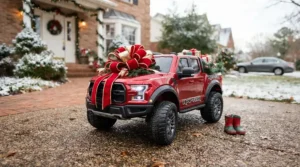
There’s a reason this one keeps topping buying guides: it doesn’t cut corners on the details that actually matter once a kid’s been driving it for a month straight. The licensed Ford Raptor bodywork isn’t just a sticker job — reviewers repeatedly point to the aggressive grille and trim as noticeably more accurate than off-brand lookalikes, and that authenticity is exactly what a truck-obsessed 7-year-old notices first.
Under the hood, this one is built for stamina. A roughly 110-minute runtime per charge is well above the 40-80 minute range typical of budget 24V trucks, which in practice means fewer “wait, it’s charging” disappointments on a Saturday afternoon. Comprehensive safety features — think seatbelt, parental remote, and speed limiting — round out the package, which matters more here than on a toy this expensive.
Reviewers consistently note that the realistic engine sound and working headlights add a level of immersion that keeps kids engaged well past the first-week novelty. If you’ve got a kid who treats every ride like a mission, not just a lap around the driveway, this is the truck that keeps up with the imagination. The trade-off is price — this sits at the premium end, so budget-focused families should weigh whether the extra runtime and licensing justify the cost, or whether the Kid Trax Ram 3500 Dually below gets close enough for less.
Pros:
- ✅ Roughly 110-minute runtime beats most 24V competitors
- ✅ Officially licensed Ford Raptor styling and trim
- ✅ Strong parental safety features included standard
Cons:
- ❌ Premium pricing compared to unlicensed alternatives
- ❌ Single-seat only, no sibling-sharing option
Price range: check current price, typically toward the higher end of the 24V category — this is the splurge pick, not the stocking stuffer.
2. Kid Trax Ram 3500 Dually — most functional play features on a budget
This is the truck that other reviewers use as the benchmark, and once you read enough parent feedback, it’s easy to see why. One reviewer who weighs 265 pounds stood in it just to test the frame and reported good tread design on traction strips, thick plastic body and parts, and a metal frame unlike others, with no bending or flexing under weight it was never designed to carry. That’s the kind of durability signal you don’t get from a spec sheet.
The manual dump bed and tailgate that actually opens turn this from “vehicle” into “vehicle plus construction toy,” and the turbo diesel engine sound effect plus working LED headlights and a lighted rear roll bar give it genuine after-dark appeal in the driveway. It runs 12V rather than 24V, topping out around 2.5 mph in normal mode with a 5 mph option for confident drivers — plenty for a 7-year-old who isn’t chasing speed records, just backyard laps.
The honest catch, and it shows up again and again in review threads: battery reliability complaints. One buyer reported the toy had a battery issue since the day they got it, and the manufacturer took time to resolve the replacement. It’s not universal, but it’s common enough to flag. Assembly is also a two-person job on this model, and doors can be stiff for smaller hands to open.
Pros:
- ✅ Metal frame holds up under serious weight and rough play
- ✅ Working dump bed, tailgate, and lighted roll bar
- ✅ Realistic engine sound and headlight details
Cons:
- ❌ Some units report early battery reliability issues
- ❌ Assembly is time-consuming and needs two adults
Price range: mid-to-budget, often the best value entry point into the 24V-style feature set at a 12V price.
3. ANPABO 24V Dump Truck — unique for the kid who wants to work, not just drive
Most ride-on trucks fake construction-vehicle energy with stickers. This one actually delivers a functional electric dump bed, which shifts the whole play pattern from “drive around” to “haul dirt, rocks, and whatever else fits.” It offers unmatched value with its unique electric dump bed and EVA tires compared to competitors in its price bracket, and that dump-bed mechanism alone justifies a look for kids whose favorite backyard activity already involves moving stuff from point A to point B.
The EVA foam tires trade a bit of top-speed traction for quieter rolling and better puncture resistance than air-filled alternatives — a sensible swap for a truck that’s going to spend real time on gravel and mulch. Based on the spec comparison against other budget 24V trucks in this guide, the ANPABO earns its spot specifically because it does one thing (functional hauling play) that none of the others attempt, rather than trying to out-spec the premium picks on speed or runtime.
Reviewers researching this category flag it repeatedly as the value pick for construction-themed play, though detailed independent long-term reviews are thinner here than for the more established Kid Trax and Ford-licensed models, so treat the durability picture as promising but less battle-tested.
Pros:
- ✅ Genuinely functional electric dump bed for hauling play
- ✅ EVA tires resist punctures better than air-filled tires
- ✅ Strong value relative to feature set
Cons:
- ❌ Less independent long-term review data than category leaders
- ❌ Dump-bed mechanism adds another part that can wear out
Price range: budget-to-mid, positioned as the value pick for construction-themed play.
4. ENYOPRO Bronco Raptor — the pick for two kids who refuse to take turns
If your household runs on the “but I want to drive too” negotiation, this two-seater ends the argument. A 24-volt 7Ah battery and dual 90-watt motors deliver up to 4.4 mph with three speed settings and 1 to 2 hours of run time per charge, which is genuinely competitive runtime for a truck hauling double the weight of a single-seater.
What most buyers overlook about two-seat ride-ons is how much the seat design matters, and this one gets it right: the cab is genuinely roomy, with a 21-inch dual seat and an independent 3-point harness for each rider, plus lockable doors, supporting combined riders up to 132 pounds. Anti-skid PP tires and a metal spring suspension smooth out sidewalks, grass, and gravel, and parents get a genuine safety net — a parent can take over with the remote, which overrides manual input and includes an emergency brake.
Ages 3 to 8 are covered, and LED lights, a horn, engine sounds, and Bluetooth music fill out the experience, though assembly takes some time, as with most two-seaters. Budget an evening, not twenty minutes, for setup.
Pros:
- ✅ Independent 3-point harnesses for two full-size riders
- ✅ Remote override with emergency brake for parents
- ✅ Metal spring suspension smooths rough backyard terrain
Cons:
- ❌ Assembly is genuinely lengthy, plan ahead
- ❌ Bulkier footprint needs more garage/storage space
Price range: mid-to-premium, priced in line with its two-seat capacity and dual-motor system.
5. Track Seven 24V Truck — the budget two-seater with real elbow room
Two-seaters usually mean two cramped kids fighting for space. This one addresses that directly: the spacious 20.4-inch seat provides plenty of space for two children up to 4 years old or one 3-8 years old, so a 7-year-old rider actually gets stretch-out room rather than a shared bucket seat.
Power comes from an updated rechargeable 24V 7Ah battery with a speed range of 3.72–6.21 mph and roughly 60-80 minutes of runtime per charge. That top speed is genuinely quick for the category — noticeably faster than most 24V trucks capping out closer to 4-4.5 mph — which is a real perk for a confident 7-year-old but a reason to supervise closely with younger siblings aboard. Reviewers researching this segment consistently place it in the budget-two-seater tier, meaning you get 2-seat capacity and Bluetooth without paying premium-brand pricing.
Here’s what the spec sheet won’t tell you outright: a 66-pound weight capacity is on the lower end for a “big kid” truck, so a heavier 7-year-old riding solo with gear in the truck bed could approach that limit faster than expected. Worth checking against your specific kid’s weight before assuming this fits long-term.
Pros:
- ✅ Wide 20.4-inch seat feels genuinely roomy
- ✅ Top speed up to 6.21 mph, quicker than most rivals
- ✅ Bluetooth and power display add engagement
Cons:
- ❌ 66-lb weight capacity is modest for the age range
- ❌ Runtime shorter than premium 24V competitors
Price range: budget, one of the more affordable genuine 24V two-seaters available.

6. Okybaby 24V Truck — the working-lights specialist
For families specifically hunting a ride-on truck with working lights for kids, this is the model built around exactly that feature. It features unique LED headlights for high brightness and strong penetration, alongside brightly colored rear searchlights for distinctive light and shadow effects — a genuinely more elaborate lighting rig than the single-bulb headlights most competitors offer.
Beyond the lights, it’s equipped with 400W motors and four-wheel suspension, offering a stable and comfortable ride across various terrains, and provides both manual driving and a parental remote control with three speed options from 1.86 to 4.35 mph for children aged 3-8. The 20-inch wide two-seater configuration lets children share the driving experience with a friend, and built-in music with Bluetooth connectivity and USB support round out the entertainment side.
Based on the spec comparison, the lighting system here isn’t just cosmetic — brighter, more distinctive light output means more usable dusk and early-evening play sessions, which matters if your neighborhood’s golden hour is prime backyard time. The trade-off is that four-wheel suspension and dual lighting add weight and moving parts, both of which tend to mean more to inspect during routine maintenance.
Pros:
- ✅ Genuinely bright dual LED headlight and taillight setup
- ✅ Four-wheel suspension smooths bumps and uneven ground
- ✅ Three parent-adjustable speed settings for growing confidence
Cons:
- ❌ Extra lighting hardware means more parts to maintain
- ❌ Less brand history than Kid Trax or Ford-licensed lines
Price range: mid-range, positioned squarely against other feature-rich 24V two-seaters.
7. Wisairt Chevrolet Cheyenne — the classic pickup look for big kids
Not every kid wants a raptor or an off-roader — some just want a plain, handsome pickup truck, and that’s this model’s whole pitch. It’s explicitly marketed as a ride on truck for big kids ages 3-8, and the Chevrolet Cheyenne styling leans into classic American pickup lines rather than the aggressive off-road aesthetic common elsewhere in this list.
As a 24V two-seater with remote control, it slots into the same general capability tier as the Track Seven and Okybaby models — Bluetooth, LED lighting, and parent override are standard fare at this price point, and the appeal here is really about the styling and brand recognition rather than any single standout spec. Here’s what most buyers overlook: for a kid who already loves real pickup trucks (as opposed to monster trucks or off-roaders), matching the ride-on to a familiar, real-world silhouette can matter more to daily enjoyment than an extra half-mile-per-hour of top speed.
Detailed independent long-term review data on this specific model is thinner than for the Kid Trax or Ford-licensed options, so treat build-quality claims with the honest caveat that most available feedback so far is early and generalized rather than deeply tested over a full season.
Pros:
- ✅ Classic pickup styling appeals to traditional-truck fans
- ✅ Standard 24V two-seat feature set (Bluetooth, remote, LED lights)
- ✅ Wide 3-8 age range for multi-year use
Cons:
- ❌ Fewer standout spec features versus category leaders
- ❌ Limited independent long-term review history so far
Price range: mid-range, comparable to other branded 24V two-seat trucks.
Setting Up for Success: Your First 30 Days
Getting a new ride-on truck for 7 year old boy shoppers just unboxed running smoothly starts before the first drive. Most 24V trucks arrive partially disassembled — expect to attach the roll bar, mirrors, steering wheel, and sometimes the seat itself. Budget a full hour, not fifteen minutes, and keep the included tools handy; reviewers across nearly every model in this guide mention assembly taking longer than the box suggests.
Charge fully before the first drive, even if the battery shows partial charge out of the box — most manufacturers recommend an initial 8-12 hour charge to properly condition a fresh battery, and skipping this step is one of the most common reasons batteries underperform early. After that, avoid the temptation to leave the truck plugged in indefinitely; overcharging is a real contributor to reduced battery lifespan over time, so unplug once the charge indicator confirms completion.
In the first 30 days, watch for three things: door and hood latches loosening from repeated slamming (a quick screwdriver check every couple of weeks prevents rattles turning into breaks), tire pressure or tread wear if the truck sees gravel or asphalt regularly, and — critically — teaching the “off” switch before the “go” pedal. A truck that’s easy to stop is a truck a 7-year-old can drive confidently, and confidence is what turns a ride-on truck for backyard play into the thing they actually choose over a tablet. There’s real value in that trade: outdoor active play supports both physical development and mood, and outdoor play is associated with measurable stress reduction within minutes of being outside, benefits a truck sitting unused in the garage can’t deliver.
Real Kids, Real Backyards: Matching the Right Truck to Your Kid
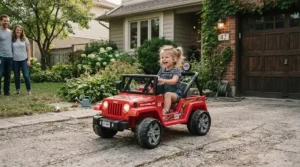
Consider a suburban 7-year-old with a flat, paved driveway and one sibling who’s always begging to tag along — that household’s best fit is almost certainly a two-seater like the ENYOPRO Bronco Raptor or Track Seven 24V Truck, where the wider seat and dual-harness setup mean nobody’s left standing on the curb.
Now picture a kid on a half-acre property with slopes, mulch beds, and a mild obsession with digging — that’s the ANPABO 24V Dump Truck scenario, where the functional dump bed turns “backyard play” into actual work-simulation, and the EVA tires shrug off gravel that would chew up standard rubber.
And then there’s the kid who wants speed, realism, and the neighborhood’s most envied truck in the driveway — that’s the First Ride On Ford F-150 Raptor territory, where the licensed styling and extended runtime justify a bigger spend because the kid will genuinely use every minute of that 110-minute charge. Matching truck to terrain and temperament, more than matching truck to price tag alone, is what determines whether a ride-on truck for 7 year old boy purchases becomes a summer-long obsession or a garage ornament by August.
How to Choose a Ride-On Truck for a 7 Year Old Boy
What is a ride-on truck for a 7 year old? It’s a battery-powered vehicle, typically 12V-24V, styled like a real pickup or off-roader, built to carry a child weighing up to roughly 130 pounds at speeds of 2-6 mph across yards, driveways, and light off-road terrain.
Picking the right one comes down to a handful of concrete factors, not marketing copy:
- Battery voltage — 12V suits lighter, younger riders on flat ground; 24V handles hills, two-seaters, and heavier kids with more consistent power.
- Weight capacity — check it against your child’s current weight plus growing room, since 7-year-olds vary widely in size.
- Seating configuration — one seat keeps things simple and affordable; two seats end sibling arguments but cost more and take longer to assemble.
- Terrain match — smooth driveways tolerate basic tires; grass, gravel, or slopes need real suspension and tougher tread.
- Safety features — parental remote override, seatbelts, and speed-limiting settings matter more as top speed climbs past 4 mph.
- Runtime versus charge time — an hour of play per 8-12 hour charge is standard; anything shorter means more downtime between sessions.
- Feature extras — working lights, Bluetooth, and horn add genuine engagement, but shouldn’t outweigh core build quality in your decision.
Truck-Style vs Sports-Car-Style Bodies: Which Fits Your Kid?
This is a debate that comes up constantly among parents comparing options, and the truck-style vs sports-car-style bodies question really comes down to how your kid plays, not just what looks cooler in photos. Truck-style bodies — like every model in this guide — sit higher, ride on a longer wheelbase, and generally offer more cargo or dump-bed functionality, which translates to better stability on grass and gravel and a lower center-of-gravity feel that’s genuinely more forgiving for a still-developing sense of balance.
Sports-car-style ride-ons, by contrast, tend to sit lower and narrower, prioritizing a sleek profile over payload or ground clearance. What most buyers overlook about that trade-off: a lower profile can mean a bumpier ride on uneven yards, since there’s less suspension travel to absorb dips and rocks. For a 7-year-old who mostly drives on grass, mulch, or gravel — rather than a smooth garage floor or sidewalk — the truck body’s practical advantages usually win out.
There’s also the imaginative-play angle worth weighing honestly: a truck invites hauling, “working,” and construction-themed play in a way a sports car simply doesn’t, which is exactly why the ANPABO 24V Dump Truck‘s functional bed stands out in this lineup. If your kid’s fantasy is racing, not hauling, a sports-car-style body might better match the daydream — but for backyard versatility and rough-terrain resilience, truck styling remains the safer bet for most families.
Working Headlights and Taillights: Why This Feature Matters
It’s easy to write off working headlight/taillight features as a gimmick, but the practical case for them is stronger than it looks. Dusk and early-evening hours are prime backyard play time in spring and fall, when daylight fades before dinner — and a truck with genuinely bright LEDs, like the Okybaby 24V Truck‘s dual headlight-and-rear-searchlight setup, simply gets more usable hours out of every day than one without.
There’s also a real safety angle beyond aesthetics: working taillights make a moving ride-on truck more visible to other kids, pets, and adults navigating a shared driveway or yard after sunset, reducing the odds of a surprise collision in low light. Reviewers consistently note that lighting quality varies dramatically between models — some “LED headlights” amount to a dim, single bulb, while others genuinely illuminate the ground ahead. If working lights are a priority for your search, prioritize models with explicit lighting specs over vague marketing language like “LED accents,” since that phrasing often signals decorative rather than functional lighting.

Common Mistakes When Buying a Ride-On Truck
Even careful shoppers trip over the same handful of pitfalls repeatedly. First, buying based on top speed alone — a 6 mph truck sounds exciting until you realize your driveway is thirty feet long and most play happens well under max speed anyway. Second, ignoring weight capacity margins; a 66-pound limit on a truck for a growing 7-year-old leaves little runway before an upgrade becomes necessary.
Third, underestimating assembly time — nearly every model in this guide takes longer to build than the box photos suggest, and rushing it risks misaligned doors or loose panels down the line. Fourth, skipping the ASTM F963 toy safety standard check entirely; not every listing clearly states compliance, and it’s worth confirming before checkout rather than after a return request. Finally, choosing styling over terrain fit — a sleek single-seater bought for a rocky, sloped backyard is a recipe for a truck that spends more time stuck than driven.
Long-Term Cost & Maintenance
The sticker price is only part of the total cost of ownership here. Replacement batteries, typically needed every one to three years depending on usage and charging habits, run a meaningful chunk of the original purchase price on their own — something worth factoring in before assuming a budget truck stays budget-friendly long-term. Tires, especially air-filled ones on gravel-heavy properties, may need replacement faster than EVA foam alternatives like those on the ANPABO 24V Dump Truck.
On a cost-per-use basis, a truck that survives two or three summers of near-daily play, like the well-reviewed Kid Trax Ram 3500 Dually, often out-values a cheaper model that needs battery or motor repairs within the first year. Basic maintenance — wiping down after muddy play, checking latch hardware monthly, and storing indoors or under cover between seasons — extends lifespan meaningfully and costs nothing but a few minutes.
Safety, Weight Limits and Regulations You Should Know
All the trucks in this guide should meet the ASTM F963 consumer safety specification for toy safety, which is mandatory under U.S. federal law for toys sold domestically and covers everything from battery safety to sharp-edge and flammability requirements. Battery-powered ride-on toys specifically fall under additional performance requirements that the Consumer Product Safety Commission has worked with ASTM to develop over the years, covering everything from motor stall fire risk to charger safety.
Practically, that means confirming a listing states ASTM F963 compliance, sticking to the manufacturer’s stated age range and weight capacity rather than assuming a bigger kid will simply “grow into” a truck safely, and always using the included charger rather than a mismatched aftermarket one, since voltage mismatches can stress motors and electronics. Supervision remains non-negotiable for 7-year-olds, particularly near driveways, streets, or pools — even a slow-moving truck can surprise a distracted adult.
Birthday Gift Ride-On Trucks: Timing and Surprise Tips
Ride-on trucks make genuinely memorable birthday gift ride-on trucks precisely because they’re rideable the same day — no waiting, no “we’ll set it up later.” That said, the assembly-time reality means gift-givers should build in prep time: unbox and assemble the night before, charge fully, and stage it in the garage rather than attempting a same-morning surprise reveal that risks a half-built truck and a disappointed kid.
For maximum surprise impact, skip the wrapping paper entirely — a big bow on the hood or a ribbon across the windshield reads as “surprise” without the awkwardness of unwrapping something the size of a coffee table. If budget allows, pairing the truck with a small helmet or a “license plate” with the birthday kid’s name adds a personal touch that costs little but photographs well for years afterward.

Frequently Asked Questions
❓ How fast do ride-on trucks go for a 7 year old?
❓ Is 12V or 24V better for a 7 year old boy?
❓ How long does the battery last on a ride-on truck?
❓ Are ride-on trucks safe for 7 year olds?
❓ What weight limit should I look for in a ride-on truck?
Conclusion
A ride-on truck for 7 year old boy shoppers ultimately pick should match three things: your kid’s actual terrain, how many riders need seats, and how much runway you want before an upgrade. The First Ride On Ford F-150 Raptor rewards families willing to spend more for realism and stamina; the Kid Trax Ram 3500 Dually proves a well-loved 12V classic still earns its spot on value alone; and the Okybaby 24V Truck solves specifically for families chasing genuine working lights.
Whichever you choose, the real win isn’t the truck itself — it’s the hours of backyard laps, imaginary deliveries, and “one more drive before dinner” pleading that follow. That’s worth more than any spec sheet number.
✨ Ready to pick the winner for your driveway? Compare current prices on today’s top pick and get your kid behind the wheel this weekend! 🚛💨
Recommended for You
- 7 Best High Speed Ride-On Car For Kids Picks (2026 Guide)
- Two-Seater Ride-On Car For Siblings: 7 Best Picks For 2026
- Affordable 24V Ride-On Car for Big Kids: 7 Picks That Won’t Quit (2026)
Disclaimer: This article contains affiliate links. As an Amazon Associate, I earn from qualifying purchases. If you purchase products through these links, we may earn a small commission at no additional cost to you.
✨ Found this helpful? Share it with your friends! 💬🤗
