

In This Article
Somewhere between the toddler push-car phase and the “can I have a real dirt bike” phase sits a tricky window: kids who are too big for the flimsy 12V models but not quite ready for anything with an actual engine. That’s exactly where the 36V vs 24V ride-on car for older kids question starts mattering. Pick too weak a motor and your kid outgrows it by summer’s end. Pick too much power without the skill to match, and you’ve got a nine-year-old learning throttle control the hard way, on gravel.
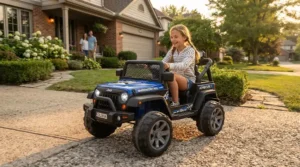
A 36V vs 24V ride-on car for older kids isn’t really a coin flip — the two voltage classes serve genuinely different riders. 24V ride-on cars top out around 8-12 mph and suit kids roughly 5 to 10 who are graduating from beginner models but still need predictable, controllable power. 36V systems push into 8-15 mph territory with dual motors, real hill-climbing torque, and longer runtime — built for confident preteens who’ve already logged serious seat time. Both come loaded with LED lights, Bluetooth speakers, and the kind of styling that makes driveways look like tiny car shows.
Below, you’ll find seven real, currently available models spanning budget to premium, honest analysis of what voltage actually buys you in performance and durability, and a decision framework so you’re not just guessing based on a big number on the box. Understanding the toy-safety standards these vehicles are built to — ASTM F963 as enforced by the Consumer Product Safety Commission — is also worth a few minutes before you buy, since it explains why stability and battery labeling requirements differ so much between price tiers.
Quick Comparison: 36V vs 24V Ride-On Cars at a Glance
| Model | Voltage | Top Speed | Best For |
|---|---|---|---|
| TOBBI 24V Electric Ride-On Tank Car | 24V | ~5-6 mph | Budget-conscious families, ages 5-8 |
| Razor Ground Force Drifter 24V Go-Kart | 24V | Up to 12 mph | Drift-loving kids, ages 8+ |
| Peg Perego Polaris Sportsman 850 24V | 24V | ~6-7 mph | Premium realism, off-road styling |
| iYofe 36V Electric Ride-On UTV | 36V | Up to 8.7 mph | Budget 36V, two riders |
| First Ride On 36V 2-Seater UTV | 36V | 5-8 mph | Mid-range dual-motor torque |
| Freddo 36V Electric Dirt Bike | 36V | Brushless, trail-rated | Off-road, single-rider thrill |
| Razor Pocket Mod Betty | 36V | Up to 14-15 mph | Skilled preteens, ages 13+ |
A quick read on the numbers: voltage alone doesn’t tell the whole story — motor wattage and whether the setup uses one or two motors matter just as much as the battery rating. The Razor Ground Force Drifter 24V Go-Kart, for instance, out-speeds several 36V UTVs on this list because its single motor is tuned purely for velocity rather than torque and towing two seats. Meanwhile, the First Ride On 36V 2-Seater UTV trades outright speed for climbing power and passenger capacity, which matters more if your kid is hauling a sibling or a friend around the yard.
💬 Already have a favorite? Skip ahead — or keep reading, because the “best for” column only tells half the story.
Top 7 36V vs 24V Ride-On Cars for Older Kids: Expert Analysis
1. TOBBI 24V Electric Ride-On Tank Car — all-terrain tracks on a budget
Tank-style tracks instead of wheels sound like a gimmick until you watch one crawl over a garden hose without stalling. That’s the standout here, and it’s a genuinely unusual feature at this price point.
The dual-motor 24V system is built for grass, gravel, and light dirt rather than pavement speed, and reviewers consistently note it handles bumpy backyard terrain that stops wheeled 24V models cold. Top speed sits in the modest 5-6 mph range — plenty for a kid who’s still building spatial judgment but wants something more capable than a plastic wheeled toy.
Based on the spec comparison against other entry-level 24V models, the tank tracks are the real differentiator: most competitors at this price still use basic rubber tires that spin out on loose gravel. This is the pick for parents who want their kid exploring uneven yard terrain without upgrading all the way to a 36V UTV. Aggregated buyer feedback on similar TOBBI all-terrain models skews positive on durability and build quality, with the most common complaint being slower top-end speed compared to wheeled alternatives — which, for a first “big kid” ride-on, is arguably a feature, not a bug.
Pros:
- ✅ Tank tracks handle terrain wheeled 24V models can’t
- ✅ Dual-motor setup adds real climbing torque
- ✅ Lower price point than most 36V alternatives
Cons:
- ❌ Top speed feels slow to kids used to 36V power
- ❌ Tracks add rolling resistance on smooth pavement
At around $250-$300, the TOBBI 24V Electric Ride-On Tank Car is a smart entry point if your priority is terrain capability over raw speed — check current price before buying since availability shifts seasonally.

2. Razor Ground Force Drifter 24V Go-Kart — sideways fun at up to 12 mph
Most 24V ride-ons are built to go straight. This one is built to slide, and that single design choice changes the entire experience.
Powered by a 24V system rated for up to 12 mph, the Razor Ground Force Drifter 24V Go-Kart uses a rear-wheel drift mechanism that lets kids intentionally break traction and spin out — under control, on grass or a driveway. What most buyers overlook about this model is that the drift function actually teaches genuine steering correction skills, which makes it a surprisingly good stepping stone toward higher-voltage machines later.
This is squarely a mid-range pick for kids ages 8 and up who’ve already mastered a slower ride-on and want something with real handling dynamics. Aggregated review sentiment across Razor’s go-kart line consistently praises the drift bar’s tactile feedback, while a recurring complaint involves tire wear from repeated drift sessions — an expected trade-off for a vehicle designed around sliding.
Pros:
- ✅ Genuine drift mechanic teaches steering control
- ✅ 12 mph top speed rivals some 36V models
- ✅ Reinforced steel frame built for rough play
Cons:
- ❌ Rear tires wear faster from intentional drifting
- ❌ Single-rider only, no passenger seat option
Priced in the $300-$400 range, the Razor Ground Force Drifter 24V Go-Kart delivers speed and skill-building that punches above its voltage class — a strong value pick for confident 24V riders.
3. Peg Perego Polaris Sportsman 850 24V — premium build, licensed realism
Officially licensed Polaris styling means this one looks like a shrunk-down real ATV rather than a toy-aisle knockoff, and the build quality backs that impression up.
The 24V system here prioritizes torque and low-end control over top speed, topping out around 6-7 mph — deliberately conservative given the vehicle’s higher-end market. Here’s what to weigh: Peg Perego consistently uses more robust plastics and metal reinforcement than typical big-box 24V models, and that shows up in aggregated review sentiment as praise for longevity, with families reporting years of use rather than a single season.
This is the pick for parents who want premium fit-and-finish and realistic styling over sheer velocity — think of it as the “does everything a little better” option rather than the fastest one on this list. The spec sheet won’t tell you this, but reviewers note the working horn, real-feel dashboard, and working shocks matter more to younger preteens’ enjoyment than an extra couple of mph.
Pros:
- ✅ Licensed Polaris styling with authentic detailing
- ✅ Reinforced build known for multi-year durability
- ✅ Working suspension improves ride comfort on grass
Cons:
- ❌ Premium price relative to top speed delivered
- ❌ Slower than several similarly priced 36V rivals
Expect to pay in the $400-$500 range for the Peg Perego Polaris Sportsman 850 24V — a solid choice when build quality and brand trust outweigh chasing top speed.
4. iYofe 36V Electric Ride-On UTV — the affordable entry into 36V power
Stepping up to 36V doesn’t have to mean a premium price tag, and this model proves it — it’s one of the more accessible ways into dual-motor territory.
Reaching a top speed of up to 8.7 mph via a 36V 9Ah battery, the iYofe 36V Electric Ride-On UTV delivers a meaningful jump over most 24V competitors while still landing in budget-friendly pricing. Based on the spec comparison, the rear-wheel spring suspension is the standout addition here — it’s a feature typically reserved for pricier UTVs, and it noticeably smooths out backyard bumps that would otherwise jolt a rigid-frame ride-on.
This is the pick for families upgrading from a worn-out 24V model who want more speed and two-seat capacity without jumping to premium pricing. Aggregated customer sentiment on similar iYofe UTVs points to strong value for money, with a recurring theme being that assembly, while straightforward, takes longer than advertised — budget an extra 30-45 minutes beyond the listed time.
Pros:
- ✅ Meaningful speed jump over budget 24V models
- ✅ Rear spring suspension rare at this price
- ✅ Two-seat capacity for siblings or friends
Cons:
- ❌ Assembly commonly takes longer than stated
- ❌ Bluetooth speaker quality is a step below premium models
At a price typically in the $300-$350 range, the iYofe 36V Electric Ride-On UTV is the value pick for anyone testing whether 36V is worth the jump.
5. First Ride On 36V 2-Seater UTV — dual motors built for real off-road climbing
If your backyard has actual hills, gravel, or dirt trails, this is the model on this list built specifically to handle them.
Equipped with dual 200W motors on a 36V 9Ah battery, the First Ride On 36V 2-Seater UTV is rated for 5-8 mph but the number that matters more is climbing ability — reviewers consistently note it handles inclines that stall single-motor UTVs. What most buyers overlook about dual-motor setups like this one is that the second motor isn’t primarily about speed; it’s about maintaining torque when one wheel loses traction, which matters enormously on grass or loose dirt.
This is squarely the pick for active kids ages 6 and up who’ll be riding on genuinely uneven ground rather than a flat driveway, and its 130-lb weight capacity means it has real growing room — a preteen won’t outgrow this one in a single season. The 14-inch EVA tires and reinforced metal chassis add durability most plastic-tired competitors can’t match, according to aggregated buyer feedback on similar dual-motor UTVs in this category.
Pros:
- ✅ Dual motors maintain torque on hills and loose terrain
- ✅ 130-lb capacity gives real multi-year growing room
- ✅ Reinforced metal chassis outlasts plastic-framed rivals
Cons:
- ❌ Top speed is modest relative to premium 36V models
- ❌ Larger footprint needs more storage space
Priced around $400-$450, the First Ride On 36V 2-Seater UTV earns its spot as the mid-range workhorse for genuinely rough terrain.
6. Freddo 36V Electric Dirt Bike — brushless power for solo trail riders
Two wheels instead of four changes everything about how a ride-on feels, and the brushless motor on this one is the detail serious buyers should pay attention to.
Freddo’s 36V dirt bike uses a brushless motor, which — unlike the brushed motors in most budget ride-ons — runs cooler, lasts longer under sustained load, and needs less maintenance over time. Motor durability at higher voltage is genuinely a bigger deal on two-wheeled models than four-wheeled UTVs, since there’s no second motor to share the load, and a brushless design here is what prevents premature burnout during long trail sessions.
This is the pick for a single confident rider who’s outgrown four-wheeled ride-ons and wants something closer to an actual dirt bike experience, balance and all. It’s not for a first-time 36V rider — the two-wheel format demands more physical coordination than any UTV on this list, so age alone isn’t the right filter here; riding experience is.
Pros:
- ✅ Brushless motor resists burnout on long rides
- ✅ Two-wheel format builds real balance and coordination
- ✅ Off-road tires handle trail-style terrain
Cons:
- ❌ Requires more riding skill than four-wheeled options
- ❌ Not suitable as a first powered ride-on
Expect a price in the $350-$450 range for the Freddo 36V Electric Dirt Bike, a strong pick once your kid has genuine ride-on experience under their belt.
7. Razor Pocket Mod Betty — the top-end pick for skilled preteens
This is the ceiling of what belongs on a “ride-on toy” list before you’re really shopping for an electric scooter or mini-bike instead.
Rated for ages 13+ with a top speed up to 14-15 mph and a 170-lb weight capacity, the Razor Pocket Mod Betty uses a 36V system with variable speed control rather than a single fixed top end — a meaningful safety feature that lets parents and riders dial back power while skills develop. Based on the spec comparison against everything else on this list, this is the only model genuinely built for teens rather than “big kids,” both in size and in the maturity its speed demands.
Here’s what to weigh: at 14-15 mph, stopping distance and reaction time matter far more than at 6-8 mph, so this pick assumes a rider who already has real experience on slower 36V or high-end 24V machines. Aggregated review sentiment on Razor’s Pocket Mod line highlights the retro scooter styling and smooth acceleration curve as standouts, with battery range under sustained high-speed use flagged as the most common limitation.
Pros:
- ✅ Variable speed control eases the power in gradually
- ✅ Highest weight capacity of any model on this list
- ✅ Retro styling with genuine scooter-like handling
Cons:
- ❌ Battery range drops noticeably at sustained top speed
- ❌ Speed and size make it unsuitable for younger siblings
Typically priced in the $400-$550 range, the Razor Pocket Mod Betty is the premium pick for a genuinely experienced preteen or young teen rider — not a first 36V car.
Setting Up and Maintaining Your New Ride-On: The First 30 Days
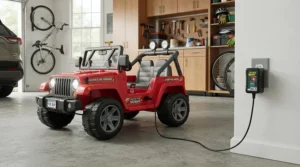
Getting the vehicle out of the box is the easy part; the first month is where most ride-on problems actually get created. Before the first ride, fully charge the battery per the manufacturer’s schedule — most 24V and 36V models need 8-12 hours on that initial charge, and cutting it short shortens the battery’s total lifespan measurably.
During week one, check every bolt after the first two or three rides. Vibration loosens fasteners faster than most parents expect, especially on models like the First Ride On 36V 2-Seater UTV with dual motors generating more torque-induced shake. Keep tire pressure (on models with inflatable tires) consistent, since underinflation is a common hidden cause of reduced range and sluggish acceleration that gets blamed on the battery instead.
A common first-30-days mistake: letting the battery drain to zero repeatedly. Lithium and sealed lead-acid batteries both prefer partial-discharge cycles, so charging after each ride rather than waiting for a full drain will noticeably extend the pack’s working life — often by a full season or more, based on general battery-care guidance from ride-on manufacturers.
Which Voltage Fits Your Kid? Three Real-World Rider Profiles
The cautious 6-year-old outgrowing a 12V car. Budget: modest. Environment: flat driveway and backyard. Frequency: a few rides a week. A model like the TOBBI 24V Electric Ride-On Tank Car is the right call — enough speed to feel like an upgrade, low enough top-end that steering mistakes stay low-consequence.
The active 8-year-old with a big, uneven yard. Budget: mid-range. Environment: grass, mild slopes, loose dirt. Frequency: daily in good weather. This is where a dual-motor 36V UTV like the First Ride On 36V 2-Seater UTV earns its price — the torque handles terrain a 24V single-motor system would bog down in, and the two-seat layout means siblings share instead of squabble.
The experienced 12-year-old who’s been riding ride-ons for years. Budget: higher, but justified by longevity. Environment: mixed pavement and trail, potentially with friends nearby. Frequency: frequent, high-intent use. The Razor Pocket Mod Betty or Freddo 36V Electric Dirt Bike fit here — both assume riding competence the younger profiles above simply haven’t built yet.
✨ Don’t Miss These Exclusive Deals!
🔍 Take your search for the perfect ride-on to the next level — click any highlighted model above to check current pricing and availability. These picks are built to create the backyard adventures your family will love for seasons to come!
How to Choose Between 36V and 24V: 7 Steps
Choosing between the two voltage classes comes down to matching power to readiness, not chasing the bigger number. Here’s the practical framework:
- Start with your child’s current riding experience, not their age alone — a confident 7-year-old can outride a hesitant 10-year-old.
- Check the weight limit against your child’s current and near-future weight, since 36V models generally support 130-176 lbs versus roughly 90-130 lbs on most 24V models.
- Match terrain to motor count — single-motor systems (common on many 24V models) suit flat ground, while dual-motor 36V setups handle grass, dirt, and mild inclines far better.
- Consider passenger needs — several 36V UTVs on this list support two seats, which matters if siblings will fight over a single-rider car.
- Factor in supervision level — 36V’s higher top speeds (up to 14-15 mph on some models) demand more active supervision than 24V’s gentler 5-12 mph range.
- Weigh runtime against your yard size — larger 36V battery packs generally deliver longer sessions, which matters more on bigger properties.
- Budget for the whole voltage class, not just one model — 36V options span from budget ($300) to premium ($550), so don’t assume voltage alone dictates price.
What Is a 36V vs 24V Ride-On Car?
A 36V ride-on car uses a higher-capacity battery system — often paired with dual motors — to deliver higher top speeds (roughly 5-15 mph), stronger climbing torque, and longer runtime than 24V models, which typically top out between 5-12 mph on single or dual motors with lighter-duty components, better suited to younger or less-experienced riders…
Common Mistakes When Buying a 36V or 24V Ride-On
The single biggest mistake parents make is buying strictly by age-range labels rather than actual skill and terrain. A ten-year-old who’s never driven a powered ride-on before isn’t automatically ready for 36V just because the box says “ages 6-12.” Reviewers consistently flag this mismatch — kids struggling with throttle control on a machine that’s mechanically too capable for their current skill level.
The second common mistake: ignoring weight capacity margins. Buying right at a model’s weight limit means losing acceleration and climbing performance almost immediately, since manufacturers test top-speed figures near the lower end of the supported weight range. Based on the spec comparison across this list, models like the First Ride On 36V 2-Seater UTV with generous 130-lb capacity give more room to grow into than tighter-limit budget options.
A third overlooked issue: assuming higher voltage always means better durability. That’s not automatic — a poorly built 36V model can wear out faster than a well-engineered 24V one. Motor quality, chassis material, and brushless vs. brushed design (see the Freddo 36V Electric Dirt Bike analysis above) matter as much as the voltage rating itself.
Voltage and Top Speed: What the Numbers Actually Mean
It’s tempting to treat voltage as a direct proxy for speed, but the relationship is looser than most product listings suggest. Voltage determines how much electrical potential is available to the motor, but actual top speed depends just as heavily on motor wattage, gear ratios, vehicle weight, and whether power is split across one or two motors.
That’s exactly why the Razor Ground Force Drifter 24V Go-Kart, a single-motor 24V machine, hits 12 mph — faster than several dual-motor 36V UTVs on this list that top out around 8 mph. The go-kart’s motor is tuned purely for speed on a lightweight frame, while UTVs like the iYofe 36V Electric Ride-On UTV distribute power toward torque and stability for two riders instead. Industry guidance generally notes that 24V systems run on dual 12-volt batteries that deliver higher voltage and increased speed than lower-voltage models, making them suited to older or more adventurous kids — but that’s a floor, not a ceiling, since 36V simply extends the same principle further with more headroom for torque and runtime.
For a deeper technical breakdown of how voltage, motor design, and real-world speed interact across the full ride-on market, PowerWheels HQ’s ranking of the fastest ride-on toys is a useful outside reference — it’s medically-adjacent industry testing rather than manufacturer marketing copy, which makes the comparisons more trustworthy.

Motor Durability at Higher Voltage: What Reviewers Report
Higher voltage generally means more torque available at low RPM, which sounds like a pure win — but it also means more mechanical stress on motor windings, bearings, and drivetrain components over time. This is where brushless vs. brushed motor design becomes genuinely important, more so than the voltage number itself.
Brushed motors, common across budget 24V and even many 36V models, wear their internal contact brushes down through friction over hundreds of hours of use — eventually requiring replacement or leading to reduced performance. Brushless motors, like the one in the Freddo 36V Electric Dirt Bike, eliminate that physical contact point entirely, running cooler and typically lasting significantly longer under sustained load, based on the mechanical design difference alone.
Dual-motor setups, common in 36V UTVs like the First Ride On 36V 2-Seater UTV, also tend to show better long-term durability than single-motor equivalents — not because any individual motor is more advanced, but because the load is split, so neither motor works as hard on hills or with two passengers aboard. What most buyers overlook: a well-built 24V single motor can genuinely outlast a poorly cooled, overworked 36V motor, so chassis ventilation and motor housing quality deserve as much attention as the voltage spec on the box.
36V Ride-On Cars for Preteens: Age vs Skill Readiness
Manufacturer age labels are a starting point, not a guarantee of readiness — and this matters more for 36V than almost any other ride-on spec. A 36V ride-on car for a 10-year-old assumes a baseline of throttle control, steering precision, and hazard awareness that not every ten-year-old has actually developed yet, regardless of what the box says.
Older kids hitting backyard grass and rougher terrain are generally better matched to 24V trucks with rubber tires or 36V UTVs, which have the power to keep pace with their independence — but that same source is clear that safety restraints and supervision matter more as speed increases, especially on faster 24V and 36V models. A useful readiness check: has your child already logged consistent, confident time on a slower ride-on without needing constant steering correction? If not, a mid-tier 24V option like the Peg Perego Polaris Sportsman 850 24V is a better bridge than jumping straight to 36V.
Physical size matters too. The Razor Pocket Mod Betty, rated for ages 13+, isn’t just gated by skill — its 170-lb capacity and scooter-style ergonomics genuinely fit a bigger rider better. Putting a smaller, younger kid on a machine sized for a young teen creates control problems that have nothing to do with driving experience at all.
What to Expect: Real-World Performance
Spec sheets rarely match backyard reality, and that gap is worth setting expectations around before you buy. A model rated for “up to 8.7 mph” will rarely hit that number consistently — rider weight, grass length, incline, and battery charge level all shave off real-world speed, sometimes by 15-20%.
Runtime numbers follow a similar pattern. A battery rated for 40-60 minutes of use typically delivers closer to 30-45 minutes of actual active riding once you account for stop-and-start play patterns rather than continuous driving. Budget for a mid-ride recharge break on longer play sessions, particularly with two-seater 36V models carrying extra weight.
Safety, Regulations & Compliance Guide
Every ride-on car sold in the U.S. intended for children 12 and under falls under mandatory federal toy safety requirements. Section 106 of the Consumer Product Safety Improvement Act made ASTM F963 a mandatory consumer product safety standard for children’s toys, codified at 16 C.F.R. part 1250. That standard, first published in 1986 and revised regularly, includes specific test methods covering the stability of ride-on toys along with hazards like heavy metals, flammability, and choking risk.
One nuance worth knowing: while ASTM F963 covers products for children under 14, CPSC’s mandatory third-party testing and certification requirements apply specifically to products designed primarily for kids 12 and under — meaning teen-oriented models like the Razor Pocket Mod Betty sit in a slightly different regulatory category than the six-and-under UTVs on this list, even though reputable manufacturers still test to the same core standard voluntarily.
Beyond federal compliance, practical safety comes down to supervision matched to speed. A 3-point harness is worth prioritizing on faster 24V models, especially for uneven-ground riding, and a parental remote remains invaluable for younger or less experienced drivers who haven’t yet mastered steering. Helmets, while not legally mandated for ride-on toys the way they are for bikes in most states, are a sensible add-on for anything in the 10+ mph range.

Frequently Asked Questions
❓ Is a 36V ride-on car too fast for a 6-year-old?
❓ Can you upgrade a 24V ride-on car to 36V?
❓ How long does a 36V ride-on car battery last per charge?
❓ What's the top speed difference between 24V and 36V ride-on cars?
❓ Do 36V ride-on cars need more maintenance than 24V models?
Conclusion
The honest answer to 36V vs 24V ride-on car for older kids isn’t “36V is always better” — it’s “match the voltage to the kid you actually have, not the one you’re hoping for in a year.” A cautious rider on a 36V UTV they can’t yet control safely is a worse outcome than a confident rider slightly outpacing a 24V model built for younger kids.
If you’re working with a genuinely uneven yard and a kid who’s outgrown gentler ride-ons, the dual-motor torque of a model like the First Ride On 36V 2-Seater UTV earns its price. If speed and skill-building matter more than raw torque, the Razor Ground Force Drifter 24V Go-Kart proves 24V still has real teeth. And if you’re shopping for an experienced preteen who’s genuinely ready for the top end, the Razor Pocket Mod Betty is about as far as “ride-on toy” territory reasonably extends.
Whichever voltage class you land on, prioritize weight capacity headroom, motor durability over marketing claims, and supervision matched to top speed — the fundamentals matter more than the number printed on the box.
Recommended for You
- 7 Best Ride-On Trucks For A 7 Year Old Boy In 2026
- 7 Best High Speed Ride-On Car For Kids Picks (2026 Guide)
- Two-Seater Ride-On Car For Siblings: 7 Best Picks For 2026
Disclaimer: This article contains affiliate links. As an Amazon Associate, I earn from qualifying purchases. If you purchase products through these links, we may earn a small commission at no additional cost to you.
✨ Found this helpful? Share it with your friends! 💬🤗
