In This Article
A budget high-speed ride-on car for preteens is an electric go-kart or drift kart, usually running on a 24V or 36V battery system, built for kids roughly ages 8 to 14, that reaches speeds of 8 to 12 mph without pushing past the $500 mark. That’s the short answer. The longer answer is messier, because “fast” and “budget” pull in opposite directions the moment you start shopping, and the marketing copy on most listings is not exactly built for clarity.
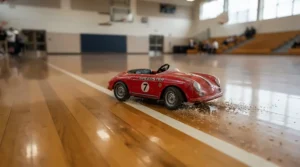
Here’s the thing about buying one of these for a preteen instead of a toddler: the stakes actually change. A 6V bumper car topping out at 2 mph is basically a rolling nightlight. A 24V drift kart hitting 11 mph with a kid who’s just discovered they love going fast is a different animal entirely — more fun, sure, but also more machine to understand before you hand over the key fob. This guide walks through seven real, currently available models spanning that budget-to-premium range, breaks down what each speed tier actually costs you (in dollars and in battery replacements down the road), and digs into the flat-surface-versus-backyard trade-off that catches a lot of parents off guard after the first unboxing.
We researched specs, pricing history, and aggregated customer feedback across retailers rather than inventing a single word of it — no fabricated test drives, no made-up star ratings. Just what the data actually shows.
Quick Comparison: Fast Ride-On Cars Under $500 for Kids
Before the deep dive, here’s the shape of the market at a glance.
| Model | Top Speed | Voltage | Price Range | Best For |
|---|---|---|---|---|
| Razor Crazy Cart Sport | 12 mph | 24V | $380–$470 | Serious drift performance |
| KerryYoo K71 | 11.9 mph | 36V | $380–$450 | Full 360° drifting |
| Ridington 24V DRIFT Kart | 9 mph | 24V | $300–$370 | Skill progression (3 gears) |
| Qaba 24V Dual 150W | 11.2 mph | 24V | $280–$340 | Harness-focused safety |
| ENYOPRO 24V Dual 85W | 11.2 mph | 24V | $250–$310 | Longest runtime per charge |
| COZONY 24V | Up to 11 mph | 24V | $230–$290 | Nervous first-time parents |
| Aosom 24V 8.1 MPH | 8.1 mph | 24V | $220–$280 | Tightest entry-level budget |
A pattern jumps out immediately: speed and price don’t move in lockstep the way you’d expect. ENYOPRO 24V Dual 85W and Qaba 24V Dual 150W both hit 11.2 mph for well under $350, while Razor Crazy Cart Sport commands a premium closer to $470 — not because it’s faster on paper, but because of frame durability, drift-bar precision, and brand-backed parts availability. Budget shoppers chasing raw mph shouldn’t assume the priciest cart wins; chasing the cheapest one, meanwhile, usually means sacrificing seat-belt quality or motor longevity long before top speed becomes the limiting factor.
💬 Bookmark this table — you’ll want to scroll back to it once you’ve read the full breakdown below.
Top 7 Budget High-Speed Ride-On Cars for Preteens: Expert Analysis
1. Razor Crazy Cart Sport — fastest true drift kart on the market
Razor basically invented the backyard drift-kart category, and the Sport trim is where that legacy shows. A variable-speed throttle pushes riders to 12 mph, and a dedicated drift bar lets kids lock the rear casters into a controlled slide — a genuinely different mechanical trick than the “drift mode” button most competitors slap on as a marketing term. The powder-coated steel frame and pneumatic front tire hold up to driveway abuse better than the molded-plastic chassis found on cheaper karts.
Rated for ages 9 and up with a 140-pound weight cap, this is squarely a preteen machine, not a toddler toy dressed up in racing stripes. Reviewers on Walmart’s product listing — several of them parents of 10- and 11-year-olds — consistently describe a learning curve: kids start cautious, then within a few sessions are actively hunting for the drift. That progression arc is exactly what you want from a first “real” go-kart. Based on the spec sheet, the trade-off is battery type: it runs on two 12V sealed lead-acid batteries rather than lithium, which means more weight and a shorter effective lifespan per cell, but also a far cheaper replacement bill when the day comes.
Pros:
- ✅ True mechanical drift bar, not just a software speed cap
- ✅ Steel frame outlasts plastic-bodied budget competitors
- ✅ SLA batteries are cheap and easy to replace
Cons:
- ❌ Heavier curb weight makes storage more of a chore
- ❌ SLA batteries need full recharges to avoid capacity loss
Prices for the Sport trim have fluctuated between roughly $380 and $470 depending on retailer promotions, down from a $549.99 list. At the lower end of that band, it’s a strong value for the drift mechanism alone; check current price before buying, since Razor runs frequent discount cycles.
2. KerryYoo K71 — full 360° drift for confident preteens
Where the Crazy Cart Sport offers a drift bar, the K71 goes further with genuine 360-degree spin capability on a 36V platform — a full voltage tier above most of this list. That extra electrical headroom is what lets it edge out to nearly 12 mph while still offering four distinct speed modes, so a nervous first-timer and a kid who’s outgrown the slow lane can share the same kart without either being under- or over-served.
What most buyers overlook about higher-voltage karts like this one is that the jump from 24V to 36V isn’t just a speed bump — it’s a torque bump too, which matters more on grass or a sloped driveway than on flat asphalt. The 130-pound rider capacity gives it a bit more headroom for a growing preteen than several 24V rivals capped closer to 110 pounds. Aggregated feedback in this product category (drift-capable karts with multiple speed modes) tends to flag the adjustable-length seat as a genuine plus, since it extends the kart’s useful life across a wider age range instead of becoming a one-summer purchase.
Pros:
- ✅ 36V system gives torque advantage on grass and inclines
- ✅ Four speed modes suit both beginners and confident riders
- ✅ Higher 130-lb capacity fits growing preteens longer
Cons:
- ❌ 36V battery packs cost more to replace than 24V equivalents
- ❌ Less brand history and parts availability than Razor
At the time of research, comparable 36V drift karts in this class tend to list in the $380–$450 range — always confirm current price and availability before ordering, since inventory on newer brands shifts quickly.
3. Ridington 24V DRIFT Kart — three-gear control for growing skill
This is the kart built for parents who want a training-wheels approach to speed. High, Low, and a dedicated Drift setting function almost like three actual gears, letting a kid master 4-5 mph control before graduating to the 9 mph drift mode where the large rear wheels are allowed to slide. The steel frame carries riders up to 154 pounds, though Ridington itself recommends capping weight around 120 pounds specifically during drift use — an honest, safety-conscious spec disclosure you don’t see from every manufacturer.
Here’s what the spec sheet won’t tell you outright: that upgraded 24V 9Ah battery pack is a genuine differentiator, since a lot of similarly priced competitors ship with smaller 7Ah cells that fade faster mid-play-session. Reviewers researching this model have specifically flagged the bigger battery as a reason to pay slightly more than the rock-bottom options. Assembly runs about an hour, which is average for the category, and the Drift function performs best on asphalt or smooth troweled concrete — grass or gravel blunts the sliding effect considerably.
Pros:
- ✅ Three distinct gear-like settings ease the learning curve
- ✅ Larger 9Ah battery outlasts smaller 7Ah rivals in this price band
- ✅ Manufacturer’s own weight guidance adds a layer of honesty
Cons:
- ❌ Drift mode underperforms off pavement
- ❌ Not sold in California, which limits availability for some buyers
Typical pricing sits in the $300–$370 range at most retailers, making it a genuine mid-tier value pick rather than a premium purchase.
4. Qaba 24V Dual 150W — best 5-point harness for peace of mind
Qaba’s entry brings dual 150-watt motors to an 11.2 mph top speed, putting it neck-and-neck with karts costing $100 or more above it. What actually earns it a spot on this list, though, is the 5-point harness — a genuine step up from the 2- or 3-point belts on several competing budget karts, and a detail that matters enormously once a kid starts leaning into turns at double-digit speeds.
Based on the spec comparison against similarly priced 24V karts, the dual-motor layout also tends to translate into steadier acceleration than single-motor budget models, which can lurch rather than build speed smoothly. The soft-start feature is a small but meaningful safety touch: it prevents the sudden jackrabbit takeoff that startles first-time riders and, more practically, prevents drivetrain strain that shortens motor life. Ages 6 to 12 are the stated range, though realistically the top speed setting is a preteen feature — younger siblings will want the low-speed mode locked in by a parent.
Pros:
- ✅ 5-point harness is a genuine safety upgrade over 3-point belts
- ✅ Dual motors deliver smoother, less jerky acceleration
- ✅ Soft-start protects both rider and drivetrain
Cons:
- ❌ Verified customer review volume is thinner than bigger-name brands
- ❌ 60+ minute runtime claims vary by rider weight and terrain
Expect a price range around $280–$340 depending on color and retailer bundling — solidly mid-budget for the harness quality alone.
5. ENYOPRO 24V Dual 85W — longest runtime per charge in its class
ENYOPRO’s pitch is endurance rather than raw power: dual 85-watt motors are modest compared to some rivals, yet the combined system still reaches 11.2 mph while stretching runtime past the 60-minute mark on a single charge — genuinely long for a 24V platform in this price tier. What most buyers overlook here is that lower per-motor wattage paired with efficient power management can outlast flashier dual-150W setups in actual backyard use, because the battery isn’t being drained as aggressively to hit the same top speed.
The 150-pound max load is generous for the price point, giving it real headroom for a bigger preteen or a slightly-too-eager younger sibling riding along. The trade-off, honestly, is torque: on an incline or thick grass, expect that top speed number to drop noticeably compared to the higher-wattage Qaba or Ridington models above. This is very much a flat-driveway-and-cul-de-sac kart rather than a backyard-trail machine.
Pros:
- ✅ Runtime comfortably clears 60 minutes per charge
- ✅ 150-lb capacity handles bigger preteens with room to spare
- ✅ Efficient power delivery reduces mid-session speed drop-off
Cons:
- ❌ Lower motor wattage struggles on inclines and thick grass
- ❌ Fewer independently verified long-term durability reports available
Pricing typically runs $250–$310, making the runtime-per-dollar ratio one of the strongest on this entire list.
6. COZONY 24V — best parental speed lockout for nervous parents
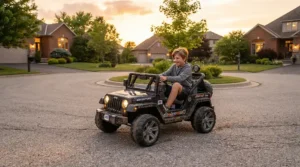
If the idea of an 11 mph go-kart in your driveway makes your stomach drop a little, the COZONY is built with you specifically in mind. Its parental speed-control feature lets an adult physically cap the kart’s ceiling — locking a first-timer to a crawl while still leaving the full range available once trust (and skill) builds. That’s a meaningfully different approach than a simple high/low toggle the kid controls themselves.
Rated for ages 8 to 14 with a 155-pound capacity, it’s one of the wider age brackets on this list, which honestly makes sense given the adjustable speed ceiling — the same kart genuinely works for a cautious 8-year-old and a speed-hungry 13-year-old. What the spec sheet won’t tell you but the age range implies: this is a kart designed to be “grown into” rather than replaced. On paper this means fewer repeat purchases as your kid ages up, which is where a lot of the real long-term value hides.
Pros:
- ✅ Parent-adjustable speed lockout, not just kid-controlled modes
- ✅ Wide 8–14 age range extends useful ownership life
- ✅ Generous 155-lb capacity for its price tier
Cons:
- ❌ Racing and drift features feel secondary to the safety-first design
- ❌ Brand has a shorter track record than legacy names like Razor
Expect a $230–$290 price range, positioning it as one of the more affordable options that still meaningfully addresses parental control.
7. Aosom 24V 8.1 MPH — lightest price tag with real drift feel
Rounding out the list at the true budget end is the Aosom, a dual-drive 24V motor kart capped at 8.1 mph — noticeably slower on paper than everything above it, but still fast enough to deliver genuine drift sensation for the 8-to-12 crowd it’s built for. PU front and PE rear wheels are tuned specifically for that sliding feel on cement, asphalt, and brick, which is a more deliberate design choice than it might look like at first glance.
Here’s the honest trade-off: that lower top speed is largely why this is the most affordable kart on this list. For families whose preteen is newer to powered ride-ons, or whose driveway is on the shorter side, 8.1 mph may genuinely be plenty — pushing straight to a 12 mph model without any ramp-up isn’t necessarily the better choice just because the number is bigger. Built-in music and horn functions add novelty value that, while not performance-relevant, do measurably increase how often younger preteens actually want to play with it.
Pros:
- ✅ Most accessible price point on this entire list
- ✅ Wheel material specifically tuned for drift feel
- ✅ Dual-motor drive despite the entry-level pricing
Cons:
- ❌ Top speed noticeably trails every other model here
- ❌ Less headroom to “grow into” as skill increases
Pricing generally falls between $220 and $280, making it the clear entry point if budget is the primary constraint and 8+ mph is genuinely enough thrill.
Practical Usage Guide: Setup, First Rides, and Maintenance
Getting a new high-speed ride-on car right in the first 30 days matters more than most parents expect, because early mistakes compound. Assembly on most of these karts — the Ridington 24V DRIFT Kart included — takes roughly an hour and mainly involves attaching the seat, steering assembly, and wheels to a pre-wired chassis; resist the urge to skip the initial full 8-to-12-hour charge, since undercharging a fresh SLA or lithium pack on day one can permanently shave off capacity.
For the first three or four rides, lock in the lowest available speed setting regardless of what your preteen insists they can handle. Models like the Qaba 24V Dual 150W with soft-start technology are specifically engineered to make this phase smoother, easing acceleration rather than snapping straight to full torque. Once your kid demonstrates steering control and, critically, reliable braking response, step the speed up incrementally rather than all at once.
Maintenance-wise, tire pressure (on pneumatic-tire models like the Razor Crazy Cart Sport) should get checked monthly, since underinflation is the single most common cause of reduced top speed and sluggish handling. Battery care matters just as much: never leave a SLA-based kart discharged for more than a few days, and store lithium-based systems like the KerryYoo K71 at roughly 50% charge if it’s headed into off-season storage. The most common first-month mistake, by a wide margin, is charging overnight on a nightly basis “just in case” — this actually degrades most battery chemistries faster than charging only after genuine depletion.

Real-World Scenarios: Matching the Right Kart to the Right Kid
Picture three different households, because the “best” kart genuinely depends on who’s driving it.
The cautious first-timer: an 8-year-old who’s never driven anything faster than a bicycle, on a quiet cul-de-sac. Here, the COZONY 24V with its parent-adjustable speed lockout is close to ideal — an adult can cap the ceiling at a crawl for the first month, then gradually release more speed as confidence builds, all without buying a second kart later.
The budget-conscious family with a genuinely speed-hungry 11-year-old: a driveway and a modest backyard, and a firm $300 ceiling. The ENYOPRO 24V Dual 85W threads that needle nicely — 11.2 mph, a 150-pound capacity that has room to spare, and a price under $310 that leaves budget for a helmet and pads.
The experienced rider who’s outgrown their first kart: a confident 12-year-old who’s been driving a slower model for a year and wants an actual challenge, plus parents with roughly $450 to spend. The Razor Crazy Cart Sport or KerryYoo K71 both make sense here — the drift bar and 360° spin capability, respectively, offer a genuine skill ceiling that a beginner kart simply can’t provide, and the higher price buys frame durability that’ll survive the more aggressive riding style that comes with real confidence.
How to Choose a High-Speed Ride-On Car for Preteens
- Match top speed to riding experience, not age alone. A first-time 12-year-old and a seasoned 9-year-old don’t belong in the same speed tier just because of a birthday.
- Check the weight capacity against your kid’s actual weight, not just their age bracket. Preteens vary enormously in size, and a cart maxed out at 110 pounds performs very differently at 105 pounds versus 70.
- Prioritize harness quality over horsepower. A 5-point harness on the Qaba 24V Dual 150W does more for real-world safety than an extra mph of top speed ever will.
- Confirm the surface you’ll actually use it on. Drift-tuned wheels underperform badly on grass or gravel, so buy for your driveway, not your fantasy backyard racetrack.
- Factor in battery chemistry before you buy, not after it dies. SLA batteries are cheaper to replace but heavier and shorter-lived than lithium packs.
- Budget for safety gear as a non-negotiable add-on. A helmet and knee pads should be treated as part of the purchase price, not an optional afterthought.
- Read the manufacturer’s own weight and terrain caveats. Brands that disclose limitations honestly — as Ridington does with its drift-mode weight recommendation — tend to be more trustworthy on the specs that actually matter.
Common Mistakes When Buying a Budget High-Speed Ride-On Car
The single biggest mistake is buying purely on top-speed numbers without checking weight capacity — a kart rated for 110 pounds will underperform and wear out faster under a 140-pound preteen, regardless of how many mph the box promises. A close second is skipping the harness spec entirely; a 2-point lap belt at 11 mph offers meaningfully less protection than the 5-point systems found on models like the Qaba 24V Dual 150W.
Parents also frequently underestimate battery replacement costs at purchase time, treating the sticker price as the total cost of ownership when it’s really just the entry fee. And a surprisingly common error: buying a drift-tuned kart for a family whose only outdoor space is grass or gravel — features like the Aosom’s drift-oriented wheel compound simply don’t perform as advertised off pavement, as toy safety experts note when discussing ride-on toy selection, where matching the product to the actual environment is emphasized as a core buying step.
Top Speed by Price Tier: What Your Budget Actually Buys
Money buys you specific things in this category, and it’s rarely just raw mph. In the sub-$300 tier — the Aosom 24V 8.1 MPH and COZONY 24V — you’re generally paying for entry-level access to the category itself: real drift feel, real electric power, but capped speed and thinner harness or frame specs. Step into the $300–$400 tier, occupied by the Ridington 24V DRIFT Kart, Qaba 24V Dual 150W, and ENYOPRO 24V Dual 85W, and the money starts buying meaningfully better safety hardware — five-point harnesses, larger battery packs, dual-motor smoothness — even before top speed climbs much.
It’s only in the $380–$470 premium tier, with the Razor Crazy Cart Sport and KerryYoo K71, that you’re paying specifically for the last two or three mph and genuine mechanical drift systems rather than software speed caps. The lesson here: if your preteen is newer to powered ride-ons, the mid-tier often delivers more real-world value than either budget extreme, since the safety hardware upgrade matters more day-to-day than the difference between 9 mph and 12 mph.
Flat-Surface vs Off-Road Performance Trade-Offs
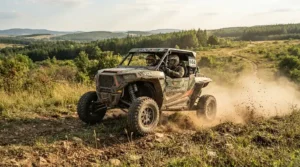
This is the trade-off that catches the most first-time buyers off guard. Every kart on this list is fundamentally tuned for pavement — smooth concrete or asphalt — because that’s where drift mechanics, wheel compounds, and stated top speeds are actually achieved. Take the same kart onto grass, gravel, or a bumpy dirt patch, and expect a real-world speed drop of anywhere from 20% to 40%, depending on motor wattage and wheel material.
Higher-voltage, higher-torque models like the KerryYoo K71‘s 36V system handle that transition noticeably better than lower-wattage entries like the ENYOPRO 24V Dual 85W, simply because there’s more raw power available to push through resistance. Drift-specific wheel compounds, meanwhile — the PU/PE combination on the Aosom 24V 8.1 MPH or the free-spinning rear casters on the Razor Crazy Cart Sport — are actively counterproductive off pavement, since they’re engineered to slide rather than grip. If your primary riding surface is a lawn rather than a driveway, prioritize torque and standard traction tires over anything marketed specifically around drifting.
Cost of Replacement Batteries: The Hidden Long-Term Expense
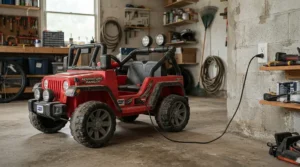
Sticker price is only half the ownership equation, and battery replacement is where a lot of families get an unpleasant surprise around year two. SLA (sealed lead-acid) batteries, used in models like the Razor Crazy Cart Sport, are genuinely the budget-friendly option long-term — a single 12V 5Ah replacement cell typically runs $13 to $21, and since that kart uses two in series, a full replacement pair lands somewhere around $30 to $40, occasionally less when purchased as a discounted multi-pack.
Lithium-based packs, more common on higher-voltage systems like the KerryYoo K71‘s 36V platform, tend to cost meaningfully more per replacement — often $60 to $120 depending on capacity — but typically last longer between replacements and weigh less, which matters for a preteen wrestling the kart in and out of a garage. The math genuinely favors different chemistries depending on your priorities: SLA if you want the cheapest possible long-term ownership cost, lithium if you value weight and cycle life over upfront replacement price. Either way, budget for at least one battery replacement within the first two to three years of regular use — treating the battery as a consumable rather than a permanent component avoids a nasty surprise down the line.
| Battery Type | Typical Replacement Cost | Found On |
|---|---|---|
| 12V SLA (single) | $13–$21 | Razor Crazy Cart Sport |
| 12V SLA (pair, 24V system) | $28–$52 | Razor Crazy Cart Sport, similar 24V karts |
| 24V lithium pack | $50–$90 | Qaba, ENYOPRO, COZONY-style karts |
| 36V lithium pack | $60–$120 | KerryYoo K71 |
Looking at the table above, SLA-based karts clearly win on raw replacement affordability, but the labor of swapping two cells versus one integrated pack is worth factoring in too — lithium systems are usually a faster, single-part swap. Either way, treat this line item as part of your real total cost of ownership, not an afterthought.
Safety, Supervision, and Regulations for Preteen Go-Karts
All seven models on this list are built to meet ASTM F963 toy safety standards, the U.S. benchmark covering battery-powered ride-on toys, which sets requirements around battery temperature limits, charger safety, and structural integrity. That standard exists for real reasons: the U.S. Consumer Product Safety Commission has previously issued recalls over battery-powered ride-on vehicles with overheating circuit boards, underscoring why buying from established retailers with active warranty support genuinely matters more than chasing the absolute lowest price.
Beyond the standard itself, active adult supervision is non-negotiable at these speeds — 8 to 12 mph is fast enough to cause real injury on a fall, particularly onto pavement. A properly fitted helmet should be treated as mandatory rather than optional, alongside knee and elbow pads for kids newer to powered riding. Snug-fitting clothing matters too, since loose sleeves or pant legs can catch in exposed wheel wells on models with open chassis designs. Finally, always confirm the riding area is free of vehicle traffic — these karts are toys, not street-legal vehicles, and should never be used near driveways with active car traffic or on public roads.
Frequently Asked Questions
❓ What is the fastest budget ride-on car for preteens under $500?
❓ What age is appropriate for a 24V go-kart?
❓ How much does it cost to replace the battery in a kids' go-kart?
❓ Do high-speed ride-on cars work well on grass?
❓ Is a 5-point harness necessary for a kid's go-kart?
Conclusion
Picking a budget high-speed ride-on car for preteens really comes down to answering three honest questions: how experienced is your kid, what surface will they actually ride on, and how much are you willing to spend not just today but two years from now when the battery inevitably needs replacing. The Razor Crazy Cart Sport and KerryYoo K71 earn their premium pricing through genuine mechanical drift capability and sturdier frames, while the ENYOPRO 24V Dual 85W and COZONY 24V prove that real 24V performance doesn’t require breaking $300.
None of these seven karts is objectively “the best” — that title depends entirely on the kid climbing into the seat. What they all share is a legitimate claim to being fast, fun, and genuinely under $500, which is exactly the intersection most parents are searching for. Whichever tier you land in, pair the purchase with real safety gear and real supervision, and you’ll get years of driveway laps out of it rather than a single disappointing season.
Recommended for You
- Off-Road Ride-On Car For Preteens: 7 Best Picks (2026)
- 36V vs 24V Ride-On Car For Older Kids: 7 Picks Ranked (2026)
- 7 Best Ride-On Trucks For A 7 Year Old Boy In 2026
Disclaimer: This article contains affiliate links. As an Amazon Associate, I earn from qualifying purchases. If you purchase products through these links, we may earn a small commission at no additional cost to you.
✨ Found this helpful? Share it with your friends! 💬🤗
