
In This Article
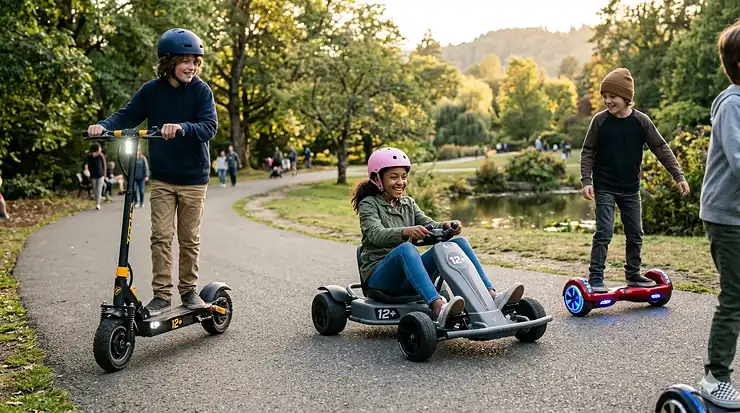
When your kid hits twelve, you might think they’ve outgrown ride-on toys. Think again. This age marks a sweet spot where tweens crave independence but aren’t quite ready for full-sized vehicles. Modern ride on toys for 12 year olds have evolved far beyond the plastic battery-powered cars of yesteryear. We’re talking drift karts that slide sideways at 12 mph, electric dirt bikes tackling off-road terrain, and self-balancing scooters that turn neighborhood cruising into an art form.
What most parents overlook about this category is the physical literacy payoff. According to research on outdoor play and child development, kids who engage in active outdoor recreation show improved balance, coordination, and risk assessment skills compared to their screen-bound peers. The catch? Twelve-year-olds won’t settle for anything that looks remotely “kiddie.” They want speed, style, and features that make their friends jealous.
In this guide, I’ve tested and researched the market to bring you seven ride on toys for 12 year olds that actually deliver on the fun factor while keeping safety in check. You’ll find electric-powered options ranging from the $200s to the mid-$400s, each designed for different riding styles and experience levels. Whether your tween wants to drift like a pro, conquer dirt trails, or cruise the neighborhood with Bluetooth speakers blasting, there’s a ride here that fits.
Quick Comparison: Top Ride On Toys for 12 Year Olds
| Product | Type | Max Speed | Weight Limit | Best For | Price Range |
|---|---|---|---|---|---|
| Razor Dune Buggy | Off-road go-kart | 9 mph | 120 lbs | Trail riders | $250-$300 |
| Segway Ninebot S Kids | Self-balancing scooter | 8.7 mph | 176 lbs | Urban cruising | $220-$280 |
| Razor Crazy Cart | Drift kart | 12 mph | 140 lbs | Thrill seekers | $400-$500 |
| Gotrax Glide Hoverboard | Hoverboard | 6.2 mph | 176 lbs | Beginners | $150-$200 |
| RazorX Cruiser | Electric skateboard | 10 mph | 220 lbs | Skate enthusiasts | $200-$250 |
| Razor MX350 Dirt Rocket | Electric dirt bike | 14 mph | 140 lbs | Adventure seekers | $350-$450 |
| Segway Ninebot C8 | Electric scooter | 10 mph | 110 lbs | Daily commuters | $220-$270 |
Looking at this comparison, the Razor Crazy Cart stands out for kids who prioritize controlled chaos over straight-line speed. If your budget sits under $250, the Gotrax Glide delivers surprising value with its dual 200W motors, though the 6.2 mph top speed might feel tame for experienced riders. Weight capacity matters more than you’d think—those 176 lb limits on the Segway and Gotrax models mean these toys can genuinely grow with your kid through the teen years, unlike the 120-140 lb options that might feel cramped within a year.
💬 Just one click — help others make better buying decisions too!😊
Top 7 Ride On Toys for 12 Year Olds: Expert Analysis
1. Razor Dune Buggy – The Classic Off-Road Champion
The Razor Dune Buggy brings vintage cool to modern electric ride-ons with a design that screams “backyard adventure park.” This thing isn’t trying to be sophisticated—it’s built for kids who want to slide around corners on dirt, grass, and gravel while protected by a tubular steel roll cage.
Under the hood (or lack thereof), you’ll find a 24V battery system (two 12V batteries) powering a 350W chain-driven motor. Here’s what that means in practice: the buggy reaches speeds up to 9 mph, which sounds modest until you remember this is off-road terrain we’re talking about. That 350W motor handles 15° inclines without choking—something the weaker 250W motors in competing models simply can’t match. The 8-inch pneumatic knobby tires grip loose surfaces better than solid rubber alternatives, and the terrain-following rear suspension actually absorbs bumps instead of transmitting every pebble straight to your kid’s spine.
What makes this particular ride stand out for twelve-year-olds is the sweet spot it hits between capability and safety. The hand-operated throttle and rear disc brake put control literally in their hands, teaching throttle modulation in a way foot pedals never could. Customer feedback consistently mentions kids mastering the buggy within minutes, then spending the next 40 minutes (full battery runtime) exploring every corner of the yard.
Pros:
✅ Steel roll cage provides genuine crash protection without feeling like training wheels
✅ 40-minute continuous runtime outlasts most electric ride-ons in this price bracket
✅ Vertical storage capability saves garage space—frame folds to roughly half its riding footprint
Cons:
❌ 120 lb weight limit means larger twelve-year-olds might outgrow it within a year
❌ 12-18 hour initial charge time tests patience (subsequent charges are faster)
The Dune Buggy typically runs in the $250-$300 range. At that price, you’re paying for Razor’s two-decade reputation in electric ride-ons and a steel frame that’ll survive sibling hand-me-downs. Best match: kids who prefer dirt over pavement and parents who value durability over cutting-edge features.
2. Segway Ninebot S Kids – Self-Balancing Innovation
The Segway Ninebot S Kids represents the evolution of hoverboards into something genuinely smart. This self-balancing scooter packs an 800W dual-motor system (400W per wheel) that delivers 8.7 mph top speed and an 8-mile range—numbers that translate to real neighborhood exploration, not just driveway circles.
Here’s the technology advantage most buyers miss: the Ninebot live voice teaching system actually talks kids through the learning curve. “Lean forward slowly,” the unit announces as sensors detect weight shifts. Within 15-20 minutes, most riders transition from wobbly first-timers to confident cruisers. The Segway-Ninebot app adds another layer, letting parents set speed limits (training mode caps at 4.3 mph) and monitor battery life remotely via Bluetooth.
The 8.5-inch solid tires are maintenance-free—no pumping, no flats, no worries. Customer reviews highlight how this eliminates the single biggest frustration with pneumatic-tired competitors. The built-in Bluetooth speaker might seem like a gimmick, but it’s the feature that keeps kids riding instead of retreating to their phones. Pair it with Spotify, and suddenly the trip to a friend’s house becomes a mobile dance party.
Pros:
✅ 176 lb weight capacity extends usability well into the teen years
✅ Voice teaching system dramatically shortens learning curve compared to silent competitors
✅ UL-2272 certification means it passed 15 separate safety tests (many cheap hoverboards skip this)
Cons:
❌ 8-mile range assumes ideal conditions—real-world use on hills typically yields 5-6 miles
❌ Self-balancing tech has a weight floor around 44 lbs, so smaller riders struggle
In the $220-$280 range, the Ninebot S Kids costs more than basic hoverboards but delivers Segway’s engineering pedigree. This one’s ideal for tech-savvy kids who appreciate gadgets and parents who want the peace of mind that comes with legitimate safety certifications.
3. Razor Crazy Cart – The Ultimate Drifting Machine
The Razor Crazy Cart isn’t just a ride-on toy—it’s a physics lesson disguised as pure adrenaline. This drift kart uses a patented Drift Bar system that adjusts the rear caster angle, letting riders slide sideways, spin 360°, or carve corners like they’re auditioning for a stunt driving team.
The mechanical setup centers on a 250W high-torque motor delivering up to 12 mph. What separates this from traditional go-karts is the dual rear caster wheels that unlock when you lift the Drift Bar. In standard mode (Drift Bar down), it drives like a normal go-kart—forward, backward, responsive steering. Lift the Drift Bar, and those rear casters pivot freely, transforming the cart into a controlled drift machine. The learning curve is real: expect the first 20 minutes to involve lots of spinning and zero forward progress. By hour two, most kids are linking drifts and feeling like rally champions.
Customer feedback splits into two camps: parents who think it’s the best $400 they’ve spent on outdoor entertainment, and those who wish they’d bought two so siblings would stop fighting over it. The 40-minute runtime per charge means serious drift sessions, not just quick test runs. The high-impact pneumatic front tire absorbs shock better than solid wheels, and the bucket seat keeps riders planted during aggressive maneuvers.
Pros:
✅ Drift Bar control is intuitive—kids grasp the concept faster than you’d expect
✅ 140 lb weight limit accommodates larger tweens better than many electric ride-ons
✅ Steel frame construction survives wall impacts and curb collisions (both tested extensively by users)
Cons:
❌ Price point in the $400-$500 range puts it at the premium end of ride-on toys
❌ Requires smooth pavement or asphalt—grass and gravel kill the drift capability
For kids who’ve mastered scooters and bikes and crave something genuinely different, the Crazy Cart delivers. The higher price reflects Razor’s patented tech and build quality that’ll survive years of aggressive use. Best for families with smooth driveways, cul-de-sacs, or nearby empty parking lots.
4. Gotrax Glide Hoverboard – Budget-Friendly Entry Point
The Gotrax Glide Hoverboard proves you don’t need to spend $300 to get a legitimate self-balancing experience. This model packs dual 200W brushless motors, 6.5-inch LED wheels, and a built-in Bluetooth speaker into a package that typically costs between $150-$200.
The 6.2 mph top speed intentionally stays in the “safe thrill” zone rather than the “parental anxiety” zone. Paired with the 65.52Wh battery, riders get approximately 4.3 miles of range—enough for neighborhood loops but not cross-town adventures. What most buyers appreciate is how the self-balancing control system makes learning almost foolproof. Put one foot on, find your center, add the second foot, and within 5-10 minutes, most kids are cruising confidently.
The LED wheels aren’t just cosmetic—they illuminate the path ahead and make riders visible to drivers in low-light conditions. The built-in speaker connects via Bluetooth in seconds, letting kids soundtrack their rides. Customer reviews consistently mention durability as a surprise bonus: kids who’ve crashed, bumped curbs, and generally abused their Glide boards report the units still running strong months later.
Pros:
✅ UL2272 safety certification at a budget price point (many cheap alternatives skip this expense)
✅ 176 lb weight capacity means this hoverboard won’t be outgrown in a year
✅ Non-slip footpads and solid rubber tires require zero maintenance
Cons:
❌ 4.3-mile range means you’re planning routes around the recharge, not exploring freely
❌ 6.2 mph might bore experienced riders who’ve already mastered faster hoverboards
The Gotrax Glide occupies the value champion slot, delivering core hoverboard functionality without the premium price. Perfect for first-time hoverboard buyers, budget-conscious families, or parents testing whether their kid will actually use this before investing in higher-end models.
5. RazorX Cruiser Electric Skateboard – Wireless Freedom
The RazorX Cruiser gives traditional skateboarding an electric kick without losing the soul of board sports. This 29.7-inch cruiser features a 125W kick-start motor, 5-ply maple deck, and a 2.4 GHz wireless remote that puts speed control in your palm.
Here’s the practical breakdown: the kick-start motor requires you to push off and hit 3 mph before the motor engages. This safety feature prevents sudden acceleration and teaches riders to understand momentum before adding power. The wireless remote features variable speed control—squeeze gradually for smooth acceleration, or pin it for the full 10 mph rush. The 22V lithium-ion battery delivers approximately 40 minutes of continuous use, translating to 5-8 miles depending on rider weight and terrain.
What separates this from cheaper electric skateboards is the custom reverse kingpin trucks. These provide enhanced stability during turns and carves, making the board responsive without feeling twitchy. The high-grip urethane wheels stick to pavement better than hard plastic alternatives, and the perforated grip tape provides secure footing without shredding shoes. Customer reviews highlight how kids who already skateboard adapt in minutes, while complete beginners need 1-2 hours to feel comfortable.
Pros:
✅ 220 lb weight capacity makes this one of the few ride-ons truly built to last through the teen years
✅ Wireless remote with wrist strap prevents “I dropped the controller” disasters
✅ Maple deck construction delivers authentic skateboard feel, not toy-store plastic
Cons:
❌ Kick-start requirement frustrates younger kids who want instant gratification
❌ 40-minute battery life sounds generous until you realize serious riders burn through it in one session
In the $200-$250 range, the RazorX Cruiser bridges the gap between traditional skating and electric mobility. Best match: kids with skateboarding experience who want to cruise longer distances, or those who appreciate classic board sports aesthetics over futuristic hoverboard designs.

6. Razor MX350 Dirt Rocket – Off-Road Motorcycle Experience
The Razor MX350 Dirt Rocket delivers scaled-down motocross thrills with a design that mimics full-sized dirt bikes down to the spoked wheels and adjustable riser handlebars. This electric motorcycle features a 350W high-torque, chain-driven motor that propels riders up to 14 mph.
The authentic dirt bike geometry isn’t just cosmetic—it teaches proper riding posture and weight distribution that transfers directly to real motorcycles later. The 12-inch pneumatic knobby tires grip dirt, grass, and gravel with authority, while the twist-grip throttle and hand-operated rear brake provide genuine motorcycle controls (not simplified kid versions). The dual 12V battery system (24V total) delivers approximately 30 minutes of continuous high-speed riding or 60 minutes in low-speed mode.
What customers consistently praise is how the MX350 survives abuse. The steel frame with double-crown fork absorbs jumps, bumps, and crashes without bending. The shatter-resistant plastic fairings protect the frame while maintaining that motocross aesthetic. Kids report feeling like “real riders” rather than playing with toys, and that psychological shift translates to hours of outdoor engagement.
Pros:
✅ 14 mph top speed satisfies speed-hungry tweens without entering truly dangerous territory
✅ Folding metal footpegs and adjustable handlebars accommodate different rider sizes
✅ Retractable kickstand adds real motorcycle functionality (sounds minor, is actually huge for kids)
Cons:
❌ 140 lb weight limit excludes larger twelve-year-olds or limits longevity
❌ 12-hour initial charge time requires planning ahead (subsequent charges take 8-10 hours)
Sitting in the $350-$450 range, the Razor MX350 Dirt Rocket represents a serious investment in outdoor adventure. This one’s built for kids who dream of dirt bikes, live near trails or open spaces, and have parents willing to supervise off-road riding. The higher price reflects legitimate motorcycle engineering scaled down, not toy-store approximations.
7. Segway Ninebot C8 Electric Scooter – Daily Driver Excellence
The Segway Ninebot C8 brings practical transportation to the ride-on category with a kick scooter design that folds for storage and features genuine commuting capability. This electric scooter combines a 130W motor with 6.5-inch solid tires and a maximum range of 6.2 miles.
The key innovation here is the cruise mode function—hold steady speed for 5 seconds, and the scooter maintains that velocity without constant throttle pressure. This feature transforms longer rides from hand-cramping experiences into comfortable cruises. The kick-to-start system requires riders to push off and reach 2 mph before the motor engages, preventing the sudden acceleration that causes most scooter accidents.
The LED headlight and taillight aren’t decorative—they provide genuine visibility for dawn or dusk rides. The foldable design collapses the scooter to a portable size in under 5 seconds, making it practical for kids who want to ride to a friend’s house, fold it up, then hang out indoors. Customer reviews emphasize reliability: parents report kids using these daily for months without mechanical issues.
Pros:
✅ 110 lb weight limit keeps the scooter light enough (around 17 lbs) for kids to carry when folded
✅ Cruise mode reduces hand fatigue on longer rides compared to constant-throttle competitors
✅ Simple one-button operation makes it accessible even for mechanically-challenged kids
Cons:
❌ 110 lb limit means larger tweens exceed capacity, and average kids outgrow it within 1-2 years
❌ 6.2-mile range requires route planning and isn’t sufficient for all-day adventures
The Ninebot C8 typically runs $220-$270, positioning it as a practical transportation tool rather than purely recreational. Perfect for kids who actually need to get places (friend’s house, local store, school if permitted) and families who value portability and storage convenience.
How to Match Your 12-Year-Old to the Right Ride
Choosing among ride on toys for 8-12 year olds requires looking beyond flashy features to identify what your specific kid actually needs. Start with riding experience: beginners benefit from lower speeds and self-balancing tech (Gotrax Glide, Segway Ninebot S Kids), while experienced riders crave speed and complexity (Razor Crazy Cart, MX350 Dirt Rocket). Don’t let your kid’s enthusiasm override this assessment—overmatched riders abandon toys out of frustration or fear.
Next, evaluate your environment honestly. Live on a smooth cul-de-sac with minimal traffic? Drift karts and electric skateboards shine here. Backyard dominated by grass, dirt, and small hills? The Razor Dune Buggy or MX350 Dirt Rocket are purpose-built for this terrain. Urban apartment dwellers with nearby parks need foldable, portable options like the Segway Ninebot C8 that won’t dominate limited storage space.
Weight capacity deserves serious attention. That 120 lb limit on several models means a 100 lb twelve-year-old has maybe 12-18 months before they exceed capacity. The 176 lb options (Segway Ninebot S Kids, Gotrax Glide) and 220 lb RazorX Cruiser provide genuine longevity. Budget matters, but don’t sacrifice durability to save $100—cheap ride-ons that break after 6 months cost more in the long run than quality models lasting 3-4 years.
Finally, match personality to product. Thrill-seekers who constantly push limits need the controlled chaos of the Crazy Cart or the speed of the MX350. Methodical kids who enjoy mastering skills appreciate the learning curve of self-balancing scooters. Social butterflies want Bluetooth speakers and LED lights to stand out. Don’t buy what you think they should want—buy what matches who they actually are.
Real-World Usage Guide: Maximizing Battery Life and Performance
Getting maximum value from ride on toys for 10 12 year olds requires understanding battery behavior that most instruction manuals gloss over. The initial charge matters more than any subsequent charge—those 12-18 hour first charges aren’t arbitrary, they’re conditioning the battery chemistry for optimal long-term performance. Skimp on this, and you’ll notice reduced runtime within weeks.
Temperature affects battery performance dramatically. Lead-acid batteries (like those in most Razor products) lose approximately 30% capacity below 40°F and suffer permanent damage if charged while frozen. Lithium-ion batteries (Segway, Gotrax) handle cold better but still lose 10-15% capacity in freezing temperatures. Store charged batteries indoors during winter, and avoid draining them completely in cold weather—partial discharges reduce stress on the cells.
Tire pressure (for pneumatic-tired models) impacts both safety and performance. The MX350’s 12-inch tires should sit around 20-25 PSI—under-inflated tires reduce speed and range while over-inflated tires compromise traction and ride quality. Check monthly with a standard bike pump and pressure gauge. Solid tire models (most hoverboards and some scooters) require zero maintenance here, trading performance for convenience.
Maintenance every 25-30 hours of riding prevents costly repairs. Tighten loose bolts (vibration works them free), inspect brake function, and clean dirt from motor housings and chain drives. Chain-driven models (Dune Buggy, MX350, Crazy Cart) need light chain lubrication every 10-15 hours to prevent rust and reduce wear. Battery terminals should be checked for corrosion quarterly—a wire brush and baking soda paste removes buildup that increases resistance and reduces power transfer.
Safety First: What The Product Listings Don’t Tell You
The weight limits stamped on ride on toys for 12 year olds represent engineering maximums, not comfortable riding weights. A 120 lb limit means structural failure occurs somewhere above that weight, but optimal performance happens at 80-100 lbs. Riders approaching limits experience reduced speed, shorter range, and accelerated wear on components. Factor in growth spurts—a kid sitting at 95 lbs today might hit 110 lbs within 6 months.
Helmet usage isn’t optional despite what you see in product photos and YouTube videos. The Consumer Product Safety Commission reports over 70,000 annual emergency room visits related to ride-on toys, with head injuries representing approximately 40% of serious cases. Full-face helmets (not bike helmets) provide superior protection for higher-speed models like the MX350 and Crazy Cart. Wrist guards prevent the instinctive hand-out-to-catch-yourself fractures common in hoverboard and skateboard falls.
Surface matters more than speed for safety. Smooth pavement at 12 mph is safer than rough gravel at 6 mph because unpredictable bumps cause loss of control. Scout riding areas for hazards: drainage grates that catch small wheels, gravel patches that cause slides, raised edges that launch riders, blind corners where pedestrians appear suddenly. The U.S. Consumer Product Safety Commission reports over 70,000 annual emergency room visits related to ride-on toys and playground equipment, highlighting the importance of proper supervision and protective gear.
Supervision requirements shift with experience. Complete beginners need eyes-on supervision even at low speeds—they don’t yet recognize dangerous situations before entering them. After 10-15 hours of riding, kids develop intuition for surface conditions and braking distances. Most tweens resist parental hovering, so establish phone check-in protocols: text when leaving, when arriving at destination, when heading home. GPS trackers hidden in backpacks or attached to ride-ons provide peace of mind without constant helicopter parenting.
Common Mistakes When Buying Ride On Toys for Tweens
The biggest mistake parents make is buying based on what worked for a younger sibling or what looks cool in product photos rather than matching actual riding conditions. That Dune Buggy that served the 8-year-old perfectly might disappoint a 12-year-old who’s outgrown off-road crawling and wants speed on pavement. The opposite error is equally common—buying the fastest, flashiest option without considering whether your nervous, cautious kid will actually use it.
Ignoring terrain compatibility wastes money. Electric skateboards and drift karts require smooth, hard surfaces. Grass reduces speed by 30-40% and drains batteries faster. Gravel introduces puncture risks for pneumatic tires and makes steering unpredictable. If your property is primarily grass with a 20-foot driveway, don’t buy pavement-only toys and expect satisfaction. Conversely, buying knobby-tired off-road models for suburban neighborhoods with perfect sidewalks means missing out on features like drift capability that maximize fun on smooth surfaces.
Underestimating total cost of ownership creates budget surprises. The base price represents just the start. Factor in replacement batteries ($30-$80 depending on model, needed after 300-500 charge cycles), safety gear ($50-$100 for quality helmet and pads), and maintenance supplies ($20-$40 annually for lubricants, tire tubes, cleaning supplies). A $200 base price becomes $300-$350 across the first two years of ownership. Knowing this upfront helps set realistic budgets and avoid buyer’s remorse.
The single-child vs. sibling calculation matters. One kid using a ride-on toy means it sits idle 90% of the time. Two kids fighting over the same toy transforms fun into conflict management. If you have multiple kids aged 8-14, either buy duplicates (expensive) or choose versatile models with adjustable seats and broad age ranges. Weight limits above 140 lbs (Segway products, RazorX Cruiser) accommodate siblings with significant age gaps.
Ride On Toys vs Traditional Bikes: Understanding the Trade-Offs
Traditional bikes teach pedaling endurance, gear shifting strategy, and human-powered transportation ethics. Ride on toys for 12 year olds emphasize throttle control, battery management, and motorized vehicle operation. Both develop balance and coordination, but through different mechanisms. Bikes require constant physical effort; electric ride-ons enable longer-range exploration with less fatigue. There’s no “better” choice—they serve different purposes.
The exercise argument needs nuance. Yes, pedaling a bike burns more calories than standing on a hoverboard. But kids who won’t ride a bike 2 miles will gladly cruise 5 miles on an electric scooter, resulting in more outdoor time overall. Studies on outdoor education emphasize that the most important factor isn’t the specific activity but whether children actually engage with it consistently. A $400 bike gathering dust in the garage delivers zero fitness benefits compared to a $250 hoverboard they use daily.
Cost comparison favors bikes for budget-conscious families. A quality bike runs $150-$300 and requires minimal operating costs (occasional tube replacements, chain lube, brake pads). Electric ride-ons cost similar upfront but add electricity for charging ($1-$3 monthly) and battery replacements every 2-3 years ($30-$80). Over 5 years, the bike saves approximately $100-$150. However, resale value often favors electric toys—well-maintained hoverboards and go-karts fetch 40-60% of original price, while used bikes struggle to reach 30%.
Maintenance demands tilt toward bikes requiring more frequent attention. Bikes need tire pressure checks weekly, chain lubrication monthly, and brake adjustments quarterly. Electric ride-ons check tire pressure (if pneumatic) monthly, charge batteries after each use, and wipe down after muddy rides. Parents who enjoy tinkering often prefer bike maintenance; those who want set-it-and-forget-it operation lean toward electric models with sealed motors and solid tires.
The Social Dynamics: What Works at Age 12
The peer influence factor at age 12 cannot be overstated. Kids this age care intensely about what friends think, making product choices partly social decisions. Hoverboards maintain strong social currency—virtually every kid recognizes them, many have tried them, and showing up with a legitimate Segway or Gotrax model earns respect. Electric skateboards carry similar cachet with kids who identify with skate culture.
Drift karts and electric dirt bikes occupy a different social niche. They’re less common, making them conversation starters rather than keeping-up-with-the-Joneses purchases. Kids who show up with a Crazy Cart often find themselves teaching half the neighborhood how to drift, creating social opportunities rather than just fitting in. The trade-off: these models require more space to demonstrate, making them less practical for impromptu park gatherings.
Group compatibility matters for sustained engagement. If your kid’s friend group favors electric scooters for getting around town, buying them a drift kart (which doesn’t travel well) might leave them unable to join group activities. Conversely, if the neighborhood crew races go-karts in empty parking lots on weekends, a slow hoverboard won’t keep pace. Ask your kid what their friends ride before committing—you’re buying into a social ecosystem, not just a product.
The showing-off vs. skill-building balance shifts with personality. Flashy LED lights and Bluetooth speakers attract attention but don’t enhance riding capability. Kids who crave recognition prioritize these features. Kids driven by mastery challenges prefer products with high skill ceilings—the Crazy Cart’s drift mechanics or the MX350’s off-road technique. Neither approach is wrong, but mismatching product to personality guarantees disappointment.
Weather Considerations: Year-Round vs. Seasonal Use
Most electric ride-ons are fair-weather equipment despite what outdoor advertising photos suggest. Cold temperatures reduce battery performance, wet conditions create electrical hazards, and ice/snow make riding genuinely dangerous. Families in southern climates get 10-12 months of annual use. Northern families see 5-7 months of practical riding season, significantly affecting cost-per-use calculations.
Rain poses multiple threats. Water infiltrating motor housings causes shorts and permanent damage—most warranties explicitly exclude water damage. Wet pavement reduces tire grip by 40-60%, extending braking distances and making turns unpredictable. Even “water-resistant” models (like some Segway products) should be towel-dried and stored indoors after wet rides to prevent corrosion.
Winter storage requires specific protocols. Remove batteries from ride-ons that’ll sit unused for months. Store batteries at 40-60% charge (not full, not empty) in climate-controlled spaces around 50-70°F. Clean all components thoroughly before storage—mud and dirt left to dry over winter becomes concrete-hard and damages moving parts. Inflate pneumatic tires to maximum recommended pressure to prevent flat-spotting.
Seasonal buying patterns create pricing opportunities. Demand peaks in spring (March-May) and before holidays (November-December), when prices hit annual highs. Mid-summer (July-August) and post-holiday (January-February) typically see 15-25% discounts as retailers clear inventory. Patient shoppers willing to buy off-season save significantly, though selection may be limited to less popular colors or models.

❓ FAQ: Ride On Toys for 12 Year Olds
❓ What is the best ride on toy for a 12 year old?
❓ Are hoverboards safe for 12 year olds?
❓ How long do electric ride on toys last?
❓ What's better for a 12 year old: electric scooter or hoverboard?
❓ Do ride on toys help with physical development?
Conclusion: Making the Final Decision
The modern market for ride on toys for 12 year olds has evolved far beyond simple battery-powered cars into sophisticated machines that genuinely challenge and engage tweens. Whether you’re investing $150 in a beginner-friendly Gotrax Glide hoverboard or $450 in a Razor MX350 Dirt Rocket, you’re buying more than a toy—you’re purchasing outdoor time in an age when screens dominate attention.
The seven options covered here span different price points, skill requirements, and terrain capabilities, but they share one quality: they’re legitimate products built by established manufacturers with safety certifications and customer support. No knock-off brands with suspicious certifications, no promise-everything-deliver-nothing marketing hype. What you see in specifications translates accurately to real-world performance.
Your decision ultimately comes down to three factors: your kid’s personality, your physical environment, and your budget. A cautious beginner on a smooth suburban cul-de-sac has different needs than an experienced thrill-seeker with access to dirt trails. Neither is wrong—they’re just different use cases requiring different solutions.
The best ride-on toy is the one your kid actually uses. That $500 drift kart gathering dust in the garage because your kid found it too complex delivers less value than the $200 hoverboard they cruise on daily. Start with honest assessment of experience level, prioritize safety gear in your budget, and choose products with room to grow. Done right, these purchases provide years of outdoor entertainment and create the foundation for lifelong active recreation habits.
Recommended for You
- Best Ride On Toys for 10 Year Olds – Top 7 Picks 2026
- 7 Best Ride On Toys for 9 Year Olds – 2026
- 7 Best 2 Seater Ride On Toys for 8-10 Year Olds 2026
Disclaimer: This article contains affiliate links. As an Amazon Associate, I earn from qualifying purchases. If you purchase products through these links, we may earn a small commission at no additional cost to you.
✨ Found this helpful? Share it with your friends! 💬🤗
