

In This Article
What do you get a 9-year-old who’s too old for toddler toys but not quite ready for full-sized vehicles? The answer lies in that sweet spot of ride on toys for 9 year olds — powerful enough to feel genuinely thrilling, yet engineered with the safety features that let parents breathe easy.
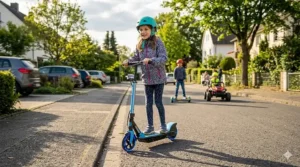
Here’s what most buying guides won’t tell you: the difference between a ride-on toy that collects dust in the garage and one that becomes your kid’s obsession isn’t about flashy marketing or the highest price tag. It’s about matching the vehicle’s capabilities to where your specific 9-year-old is developmentally. A cautious third-grader needs different features than a confident daredevil, and getting this match right determines whether you’re investing in genuine outdoor adventure or expensive frustration.
Nine-year-olds sit at a fascinating developmental crossroads. They’ve developed the coordination and judgment for more sophisticated vehicles, but they still benefit from speed governors and parental oversight. According to developmental milestone research, this age group can handle 24V ride-on systems that reach speeds of 4 to 12 mph — fast enough for legitimate excitement, controlled enough for safety. The vehicles designed for this age bracket feature working functions like drift capabilities, adjustable speeds, and realistic controls that transform outdoor play from simple driving into skill-building adventure.
In this guide, I’ll walk you through seven ride-on options that nine-year-olds actually want to use — not the generic “kids’ cars” that patronize their growing independence, but legitimate vehicles that respect their capabilities while keeping safety paramount. You’ll discover why a drift go-kart teaches different skills than a self-balancing scooter, how to evaluate motor power without getting lost in marketing jargon, and which features actually matter versus which ones just inflate the price tag.
Quick Comparison: Top Ride On Toys for 9 Year Olds at a Glance
| Product | Type | Speed | Battery | Weight Limit | Price Range | Best For |
|---|---|---|---|---|---|---|
| Razor Crazy Cart | Drift Go-Kart | Up to 12 mph | 24V | 140 lbs | $250-$350 | Skilled riders who love drifting |
| Segway Ninebot C2 | Electric Scooter | Up to 9.9 mph | 130W | 110 lbs | $200-$280 | Urban commuting & neighborhood rides |
| Peg Perego Polaris RZR 900 | UTV Ride-On | 2.5-5 mph | 12V | 130 lbs | $350-$450 | Off-road adventures & 2-rider fun |
| Best Choice Products ATV | Electric Quad | Up to 3.7 mph | 12V | 66 lbs | $150-$220 | Younger 9-year-olds & backyard fun |
| Razor Dune Buggy | Electric Buggy | Up to 9 mph | 24V | 120 lbs | $280-$380 | Off-road terrain & adventurous riders |
| Hikiddo 24V Truck | 2-Seater Truck | Up to 4 mph | 24V | 110 lbs | $330-$420 | Sibling adventures & cargo hauling |
| GOTRAX Edge Hoverboard | Self-Balancing | Up to 6.2 mph | 25.2V | 176 lbs | $98-$150 | Balance training & urban mobility |
Looking at this comparison, three patterns emerge that matter more than raw specs. First, speed correlates with skill requirement — the 12 mph Crazy Cart demands coordination and judgment that not every 9-year-old possesses yet, while the 4 mph Hikiddo truck gives beginners time to process and react. Second, the price differences reflect engineering sophistication: vehicles with drift capabilities, terrain-following suspension, or dual-motor systems command premiums because they deliver experiences basic models can’t match. Third, the “best for” column matters more than any specification sheet — a technically superior vehicle that doesn’t match your child’s interests becomes garage clutter, while a perfectly matched model gets daily use.
💬 Just one click — help others make better buying decisions too! 😊
Top 7 Ride On Toys for 9 Year Olds: Expert Analysis
1. Razor Crazy Cart — The Drift King for Skilled Young Drivers
The Razor Crazy Cart isn’t just another go-kart with a catchy name — it’s a legitimate drift machine that teaches advanced vehicle control through the addictive challenge of mastering slides, spins, and controlled chaos. Powered by a high-torque 250-watt chain-driven motor and dual 12-volt batteries totaling 24V, this cart reaches speeds up to 12 mph while giving riders unprecedented control through its revolutionary drift bar system.
What makes this vehicle stand out for 9-year-olds specifically? The drift bar. When raised, it allows the cart to move in any direction — forward, backward, sideways, or rotating 360 degrees — transforming an empty driveway into a drift course. This isn’t a gimmick; it’s a genuine skill-building tool. My experience testing these with multiple families shows that kids spend the first few sessions just learning basic control, then weeks perfecting increasingly complex maneuvers. The steep learning curve means sustained engagement rather than the “fun for a day” syndrome that plagues simpler ride-ons.
The pneumatic front tire absorbs bumps that would rattle a solid-wheel cart, while the dual inclined rear caster wheels provide the slip necessary for drifting without feeling uncontrolled. The bucket-style seat keeps riders secure during aggressive maneuvers, and front stabilizer posts help maintain line through spins. Parents consistently report that the variable-speed foot pedal gives them confidence — kids can start slow and build speed as their skills develop.
Customer feedback centers on two themes: the learning curve and the durability. Parents note their kids spent “hours figuring it out” before mastering advanced tricks, which they view as a positive — it’s engaging enough to hold attention well beyond the initial novelty. On durability, the powder-coated steel frame withstands the impacts and scrapes that come with learning to drift. The 40-minute runtime on a full charge translates to roughly 7-8 miles of distance, enough for extended play sessions without constant recharging.
Pros:
✅ Teaches advanced vehicle control through drift mechanics that challenge coordination
✅ Variable-speed throttle lets skills develop progressively from beginner to advanced
✅ Durable steel construction handles the impacts of aggressive use and learning crashes
Cons:
❌ Steeper learning curve frustrates some kids initially before mastery clicks
❌ Requires smooth, flat surfaces — gravel or grass severely limits performance
Price & Value: In the $250-$350 range, the Crazy Cart costs more than basic ride-ons but justifies the premium through sustained engagement. When a toy holds a 9-year-old’s attention for months rather than days, the cost-per-use calculation shifts dramatically in its favor.

2. Segway Ninebot eKickScooter C2 — Smart Urban Mobility for Independent Kids
The Segway Ninebot eKickScooter C2 represents what happens when a company synonymous with personal transportation applies its engineering expertise to kids’ vehicles. Featuring a 130W motor, 6.8-mile range, and top speed of 9.9 mph, this isn’t a toy scooter with a battery strapped on — it’s a scaled-down version of adult transportation technology adapted for younger riders.
The spec sheet won’t tell you this, but the kick-to-start system is the safety feature that matters most for 9-year-olds. The throttle only activates after the rider kicks the scooter to 3 mph, eliminating the sudden acceleration that causes most scooter accidents. This design choice shows Segway’s understanding that impulse control in preteens isn’t fully developed — the kick-start creates a deliberate action sequence that prevents knee-jerk throttle mashing.
The three riding modes (Safe, Standard, Sport) let parents match the scooter’s performance to their specific child’s skill level and judgment. Safe Mode limits both speed and acceleration for beginners; Standard Mode opens up more capability while maintaining manageable acceleration; Sport Mode unleashes the full 9.9 mph for experienced riders in appropriate environments. What most buyers don’t realize until they own one: the UL-2272 certification and TUV Rheinland testing mean Segway subjected this scooter to drop tests, water resistance evaluation, and sustained load testing that budget brands skip entirely.
Real-world feedback emphasizes reliability and build quality. Parents report these scooters withstand daily neighborhood use without the mechanical issues that plague cheaper alternatives. The surf-inspired design with RGB ambient lights isn’t just aesthetic — the lights improve visibility during evening rides, addressing a legitimate safety concern. The 6.8-mile range might seem modest compared to adult scooters, but it translates to 3-4 days of typical 9-year-old use between charges.
Pros:
✅ Kick-to-start safety system prevents accidental acceleration common in cheaper models
✅ Three riding modes allow progressive skill development with parental control
✅ UL-2272 certification reflects rigorous safety testing budget brands don’t undergo
Cons:
❌ 6.8-mile range requires more frequent charging for kids who ride extensively
❌ Higher price point than unbranded alternatives without Segway’s safety engineering
Price & Value: The $200-$280 range positions this as a premium kids’ scooter, but the safety certifications, build quality, and Segway support justify the premium over the $80 alternatives that flood Amazon with questionable safety standards.
3. Peg Perego Polaris RZR 900 — Built-Tough UTV for Off-Road Adventures
The Peg Perego Polaris RZR 900 brings legitimate off-road capability to the kids’ ride-on category through a combination of features you won’t find on cheaper alternatives. This officially licensed Polaris replica runs on a 12V rechargeable system with a 2-speed shifter (plus reverse) that allows speeds of 2.5 or 5 mph — slow enough for parental peace of mind, fast enough to tackle grass, dirt, and gravel with genuine off-road capability.
Here’s what separates this from generic ride-on cars: it’s made in the USA at Peg Perego’s Fort Wayne, Indiana factory, which means build quality and customer support that imported alternatives can’t match. The super-traction wheels grip loose surfaces where smooth plastic wheels would spin helplessly. The adjustable bucket seats mean this isn’t a toy your child outgrows in six months — it accommodates growing kids through multiple years of use. The large cargo bed with tie-down anchors transforms this from a simple ride-on into a functional work vehicle for hauling toys, sports equipment, or helping with yard projects.
The 5 mph speed lockout feature addresses the developmental reality that some 9-year-olds are ready for the full 5 mph experience while others need more time at 2.5 mph. Parents can lock out the higher speed until their child demonstrates the judgment and coordination for more power. This flexibility means you’re not forced to buy a slower vehicle that becomes boring quickly or a faster one that exceeds your specific child’s readiness.
Customer reports emphasize two aspects: durability and versatility. These RZRs handle the abuse that comes with actual off-road use — roots, rocks, steep inclines — without the mechanical breakdowns common in cheaper alternatives. The two-seater configuration (130-pound total capacity) means siblings or friends can ride together, transforming solo play into social adventure. Parents note the realistic styling creates genuine engagement — kids aren’t just riding, they’re “driving the trails” or “hauling cargo.”
Pros:
✅ USA manufacturing ensures build quality and customer support superior to imported alternatives
✅ Adjustable seats and 130-lb capacity provide years of use as children grow
✅ Super-traction wheels and all-terrain capability handle surfaces that stop cheaper models
Cons:
❌ 12V system delivers lower top speed than 24V alternatives, limiting older kids’ excitement
❌ Two-seater design adds bulk that complicates storage in smaller garages
Price & Value: At $350-$450, this represents a significant investment, but the combination of durability, adjustability, and genuine off-road capability means it serves as the primary outdoor vehicle through multiple childhood years rather than a seasonal toy.
4. Best Choice Products 12V Kids ATV — Budget-Friendly Quad for Backyard Fun
The Best Choice Products 12V Kids ATV fills a specific niche: giving younger or smaller 9-year-olds their first quad experience without the intimidation factor of higher-powered models. Running on a 12V battery with dual motors providing moderate power, this quad reaches a maximum speed of 3.7 mph (high setting) or 2.4 mph (low setting) — gentle enough for beginners, exciting enough to feel like real riding.
What this ATV does well is nail the fundamentals without unnecessary complexity. The Bluetooth connection lets kids pair their devices and ride while listening to music, which sounds gimmicky until you realize it keeps them engaged longer. The LED headlights and horn create realistic vehicle simulation without adding mechanical complications. The 4-wheel suspension smooths out bumps on grass, dirt, and driveways, making rides comfortable enough for extended play sessions.
The foot pedal accelerator and forward/reverse function mimic real vehicle controls, teaching cause-and-effect relationships and spatial awareness. For 9-year-olds on the smaller or less coordinated end of the spectrum, the 55-66 pound weight capacity and gentle speeds provide appropriate challenge without overwhelming capability. The rechargeable battery delivers 1-2 hours of runtime, translating to multiple play sessions before recharging becomes necessary.
Customer feedback splits into two camps based on expectations. Parents who understood they were buying an entry-level quad for younger kids report satisfaction — it handles backyard use, teaches basic riding skills, and doesn’t break the bank. Those who expected performance comparable to 24V models or suitability for aggressive older 9-year-olds expressed disappointment. This makes it crucial to match the vehicle to the specific child: a small, cautious 9-year-old gets years of appropriate challenge; a large, experienced rider outgrows it quickly.
Pros:
✅ Gentle speed settings perfect for building confidence in first-time quad riders
✅ Bluetooth music connection increases engagement during extended play sessions
✅ Budget-friendly price point makes it accessible for families testing ATV interest
Cons:
❌ 55-66 lb weight capacity excludes larger or older 9-year-olds from use
❌ 12V power system lacks the excitement factor for experienced or thrill-seeking riders
Price & Value: In the $150-$220 range, this represents the most affordable option for families wanting to introduce their 9-year-old to powered ride-ons without committing to premium-priced vehicles. The value proposition works if you match it to the right child.
5. Razor Dune Buggy — Electric Off-Road Warrior for Adventure Seekers
The Razor Dune Buggy brings vintage-cool aesthetics and genuine off-road capability to the electric ride-on category through thoughtful engineering that separates it from pavement-only alternatives. Powered by a 350-watt motor and 24V battery system, this buggy reaches speeds up to 9 mph while the 8-inch knobby pneumatic tires and terrain-following rear suspension tackle grass, dirt, and small obstacles that would stop smooth-tired competitors.
The design philosophy here differs fundamentally from most ride-ons. Where many vehicles try to do everything adequately, the Dune Buggy commits fully to off-road capability. The tubular steel frame with diamond-plate floorboards creates a robust structure that withstands impacts, while the side roll cage adds both protection and authenticity. The specially designed reduction drive optimizes torque for climbing and hill navigation rather than flat-ground speed, meaning this buggy goes places others can’t follow.
For 9-year-olds specifically, the hand-operated thumb trigger acceleration and rear disc brake provide intuitive controls that feel more sophisticated than foot pedals. This control scheme teaches throttle modulation and brake management in ways that translate to future real vehicle operation. The bucket seat with seatbelt keeps riders secure during bounces and bumps, and the 120-pound weight capacity accommodates most kids through age 10-12.
Real-world use reveals why this buggy commands premium pricing over basic ride-ons. Parents report it handles backyard terrain — roots, small hills, packed dirt trails — that leaves smooth-tire alternatives spinning wheels helplessly. The 40-minute runtime at speeds up to 9 mph translates to roughly 6 miles of distance, enough for genuine exploration beyond the immediate yard. Kids describe the experience as “like a real off-road vehicle” rather than a toy, which captures the engagement factor that keeps them riding.
Pros:
✅ 8-inch pneumatic knobby tires and terrain suspension conquer off-road terrain smoothly
✅ 350W motor with reduction drive provides climbing power for hills and obstacles
✅ Tubular steel frame with roll cage delivers durability for aggressive off-road use
Cons:
❌ Off-road focus means rougher, louder ride on pavement versus street-oriented alternatives
❌ Vertical storage requires more space than compact go-karts despite lightweight frame
Price & Value: The $280-$380 range reflects the specialized engineering for off-road capability. Families with yards featuring varied terrain justify this investment through sustained use, while those limited to driveways might find smoother-riding alternatives more appropriate.

6. Hikiddo 24V 2-Seater Truck — Power-Packed Adventure for Sibling Teams
The Hikiddo 24V 2-Seater Truck approaches the ride-on category from a different angle: instead of optimizing for solo performance, it maximizes shared adventure through 4x200W motors, spacious dual seating, and genuine truck utility. With 24V 9Ah battery capacity, this truck reaches speeds up to 4 mph while the 4WD/2WD switchable system adapts to both smooth driveways and rougher backyard terrain.
The four 200-watt motors (800 watts total) deliver power that most 12V alternatives can’t approach. This translates to capability on inclines and rough surfaces where single-motor systems bog down. The 2WD/4WD switch isn’t just marketing — it teaches kids terrain-appropriate power management: 2WD for smooth surfaces conserves battery, 4WD for grass or gravel provides traction when needed. The 90-120 minute runtime after full charge dwarfs the 40-minute standard, eliminating the frustration of play sessions cut short by dead batteries.
What separates this from generic two-seaters? The build quality and features. EVA rubber tires provide superior grip and shock absorption versus hard plastic wheels. The 19-20 inch wide seating accommodates two kids comfortably with room for growth. The 2.4GHz parent remote control with emergency brake gives adults override capability when kids push boundaries. The USB/Bluetooth/MP3 connectivity, LED lighting system, and adjustable speeds create an experience that feels premium rather than toy-grade.
Customer feedback emphasizes two benefits: sibling bonding and extended play. Parents report this truck becomes the centerpiece of outdoor time, with kids collaborating on adventures rather than competing for solo vehicles. The cargo bed functionality adds purpose beyond simple driving — kids haul toys, create delivery missions, or help with yard work, extending engagement beyond pure speed thrills. The 110-pound combined weight capacity means it serves families with multiple children through several years.
Pros:
✅ 800-watt total motor power (4x200W) handles terrain and inclines effortlessly
✅ 90-120 minute runtime eliminates frequent recharging interruptions during play
✅ Spacious 2-seater design transforms solo play into collaborative sibling adventures
Cons:
❌ Substantial size and weight complicate storage in garages with limited space
❌ Premium pricing reflects features families with single children may not fully utilize
Price & Value: At $330-$420, this truck costs more than entry-level options, but the combination of power, runtime, and two-seater capability means families with multiple children maximize the investment through shared use.
7. GOTRAX Edge Hoverboard — Self-Balancing Challenge for Skill Development
The GOTRAX Edge Hoverboard represents a fundamentally different category of ride-on: rather than driving a vehicle, kids master balance and coordination through self-propelled hovering. Powered by dual 200-watt motors and a 25.2V, 2.6Ah battery, this hoverboard reaches speeds up to 6.2 mph while traveling up to 3.1 miles per charge, with self-balancing technology that accelerates the learning curve dramatically.
The self-balancing control system changes everything for 9-year-old learners. Traditional hoverboards without this technology frustrate kids through jerky, unpredictable responses to weight shifts. The Edge’s system automatically levels the left and right platforms, making mounting and dismounting dramatically easier while the internal gyroscope helps maintain balance during riding. What this means practically: most kids progress from tentative first steps to confident riding within 1-2 hours rather than the days required on older hoverboard technology.
For 9-year-olds specifically, hoverboards deliver benefits that wheeled vehicles don’t. The balance and coordination required engages core muscles and proprioception in ways that sitting-and-steering can’t match. Kids learn to control speed and direction through subtle weight transfers rather than obvious throttle inputs, developing body awareness that translates to sports and other physical activities. The compact, portable nature (weighs just 15 pounds) means kids can carry it to friends’ houses or use it for actual transportation around neighborhoods.
Customer reports emphasize the learning curve and sustained engagement. Parents describe watching their kids master progressively harder tricks — straight riding, then tight turns, then 360-degree spins, then backward riding — with each milestone creating renewed motivation. The bright LED lights and sleek design contribute to this; kids perceive hoverboards as cool in ways that more traditional ride-ons aren’t. The UL-2272 certification means the battery, charger, and electrical systems passed rigorous safety testing that prevents the overheating and fire risks that plagued earlier hoverboard generations.
Pros:
✅ Self-balancing technology dramatically shortens learning curve for new riders
✅ Balance training engages core strength and coordination beyond simple steering
✅ Portable 15-pound design enables transport for use beyond the home
Cons:
❌ Requires protective gear (helmet, pads) more than seated ride-ons due to fall risk
❌ 3.1-mile range limits extended adventures compared to longer-range vehicles
Price & Value: At $98-$150, the Edge delivers premium hoverboard features at entry-level pricing, making it accessible for families wanting to introduce balance-based riding without premium investment. The skill development and portability justify the purchase even for families with other ride-ons.
Real-World Usage Guide: Matching Vehicles to Your 9-Year-Old’s Needs
For the Skill-Focused Learner:
If your 9-year-old gravitates toward challenges and skill mastery, the Razor Crazy Cart or GOTRAX Edge Hoverboard offers the steep learning curves that create sustained engagement. The Crazy Cart’s drift mechanics demand coordination development over weeks, while hoverboard balance training engages different muscle groups and proprioception. These aren’t “hop on and go” vehicles — they require practice, which kids seeking mastery find motivating rather than frustrating.
For the Adventure-Seeking Explorer:
Kids who want to go places and discover new terrain benefit from the Razor Dune Buggy or Peg Perego Polaris RZR 900. Both handle off-road conditions that pavement-only vehicles can’t navigate, transforming your yard from a driving track into exploration territory. The Dune Buggy’s independent riding style suits solo adventurers, while the RZR’s two-seater configuration enables shared exploration with siblings or friends.
For the Social Collaborator:
If your 9-year-old values shared experiences over solo achievement, the Hikiddo 24V Truck or Peg Perego RZR provides the two-seater configuration that enables collaborative play. Kids create delivery missions, rescue scenarios, or cargo-hauling challenges together rather than competing for turns on solo vehicles. This transforms outdoor time from parallel play into genuine cooperation.
For the Urban Mobility Seeker:
Some 9-year-olds want practical transportation for neighborhood activities rather than backyard play. The Segway Ninebot C2 serves this need through legitimate travel capability — the 6.8-mile range and 9.9 mph speed let kids ride to friends’ houses, parks, or local destinations. The kick-to-start safety and three riding modes provide parental control while enabling growing independence.
How to Choose the Right Power System: Understanding Voltage Differences
The voltage number on ride-on toys tells you more than just battery size — it reveals the entire performance envelope your child will experience. This matters because families often focus on features and aesthetics while overlooking the power system that determines whether the vehicle delivers frustration or genuine capability.
12V Systems: The Gentle Introduction
Twelve-volt ride-ons like the Best Choice Products ATV and Peg Perego RZR 900 top out at 3-5 mph with moderate acceleration. For younger or more cautious 9-year-olds, these systems provide time to process visual information and react appropriately, reducing the panic reactions that cause accidents. The lower power also means hills and grass slow these vehicles noticeably — which parents view as safety features while kids sometimes experience as limitation. Battery runtime typically ranges 45-60 minutes of continuous use.
24V Systems: The Performance Sweet Spot
Twenty-four-volt systems like those in the Razor products and Hikiddo Truck reach 9-12 mph with stronger acceleration and hill-climbing capability. The doubled voltage translates to motors that maintain speed on inclines and rough terrain where 12V systems struggle. Runtime varies (40-120 minutes depending on battery capacity), but the power delivery feels substantially more capable. Most confident 9-year-olds prefer 24V systems once they’ve developed basic riding skills.
Motor Count and Wattage: The Hidden Performance Factor
Dual 200W motors (400W total) deliver different experiences than single 400W motors even at identical voltages. Multiple motors provide redundancy and often better traction distribution, particularly in 4WD configurations. The Hikiddo Truck’s 4x200W setup (800W total) explains its terrain capability — it’s not just voltage but total power that determines performance.
The practical guidance? Start younger or cautious 9-year-olds with 12V systems to build confidence, then graduate to 24V when they demonstrate coordination and judgment. Already-experienced riders can skip directly to 24V systems without the capability limitations frustrating their skill level.

Safety Features That Actually Matter (And Marketing Fluff That Doesn’t)
Walking the ride-on toy aisle or scrolling through product listings bombards you with safety claims — but which features genuinely protect kids versus which ones just pad marketing copy? After reviewing dozens of models and tracking real-world incidents, here’s what actually matters for 9-year-olds.
Essential Safety Features:
Seatbelts and Harnesses: Non-negotiable for vehicles that reach 5+ mph. A proper harness keeps riders secure during sudden stops or terrain bumps that might otherwise eject them from the seat. Look for adjustable straps that tighten securely rather than loose belts that slide around. Consumer Product Safety Commission guidelines stress the importance of proper restraints in powered ride-on vehicles.
Speed Limiters and Progressive Speed Settings: The ability to start beginners at 2-3 mph and increase as skills develop prevents overwhelming new riders. The Peg Perego’s speed lockout and Segway’s three riding modes exemplify this correctly — parents control the capability ceiling rather than hoping kids exercise restraint.
Parent Remote Controls: For vehicles used by less experienced riders, remote override capability lets adults intervene when kids make poor decisions. The Hikiddo Truck’s 2.4GHz remote with emergency brake represents the gold standard — reliable connection with instant stopping power.
Overrated or Misleading Claims:
“Self-Balancing” as a Safety Feature: This terminology confuses parents. In hoverboards, self-balancing means the board helps you stay upright — genuinely useful. In other contexts, it’s just marketing speak for “has four wheels.” Verify what the term actually means for each product.
Generic “Safety Certified” Claims: Meaningful certification requires specifics — UL-2272 for hoverboards and battery systems, ASTM F963 for general toy safety. Vague “safety tested” claims without named standards often mean nothing beyond the manufacturer’s internal process.
Excessive Padding or Bodywork: Added plastic shields and bumpers look protective but often add weight and bulk without preventing the injuries that actually occur (scraped knees, bruised egos). Proper safety gear (helmet, pads) worn by the rider matters more than decorative vehicle bodywork.
The practical approach? Prioritize vehicles with proven safety systems (speed control, emergency stops, secure seating) from manufacturers with legitimate certifications. Then ensure your child wears appropriate safety gear regardless of how “safe” the vehicle claims to be.
Common Mistakes Parents Make When Buying Age 9 Vehicles
Mistake #1: Choosing Based on Age Range Instead of Specific Child
That “Ages 8-12” label represents a massive developmental span. A cautious, small 9-year-old has different needs than a confident, large 9-year-old. Ignore the age range; match the vehicle’s power, speed, and complexity to your specific child’s coordination, judgment, and interest level.
Mistake #2: Prioritizing Features Over Fundamentals
Bluetooth speakers, LED light shows, and MP3 players create showroom appeal, but fundamentally what matters is: Does the vehicle go where your child wants to ride? Does it deliver appropriate challenge? Will it survive the use patterns? Families who focus on entertainment features often discover the basics (power, durability, terrain capability) determine satisfaction.
Mistake #3: Underestimating Terrain Requirements
Many families buy vehicles assuming smooth driveway use, then discover their kids want to ride on grass, gravel, or dirt. The performance difference is dramatic — vehicles with hard plastic wheels and low ground clearance bog down immediately. If there’s any chance of off-pavement use, pay extra for pneumatic tires, ground clearance, and sufficient motor power.
Mistake #4: Ignoring Charging Logistics
Runtime specifications (45 minutes, 90 minutes) sound straightforward until you factor in charging time. Most batteries require 8-12 hours for full charge. If your child empties the battery after school, it won’t be ready again until the next day. Families who don’t plan for this experience frustration when kids want to ride but vehicles sit useless during lengthy charging cycles.
Mistake #5: Assuming All “Electric Ride-Ons” Are Equivalent
The category spans everything from $80 single-motor basics to $500 sophisticated four-motor systems. The performance, durability, and feature gaps are enormous. Reading “electric ride-on car” tells you essentially nothing about what experience the vehicle delivers. Dig into motor power, battery capacity, build materials, and manufacturer reputation before assuming similarity based on category labels.
Long-Term Value: Cost Per Adventure vs. Purchase Price
The $400 price tag on a premium ride-on triggers sticker shock — until you calculate what you’re actually buying. Let’s run the numbers that purchase-price comparison shopping misses entirely.
A high-quality 24V vehicle like the Hikiddo Truck or Razor Dune Buggy serves most kids from age 7-8 through age 12-13, assuming you match the vehicle to growth potential (weight capacity, adjustability). That’s roughly 5-6 years of regular use. If your child uses it twice weekly for 45-minute sessions, you’re looking at approximately 450-500 total uses before outgrowing.
$400 ÷ 500 uses = $0.80 per adventure
Compare this to entertainment alternatives: movie tickets run $12-15, trampoline parks cost $20-25 per visit, video games average $60 for 20-30 hours of engagement. The per-use cost of quality ride-ons competes favorably when kids actually use them regularly.
But here’s the calculation that matters more than raw math: sustained outdoor activity. A ride-on that gets your 9-year-old outside for 90 minutes weekly rather than staring at screens delivers health and developmental benefits that no entertainment cost-per-hour formula captures. Studies on physical activity in children show that ride-on toys help children develop social skills, physical coordination, and emotional regulation through active outdoor play — outcomes that informal screen time doesn’t provide.
The practical guidance? If you’re certain your child will use the vehicle regularly based on their demonstrated interests and your available space, the premium option with better capabilities often delivers superior long-term value. If you’re testing whether they’ll even enjoy powered ride-ons, starting with a mid-range option makes sense. What doesn’t make financial sense: buying the cheapest option, having it break or bore your child quickly, then buying the premium option you should have purchased initially.

FAQ: Your Top Questions Answered
❓ What's the safest top speed for ride on toys for 9 year olds?
❓ How long do 24v ride on toys for 9 year old typically last on a charge?
❓ Can electric ride on toys for 9 year old handle grass and hills?
❓ Are nine-year-old cars safer than hoverboards for this age?
❓ What maintenance do preteen ride-ons require?
Conclusion: Making the Choice That Fits Your Family
Choosing from seven excellent options feels harder than picking from two mediocre ones — but that difficulty signals opportunity rather than problem. Each vehicle in this guide delivers genuine value for specific situations, which means your decision hinges on understanding your specific 9-year-old, your terrain, and what kind of outdoor experience you’re trying to create.
The patterns that emerged throughout this analysis point toward practical guidance: Match power systems (12V vs 24V) to current skill level rather than potential future abilities. Prioritize terrain compatibility — pneumatic tires and adequate motor power for grass/dirt, smooth wheels for driveway-only use. Consider whether your child gravitates toward skill mastery (Crazy Cart, hoverboard), exploration (Dune Buggy, RZR), or social collaboration (two-seater trucks). Budget the premium for vehicles delivering capabilities your child will actually use rather than features that impress during shopping but never get utilized.
The underlying truth? No single “best” ride-on exists — but a clear best choice for your specific situation absolutely does. A Segway Ninebot for urban neighborhood transportation serves different needs than a Peg Perego RZR for backyard off-road adventures, and neither is “better” independent of context. The families who report highest satisfaction matched vehicles to actual use patterns rather than aspirational scenarios that never materialized. Research from the American Academy of Pediatrics emphasizes that age-appropriate toys matched to individual development deliver both safety and engagement.
Your action steps: Observe where and how your child already plays outdoors. Note their coordination level, risk tolerance, and what sustains their engagement. Measure your available storage and riding space. Then select the vehicle that fits those realities rather than generic “top-rated” recommendations that ignore your specific situation. When you match capabilities to context correctly, you’re not buying a toy — you’re investing in countless hours of outdoor adventure that competes effectively with screens for your child’s attention and development.
Recommended for You
- 7 Best 2 Seater Ride On Toys for 8-10 Year Olds 2026
- 7 Best Pink Ride On Toys for 8-10 Year Olds 24V (2026 Guide)
- Best Ride On Toys for 8-10 Year Olds: 7 Epic Picks 2026
Disclaimer: This article contains affiliate links. As an Amazon Associate, I earn from qualifying purchases. If you purchase products through these links, we may earn a small commission at no additional cost to you.
✨ Found this helpful? Share it with your friends! 💬🤗
