
In This Article
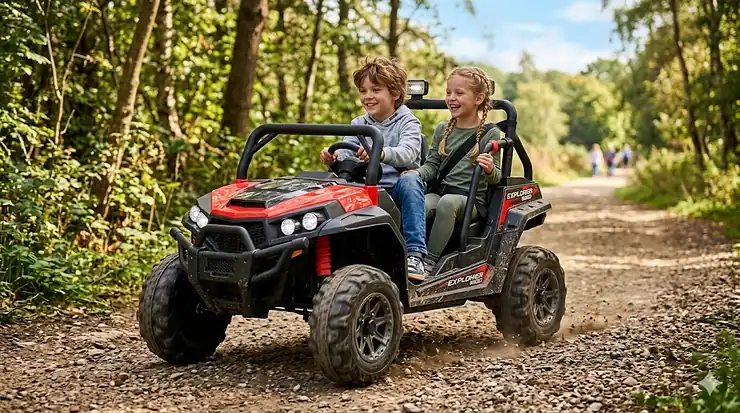
Remember the days when your 8-year-old could barely squeeze into that tiny plastic car they got for their 5th birthday? Fast-forward to today, and the landscape has completely shifted. Modern 2 seater ride on toys for 8-10 year olds aren’t just scaled-up versions of toddler toys — they’re legitimate adventure machines engineered to handle real terrain, genuine sibling teamwork, and the kind of outdoor play that actually gets kids off their screens.
Here’s what most parents overlook when shopping for this age group: by 8-10 years old, kids have outgrown the toy aisle limitations. They need vehicles with enough power to climb backyard hills, enough space to bring a friend along, and enough durability to survive the kind of “testing” that only older kids can deliver. That 12V battery that worked fine at age 5? It’ll struggle on grass with two 70-pound kids aboard. The plastic frame that seemed sturdy for a toddler? It won’t last a month with a pair of adventurous 9-year-olds pushing boundaries.
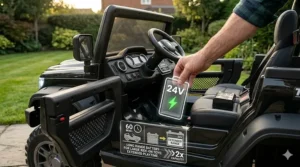
The sweet spot for this age range sits squarely in the 24V category — double the voltage means double the climbing power, nearly twice the speed capability, and battery life that actually lasts through a full afternoon of neighborhood exploration. What you’re really buying isn’t just a toy; you’re investing in shared experiences, teaching cooperation between siblings or friends, and creating the kind of outdoor memories that stick with kids long after the batteries finally give out. Research from the CDC shows that outdoor play significantly improves children’s physical health, brain development, and emotional well-being — making these vehicles tools for healthy development, not just entertainment.
Quick Comparison: Top 5 Two-Seater Models at a Glance
| Model | Voltage/Motor | Weight Capacity | Top Speed | Best For | Price Range |
|---|---|---|---|---|---|
| Firstness 24V UTV | 24V, 4x200W | 110 lbs | 5 mph | All-terrain adventures | $400-$500 |
| ALINUX Metal Frame UTV | 24V, 2x200W | 130 lbs | 4.7 mph | Durability-focused families | $350-$450 |
| POSTACK Side-by-Side | 24V, 4 motors | 130 lbs | 4.9 mph | Remote control peace of mind | $380-$480 |
| Razor Crazy Cart DLX | 24V | 140 lbs | 12 mph | Drift enthusiasts 9+ | $450-$550 |
| Evmore Off-Road Truck | 24V, 4WD | 140 lbs | Variable | Safety-conscious parents | $420-$520 |
Looking at the data above, the ALINUX stands out for families who prioritize durability over flash — that metal frame construction means you’re not replacing body panels after every curb bump, unlike the all-plastic competitors. However, if you’re dealing with rough terrain or steep driveways, the Firstness’s 800W combined motor output delivers noticeably better hill-climbing performance than the 400W alternatives. The Razor Crazy Cart DLX sits in its own category entirely; it’s engineered for drift-style maneuvering rather than straight-line off-road capability, which makes it ideal for paved surfaces and kids who prioritize tricks over trails.
💬 Just one click — help others make better buying decisions too! 😊
Top 5 2 Seater Ride On Toys for 8-10 Year Olds: Expert Analysis
1. Firstness 24V Electric Remote Control UTV
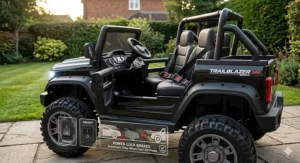
This model immediately signals its capabilities through sheer motor muscle — four independent 200W motors totaling 800W of combined output. What does that actually mean for your driveway? Where competing 12V models bog down on inclines steeper than 10 degrees, the Firstness charges up 15-degree slopes without losing momentum, which translates to tackling those challenging backyard hills that turn other ride-ons into expensive lawn ornaments.
The 19.7-inch seat width deserves specific attention because manufacturers often fudge “2-seater” claims with seats barely wide enough for one big kid. In practical terms, this dimension comfortably accommodates two 8-year-olds side-by-side or a single 10-year-old with room for a backpack and snacks. The 24V 10Ah battery configuration delivers approximately 60 minutes of mixed-use playtime — that’s about 45 minutes if they’re constantly hitting the throttle on grass, closer to 75 minutes if they’re cruising paved paths with occasional stops.
What really separates this from the budget pack is the suspension system. Those rear shocks aren’t cosmetic; they genuinely absorb the jarring impacts that come from kids deliberately seeking out every bump, root, and curb they can find. Without proper suspension, repeated impacts stress the frame welds and loosen electrical connections over time. With it, you’re looking at a vehicle that maintains structural integrity through seasons of aggressive play.
Customer feedback consistently highlights: “Finally has enough power for two kids on grass” and “Made it up our gravel driveway without stalling.”
✅ Pros:
- 800W total motor output handles challenging terrain
- 60-minute battery life supports extended play sessions
- Three speed modes let kids build confidence gradually
❌ Cons:
- Higher price point than 12V alternatives
- Assembly requires 60-90 minutes
Value verdict: In the $400-$500 range, this represents strong value for families with hilly properties or two kids who want to ride together regularly.
2. ALINUX 24V Metal Frame UTV
Where most manufacturers in this category use predominantly plastic construction with metal reinforcement points, ALINUX flipped the script — the entire frame and bottom plate are metal, with plastic body panels as the secondary material. Why does this matter beyond just durability marketing? Because when two 70-pound kids hit a curb at 4 mph, the impact force concentrates at the frame mounting points. Plastic frames can crack at these stress points; metal frames absorb and distribute the impact.
The brake-and-pedal system on this model mimics real vehicle operation more accurately than the basic on/off thumb throttles you’ll find on budget options. Kids actually learn proper acceleration control — feathering the pedal for smooth starts, modulating speed through turns — rather than the jerky “all or nothing” operation that’s common with simpler throttle mechanisms. This might seem like a minor detail until you watch them transition to actual go-karts or ATVs later; the muscle memory transfers directly.
Capacity-wise, that 130-pound limit gives you more runway before they outgrow it. An average 8-year-old weighs around 55-65 pounds, so two of them combined run 110-130 pounds — meaning this model actually accommodates two bigger kids, not just small-framed 8-year-olds. Competing models rated at 110 pounds force you into “one kid only” territory by age 9.
Customer feedback patterns show: “Survived a year of daily abuse from brothers” and “Metal construction worth the slightly higher price.”
✅ Pros:
- Metal frame longevity outlasts plastic competitors
- 130-pound capacity extends usability range
- Real brake/gas pedal system teaches proper control
❌ Cons:
- Weighs 75 pounds (heavier than plastic alternatives)
- EVA tires can’t be inflated if punctured
Value verdict: Around $350-$450, this excels for families prioritizing long-term durability over lightweight portability.
3. POSTACK 24V 4WD Side-by-Side
The standout feature here isn’t the four-wheel drive (though that’s valuable) — it’s the remote control override system that actually functions at meaningful distances. Most parental remotes cut out beyond 30-40 feet due to basic 2.4GHz radio limitations. POSTACK’s implementation maintains clean signal control up to 65 feet, which matters enormously when your 8-year-old is heading toward the neighbor’s flower bed and you’re standing on the porch.
That remote control serves a dual purpose that becomes apparent after the first week of ownership. Initially, you’ll use it for safety — overriding their steering when they’re learning boundaries. But the real long-term value emerges when younger siblings (5-6 years old) want to participate. You can let a 6-year-old sit in the passenger seat while the 9-year-old “drives” with you handling actual control from the remote, creating a shared experience that wouldn’t be possible with manual-only operation.
The 4WD system with EVA (ethylene-vinyl acetate) tires provides superior traction on loose surfaces compared to standard plastic wheels. EVA won’t puncture like pneumatic tires, but it maintains enough flex to grip rather than slip on gravel or wet grass. The trade-off? EVA feels stiffer on pavement, transmitting more vibration. If your primary surface is a driveway, pneumatic tires deliver a smoother ride; if you’re dealing with varied terrain including mud or sand, EVA wins decisively.
Customer insights reveal: “Remote actually works from the deck while they’re in the yard” and “4WD handles our uneven backyard better than friend’s 2WD model.”
✅ Pros:
- Extended-range remote control (65 feet effective)
- 4WD traction handles challenging surfaces
- 130-pound capacity accommodates bigger kids
❌ Cons:
- EVA tires feel harsh on concrete
- Some users report 6-8 week wait times during peak season
Value verdict: At $380-$480, the remote reliability alone justifies the mid-range pricing for parents of younger or less experienced drivers.
4. Razor Crazy Cart DLX (Ages 9+)
Here’s where we pivot from traditional forward-driving vehicles to something completely different — the DLX is engineered specifically for controlled drifting, not point-A-to-point-B transportation. That distinction fundamentally changes who should buy this. If your kid dreams of rally racing or watches drift videos online, this delivers authentic sideways action through Razor’s patented drift bar system. If they just want to cruise around the yard with a friend, they’ll be underwhelmed.
The single-rider design (not technically a 2-seater despite its presence in this guide) supports up to 140 pounds and reaches 12 mph — significantly faster than the UTVs listed above. More importantly, it achieves 12 mph while sideways, which introduces an entirely different skill set. Kids learn counter-steering, weight transfer, and controlled slides — legitimate driving techniques that apply later in life. The bucket seat and hand-operated drift bar mean they’re constantly engaging core muscles to maintain position, adding an unintended workout element you won’t find in sit-and-steer vehicles.
Battery runtime sits around 40 minutes of continuous use, though aggressive drifting drains it faster than casual riding. The 36V system (three 12V batteries in series) delivers consistent power throughout the discharge cycle, avoiding the performance fade you’ll notice with 24V systems as voltage drops below 22V.
User feedback consistently notes: “My 9-year-old mastered drifting in two days” and “Pavement or smooth concrete only — doesn’t work on grass.”
✅ Pros:
- 12 mph top speed for thrill-seeking kids
- Teaches genuine vehicle control skills
- Durable steel frame withstands impact
❌ Cons:
- Single rider only (not true 2-seater)
- Requires smooth surfaces to drift effectively
Value verdict: Around $450-$550, this fills a niche for kids ready to graduate beyond traditional ride-ons, particularly ages 9-12.
5. Evmore 24V Off-Road Electric Vehicle
The Evmore distinguishes itself through comprehensive safety engineering that goes beyond basic seatbelts. Soft-start technology prevents the abrupt lurches that cause younger riders to lose balance during acceleration — the motor gradually ramps power over the first second rather than delivering full torque instantly. This might sound like a minor feature until you’ve watched a 7-year-old get thrown backward on their first launch in a vehicle without soft-start.
That 20-inch seat width matches the Firstness, but Evmore adds passenger armrests that genuinely contribute to safety. When hitting bumps or taking turns, passengers instinctively grab something; without armrests, they grab the driver or the steering wheel. With armrests, the passenger stays secure without interfering with vehicle control. This design consideration shows up most dramatically when an 8-year-old is driving with a 6-year-old sibling aboard — the age gap means the younger one needs that extra reassurance.
The raised chassis provides 4.5 inches of ground clearance, which might seem marginal compared to full-size ATVs but represents a meaningful advantage over the 3-inch clearance typical of budget models. That extra 1.5 inches determines whether you scrape the bottom crossing a lawn drainage channel or clear it cleanly. Over months of use, repeated undercarriage scraping can damage wiring harnesses and battery mounting brackets.
Customer reports emphasize: “Best safety features in this price range” and “Soft-start prevented my younger kid from being scared on first ride.”
✅ Pros:
- Comprehensive safety engineering (soft-start, armrests, lockable doors)
- 140-pound capacity with genuine 20-inch seat
- 4.5-inch ground clearance handles obstacles
❌ Cons:
- Slightly lower top speed than competitors (trade-off for safety features)
- Premium safety features increase cost
Value verdict: In the $420-$520 range, this makes sense for families with younger kids (6-8) transitioning to bigger vehicles or parents prioritizing safety over speed.
How to Set Up Your 2-Seater for Maximum Fun: First 48 Hours Matter
Initial assembly quality directly impacts long-term reliability more than most buyers realize. The typical approach — skim the manual, finger-tighten bolts, throw the battery in — creates problems that surface weeks later as loose connections, rattling body panels, and premature wear.
Assembly Best Practices: Begin with the battery connections. Even if the terminals look secure, apply dielectric grease to prevent corrosion (coastal or humid climates especially). Tighten all wheel nuts to manufacturer specs using an actual torque wrench rather than hand-tightening — overtightening cracks plastic hubs, undertightening causes wobbling that loosens itself further. Check that steering linkages move freely without binding; binding indicates misaligned mounting holes that will stress the system.
Critical First Charge: Most manuals recommend an 8-12 hour initial charge regardless of factory charge level. This synchronizes the battery cells to ensure even discharge rates. Skipping or shortening this first charge creates cell imbalance that reduces long-term capacity. Charge in a cool, ventilated area (not a hot garage) and never leave batteries on the charger for 24+ hours continuously.
Break-in Period: Limit the first three sessions to 15-20 minutes each on flat terrain. This lets motors seat their brushes, allows gears to wear-in smoothly, and helps kids learn controls at low speeds before tackling hills or obstacles. Rushing past break-in is like flogging a new engine before the oil’s been changed — technically possible, but you’ll pay for it in shortened lifespan.
Safety Boundary Training: Before handing over full control, walk the property with your kids and physically mark boundaries with landscape flags. “Stay in the backyard” sounds clear until they discover the side gate is open. Explicit physical markers eliminate ambiguity. Set consequence-based rules: crossing boundaries = vehicle goes in timeout for a day. Consistent enforcement during week one prevents months of boundary disputes.
Real-World Scenario: Matching Vehicle to Family Dynamics
The Daily Commuters (Ages 8 & 10): Two siblings in a suburban setting with a large backyard and a paved cul-de-sac. The older one wants speed and independence; the younger one wants to tag along.
Best match: Firstness 24V UTV. The 800W motor power satisfies the older kid’s need for performance while the two-seater design forces cooperation. The three-speed settings let you start both kids on low speed until trust is earned, then gradually unlock higher speeds as skills improve. Budget expectation: around $450 with spare battery for extended sessions.
The Adventure Seekers (Ages 7 & 9): Rough backyard terrain with hills, a gravel driveway, and occasional neighborhood street use. Kids want to explore rather than stay in one zone.
Best match: POSTACK 4WD with remote control. The 4WD traction handles varied surfaces confidently, while the extended-range remote lets you supervise from distance. The younger one isn’t quite ready for independent control yet, so the remote override provides safety insurance. Budget: around $430, factor in a storage cover for outdoor parking.
The Drift Enthusiast (Age 9 Solo): Single child who watches motorsports videos and wants something more exciting than straight-line driving. Large driveway or basketball court available.
Best match: Razor Crazy Cart DLX. Not ideal for typical two-kid scenarios, but perfect for that specific personality type who’ll spend hours perfecting 360-degree spins. This requires more active supervision since crashes happen more frequently during tricks, but the steel frame construction handles it. Budget: around $500, consider knee/elbow pads.
The Safety-First Family (Ages 6 & 8): One nervous parent, one cautious younger child, combined with one more confident older sibling. Mostly backyard use on grass with some sidewalk paths.
Best match: Evmore 24V with full safety features. The soft-start prevents scary lurches, the lockable doors reassure the parent, and the passenger armrests keep the nervous 6-year-old feeling secure. Slightly slower top speed is actually an advantage here. Budget: around $470, worth it for peace of mind.
Common Mistakes When Buying Multi-Passenger Toys (And How to Avoid Them)
Mistake #1: Assuming “2-Seater” Means Two 8-10 Year Olds — Many models market themselves as 2-seater but base that rating on two 3-4 year olds. Check the actual seat width measurement (should be 19+ inches) and combined weight capacity (110 pounds is bare minimum for this age group; 130+ pounds provides comfort room). If the listing shows toddlers in both seats, that’s your warning sign it’s sized for younger kids.
Mistake #2: Prioritizing Speed Over Torque — Parents get excited about “reaches 6 mph!” specifications without understanding that headline speed means nothing if the vehicle stalls climbing a mild incline. Look for wattage specifications instead: 400W total (4x100W or 2x200W) is entry-level for 8-10 year olds, 600-800W handles challenging terrain confidently. If the listing doesn’t specify wattage, it’s probably underpowered.
Mistake #3: Ignoring Terrain Compatibility — That slick UTV looks amazing cruising across smooth parking lots in the product video. Reality check: Your backyard has grass, roots, uneven ground, and possibly gravel. Verify tire type matches your primary surface. Pneumatic tires = best for pavement and light grass. EVA tires = superior for rough terrain, mud, gravel. Hard plastic wheels = indoor/smooth concrete only.
Mistake #4: Overlooking Battery Replacement Costs — That $300 model seems like a bargain until you realize the proprietary battery costs $120 to replace and has to be special-ordered from overseas. Check replacement battery availability and price before buying. Standard 24V batteries with common connection types cost $40-60 and ship fast; proprietary systems trap you into expensive, slow replacement cycles.
Mistake #5: Buying Too Small “For Now” — Kids in this age range are growing 2-3 inches and gaining 5-8 pounds annually. A vehicle that barely fits two 8-year-olds today will be outgrown before next summer. Size up rather than down; they’ll appreciate the extra room immediately and you’ll get an extra year or two of use before they genuinely outgrow it.
2 Seater Ride On Toys for 8-10 Year Olds vs. Single-Rider Options: The Sharing Factor
The fundamental difference isn’t just “one seat versus two” — it’s about the entirely different usage patterns that emerge. Single-rider vehicles encourage solo play and individual skill development. Your child takes it out alone, practices controls, pushes their own limits, and returns when they’ve had their fill. It’s independent exploration.
Two-seater vehicles force social interaction, for better and worse. Siblings must negotiate who drives first, how fast to go, where to explore. One wants to park and play pirates; the other wants to keep moving. These aren’t bugs in the system; they’re features. Kids learn compromise, cooperation, and conflict resolution through vehicle sharing in ways that solo play doesn’t teach. The flip side? More arguments during the first two weeks until house rules get established.
From a practical standpoint, two-seaters command longer play sessions because kids aren’t competing for solo access. If you have multiple children close in age, a two-seater often gets more total usage than two single-rider vehicles because it eliminates “whose turn is it?” battles. One child drives the first half of the session, they swap positions at the halfway point, everyone’s satisfied. According to the CDC’s physical activity guidelines, children ages 6-17 need at least 60 minutes of physical activity daily — and outdoor ride-on play naturally contributes to meeting this recommendation.
Cost analysis tilts decisively toward two-seaters in multi-child households: one $450 two-seater versus two $280 single-riders equals roughly $110 in savings, plus you’re storing/maintaining/charging only one vehicle instead of two. The space savings alone matter if you’re working with a single-car garage or limited storage.
However, if you have a single child or kids with a wide age gap (8-year-old and 4-year-old, for example), the two-seater’s cooperative advantage disappears. The age gap means the younger one isn’t ready for peer-level play; they’re passengers, not participants. In that scenario, a single-rider matched to the older child’s abilities serves them better.
What to Look for in Safety Features: Beyond the Basic Seatbelt
Modern ride-on safety engineering has evolved significantly beyond “does it have a seatbelt?” The baseline now includes 2-point or 3-point harnesses, but savvy buyers dig deeper into systems that prevent accidents rather than just mitigating them. Quality ride-on toys sold in the U.S. must comply with ASTM F963 safety standards, which the Consumer Product Safety Commission enforces to minimize hazards in children’s products.
Soft-Start Technology: This feature prevents the lurching acceleration that causes loss of control during starts. Standard throttle systems deliver full motor torque the instant kids press the pedal; soft-start ramps power gradually over 1-2 seconds. The difference feels subtle to adults but dramatically impacts kid confidence and safety. When testing, press the accelerator fully from a dead stop — if the vehicle jerks forward aggressively, it lacks soft-start.
Remote Override Range: Parental remote controls vary wildly in effective range. Basic models lose signal beyond 30 feet, rendering them useless for anything beyond very close supervision. Quality systems maintain clean control to 60-70 feet using 2.4GHz radio. Test this before purchase if possible — many retailers allow parking lot demonstrations. If buying online, check reviews specifically mentioning “remote range.”
Ground Clearance vs. Center of Gravity: Higher ground clearance helps navigate obstacles, but it also raises the center of gravity, increasing tip-over risk during sharp turns. The sweet spot sits around 4-5 inches of clearance with a wide wheelbase (at least 30 inches). Avoid models with 6+ inches of clearance unless the wheelbase proportionally increases to maintain stability.
Battery Protection: Quality models house batteries in sealed compartments separate from the passenger area with proper ventilation. Cheaper designs expose battery connections to dirt, moisture, and kid interference. Battery shorts can cause fires; proper isolation isn’t optional. Check that battery compartments require tools to access — if kids can open them with fingers, it’s a design flaw.
Braking Systems: Entry-level models use motor braking only (stopping happens when you release the accelerator). Better models add mechanical disc brakes for faster, more controlled stops. The difference becomes critical at higher speeds or on downhill slopes. A 24V vehicle at 5 mph needs approximately 15 feet to stop with motor braking alone; adding disc brakes cuts that to under 10 feet.
Maximizing Battery Life: Get 2-3 Years Instead of 6 Months
Battery degradation represents the #1 long-term cost factor in electric ride-ons, yet most buyers ignore maintenance until performance drops noticeably. Proper care extends usable battery life from 8-12 months (typical neglected battery) to 30-40 months (well-maintained system).
Charging Discipline: Never let batteries sit fully discharged for extended periods (weeks/months). This causes sulfation — crystal formation on lead plates that permanently reduces capacity. If storing the vehicle seasonally, charge batteries to 70-80% and disconnect them. Recharge every 4-6 weeks during storage even if unused. Use a smart charger that automatically stops at full charge rather than a basic wall adapter that will overcharge if left connected overnight.
Temperature Management: Heat accelerates battery aging exponentially. Never charge batteries immediately after use when they’re warm; let them cool 30-60 minutes first. Store vehicles in climate-controlled spaces if possible; garages that hit 95°F+ in summer drastically shorten battery life. Similarly, extremely cold temperatures (below 35°F) reduce available capacity and increase charging time.
Depth of Discharge Patterns: Running batteries completely flat every single time significantly reduces cycle life. Ideally, recharge when capacity drops to 30-40% remaining rather than waiting for total depletion. Yes, this means more frequent charging cycles, but you’re trading minor inconvenience for doubled battery longevity. Think of it like your phone — running to zero daily kills the battery faster than partial charging habits.
Load Management: Continuously operating at maximum capacity (two heavy kids, steep hills, tall grass) works the battery harder than light use. Vary usage patterns when possible — mix flat terrain sessions with hill climbing, alternate between one and two riders. This doesn’t mean restricting kids’ fun, just being strategic about when you tackle the most demanding challenges.
Connection Maintenance: Every 2-3 months, disconnect battery terminals, clean them with a wire brush to remove corrosion, and apply dielectric grease before reconnecting. Corroded connections create resistance that makes the battery work harder than necessary, generating excess heat and reducing efficiency.
Price Ranges & Value Analysis: Where Does Money Actually Matter?
The 2-seater market stratifies into clear price tiers, each offering distinct value propositions rather than simple “better versus worse.”
Budget Tier ($280-$350): Entry-level models typically feature 12V systems, plastic-heavy construction, and 90-110 pound capacity limits. These work adequately for short-term use with smaller/younger 8-year-olds, but they’ll be outgrown quickly. The economics make sense for families with occasional use patterns or temporary needs (summer rental property, grandparents’ house) rather than daily drivers. Expect 12-18 months of serviceability before kids literally outgrow the weight capacity or wear out the underspec’d components.
Mid-Range Tier ($350-$480): This sweet spot captures the majority of quality manufacturers. You’re buying 24V power plants, metal frame reinforcements, 110-130 pound capacities, and genuine 2-seater dimensions. Differences within this tier come down to specific features — remote control range, motor wattage, tire quality — rather than fundamental capability gaps. For most families with 8-10 year olds, this tier delivers optimal value: sufficient power, adequate durability, reasonable longevity (2-3 years with proper care).
Premium Tier ($480-$650): High-end models add aluminum frame construction, brushless motors (longer lifespan, more efficient), premium suspension systems, and enhanced battery systems. The performance advantage is real but incremental — you’re paying significantly more for 15-20% better acceleration, slightly longer battery life, and refined details. This tier makes economic sense for families with multiple kids who’ll use it continuously for years, enthusiasts who value peak performance, or those with challenging terrain that demands maximum capability.
Specialty Tier ($450-$600): Models like the Razor Crazy Cart DLX sit here. You’re not buying a better UTV; you’re buying a completely different vehicle category. The pricing reflects specialized engineering rather than superior general-purpose performance.
Where does extra money deliver the most value? First priority: motor wattage. The jump from 400W to 800W fundamentally changes usability on hills and rough terrain. Second priority: frame construction (metal versus plastic). Third priority: battery capacity (7Ah versus 10Ah). Everything else — LED light colors, sound effects, cosmetic details — adds cost without meaningfully impacting the core experience.
Maintenance Tips: Keep It Running Through Seasons
Monthly maintenance prevents expensive repairs and extends vehicle life significantly beyond typical usage patterns.
Wheel & Axle Inspection: Spin each wheel and listen for grinding or clicking sounds indicating bearing wear. Tighten wheel nuts if any wobbling is detected — loose wheels create excessive wear that cascades through the drive system. Apply silicone spray to axles every 2-3 months to prevent corrosion and binding.
Electrical Connection Check: Vibration gradually loosens electrical connections. Every month, open the battery compartment and gently tug each wire connection. If any pull free easily, disconnect, clean the terminal with electrical contact cleaner, and reconnect firmly. Check for frayed or exposed wires near moving parts; wrap any damaged sections with electrical tape or replace the wire entirely.
Tire Condition Assessment: Pneumatic tires need pressure checks weekly during active use (most require 8-12 PSI). EVA tires should be inspected for deep cuts or chunks missing from the tread. Completely bald tires lose traction dramatically; plan for replacement when tread depth drops below 2-3mm. Most manufacturers sell replacement tire sets in the $40-60 range.
Motor & Drive System: After every 10-15 hours of operation, remove the motor cover and blow out dust/dirt with compressed air. Accumulated debris causes motors to overheat and gears to wear prematurely. If your model uses chain drive, check chain tension monthly — excessively loose chains skip under load; overly tight chains stress bearings. Apply appropriate chain lubricant (not WD-40, which attracts dirt).
Body Panel Security: Kids view ride-ons as toys; physics views them as vibrating machines. That combination means screws loosen. Every month, walk around with a screwdriver and tighten anything that’s backed out. A single loose screw isn’t a problem; five loose screws lead to a cracked body panel when stress concentrates at the remaining attachment points.
Winter Storage (Seasonal): If storing for months during cold weather, elevate the vehicle on blocks to prevent flat-spotting tires. Disconnect and remove the battery, storing it in a climate-controlled space. Charge to 70% before storage, then recharge monthly during the off-season. Cover the vehicle to prevent dust accumulation but ensure some ventilation to avoid moisture buildup.
❓ Frequently Asked Questions
❓ How long do 24V batteries last in 2 seater ride on toys for 8-10 year olds?
❓ Can two 70-pound kids ride together safely on these vehicles?
❓ What's the difference between 12V and 24V ride-ons for this age group?
❓ Are remote controls necessary for 8-10 year olds or just younger kids?
❓ How do you prevent sibling fights over driving turns?
Conclusion: Making the Right Choice for Your Family’s Adventures
Choosing the right 2 seater ride on toys for 8-10 year olds ultimately boils down to matching vehicle capabilities with your family’s specific circumstances rather than chasing the highest specifications or lowest price. A $500 premium model with 800W of power and 6 mph speed is objectively “better” than a $350 mid-range option, but it’s not necessarily better for you if your kids primarily cruise flat sidewalks at slow speeds.
Start with an honest assessment of your primary use case: Are you dealing with challenging terrain that demands maximum power? Do you have younger kids requiring remote control override? Is this vehicle seeing daily use that justifies premium durability, or occasional use where mid-range quality suffices? The Firstness 24V dominates if hills are involved; the ALINUX metal frame wins for rough-and-tumble durability; the POSTACK excels when remote control peace of mind is priority one; the Evmore leads on comprehensive safety features for younger or more cautious kids.
Remember that the vehicle is ultimately a tool for creating outdoor experiences and shared memories. The “best” choice is the one that gets used consistently rather than sitting in the garage because it’s intimidating, uncomfortable, or not well-matched to your environment. A mid-range model that sees daily use delivers infinitely more value than a premium vehicle that’s “too nice” to risk on rough terrain.
Pay specific attention to battery maintenance, establish clear usage boundaries from day one, and don’t skip the break-in period — these operational factors impact long-term satisfaction as much as initial purchase decisions. With proper care, a quality 24V two-seater should provide 2-3 full seasons of active use before kids genuinely outgrow it, translating to hundreds of hours of outdoor play that would otherwise be spent on screens.
Recommended for You
- 7 Best Pink Ride On Toys for 8-10 Year Olds 24V (2026 Guide)
- Best Ride On Toys for 8-10 Year Olds: 7 Epic Picks 2026
- 7 Best 48-Volt Ride On Toys for 8-10 Year Olds (2026 Guide)
Disclaimer: This article contains affiliate links. As an Amazon Associate, I earn from qualifying purchases. If you purchase products through these links, we may earn a small commission at no additional cost to you.
✨ Found this helpful? Share it with your friends! 💬🤗
