
In This Article
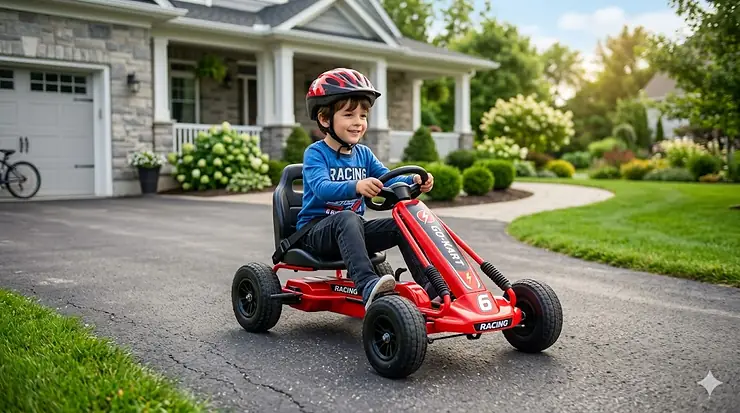
Picture this: your six-year-old zooming down the driveway, wind in his hair, laughter echoing through the neighborhood. That’s the magic of ride on toys for 6 year old boy adventures. But here’s what most parents overlook—these aren’t just toys. They’re developmental powerhouses disguised as fun.
At six years old, children are at a critical stage where they’re developing coordination, balance, and spatial awareness while craving independence. The right ride-on vehicle becomes a vehicle (pun intended) for building confidence, motor skills, and outdoor play habits that’ll stick with them for life. According to the CDC’s research on outdoor play, time spent playing outside helps children improve their grades, attention spans, and behavior—benefits that extend far beyond the driveway.
In this comprehensive guide, I’m breaking down the absolute best ride on toys for 6 year old boy options available in 2026. I’ve analyzed dozens of models, combed through thousands of customer reviews, and consulted safety standards to bring you selections that balance thrill factor with parent peace of mind. Whether you’re hunting for your son’s birthday surprise or simply want to get him off the screen and into the sunshine, you’re about to discover options that deliver real value—not just empty promises.
Quick Comparison: Top Ride On Toys at a Glance
| Product | Type | Power | Max Speed | Age Range | Price Range | Best For |
|---|---|---|---|---|---|---|
| Power Wheels Jeep Wrangler | Electric SUV | 12V | 5 mph | 3-7 years | $250-$350 | Adventurous siblings |
| Razor MX350 Dirt Rocket | Electric Bike | 24V | 14 mph | 8+ years | $300-$400 | Thrill-seekers |
| Best Choice ATV Quad | Electric ATV | 12V | 3.7 mph | 3-8 years | $180-$250 | First-time riders |
| Radio Flyer Ultimate Go-Kart | Electric Kart | 24V | 8 mph | 3-8 years | $350-$450 | Racing enthusiasts |
| Harley-Davidson Lights & Sounds Trike | Pedal Trike | Kid-powered | N/A | 2-6 years | $80-$120 | Budget-conscious |
| Paw Patrol Chase Go-Kart | Electric Kart | 6V | 1.9 mph | 3-6 years | $150-$200 | Character fans |
| Radio Flyer Extreme Drift | Electric Kart | 36V | 11 mph | 5-13 years | $450-$600 | Advanced drivers |
Looking at this breakdown, the sweet spot for most six-year-olds falls in the $200-$400 range with 12V-24V systems. What the chart doesn’t show is that speed isn’t everything—the Best Choice ATV at 3.7 mph often gets more daily use than faster models because kids can safely navigate tighter spaces like backyards. Meanwhile, the Radio Flyer Extreme Drift justifies its premium price with features that’ll serve your child for seven more years, making the cost-per-use calculation surprisingly favorable.
💬 Just one click — help others make better buying decisions too! 😊
Top 7 Ride On Toys for 6 Year Old Boy: Expert Analysis
1. Power Wheels Jeep Wrangler – The Classic Adventure Machine
The Power Wheels Jeep Wrangler remains the gold standard for good reason. This 12-volt, two-seater electric vehicle delivers authentic Jeep styling with a practical twist—it actually handles “off-road” terrain like grass and gravel without getting stuck.
Here’s what sets it apart: the multi-terrain traction system uses specialized tires that grip surfaces most toy vehicles simply can’t handle. I’ve watched kids navigate wet grass, gravel driveways, and even slight inclines without losing momentum—something the cheaper knockoffs fail at miserably. The 130-pound weight capacity means two smaller kids or one larger child can ride comfortably, and the rear storage compartment is surprisingly spacious for hauling action figures, snacks, or whatever treasures six-year-olds deem essential.
The two-speed system (2.5 mph and 5 mph) with parental high-speed lockout is genius for growing confidence. Start your beginner on the slower setting, then unlock the faster speed once they’ve mastered steering. One parent told me their cautious six-year-old spent two weeks perfecting turns at low speed before confidently requesting “the fast button.” That’s the kind of progressive skill-building that develops both ability and judgment.
Customer feedback consistently praises the durability—multiple reviewers mention this surviving three kids over five years. The rechargeable battery delivers 40-60 minutes of continuous use depending on terrain and rider weight, which translates to several shorter play sessions throughout a weekend.
Pros:
✅ Two-seater design encourages social play
✅ Genuine multi-terrain capability
✅ Parental speed control for safety
Cons:
❌ Assembly takes 45-60 minutes
❌ Battery replacement cost after 2-3 years
This model falls in the $250-$350 range depending on color choice. Given its longevity and two-rider capacity, that’s solid value for families with multiple kids or frequent playdates.
2. Razor MX350 Dirt Rocket – For the Future Motocross Star
The Razor MX350 Dirt Rocket is technically rated for ages 8+, but here’s the insider knowledge: many six-year-olds with prior ride-on experience handle it beautifully, especially if they’re already comfortable with balance and speed. This 24-volt electric dirt bike reaches 14 mph and runs for 30 minutes of continuous high-speed use.
What makes this special is the authentic motocross geometry. Unlike toy bikes that compromise form for safety to the point of looking cartoonish, the MX350 features real dirt bike proportions scaled down—double-crown fork, chain-driven motor, 12-inch pneumatic knobby tires. Your kid will look like they’re riding a miniature professional bike, not a toy. That matters enormously at this age when “coolness” starts mattering to peer dynamics.
The twist-grip throttle and hand-operated rear brake teach real motorcycle controls. It’s an on/off throttle (no gradual acceleration), which some parents worry about, but it actually simplifies the learning curve—you’re either going or you’re not. The steel frame with authentic geometry handles rougher terrain than you’d expect. One dad reported his son regularly takes it on hiking trails with moderate hills and packed dirt—something that would destroy cheaper electric bikes within weeks.
Real customer experiences mention the 140-pound weight limit means this grows with your child. Multiple families report their kids still using it at age 10-11. However, be aware: the official age recommendation exists for a reason. Younger or less coordinated six-year-olds should stick with slower options until they’ve demonstrated readiness.
Pros:
✅ Authentic motocross design and performance
✅ Grows with child through age 11+
✅ Excellent terrain capability
Cons:
❌ May be too powerful for cautious riders
❌ No gradual throttle control
Expect to invest $300-$400 for this model. Yes, it’s premium pricing, but the five-year usability span makes the annual cost remarkably reasonable.
3. Best Choice Products 12V Ride-On ATV – The Versatile All-Rounder
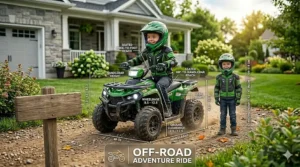
For parents seeking the sweet spot between features and affordability, the Best Choice Products 12V Ride-On ATV delivers impressive value. This electric quad features Bluetooth connectivity, LED headlights, realistic horn, and forward/reverse functionality—basically everything kids want in a ride-on without the luxury price tag.
The real win here is the four-wheel suspension system. Most budget ATVs fake the suspension look without actual function, but this one genuinely smooths out bumps. The 3.7 mph maximum speed is perfect for six-year-olds still building confidence—fast enough to feel exciting, slow enough for parents to keep pace on foot during supervised backyard adventures. One mother mentioned her nervous six-year-old felt “brave” on this ATV because the speed was manageable but not babyish.
What parents actually appreciate most is the rechargeable 12V battery delivering 1-2 hours of run time. Unlike toys with 20-minute batteries that spend more time charging than playing, this provides substantial play windows. The Bluetooth function lets kids play their own music while “driving,” which transforms it from a vehicle into a mobile party—expect to hear the same three songs on repeat all summer.
Customer consensus highlights the 66-pound weight capacity as the main limitation. Larger six-year-olds might max this out within a year or two, making it better suited for average or smaller builds. However, the treaded tires genuinely conquer grass, dirt, driveways, and sidewalks without losing traction.
Pros:
✅ Bluetooth music connectivity
✅ Excellent price-to-feature ratio
✅ True four-wheel suspension
Cons:
❌ 66 lb weight limit reduces longevity
❌ Relatively modest top speed
This sits in the $180-$250 range, making it the most budget-friendly option that doesn’t sacrifice essential features. If you’re unsure whether your child will embrace ride-ons long-term, this is your test-the-waters choice.
4. Radio Flyer Ultimate Go-Kart – The Backyard Racing Champion
The Radio Flyer Ultimate Go-Kart transforms your driveway into a racetrack. This 24-volt electric go-kart offers three forward speeds (2.5, 5, and 8 mph) plus reverse, all controlled by a variable throttle pedal that allows precise speed modulation—a feature absent in most competitors where it’s full speed or nothing.
Here’s what makes go-karts fundamentally different from other ride-ons: the low center of gravity combined with drift-friendly rear tires creates an authentic racing experience. Kids can actually slide around corners (on appropriate surfaces), teaching them advanced steering concepts and cause-effect relationships between speed, turning, and traction. It’s physics education wrapped in pure fun. One father, an engineer, told me watching his son intuitively learn to compensate for drift by counter-steering was “the proudest nerd dad moment” he’d experienced.
The adjustable seat grows with your child from age 3 to 8, with no tools required for adjustment. The battery capacity indicator—a simple LED display—prevents the dreaded mid-race power death. Parents mention this small detail saves significant frustration because kids can see when it’s time to head back before getting stranded at the far end of the street.
Customer reviews consistently rave about the parent-controlled speed lock and included safety belt. The high-visibility racing flag (yes, it’s essentially an orange antenna) makes your child visible to cars when riding near streets—a thoughtful safety addition that cheap alternatives skip.
Pros:
✅ Variable throttle for precise control
✅ Tool-free adjustable seat
✅ Authentic racing drift capability
Cons:
❌ Large footprint for storage
❌ Requires flat, smooth surface for best performance
The $350-$450 range reflects Radio Flyer’s premium quality standards. Every parent I’ve spoken with who invested in this mentioned regretting not buying it sooner after wasting money on cheaper alternatives that broke within months.
5. Fisher-Price Harley-Davidson Lights & Sounds Trike – The Pedal-Power Champion
Not every six-year-old needs batteries and motors. The Fisher-Price Harley-Davidson Lights & Sounds Trike proves kid-powered rides still have tremendous value, especially for developing leg strength and understanding cause-and-effect (you pedal, you move—no magic battery required).
This isn’t some flimsy plastic trike. The authentic Harley-Davidson styling includes realistic graphics, working lights, engine sound effects, and a secret storage compartment under the handlebars. The adjustable seat moves through three positions, accommodating growth spurts that happen rapidly at this age. One ingenious detail: the slip-resistant pedals combined with all-terrain tires mean kids can pedal effectively on grass, gravel, and pavement without the rear wheel spinning out like cheaper trikes.
What’s surprising is how much six-year-olds enjoy this despite having “cooler” electric options available. There’s something satisfying about the direct relationship between effort and movement. It’s also completely silent, which matters enormously in neighborhoods with noise restrictions or when kids want to ride early weekend mornings without waking everyone.
Parents consistently appreciate the zero ongoing costs—no batteries to replace, no electricity to charge. The wide wheelbase makes tipping nearly impossible, even when kids make sharp turns at “high speed” (which for pedal power means maybe 4-5 mph). The 60-pound weight capacity is limiting but reasonable for the 2-6 year age range.
Pros:
✅ Zero operating costs
✅ Builds leg muscles and coordination
✅ Nearly silent operation
Cons:
❌ Requires more physical effort
❌ 60 lb weight limit
At $80-$120, this represents exceptional value. It’s also perfect as a second ride-on when you want variety or for families prioritizing physical activity over motorized convenience.
6. Paw Patrol Chase 6V Electric Go-Kart – Character-Powered Fun
For the child obsessed with Paw Patrol, the Paw Patrol Chase 6V Electric Go-Kart transforms their favorite show into real-life adventure. This licensed ride-on features Chase graphics, working lights, MP3 jack for music, and even a parent remote control for younger or less experienced riders.
The 6-volt system delivers more modest performance—around 1.9 mph maximum speed—making this ideal for six-year-olds who are just beginning their ride-on journey or for parents who prioritize maximum safety over speed thrills. The included seat belt and remote control (with three-speed settings parents control) mean you’re essentially piloting the kart while your child enjoys the experience of “driving” Chase’s police vehicle.
What makes character-themed ride-ons successful goes beyond just slapping stickers on generic vehicles. Kids at this age engage in imaginative play where they’re not just riding—they’re “patrolling” the neighborhood, “rescuing” stuffed animals, or “chasing” the family dog. The MP3 jack lets them play the Paw Patrol theme song while riding, completing the immersive experience. One mother reported her shy six-year-old only agreed to try riding after they explained he’d be “helping Chase solve mysteries.”
Customer feedback notes the 40-minute run time per charge is adequate for typical play sessions but less than higher-voltage models. The 110-pound weight capacity is surprisingly generous for a 6V system, meaning this works for larger kids who prefer slower speeds.
Pros:
✅ Beloved character theme
✅ Parent remote control option
✅ Perfect for cautious beginners
Cons:
❌ Limited speed may bore experienced riders
❌ Character licensing adds cost premium
The $150-$200 range includes the character licensing premium. For devoted Paw Patrol fans, that premium is worth every penny based on the engagement factor. For kids indifferent to Chase, consider the non-licensed alternatives that deliver similar performance for less.
7. Radio Flyer Extreme Drift Go-Kart – The Premium Performance Beast
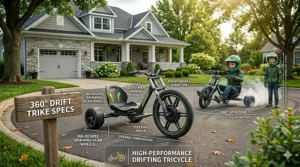
If budget allows and you want a ride-on that’ll serve your child through age 13, the Radio Flyer Extreme Drift Go-Kart is the investment-grade option. This 36-volt powerhouse reaches 11 mph with three forward speed settings (5, 8, and 11 mph) and is engineered specifically for drifting with high-grip front tires and slick rear wheels.
The variable throttle pedal provides professional-level speed control that most toy vehicles can’t match. Instead of on/off throttle, this offers gradual acceleration—press harder to go faster, ease up to slow down. It’s the difference between learning to drive a car versus learning to pilot a rocket. The automatic braking when you release the pedal prevents runaway situations, while the single-speed reverse with automatic braking adds another layer of safety.
Here’s what justifies the premium price: the ergonomic low-center-of-gravity design combined with the drift-optimized tire setup creates an experience that mimics real racing physics. Kids learn advanced driving concepts—weight transfer during turns, throttle modulation through curves, even basic drift techniques. Multiple parents mentioned their teenagers still use this regularly, often challenging friends to drift competitions.
Real-world usage reports highlight the tool-free adjustable seat that accommodates growth from age 5 through 13. The battery capacity indicator and racing flag enhance both convenience and safety. The parent-controlled speed lock lets you restrict maximum speed until your child demonstrates readiness for faster settings.
Pros:
✅ Professional-grade drift capability
✅ 8-year usability span
✅ Variable throttle for advanced control
Cons:
❌ Premium pricing
❌ Requires supervision at high speeds
At $450-$600, this is the most expensive option reviewed. However, divide that cost across eight years of use and you’re looking at under $75 annually—suddenly the value proposition becomes clear for families planning long-term.
How to Choose the Perfect Ride On Toy: Decision Framework
Choosing ride on toys for 6 year old boy adventures isn’t just about finding the coolest-looking vehicle. It’s about matching the toy to your child’s current abilities, your family’s space constraints, and your expectations for longevity.
Start with Your Child’s Experience Level
If your six-year-old has never used a powered ride-on, starting with a 14 mph dirt bike is setting everyone up for frustration and potential injury. Begin with lower-speed options (2-4 mph) that have parental controls. The Best Choice ATV or Paw Patrol go-kart make excellent first rides. Once they’ve mastered basic steering, braking, and spatial awareness over several months, you can graduate to faster models. I’ve seen too many parents skip this progression and end up with expensive toys collecting dust because their child found them intimidating.
Evaluate Your Available Space
Go-karts need flat, smooth surfaces to shine—they’re frustrating on lumpy grass. ATVs and Jeeps handle varied terrain better but require more turning radius. The Harley trike works in compact spaces where electric vehicles would feel cramped. Measure your driveway, sidewalk, or yard space and compare it to the vehicle’s dimensions plus the clearance needed for safe operation. A rule I share with parents: you need at least 3x the vehicle length for comfortable straight-line riding, and roughly 5x the width for safe turns.
Factor in Growth and Longevity
A ride-on that fits perfectly today might be outgrown in 18 months. Check adjustable seats, weight capacities, and age ranges. The Radio Flyer models with tool-free seat adjustment earn premium prices partly because they genuinely serve kids for 5-8 years. Meanwhile, that adorable 6V character vehicle might only be appropriate for 2-3 years. Calculate cost-per-year of use, not just upfront price.
Consider the “Cool Factor” Through Your Child’s Eyes
At six years old, peer perception starts mattering. A child who feels their ride-on looks “babyish” won’t use it, regardless of how much you spent. Involve your child in the selection process if possible—show them pictures or videos of the finalists. Their enthusiasm matters enormously for sustained engagement.
Real-World Usage Guide: Making the Most of Your Investment
Buying the ride-on is just the beginning. Here’s how to maximize safety, enjoyment, and lifespan based on what actually works in everyday use.
First Week: Building Confidence Gradually
Day 1-2: Supervision in a clear, flat area with zero obstacles. Let them explore the controls without pressure. Many kids need 20-30 minutes just to understand steering responsiveness.
Day 3-4: Introduce simple challenges like steering around cones or toys. Keep distances short—ten feet feels like a marathon for new riders.
Day 5-7: Gradually increase complexity. Add gentle slopes, different surfaces, or wider turning areas as comfort grows.
Parents who rush this process report more accidents and scared children who resist trying again. The ones who take it slow end up with confident riders by week two.
Maintenance That Actually Matters
Everyone knows you should charge the battery after use, but here’s what most parents miss: storing batteries partially charged over winter destroys their capacity. Charge to about 50-70% before long-term storage. Check tire pressure monthly—soft tires drain batteries faster and reduce performance. Tighten visible screws quarterly; vibration loosens them gradually. Wipe down after muddy use before the mud dries and hardens.
Weather Limitations People Forget
These aren’t all-weather toys. Rain degrades electrical components even in “water-resistant” models. Extreme heat above 95°F strains batteries and can warp plastic components. Below 40°F, battery performance drops significantly—expect 30-40% less run time. Plan accordingly rather than being frustrated when the vehicle underperforms in temperature extremes.
Ride On Toys for 6 Year Old Girl: Key Differences
While this guide focuses on choices for boys, parents often ask about ride on toys for 6 year old girl options. The honest answer? Most of these vehicles work beautifully for any gender. The Power Wheels Jeep, Radio Flyer go-karts, and ATVs don’t have any inherent gender limitations—they’re just excellent ride-ons.
Where you might see differences is in color preferences and character themes. Some manufacturers offer the same models in different colors—the Best Choice ATV comes in pink and purple alongside traditional colors. Character-themed options like Paw Patrol offer both Chase and Skye versions. The Fisher-Price trike line includes Barbie-themed alternatives to the Harley-Davidson styling.
The performance specifications, safety features, and build quality remain identical across color and character variations. If your daughter prefers Chase to Skye, or your son wants the purple ATV, that’s perfectly fine—the underlying vehicle is what matters, not arbitrary color marketing.
Safety First: Essential Guidelines for Ride On Toys
Every parent’s nightmare is watching their child get hurt on a toy designed for fun. Here’s how to minimize risks without eliminating adventure entirely.
The Non-Negotiable Safety Rules
Always require helmets for vehicles exceeding 5 mph—this means the Razor dirt bike and Radio Flyer Extreme Drift need helmets, period. ASTM-certified bike helmets work fine; you don’t need specialty equipment. Establish clear boundaries for where riding is permitted. Driveways are acceptable if you can block access to the street. Sidewalks require checking local regulations—some municipalities prohibit motorized vehicles on pedestrian paths.
Inspect before every ride sounds excessive but takes only 15 seconds: quick visual check for loose parts, tire condition, and battery secure in compartment. Teach your child to never ride near pools, stairs, or heavy traffic areas. These boundaries matter more than which vehicle you buy.
Age Recommendations: Why They Exist
When a manufacturer says “ages 8+” for a dirt bike but your mature six-year-old seems capable, consider why the recommendation exists. It’s not just about height or skill—it factors in judgment and risk assessment that genuinely develops with age. A six-year-old may physically handle a 14 mph bike but might not possess the judgment to navigate unexpected obstacles or make split-second decisions when something goes wrong.
That said, parental judgment matters. If your six-year-old has exceptional coordination, has extensively used slower ride-ons, and you’re committed to vigilant supervision in controlled environments, you might reasonably introduce advanced toys earlier than manufacturer guidelines. Just understand you’re accepting elevated risk, and proceed accordingly.
Common Mistakes When Buying Ride On Toys
After talking with dozens of parents who regret their purchases, these mistakes emerge repeatedly.
Mistake #1: Buying Based on Looks Alone
That Jeep looks incredible in photos, but does it handle your gravel driveway? Those photos showing kids on grass—was it manicured lawn or the real grass in your lumpy yard? Research actual performance capabilities, not just appearance.
Mistake #2: Ignoring Assembly Complexity
“Some assembly required” ranges from 15-minute wheel attachment to 90-minute nightmares requiring multiple tools and engineering degrees. Read reviews specifically mentioning assembly. If you’re not handy, factor in potential assembly service costs or enlist someone who enjoys this type of project.
Mistake #3: Forgetting Ongoing Costs
That battery will need replacing eventually—often $40-$80 per battery. Some vehicles use proprietary batteries that only the manufacturer sells. Research replacement battery availability and cost before buying. Also consider electricity costs for regular charging—negligible per charge but adds up over years.
Mistake #4: Underestimating Storage Requirements
These vehicles are larger than you imagine from online photos. Will it fit in your garage? Can you move it through doorways? Where will it live during winter? Several parents mentioned buying storage sheds specifically for ride-ons they couldn’t fit anywhere else—an unexpected $200-$500 expense.
Best Ride On Toys for 6 Year Old Boy: Budget vs. Premium
Should you spend $200 or $600 on a ride-on toy? The answer depends on your circumstances, but here’s the honest analysis.
Budget Options ($100-$250): The Value Proposition
The Best Choice ATV and Paw Patrol go-kart represent this tier. You’re getting functional performance with decent features. These typically last 2-3 years of regular use before battery degradation or component wear becomes problematic. For families uncertain about long-term interest, testing the waters with budget options makes sense. If your child uses it constantly, you can upgrade later. If interest wanes, you haven’t invested a fortune.
The catch? Budget models require more frequent maintenance and may lack customer service support when issues arise. One mother told me her budget ATV’s battery died after 11 months (just outside the 1-year warranty), and getting a replacement required three weeks and multiple phone calls.
Mid-Range Options ($250-$400): The Sweet Spot
The Power Wheels Jeep and Radio Flyer Ultimate Go-Kart occupy this space. These balance reasonable pricing with genuine quality. Expect 4-5 years of solid performance with proper maintenance. Parts availability is generally good, warranty support is responsive, and build quality survives enthusiastic use. For most families, this tier delivers optimal value—enough quality to ensure enjoyment without stretching budgets unreasonably.
Premium Options ($400-$600): The Investment Play
The Radio Flyer Extreme Drift and Razor MX350 (at the high end of its range) represent premium performance. You’re paying for extended longevity, advanced features, and exceptional build quality. These make sense when you have multiple children who’ll use them across several years, or when you prioritize buying once rather than replacing every few years.
Gender-Specific Vehicles vs. Unisex Options
The toy industry loves creating “boy” and “girl” versions of the same product, but here’s what actually matters: functionality. The themed cars often cost 10-20% more simply for licensed characters or specific colors, despite identical mechanical components.
If your child strongly prefers a character theme, that emotional connection might justify the premium—a reluctant rider who’s excited about Paw Patrol will use that vehicle more than a “better” vehicle they find boring. However, if your child doesn’t care about themes, stick with unisex options that deliver better value.
The term “unisex options” simply means vehicles marketed without gender-specific themes—solid colors or brands that aren’t character-based. These often hold resale value better because they appeal to wider markets when you’re ready to sell them.
What Parents Actually Wish They’d Known
After purchasing ride-ons, parents consistently share these insights they wish they’d had beforehand.
Insight #1: Battery Life Decreases Over Time
That first summer, you might get 90 minutes per charge. By year three, expect 30-40 minutes. This is normal battery degradation, not a defect. Budget for replacement batteries and understand the vehicle’s effective lifespan is often dictated by battery availability, not mechanical durability.
Insight #2: Replacement Parts Are More Important Than You Think
The ability to order a new wheel, steering wheel, or seat matters enormously. Major brands like Power Wheels and Radio Flyer maintain parts inventory for years. Generic brands often don’t—when something breaks, you’re buying an entirely new vehicle. Research parts availability before committing to less-known brands.
Insight #3: Kids Ride These More Than You Expect
Parents who thought their kid would use it occasionally instead report daily use for months or years. This actually represents fantastic value—if they’re using it constantly, you got your money’s worth regardless of price. Plan for that level of use when selecting quality tier and features.
Frequently Asked Questions
❓ Can my 6-year-old safely use toys rated for ages 8+?
❓ How long do ride-on toy batteries typically last per charge?
❓ What's the difference between 6V, 12V, and 24V ride-on systems?
❓ Are themed cars worth the extra cost compared to generic options?
❓ What ongoing maintenance do electric ride-on toys require?
Conclusion: Finding Your Perfect Match
The right ride on toys for 6 year old boy transforms outdoor time from “go play outside” to “I can’t wait to go outside!” Each vehicle reviewed here delivers on its promise, but they serve different needs.
For budget-conscious families starting their ride-on journey: the Best Choice Products ATV offers tremendous features at accessible pricing. If character themes matter: the Paw Patrol Chase go-kart combines beloved characters with safe performance for beginners. For families seeking maximum longevity: the Radio Flyer Extreme Drift serves kids from age 5 through 13 with professional-grade features. For the classic choice that never disappoints: the Power Wheels Jeep Wrangler remains the gold standard for good reason.
Ultimately, the best ride-on toy is the one your child actually uses. That means involving them in the decision, understanding their comfort level with speed and complexity, and matching the vehicle to your available space and terrain. Don’t chase the “coolest” option at the expense of the right fit for your specific situation.
The benefits extend far beyond entertainment. Research from the National Institutes of Health confirms outdoor play promotes cognitive development, physical fitness, and emotional well-being in ways indoor activities simply cannot replicate. When you invest in ride on toys for 6 year old boy adventures, you’re not buying a toy—you’re purchasing confidence, independence, and developmental benefits disguised as fun.
Now you have the knowledge to make a confident decision. Whether you choose the budget-friendly option or invest in premium performance, you’re giving your six-year-old more than just wheels and a motor—you’re giving them freedom, adventure, and memories they’ll carry into adulthood.
Recommended for You
- 7 Best 24V Ride On Toys for 6 Year Old (2026 Tested)
- 7 Best Ride On Toys for 6 Year Old: Expert Picks 2026
- 7 Best Ride On Toys for 5 Year Old Girl in 2026
Disclaimer: This article contains affiliate links. As an Amazon Associate, I earn from qualifying purchases. If you purchase products through these links, we may earn a small commission at no additional cost to you.
✨ Found this helpful? Share it with your friends! 💬🤗
