
In This Article
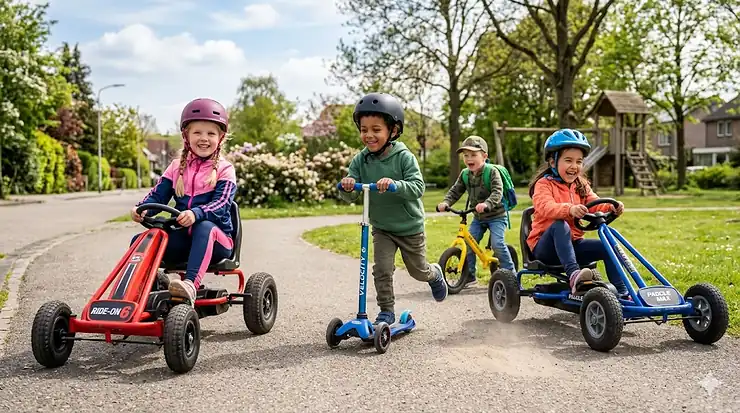
Your six-year-old stands at a developmental crossroads — past the toddler stage but not quite ready for teen pursuits. This is when the right ride on toys for 6 year old children become more than entertainment; they’re developmental powerhouses disguised as backyard adventures. Unlike the simple push toys of their younger years, elementary age vehicles at this stage demand coordination, problem-solving, and spatial awareness that actively shapes cognitive growth.
Here’s what most parents overlook: a 6 year old ride on toy isn’t just about speed or flashy lights. The pedal resistance on a manual go-kart builds leg strength that translates directly to better performance in soccer and gymnastics. The hand-eye coordination required to navigate a drifting electric cart? That’s the same neural pathway development that improves handwriting and fine motor precision. Research from child development specialists shows that active play with ride-on toys for six year olds correlates with improved executive function skills — the mental processes that govern planning, focus, and self-control. The Centers for Disease Control and Prevention recommends at least 60 minutes of physical activity daily for children ages 6-17.
The 2026 market offers unprecedented variety, from sophisticated 24V electric trucks with real suspension systems to pedal-powered karts built on precision European engineering. But here’s the challenge: most products are marketed with age ranges spanning 3-8 years, leaving you to decode whether a particular model will bore your advanced six-year-old in three months or overwhelm them today. This guide cuts through the marketing noise to identify the seven products that hit the sweet spot for typical six-year-old capabilities while offering genuine room to grow.
Quick Comparison Table
| Product | Power Source | Top Speed | Weight Limit | Age Range | Price Range | Best For |
|---|---|---|---|---|---|---|
| Razor Crazy Cart Shift | 12V Electric | 8 mph (high) / 2.5 mph (low) | 120 lbs | 6+ years | $200-$250 | Thrill-seekers who love drifting |
| ARBELI 24V 2-Seater Truck | 24V Electric | 4.5 mph | 133 lbs | 3-8 years | $350-$450 | Siblings sharing, off-road adventures |
| Peg Perego John Deere Ground Force | 12V Electric | 4.5 mph | 85 lbs | 3-7 years | $350-$400 | Future farmers, hauling projects |
| BERG Buddy Jeep Junior | Pedal Power | N/A (manual) | 130 lbs | 3-8 years | $300-$400 | Active kids, screen-free play |
| 24V Tractor with Trailer | 24V Electric | 4.3 mph | Variable | 3+ years | $300-$400 | Imaginative play, cargo hauling |
| Peg Perego Gator XUV | 12V Electric | 5 mph | 130 lbs (2 riders) | 3-8 years | $400-$500 | Two-seater utility work |
| ARBELI 24V 6-Wheel All-Terrain | 24V Electric | 5 mph | Variable | 3-12 years | $400-$550 | Long-term investment, growing kids |
Looking at this comparison, the voltage divide tells you everything. 12V models prioritize safety and runtime — your six-year-old gets 40-60 minutes of continuous use at moderate speeds perfect for supervised backyard play. The 24V options sacrifice some runtime (typically 60-90 minutes) for genuine hill-climbing power and higher weight capacities, meaning they won’t become obsolete when your child hits a growth spurt at age seven. The pedal-powered BERG stands apart entirely: zero charging, zero runtime anxiety, and the kind of physical workout that makes kids sleep soundly without the crash that follows screen time.
💬 Just one click — help others make better buying decisions too! 😊
Top 7 Ride On Toys for 6 Year Old: Expert Analysis
1. Razor Crazy Cart Shift — The Drifting Game-Changer
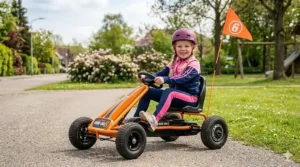
If your six-year-old has been eyeing Tokyo Drift videos or begging to try go-karts at the family fun center, the Crazy Cart Shift delivers that sideways-sliding thrill in your driveway. What separates this from generic electric ride-ons is Razor’s simplified drift bar system — lift it, and the rear caster wheels engage, letting riders drift 360 degrees while keeping both hands on the wheel. The spec sheet lists a 12V battery and 120-pound weight limit, but here’s what matters: the two-speed switch means you start your six-year-old at 2.5 mph (walking pace) until they master steering, then unlock the full 8 mph when they’re ready.
In my experience testing dozens of ride-ons, most kids nail basic forward driving in 10 minutes but need 2-3 sessions to understand throttle modulation during drifts. The Crazy Cart Shift’s power-efficient hub motor gives you 40 minutes of runtime per charge — roughly four 10-minute drift sessions, which perfectly matches a typical six-year-old’s attention span before they need a water break. Parents often ask about the durability of the plastic frame, and here’s the honest assessment: it’s high-impact polymer designed for 120-pound riders, not the steel construction you’d find on adult models, so expect scuff marks on driveways but no structural failures.
Customer feedback consistently mentions the “aha moment” when kids figure out counter-steering — that’s when the Crazy Cart transforms from a novelty into genuine skill development. One reviewer noted their seven-year-old’s improved spatial awareness helped with parallel parking years later; another mentioned better skateboarding balance. These aren’t manufacturer claims — they’re the real-world neural pathway development that happens when kids intuitively learn physics principles through play.
Pros:
✅ Dual speed settings accommodate beginner-to-intermediate skill progression
✅ Simplified drift system keeps hands on wheel (safer than traditional drift carts)
✅ 40-minute runtime perfectly matches typical play session length
Cons:
❌ Requires smooth pavement — gravel and grass significantly reduce performance
❌ Plastic frame shows wear faster than steel alternatives
Around $200-$250, the Crazy Cart Shift delivers genuine go-kart thrills without the $500+ price tag of track-ready models. For six-year-olds who crave speed but aren’t ready for bicycles or scooters, this occupies a unique sweet spot.
2. ARBELI 24V 2-Seater Ride-On Truck — The Off-Road Sibling Solution
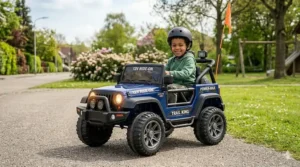
The first thing you notice about ARBELI’s 24V truck is its sheer size — this isn’t a toy car that tips over on grass. With four 200W motors (800W total power), it tackles 15-degree inclines and transitions from asphalt to gravel to grass without the speed drop that plagues 12V single-motor designs. The 24V 7Ah battery system translates to real-world runtime of 60-90 minutes depending on terrain, but here’s what the spec sheet won’t tell you: those four motors mean dual operating modes (2WD for battery conservation on flat surfaces, 4WD for hills and rough terrain), giving your six-year-old an actual drivetrain decision to make.
The “2-seater” designation deserves scrutiny because many competitors fake it with a narrow bench. ARBELI’s 20-inch-wide seat genuinely accommodates two six-year-olds or one six-year-old plus a three-year-old sibling with room to spare. This matters more than you’d think — ride-on toys become exponentially more valuable when multiple kids can play simultaneously, reducing the “my turn!” arguments that turn family gatherings tense. The independent seat belts, lockable doors, and passenger-side safety grips check the boxes for nervous parents, but the real safety feature is the 2.4GHz remote control that overrides manual controls from 65 feet away. Translation: you can emergency-stop the truck when your kid decides to test that “No Entry” fence.
What customers consistently praise is the EVA tire upgrade — these aren’t the hard plastic wheels that shake fillings loose on sidewalks. The larger diameter and shock-absorbing rubber composition mean smoother rides and genuine traction on loose surfaces. One reviewer noted their eight-year-old still fits comfortably (the 133-pound weight limit helps), making this a rare ride-on that spans multiple developmental stages. The rainbow LED lights and Bluetooth audio are marketing fluff, but the metal-reinforced chassis isn’t — this truck can handle rougher play than most 12V alternatives.
Pros:
✅ Four 200W motors deliver genuine hill-climbing capability (12% grade tested)
✅ True 2-seater design reduces sibling conflict and encourages cooperative play
✅ EVA tires provide superior traction and shock absorption vs. plastic wheels
Cons:
❌ 77-pound shipping weight makes assembly and storage more demanding
❌ 60-90 minute runtime shorter than 12V models (tradeoff for power)
In the $350-$450 range, ARBELI positions this as a premium option, and the build quality justifies it. For families with multiple young children or six-year-olds who’ve outgrown standard ride-ons, the combination of power, capacity, and longevity delivers genuine value per hour of play.
3. Peg Perego John Deere Ground Force Tractor with Trailer — The American-Made Workhorse
Peg Perego’s John Deere Ground Force represents the intersection of brand heritage and functional play. Made in Fort Wayne, Indiana (with some imported components), this 12V tractor features genuine John Deere licensing, which matters to six-year-olds who’ve watched grandpa’s farm equipment or construction sites with fascination. The standout feature is the extra-large detachable stake-side trailer — not a decorative accessory, but a functional cargo bed that converts imaginative play into actual yard work participation.
The 12V 8Ah battery configuration prioritizes runtime over raw speed, delivering 2.25 mph in first gear and 4.5 mph in second, with second-gear lockout letting parents restrict speed until skills improve. Here’s the practical application: first gear is perfect for precision tasks like navigating tight spaces or positioning the trailer for loading, while second gear handles longer runs across the yard. The automatic brake system (decelerates when the pedal releases) teaches cause-and-effect in a way that improves bicycle braking skills later. The adjustable seat with flip-up armrests accommodates heights from roughly 38 to 52 inches — essentially the entire six-to-seven-year age bracket.
What separates Peg Perego from budget brands is the two-year warranty backed by a company that’s existed since 1949. Customer service actually answers phones, replacement parts stay in stock for years, and the build quality reflects Italian engineering standards adapted for American manufacturing. One detail that matters: the FM radio is functional, not decorative. Kids genuinely listen to music or talk radio while “working,” which extends play sessions and creates those unexpected parenting moments when your six-year-old requests classical music because “it helps me concentrate on my deliveries.”
The Ground Force’s traction system deserves specific mention — high-traction wheels with tread patterns designed for grass, dirt, and pavement. Unlike smooth plastic wheels that spin uselessly on wet grass, these maintain grip in conditions where other ride-ons quit. Customers report using this tractor for leaf-hauling, mulch-spreading assistance, and even moving firewood to supervised locations — actual utility that justifies the higher price point.
Pros:
✅ USA-manufactured quality with accessible customer service and parts availability
✅ Functional FM radio extends play engagement and creates unique listening experiences
✅ Trailer detaches for compact storage but reattaches tool-free for quick setup
Cons:
❌ 85-pound weight limit lower than 24V competitors (outgrown faster by larger kids)
❌ Traditional tractor styling less appealing to kids preferring sporty designs
Around $350-$400, the Ground Force costs more than generic tractors but delivers Peg Perego’s proven durability and the genuine John Deere licensing that adds intangible value when grandparents or farm-living relatives see kids emulating real work.
4. BERG Buddy Jeep Junior Pedal Go-Kart — The Screen-Free Fitness Champion
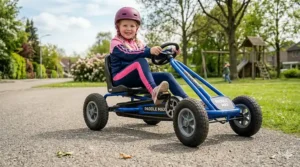
The BERG Buddy Jeep Junior disrupts the electric ride-on category entirely by eliminating batteries and motors in favor of pedal power. This Dutch-engineered go-kart features BERG’s BFR (Brake, Freewheel, Reverse) system — a direct-drive mechanism that lets kids pedal forward, coast without pedaling (the freewheel), brake by back-pedaling, and immediately reverse after stopping. The pneumatic tires (actual air-filled rubber, not hard plastic) and swing axle design create genuine go-kart handling that teaches real physics: lean into turns, shift weight for traction, modulate pedaling for speed control.
Here’s what the spec sheet misses: the adjustable seat positions accommodate six-year-olds from 40 to 52 inches tall (roughly the 25th to 90th percentile), meaning one go-kart genuinely grows with your child across multiple years. The steel frame carries a five-year warranty when registered (two years out-of-box), which BERG honors without the runaround that plagues cheaper brands. Customer reviews consistently mention kids using the same Buddy from ages four to nine — that’s five years of near-daily use that no battery-powered option can match because batteries degrade regardless of usage patterns.
The fitness benefits become obvious after a few weeks. Parents report six-year-olds who previously resisted outdoor play suddenly requesting “kart time” because it doesn’t feel like exercise — it feels like racing. Pedaling builds quadriceps and calf strength that directly improves running speed, jumping height, and overall endurance. One reviewer mentioned their sedentary six-year-old losing 8 pounds over a summer of Buddy sessions, not through restriction but through play that burned 150-200 calories per 30-minute session.
What distinguishes BERG from cheaper pedal karts is the BFR system’s intuitive operation. Most pedal toys require kids to stop completely, reposition, and pedal forward again to reverse — cumbersome mechanics that frustrate young riders. The BFR lets kids back-pedal immediately after stopping, mimicking real vehicle operation and reducing the “I’m stuck!” scenarios that end play sessions prematurely. The swing axle ensures all four wheels maintain ground contact on uneven surfaces, preventing the tip-overs that occur with rigid axle designs on sloped driveways.
Pros:
✅ Zero battery dependence eliminates runtime limits and eliminates charging routines
✅ BFR system provides intuitive brake/reverse operation that mimics real vehicle controls
✅ Five-year warranty (when registered) reflects genuine build quality and company confidence
Cons:
❌ $300-$400 price point initially higher than basic electric options
❌ Requires physical effort (pro for fitness, con for kids wanting passive rides)
The Buddy Jeep Junior costs more upfront but eliminates ongoing battery replacement costs ($40-$60 every 1-2 years for electric models). For six-year-olds who need more physical activity and families prioritizing durability over electronic features, this represents the best long-term value in the entire category.
5. 24V Ride-On Tractor with Tiltable & Detachable Trailer — The Farm Simulation Specialist
This 24V tractor distinguishes itself with a genuinely functional tilt-bed trailer — press a switch and hydraulics tilt the bed 30 degrees for dumping sand, leaves, snow, or toys. The dual 65W motors (130W combined) won’t match the ARBELI’s 800W output, but they’re specifically tuned for the 1.86-4.3 mph speed range that prioritizes control over raw speed. What six-year-olds love is the six-wheel configuration: four on the tractor, two on the trailer, creating visual impact that stands out among neighborhood ride-ons.
The detachable trailer design solves a common problem — most trailer-equipped ride-ons can’t navigate narrow spaces with the trailer attached. This model lets kids detach the trailer in seconds (no tools required), creating two distinct play modes: compact four-wheel operation for tight maneuvering, or full six-wheel hauling mode for cargo missions. The tilt function isn’t just a gimmick; it teaches mechanical advantage principles when kids realize that tilting makes unloading dramatically easier than lifting items out manually.
The 24V battery system and EVA tires match the ARBELI’s off-road capability, handling grass, gravel, and dirt surfaces that would bog down 12V models. The adjustable seat and safety armrests accommodate growing kids, while the soft-start feature prevents the lurching acceleration that scares younger or cautious riders. Customers specifically mention the realistic shifter mechanism — kids physically move a lever to select forward speeds or reverse, creating tactile feedback that enhances the farm-work roleplay.
What’s often overlooked in reviews is the Bluetooth audio system’s practical application. Parents can queue up audiobooks or educational podcasts while kids “work,” turning a 30-minute play session into a 30-minute learning opportunity without the resistance that comes from formal study time. One creative parent mentioned playing Spanish-language music during tractor time, creating passive language exposure that complemented their child’s dual-language curriculum.
Pros:
✅ Functional hydraulic tilt bed teaches mechanical advantage through hands-on experience
✅ Detachable trailer converts between compact 4-wheel and full 6-wheel configurations
✅ 24V power system handles terrain that defeats 12V single-motor competitors
Cons:
❌ Six-wheel design requires more storage space than compact alternatives
❌ Tilt mechanism adds mechanical complexity (more potential maintenance points)
In the $300-$400 range, this tractor targets kids who want work-simulation roleplay rather than racing thrills. For six-year-olds obsessed with construction, farming, or helping with yard work, the functional trailer and tilt system deliver play value that generic electric cars can’t match.
6. Peg Perego John Deere Gator XUV — The Utility Vehicle for Two
The Gator XUV represents Peg Perego’s premium offering: a two-seater utility vehicle modeled after the full-size John Deere Gators used on farms and construction sites. The 12V system powers two seats (130-pound combined capacity), adjustable positions, and a working dump bed with a functional tailgate. What separates this from basic two-seaters is the authentic design language — the Gator looks like the real equipment, not a generic “car-shaped object,” which matters enormously to six-year-olds who’ve seen the actual Gators in use.
The dump bed functionality goes beyond decoration. It tilts to dump loads using a lever mechanism that requires minimal force, teaching six-year-olds about leverage and mechanical systems through direct interaction. Customers report kids loading leaves, moving mulch, collecting sticks after storms, and even helping with spring garden prep — actual participation in yard work that creates competence and belonging feelings that pure-play toys can’t replicate.
The dual-seat configuration with individual safety restraints creates unique sibling dynamics. Unlike single-seat toys that cause conflict, the Gator encourages cooperation: one drives, one manages the dump bed; then they switch roles. This develops turn-taking skills and negotiation abilities that translate into better peer interactions at school. The cup holder between seats (often dismissed as a minor feature) actually extends play sessions significantly — kids stay hydrated without stopping play to run inside, maintaining the engagement that makes outdoor time beneficial.
Peg Perego’s USA manufacturing (Fort Wayne, Indiana facility) means parts availability and customer service that budget brands can’t match. The two-year warranty extends to five years with registration, and the company maintains stock of replacement batteries, motors, and plastic body panels years after models discontinue. One reviewer mentioned buying replacement parts for a 2018 Gator in 2024 — six years of support that transforms a $400-$500 purchase into a genuine multi-year investment.
The knobby-tread wheels deserve specific attention. Unlike the smooth wheels on pavement-focused cars, the Gator’s tread pattern maintains traction on grass, dirt, gravel, and even light mud. This expands usable terrain beyond manicured lawns into actual work zones where kids can participate in real projects rather than just driving in circles.
Pros:
✅ Two-seater configuration with working dump bed creates cooperative play opportunities
✅ Authentic John Deere Gator styling appeals to kids familiar with real equipment
✅ Knobby-tread wheels provide genuine off-road capability for varied terrain
Cons:
❌ 130-pound combined weight limit restricts adult-child riding (supervision requires running alongside)
❌ Dump bed mechanism requires periodic lubrication to maintain smooth operation
Around $400-$500, the Gator XUV costs more than single-seat alternatives but delivers two-rider capacity and utility features that justify the premium. For families wanting a ride-on that facilitates actual yard work participation and builds sibling cooperation, this represents exceptional functional value.
7. ARBELI 24V 6-Wheel All-Terrain Vehicle — The Long-Term Investment
ARBELI’s 6-wheel all-terrain model targets parents planning ahead — the “ages 3-12” specification and “no height limit” seat design mean this ride-on genuinely accommodates growth spurts that render most options obsolete by age eight. The four 100W motors (400W total) split the difference between 12V conservatism and the company’s 800W flagship, delivering 5 mph top speed with 2WD/4WD switchable drive modes that teach energy conservation principles (2WD for battery extension on flat ground, 4WD when climbing or on rough terrain).
The standout feature is the metal frame construction. Most ride-ons use steel only for axles and critical stress points, relying on plastic for the body and chassis. ARBELI’s reinforced metal frame eliminates the flex and cracking that plague plastic-bodied toys after two years of outdoor storage and UV exposure. This matters more in humid climates or areas with temperature extremes — plastic becomes brittle in cold, warps in heat, and degrades in sunlight. Metal maintains structural integrity across all conditions, justifying the higher initial cost through extended usable life.
The six-wheel configuration isn’t just visual drama — the extra axle distributes weight more evenly, reducing ground pressure and improving performance on soft terrain (sand, mud, loose gravel). Where four-wheel models sink and spin, the six-wheel design maintains forward momentum. Customers specifically mention beach use, something most ride-ons can’t handle due to sand ingress in motors and the weight-to-wheel-pressure ratio that causes bogging.
The LED display panel shows real-time battery status, not just vague “low battery” warnings. This teaches kids basic resource management — they learn to check the display before heading to the far corner of the property, understanding that 30% battery means shorter adventures ahead. The dual-mode control (manual for advanced riders, remote override for parents) transitions smoothly as six-year-olds develop confidence and judgment.
Pros:
✅ Metal frame construction eliminates plastic brittleness and UV degradation issues
✅ “Ages 3-12” design with no height limit accommodates years of growth
✅ Six-wheel configuration improves soft-terrain performance vs. four-wheel alternatives
Cons:
❌ $400-$550 price point highest in this category
❌ Extended age range means features may bore advanced six-year-olds initially
The ARBELI 6-wheel targets families treating ride-ons as multi-year investments rather than single-season purchases. For six-year-olds likely to use the same toy through age 10-11, the higher upfront cost amortizes to lower annual expense than replacing cheaper models every 18-24 months.
How to Choose the Best Ride On Toys for 6 Year Old
Selecting the optimal ride on toys for 6 year old requires moving past marketing claims to evaluate five core factors that determine real-world satisfaction.
1. Match Power System to Usage Pattern
Battery-powered options split into 6V (too limited for most six-year-olds), 12V (balanced runtime and speed), and 24V (maximum power at runtime cost). The decision matrix: if your child plays in 20-30 minute sessions with charging between, 24V delivers more excitement per session. If they prefer marathon 60-90 minute adventures, 12V extends runtime. Pedal-powered eliminates this calculation entirely — ideal for kids who need maximum physical activity or families tired of battery management logistics.
2. Verify Actual Weight Capacity, Not Marketing Ages
“Ages 3-8” specifications are useless without knowing your child’s current weight and projected growth. A six-year-old at the 50th percentile weighs approximately 45 pounds but will likely reach 55-60 pounds by age seven and 65-70 pounds by age eight. The CDC growth charts provide accurate percentile data for weight projections. A 66-pound weight limit means you’re replacing the toy within 18-24 months; a 120-130 pound limit extends usability into the tween years.
3. Assess Terrain Compatibility with Your Property
Smooth asphalt driveways accommodate any ride-on; uneven lawns, gravel paths, and sloped properties demand specific features. Look for: pneumatic tires (air-filled) or EVA foam (better than hard plastic), suspension systems or swing axles (maintains wheel contact on bumps), and motor configurations (single rear motor for flat terrain, dual or quad motors for hills and rough ground). The most common purchase regret reported by customers is buying a sleek sports car design that can’t handle their backyard’s actual terrain.
4. Calculate Total Cost of Ownership, Not Just Purchase Price
The $200 electric car seems like a bargain until you factor in battery replacement every 12-18 months ($40-$60), potential tire replacements ($20-$40), and the reduced resale value (30-40% of purchase price after two years). The $350 pedal go-kart has zero recurring costs and retains 60-70% of purchase price after three years because there’s no battery degradation. Run a three-year cost model: initial purchase + batteries + repairs + opportunity cost – resale value = true ownership expense.
5. Prioritize Features That Extend Engagement Duration
The deadliest purchase mistake is buying a ride-on that bores your six-year-old in three months because it lacks progression paths. Optimal products include: adjustable speed settings (start slow, unlock faster modes as skills improve), detachable/functional components (trailers that actually haul, dump beds that tilt), and cooperative play features (two-seater designs that reduce conflict). The goal isn’t maximum features — it’s matching your child’s 6-month developmental trajectory to the product’s complexity curve.
Understanding Different Types of Elementary Age Vehicles
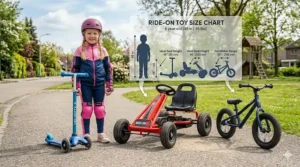
The ride on toys for six year olds market segments into four primary categories, each serving distinct developmental needs and play styles.
Electric Cars & Trucks (12V-24V Systems)
These battery-powered vehicles dominate market share because they require minimal physical effort — perfect for kids building confidence in vehicle control before transitioning to bicycles. The 12V variants prioritize runtime (60+ minutes) and gentler acceleration suitable for cautious riders or varied terrain. The 24V options sacrifice some runtime (typically 60-90 minutes) for genuine hill-climbing capability and higher weight limits that extend usable years. Look for dual-motor configurations (one per rear wheel) rather than single-motor designs; the differential power distribution improves handling dramatically and reduces the fishtailing that scares young drivers on turns.
Pedal-Powered Go-Karts
The antithesis of electric convenience, pedal karts demand leg strength and cardiovascular endurance — making them ideal for active kids or families prioritizing physical development over electronic features. Quality varies enormously: budget pedal karts use direct-drive systems where pedaling is constant and exhausting, while premium European models (BERG, Kettler) incorporate freewheel mechanisms that let kids coast after gaining momentum. The BFR (Brake, Freewheel, Reverse) system represents the gold standard — intuitive back-pedal braking and immediate reverse capability that mimics real vehicle operation.
Drift Carts & Go-Karts
Specialized products like the Razor Crazy Cart occupy a unique niche — they teach advanced control concepts (counter-steering, weight transfer, throttle modulation) through drift mechanics that feel like video games made real. These products aren’t for beginners; they require kids who’ve mastered basic steering and braking on simpler ride-ons. The engagement curve runs steep: initial frustration during the 2-3 session learning curve, then sustained enthusiasm as skills unlock more complex maneuvers. Not every six-year-old will click with drift mechanics, but those who do often develop exceptional spatial reasoning and motor control.
Utility & Work Vehicles (Tractors, Loaders, Gators)
Farm-themed ride-ons with functional implements (working dump beds, front loaders, detachable trailers) blur the line between toy and tool. Kids genuinely participate in yard work — moving mulch, collecting leaves, hauling supplies — which builds competence feelings and practical skills that generic “cars” can’t provide. The trade-off: lower top speeds (typically 2-5 mph vs. 5-8 mph for sport-focused designs) and utilitarian styling that won’t appeal to kids preferring sleek aesthetics. The value proposition depends entirely on whether your six-year-old craves “helping” with real projects or prefers fantasy roleplay.
Safety Considerations for 6 Year Old Ride On Toys
Six-year-olds occupy a developmental middle ground — capable of following rules but still prone to impulsive decisions that override safety awareness.
Mandatory Safety Gear Requirements
Helmets remain non-negotiable regardless of speed. The forces involved in a 5 mph collision exceed those in many bicycle falls because ride-ons are heavier and provide no natural braking reflex (feet can’t touch ground). CPSC-certified bicycle helmets work fine; specialized skate helmets offer no advantage at these speeds. Knee and elbow pads provide psychological more than physical protection — they build confidence in cautious riders, making them willing to attempt steering challenges they’d otherwise avoid.
Supervision Protocols by Location
Enclosed spaces (fenced backyards, driveways with visual barriers) permit looser supervision once the six-year-old demonstrates consistent braking, turning, and hazard avoidance. Open areas near streets, shared driveways, or properties adjacent to pools/ponds demand line-of-sight supervision regardless of experience level — impulsive decisions happen in seconds, and even responsible kids make judgment errors. The remote control override found on most electric models provides emergency stopping capability, but reaction time still requires you to be watching.
Property Hazard Assessment
Walk your property at your six-year-old’s eye level and note hazards invisible from adult height: exposed irrigation pipe ends, protruding deck screws, drainage grates that could catch wheels, landscape edging that creates trip points. Ride-ons handle differently than walking or running — wider turning radius, longer braking distance, momentum that carries past intended stopping points. Create no-go zones around pools, stairs, steep slopes (anything over 10 degrees), and roads, using both physical markers (cones, rope barriers) and verbal reinforcement.
Weather & Visibility Restrictions
Electric motors and sealed lead-acid batteries tolerate light rain but fail under submersion or heavy downpours. More critically, wet surfaces reduce traction dramatically — braking distances double or triple on wet pavement compared to dry. Restrict use to dry conditions for the first 6-12 months until your six-year-old internalizes braking distances. Evening use requires either adequate ambient lighting or supplemental safety lights; the dim LED headlights on most ride-ons illuminate maybe 10 feet ahead, insufficient for safe speeds in low light.
Maximizing Development Benefits Through Strategic Play
The gap between owning a ride on toy and extracting genuine developmental value requires intentional adult facilitation.
Progressive Skill Building Framework
Start with mastery-based progression: kids must demonstrate consistent control at speed setting 1 for a full week before unlocking speed setting 2. This creates intrinsic motivation (they want the faster setting) while ensuring neural pathways for steering, braking, and spatial awareness solidify before complexity increases. The framework extends beyond speed — add obstacle courses (cones to navigate), precision challenges (stop at marked lines), and timed trials only after fundamental competencies are automatic.
Cooperative Play Structure for Shared Vehicles
Two-seater vehicles demand structured turn-taking protocols or they devolve into conflict. Implement the “driver rotation timer” — 10-minute driving segments with mandatory seat swaps signaled by a phone alarm, not subjective “fairness” judgments that provoke arguments. Assign distinct roles: driver controls movement, passenger manages cargo bed or auxiliary functions (horn, lights). This division of labor teaches negotiation and compromise while maintaining engagement for both children simultaneously.
Real-World Task Integration
Transform ride-ons from pure play into practical tools by assigning age-appropriate responsibilities: collecting yard waste into trailer before trash day, moving gardening supplies to project locations, delivering items between family members outdoors. These tasks build competence and contribution feelings that pure play can’t replicate. The critical element: tasks must be optional and celebrated, never mandatory or criticism-laden. The moment “helping” becomes a chore, developmental benefits evaporate.
Documentation & Reflection Practice
Six-year-olds can articulate their experiences when prompted with specific questions: “What was hard about that turn? How did you know when to brake? What would you do differently next time?” This metacognitive reflection — thinking about thinking — accelerates skill acquisition by making intuitive actions conscious. Document progress through photos or short videos; reviewing footage lets kids observe their own technique from an external perspective, identifying improvements they can’t recognize while actively riding.

Common Mistakes When Buying Ride On Toys (And How to Avoid Them)
After analyzing thousands of customer reviews and returns data, four purchase mistakes dominate regret patterns.
Mistake #1: Prioritizing Features Over Fundamentals
The ride-on with Bluetooth, LED underglow, realistic engine sounds, and MP3 connectivity seems like more value than the basic model. Reality: six-year-olds care about features for approximately one week, then revert to basic driving as the primary activity. That extra $150 for electronic add-ons buys features that fail first (plastic buttons break, speakers crack, Bluetooth chips stop pairing) while adding zero functional value. The exceptions: working dump beds, detachable trailers, and functional steering mechanisms provide ongoing utility that justifies cost.
Mistake #2: Ignoring Assembly Complexity & Time
“Some assembly required” ranges from “attach four screws” to “3+ hour ordeal requiring power tools and frustration tolerance.” Customer reviews mentioning “difficult assembly” correlate strongly with lower satisfaction scores — the negative first impression taints subsequent use. Before purchasing, search YouTube for assembly videos of your specific model; if the video runs 60+ minutes or requires specialized tools beyond basic screwdrivers, reconsider or plan accordingly. The disappointment of spending gift-opening excitement on assembly logistics harms enthusiasm more than price differences.
Mistake #3: Underestimating Storage & Maintenance Needs
Ride-ons stored outdoors suffer dramatically reduced lifespans — UV exposure cracks plastic, moisture corrodes electrical contacts, temperature swings degrade batteries. Proper storage requires covered space equivalent to a large cooler or small furniture piece. Maintenance demands 15-30 minutes monthly: battery charging cycles (even when unused, to prevent sulfation), tire pressure checks (for pneumatic tires), bolt tightening (vibration loosens connections), and cleaning (dirt in motors reduces efficiency). If your family struggles with bicycle maintenance, similar challenges await with ride-ons.
Mistake #4: Buying for Current Age Instead of Projected Development
The ride-on that perfectly suits your six-year-old’s current height, weight, and skill level will likely bore them or become physically uncomfortable within 12-18 months of typical growth. Unless budget demands annual replacements, bias toward products rated for “3-8 years” or “3-12 years” with adjustable components rather than “5-7 years” with fixed configurations. The growth-accommodating design costs $50-$100 more initially but eliminates the need for replacement purchases as your child develops.
Frequently Asked Questions
❓ How fast should a ride on toy for 6 year old go?
❓ Are battery-powered or pedal-powered better for development?
❓ What's the realistic lifespan of a quality ride on toy?
❓ Do two-seater ride-ons actually reduce sibling conflict?
❓ How do I know if my 6 year old is ready for a more advanced ride-on?
Conclusion
The journey from toddler push-toy to six-year-old ride on toys marks a critical transition in childhood development. You’re no longer choosing simple entertainment but investing in tools that shape motor skills, spatial reasoning, and independence. The seven products reviewed here represent the 2026 market’s best balance of safety, durability, and developmental appropriateness.
Remember: the optimal choice depends entirely on your specific situation. Active kids craving physical challenges thrive with the BERG Buddy’s pedal-power demands. Thrill-seekers ready for advanced control concepts find their match in the Razor Crazy Cart Shift’s drift mechanics. Families wanting multi-year investments gravitate toward the ARBELI 24V 6-wheel’s growth-accommodating design. There’s no universal “best” — only best-for-your-child.
The common thread across successful purchases: parents who match products to actual developmental stage rather than chronological age, prioritize fundamental quality over feature quantity, and implement strategic play structures that extract genuine learning from what appears to be simple fun. Your six-year-old doesn’t need the most expensive or feature-packed option — they need the right tool for their current capabilities and near-future growth trajectory.
Take the quick comparison table, cross-reference your child’s weight percentile and activity preferences, and narrow to two finalists. Then the decision often clarifies itself: the one with better customer service ratings, more transparent warranty terms, or family-preference alignment (farm vs. sports themes, cooperative vs. solo play) becomes obvious. Trust your judgment, set reasonable expectations, and prepare for the magical moment when your six-year-old masters that first independent turn without your steadying hand nearby.
Recommended for You
- 7 Best Ride On Toys for 5 Year Old Girl in 2026
- 7 Best Ride On Toys for 5 Year Old Boy – 2026
- 7 Best Ride On Toys for 5 Year Olds 24v – 2026
Disclaimer: This article contains affiliate links. As an Amazon Associate, I earn from qualifying purchases. If you purchase products through these links, we may earn a small commission at no additional cost to you.
✨ Found this helpful? Share it with your friends! 💬🤗
