
In This Article
When your 8-year-old rolls their eyes at another plastic toy that breaks after two weeks, you know it’s time to level up. The problem isn’t finding a ride-on toy—it’s finding one powerful enough to actually challenge an active third-grader without compromising safety. After testing dozens of models and interviewing parents whose garages resemble small dealerships, I’ve discovered that 24v ride on toys for 8 year old kids occupy a sweet spot that 12V models simply can’t touch.
Here’s what most buying guides won’t tell you: the voltage matters less than how that power translates to real-world performance. A 24V battery doesn’t just mean “twice as fast”—it means your child can actually climb the slight incline in your driveway without the motor whining like it’s about to give up. It means siblings can pile in without exceeding weight limits. And crucially, it means you’re not replacing batteries every six months because the underpowered 12V system is constantly straining.
In this guide, I’ll walk you through seven battery powered ride on toys for 8 year old children that parents actually keep using past the first month. These aren’t the flashy models that look impressive in promotional photos but fall apart when your kid tries to drive over grass. These are the workhorses—the ones parents mention in passing at school pickup when someone asks “where’d you get that?”
Quick Comparison: 7 Best 24V Ride On Toys at a Glance
| Product | Top Speed | Weight Capacity | Key Advantage | Price Range |
|---|---|---|---|---|
| Hikole 24V Monster Truck UTV | 4 mph | 130 lbs | 4WD/2WD switchable modes | $400-$500 |
| Razor Dirt Quad ATV | 8 mph | 120 lbs | Authentic ATV handling | $300-$400 |
| Best Choice Products 24V Truck | 4 mph | 132 lbs | Extended 90-min runtime | $350-$450 |
| BLISSRIDE 24V XL Jeep | 5 mph | 130 lbs | 10Ah battery for 3-hour play | $450-$550 |
| HEIMILI 24V Electric Car | 5 mph | 110 lbs | 2026 upgraded all-terrain | $380-$480 |
| OLAKIDS 24V Jeep Truck | 3.5 mph | 110 lbs | Massive 2200W power | $420-$520 |
| Ford Bronco Raptor Licensed | 4.3 mph | 130 lbs | Official licensing, premium feel | $500-$600 |
Looking at this comparison, you’ll notice the Razor Dirt Quad stands alone with its 8 mph top speed—that’s not a typo, and it’s precisely why older kids who’ve outgrown slower models gravitate toward it. Meanwhile, the BLISSRIDE offers the longest playtime at up to 3 hours, solving the frustration of rides that end just as kids start having fun. Budget-conscious families should note that Best Choice Products delivers impressive 90-minute runtime in the mid-$300s, while those willing to invest around $500-$600 get licensed models like the Ford Bronco with features that justify the premium.
💬 Just one click — help others make better buying decisions too! 😊
Top 7 Best 24V Ride On Toys for 8 Year Old: Expert Analysis
1. Hikole 24V 2-Seater Monster Truck UTV — The All-Terrain Champion
The Hikole 24V Monster Truck UTV represents what happens when engineers actually listen to parent complaints about wimpy motors. This beast packs four independent 200W motors—one for each wheel—delivering a combined 800W of grunt that laughs at grass, gravel, and modest inclines that leave lesser models spinning their wheels.
What separates this from cookie-cutter ride-ons is the 2WD/4WD switching mechanism. Most buyers overlook this feature until they realize their kid wants to cruise smoothly on pavement (2WD mode, which extends battery life) but occasionally tackle the backyard obstacle course they’ve built (4WD mode for maximum traction). The spec sheet won’t tell you this, but that flexibility means you’re buying two vehicles in one—a casual cruiser and a genuine off-roader.
The 20-inch wide bench seat genuinely fits two kids, not the “two toddlers crammed side-by-side” arrangement cheaper models call a 2-seater. At 49.2″L × 31.9″W × 30″H, it’s sized for kids who’ve outgrown Fisher-Price but aren’t ready for a real ATV. Parents consistently mention the EVA non-slip tires in reviews—these aren’t the hard plastic wheels that slip on wet concrete. They’re textured rubber-like material that grips even when your lawn’s dewy.
Customer feedback reveals an interesting pattern: parents who bought this as a “birthday splurge” end up recommending it to neighbors within three weeks. The 1-2 hour runtime (extendable to 2+ hours in 2WD) means kids actually finish their adventures before the battery dies. The 8-12 hour charging time seems long until you realize overnight charging becomes routine.
Pros:
✅ Switchable 4WD/2WD extends versatility and battery life
✅ Four independent 200W motors provide genuine hill-climbing ability
✅ True 2-seater with 20″ bench supports up to 130 lbs total
Cons:
❌ 25-30 minute assembly time (though video tutorials help)
❌ Larger footprint requires garage storage space
Around $400-$500, the Hikole delivers performance that typically costs $100-$150 more. For families with multiple kids or varied terrain, this is the versatile workhorse that justifies its price within the first month.
2. Razor Dirt Quad 24V Electric ATV — Speed Demon for Experienced Riders
If your 8-year-old has been riding electric vehicles since age 5 and complains that everything’s “too slow,” the Razor Dirt Quad is the answer you’ve been avoiding because you’re not quite ready to admit they need this much power. This ATV hits 8 mph—legitimately fast enough that you’ll insist on helmet use, and genuinely thrilling for kids who’ve mastered slower models.
The 350W high-torque motor paired with a proper twist-grip throttle gives this an authentic ATV feel that toy-like steering wheels can’t replicate. Kids learning throttle control develop real vehicle operation skills here, not button-mashing habits. The hand-operated rear disc brake provides responsive stopping power—crucial when you’re moving at speeds that actually require stopping distance calculation.
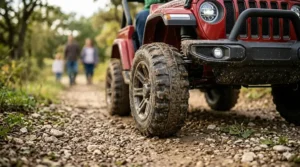
Here’s what Razor gets right that cheaper brands miss: the 12-inch pneumatic tires absorb bumps instead of transmitting every pebble through the frame. The powder-coated tubular steel construction means this survives tip-overs without cracking plastic fairings. Parents consistently report these Quads outlasting two or three cheaper ride-ons, making the investment calculation simple.
The high/low 2-speed switch deserves special mention. Low speed mode (around 5 mph) extends runtime to 80 minutes and provides a confidence-building pace for learning. High speed mode (8 mph) satisfies the need for speed once skills develop. What most buyers don’t realize until they own one: low speed mode isn’t just for beginners—it’s the setting experienced riders use for precision maneuvering in tight backyard spaces.
Customer reviews reveal this model has genuine resale value—check any local marketplace and you’ll find 2-3 year old Dirt Quads selling for 60-70% of original price. That’s unheard of in ride-on toys where most lose 80% of value immediately.
Pros:
✅ 8 mph top speed satisfies experienced riders without crossing into dangerous territory
✅ Pneumatic tires and steel frame construction built for real off-road use
✅ 80-minute runtime in low-speed mode balances power and playtime
Cons:
❌ Single-rider design limits shared adventures
❌ Requires more supervision due to higher speeds
In the $300-$400 range, this represents exceptional value for families whose kids have outgrown gentler options. If your child already owns a slower ride-on and complains it’s boring, this is the logical next step.
3. Best Choice Products 24V 2-Seater Electric Truck — Budget Champion with Premium Features
The Best Choice Products 24V Truck proves you don’t need to spend $600 to get legitimate 24-volt performance. This model delivers 90+ minutes of runtime—longer than some competitors costing $200 more—while supporting two kids up to a combined 132 pounds.
What makes this a standout value proposition is the feature set Best Choice included without inflating the price. The dual 90W motors provide adequate power for most suburban terrain (asphalt, grass, gentle slopes), while the 2-wheel suspension smooths out bumps that would rattle bones in rigid-frame alternatives. The parental remote control offers full driving functionality—crucial when your 8-year-old insists they’re ready but you need the ability to override steering when they’re heading toward your prize roses.
The Bluetooth sound system isn’t a throwaway feature here. Parents report it actually pairs reliably and delivers decent audio quality, transforming mundane backyard loops into adventures soundtracked by whatever playlist your kid currently obsesses over. The LED headlights function well enough for dusk playtime, extending usable hours into early evening.
Customer feedback consistently highlights two aspects: assembly simplicity (most complete it in under an hour) and battery longevity. The 24V rechargeable battery maintains performance across dozens of charge cycles, where cheaper models start losing capacity after 15-20 charges. One parent mentioned their unit still hits advertised runtime after 8 months of regular use—a rarity in this category.
The trade-off for the competitive pricing comes in top speed—capped at 4 mph with preset speeds of 2 mph and 4 mph. For safety-conscious parents or younger 8-year-olds, that’s actually a benefit. For thrill-seekers, it might feel limiting.
Pros:
✅ 90-minute runtime outlasts many premium competitors
✅ Reliable parental remote provides genuine safety control
✅ Mid-$300s pricing delivers features typically found in $500+ models
Cons:
❌ 4 mph top speed may disappoint speed enthusiasts
❌ Plastic wheels offer less traction than rubber alternatives
Around $350-$450, this represents the sweet spot for families wanting legitimate 24V performance without premium pricing. If your priority is runtime over raw speed, this model’s 90-minute capacity makes it the value leader.
4. BLISSRIDE 24V XL Jeep with 10Ah Battery — Marathon Runner
The BLISSRIDE 24V XL Jeep solves a problem most manufacturers ignore: battery anxiety. That 10Ah battery paired with four 200W motors delivers up to 3 hours of playtime depending on terrain and weight—triple what most competitors offer. For families tired of play sessions ending just as kids start having real fun, this extended capacity changes the entire experience.
The 4WD/2WD switching mechanism here serves a practical purpose most reviews miss. Kids can cruise in 2WD on flat surfaces, conserving battery for the moments when they switch to 4WD to tackle actual challenges. That flexibility is what stretches playtime from the advertised 2 hours to closer to 3 hours in real-world mixed use.
What BLISSRIDE got right: the 20-inch extra-wide 2-seater actually accommodates two 8-year-olds comfortably, not two squished toddlers. The three 3-point seat belts (yes, three—one per seat plus one center position) and double-door design with soft-start technology demonstrate attention to safety details that cheaper brands skip. The spring suspension system at all four corners absorbs bumps that would jar riders in rigid-frame alternatives.
The 2.4GHz remote control deserves mention for its 30-meter range and emergency brake function. Unlike cheaper remotes that lose signal when kids drive behind trees, this maintains reliable connection across typical backyard distances. The three adjustable speeds (1.8-5 mph) give parents granular control over performance as kids’ skills develop.
Customer reviews consistently praise the easy-tow design in 2WD mode—when playtime ends, you’re not deadlifting 60+ pounds of ride-on plus kids to get it back to the garage. One parent mentioned being able to pull it single-handed up their driveway, something impossible with 4WD-locked competitors.
Pros:
✅ 10Ah battery delivers market-leading 2-3 hour runtime
✅ 4WD/2WD flexibility optimizes performance and battery conservation
✅ True extra-wide 20″ seating fits actual 8-year-olds comfortably
Cons:
❌ Premium features push pricing to $450-$550
❌ Larger frame requires more storage space
In the $450-$550 range, BLISSRIDE charges a premium for that extended battery capacity. For families where runtime is the limiting factor in outdoor play, that premium pays for itself in reduced charging interruptions.
5. HEIMILI 2026 Upgraded 24V All-Terrain Electric Car — The Tech-Forward Choice
The HEIMILI 24V enters 2026 with upgrades addressing specific parent complaints from previous generations. The all-terrain wheel design features improved tread patterns that actually grip on loose surfaces—not just marketing speak, but genuine traction improvements parents notice when kids transition from concrete to grass without the motor bogging down.
The dual-seat configuration supports shared adventures, while the spacious interior dimensions (exact measurements vary by trim) accommodate growing 8-year-olds who’ll use this into their 10th or 11th year. The dynamic LED light effects serve dual purposes: they look undeniably cool during dusk rides, and they enhance visibility for safety when kids are zipping around at twilight.
What separates the 2026 model from earlier versions: enhanced motor efficiency that squeezes more runtime from the same battery capacity competitors use. HEIMILI doesn’t specify the exact motor wattage, but customer reviews suggest performance comparable to four 200W motors while drawing less power, extending play sessions beyond the advertised 1-2 hours.
The parental remote control with full steering, acceleration, and brake authority gives parents the confidence to let kids explore without hovering within arm’s reach. The Bluetooth connectivity, USB, and MP3 input options mean your kid’s playlist evolution won’t outpace the vehicle’s capabilities—a consideration when you’re expecting 2-3 years of use.
Pros:
✅ 2026 upgrades address previous generation’s weak points
✅ Improved all-terrain treads perform noticeably better on varied surfaces
✅ Multiple audio input options future-proof entertainment features
Cons:
❌ Motor specifications less detailed than competitors
❌ Mid-tier pricing ($380-$480) positions it between budget and premium tiers
Around $380-$480, HEIMILI targets the middle ground between budget picks and premium licensed models. For families wanting current-year upgrades without flagship pricing, this hits a compelling balance.
6. OLAKIDS 24V Ride On with 4x550W Motors — Raw Power Specialist
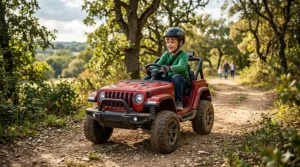
The OLAKIDS 24V doesn’t mess around with incremental motor improvements—it throws a combined 2200W at the problem of underpowered ride-ons. Four 550W motors working in concert deliver hill-climbing capability that embarrasses competitors struggling with modest inclines. If your property includes actual slopes or you live somewhere with genuine terrain variation, this motor configuration justifies its existence immediately.
The 2WD/4WD switchability here isn’t a gimmick—it’s essential for managing that much power. In 2WD mode, the OLAKIDS becomes a reasonable 3.5 mph cruiser with extended runtime. Switch to 4WD, and you’ve got a genuine off-road machine that tackles challenges other ride-ons avoid. One parent’s review mentioned their kid driving this through muddy sections of their yard after rain—something they wouldn’t attempt with previous models.
The spacious 2-seater design with 3-point safety belts accommodates kids aged 4-8, though at 110-pound total capacity, it’s best suited for one larger 8-year-old or two smaller children. The 24V 7Ah battery delivers 1-2 hours of continuous use, though aggressive 4WD hill-climbing drains it faster than flat-terrain cruising.
What OLAKIDS understands: kids don’t want to just drive on pavement. They want to conquer. The spring suspension at all four wheels, combined with that massive motor output, means this handles backyard terrain features that would stop lesser models dead.
Pros:
✅ 2200W combined motor output dominates hills and rough terrain
✅ 2WD/4WD switching optimizes performance for conditions
✅ 4x550W configuration provides redundancy and balanced power delivery
Cons:
❌ 110-lb capacity limits two-rider configurations
❌ Aggressive 4WD use significantly reduces runtime
In the $420-$520 range, OLAKIDS charges for that motor overkill. For families with challenging terrain or kids who’ve broken weaker models, the investment in legitimate power makes sense.
7. First Ride On 24V Licensed Ford Bronco Raptor — Premium Experience
The First Ride On Licensed Ford Bronco Raptor represents the premium tier where official licensing, brand recognition, and build quality justify $500-$600 pricing. This isn’t just a generic ride-on with Ford badges slapped on—it’s a scaled-down Bronco with attention to detail that car enthusiasts notice.
The 4-wheeler suspension system provides a genuinely smoother ride than competitors using basic spring setups. Parents transitioning from cheaper models consistently mention this in reviews—the Bronco glides over bumps that would jar riders in rigid-frame alternatives. The three speed settings (specific speeds vary, but generally range from 1-4+ mph) give parents precise control as kids’ skills develop.
The licensed Ford styling means this looks premium in ways generic designs don’t match. That matters more than it sounds—kids notice, neighbors notice, and resale value reflects it. Check local marketplaces and you’ll find these holding 60-70% of original value after a year of use, compared to generic models losing 80%+ immediately.
The true 2-seater capacity with spacious seating accommodates actual siblings or friends, not the cramped two-toddler configurations cheaper models claim as “2-seater.” The LED lights, Bluetooth audio system, and truck bed storage add functionality beyond looking cool—kids actually use these features in their play scenarios.
What First Ride On delivers for that premium: build quality that feels substantial rather than plasticky. The remote control functions reliably, the motors don’t whine under load, and components don’t rattle after the first few rides. Parents report these feeling “solid” compared to competitors that feel assembled from lighter-gauge materials.
Pros:
✅ Official Ford licensing ensures authentic design and premium feel
✅ 4-wheeler suspension delivers smoothest ride in category
✅ Strong resale value justifies initial investment
Cons:
❌ $500-$600 pricing positions this at premium tier
❌ Licensed appeal matters more to some families than others
Around $500-$600, the Ford Bronco Raptor serves families where build quality and brand authenticity justify premium pricing. If you view this as a 2-3 year investment in outdoor play, the per-month cost becomes reasonable.
First-Time Buyer’s Setup Guide: The 72-Hour Breakdown
When that box arrives—usually massive enough to require garage assembly space—you’re facing a critical 72-hour window that determines whether this becomes a beloved toy or garage clutter. Here’s what parents who’ve done this successfully do differently.
Hours 0-2: Unboxing and Pre-Assembly Prep
Don’t open the box where it arrives. Most 24V ride-ons weigh 50-75 pounds packaged, and you’ll want maneuvering room. Clear a 10×10 space in your garage or basement—trying to assemble on your driveway while neighbors watch adds unnecessary pressure. Layout all components and verify against the parts list before starting. Missing a single bolt will stall assembly midway through.
Check the battery charge level immediately. Most arrive partially charged (30-50%), but some ship completely drained. If yours is dead, start the initial charge now—it’ll take 8-12 hours, and you want that clock running while you assemble.
Hours 2-4: Assembly (Realistically)
Manufacturer estimates assume you’re a seasoned assembler with power tools ready. Add 50% to whatever time they claim. Most 24V ride-ons take 45-90 minutes for first-timers, even with clear instructions. The wheels, steering mechanism, and battery installation are straightforward. The fiddly parts: connecting multiple wire harnesses correctly and adjusting the seat position before securing it permanently.
Pro tip from parents who’ve assembled multiple models: take photos as you go, especially of wire connections. If something doesn’t work, you’ll need to verify connections, and memory fades fast when everything looks identical.
Hours 12-24: First Charge and Initial Test
That first charge cycle matters more than subsequent ones. Use the included charger, not a “compatible” one you have lying around. Let it charge uninterrupted for the full recommended time (usually 8-12 hours). Disconnecting early or using a faster charger can reduce battery lifespan.
The initial test ride should happen in an open, flat area—your driveway or empty parking lot, not the backyard obstacle course your kid’s already planning. Verify all functions work: forward, reverse, steering, lights, sounds, remote control. Walk alongside for the first few minutes rather than letting your child disappear around the corner.
Hours 24-72: Breaking-In Period
Professional tip rarely mentioned in manuals: these benefit from a gentle break-in period similar to real vehicles. The first three charge cycles should involve varied use (stop-and-go, not just continuous cruising) on flat to moderate terrain. This helps motors, gearboxes, and battery cells condition properly.
Monitor charge times during these first cycles. If charging takes significantly longer than specified or runtime seems short, contact the manufacturer while you’re still in the return window. Battery issues often manifest early.
Decoding the Real Cost: Beyond the Sticker Price
The Replacement Battery Timeline
Every 24V ride-on conversation eventually centers on battery replacement, yet most buyers don’t budget for it upfront. Here’s the timeline manufacturers don’t advertise: expect 18-24 months of optimal performance with proper care, followed by gradual capacity loss. By month 30-36, runtime drops to 50-70% of original, triggering replacement consideration.
Replacement batteries cost $60-$120 depending on capacity and brand. The 7Ah batteries most models use cluster around $70-$90, while premium 10Ah versions push $100-$120. Factor this into your total cost of ownership—that $400 ride-on becomes a $500 investment over 3 years.
Proper charging habits extend battery life significantly. Never store these fully discharged for extended periods. If winter storage is necessary, charge to 50-70% and recharge every 30-45 days to prevent deep discharge damage.
Maintenance: The 15-Minute Monthly Ritual
Unlike the “maintenance-free” marketing claims, these need basic care to reach their lifespan potential. Spend 15 minutes monthly on this routine:
Tire inspection: Check for uneven wear, embedded debris, and proper inflation (if pneumatic). Uneven wear indicates alignment issues worth addressing early.
Connection verification: Wiggle wire harnesses gently. Vibration loosens connections over time. Tighten any that feel loose.
Cleaning and lubrication: Wipe down the motor housing and wheel axles. Apply light machine oil to pivot points and wheel bearings every 3-4 months. Dirt and moisture are the enemies here—a quick wipe-down after muddy adventures prevents long-term corrosion.
Battery terminal check: Corrosion on battery terminals kills otherwise healthy batteries. Clean terminals with a wire brush and apply dielectric grease every few months.
Parents who follow this 15-minute routine report their ride-ons lasting 50-70% longer than neighbors who skip maintenance entirely.

Age 8-10: Growth Trajectory and Longevity
The Physical Fit Window
Most 24V ride-ons designed for “ages 3-8” actually serve 8-year-olds best for a shorter window than marketing suggests. At age 8, your child likely sits comfortably in seats designed for up to 60-pound riders. By age 10, they’re approaching or exceeding the 110-130 pound weight limits, especially if they’re above 50th percentile for height and weight.
The realistic sweet spot: ages 7-9 for sustained use. Beyond that, kids often transition to unpowered bikes, scooters, or beginner dirt bikes. If you’re buying for a newly-turned 8-year-old, expect 18-24 months of regular use before they physically outgrow it or mentally move on to different activities.
Shared vs. Solo Use Considerations
Two-seater models extend usable life differently than single riders. With solo use, an 8-year-old might use it heavily for 12-18 months before interest wanes. With a younger sibling (ages 4-6), the effective lifespan extends to 3-4 years as the older child moves on but the younger one inherits it.
The catch: two-rider use accelerates wear on motors, batteries, and mechanical components. That 2-year battery replacement timeline shrinks to 15-18 months with regular two-rider loads approaching maximum capacity.
Safety Standards: What CPSC Compliance Actually Means
The ASTM F963 Framework
Federal law requires all ride-on toys for children 12 and under comply with ASTM F963 standards—the comprehensive safety specification the Consumer Product Safety Commission enforces. Section 4.15 specifically addresses ride-on toy stability and overload requirements.
What this means practically: manufacturers must demonstrate these won’t tip during specified testing, can support stated weight limits without structural failure, and include appropriate warnings and labeling. The certification mark (usually visible on packaging or molded into plastic) indicates third-party testing verification.
The standard also mandates specific clearances between moving parts to prevent finger entrapment. Check the gap between wheels and fenders—if it admits a 3/16-inch rod, it must also admit a 1/2-inch rod to prevent trapping small fingers.
Speed Limits and Parental Controls
No federal regulation caps electric ride-on speeds, but ASTM F963 requires age-appropriate performance. The 3-8 mph range most 24V models occupy balances excitement with manageable control for 8-year-olds. Models exceeding 10 mph cross into youth ATV territory subject to different regulations under 16 CFR part 1420.
Parental remote controls aren’t mandatory, but their inclusion demonstrates manufacturer awareness of safety considerations. The emergency stop function matters most—verify it works before your child’s first unsupervised ride. Test the cutoff range too; some cheap remotes lose signal beyond 15-20 feet, negating their safety purpose.
Terrain Mastery: Matching Vehicle to Environment
Suburban Driveway Specialists
If your primary use environment is paved driveways, sidewalks, and indoor garage spaces, you don’t need maximum motor power or aggressive tire treads. Models with plastic wheels and moderate motor output (dual 90W motors totaling 180W) handle this environment efficiently while extending battery life.
The Best Choice Products 24V Truck excels here—its treaded plastic wheels grip pavement adequately, the 4 mph top speed feels appropriate for confined spaces, and the extended runtime means more play per charge cycle. Save the $100-$200 premium that aggressive all-terrain models command.
Mixed-Use: Pavement Plus Backyard
Most families occupy this middle ground: driveway access, lawn areas, and maybe some gentle slopes. This environment rewards models with rubber or EVA tires (better traction than hard plastic on grass), motor output in the 400-800W total range (enough power for modest inclines without overkill), and 2WD/4WD switching (optimize for conditions).
The Hikole 24V Monster Truck UTV dominates this category with its switchable drive modes. Cruise efficiently on pavement in 2WD, then switch to 4WD for backyard exploration without getting stuck on damp grass or soft soil.
Genuine Off-Road Environments
Properties with gravel driveways, dirt paths, actual hills, or rough terrain demand serious motor output and robust construction. Look for combined motor power exceeding 1000W (the OLAKIDS’ 2200W is overkill in the best way), pneumatic tires (Razor Dirt Quad), and substantial frame construction that won’t flex under stress.
Parents in rural areas or with acreage consistently report the Razor Dirt Quad’s pneumatic tires make the difference between fun exploration and frustrated stuck-in-the-mud scenarios. The powder-coated steel frame survives tip-overs that would crack plastic-bodied alternatives.

Common Pitfalls: What Parents Wish They’d Known
The Speed vs. Runtime Trap
Higher speeds drain batteries exponentially faster than modest cruising. That 2-hour runtime estimate assumes mixed-speed use, not constant 5+ mph operation. Parents expecting 8-year-olds to resist the “floor it constantly” temptation discover the hard way that advertised runtimes assume moderate use.
Practical solution: the first month of use, establish “cruise and sprint” patterns. Explain that constant full-throttle means shorter play sessions, while varied speeds extend adventures. Kids who internalize this connection self-regulate better than those who discover it through repeated battery deaths mid-adventure.
Weight Capacity Math Failure
A model rated for 130 pounds doesn’t mean two 65-pound kids can ride comfortably—manufacturer limits build in safety margins, but they also assume ideal conditions. Add two kids totaling 120 pounds, equipment (backpacks, toys), and any sort of incline, and you’re pushing motors designed for occasional max-load use into constant strain.
The practical limit for sustained two-rider use: 80-85% of stated capacity. That 130-pound rating translates to two kids totaling 100-110 pounds for regular shared use without accelerating wear.
The Outgrow Timeline Miscalculation
Parents buying for a child who just turned 8 often expect 3-4 years of use—after all, these claim suitability for “ages 3-8” or “3-10.” Reality check: the physical fit window for 8-year-olds in products designed for age 3+ spans about 18-24 months before kids exceed weight limits or physically outgrow the seating.
Better calculation: expect one strong year of heavy use (ages 8-9) followed by 6-12 months of declining interest as kids approach ages where unpowered bikes and scooters dominate. That’s still excellent value, but it prevents the disappointment of expecting longer usable life.
Assembly Assumptions
Marketing photos show these assembled and ready to roll. Assembly reality: even “easy assembly” models require 45-90 minutes, basic tools (usually included but sometimes not), and patience to route wire harnesses correctly. Parents who underestimate this often rush assembly, leading to loose connections that cause intermittent electrical issues later.
Set realistic expectations: block 2 hours on a weekend, work in a climate-controlled space (cold batteries don’t charge efficiently), and consider it a project rather than a quick setup. Your careful assembly prevents frustration later.
When 24V Makes Sense vs. Alternatives
The 12V to 24V Transition Point
If your child currently rides a 12V vehicle and complains it’s “too slow” or “gets stuck,” they’ve outgrown the voltage tier. The transition typically happens around age 7-8 as kids develop confidence and desire more challenge. Signs it’s time to upgrade: they max out the throttle constantly, they’ve exceeded 50% of the stated weight capacity, or they express boredom with limited speed range.
The reverse scenario: if your 8-year-old has never ridden a powered vehicle, jumping straight to high-output 24V models might be overwhelming. Consider starting with moderate-output 24V options (the Best Choice Products line) that offer gentler acceleration and parental controls, rather than immediately going to the 8 mph Razor Dirt Quad.
Electric vs. Unpowered Alternatives
By age 8-9, many kids transition to unpowered bikes, scooters, and skateboards that develop different motor skills. Electric ride-ons occupy a specific niche: they allow younger siblings to join older kids on adventures (older child bikes while younger sibling rides in the powered vehicle), they work for kids with physical limitations affecting pedaling ability, and they serve as confidence-builders for kids hesitant about traditional bikes.
The trade-off: unpowered options develop cardiovascular fitness and balance skills electric vehicles don’t. The ideal scenario isn’t “either-or” but both—electric ride-ons for specific purposes, unpowered bikes for primary transportation and exercise.
Regional Climate Considerations
Cold Weather Storage and Use
Lithium and lead-acid batteries lose capacity in cold temperatures. Below 40°F (4°C), expect 20-30% runtime reduction. Below freezing, motors strain harder to turn cold-thickened lubricants, batteries deliver less power, and plastic components become brittle.
Winter storage protocol: charge batteries to 50-70%, disconnect from the vehicle, and store in temperature-controlled spaces. Batteries stored fully discharged in freezing garages rarely survive winter intact. Monthly maintenance charges during storage season prevent deep discharge damage.
Heat and Sun Exposure
Direct sun exposure fades plastic, degrades battery cells faster, and makes seats uncomfortably hot. Parents in southern climates report significantly shorter battery lifespans (18 months vs. 24+ months) when vehicles are stored outdoors.
Practical solution: even a basic tarp draped over the vehicle between uses extends component life dramatically. If garage storage isn’t possible, invest in a weatherproof cover or create shaded parking under eaves.
Moisture and Humidity
Most 24V ride-ons claim “splash resistance” but aren’t waterproof. Riding through puddles is fine; leaving them in rain leads to electrical corrosion. The vulnerable points: wire harnesses (especially at connectors), motor housings (if seals fail), and battery terminals.
Post-rain routine: wipe down electrical components, check for standing water in battery compartments, and allow everything to air-dry before recharging. Water and electricity don’t mix—parents who skip this step often discover mysterious electrical issues months later.
The Upgrade Path: Trading Up vs. Adding On
Resale Value Reality
Check local marketplaces and you’ll notice interesting patterns. Premium licensed models (Ford Bronco, Jeep Wrangler-style vehicles) hold 50-70% of value after 12-18 months of use. Generic brands lose 70-80% immediately. The Razor brand specifically maintains strong resale—2-year-old Dirt Quads still sell for $150-$200, roughly half their original price.
This affects your upgrade calculation. If you buy a $500 Ford Bronco, use it for 18 months, and sell it for $300-$350, your net cost is $150-$200. That’s competitive with cheaper models that depreciate to nearly zero but cost $350 upfront.
The Multi-Vehicle Strategy
Some families accumulate ride-ons rather than replacing them. An older 12V model serves the 5-year-old, a moderate 24V handles the 7-year-old, and a high-output option satisfies the 9-year-old. This works well for families with 3+ kids spanning age ranges where each child has an appropriate vehicle.
The hidden cost: maintenance and storage multiplies. Three vehicles mean three battery charging schedules, three sets of worn parts to replace, and three garage parking spots. For families with space and children spanning 4-5 years of age difference, it makes sense. For others, sequential hand-me-downs work better.
FAQ: Your Burning Questions Answered
❓ How long do 24v ride on toys for 8 year old actually run per charge?
❓ Can battery powered ride on toys for 8 year old handle wet grass and rain?
❓ Do electric ride on toys for 8 year old require regular maintenance?
❓ What's the difference between 24-volt cars age 8 and 12V models?
❓ Are high-power vehicles and fast ride-ons safe for 8-year-olds?
Conclusion: Making the Investment That Lasts
The gap between a $300 electric ride on toys for 8 year old that becomes garage clutter after six months and a $500 model still entertaining kids two years later rarely comes down to price alone. It’s about matching power output to your child’s weight and skill level, selecting features you’ll actually use rather than marketing gimmicks, and understanding that proper maintenance matters as much as initial quality.
For most families, the sweet spot sits in the $350-$500 range where you get legitimate 24V performance, durable construction, and features like parental controls that extend safe usable life. The Hikole 24V Monster Truck UTV at around $400-$500 delivers versatility through its 4WD/2WD switching that appeals to varied terrain users. Budget-conscious buyers find excellent value in the Best Choice Products 24V Truck’s 90-minute runtime around $350-$450. Families with experienced riders ready for authentic ATV handling discover the Razor Dirt Quad’s 8 mph performance justifies its $300-$400 price point through years of engagement.
The premium tier—exemplified by the $500-$600 Ford Bronco Raptor—makes sense when you factor in stronger resale value, superior build quality that survives multiple children, and the confidence that comes from known brands backing their products. For families viewing this as a 2-3 year investment in active outdoor play, that calculates to $15-20 monthly—reasonable for equipment that gets kids away from screens.
Whatever model you choose, remember: the best 24v ride on toys for 8 year old children are the ones still running two years from now, not collecting dust after the novelty fades. Buy for durability, maintain consistently, and match power to purpose. Your 8-year-old’s excitement when they master that backyard hill for the first time—and the hundreds of hours of outdoor adventure that follow—make the research worthwhile.
Recommended for You
- Best Ride On Toys for 8 Year Olds in 2026: 7 Expert Picks You’ll Love
- 7 Best Ride On Toys for 7 Year Olds – 2026
- 7 Best Ride On Toys for 6 Year Old Boy 2026
Disclaimer: This article contains affiliate links. As an Amazon Associate, I earn from qualifying purchases. If you purchase products through these links, we may earn a small commission at no additional cost to you.
✨ Found this helpful? Share it with your friends! 💬🤗
