

In This Article
Here’s what most parents discover the hard way: that shiny 12V ride-on car they bought last year? Their 6-year-old now treats it like a turtle race. Six-year-olds have outgrown the toddler phase—they want speed, they want power, and honestly, they’ve earned an upgrade. That’s precisely where 24v ride on toys for 6 year old enter the picture, delivering double the voltage and triple the excitement compared to those entry-level models gathering dust in your garage.
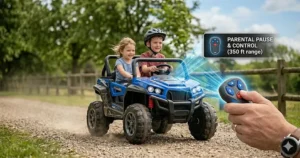
The jump from 12V to 24V isn’t just about faster speeds (though yes, we’re talking 4-6 mph versus the sluggish 2-3 mph). It’s about conquering that slight incline in your driveway without grinding to a pathetic halt. It’s about battery life that actually lasts through an entire playdate instead of dying after 20 minutes. Most critically for parents dealing with siblings or neighborhood kids, many battery powered ride on toys for 6 year olds in the 24V category offer genuine two-seater designs with weight capacities hitting 130-200 pounds—not those cramped “maybe-if-they’re-both-tiny” seats.
What separates a smart purchase from an expensive lawn ornament? Real-world performance that product descriptions conveniently skip. The spec sheet might promise “powerful motors,” but will those motors actually push your 65-pound kid up the driveway slope after a rainstorm? That’s the kind of practical insight you won’t find on Amazon listings, and that’s exactly what this guide delivers—commentary from someone who’s watched these toys perform beyond the first unboxing video.
Quick Comparison Table: 24V Ride-On Toys at a Glance
| Model | Motors | Top Speed | Battery | Weight Limit | Best For | Price Range |
|---|---|---|---|---|---|---|
| Hikole Monster UTV | 4x200W (switchable 2WD/4WD) | 6.3 km/h | 24V 7AH | 110 lbs | Off-road adventures | $350-$450 |
| RAM 1500 RHO | Dual 90W | 3.7 mph | 24V | 132 lbs | Realistic truck lovers | $300-$400 |
| Costzon Dump Truck | Dual RPM20000 | 3 speeds | 24V 7AH | 110 lbs | Interactive play | $320-$420 |
| Best Choice Ford F-150 | 2x90W | 3.7 mph | 24V | 132 lbs | Brand enthusiasts | $290-$380 |
| JOYLDIAS Go Kart | Dual motors | 3 speeds | 24V | 200 lbs | Parent-child bonding | $380-$480 |
| ELEMARA UTV Deluxe | 4x45W | 4.5 mph | 24V 10AH | 150 lbs | All-weather play | $400-$500 |
| Costzon 4WD UTV | 4x100W (switchable) | High/Low | 24V 7AH | 110 lbs | Terrain variety | $340-$440 |
Looking at this comparison, the power differential becomes immediately clear—but here’s what the numbers don’t tell you: the Hikole Monster UTV with its 800W total output (4x200W) will absolutely dominate grass and gravel that would bog down the dual 90W models. However, for pavement cruising and neighborhood tours, those 90W setups from RAM and Ford actually offer smoother speed control that younger or more cautious six-year-olds handle better. The JOYLDIAS Go Kart‘s 200-pound capacity isn’t marketing fluff—it genuinely accommodates a parent sitting in the back seat, which transforms this from a solo toy into a teaching tool where you’re physically present during those first driving lessons.
💬 Just one click — help others make better buying decisions too! 😊
Top 7 24V Ride On Toys for 6 Year Old: Expert Analysis
1. Hikole 24V Monster Truck UTV – The Off-Road Champion
The Hikole Monster UTV doesn’t mess around with its quad-motor setup—four independent 200W motors delivering switchable 2WD/4WD capability that actually works, not just a marketing checkbox. In practical terms, this means your kid can toggle to 4WD mode when crossing from your lawn to the neighbor’s gravel driveway, then switch back to 2WD for extended battery life during pavement cruising. That 24V 7AH battery pushes playtime to the 1-2 hour range under mixed use, though aggressive 4WD hill climbing will drain it closer to the 60-minute mark.
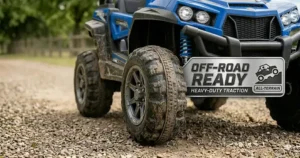
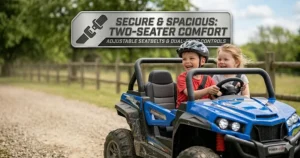
The 49.2″ length accommodates two kids comfortably with that 20-inch wide bench seat—this isn’t one of those “technically fits two” situations where both children are squished shoulder-to-shoulder. What most Amazon listings won’t mention: the spring suspension system genuinely absorbs bumps that would rattle cheaper models into pieces, and the EVA non-slip wheels maintain traction on surfaces where standard plastic wheels would just spin helplessly. Customer feedback consistently praises the build quality, with parents noting the metal frame withstands the kind of abuse that destroys lesser rides within months.
For parents concerned about control, the 2.4GHz remote override lets you take command from up to 30 meters away—essential when your enthusiastic six-year-old discovers the 4WD can climb steeper grades than their judgment should allow. The soft-start function prevents that jarring lurch that topples younger passengers, while the one-button engine start with realistic sounds adds theatrical flair kids absolutely love.
Pros:
✅ Genuine 4WD performance on varied terrain—not cosmetic
✅ 800W total motor output handles slopes up to 15 degrees
✅ Spacious dual-seat design with proper safety belts
Cons:
❌ Assembly requires 25-30 minutes (faster with the video tutorial, but still not “out of box”)
❌ 4WD mode drains battery noticeably faster than 2WD cruising
Price & Verdict: In the $350-$450 range, this represents the upper tier of electric ride on toys for 6 year old shoppers. You’re paying for motors that won’t burn out after three months of grass riding, and suspension that actually functions. Best matched to families with varied terrain or multiple children sharing the vehicle.
2. Licensed RAM 1500 RHO by First Ride On – Authentic Design Meets Practical Power
The RAM 1500 RHO earns its “officially licensed” badge with details that matter to truck-obsessed kids—working manual gear shifter, functional drop-down tailgate, and power-style wheels that mirror the full-size RAM’s aggressive stance. But beyond the cosmetics, this electric ride on toys for 6 year old delivers surprisingly capable performance from its dual 90W motors. Maximum speed tops out around 3.7 mph, which sounds modest until you remember we’re talking about a vehicle carrying up to 132 pounds of kid cargo. That’s actually brisk enough to require attentive parenting near driveways.
The 20-inch wide two-seater layout genuinely accommodates siblings or friends, with the spacious truck bed offering functional storage—not just decoration. Parents consistently note kids loading toys, rocks, sticks, and whatever treasures six-year-olds consider valuable into that bed, which extends imaginative play beyond just driving circles. The lockable doors and seatbelt system provide peace of mind, though like all ride-ons, active supervision remains non-negotiable near streets or pools.
What separates this from cheaper imposters? The soft-start system delivers gradual acceleration that prevents the whiplash effect budget models inflict, and the suspension system actually cushions bumps rather than just existing as a parts-list item. The remote control extends to 98 feet—practically the length of most residential lots—giving parents override capability even when kids venture to the far corner of the yard. Bluetooth connectivity means the sound system plays their favorite songs instead of the canned nursery rhymes many cheaper models force upon suffering parents.
Pros:
✅ Official RAM licensing delivers authentic truck details kids recognize
✅ 132-pound capacity handles larger six-year-olds plus a sibling
✅ Functional truck bed encourages creative cargo-hauling play
Cons:
❌ Top speed of 3.7 mph may feel slow to kids who’ve outgrown 12V models
❌ Dual 90W motors struggle with sustained grass use on thick lawns
Price & Verdict: At around $300-$400, this hits the sweet spot between budget and premium tiers. Ideal for families prioritizing realistic design and dual-seating over maximum speed or off-road capability.
3. Costzon 24V Dump Truck – Interactive Features That Justify the Price
The Costzon 24V Dump Truck differentiates itself immediately with that automatic dump bed—kids flip a switch and watch the bed tilt to “unload” their cargo of playground sand, fallen leaves, or whatever materials they’ve appointed themselves to transport. This isn’t just gimmick; it transforms the vehicle from passive riding toy to active play tool, and parents report this feature alone extends play sessions by keeping kids engaged beyond simple driving.
Dual RPM20000 motors deliver power comparable to the competition’s setups, pushing speeds across three selectable ranges that top out around 4-5 km/h. The four extra-large wear-resistant wheels paired with spring suspensions on each corner provide legitimate off-road capability—this handles transition from pavement to grass to gravel without the stuttering slowdowns that plague single-surface specialists. Customer reviews consistently praise durability, with the heavy-duty steel frame surviving the kind of crashes and impacts that send plastic-bodied competitors to the landfill.
The 2.4GHz remote control offers parents full directional control plus three-speed adjustment, meaning you can cap the maximum velocity for nervous beginners or unleash full power once they’ve demonstrated competence. Built-in music, AUX input, USB port, and wireless connectivity transform this from quiet cruiser to rolling sound system—though whether that’s a feature or bug depends entirely on your tolerance for six-year-old music choices at outdoor volume.
Pros:
✅ Working dump bed adds functional play beyond just driving
✅ Includes extra shovel for complete construction-themed play
✅ Four-wheel suspension handles rough terrain genuinely well
Cons:
❌ 110-pound weight limit is lower than some competitors at 132-150 pounds
❌ Assembly complexity slightly higher due to dump bed mechanism
Price & Verdict: Priced around $320-$420, this represents excellent value for families wanting interactive features. The dump bed functionality justifies the investment for kids who love construction themes or hands-on play.
4. Costzon 24V UTV with 4WD/2WD Switching – Terrain Versatility Champion
The Costzon 24V UTV addresses one specific problem most ride-ons ignore: different surfaces demand different power delivery. That’s where the 4WD/2WD switch becomes practical rather than gimmicky—engage 4WD for grass, gravel, or that slight slope in your driveway, then flip to 2WD for pavement cruising that conserves battery by not wasting power on all four wheels. The four 100W motors (total 400W output) position this squarely between budget dual-motor setups and premium quad-200W beasts like the Hikole.
Real-world performance separates spec-sheet promises from actual capability. Parents consistently report this UTV handles boardwalks, brick roads, low-lying lawns, and asphalt roads without the speed drop-off that kills momentum on lesser models. The wear-resistant, anti-slip wheels maintain grip on surfaces where standard plastic wheels would just spin uselessly, and those four suspension springs genuinely absorb impacts rather than transmitting every bump directly to the passenger’s spine.
The spacious two-seat design accommodates kids over three years with three-point safety belts, while lockable doors prevent mid-ride exits when excitement overrides judgment. One-button start, high/low speed selection, and forward/reverse lever deliver the authentic driving experience six-year-olds crave. The 24V 7AH battery provides extended playtime—expect 60-90 minutes depending on terrain and how aggressively they’re using 4WD mode.
Pros:
✅ Switchable 4WD/2WD adapts to terrain and battery conservation needs
✅ 400W total motor output handles various surfaces without bogging down
✅ Four-wheel suspension system provides genuinely smooth rides
Cons:
❌ 110-pound capacity may limit use as kids approach upper elementary ages
❌ 4WD mode’s power advantage comes with noticeably faster battery drain
Price & Verdict: Around $340-$440 positions this as mid-tier pricing for upper-tier features. Best suited for families with varied terrain or those wanting flexibility between power and battery life.
5. Best Choice Products Ford F-150 Lightning – Licensed Excellence Under $400
The Best Choice Products Ford F-150 Lightning captures the essence of Ford’s electric truck revolution in kid-size form—officially licensed with true-to-life interactive features that Ford enthusiasts recognize instantly. The dual 90W motors deliver 2-wheel drive performance sufficient for most residential use, with preset speeds of 2 mph and 4 mph allowing gradual skill progression. That 90-minute runtime on full charge translates to genuine all-afternoon play sessions rather than the disappointing 20-30 minute stints cheaper 12v ride on toys for 6 year old provide.
What matters beyond the Ford badge? The adjustable seat harness system actually keeps kids secured properly—not the loose, practically decorative straps some budget models include. Treaded plastic wheels provide adequate traction for pavement and short grass, though don’t expect this to conquer steep grades or loose gravel like the 4WD competitors. LED headlights and 4-wheel suspension add refinement, while the child-friendly controls suit small hands without requiring adult strength to operate.
The parental remote control extends your oversight range significantly, allowing speed selection among three settings plus emergency stop capability. While your child drives manually using the foot pedal and steering wheel, the built-in Bluetooth sound system plays their favorite songs—transforming the Lightning from simple transportation to mobile entertainment center. Customer feedback emphasizes the build quality exceeds expectations at this price point, with the plastic body proving surprisingly durable against the inevitable garage door encounters and tree stump collisions.
Pros:
✅ Official Ford F-150 Lightning licensing delivers authentic styling kids recognize
✅ 90-minute battery life supports extended play without constant recharging
✅ Dual control modes grow with child’s developing driving skills
Cons:
❌ 2-wheel drive limits off-road capability compared to 4WD alternatives
❌ 132-pound combined weight capacity can be restrictive for larger sibling pairs
Price & Verdict: At approximately $290-$380, this represents outstanding value for brand-conscious families. The Ford licensing adds legitimacy that no-name brands can’t match, while performance suits standard suburban use.
6. JOYLDIAS 24V Parent-Child Go Kart – Revolutionary Dual-Control Design
The JOYLDIAS Parent-Child Go Kart innovates where competitors simply iterate—dual pedal configuration lets kids control the inner pedal while parents operate the outer one, with an effortless switch button toggling control between generations. This isn’t just clever engineering; it transforms nervous first-time driving into genuine teaching moments where you’re physically present, controlling speed and direction until they’re ready for independence. That parent seat flips to reveal a toolbox, adding functional storage that extends play possibilities.
The 200-pound weight capacity isn’t marketing exaggeration—this legitimately accommodates a full-size adult sitting in back while a six-year-old drives, which no other model in this comparison can claim. Powered by 24V batteries and motors, it carries two passengers effortlessly for 1-2 hours of continuous use. The 2.4GHz remote control provides complete override for speed, forward/backward movement, and emergency stopping, though the unique dual-pedal system means you can also physically intervene without grabbing the remote.
Built-in MP3, Bluetooth, stories, and USB ensure entertainment variety—kids can listen to audiobooks during “long hauls” across the backyard or pump their favorite songs through the speakers. The go-kart design sits lower than truck-style alternatives, lowering the center of gravity for enhanced stability during turns that would tip taller vehicles. Made from PP and metal with ASTM and CPSIA certification, this prioritizes safety alongside innovation.
Pros:
✅ Unique dual-pedal system enables side-by-side parent teaching
✅ 200-pound capacity actually supports adult + child combination
✅ Go-kart design’s low center of gravity enhances cornering stability
Cons:
❌ Go-kart styling may not appeal to kids wanting truck/UTV aesthetics
❌ Lower ground clearance limits off-road capability versus high-clearance UTVs
Price & Verdict: Around $380-$480 positions this as premium-priced, but the parent-child capability justifies the investment for families wanting active involvement in early driving development. No competitor offers this level of dual-control integration.
7. ELEMARA 24V 2-Seater UTV with Dump Bed – The Complete Package
The ELEMARA 24V UTV Deluxe doesn’t pick one feature to emphasize—it delivers everything. Sun shade for bright-day comfort, lifting dump bed for interactive cargo play, included shovel for complete construction themes, and a 24V 10AH battery (highest capacity in this roundup) providing extended 90-minute runtime under normal use. Four 45W motors totaling 180W deliver sufficient power for mixed terrain, with three speed settings (3.1/3.7/4.5 mph) allowing gradual skill progression.
That 10AH battery capacity matters more than casual shoppers realize—it’s the difference between afternoon-long play and constant recharge interruptions. The 4WD capability handles concrete, gravel, tile roads, and more without the dramatic speed loss that reveals inferior motor sizing. Two shock absorbers provide ride quality that matters during extended sessions, preventing the fatigue that rough-riding competitors inflict after 20 minutes.
The dual control system gives parents remote authority while allowing kids manual operation, with the transition handled via simple switch. Soft start prevents jarring acceleration, safety belt secures passengers, lockable doors prevent mid-ride exits, and spring suspension cushions impacts. Built-in radio, MP4 player, USB, and Bluetooth connectivity (“YX” pairing) deliver entertainment variety, while front/rear LED lights add safety and style for evening cruising.
Pros:
✅ Sun shade provides weather protection other models lack
✅ 10AH battery delivers longest runtime in this comparison
✅ 150-pound weight capacity exceeds most competitors’ 110-132 pound limits
Cons:
❌ Higher price point around $400-$500 requires larger initial investment
❌ Total 180W motor output trails the 400W+ powerhouses for serious off-roading
Price & Verdict: At approximately $400-$500, this commands premium pricing for premium features. The sun shade and superior battery capacity justify the cost for families in sunny climates or those prioritizing maximum playtime per charge. Weight capacity and build quality support years of use rather than single-season disposal.
How to Choose the Right 24V Ride-On for Your 6-Year-Old
Choosing the right 24v ride on toys for 6 year old involves more than picking the shiniest model or the one with the most Amazon stars. Start with terrain assessment—what surfaces will this vehicle actually encounter? If your property features grass, gravel, slopes, or mixed terrain, prioritize 4WD models with legitimate motor output (400W+ total). The Hikole Monster UTV and Costzon 4WD UTV excel here, delivering genuine all-terrain capability rather than marketing promises. Conversely, if use will be primarily pavement-based neighborhood cruising, the dual-motor setups like the Ford F-150 Lightning or RAM 1500 provide adequate power while saving battery life for extended runtime.
Weight capacity demands honest assessment of current and future needs. Your six-year-old might be 50 pounds today, but will they still fit this vehicle at age 8 or 9? Models capped at 110 pounds risk obsolescence quickly, while the 132-150 pound options extend usability significantly. The JOYLDIAS Go Kart at 200 pounds stands alone for families wanting parent-child riding capability or those with multiple children who’ll share the vehicle. Consider whether siblings will ride together—those cramped “technically two seats” designs disappoint when both kids can’t actually fit comfortably.
Battery capacity directly controls how much actual playing happens before recharge downtime interrupts. The 24V 7AH batteries most models use deliver 60-90 minutes of mixed use, but aggressive uphill or 4WD operation drains them closer to 45-60 minutes. The ELEMARA UTV’s 10AH battery extends this to genuine 90-minute sessions under normal conditions. Balance this against recharge time (typically 8-12 hours)—if you’re hosting playdates or have multiple kids wanting turns, inadequate battery life creates conflicts no parent wants to referee.
Safety features separate responsible purchases from lawsuit generators. Verify the model includes functional seat belts (not decorative straps), soft-start acceleration to prevent whiplash, and remote override allowing parental intervention from distance. The lockable doors many models advertise actually matter—they prevent mid-ride exits when excitement overrides judgment. Check for CPSC compliance and legitimate ASTM F963 certification, not just vague “safety tested” claims. According to the U.S. Consumer Product Safety Commission, proper adult supervision remains mandatory regardless of safety features—these are toys, not autonomous vehicles.
Interactive features like dump beds, working lights, Bluetooth audio, and realistic engine sounds extend play value beyond simple driving. The Costzon Dump Truck and ELEMARA UTV demonstrate how functional elements transform passive riding into active imaginative play. However, prioritize mechanical reliability over gimmicks—a vehicle with mediocre motors but cool lights will frustrate faster than a powerful performer with basic features. Test the remote control range realistically; claims of “up to 100 feet” often mean “barely 50 feet with obstacles,” which matters when your yard has trees, fences, or other signal blockers.
Price versus value requires distinguishing between initial cost and total ownership expense. A $250 budget model lasting six months before motor burnout costs more than a $400 quality build providing three years of service. Read reviews specifically mentioning longevity—phrases like “still going strong after a year” or “motor died after two months” reveal real-world durability. Factor in replacement part availability; established brands maintain inventory while fly-by-night manufacturers disappear, leaving you with irreparable expensive lawn ornaments.
Real-World Usage Guide: Getting the Most from Your 24V Ride-On
First-Use Optimization Starts Before Assembly
Charge that battery completely before the first ride—12 hours minimum, even if the manual suggests 8-10. This initial conditioning cycle affects long-term battery health significantly, and skipping it to satisfy impatient kids costs runtime throughout the vehicle’s lifespan. During assembly, apply thread-locking compound to critical bolts (wheels, steering column, seat mounts)—vibration loosens factory torque settings within weeks, and preventative maintenance beats reactive repairs. Verify all electrical connections seat fully; loose terminals cause intermittent power loss that’s maddening to diagnose later.
Test the remote control in your actual yard before letting kids drive solo. Walk the perimeter identifying dead zones where fences, structures, or trees block signal. Mark these mentally—they’re where you’ll lose override capability when kids inevitably head toward the street. Adjust remote control sensitivity if your model allows it; hair-trigger responsiveness causes jerky operation that frustrates beginners, while sluggish response delays necessary interventions.
Maintenance Schedule That Actually Gets Done
Weekly during active use: Inspect tires for debris (rocks, sticks, wire) that wedge into treads and cause wobbling. Check battery terminals for corrosion—white crusty buildup kills connectivity and gets blamed on “bad batteries.” Wipe down the body; accumulated dirt becomes abrasive paste that scratches protective coatings, and dirt in motor vents accelerates overheating.
Monthly: Lubricate wheel axles with silicone spray (not WD-40, which attracts dirt). Test remote control batteries—weak batteries cause erratic override behavior that mimics electrical faults. Inspect seat belts for fraying; replace immediately if compromised. Verify all bolts remain tight; vibration loosens them predictably.
Seasonally: Deep clean the chassis, removing grass clippings and debris from motor housings. Inspect wiring for damage from rocks or impacts. Test battery capacity by timing a full-speed run; dramatic runtime decline signals replacement needs. According to Nationwide Children’s Hospital safety guidelines, regular inspection prevents most toy-related injuries—ride-ons included.
Common Mistakes That Destroy Fast Toys
Overloading weight limits doesn’t just void warranties—it burns motors, strains suspension, and causes catastrophic failures mid-ride. Enforce the stated capacity religiously, accounting for both riders and cargo. Leaving vehicles outside subjects batteries to temperature extremes that permanently reduce capacity; store indoors or under waterproof covers. Ignoring low-battery warnings and running until total depletion damages battery cells; recharge when runtime noticeably decreases.
Allowing use on slopes exceeding manufacturer specifications overheats motors and drains batteries exponentially. A 15-degree incline doesn’t look steep, but it demands far more power than flat ground—save hill climbing for 4WD models rated for it. Hosing down the vehicle for cleaning forces water into electrical components; use damp cloths instead. Operating on wet grass when the manual specifies dry conditions only risks motor damage from moisture ingress that develops into corrosion.
Optimization Tricks the Manual Won’t Mention
Apply car wax to the plastic body twice annually—it prevents sun damage and makes cleaning effortless. Install upgraded rubber tires if your model uses plastic wheels; the ride quality and traction improvements justify the $40-60 investment. Add reflective tape to the rear and sides for visibility during evening play; it costs pennies and dramatically improves safety. Keep a spare battery charging during peak-use seasons; swapping batteries extends playtime without the overnight wait.
Create a “pre-flight checklist” laminated card: battery charged, tires inflated (if applicable), remote control batteries fresh, area clear of obstacles, helmet on rider. Making this routine prevents the rushed “just let them go” approach that leads to avoidable accidents. Designate a specific storage location with the charger permanently installed; random storage locations guarantee the one time you need it charged, the battery will be dead.
24V vs 12V Ride-Ons: What the Extra Voltage Actually Delivers
The voltage jump from 12V to 24V doubles the electrical potential, but the real-world benefits extend far beyond simple math. Motor performance improvements manifest most noticeably under load—those moments when your kid encounters even slight resistance like grass, gravel, or inclines. A 12V motor strains and slows dramatically; the 24V equivalent maintains momentum because it’s operating well within capability rather than at maximum output. This reduced strain extends motor lifespan significantly; 12V motors frequently burn out within 6-12 months of grass use, while properly-sized 24V setups routinely survive 2-3 years.
Battery runtime differences prove less dramatic than marketing suggests. While 24V systems pack more capacity, they’re also powering more demanding motors. Expect 60-90 minutes from most 24V setups under mixed conditions—better than 12V’s 30-60 minutes, but not the “hours of fun” some descriptions promise. The practical advantage comes from sustained performance throughout the charge cycle; 12V models slow noticeably as batteries drain, while 24V maintains consistent speed until the final 10-15% of capacity.
Speed capabilities increase moderately but meaningfully. Most 12V ride-ons top out around 2-3 mph; 24V models reach 3.7-6 mph depending on motor configuration. That 3-4 mph difference transforms the experience from crawling to cruising, satisfying six-year-olds who’ve outgrown toddler paces. However, faster speeds demand enhanced parental vigilance—the same velocity that thrills on an open lawn becomes dangerous near driveways or streets. The CPSC guidelines for age-appropriate riding toys emphasize supervision intensity must increase alongside vehicle capability.
Weight capacity improvements matter more than parents initially realize. Most powerful vehicles in the 12V category max out around 65-80 pounds total; 24V models commonly support 110-150 pounds, with outliers like the JOYLDIAS Go Kart reaching 200 pounds. This capacity difference determines whether your six-year-old can give rides to their seven-year-old friend, whether siblings can share the vehicle, and how many years of use you’ll extract before they physically outgrow it. A 50-pound six-year-old riding solo might seem fine in a 65-pound-capacity 12V, but add a 45-pound friend and you’re overloaded into motor-damaging territory.
Terrain capability separates 24V models into a different performance class entirely. The higher voltage allows manufacturers to implement legitimate 4WD systems and more powerful motors that actually conquer grass, gravel, and modest slopes. Most 12V models bog down on anything beyond smooth pavement, limiting use to driveways and garage floors. The investment in 24V pays dividends if your property features varied terrain—$150 saved on a 12V purchase becomes waste when it can’t handle your lawn.
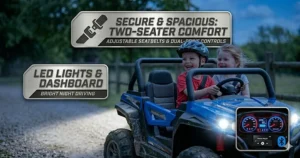
Feature sophistication increases with voltage class, though this correlates more with target market than electrical requirements. 24V models typically include working dump beds, realistic dashboard controls, Bluetooth audio, LED lighting, and remote controls with extended range. You’re not paying for voltage alone; you’re accessing the premium tier where manufacturers invest in refinements that justify higher pricing. However, don’t confuse features with fundamentals—a feature-packed 24V with weak motors disappoints faster than a basic model with robust mechanicals.
Safety First: CPSC Compliance and Smart Supervision
Federal safety regulations exist because ride-on injuries happen predictably when basic precautions disappear. All legitimate 24v ride on toys for 6 year old must comply with ASTM F963 standards, which mandate third-party testing and Children’s Product Certificate documentation. According to the Consumer Product Safety Commission, manufacturers must certify compliance before sale—if a product lacks this certification, it’s either illegal or imported through channels that ignore U.S. safety requirements. Verify certificates rather than trusting vague “safety tested” marketing claims.
Helmet requirements remain non-negotiable despite these being “toys” rather than “vehicles” in legal classification. The same head injuries that result from bicycle crashes occur during ride-on accidents, and CPSC-certified helmets provide essential protection. Fit the helmet properly—not perched on top of the head or tilted back—with the chinstrap snug enough to prevent rotation. Replace helmets after any impact; the protective foam compresses permanently even when external damage isn’t visible.
Supervision requirements don’t diminish as kids age; they shift focus. Six-year-olds possess more judgment than toddlers but less than adults think. They’ll test limits specifically when unwatched, so “check occasionally from the window” fails as a supervision strategy. Active supervision means being present outdoors, watching traffic patterns, and intervening before problems escalate. The remote control override provides backup but shouldn’t replace proximity.
Terrain restrictions matter more than resistance to enforcing them. Never allow use near streets, even quiet residential roads—six-year-olds cannot reliably assess vehicle approach speed or stopping distance. Eliminate access to slopes exceeding the manufacturer’s specifications; rollover risks increase exponentially with grade angle. Ban operation near swimming pools, ponds, or other water features—a 24V ride-on will absolutely continue rolling if it enters water, and the weight prevents easy exit for trapped passengers.
Weight limit enforcement protects both children and equipment. Overloading causes mechanical failures mid-operation, which at 4-6 mph produces injuries ranging from bumps to fractures. Calculate combined passenger weight honestly, including that friend who “just wants a quick turn.” The stated limit isn’t conservative padding—it represents tested maximum capacity before component failure probability increases dramatically.
Proper storage prevents accidents that occur when toys become accessible unsupervised. Store the vehicle where young children cannot reach it without adult assistance, with the battery disconnected or key removed. Charging should occur in ventilated areas away from flammable materials, using only the provided charger—generic replacements lack proper voltage regulation and create fire hazards. Never leave batteries charging overnight unattended; 8-12 hour charge cycles should be monitored periodically.
Emergency preparedness includes knowing how to stop the vehicle instantly if remote override fails. Every adult supervising should understand the manual emergency brake or power disconnect procedure. Keep the instruction manual accessible rather than filed away—it contains troubleshooting steps for common issues that present as emergencies to panicked parents. Program poison control (1-800-222-1222) and your pediatrician’s number into your phone before problems arise.
Battery Care: Extending Lifespan and Performance
Lead-acid batteries (most common in ride-ons) demand specific care that conflicts with “just plug it in” assumptions. The initial charge before first use isn’t suggestion—it’s requirement. New batteries arrive partially charged but need full conditioning to achieve rated capacity. Charge for 12-18 hours initially, even if the manual claims 8-10 hours suffices. This first cycle establishes performance baseline for the battery’s lifespan.
Regular charging schedules prevent the “deep discharge” damage that kills batteries prematurely. Recharge after each use rather than waiting for complete depletion. Lead-acid batteries suffer permanent capacity loss when drained below 20%; waiting until the vehicle barely moves before charging guarantees progressive performance decline. If the vehicle will sit unused for weeks, charge the battery monthly to prevent sulfation—the chemical process that permanently reduces capacity in stored batteries.
Temperature extremes murder battery performance both immediately and cumulatively. Charging or operating in freezing conditions reduces capacity temporarily and damages cells permanently. Heat above 90°F accelerates chemical degradation, shortening lifespan from years to months. Store vehicles in temperature-controlled spaces when possible; if garage storage is your only option, avoid summer charging during afternoon heat peaks. According to battery chemistry fundamentals, each 15°F temperature increase halves battery lifespan.
Charger compatibility isn’t generic—voltage matching alone doesn’t ensure safety. Use only the provided charger or exact manufacturer-specified replacement. Generic 24V chargers from discount retailers may lack proper voltage regulation, overcharging batteries into thermal runaway (fire hazard) or undercharging them into inadequate capacity. The original charger’s specific amperage rating matches battery chemistry; mismatched current delivery accelerates degradation.
Visual battery inspection should occur quarterly minimum, with attention to terminal corrosion and case swelling. White or blue-green crusty buildup on terminals indicates corrosion that increases resistance and reduces power delivery. Clean with baking soda solution and water, then dry thoroughly before reconnecting. Battery case swelling signals serious internal damage; discontinue use immediately and replace. Never ignore swelling—continued use risks rupture and acid exposure.
Battery lifespan expectations require realistic understanding. Even with perfect care, lead-acid batteries degrade over time and use cycles. Expect 1-2 years from batteries in regular use, with replacement cost typically $50-80. Budget this into ownership expenses rather than treating battery failure as defect. Upgraded lithium batteries exist for some models, offering double the lifespan at triple the price—worthwhile for intensive use, overkill for occasional weekend riding.
When Kids Outgrow 24V: Upgrade Path Planning
The average six-year-old extracts 2-3 years of use from a properly-sized 24V ride-on before physical growth or interest evolution demands changes. Weight capacity hits first for most kids—your 50-pound six-year-old becomes a 75-pound nine-year-old who’s approaching the 110-132 pound limits common in this category. Monitor weight relative to capacity as they grow; operating at maximum capacity stresses motors and reduces remaining service life.
Interest shifts often precede physical outgrowing. Many eight-to-nine-year-olds transition from parent-directed yard cruising toward more independent cycling, skating, or other activities that provide greater speed and range. The ride-on that thrilled at six may become “baby toys” by eight, regardless of whether it physically fits. Recognize this transition rather than forcing continued use of equipment that no longer engages them.
Younger siblings provide excellent ride-on succession planning. If you have multiple children, the 24V purchase becomes shared family asset used sequentially by each child. The JOYLDIAS Go Kart‘s 200-pound capacity even allows older kids to give younger siblings rides, extending family involvement beyond solo use. Durable construction matters more in succession scenarios—the vehicle must survive years rather than seasons.
Resale value depends heavily on condition and brand recognition. Well-maintained popular brands like Best Choice Products and Costzon retain 40-60% of purchase price in working condition. Document maintenance, save original packaging if possible, and clean thoroughly before listing. Local Facebook Marketplace and Craigslist outperform national platforms for these bulky items; shipping costs kill most distant sales.
Upgrade paths after 24V typically lead toward non-electric options. Most kids transitioning beyond ride-ons show interest in pedal go-karts, electric scooters (age 8+), or bicycles rather than seeking more powerful electric vehicles. If they specifically want faster electric transportation, hoverboards and electric skateboards become age-appropriate around 10-12 years with proper safety gear and supervision.
Donation extends the vehicle’s useful life when your family no longer needs it. Local daycares, preschools, or community centers often welcome functional ride-ons for their playgrounds. Ensure donated vehicles include chargers, remotes, and instruction manuals—incomplete sets provide little value. Some children’s hospitals accept ride-on donations for patient play areas; call ahead to verify acceptance policies and safety requirement compliance.
Top Brands Compared: Quality Differences That Matter
Hikole emerged relatively recently but captured attention through robust construction that survives abuse destroying lesser brands. Their focus on higher-wattage motors (200W per wheel vs. competitors’ 35-100W) delivers legitimate power advantages, though this comes at premium pricing. Customer service receives mixed reviews—excellent when problems occur during warranty, essentially non-existent afterward. Parts availability is adequate for current models but questionable for discontinue designs.
Best Choice Products represents the established value leader, offering licensed designs and reliable performance at prices undercutting specialty brands. Their wide distribution through major retailers simplifies returns and warranty claims compared to Amazon-only brands. Quality control occasionally stumbles—you’ll find reports of missing parts or assembly instruction errors—but the company generally resolves issues when contacted. Longevity typically reaches the 18-24 month range with regular use before motor or battery replacement becomes necessary.
Costzon balances features and affordability effectively, implementing innovations like working dump beds without the premium pricing specialty manufacturers charge. Their broader product line means shared components across models—great for parts availability, less ideal for cutting-edge design. Customer service operates primarily through email with response times measured in days rather than hours. Build quality generally exceeds price point expectations, with the heavy-duty steel frames outlasting the plastic-body competitors.
JOYLDIAS differentiates through unique designs like the parent-child go-kart rather than competing on price alone. Their products skew toward innovation over raw specifications—you’re paying for clever engineering like the dual-pedal system rather than maximum motor wattage. Quality control appears above average based on customer feedback, with few reports of DOA arrivals or early failures. Limited model selection means if their specific design doesn’t suit your needs, you’re looking elsewhere.
ELEMARA targets the premium segment with comprehensive feature sets and higher-capacity batteries. The 10AH battery in their flagship models genuinely provides extended runtime compared to competitors’ standard 7AH packs. Build quality justifies the higher pricing for families wanting maximum durability—these vehicles survive hand-me-down through multiple children. Customer service accessibility varies; while responsive to initial inquiries, post-sale support can slow dramatically.
When choosing between brands, prioritize based on your specific needs. If maximum power and off-road capability matter most, Hikole’s motor advantage proves worth premium pricing. Budget-conscious families wanting established reliability lean toward Best Choice Products’ proven track record. Feature seekers appreciate Costzon’s innovation-per-dollar ratio. Those wanting unique capabilities like parent-child operation should explore JOYLDIAS despite limited selection. Families investing for multi-child, multi-year use justify ELEMARA’s quality-focused approach.
Seasonal Considerations: Weather and Storage Impact
Summer Operation Demands Heat Management
Battery performance peaks in moderate temperatures (60-80°F) but degrades rapidly above 90°F. Direct sunlight exposure heats plastic bodies to temperatures far exceeding ambient air, with dashboard and seat surfaces reaching skin-burn levels. The sun shade on models like the ELEMARA UTV Deluxe isn’t luxury—it’s necessity in southern climates where summer heat limits usability. Schedule riding sessions for morning or evening rather than afternoon heat peaks when possible.
Motor overheating occurs faster in summer, particularly during sustained uphill operation or 4WD use. If motors feel hot to touch (use the back of your hand, not palm), shut down for 15-20 minute cooling periods. Continued operation past overheating damages motor windings permanently, converting a temporary heat issue into permanent power loss. Adequate ventilation around motor housings matters—avoid operation in long grass that blocks airflow.
Winter Storage Prevents Cold-Weather Damage
Freezing temperatures don’t just reduce battery capacity temporarily—they risk permanent damage if batteries freeze while discharged. Lead-acid batteries freeze around 20°F when fully discharged but resist freezing down to -75°F when fully charged. Always charge batteries completely before winter storage, then disconnect them to prevent parasitic drain. Store in temperature-controlled spaces if possible; unheated garages work if batteries stay above freezing.
Plastic components become brittle in cold, cracking under impacts that summer temperatures would survive. Avoid operating below 40°F when possible; if use is necessary, limit speed and avoid obstacles that stress plastic body panels. Tires lose pressure and traction in cold; check inflation before use and expect reduced grip on cold pavement.
Rain and Moisture Require Strict Boundaries
These vehicles tolerate light moisture but aren’t waterproof despite some marketing claims. Operating on wet grass risks motor damage from water ingress that develops into corrosion over time. Never allow use during rain or immediately after heavy storms when standing water exists. If the vehicle gets wet, dry it thoroughly—especially electrical components—before storage to prevent corrosion development.
Post-rain cleanup isn’t optional. Wipe down all electrical connections, dry the battery compartment, and verify motors spin freely without water-induced resistance. Mud accumulation in wheel wells causes drag and motor strain; remove it promptly. Some families apply dielectric grease to electrical connections as corrosion preventative—worthwhile in humid climates where moisture exposure is inevitable.
Off-Season Storage Best Practices
When storing for extended periods (winter months in northern climates), preparation prevents spring disappointment. Charge batteries fully, then disconnect and remove them for separate climate-controlled storage. Clean the vehicle thoroughly, removing all dirt, grass, and debris that becomes harder to remove after months of setting. Apply protective coating to metal components if storing in unheated spaces where condensation occurs.
Store indoors when possible—even covered outdoor storage exposes vehicles to temperature swings and moisture infiltration. If garage storage is your only option, elevate the vehicle on blocks to prevent tire flat-spotting. Cover with breathable fabric; plastic tarps trap moisture and accelerate corrosion. Monthly battery maintenance charging prevents sulfation during storage periods.
Common Problems and Practical Solutions
“It Won’t Move” Troubleshooting Hierarchy
Start with the simplest explanation: battery charge. Connect the charger and verify the charging indicator light functions—if no light, check outlet power and charger connections. If charging light works, allow full charge cycle before retesting. Still won’t move? Check the power switch actually engages; worn switches sometimes feel “on” without making electrical contact. Test by wiggling the switch during attempted operation.
Next suspect: safety interlock systems. Many models require proper seating, closed doors, or other safety conditions before motors engage. Verify the child sits properly and all doors latch completely. Test the foot pedal without a child seated—if motors engage, the issue is interlock-related. If motors still don’t engage, check fuse locations (usually near battery compartment); blown fuses indicate electrical shorts that need professional attention.
Remote Control Failures and Fixes
Weak batteries in the remote cause erratic override behavior that mimics electrical faults. Replace remote batteries before assuming vehicle problems—use quality alkaline batteries, not dollar-store variants. If replacement doesn’t help, verify remote pairing hasn’t disconnected; most remotes require re-pairing after battery changes. Consult the manual for model-specific pairing procedures.
Signal interference from WiFi routers, cordless phones, or neighboring ride-ons operating on the same frequency causes intermittent control loss. Test in a different location away from house electronics. If problems persist outdoors away from interference sources, the remote receiver (in the vehicle) may have failed—replacement typically costs $20-40 and requires basic electrical skills.
Strange Noises Demand Immediate Attention
Grinding, squealing, or clicking from wheels indicates bearing failure, debris interference, or loose components. Stop operation immediately—continued use converts minor problems into major damage. Inspect wheels for rocks, sticks, or wire wrapped around axles. Remove debris and rotate wheels by hand; smooth rotation signals you’ve solved the problem, but resistance or roughness requires bearing replacement.
Motor whining or buzzing suggests overload, failing motor, or low battery creating voltage drop. First verify operation within weight limits—overloading causes motor strain that presents as noise. Next, charge battery fully and retest; weak batteries can’t supply adequate voltage under load. If problems persist with fresh batteries and proper weight, motor replacement looms—typically $30-60 per motor plus labor if you’re not handy.
Battery Issues Beyond Simple Charging
Rapidly declining runtime signals battery degradation or improper charging habits. If full charge delivers noticeably less use than when new, test battery voltage with a multimeter (should read 25-26V fully charged for 24V systems). Readings below 24V indicate dead cells; replacement is your only option. Prevention beats replacement—proper charge habits from day one extend battery lifespan dramatically.
Batteries that won’t hold charge despite overnight charging have reached end-of-life or suffered damage. Verify charger function first by measuring output voltage; if charger works but battery won’t charge, replacement is necessary. Don’t attempt to “revive” dead batteries with automotive chargers or other improvised methods—the amperage mismatch risks fire. Proper 24V ride-on replacement batteries cost $50-80 and are worthwhile investments in vehicles that otherwise function well.
FAQ: Your Top Questions Answered
❓ How long does the battery actually last on a 24v ride on toys for 6 year old?
❓ Can my 6-year-old ride with a friend in these 2-seater models?
❓ Do I really need to spend $400+ for decent quality?
❓ Is 4WD worth the extra cost for regular suburban yards?
❓ What safety certifications should I verify before buying?
Conclusion: Making Your 24V Investment Count
The transition from 12V to 24v ride on toys for 6 year old represents more than voltage doubling—it’s upgrading from toy to genuine outdoor recreation equipment that delivers years of use when chosen wisely. The seven models detailed here span budget-friendly performers like the Best Choice Products Ford F-150 Lightning to premium all-terrain champions like the Hikole Monster UTV, each earning inclusion through proven real-world performance rather than marketing hype.
Your ideal choice depends on specific needs and honest terrain assessment. Families with flat paved driveways save money choosing capable 2WD models like the RAM 1500 RHO* or Ford F-150, while those with varied property benefit from 4WD powerhouses like the Costzon UTV or Hikole Monster. The unique parent-child capability of the JOYLDIAS Go Kart serves families wanting active teaching involvement, while the ELEMARA UTV Deluxe justifies premium pricing through superior battery capacity and weather protection.
Beyond initial purchase, success requires commitment to proper maintenance and realistic supervision. These aren’t set-and-forget purchases—battery care, regular inspection, and terrain-appropriate use determine whether your $300-500 investment delivers three months or three years of service. The difference between satisfied customers and frustrated reviewers often comes down to following basic care protocols rather than product quality variations.
Start your search by honestly assessing your property’s terrain, your child’s current weight and growth projection, and whether siblings will share the vehicle. Prioritize motor output and 4WD capability for challenging terrain; emphasize battery capacity for extended play sessions; value brand reputation and warranty support for long-term ownership confidence. The perfect 24V ride-on exists for your specific situation—finding it just requires looking beyond shiny photos to actual specifications and real customer experiences.
Ready to upgrade from those underpowered 12V toys your six-year-old has outgrown? The models detailed here represent the cream of the current crop, each offering genuine value in its price category rather than false promises. Your child’s next outdoor adventure awaits—equipped with proper power, appropriate safety features, and realistic parental expectations, these battery powered ride on toys for 6 year olds deliver the thrill they crave with the safety you demand.
Recommended for You
- 7 Best Ride On Toys for 6 Year Old: Expert Picks 2026
- 7 Best Ride On Toys for 5 Year Old Girl in 2026
- 7 Best Ride On Toys for 5 Year Old Boy – 2026
Disclaimer: This article contains affiliate links. As an Amazon Associate, I earn from qualifying purchases. If you purchase products through these links, we may earn a small commission at no additional cost to you.
✨ Found this helpful? Share it with your friends! 💬🤗
