
In This Article
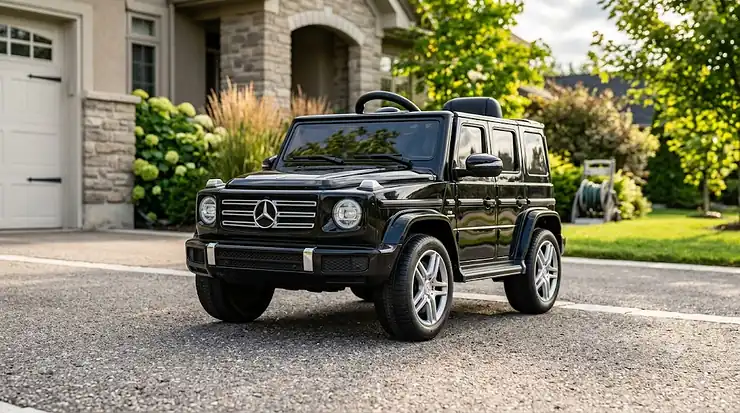
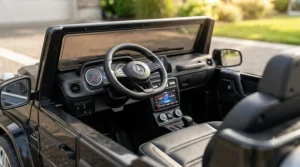
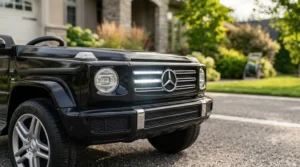
Realistic electric ride on cars are battery-powered toy vehicles styled after actual car, truck, or UTV models — often built under official licensing agreements — that replicate real-world details like working doors, branded badges, LED headlights, and multi-speed motors. The result feels less like a toy and more like a scaled-down version of the real thing.
That distinction matters more than it used to. Walk through any toy aisle (or scroll Amazon for ten minutes) and you’ll see dozens of generic battery-powered cars that all blur together — same plastic shell, same vague “sports car” shape, same forgettable name. Licensed electric ride on cars are a different category entirely. They’re built off actual blueprints, which is why a Ford F-150 ride-on actually looks like a Ford F-150, down to the grille.
We pulled together seven currently available models — a mix of budget, mid-range, and premium picks — and put them through the same lens: voltage and motor output, seating, terrain handling, and overall realism. Whether you’re shopping for a toddler’s first ride-on or a sturdier two-seater your kids won’t outgrow in a year, you’ll find a fit in this list. We’ve also added a usage guide, a few real-world buyer scenarios, and answers to the questions parents ask most before checking out.
Quick Comparison Table
| Model | Voltage / Power | Seats | Best For |
|---|---|---|---|
| ANPABO Mercedes-Benz G63 | 12V | 1 | First-time toddler drivers |
| First Ride On 1970 Dodge Charger R/T | 24V | 2 | Older kids who want “cool factor” |
| ANPABO Ford F-150 | 24V, 4x100W | 2 | Families wanting cargo + traction |
| First Ride On Ford Bronco Raptor | 24V | 2 | Bumpy or uneven yards |
| Costzon Ford Mach-E | 12V | 1 | Budget-conscious, younger riders |
| Kawasaki KRX 1000 UTV | 24V, 4WD | 1-2 | Off-road-style backyard play |
| Best Choice Products 2-Seater Truck | 24V | 2 | Two kids sharing one car long-term |
Looking at the table, the split is mostly about voltage and drivetrain rather than brand. The 12V single-motor models (Mercedes-Benz G63, Ford Mach-E) suit lighter, younger riders on flat pavement, while the 24V multi-motor options handle grass, light gravel, and small inclines noticeably better. If your yard isn’t perfectly flat, that voltage gap is the single biggest factor in whether the car feels fun or frustrating within the first week.
💬 Just one click — help others make better buying decisions too!😊
Top 7 Realistic Electric Ride On Cars: Expert Analysis
We looked at seven models currently listed on Amazon, chosen to cover a real spread of price points, body styles, and use cases — not just seven variations of the same car with different paint.
1. ANPABO Licensed Mercedes-Benz G63
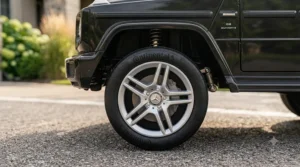
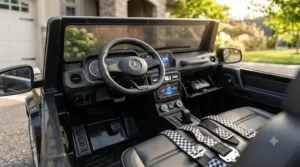
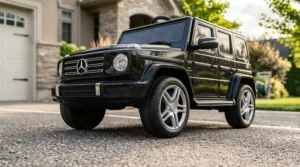
The ANPABO Licensed Mercedes-Benz G63 leans entirely on its styling — it’s a scaled G-Wagon, badges and boxy proportions included, which is rare to see this faithfully replicated at the entry-price tier.
Under the hood it’s a straightforward 12V single-motor setup with LED headlights, a horn, a built-in music player, and a soft-start feature. That last detail matters more than it sounds: soft-start prevents the jolt-forward most cheap ride-ons have when the throttle is first pressed, which is the difference between a toddler enjoying the car and being startled off it. The low-battery prompt is a small but practical touch — it warns before the car dies mid-yard instead of just stopping.
This is best suited to toddlers and younger preschoolers taking their first ride-on car, not bigger kids hoping for speed or rough terrain. Feedback in this category consistently points to good badge and paint fidelity for the price, with the trade-off being that a single 12V motor struggles once grass gets thick or a slope appears.
Pros:
✅ Strong styling accuracy for the price
✅ Soft-start protects new riders
✅ Simple to operate
Cons:
❌ Underpowered on grass or slopes
❌ Single seat only
Priced in the lower end of the category — generally in the $150–$220 range — this is a sensible entry point rather than a long-term car.
Verdict: great first car, not a car to expect to last through age 6.
2. First Ride On Licensed 1970 Dodge Charger R/T
The First Ride On Licensed 1970 Dodge Charger R/T is built around one standout detail: a hood-mounted supercharger replica that immediately signals “muscle car” rather than generic toy car — it’s the kind of detail that gets noticed in the driveway.
It runs on a 24V battery with two seats, a parental remote, LED lighting, and Bluetooth audio. The 24V jump over entry-level 12V models translates to real torque difference — enough to handle a slight grade without bogging down, which a 12V single-motor car typically can’t manage.
This is best suited to kids around 5–8 who care about how the car looks as much as how it drives, and to parents buying a “wow factor” gift rather than a daily-driver yard toy. The lower stance that makes the Charger look authentic also means less ground clearance, so expect it to perform best on driveways and smooth lawns rather than rough terrain.
Pros:
✅ Standout retro styling
✅ Two-seat capacity
✅ Bluetooth audio
Cons:
❌ Lower ground clearance
❌ Pricier than basic 24V models
Sitting in the mid-to-upper range — roughly $300–$400 — the Charger is priced more like a statement piece than a basic ride-on.
Verdict: worth it if the styling is the point.
3. ANPABO Licensed Ford F-150
The ANPABO Licensed Ford F-150 is the most “workhorse” entry on this list — a retro-styled truck body with a genuinely useful storage box rather than a decorative one.
It’s powered by four 100W motors (400W combined) on a 24V system across three speed settings. Distributing power across four motors instead of one is the real upgrade here: it improves traction on grass and dirt noticeably more than a single, more powerful motor would, because each wheel gets independent drive rather than relying on differential slip.
This suits families who want a two-seater that can also haul a few toys or snacks in the bed, and who plan to use it mostly on lawns or unpaved driveways rather than smooth pavement. Buyer feedback in this product line tends to flag the storage box as a genuine plus, with the trade-off being a slightly longer first-time assembly due to the extra truck-bed hardware.
Pros:
✅ Four-motor traction
✅ Functional storage
✅ Three speed settings
Cons:
❌ Longer assembly time
❌ Bulkier to store than sedan-style models
Priced in the mid-range, typically $280–$380.
Verdict: the practical pick if cargo space and traction matter more than styling.
4. First Ride On Licensed Ford Bronco Raptor
The First Ride On Licensed Ford Bronco Raptor is the off-road specialist of the group, built around four-wheel suspension rather than a fixed frame.
Running on 24V with three speeds, Bluetooth, and a parental remote, the suspension is the feature that actually changes the riding experience — it absorbs bumps from roots, rocks, and uneven turf instead of transmitting every jolt straight to the seat. That’s a meaningfully different experience from the rigid-frame models on this list.
This is the right pick for families with yards that are anything but flat — slopes, gravel patches, root systems — where a rigid 24V car would bounce uncomfortably. It’s less necessary if your only driving surface is a smooth driveway. Feedback consistently praises ride comfort on rough ground, with the main trade-off being a heavier curb weight that takes up more garage or shed space.
Pros:
✅ Real suspension travel
✅ Two-seat layout
✅ Bluetooth + remote control
Cons:
❌ Heavier and bulkier to store
❌ Premium pricing for the suspension upgrade
Expect a price in the $320–$420 range.
Verdict: the best choice specifically for uneven terrain.
5. Costzon Licensed Ford Mach-E
The Costzon Licensed Ford Mach-E is the rare ride-on that’s a replica of an actual EV rather than a gas-powered vehicle — a small but fitting detail for a battery-powered toy.
It runs a 12V system with spring suspension, wireless connectivity, and parental control. The lighter 12V setup is actually an advantage here, not a limitation: it keeps curb weight down, making the car easier for a smaller child to feel in control of, while basic spring suspension takes the edge off minor driveway cracks.
This is a strong pick for younger kids and budget-conscious parents who still want recognizable, real-vehicle branding rather than a generic shape. It’s not built for rough yards or older, heavier riders. Buyers in this segment generally report it handles well for its size class, with the expected trade-off of shorter run time per charge that comes with any 12V system.
Pros:
✅ Lightweight, easy handling
✅ Real EV styling
✅ Budget-friendly
Cons:
❌ Limited to flat, smooth surfaces
❌ Shorter runtime than 24V models
Generally found in the $160–$230 range.
Verdict: a smart budget pick for younger drivers.
6. Kawasaki KRX 1000 Licensed UTV
The Kawasaki KRX 1000 Licensed UTV trades sedan styling entirely for a sport-UTV look, complete with 4WD and EVA rubber tires rather than the hard plastic wheels found on cheaper models.
The 4WD system is the headline feature: power gets distributed to all four wheels rather than two, which noticeably improves grip on grass and loose dirt compared to 2WD ride-ons at a similar price. EVA tires add a second benefit — they won’t go flat or crack the way hard plastic wheels eventually do.
This fits families who want genuine off-road-style play rather than driveway cruising, particularly for the 3–6 age range the model is built for. The top speed is capped around 4 mph, which is appropriately cautious for the age range but worth knowing if an older sibling is expecting something faster. Feedback tends to praise the realistic UTV detailing and tire durability specifically.
Pros:
✅ True 4WD traction
✅ Puncture-resistant EVA tires
✅ Realistic UTV styling
Cons:
❌ Speed capped low for older kids
❌ Premium price for the segment
This sits at the premium end, roughly $350–$450.
Verdict: best for rugged, realistic off-road play within its age range.
7. Best Choice Products 24V 2-Seater Ride On Car Truck
The Best Choice Products 24V 2-Seater Ride On Car Truck isn’t trying to replicate a specific real-world model — its strength is sheer practicality, anchored by a 132 lb weight capacity that’s high for this price tier.
It runs 24V power with Bluetooth audio, parental remote control, and LED lighting. That weight capacity is the number that actually matters long-term: a higher rating means two kids — or one growing kid — can keep using the car for years rather than outgrowing it in a single summer, which is the most common complaint with smaller ride-ons.
This is the pick for parents prioritizing longevity and shared use over branded realism. If a licensed badge isn’t a priority but getting multiple years of use out of one purchase is, this is the more rational buy. Buyers consistently cite the two-seat capacity and price as the main draw, with some noting the generic body styling feels less “authentic” than the licensed models above.
Pros:
✅ High 132 lb weight capacity
✅ Strong value for 24V power
✅ Bluetooth + remote control
Cons:
❌ Less authentic styling than licensed models
❌ No branded badge appeal
Typically priced in the $230–$320 range.
Verdict: the best value pick if longevity matters more than looks.
Real-World Scenarios: Matching the Right Rider to the Right Car
The driveway cruiser (ages 2–4): A smaller child taking their first ride-on on flat pavement doesn’t need 24V power or off-road suspension — the ANPABO Mercedes-Benz G63 or Costzon Ford Mach-E covers this well, with soft-start and light handling that build confidence without overwhelming a new driver.
The backyard off-roader (ages 5–8): For yards with slopes, roots, or loose gravel, rigid-frame 12V and even basic 24V cars will bounce uncomfortably. The First Ride On Ford Bronco Raptor or Kawasaki KRX 1000 are built specifically for this terrain, with suspension or 4WD doing the heavy lifting.
The sibling duo: Two kids fighting over one car is a real and recurring problem. A genuine two-seater with a higher weight rating — the Best Choice Products 24V Truck or ANPABO Ford F-150 — solves this directly rather than forcing parents to buy two separate cars.
Practical Usage Guide: Setup, Charging & Maintenance
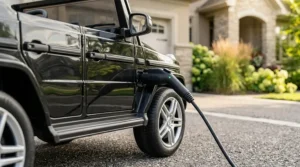
Most 12V and 24V ride-on batteries need a full 8–12 hour charge before first use, even if the listing says a shorter “quick charge” is possible — topping off a battery that hasn’t been fully conditioned tends to shorten its lifespan early on.
After that first charge, a few habits make a real difference in how long the battery lasts:
✅ Unplug the charger once the battery is full rather than leaving it connected overnight repeatedly
✅ Store the car somewhere temperature-stable — extreme garage heat or freezing cold both degrade battery capacity faster than normal use does
✅ Check tire treads and wheel bolts every few weeks, especially on suspension models where extra moving parts can loosen
✅ Re-pair Bluetooth or test remote control range each season, since these are the first features to act up after storage
None of this is complicated, but skipping it is exactly why some ride-ons feel “broken” within a year when the real issue is battery neglect rather than a manufacturing flaw.
Problem → Solution: Fixing Common Ride-On Car Frustrations
“The car struggles on grass or won’t climb our slope.” This is almost always a power-distribution issue rather than a defect — single-motor 12V cars aren’t built for it. The fix is choosing a multi-motor 24V model like the Ford F-150 or Bronco Raptor rather than expecting a budget car to handle terrain it wasn’t designed for.
“The battery dies faster than it used to.” Repeatedly running a battery down to empty before recharging shortens its usable life. Charging after most rides, rather than waiting for a full drain, keeps capacity more stable over time.
“The remote stops responding at a distance.” Most consumer ride-on remotes have a shorter range than expected — staying within line of sight, and checking the remote’s own battery, resolves the majority of reported issues before assuming the unit is faulty.
“My kid is already outgrowing it.” This usually traces back to weight capacity, not age. Checking the rated capacity against your child’s current and likely near-future weight avoids the most common reason families end up replacing a ride-on within a year.
How to Choose a Realistic Electric Ride-On Car
- Match voltage to your child’s size and age — 12V suits lighter toddlers on flat ground; 24V suits bigger kids, two-seaters, or any terrain beyond pavement.
- Check the weight capacity against future growth, not just current weight — this is the single biggest factor in how long the car lasts.
- Decide single vs. two-seater early — retrofitting isn’t possible, and sibling conflict is a real, recurring complaint.
- Match suspension to your actual terrain — flat driveways don’t need it; grass, gravel, or slopes benefit significantly.
- Weigh licensed branding against budget — licensed detail adds cost but also resale appeal later.
- Consider charge time as a daily-use factor, not just a spec — an 8–12 hour charge means planning ahead, not spontaneous afternoon rides.
- Treat extra features (Bluetooth, multiple speeds) as nice-to-haves, not deciding factors — they rarely make or break long-term satisfaction.
Licensed Ride-On Cars vs. Generic Ride-On Toys
| Factor | Licensed Models | Generic Models |
|---|---|---|
| Styling accuracy | High — real badges, body lines | Low — generic “sports car” shape |
| Typical price | Higher | Lower |
| Resale value | Generally better | Lower, harder to identify |
| Model variety | Tied to real vehicle lineups | Broader, less distinct |
The price gap between licensed and generic models is real, but it isn’t purely cosmetic — licensing fees are baked into that higher cost, and in exchange you typically get more accurate proportions and branded details that hold up to scrutiny from kids who already recognize real car logos. Generic models close that gap mainly on price and occasionally on raw power-to-cost ratio, as the Best Choice Products truck on this list demonstrates.
What to Expect: Real-World Performance
Top speed numbers on spec sheets can be misleading without context. A 2–3 mph top speed (common on 12V single-seaters) is roughly toddler walking pace — safe, but not exciting for a child over 5. The 24V models on this list typically push 4–6 mph, closer to a light jog, which is where most of the “fun factor” parents report actually shows up.
Runtime is the other figure worth recalibrating expectations around: most listings advertise 1–2 hours per charge, but real-world use on grass, with a heavier rider, or with frequent stop-start driving (which drains batteries faster than steady cruising) tends to land at the lower end of that range.
Features That Actually Matter (And Those That Don’t)
Actually matter: accurate weight capacity ratings, suspension matched to your terrain, parent remote with a genuine override function, and realistic charge-time expectations.
Matter less than marketing suggests: a third or fourth “speed” setting beyond two meaningful tiers, elaborate sound-effect libraries, and minor cosmetic trim differences between otherwise identical models. These are pleasant extras, not factors that should swing a purchase decision.
✨ Don’t Miss These Exclusive Deals!
🔍 Take your search for the right ride-on car to the next level — click on any highlighted model above to check current pricing and availability. These picks are built to handle real backyards, not just showroom driveways!
Safety, Battery Care & Regulations Guide
Ride-on toy cars in the U.S. fall under general toy safety oversight, and organizations like the Consumer Product Safety Commission publish ongoing guidance on age grading, weight limits, and battery-related hazards that’s worth a quick read before a big purchase, especially for higher-speed UTV-style models.
A few safety basics apply across every model on this list: charge batteries on a flat, stable surface away from foot traffic, never leave a charging battery unattended overnight in living spaces, and supervise early rides until a child understands the throttle and brake. Battery and charging fire risk is low but not zero — general consumer guidance from groups like the National Fire Protection Association recommends using only the charger that shipped with the unit and avoiding third-party replacements, since voltage mismatches are a recognized cause of overheating in rechargeable battery products.
Long-Term Cost & Maintenance: The ROI of a Realistic Ride-On Car
A realistic ride-on car’s upfront price — typically $150 to $450 across this list — isn’t the full cost story. Budget for an eventual battery replacement (most lead-acid 12V/24V batteries last 1–3 years of regular use before capacity noticeably drops) and occasional tire or charger replacements.
Even accounting for that, a well-matched ride-on usually outlasts the cycle of pedal cars, scooters, and smaller ride-ons a child would otherwise go through at the same age, simply because weight capacity and terrain handling let one car serve a wider age and size range. Buying based on future weight capacity, not just today’s fit, is the single biggest lever for stretching that cost over more years.
Electric Ride-On Cars for Different Ages and Skill Levels
Ages 1–3: Lighter 12V single-seaters with soft-start are the right entry point — speed isn’t the goal, confidence and basic steering are. The Mercedes-Benz G63 and Ford Mach-E fit here.
Ages 4–6: Kids in this range benefit from slightly more power and, often, a second seat for a sibling or friend — the Ford F-150 and Kawasaki KRX 1000 suit this stage well.
Ages 6–8+: Bigger riders need higher weight capacity and real terrain handling more than top speed — the Bronco Raptor and Best Choice Products two-seater hold up best here. Pairing ride-on play with other active outdoor time is generally recommended by pediatric guidance, including general activity recommendations from the American Academy of Pediatrics, as part of balanced motor-skill development.
FAQ
❓ How fast do realistic electric ride on cars go?
❓ What age is appropriate for a 24V ride on car?
❓ Are licensed electric ride on cars worth the extra cost?
❓ How long does the battery last on a full charge?
❓ Can two kids safely ride together in a 2-seater ride on car?
Conclusion
Across all seven models, the real decision usually comes down to two questions: how much power does your terrain actually require, and how much does branded realism matter to you versus raw value? The ANPABO Mercedes-Benz G63 and Costzon Ford Mach-E are the strongest starting points for younger kids on flat ground, the Ford F-150 and Bronco Raptor handle rougher yards and bigger kids well, and the Best Choice Products two-seater remains the most practical buy if long-term value matters more than badge detail.
There’s no single “best” realistic electric ride on car — there’s a best one for your driveway, your kid’s age, and how long you want it to last. Matching voltage and weight capacity to your actual situation, rather than chasing the most feature-packed listing, is what determines whether a ride-on gets used for one summer or several.
✨ Ready to Find Your Family’s Perfect Match?
🚗 Browse the full lineup above and pick the model that fits your driveway, your terrain, and your kid’s next few years of growth — not just this season’s wish list.
Recommended for You
- Electric Ride On Toy Car: 7 Best Picks for 2026
- Ride On Toy Voltage Guide 2026: 7 Real Picks That Last
- 7 Best 48V Ride-On Toys for Kids in 2026
Disclaimer: This article contains affiliate links. As an Amazon Associate, I earn from qualifying purchases. If you purchase products through these links, we may earn a small commission at no additional cost to you.
✨ Found this helpful? Share it with your friends! 💬🤗
