
In This Article
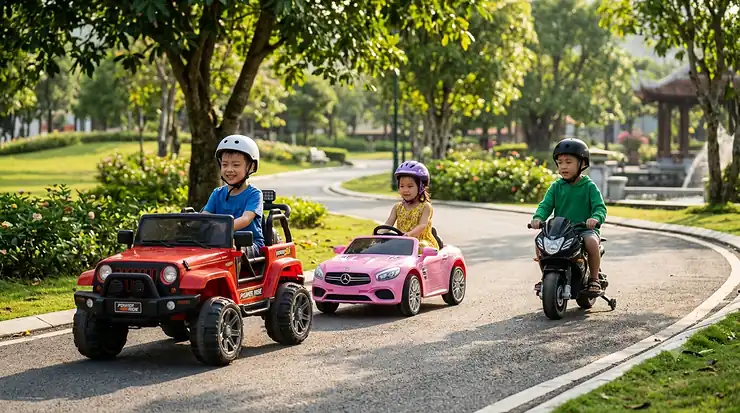
If you’ve shopped for motorized ride on toys lately, you already know the category has exploded. What used to mean one slow plastic car in three colors now spans toddler ATVs, 4-motor off-road trucks, and electric dirt bikes that hit highway-adjacent speeds (relatively speaking — we’re still talking about toys here). The hard part isn’t finding a ride-on toy. It’s figuring out which motor setup, voltage, and price tier actually matches your kid’s age, weight, and terrain.

That’s the gap this guide fills. Instead of repeating spec sheets, we dug into seven real, currently available models — from a $100-ish toddler ATV to a 700-watt dirt bike — and broke down what each motor configuration actually feels like in a driveway, a backyard, or a gravel trail. We also leaned on patterns from verified buyer feedback to flag what tends to go right (and wrong) after the unboxing excitement fades.
Quick context for the comparisons ahead: most entry ride-on toys run a single motor under 50 watts and top out under 2 mph. Once you move into 24V and 36V territory, dual- and quad-motor setups become common, and that’s where torque, hill-climbing, and real speed start to separate one toy from another.
What Is a Motorized Ride On Toy?
A motorized ride on toy is a battery-powered vehicle — car, truck, ATV, UTV, or motorcycle-style — built for a child to drive or be remotely guided in, using an electric motor instead of pedals. Voltage (6V to 36V) and motor wattage determine speed, torque, and how well the vehicle handles grass, gravel, or hills.
Quick Comparison: Motor Power, Speed & Price at a Glance
| Product | Motor Setup | Top Speed | Best For | Price Range |
|---|---|---|---|---|
| Gotrax RT1 | Single motor, 12V | 1.5 mph | Toddlers 1.5–4 | Budget (under $150) |
| TOBBI Off-Road Truck | Dual 25W motors, 12V | up to 4.35 mph | Ages 3–6, budget dual-motor | Budget-mid ($100–$170) |
| ANPABO Mercedes-Benz G63 | Dual 35W motors, 12V | 3 mph | Ages 2–5, licensed design | Mid ($180–$240) |
| ANPABO Ford F-150 | Quad 100W motors, 24V | 4.3 mph | Ages 3–8, 2-seater all-terrain | Mid-premium ($350–$450) |
| ANPABO 24V XXL/4×4 | Quad 200W motors, 24V | up to 5.1 mph | Ages 3–12, high-torque off-road | Premium ($330–$420) |
| First Ride On 36V UTV | Dual 200W motors, 36V | 5–8 mph | Ages 6+, real pedal driving | Premium ($420–$500) |
| ECOLEAP K1 Dirt Bike | 700W peak motor, 36V | up to 16 mph | Ages 3–10, top speed/range | Premium ($330–$390) |
A clear pattern shows up here: doubling or quadrupling motor count doesn’t just add speed — it changes what surfaces the toy can handle at all. The Gotrax RT1 and TOBBI truck are built for flat driveways and indoor floors, while the quad-motor ANPABO models and the dual-motor UTV are engineered to push through grass, gravel, and mild slopes without stalling. The ECOLEAP K1 sits in its own lane entirely, since it’s a single high-output motor optimized for sustained speed rather than torque-heavy crawling.
💬 Just one click — help others make better buying decisions too! 😊
✨ Don’t Miss These Exclusive Deals!
💬 Take your search for the right ride-on toy further — click on any highlighted pick above to check current pricing and availability. These picks help real families find a ride that matches how their kid actually plays!😊
Top 7 Motorized Ride On Toys: Expert Analysis
1. Gotrax RT1 Ride-On ATV (Budget Pick)
The Gotrax RT1 is built for exactly one job: giving a 1.5–4-year-old their first taste of independent driving without any real risk. Its 12V 4.5Ah lead-acid battery and single motor cap out at 1.5 mph — slow enough that a parent can walk alongside without breaking a sweat, but fast enough to feel like a “real” vehicle to a toddler. The 8-inch tires and anti-rollover geometry matter more than the speed number here, since toppling on a slope is the actual risk at this age, not velocity.
This is the toy for a first birthday gift, not a forever toy — most kids outgrow the 1.5 mph ceiling by age 4. Owner feedback consistently points to two things: the anti-rollover design genuinely holds up on bumpy yards, and the push-button forward/reverse is intuitive enough that toddlers pick it up in minutes.
Pros: Genuinely toddler-safe top speed, simple push-button controls, strong stability on uneven ground.
Cons: No remote control for parents, battery life shortens noticeably after a year of regular charging.
In the budget tier, this is hard to beat for the 1.5–4 age window — just don’t expect it to last past preschool.

2. TOBBI 12V Off-Road Truck with 25W Dual Motors
The TOBBI Off-Road Truck is the clearest entry point into dual motor ride on toys without paying premium prices. Its twin 25W motors push the speed range to 1.86–4.35 mph, which sounds modest, but the dual-motor layout means each rear wheel gets independent power — something single-motor budget trucks in this price bracket simply can’t replicate, especially when turning on grass.
What most buyers overlook about this model is that the “off-road” labeling is earned, not just marketing: the shock-absorbing knobby tires and gentle-start system noticeably reduce the jolts that make cheaper 12V trucks feel twitchy on grass or gravel.
This is the pick for parents who want their first electric ride-on to survive a backyard rather than just a driveway, without jumping to 24V pricing. Feedback on the broader TOBBI off-road lineup tends to praise the openable doors and built-in songs as genuinely used features, not throwaway gimmicks.
Pros: Dual-motor traction at a budget price, shock-absorbing tires, easy assembly.
Cons: Around 1-hour runtime per charge, max weight capacity of 66 lbs limits it to smaller kids.
If “dual motor” is the box you want checked without spending $300+, this is the realistic answer.
3. ANPABO Licensed Mercedes-Benz G63 (12V)
The ANPABO Mercedes-Benz G63 swaps raw power for polish — its dual 35W motors and 12V 7Ah battery only hit 3 mph, but the battery itself is 55% larger than the standard 4.5Ah pack most 12V competitors use, which translates to noticeably fewer mid-play recharges. That’s the kind of spec that doesn’t show up in a glance at the box but matters during an actual afternoon of play.
What stands out for this model is the licensed G-Wagon styling combined with a real-time battery indicator and low-battery voice prompt — a small touch that prevents the classic “dead battery, meltdown” scenario other toddler cars are notorious for.
This is the pick for parents prioritizing a premium look over speed, particularly for ages 2–5 who care more about the car looking cool than going fast. Buyer feedback repeatedly calls out the build quality and how well it handles both grass and pavement without separate settings.
Pros: Strong battery life for the voltage class, low-battery warning prevents dead-stop surprises, premium licensed design.
Cons: Top speed of 3 mph is slow even for this voltage tier, single-rider weight cap of 66 lbs.
A style-and-reliability pick more than a performance one — but it delivers on both those fronts.
4. ANPABO Licensed Ford F-150 (24V, Quad 100W Motors)
Stepping up to 24V changes the conversation entirely, and the ANPABO Ford F-150 is a clean example of why. Its four 100W motors deliver genuine 4WD, not just four wheels turning — the practical result is that this truck climbs over gravel, grass, and light mud where a 12V or 24V 2WD car would simply spin a wheel and stop. The 24V 7Ah battery (50% larger than ANPABO’s own standard pack) stretches runtime to 70–130 minutes depending on terrain and rider weight.
What most buyers overlook here is the 2-seater cabin dimensions — at 20″L x 14″W, it’s roomy enough that two kids aged 3–8 can actually sit side by side without elbowing each other, which matters more for sibling harmony than any spec sheet number.
This is the pick for families with two kids who fight over a single-seater, or anyone whose yard has actual texture (slopes, gravel, uneven grass) rather than flat pavement. Owner feedback frequently highlights the Bluetooth speaker and how manageable assembly is solo, typically 20–30 minutes.
Pros: True 4WD with real hill/gravel performance, 2-seater comfort, long runtime for the voltage class.
Cons: 4.3 mph cap means it’s not the fastest 24V option, large storage trunk adds bulk for smaller garages.
If your terrain has any texture at all, the quad-motor setup here is the upgrade that actually shows up in daily use.
5. ANPABO 24V XXL / 4×4 Ride-On (Quad 200W Motors)
This is where “strongest ride on toy motors” stops being a marketing phrase and starts being measurable: the ANPABO 24V XXL/4×4 doubles the wattage of the F-150 above to four 200W motors, pushing top speed to 5–5.1 mph while adding an 11-inch-high chassis specifically built to clear small mounds and gravel driveways. The torque difference between 100W and 200W motors per wheel isn’t subtle in practice — it’s the difference between a truck that hesitates on an incline and one that just climbs it.
What stands out for this model is the wide, adjustable 21-inch seat that can fit either one big kid up to age 12 or two smaller toddlers side by side, which is unusually flexible compared to fixed bucket seats on competing 24V trucks.
This is the pick for older kids (up to age 12) or families wanting genuine off-road capability rather than a backyard cruiser. Feedback on this line consistently flags the metal-frame construction as feeling noticeably sturdier than the plastic-heavy competition at similar voltage.
Pros: Highest torque-per-wheel in this lineup, adjustable seat fits a wide age range, metal frame durability.
Cons: Heavier curb weight makes it harder to move manually when the battery dies, premium price for a 24V model.
For genuine off-road ambition without jumping to 36V, this is the strongest motor setup on this list at this voltage.
6. First Ride On 36V UTV (Dual 200W Motors, 2-Seater)
The First Ride On 36V UTV is built differently from everything above it on this list: there’s no parental remote at all. It’s designed as a real driving experience for ages 6+, with a variable throttle pedal, forward/reverse shifter, and electronic brake — dual 200W motors (400W combined) and a 36V 9Ah battery push it to 5–8 mph depending on terrain and load.
What most buyers overlook is that removing the remote isn’t a missing feature — it’s the point. Once a child is old enough to handle independent speed control, a remote-controlled toy starts feeling like a constraint rather than a safety feature, and this UTV is positioned squarely for that transition age.
This is the pick for a 6-to-10-year-old who has outgrown remote-controlled ride-ons and is ready for actual pedal-and-shifter control, ideally with rear storage for solo backyard exploring. Owner feedback is notably consistent about build quality — strong metal frame, smooth acceleration, and EVA tires that perform well across both indoor and outdoor surfaces — though a small number of buyers reported cosmetic shipping damage to plastic trim pieces.
Pros: Real pedal-and-shifter driving experience, strong torque from dual 200W motors, spacious 2-seat, 130-lb capacity.
Cons: No remote control means less oversight for hesitant parents, shorter 40–60 minute runtime than its voltage suggests.
If your kid is asking for “a real car, not a toy,” this is the closest thing on this list.
7. ECOLEAP K1 Kids Electric Dirt Bike (36V, 700W Peak)
The ECOLEAP K1 stands apart from every wheeled vehicle on this list because it’s a two-wheeler, and its 700W peak motor is tuned for sustained speed rather than load-hauling torque — three selectable speed modes top out at 6, 9, and 16 mph respectively, with a 36V 5.2Ah battery rated for up to 14 miles of range.
What stands out here is the tiered speed-mode system: rather than one fixed top speed, parents can lock a younger or newer rider into the 6 mph mode and only unlock 16 mph once they’ve demonstrated control, which is a meaningfully different safety model than a single fixed throttle.
This is the pick for kids ages 3–10 who already ride a balance bike or bicycle and are ready for their first powered two-wheeler, particularly in households with space to ride beyond a driveway (a paved trail or large yard). Feedback on this model frequently highlights responsive customer service for replacement parts and praises the UL-2272 battery certification as genuine peace of mind, not just a sticker.
Pros: UL-2272 certified battery, tiered speed modes for skill progression, longest range on this list at 14 miles.
Cons: Requires more rider skill/balance than four-wheeled options, 16 mph top speed demands closer supervision than anything else here.
Out of all seven picks, this is the one where motor output is genuinely the headline feature — and the tiered speed system is what makes that safe to recommend.
Real-World Scenarios: Matching Riders to the Right Machine
The first-time toddler driver: A 2-year-old getting their first ride-on toy doesn’t need speed — they need stability and a parent who can keep pace on foot. The Gotrax RT1’s 1.5 mph ceiling and anti-rollover frame are built exactly for this stage. Budget around $100–150 and expect to pass the toy down or resell it within 18–24 months as the child outgrows the speed limit.
The sibling-sharing household: If two kids are constantly fighting over one ride-on toy, a single-seater just multiplies conflict. The ANPABO Ford F-150’s roomy 2-seat cabin solves this directly, and its 4WD means it won’t bog down even with two kids’ combined weight on grass or a sloped driveway.
The graduating big kid: Once a child has mastered a remote-controlled ride-on and starts asking to drive “for real,” the First Ride On 36V UTV’s pedal-and-shifter setup is the natural next step — it’s the rare ride-on that adds responsibility instead of just adding speed.
Problem → Solution: Fixing Common Ride-On Toy Frustrations
Problem: “My kid’s ride-on stalls on grass or slight hills.” Solution: This almost always traces back to motor count and wattage, not battery charge. A single 35–50W motor simply doesn’t have torque for inclines. Stepping up to a quad-motor setup like the ANPABO F-150 or 24V XXL resolves this directly rather than fixing a “battery problem” that isn’t actually a battery problem.
Problem: “The battery dies faster every season.” Solution: Lead-acid batteries (common in budget 6V/12V toys like the Gotrax RT1) lose capacity gradually with every charge cycle — that’s normal chemistry, not a defect. Avoid letting the battery sit fully drained for weeks, and charge it after every use rather than waiting until it’s empty.
Problem: “Two kids, one ride-on, constant arguing.” Solution: Rather than buying a second budget toy, a 2-seater like the ANPABO F-150 or First Ride On UTV removes the conflict entirely and tends to be cheaper than buying two separate single-seaters of comparable quality.
How to Choose a Motorized Ride On Toy
- Match voltage to age, not ambition. 6V–12V suits ages 1–5; 24V fits ages 3–8; 36V is appropriate for ages 6+ who can handle real speed and braking.
- Check terrain before motor count. Flat driveways and indoor floors don’t need 4WD — save the money for a single or dual-motor model instead.
- Weigh remote control vs. independence. Younger or more cautious riders benefit from parental remote override; older kids ready for real driving do better without one.
- Confirm weight capacity against your child’s actual weight, not their age bracket. Capacity limits (often 50–130 lbs) are frequently the real constraint, not the age range on the box.
- Look at runtime relative to how your kid actually plays. A 40-minute runtime is fine for short bursts; a 70–130 minute range matters for all-day outdoor sessions.
- Verify safety certifications. ASTM F963 and CPSIA compliance (for ride-on cars) or UL-2272 (for battery-powered bikes) indicate the product has passed recognized safety testing — see ASTM International’s toy safety standard for what F963 actually covers.
- Decide if 2-seater value outweighs single-seater simplicity if you have more than one child in the target age range.
Dual Motor vs. Single Motor Ride On Toys: What Actually Changes
A single motor drives one axle or wheel pair through a shared drivetrain; dual and quad motor ride on toys give independent power to each wheel. In practice, this means dual-motor trucks like the TOBBI off-road model maintain traction when turning on loose surfaces, where single-motor budget trucks can lose grip on one side. Quad-motor setups, like the ANPABO F-150 and 24V XXL, take this further by adding genuine 4WD capability — useful specifically for hills and uneven terrain, not flat pavement, where the extra motors add cost without adding noticeable benefit.
The practical takeaway: if your child only ever drives on a driveway or sidewalk, a single or dual-motor toy is sufficient and considerably cheaper. Multi-motor setups earn their price premium specifically on grass, gravel, and inclines.
High Torque vs. High Speed: Which Matters More?
These two specs get conflated constantly, but they solve different problems. High-torque ride on toys — the quad-motor ANPABO models and the dual 200W First Ride On UTV — are engineered to maintain power at low speed, which is what lets them climb hills or push through grass without stalling. High-speed toys, like the ECOLEAP K1’s 700W peak motor, are optimized for sustained velocity on relatively flat, clear surfaces.
For most backyards and driveways, torque matters more than top speed — a toy that stalls on a 5-degree slope is more frustrating in daily use than one that “only” goes 4 mph instead of 8. Speed becomes the priority specifically for older kids riding on open trails or larger paved areas where there’s room to actually use it.
✨ Don’t Miss These Exclusive Deals!
🔍 Take your search for the right ride-on toy to the next level — click on any highlighted product above to check current pricing and availability. These picks will help your family find a ride that actually matches how your kids play!
Common Mistakes When Buying Motorized Ride On Toys
- Buying based on top speed alone. A 16 mph dirt bike is the wrong choice for a cautious first-time rider, regardless of how impressive the number looks on the box.
- Ignoring weight capacity. Many parents check the age range and skip the lb limit, then are surprised the toy struggles or feels underpowered.
- Assuming all “24V” toys perform the same. Motor count and wattage vary wildly within the same voltage class — the ANPABO F-150’s 4x100W and the 24V XXL’s 4x200W are both “24V” but perform very differently on hills.
- Skipping safety certification checks. Not every off-brand listing carries ASTM F963 or CPSIA testing, and that’s a meaningful gap for products kids climb in and out of constantly.
- Underestimating charge time. An 8–12 hour charge time means overnight charging is mandatory, not optional, for next-day play.
Features That Actually Matter (And Those That Don’t)
Actually matters: Motor wattage and count (torque/hill performance), battery capacity in Ah (runtime), weight capacity, and safety certification. These directly affect whether the toy performs as advertised in real conditions.
Mostly marketing: Bluetooth speakers, built-in “engine sounds,” and LED light shows are genuinely fun for kids but have zero effect on performance, safety, or longevity. They’re reasonable tie-breakers between two similar models — not reasons to choose a weaker motor setup over a stronger one.
Worth paying for if your terrain demands it: EVA (foam-filled or dense rubber) tires over hard plastic wheels, which the Consumer Product Safety Commission implicitly supports through its broader ride-on toy safety guidance — better tire material reduces both wear and the jarring impact of uneven terrain on small bodies.
Safety, Regulations & Compliance Guide
In the U.S., ride-on toys for children fall under the Consumer Product Safety Commission’s oversight, and reputable manufacturers test to the ASTM F963 toy safety standard and CPSIA lead/phthalate requirements — all seven products on this list reference at least one of these certifications in their listings. Battery-powered bikes like the ECOLEAP K1 carry the separate UL-2272 certification specifically for electrical/battery system safety, which is a meaningfully different (and important) standard from toy-specific ASTM testing.
Practical safety habits matter as much as certifications: always supervise riders regardless of advertised safety features, match the toy’s weight capacity to your child rather than rounding up based on age, and never charge batteries unattended or in extreme temperatures — guidance echoed by the FDNY’s lithium-ion battery safety tips, which apply to the lithium packs used in higher-voltage ride-on toys like the ECOLEAP K1 and First Ride On UTV.
Long-Term Cost & Maintenance
Budget toys (Gotrax RT1, TOBBI truck) typically use lead-acid or basic lithium packs that degrade within 1–2 years of regular use, and replacement batteries generally cost a fraction of the toy’s original price — a worthwhile repair rather than a reason to discard the whole unit. Premium 24V and 36V models carry larger lithium packs that tend to last longer per charge cycle but cost more to replace if they do fail.
Tires, especially EVA models on the higher-end picks, rarely need replacing within a typical ownership window, while plastic wheels on budget toys are more prone to cracking after a season of gravel or rough pavement use. Across this list, the real long-term cost driver isn’t the sticker price — it’s how well the motor and battery combination matches your actual terrain, since underpowered toys on hilly yards tend to burn out motors faster from sustained strain.

❓ Frequently Asked Questions
❓ How fast can a motorized ride on toy go?
❓ What age is best for an electric ride on toy?
❓ Are dual motor ride on toys better than single motor?
❓ How long does a ride-on toy battery last per charge?
❓ Are motorized ride on toys safe for toddlers?
Conclusion
The motorized ride on toys market in 2026 isn’t just “bigger numbers are better” — the right pick depends entirely on your kid’s age, your terrain, and whether you want a toy that grows with them or a stepping stone to the next size up. A toddler doesn’t need quad motors any more than a 9-year-old needs a 1.5 mph speed cap. Use the torque-versus-speed framework above, match weight capacity honestly to your child, and the seven picks in this guide cover nearly every realistic scenario from first ride to first real driving lesson.
✨ Don’t Miss These Exclusive Deals!
🔍 Ready to find the right ride? Click on any product above to check current pricing and availability, and give your kids the outdoor adventure they’ve been asking for!
Recommended for You
- 7 Realistic Electric Ride On Cars Kids Won’t Outgrow (2026)
- Electric Ride On Toy Car: 7 Best Picks for 2026
- Ride On Toy Voltage Guide 2026: 7 Real Picks That Last
Disclaimer: This article contains affiliate links. As an Amazon Associate, I earn from qualifying purchases. If you purchase products through these links, we may earn a small commission at no additional cost to you.
✨ Found this helpful? Share it with your friends! 💬🤗
