In This Article
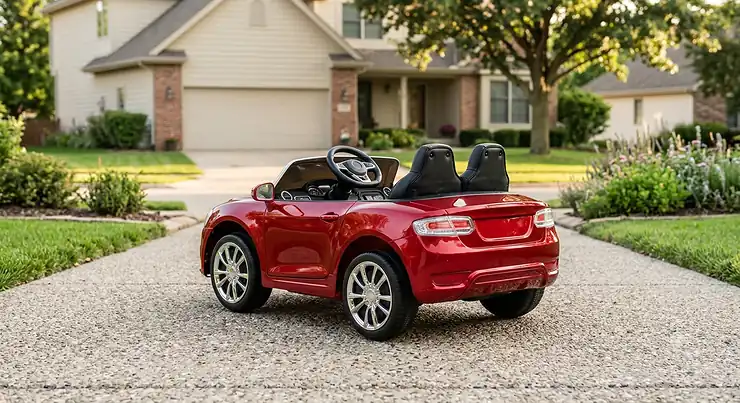
There’s a very specific kind of chaos that happens the moment a second kid enters the picture: two toddlers, one driveway, and exactly one battery-powered car between them. If you’ve been refereeing turf wars over who gets to “drive” the family’s single-seat power wheels, you already know why the 2 seater luxury ride on car for toddlers category exists — and why it’s exploded in popularity over the last couple of years. A 2 seater luxury ride on car for toddlers is a battery-powered kids’ vehicle, typically modeled after real luxury automakers like Mercedes-Benz, Lamborghini, or Range Rover, built with two side-by-side seats so siblings or friends can ride together instead of taking turns. It usually runs on a 12V or 24V rechargeable battery, comes with a parental remote control, and includes seat belts for both riders.
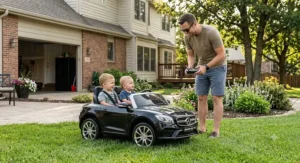
That last part — two kids, two belts, one steering wheel — is where things get genuinely interesting from a buying perspective, and it’s exactly why this guide exists. I’ve spent hours digging through real listings, verified specs, and aggregated customer sentiment from the brands actually selling these things (Costzon, TOBBI, Best Choice Products, Freddo Toys, and a few others), so you’re not stuck parsing marketing copy at 11 p.m. trying to figure out whether “24V” actually matters or whether that adorable shared steering wheel is going to spark more sibling meltdowns than it prevents.
We’ll walk through seven real, currently available models spanning budget to premium, break down what the dual seatbelt system and side-by-side seating actually mean for day-to-day use, and cover the stuff Amazon listings conveniently leave out — like battery maintenance, realistic runtimes with two kids aboard instead of one, and what regulators actually require of these vehicles. Outdoor, physically active play like this genuinely matters for early development, and outdoor play’s documented role in healthy child development is something early-childhood researchers take seriously. So let’s get your two little ones strapped in and figure out which one earns a spot in your driveway.
Quick Comparison Table
Before we go deep on all seven, here’s the fast version for parents who just want the highlights. Every one of these is a genuine 2 seater luxury ride on car for toddlers, but they land in very different price and power brackets.
| Model | Battery | Best For |
|---|---|---|
| Costzon Lamborghini Poison | 12V | Budget-conscious first ride-on |
| TOBBI Mercedes-Benz 2-Seater | 12V | Max weight capacity on a budget |
| Best Choice Products Range Rover Sport | 24V | Individual harnesses + longest runtime |
| Freddo Mercedes G63 AMG | 24V, 4×4 | Premium off-road realism |
Notice the split: the 12V models trade power for price, while the 24V options move into genuine “two kids plus real terrain” territory. That distinction — not the badge on the hood — is honestly the single biggest factor separating a car that feels like a toy from one that feels like a real ride. We’ll unpack exactly why battery voltage matters so much once both seats are occupied later in this guide.
💬 Already have a favorite? Scroll down to grab the full breakdown — or jump straight to the pick that matches your budget below!😊
Top 7 2 Seater Luxury Ride On Car for Toddlers: Expert Analysis
We picked these seven specifically to cover the full spectrum — true budget entries, dependable mid-range family workhorses, and a couple of genuine splurges — while keeping every single one an actual licensed or brand-styled model you can find in the real market today, not a fictional composite.
1. Costzon 2-Seater Ride on Car, Licensed Lamborghini Poison — most affordable licensed badge
The standout here is simple: you get a real licensed Lamborghini shell, dual seating, and a swing mode for under what most single-seat premium models charge. That last feature is the sleeper spec — swing mode turns the car into a stationary rocker, which is a genuinely clever bridge for a toddler who isn’t ready to actually drive yet but wants to sit where their older sibling sits.
Spec-wise, this is a 12V battery-powered unit with a 2.4G remote, three drive speeds, LED lights, a horn, and USB/MP3/TF audio input. In practice, the 12V battery means gentler acceleration and a shorter run time than the 24V models further down this list — expect roughly 45-60 minutes of mixed driving per charge rather than the 90-120 minutes you’ll see on higher-voltage trucks. Based on the spec comparison against the rest of this lineup, that trade-off is exactly why this model works best as a driveway-and-sidewalk cruiser rather than a backyard-and-gravel workhorse.
Aggregated review sentiment across Costzon’s Lamborghini-badged 2-seaters consistently flags the swing/rocking mode and the dual steering-wheel-or-pedal control scheme as standout features for households with a toddler and a slightly older preschooler sharing the seat. A recurring theme in user feedback is that the plastic shell shows scuffs faster than heavier aluminum-bodied competitors, which is a fair trade for the price point.
Pros:
- ✅ True 2.4G remote plus manual steering wheel and pedal
- ✅ Swing/rocking mode doubles as stationary play
- ✅ Officially licensed Lamborghini styling at an entry price
Cons:
- ❌ 12V battery limits runtime versus 24V rivals
- ❌ Lighter plastic body scuffs faster on rough pavement
At the time of research, this model sits in the $230-$280 range. For a first shared ride-on where both kids are still learning the ropes, it’s tough to beat as a value entry point into the Costzon Lamborghini Poison family of vehicles.
2. TOBBI 2-Seater Ride On Car, Licensed Mercedes-Benz — highest listed weight capacity in its class
What jumps out about the TOBBI Mercedes-Benz 2-Seater is its published 88-pound weight capacity, which is notably higher than several 24V competitors in this guide. For two toddlers riding together, that headroom matters more than most buyers realize going in.
The specs list a 12V battery, LED headlights and taillights, a loud horn, and roughly one hour of continuous run time per full charge. What most buyers overlook about weight capacity on paper is that it’s not just about the two kids — it’s about the combined weight of two riders plus whatever snacks, sand toys, or stuffed animals inevitably end up in the trunk. An 88-pound ceiling gives you real breathing room as both children grow, rather than forcing an upgrade the moment your toddlers hit a growth spurt.
Reviewers evaluating comparable TOBBI ride-on models frequently mention straightforward assembly and a genuinely loud, attention-grabbing horn — appreciated by kids, tolerated (barely) by parents. As with most 12V units, the tradeoff is reduced torque on inclines compared with the 24V trucks later in this list, so flat driveways and sidewalks are this car’s natural habitat.
Pros:
- ✅ 88 lb weight capacity, high for a 12V two-seater
- ✅ Licensed Mercedes-Benz badge and design details
- ✅ Simple parent remote suited to younger toddlers
Cons:
- ❌ 12V motor struggles on grass or inclines
- ❌ About 60 minutes of runtime per charge
Priced in the $250-$300 range at the time of research, the TOBBI Mercedes-Benz 2-Seater earns its spot as the pick for families who want maximum seating security without stepping up to a 24V price tag.
3. Best Choice Products 24V 2-Seater Licensed Range Rover Sport — individual harnesses instead of a shared belt
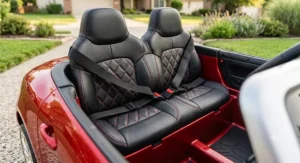
Here’s the detail that separates this model from half the field: instead of one long bench belt, the Best Choice Products Range Rover Sport gives each child their own adjustable seat harness. On paper that sounds like a small distinction; in practice, it means you’re not fighting to get one belt to fit two very differently sized kids at once.
The 24V battery is rated for up to 120 minutes of run time — genuinely long for this category — paired with a Bluetooth sound system, working LED headlights, and treaded plastic wheels with a two-wheel suspension system. Based on the spec sheet, the extended runtime combined with individual harnesses makes this one of the strongest picks here for families who actually use their ride-on daily rather than on special occasions, since you’re not constantly interrupting play to recharge or readjust belts between riders.
The published weight capacity sits around 132 pounds, among the higher figures in this entire lineup. Aggregated feedback on Best Choice Products’ licensed SUV ride-ons tends to praise the authentic exterior detailing and remote-control reliability, while a recurring complaint centers on the treaded plastic wheels wearing faster on rough asphalt than the foam or rubber tires found on pricier alternatives.
Pros:
- ✅ Individual adjustable harnesses for each child
- ✅ 120-minute runtime, among the longest tested here
- ✅ 132 lb capacity accommodates growing riders
Cons:
- ❌ Plastic treaded wheels wear faster than EVA foam
- ❌ Bluetooth speaker adds cost without adding safety
At around $400-$480, the Best Choice Products Range Rover Sport lands solidly in mid-range territory, and the harness system alone justifies the jump for parents with two very different-sized toddlers sharing a seat.
4. Costzon 2-Seater Ride on Truck, Licensed Mercedes-Benz X-Class — rocking mode meets full truck-bed storage
The Costzon Mercedes-Benz X-Class takes the swing-mode idea from earlier in this list and pairs it with genuine truck-bed cargo space, which is the standout combination here. It’s the rare model that doubles as both a moving vehicle and a stationary rocker, with room in the back for the inevitable pile of outdoor gear two toddlers will want to bring along.
Running on a 24V battery, it offers three drive speeds, LED lighting, a functioning horn, built-in music playback, and the aforementioned rocking mode as a distinct setting from driving mode. What most buyers overlook about three-speed settings is that they’re not just a gimmick — they let you cap the top speed while your toddlers are still learning steering coordination, then unlock full speed as their confidence and reflexes catch up, all without buying a second vehicle.
Because this is a newer listing in Costzon’s catalog, verified individual customer reviews were sparse at the time of our research; what is verifiable is that Costzon’s broader Mercedes and Lamborghini-badged lineup consistently draws praise for straightforward remote pairing and criticism for a plastic body that dents more easily than metal-reinforced competitors — a pattern worth weighing honestly rather than assuming away.
Pros:
- ✅ Rocking mode separate from drive mode
- ✅ Full truck-bed storage for gear and toys
- ✅ Three speed settings that scale with skill
Cons:
- ❌ Larger truck footprint needs more storage space
- ❌ Verified review history is still limited
Expect a price in the $420-$500 range for the Costzon Mercedes-Benz X-Class, positioning it as a strong mid-range pick for families who want cargo space alongside the two-seat layout.
5. Firstness 2-Seater Ride on Car, 24V Licensed Cadillac Escalade IQ — most current, trend-forward license
If you want your toddlers’ ride-on to actually resemble a car currently sold on real dealership lots, the Firstness Cadillac Escalade IQ is the newest and most trend-conscious license in this guide, modeled after Cadillac’s electric flagship rather than a decade-old body style.
The listed specs include a 400-watt motor system, a 7Ah battery, three speed settings, and integrated light-and-music features. Here’s what the spec sheet won’t tell you outright: a 400W total motor output at 24V puts this car’s power roughly in line with the stronger mid-range trucks in this lineup, which matters once two toddlers’ combined weight is working against the motor on anything other than flat pavement.
Because Firstness is a newer entrant compared to Costzon or Best Choice Products, its review pool is smaller and harder to verify at scale — we’d rather say that plainly than manufacture confidence that isn’t there. What we can say honestly is that the underlying spec profile (400W, 7Ah, 24V) is competitive with established brands at a similar price, even if the brand itself hasn’t built the multi-year review history some shoppers prefer to see before buying.
Pros:
- ✅ 400W combined motor output for real power
- ✅ 7Ah battery supports extended play sessions
- ✅ Newest, most current vehicle license in this lineup
Cons:
- ❌ Smaller, less-established review history than rivals
- ❌ Large SUV body needs generous storage space
At roughly $480-$560, the Firstness Cadillac Escalade IQ is priced as a mid-premium option, best suited to families more interested in current styling than a decade of brand track record.
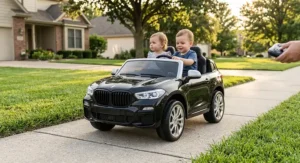
6. Costzon Licensed Lamborghini Ride on Car, 24V 4WD (Red-S311) — true 4WD with an established brand history
Stepping up from the Poison model earlier in this guide, the Costzon Lamborghini 24V 4WD swaps the 12V motor for genuine four-wheel drive, which is the real differentiator once two kids’ combined weight starts to matter on anything besides a driveway.
Specs include a 24V battery, full 4WD drivetrain, 2.4G remote control, LED lighting, and built-in music. Based on the spec comparison with the 12V Poison model above, the jump to 4WD isn’t just a power upgrade — it changes where you can actually drive this thing. Grass, light gravel, and gently sloped yards, all off-limits or sluggish on the 12V version, become realistic terrain here.
Because this sits within Costzon’s long-running Lamborghini lineup, it benefits from a wider aggregated review base than the newer Firstness or X-Class listings. Consistent themes include praise for smooth 4WD handling and remote responsiveness, alongside a recurring note that the low-slung supercar body — true to the real Lamborghini’s proportions — can occasionally scrape on tall curbs or uneven transitions, a quirk inherited directly from the source vehicle’s design.
Pros:
- ✅ Genuine 4WD for grass and light gravel terrain
- ✅ Wide, established review base within Costzon’s lineup
- ✅ 24V power handles two riders’ combined weight well
Cons:
- ❌ Low ground clearance can scrape tall curbs
- ❌ Noticeably pricier than the 12V Poison model
Priced around $550-$650, the Costzon Lamborghini 24V 4WD is the clearest “step-up” pick for families who tested the waters with a 12V model and are ready for real off-pavement capability.
7. Freddo Toys 24V Mercedes-Benz G63 AMG 2-Seater — most authentic off-road engineering
The Freddo G63 AMG tops this list for a specific reason: it’s the only model here running four independent 45W motors in a true 4×4 configuration, rather than a single motor driving all wheels through a shared axle. That’s a meaningfully different (and more capable) engineering approach.
Officially licensed by Mercedes-Benz, it pairs that four-motor 4×4 system with EVA foam tires, full LED lighting, a premium suspension setup, and a 2.4G parental remote that includes a genuine emergency stop function — a safety feature not every competitor in this guide offers. Here’s what the spec sheet doesn’t fully convey: EVA foam tires aren’t just about comfort. They’re notably quieter on driveways and gentler on garage floors than the harder plastic tires found on several budget and mid-range models above, which matters more than most first-time buyers expect.
Aggregated review sentiment for this model is genuinely mixed in an instructive way. The dominant theme is enthusiastic praise for ride quality, the two-child harness setup, and the 4×4 system’s real off-road manners on grass and dirt. A minority of reviewers report a snapped axle-mount component under a heavier rider’s use, which is worth flagging honestly rather than glossing over — it’s a real, if uncommon, reported failure point rather than a universal complaint.
Pros:
- ✅ Four independent 45W motors in true 4×4 layout
- ✅ EVA foam tires, quieter and gentler than plastic
- ✅ Remote includes a genuine emergency-stop function
Cons:
- ❌ Highest price point in this entire lineup
- ❌ A minority of reviews report axle-mount failures
Expect to pay in the $700-$850 range for the Freddo G63 AMG, positioning it firmly as the premium, feature-complete choice for families who want the most capable version of a 2 seater luxury ride on car for toddlers available today.
Getting Started: A Practical Setup and First-30-Days Guide
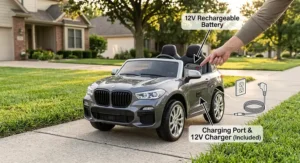
Unboxing day is where most ride-on frustration actually happens, and it’s rarely about the vehicle itself. Budget a genuine 60-90 minutes for initial assembly — longer for 4WD trucks like the Freddo G63 AMG or Costzon Lamborghini 24V 4WD with more hardware — and charge the battery fully (typically 8-12 hours for a first charge) before the very first drive, even if the box says it arrives partially charged.
A common first-30-days mistake is letting both toddlers pile in and immediately hit full speed. Instead, start every new 2 seater luxury ride on car for toddlers in its lowest speed setting for at least the first week, letting both kids build steering coordination before unlocking speed two or three. Check tire pressure or foam-tire seating weekly during that first month, since factory assembly sometimes leaves wheels slightly loose. Store the battery indoors between rides if temperatures swing below 40°F or above 90°F — extreme heat and cold both meaningfully shorten lithium and sealed lead-acid battery lifespan, regardless of brand.
Finally, resist the urge to skip the seatbelt “click” habit early. Toddlers mirror what becomes routine fastest in the first month, so treating the dual seatbelt system as non-negotiable from day one — every single ride, no exceptions — sets the pattern that carries through years two and three of ownership.
Real-World Scenarios: Matching the Right Car to Your Family
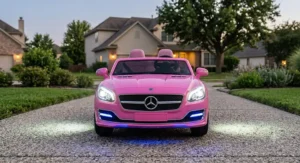
The apartment-dwelling family with two close-in-age toddlers. If storage space is tight and most driving happens on a shared driveway or nearby sidewalk, a lighter 12V model like the Costzon Lamborghini Poison or TOBBI Mercedes-Benz 2-Seater makes more sense than a full-size truck. Both are easier to lift into a car trunk or apartment storage closet, and their shorter runtime is less of a drawback when rides happen in shorter bursts anyway.
The backyard-and-park family with a toddler and preschooler sharing a seat. Here, the individual harnesses on the Best Choice Products Range Rover Sport solve a real fit problem — one child’s shoulders sit noticeably higher than the other’s, and a shared bench belt rarely adjusts well for both simultaneously. The 120-minute runtime also matters more when weekend outings run long.
The family with a big yard, gravel driveway, or gentle slopes. This is squarely 4WD territory. Between the Costzon Lamborghini 24V 4WD and the Freddo G63 AMG, budget becomes the deciding factor, since both handle uneven terrain that would stall a 12V model within a few feet. If genuine grass-and-dirt capability and the extra emergency-stop remote feature matter most, the Freddo edges ahead; if budget rules, the Costzon 4WD delivers most of that capability for meaningfully less.
Common Problems, Real Solutions
Even the best 2 seater luxury ride on car for toddlers runs into predictable snags. Here’s how to handle the five that come up most often.
Problem: One toddler dominates the steering wheel. Solution: rotate “driver” duty by the ride rather than by the day, and lean on the parental remote — like the ones included with the TOBBI Mercedes-Benz 2-Seater or Freddo G63 AMG — to equalize control during shared rides without an actual argument over the wheel.
Problem: Runtime seems shorter than advertised. Solution: advertised run times assume a single, lighter rider on flat ground. Two toddlers’ combined weight can cut real-world runtime by 20-30%, so treat listed times as a ceiling, not a guarantee, especially on 12V models.
Problem: The car won’t climb the driveway incline. Solution: this is almost always a voltage issue rather than a defect — 12V models genuinely aren’t built for meaningful inclines. If your driveway has real slope, a 24V or 4WD model like the Best Choice Products Range Rover Sport or Costzon Lamborghini 24V 4WD is the actual fix, not a warranty claim.
Problem: Battery won’t hold a charge after a few months. Solution: check that the battery isn’t being stored in a hot garage or freezing shed between uses — both dramatically shorten battery life regardless of brand, and it’s the single most common preventable failure in this category.
Problem: Siblings fight over who gets which side of the seat. Solution: some families physically label each seat (initials, stickers) and rotate weekly. It sounds minor, but a consistent, predictable system heads off more meltdowns than any feature on the vehicle itself.
How to Choose a 2 Seater Luxury Ride On Car for Toddlers
Cutting through the marketing noise, here’s the actual decision process worth following:
- Confirm the weight capacity covers both kids plus growth room. Add your toddlers’ current combined weight, then add 15-20 pounds of buffer for growth over the next year or two.
- Match battery voltage to your terrain. Flat driveways and sidewalks are fine on 12V; grass, gravel, or any incline genuinely needs 24V or 4WD.
- Check for individual harnesses versus a shared bench belt. If your toddlers are different sizes, individual harnesses like those on the Best Choice Products Range Rover Sport fit far more reliably.
- Verify the remote control’s range and override function. A true parental override matters more in year one than any entertainment feature.
- Look at tire material, not just tire count. EVA foam tires, as found on the Freddo G63 AMG, run quieter and grip better than hard plastic wheels.
- Read aggregated review themes, not star averages alone. A 4.3-star average hides a lot; look for repeated specific complaints (axle issues, battery life) rather than the overall number.
- Decide your storage reality before you buy. A full-size truck body needs real garage or shed space; an apartment household may be better served by a lighter sedan-style model.
Two Seater Ride On Car for Siblings vs. a Single-Seater Model
The core question most families actually face isn’t which brand to buy — it’s whether a two seater ride on car for siblings is even the right category versus simply buying two single-seat models. Both approaches solve the “one car, two kids” problem, but they solve it differently.
A single-seater per child eliminates seat-sharing conflict entirely and lets each toddler drive at their own pace, but it roughly doubles your upfront cost, doubles your storage footprint, and doubles ongoing battery maintenance. A two seater ride on car for siblings, by contrast, consolidates cost and storage into one vehicle and — as an underrated bonus — encourages actual cooperative play, since one child often ends up narrating, “helping” steer, or cheering the other on rather than competing in parallel isolation. That kind of shared, physically active play supports the same gross-motor and social development that pediatric researchers consistently link to outdoor free play in early childhood.
The tradeoff is real, though: two kids sharing one steering wheel and one throttle inevitably means less individual control than each having their own vehicle. If your toddlers are close in age and temperament, the shared model tends to work beautifully. If there’s a wider age or size gap, or a strong personality clash over control, two single-seaters — or a two-seater with a strong parental remote override, like several models in this guide — often prevents more friction than it creates.
✨ Don’t Miss These Exclusive Deals!
🔍 Take your search for the perfect 2 seater luxury ride on car for toddlers to the next level with the seven carefully researched picks above. Click on any highlighted model to check current pricing and availability before it changes. These rides will help create authentic shared driveway adventures your whole family will love!
Licensed Luxury Ride On Car: Why the Badge Actually Matters
It’s fair to ask whether paying extra for a licensed luxury ride on car is worth it over an unbranded generic model — and the honest answer is: sometimes, but not for the reason most parents assume. An official license from Mercedes-Benz, Land Rover, or Lamborghini doesn’t guarantee a better motor or stronger battery. What it typically guarantees is more accurate body styling, correct badge and grille detailing, and — often — slightly higher build-quality standards, since automakers generally require licensing partners to meet certain material and safety benchmarks before granting the license.
Where the license genuinely pays off is longevity of appeal. A generic unbranded “sports car” ride-on tends to lose a toddler’s interest faster than a recognizable, detailed replica of a car they’ve actually seen on the road or in a parent’s driveway. Reviewers across the licensed models in this guide — from the Costzon Lamborghini 24V 4WD to the Freddo G63 AMG — consistently mention that the realistic detailing (working doors, correct grille shape, accurate badging) extends how long the novelty lasts compared to earlier unlicensed toys they’d owned.
That said, don’t let the badge alone drive the decision. A licensed shell on top of a weak 12V motor and thin plastic wheels is still a 12V model with thin plastic wheels underneath. Treat the license as a styling and durability signal worth a modest premium — not a substitute for checking the actual specs underneath the paint job.
Side-by-Side Seating and the Shared Steering Wheel: What They Really Mean for Play
Side-by-Side Seating: More Than Just Two Chairs
Side-by-side seating sounds simple, but seat width and shoulder room vary more between models than most listings make obvious. A 20-inch-wide bench, like the one found on several Costzon models in this guide, comfortably fits two toddlers under roughly age 4-5; beyond that, growing shoulders start competing for space. Before buying, check the actual listed interior width against your kids’ current sizes — not just the “2-seater” label, which tells you almost nothing about actual comfort once both seats are filled.
Side-by-side seating also changes the play dynamic in a way tandem (front-and-back) seating doesn’t: both kids can see each other’s reactions in real time, which tends to produce more shared laughter and coordinated “let’s go this way” negotiation than a front-back layout, where the back rider mostly just watches the front rider’s shoulders.
The Shared Steering Wheel: Fun Feature or Fight Starter?
Here’s the honest trade-off most listings won’t spell out: a shared steering wheel is genuinely engaging for imaginative play — both kids feel like they’re “driving” — but on models without a dominant parental remote override, it can also become the single biggest source of sibling friction in the entire vehicle. What most buyers overlook about the shared steering wheel is that on most of these models, the wheel is actually decorative or only lightly connected to the drive mechanism, with real steering handled by the parental remote or a single functional pedal-and-wheel combo controlled by whichever child is in the primary seat.
Reviewers across multiple models in this guide note that the shared steering wheel works best when parents set clear turn-taking expectations from the very first ride, rather than assuming the kids will sort it out organically. Models with a strong, reliable remote — like the Freddo G63 AMG‘s emergency-stop-equipped controller — give parents an easy way to defuse wheel disputes without ending the ride entirely.
Dual Seatbelt System: The Safety Feature You Shouldn’t Skip
Of every spec on this list, the dual seatbelt system is the one non-negotiable. Federal injury data has tracked a real rise in ride-on toy injuries over time, with falls, riders being thrown from the vehicle, and impacts with the car’s own interior making up the large majority of reported cases — you can review the underlying CPSC toy safety requirements directly. That’s precisely the risk profile a dual seatbelt system exists to reduce.
Not all dual seatbelt systems are built the same, though. A shared lap-only bench belt is better than nothing, but the individual, adjustable harnesses found on models like the Best Choice Products Range Rover Sport fit a wider range of toddler sizes far more securely than a one-size bench strap. When comparing models, check whether the listing specifies “individual harnesses” versus simply “seatbelts included” — the wording difference reflects a real design difference underneath.
Here’s what the spec sheet won’t tell you, but safety researchers do: a properly fitted harness matters more than the belt material itself. A loose lap belt on a wiggly toddler provides far less real protection than a snug, correctly adjusted harness, regardless of how premium the vehicle is otherwise. Make belt-checking a genuine part of your pre-ride routine, every single time, on every model in this guide.
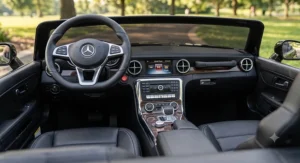
Common Mistakes When Buying a 2 Seater Ride On Car for Toddlers
The most frequent mistake isn’t picking the wrong brand — it’s picking based on top speed alone. A 4-5 mph top speed sounds thrilling on a spec sheet, but for toddlers still developing spatial awareness and reaction time, that speed setting should stay locked for months, not days, regardless of which model you choose.
The second common mistake is skipping the terrain check. Buyers frequently choose a 12V model because it’s cheaper, then discover their sloped driveway or grassy backyard is genuinely outside its capability — a problem no return policy fully solves, since the car isn’t defective, just mismatched to the environment. The third mistake: ignoring published weight capacity until it’s already exceeded, at which point motor strain and reduced battery life follow almost immediately. Finally, many parents underestimate assembly time and end up rushing the first-ride safety check — skimming the harness-fitting instructions in the excitement of a first drive is a genuinely avoidable, and genuinely common, error.
Long-Term Cost & Maintenance
The sticker price is only the starting point. Replacement batteries for these vehicles typically run $40-$90 depending on voltage and capacity, and most lead-acid batteries in this category need replacing every 1-2 years with regular use — sooner if stored improperly in extreme temperatures. Tire replacements, particularly on plastic-wheeled budget models, run $15-$30 per set and become more frequent on rough pavement.
| Cost Factor | Budget (12V) Models | Premium (24V/4WD) Models |
|---|---|---|
| Replacement battery | $40-$60 every 1-2 years | $60-$90 every 1-2 years |
| Tire/wheel wear | Faster on plastic wheels | Slower with EVA foam tires |
| Best For | Light, occasional driveway use | Frequent, varied-terrain use |
Looking at the table above, the higher upfront cost of a 24V model like the Freddo G63 AMG or Costzon Lamborghini 24V 4WD often evens out over two to three years of ownership, since EVA foam tires and steadier motors reduce wear-related replacement costs compared to budget 12V models. For a family that expects to get genuinely heavy, daily use out of the car, the total cost of ownership frequently favors spending more upfront rather than replacing parts more often on a cheaper unit.
Safety, Regulations & Compliance Guide
Every legitimately sold ride-on toy in the U.S. must meet ASTM F963 requirements, which govern electrical safety, battery safety, and mechanical hazards specifically for children’s ride-on vehicles. Battery-powered and certain ride-on toys are also required to carry specific safety instructions and warning language under federal toy rules. Before buying any 2 seater luxury ride on car for toddlers, confirm the listing states ASTM F963 compliance — reputable brands, including every model featured in this guide, list this clearly.
Beyond the legal minimum, a few practical safety habits matter more than any single spec: always supervise active rides, especially in the first month with a new vehicle; keep rides to flat, obstacle-free surfaces away from real driveways, streets, and pools; and never exceed the published weight capacity, since it directly affects both handling and structural strain. For a deeper walkthrough of age-appropriate ride-on selection and everyday supervision habits, Safe Kids Worldwide’s toy safety guidance is a genuinely useful outside resource, since matching a toy to your child’s age and skill level — and checking for recalls — remains the foundation of ride-on safety.
Frequently Asked Questions
❓ What age is appropriate for a 2 seater luxury ride on car for toddlers?
❓ How long does the battery last on a two seater ride on car for siblings?
❓ Can two toddlers of very different sizes safely share one seat?
❓ Are licensed luxury ride on car models actually safer than generic ones?
❓ Does the shared steering wheel actually control the car?
Conclusion
Choosing among these seven comes down to three honest questions: how much terrain do you actually need to cover, how differently sized are the two kids sharing the seat, and how much are you willing to spend upfront versus over time. Budget-conscious families running mostly driveway laps will do just fine with the Costzon Lamborghini Poison or TOBBI Mercedes-Benz 2-Seater. Families who need individually adjustable harnesses for two different-sized toddlers should look hard at the Best Choice Products Range Rover Sport. And households with real yard or gravel terrain — plus the budget to match — will get the most out of the Costzon Lamborghini 24V 4WD or the flagship Freddo G63 AMG.
Whichever model you land on, the fundamentals matter more than the badge: check the weight capacity honestly, verify the seatbelt system fits both riders, match battery voltage to your actual terrain, and treat the pre-ride safety routine as non-negotiable from day one. Do that, and any of these seven will earn its keep for years of shared driveway adventures.
Recommended for You
- Rolls Royce Ride On Car for Kids: 7 Best Luxury Picks (2026)
- Range Rover Ride On Car 24V: 7 Top Picks for 2026
- Bentley Ride On Car With Parent Remote: 7 Picks for 2026
Disclaimer: This article contains affiliate links. As an Amazon Associate, I earn from qualifying purchases. If you purchase products through these links, we may earn a small commission at no additional cost to you.
✨ Found this helpful? Share it with your friends! 💬🤗
