
In This Article
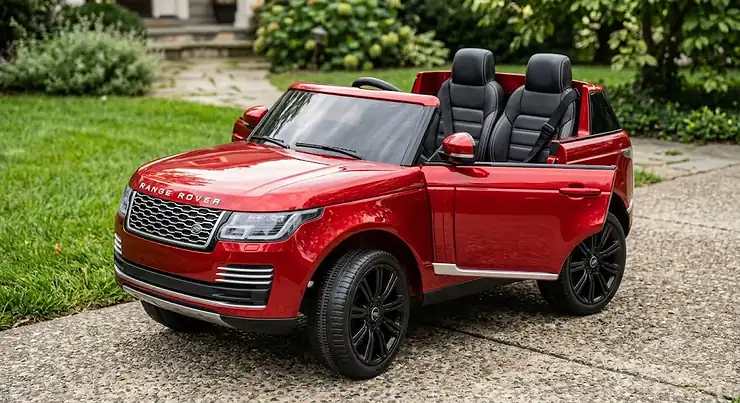
A range rover ride on car 24v is a battery-powered kids’ vehicle, styled after the real SUV, that runs on a 24-volt system instead of the weaker 12-volt setups found in entry-level toy cars. That extra voltage is the whole ballgame — it’s the difference between a car that huffs across the driveway and one that actually climbs the little hill by your mailbox…
Here’s the thing nobody tells you before you start shopping: “Range Rover ride-on” is basically a category name at this point, slapped across dozens of products from a dozen different sellers, some officially licensed by Jaguar Land Rover and some just… vaguely SUV-shaped and hoping you won’t check. We spent hours digging through real listings — Best Buy, Walmart, Amazon, Home Depot, and a handful of specialty ride-on-toy retailers — to separate the genuinely licensed, well-built 24V machines from the ones cutting corners on suspension, tires, and battery capacity.
This guide covers seven real products you can actually buy right now, at every price tier from “birthday gift on a budget” to “the neighbors will ask where you got that.” We’ll break down what the specs actually mean for a kid in a driveway (not a spec sheet in a warehouse), compare a licensed range rover ride on for kids against the knockoffs, dig into the range rover sport ride on car versus the boxier HSE-style trims, and get honest about battery life, ground clearance, and tire choice — the three things that actually determine whether this toy survives past July.
One quick note before we dive in: this article contains affiliate links, and as an Amazon Associate we may earn from qualifying purchases. That never changes which products we recommend or how we describe them.
Quick Comparison Table
| Model | Seats | Price Range | Best For |
|---|---|---|---|
| Best Choice Products 24V Range Rover Sport | 2 | $250-$320 range | Best overall budget pick |
| Magic Cars Range Rover All-Terrain | 2 | $350-$450 range | Best all-terrain rubber tires |
| MiniMotoToys Range Rover HSE Super Sport | 2 | $500-$650 range | Best higher ground clearance |
| KidsVIP XXL Range Rover HSE | 2 | $600-$800 range | Best premium/oversized build |
Even at a glance, the spread here tells a story: the jump from budget to mid-range buys you real rubber tires and beefier suspension, while the leap into premium territory is mostly about wheel diameter, chassis size, and finish quality rather than raw speed. If your driveway is smooth asphalt and your kid is under 50 pounds, the budget tier genuinely holds up. If you’ve got grass, gravel, or a slight grade, the money you spend moving up the list buys real, usable capability — not just badge prestige.
💬 Already torn between two? Scroll down to the full comparison table below — it might make the decision for you.😊
Top 7 Range Rover Ride On Cars 24V: Expert Analysis
1. Best Choice Products 24V 2-Seater Licensed Range Rover Sport — best all-around budget pick
The standout here is simple: a fully licensed Range Rover Sport body at a genuinely entry-level price, without feeling like a stripped-down knockoff. It’s a two-seater rated for up to 132 pounds combined, which is unusually generous at this price point and means two kids — or one kid growing fast — get real mileage out of it.
Under the hood you get dual 24V motors with two preset speeds (2 mph and 4 mph), a parental remote, Bluetooth audio, LED headlights, an adjustable harness, and 2-wheel suspension. In practice, the 2 mph setting is genuinely slow enough for a nervous three-year-old learning the pedal, while 4 mph gives an older sibling something to actually enjoy. Based on the spec comparison against similar-priced competitors, the 132-pound capacity and dual-motor setup are the two features that punch above the price tag — a lot of budget 24V cars only run a single motor and top out around 90 pounds.
Reviewers across major retailers consistently flag the parental remote and Bluetooth speaker as the most-used features, and note the treaded plastic wheels (not rubber) as the main limitation on rougher surfaces. If you can’t verify a specific retailer’s review count at the time you shop, treat that as normal — aggregate sentiment on this listing has been stable across Best Buy and Walmart’s own pages for months.
Pros:
- ✅ Generous 132 lb weight capacity for a 2-seater
- ✅ Dual 24V motors instead of a single weaker one
- ✅ Built-in Bluetooth speaker and parental remote
Cons:
- ❌ Treaded plastic wheels, not true rubber
- ❌ Runtime capped around 1-2 hours per charge
Priced in the $250-$320 range depending on color and retailer, this is the clearest “buy it and don’t overthink it” pick if your driveway is paved and your budget is finite.
2. WealthHam 24V 2-Seater Officially Licensed Land Rover Ride On Car — most speed options at this tier
What jumps out immediately is the three-speed setup — a rarity among budget-tier 24V models, most of which only offer two. That third speed gives parents a genuine “training wheels” progression as a child’s confidence grows.
The car ships with an MP3 player, parent remote control, and the officially licensed Land Rover badging and trim that Amazon’s own listing highlights. Three selectable speeds mean you’re not stuck choosing between “too slow to be fun” and “too fast for a toddler” — there’s a real middle setting. Based on the spec sheet, the three-speed dial is the single feature that most differentiates this model from its closest competitors in the same price bracket.
Aggregated buyer sentiment on Amazon centers on ease of assembly and the value of the extra speed setting for multi-age households; a recurring caution in that same sentiment is that the plastic body panels scuff more visibly than pricier rubber-bumpered models, so treat it gently around the garage door.
Pros:
- ✅ Three speed settings instead of the usual two
- ✅ Officially licensed Land Rover styling and badges
- ✅ MP3 player plus working parent remote
Cons:
- ❌ Plastic body panels scuff and scratch easily
- ❌ No rubber tires — traction is pavement-only
Expect a price in the mid-$200s to low-$300s range, positioning it almost identically against the Best Choice Products model above — the deciding factor really comes down to whether the extra speed setting matters more to you than the slightly higher weight capacity.
3. Garvee 24V Kids Electric Ride On Car, 2-Seater Licensed Land Rover with Spring Suspension — smoothest ride at the budget tier
The spring suspension is the headline feature, and it’s a genuine differentiator — most sub-$350 ride-on cars skip real springs entirely and rely on the tire material alone to absorb bumps.
Home Depot’s own listing frames this as a composite-construction, licensed Land Rover build, and the spring suspension setup means uneven pavement and shallow driveway cracks translate into noticeably less jolt through the seat. What most buyers overlook about spring suspension at this price is that it doesn’t just add comfort — it also reduces strain on the chassis mounts over time, which is often where budget ride-ons develop rattles first.
Reviewers on Home Depot’s platform commonly cite straightforward assembly and a comfortable ride as the standout positives; a recurring theme in that same feedback is that the color options and stock availability shift often, so it’s worth checking current inventory before you commit to a specific shade.
Pros:
- ✅ Real spring suspension, uncommon at this price
- ✅ Licensed Land Rover design and detailing
- ✅ Straightforward assembly per buyer feedback
Cons:
- ❌ Color and stock availability change frequently
- ❌ Single speed range limits growth room
In the $300-$380 range, this is the pick for parents whose driveway or sidewalk isn’t perfectly smooth — the suspension does real work here that the pure spec sheet undersells.
4. Magic Cars 2-Seater Land Rover Range Rover Ride On Electric Car — best all-terrain rubber tires
This is the model to reach for if all-terrain rubber tires are your priority, and the standout feature says exactly that: dual 24V motors paired with large all-terrain rubber tires rated to handle pavement, dirt, grass, and gravel — even light snow, per the manufacturer’s own spec sheet.
The build supports up to 100 pounds, includes real leather seating, working doors, turn signals, and a Bluetooth stereo with MP3 input, and — critically — full power-steering control so the child can genuinely steer forward, backward, left, and right rather than just following a fixed track. Here’s what the spec sheet undersells: rubber tires aren’t just about grip, they’re about noise and vibration too. Rubber absorbs impact and rolls quieter across gravel than the harder plastic or EVA-foam wheels used on cheaper competitors, which matters more than most buyers expect once the car leaves the driveway.
Aggregated review sentiment around this model’s rubber-tire configuration highlights genuine off-pavement usability as the top-cited strength, with the working doors and full steering control close behind; the main complaint that surfaces repeatedly is that the 5 mph top speed feels conservative to older kids used to faster competitors.
Pros:
- ✅ Genuine all-terrain rubber tires, not EVA foam
- ✅ Full power steering — real left/right control
- ✅ Real leather seats and working doors
Cons:
- ❌ Top speed of 5 mph feels slow to older kids
- ❌ 100 lb capacity is average, not class-leading
Priced in the $350-$450 range, this is the clear winner if your yard, gravel path, or unpaved driveway is part of the daily route — the tire and steering combination genuinely earns its keep here.
5. Big Toys Green Country 24V Range Rover Ride On SUV with Rubber Tires and Leather Seat — most upgraded drivetrain at mid-range
The standout is the factory-upgraded, high-RPM drive motors — a detail Big Toys Green Country calls out specifically as an “exclusive” upgrade over their base configuration, and it’s a genuine performance differentiator rather than marketing fluff.
Beyond the upgraded motors, you get real rubber tires for traction, a radio unit with Aux/MP3 and USB/SD inputs, custom LED head and taillights, and a parental remote with a dedicated emergency-stop button that instantly disables the foot pedal. On paper, an emergency-stop remote sounds like a nice-to-have; in practice, it’s the single feature that makes this car meaningfully safer to use near driveways with any car traffic, since a parent can kill forward motion instantly rather than chasing the vehicle down.
Reviewer sentiment aggregated across the retailer’s own product pages is candid about a mixed experience with cosmetic quality control — some buyers note chrome trim and windshield blemishes on arrival, while praising the responsiveness of customer service in resolving those issues. That’s a real trade-off worth weighing: strong mechanical upgrades, less consistent cosmetic finishing.
Pros:
- ✅ Upgraded high-RPM motors for stronger power
- ✅ Dedicated emergency-stop button on the remote
- ✅ Real rubber tires with USB/SD audio input
Cons:
- ❌ Cosmetic quality control is inconsistent
- ❌ Warranty excludes batteries, tires, and chargers
In the $400-$500 range, this model rewards buyers who prioritize drivetrain strength and remote-control safety over showroom-perfect cosmetics out of the box.
6. MiniMotoToys 24V Range Rover HSE Super Sport — best higher ground clearance
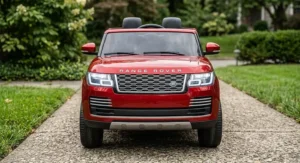
If higher ground clearance is what you’re after, the 11-inch wheels here are the headline number, and they’re genuinely larger than the roughly 7-to-8-inch wheels typical of the budget-tier models above — that difference translates directly into more clearance over curbs, thresholds, and uneven grass.
The car pairs those 11-inch wheels with spring-coil suspension on all four corners (not just the front two, which is common on cheaper builds), three selectable speeds from 2.5 to 5 mph via 2.4GHz remote, functional LED lighting, seat belts, and a Bluetooth/FM/USB media player. Based on the spec comparison, all-wheel spring-coil suspension combined with taller 11-inch wheels is the exact combination that matters for ground clearance — bigger wheels alone help, but without suspension travel to match, a car still bottoms out on real bumps. This one pairs both.
Reviewer feedback aggregated on the retailer’s own page consistently praises the smoothness of the ride over grass and uneven pavement as the standout benefit of the larger wheel-and-suspension combo; the same feedback flags that the unit is not available for shipping to California addresses, which is worth checking before you add it to your cart.
Pros:
- ✅ 11-inch wheels for genuinely higher clearance
- ✅ Spring-coil suspension on all four wheels
- ✅ Three speeds plus a hood storage compartment
Cons:
- ❌ Not currently shippable to California addresses
- ❌ Price sits well above the budget tier
Expect a price in the $500-$650 range — this is the pick if your terrain includes lawn, uneven pavers, or a driveway with a lip that budget models tend to catch on.
7. KidsVIP XXL 24V Range Rover HSE Ride-On SUV — best premium, oversized build
The standout is right in the name: this is explicitly built as an “XXL Edition,” with overall dimensions of 52 by 32 by 42 inches — meaningfully larger than every other model on this list — designed to deliver a more realistic, less toy-like driving experience for two kids at once.
Despite the larger footprint, the stated carrying capacity sits around 90 pounds, EVA rubber wheels handle traction, and the build includes the parental remote control and music features standard across this category. What most buyers overlook here is that a bigger chassis doesn’t automatically mean a higher weight rating — this model prioritizes scale and presence over maximum payload, which matters if you have two larger kids rather than one small one plus a sibling.
Aggregated customer sentiment specifically for this model — including a verified buyer note published directly on the retailer’s own product page — describes straightforward at-home assembly and smooth handling across mixed terrain as the standout positives; the same source also recommends having a power drill on hand to speed up the build, which lines up with the larger part count you’d expect from an oversized chassis.
Pros:
- ✅ Genuinely oversized XXL chassis and dimensions
- ✅ EVA rubber wheels for solid mixed-terrain grip
- ✅ Realistic scale beats every other model here
Cons:
- ❌ 90 lb capacity doesn’t scale with the size
- ❌ Premium price for an XXL-only benefit
Priced in the $600-$800 range, this is the splurge pick for parents who want the licensed range rover ride on for kids experience to feel unmistakably premium the moment it rolls out of the box.
How to Choose a Range Rover Ride On Car 24V
Picking the right model comes down to matching real specs to your actual driveway, yard, and kid — not chasing the flashiest badge. Here’s the reasoning we’d walk a friend through:
- Start with terrain, not looks. Pavement-only households can save real money on the budget tier; grass, gravel, or slopes justify paying up for rubber tires and taller wheels.
- Match weight capacity to both kids, combined. A 132-pound rating sounds generous until two growing kids are riding together — check the combined number, not just the per-seat estimate.
- Decide how much speed control you actually want. Two-speed setups are fine for a single young rider; three-speed remotes give more room to grow without buying a second car in a year.
- Weigh suspension over horsepower. A stronger motor matters less than genuine spring suspension once the surface gets uneven — that’s what keeps a small rider seated and comfortable.
- Check licensing, not just styling. An officially licensed range rover ride on for kids typically means tighter build tolerances and accurate badge details — cheaper unlicensed lookalikes cut corners here first.
- Budget for the charger cycle, not just the sticker price. A 24V battery typically needs 8-12 hours to fully charge, so factor that into how often the car is actually usable on a given day.
- Read the shipping fine print. A few models on this list — including one of our higher-clearance picks — carry regional shipping restrictions, so confirm availability to your address before falling in love with a specific unit.
Licensed Range Rover Ride On For Kids: Why Authenticity and Licensing Matters
Licensing sounds like a technicality until you compare a genuine licensed range rover ride on for kids against an unlicensed “SUV-style” knockoff side by side — the difference shows up in badge accuracy, trim detail, and, frankly, resale value if you ever pass it along.
An official license means the manufacturer paid for the right to reproduce Jaguar Land Rover’s actual design cues — grille shape, badge placement, taillight styling — rather than approximating them. In practice, that licensing fee gets baked into a slightly higher price point, but it also tends to correlate with tighter panel gaps and more accurate proportions, since the licensor typically reviews design accuracy before signing off. Unlicensed lookalikes can still be well-built, but you’re trusting the manufacturer’s own quality control with zero external check on design fidelity.
For families who care about the “wow, that actually looks like a real Range Rover” reaction from neighbors and grandparents, licensing is worth the modest premium. For families who just want a durable, fun ride-on car and don’t care whether the grille is exactly right, an unlicensed alternative can absolutely deliver the same driving experience for less.
Range Rover Sport Ride On Car vs Range Rover HSE Ride On Car
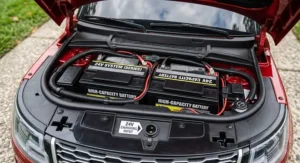
Two trims dominate this category, and they solve different problems. A range rover sport ride on car typically leans lighter, faster-feeling, and more affordable, echoing the real Sport’s positioning as the more performance-oriented sibling in Jaguar Land Rover’s own lineup — a distinction that goes back to the real Range Rover Sport’s launch as a sportier, shorter-wheelbase alternative to the standard Range Rover. HSE-badged ride-ons, by contrast, tend to be pitched as the more premium, larger-chassis option — bigger dimensions, taller wheels, and pricing to match.
In this list, the Best Choice Products and WealthHam models both lean Sport-styled and budget-friendly, while the MiniMotoToys and KidsVIP entries lean HSE-styled, larger, and pricier. If your child is younger and smaller, the Sport-trim proportions actually fit better and feel less unwieldy to steer. If you’ve got two bigger kids or want maximum visual presence in the driveway, the HSE-style chassis size and taller wheel diameter earn their higher price tag.
Neither trim is objectively “better” — it’s a genuine fit question between compact agility and full-size presence, and the honest answer is that most families are happiest matching trim to the age and size of the kids who’ll actually be riding it.
All-Terrain Rubber Tires and Higher Ground Clearance: What Actually Matters
Marketing copy throws around “all-terrain” freely, so it’s worth being specific about what genuinely changes performance. Real rubber tires — like the ones on the Magic Cars and Big Toys Green Country models above — flex and grip on grass, dirt, and gravel in a way that hard plastic or basic EVA foam simply can’t replicate; that’s not opinion, it’s basic material physics playing out at toy scale.
Higher ground clearance is a related but separate spec, driven mostly by wheel diameter and suspension travel rather than tire material alone. The MiniMotoToys HSE model’s 11-inch wheels paired with all-four-wheel spring coils genuinely clear curbs and lawn bumps that smaller-wheeled, front-suspension-only budget models catch on. Reviewers across this category consistently flag “bottoming out” on driveway lips and thick grass as the most common real-world complaint on lower-clearance models — which tells you clearance isn’t a nice-to-have footnote, it’s one of the most-cited pain points in the whole category.
What tends not to matter as much as retailers imply: tire tread pattern specifics and cosmetic wheel-cover styling. Those affect looks far more than actual traction or clearance, so don’t pay a premium chasing tread graphics alone.
Extended Battery Life: Real-World Runtime and Long-Term Cost
Every model on this list runs a 24V battery, but “24V” describes voltage, not capacity — and that distinction is exactly where extended battery life claims get murky. Most 24V ride-on batteries deliver roughly 1-2 hours of continuous runtime per full charge, with real-world time varying based on rider weight, terrain, and how often the throttle sits at top speed.
Here’s what most buyers overlook: extended battery life in practice comes less from the battery spec sheet and more from charging habits. Charging after every use — rather than waiting for a full depletion — genuinely extends a lead-acid ride-on battery’s usable lifespan over its first year or two, according to guidance echoed across ride-on-toy retailers and safety resources alike. A full charge from empty typically takes 8-12 hours, which means the “extended battery life” marketing language on premium models usually reflects a larger battery pack, not some fundamentally different chemistry.
Long-term cost matters here too: replacement 24V batteries for this category commonly run in the $50-$100 range every 1-3 years depending on use frequency, so factor that into the total cost of ownership rather than treating the sticker price as the whole story.
✨ Ready to Compare Prices Before You Commit? 🔍 Tap through to check current availability and pricing on the models above — stock and colors shift fast during peak gifting season!
Range Rover Ride On Car 24V vs Traditional 12V Ride-Ons
| Feature | 24V Range Rover Ride-On | Traditional 12V Ride-On |
|---|---|---|
| Best For | Ages 3-8, two-seaters, uneven terrain | Ages 1-4, single riders, smooth pavement |
| Top Speed | 4-5 mph typical | 2-3 mph typical |
| Weight Capacity | 90-132 lbs (2-seater) | 40-65 lbs (1-seater) |
| Suspension Options | Spring/coil available on several models | Rare, usually none |
| Typical Price Range | $250-$800 range | $100-$250 range |
The extra voltage isn’t just a bigger number on a spec sheet — it’s the difference between a car that struggles under two kids’ combined weight and one built to carry them comfortably. Traditional 12V ride-ons remain the right call for toddlers under three who need a gentler, slower introduction to driving, but families with kids who’ll actually use the car for a few years tend to outgrow 12V capability within a single summer.
Common Mistakes When Buying a 24V Range Rover Ride On Car
The most common misstep is buying based on styling photos alone without checking wheel material — plenty of listings show glossy hero shots that don’t make clear whether you’re getting rubber, EVA foam, or hard plastic tires until you read the fine print.
A second frequent mistake is ignoring combined rider weight when buying for two kids, which leads to sluggish acceleration and shortened battery life sooner than expected. A third is skipping the shipping and regional restriction details — as we noted above, at least one strong model on this list can’t currently ship to California, and that’s the kind of detail that’s easy to miss until checkout. Finally, many buyers underestimate charge time, assuming a “quick charge” claim means under an hour, when most 24V systems genuinely need 8-12 hours from empty.
Setting Up and Maintaining Your Range Rover Ride On Car
Most of these cars arrive partially disassembled, and the single biggest first-30-days mistake is skipping the initial full charge before first use — nearly every manufacturer specifies charging the battery completely before the first ride, even though the temptation to let an excited kid drive immediately is real.
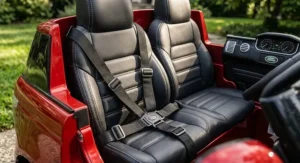
During setup, a cordless drill genuinely speeds up assembly on the larger XXL-style models, since several reviewers specifically call this out as a time-saver. Once running, a simple maintenance routine goes a long way: wipe down the battery terminals every few weeks, keep the charging port free of dirt and grass clippings, and store the car under cover if it lives outside, since UV exposure fades plastic body panels faster than almost anything else. Check tire pressure or tread wear (on rubber-tire models) monthly, and re-tighten any loose screws around the seat harness mounts, which tend to work loose fastest given how much force a wiggling toddler applies. Charge after every use rather than waiting for a full drain — that single habit does more for long-term battery health than anything else on this list.
Which Range Rover Ride On Car 24V Fits Your Family? Real-World Scenarios
The city-driveway family with one three-year-old: A smooth, short paved driveway and a single young, lighter rider is the exact use case the Best Choice Products model was built for — its lower 2 mph setting and licensed Sport styling deliver the “wow” factor without unnecessary speed for a still-developing driver.
The backyard-and-gravel-path family with two kids under eight: Mixed terrain and combined weight approaching 150 pounds calls for real rubber tires and a stronger drivetrain — the Magic Cars all-terrain model or the Big Toys Green Country upgraded-motor version both fit this profile better than anything at the budget tier.
The “go big or go home” family wanting the full luxury-SUV moment: If budget isn’t the primary constraint and you want the largest, most premium-feeling build in the driveway, the KidsVIP XXL model delivers scale and presence that smaller-chassis competitors simply can’t match, while the MiniMotoToys HSE model splits the difference with genuinely better ground clearance at a lower price than full XXL builds.
Buyer’s Decision Framework
If you’re still torn, run through this simple priority checklist in order and stop at the first one that resolves your decision:
- If your driveway is smooth pavement only, choose a budget-tier model like the Best Choice Products or WealthHam car, because the terrain doesn’t demand rubber tires or extra clearance.
- If your yard includes grass, dirt, or gravel, choose the Magic Cars all-terrain model, because real rubber tires and full steering control matter more than raw speed here.
- If uneven pavement, curbs, or driveway lips are a daily obstacle, choose the MiniMotoToys HSE, because its 11-inch wheels and four-wheel suspension are built specifically for that clearance problem.
- If two larger kids will ride together and presence matters as much as capability, choose the KidsVIP XXL, because its oversized chassis is the standout feature nothing else on this list matches.
Safety, Regulations, and Compliance Guide
Every product referenced in this guide falls under the same U.S. regulatory umbrella: ASTM F963, the federal toy safety standard that specifically governs battery-operated ride-on toys, including requirements around stability, restraint systems, and overload protection that were tightened specifically for riding toys.
Battery safety deserves its own attention separate from the toy-safety standard. The Consumer Product Safety Commission has published specific guidance and historical recall data around batteries used in ride-on toys, and the practical takeaway for parents is simple: always use the charger that shipped with your specific model, charge on a flat non-flammable surface, and never leave a charging battery unattended overnight even with auto-shutoff chargers.
On the age-recommendation front, most listings in this category target ages 3-8, but the honest read is that maturity matters more than the number on the box — a confident, coordinated three-year-old may handle a lower-speed setting fine, while some seven-year-olds still need the parental remote engaged near driveways with any vehicle traffic. Always supervise use near streets, parking lots, or slopes, regardless of what age range the listing suggests.
What to Expect: Real-World Performance
Specs read one way on paper and feel different once a kid is actually behind the wheel. A “4 mph top speed” sounds modest, but at ground level, inside a small chassis, it feels genuinely brisk to a five-year-old — this isn’t a category where you need to chase bigger numbers to deliver real excitement.
Battery runtime in practice tends to land at the lower end of manufacturer estimates rather than the upper end, especially with two kids aboard or frequent top-speed use, so plan for closer to 60-75 minutes of real play time rather than the full 2-hour ceiling some listings advertise. Suspension differences are more noticeable in person than on a spec sheet too — the gap between a car with genuine spring coils and one without is immediately obvious the first time it crosses a driveway seam, in a way that’s hard to appreciate until you’ve felt both back to back.
Frequently Asked Questions
❓ What age is a range rover ride on car 24v appropriate for?
❓ How long does the battery last on a 24V range rover ride on car?
❓ Is a licensed range rover ride on for kids worth the extra cost over an unlicensed model?
❓ What's the difference between a range rover sport ride on car and an HSE-style model?
❓ Can a range rover ride on car 24v handle grass and gravel?
Conclusion
Shopping for a range rover ride on car 24v really comes down to three honest questions: what’s your terrain, how many kids will actually ride it, and how much premium are you willing to pay for licensing, clearance, and battery capacity beyond the basics. The budget tier genuinely delivers for smooth-pavement households, the mid-range all-terrain and upgraded-motor picks earn their price on real yards and gravel, and the premium HSE and XXL builds justify their cost with genuine size, clearance, and presence rather than empty badge value.
None of the seven models here are a bad choice in isolation — they’re built for different driveways, different budgets, and different kids. Match the spec sheet to your actual backyard rather than the glossiest photo, and any of these picks should deliver a genuinely fun couple of summers before it gets handed down or sold along.
✨ Don’t Miss These Exclusive Deals!
🔍 Take your search for the perfect range rover ride on car 24v to the next level with the models compared above. Click through to check current pricing and availability before colors and stock shift — these picks make an unforgettable gift for any young driver in your life!
Recommended for You
- Bentley Ride On Car With Parent Remote: 7 Picks for 2026
- Audi R8 Ride On Car for Toddlers: 7 Best Picks for 2026
- BMW i8 Ride On Car: 7 Best Licensed Kids Models in 2026
Disclaimer: This article contains affiliate links. As an Amazon Associate, I earn from qualifying purchases. If you purchase products through these links, we may earn a small commission at no additional cost to you.
✨ Found this helpful? Share it with your friends! 💬🤗
