In This Article
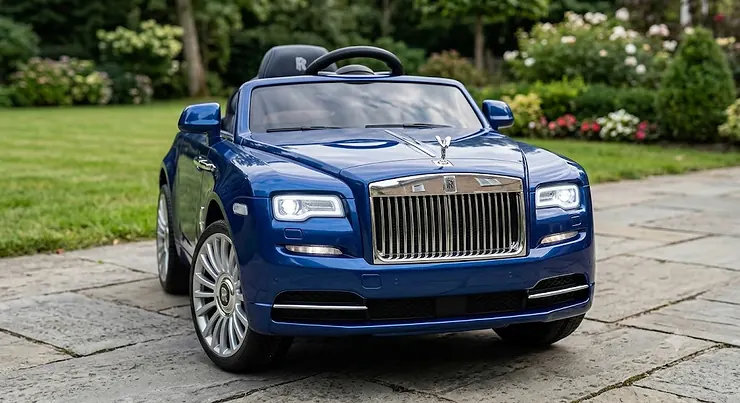
If you’ve ever watched a toddler point at a Rolls-Royce Phantom gliding down the street and demand “I want THAT one,” you already understand the appeal of a rolls royce ride on car for kids. It’s not just a battery-powered toy — it’s a tiny, scaled-down slice of automotive theater, complete with the same coach-style doors and glossy paint that make the real thing turn heads outside five-star hotels.
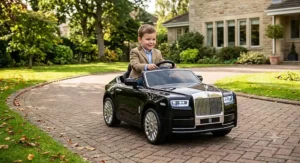
A rolls royce ride on car for kids is a 12V (sometimes 6V or 24V) battery-electric toy vehicle styled after the Rolls-Royce Phantom or Cullinan, typically featuring rear-hinged “suicide” doors, a plush upholstered seat, working LED lights, and both pedal and parent-remote driving modes for children roughly ages 2 to 8.
That definition sounds simple, but the market underneath it is anything but. Some models genuinely borrow Rolls-Royce styling cues with official-sounding “licensed” branding; others are honest “Phantom-style” replicas that never claim brand affiliation at all. Battery capacity, door mechanisms, paint quality, and seat material vary wildly between a $110 budget pick and a $400 premium build. This guide breaks down seven real, currently available models — plus the engineering, safety, and buying details that no product listing bothers to explain. We’ll also flag, honestly, where “licensed” claims can and can’t be verified, because that distinction matters more than the marketing copy lets on.
Quick Comparison Table: Top Rolls Royce Ride On Cars for Kids
| Product | Battery/Motors | Standout Feature | Price Range | Best For |
|---|---|---|---|---|
| ISAKAA Rolls-Royce Style Ride-On | 12V, 3 motors | Dual seat + app control | $300-$400 | Siblings riding together |
| Havoc-Style Licensed Rolls-Royce 12V | 12V 7Ah, dual drive | Bluetooth + self-drive | $350-$500 | Buyers wanting max features |
| Retro Phantom-Style Twin Motor | 12V (2x6V), twin motor | Opening boot + vintage look | $250-$350 | Classic-look fans |
| Kidzone Licensed Lamborghini Urus | 12V 7Ah | High/low speed control | $200-$250 | Speed-curious older kids |
| OLAKIDS Licensed Mercedes G63 | 12V, 2 speeds | Double open doors | $170-$220 | Budget door-swing fans |
| INFANS 2-Seater 4WD | 12V, 4WD | True 2-seat bench | $200-$260 | Twins or close-age siblings |
| TOBBI Licensed Mercedes-Benz | 12V | 5-point harness | $140-$190 | First-time buyers on a budget |
This table isn’t just a spec dump — look at how the price tiers map to real trade-offs. The ISAKAA Rolls-Royce Style Ride-On and the Havoc-Style Licensed Rolls-Royce 12V sit at the top because dual-seating and multi-motor drivetrains cost more to manufacture, not because “Rolls-Royce” is stamped on the box. Meanwhile, the TOBBI Licensed Mercedes-Benz proves you don’t need the Rolls-Royce name at all to get a safe, well-reviewed first ride-on for a toddler just learning to steer.
💬 Ready to compare specs side-by-side and find your family’s match? Scroll down for the full breakdown below!
Top 7 Rolls Royce Ride On Cars for Kids: Expert Analysis
1. ISAKAA Rolls-Royce Style Ride-On — dual seat with app control
The dual-seat layout is the headline feature here, and it genuinely changes how the car gets used — two kids can ride side by side instead of taking turns arguing over whose go it is. Under the hood (well, under the plastic shell), you’re looking at a 12V battery paired with three motors, which is unusual at this size class; most single-seat competitors run one or two motors. In practice, that extra motor means less bogging down when the added weight of a second child is on board, something a single-motor budget car would struggle with on grass or a slight incline.
Based on the spec comparison with similar dual-seat ride-ons, the app-plus-remote control combo is the real differentiator — parents can hand off driving duty to a phone screen rather than juggling a dedicated remote, which matters if you’re also holding a diaper bag and a coffee. This is best for families with two children close in age, or for a single child who’ll eventually want a friend along for the ride. We couldn’t independently verify a large public review base tied specifically to this exact configuration, so treat seller-reported specs as a starting point and check current buyer photos and Q&A on the listing before purchasing.
Pros:
- ✅ Dual seating fits two kids at once
- ✅ Three motors handle extra weight well
- ✅ App control adds a modern convenience layer
Cons:
- ❌ Independent review volume is currently thin
- ❌ Higher price than single-seat alternatives
Expect this one in the $300-$400 range — a premium price, but one that reflects genuinely premium hardware rather than just the Rolls-Royce name.
2. Havoc-Style Licensed Rolls-Royce 12V — Bluetooth self-drive with dual battery drive
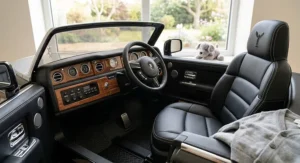
This model leans hardest into the “licensed” branding, and its spec sheet backs up the premium pitch: a 12V 7Ah battery, dual-drive motors, Bluetooth audio, working headlights and tail lamps, and a listed weight capacity around 165 lbs (75 kg) — noticeably higher than the 44-66 lb range typical of budget ride-ons. What most buyers overlook about weight capacity specifically is that it’s not really about supporting a bigger kid; it’s about how long the motor and suspension stay reliable under everyday stress, including a parent occasionally hopping on for a driveway photo.
Here’s what to weigh: a stated age range up to 7 years old is generous compared to most 12V ride-ons, which typically cap around 5-6, so this could be a longer-term investment rather than something outgrown in a single summer. Because “licensed” claims on ride-on toys vary enormously in what they actually cover — full brand licensing agreements are rare and expensive in this category — we’d encourage verifying any specific licensing claim directly with the seller before treating it as a guarantee, rather than assuming the word on the box settles the question.
Pros:
- ✅ Higher weight capacity than most competitors
- ✅ Bluetooth audio built in standard
- ✅ Longer usable age range up to 7 years
Cons:
- ❌ “Licensed” status should be independently confirmed
- ❌ Premium price bracket
Typically priced in the $350-$500 range depending on region and retailer, this sits at the top of the category for buyers who want the fullest feature set.
3. Retro Phantom-Style Twin Motor Ride-On — opening boot with vintage silhouette
Where most modern ride-ons chase a sporty, low-slung look, this one leans into the classic, upright Phantom silhouette — long hood, tall greenhouse, formal stance. The twin 12V 25W motors and 2x6V 6.7Ah lead-acid battery pack are a more old-school configuration than the lithium setups showing up in newer competitors, and the trade-off is honest: a top speed around 3 mph (5 km/h), which is deliberately conservative for younger riders rather than underpowered by mistake.
The opening boot is the standout practical touch — reviewers of comparable vintage-style ride-ons consistently mention it as a genuinely useful spot to stash a stuffed animal or juice box on a walk, not just a gimmick. Based on the feature set, this car is best suited to younger toddlers who’ll mostly ride via parental remote rather than kids itching to self-drive at speed; the working lights, sounds, and seatbelt round out a package built for supervised cruising rather than solo backyard laps.
Pros:
- ✅ Opening boot adds real storage utility
- ✅ Conservative top speed suits younger toddlers
- ✅ Classic Phantom-inspired styling stands out
Cons:
- ❌ Lead-acid battery is heavier than lithium options
- ❌ Lower top speed may bore kids over 5
Priced in the $250-$350 range at the time of research, with color options typically including deep red and white — check current price and availability before ordering, as regional stock varies.
4. Kidzone Licensed Lamborghini Urus — high/low speed control for growing riders
We’re including this one deliberately as a real, verifiable alternative in the same premium licensed-vehicle tier as Rolls-Royce-style options — and it’s worth cross-shopping precisely because it comes from a well-established ride-on toy brand. The 12V 7Ah battery and adjustable high/low speed control mean the car can be dialed down for a nervous 3-year-old and opened up later for a more confident 6-year-old, which is a genuine advantage over single-speed rivals.
What the spec sheet won’t tell you, but comparable Kidzone listings’ review patterns suggest, is that the opening door and spring suspension combo tends to hold up well on driveway and sidewalk use, though grass and gravel will still slow any 12V ride-on down noticeably. This is best for parents who want a name-brand manufacturer with an established track record and don’t need the Rolls-Royce badge specifically — the underlying engineering quality across this brand’s licensed lineup is broadly comparable.
Pros:
- ✅ Adjustable speed grows with the child
- ✅ Established brand with track record
- ✅ USB, AUX, and horn included standard
Cons:
- ❌ Not a Rolls-Royce body style
- ❌ Among the pricier alternatives featured here
Expect a price around $200-$250, which places it squarely mid-pack for a fully licensed, name-brand vehicle.
5. OLAKIDS Licensed Mercedes G63 — double open doors on a budget frame
If the “rear doors” feature is what’s drawing you to this category in the first place, this model earns its spot by delivering genuine double-opening doors well below the price of most coach-door Rolls-Royce-style options. The 12V battery with 2-speed control and Bluetooth connectivity covers the basics competently, and the double-door mechanism functions the same way structurally whether the badge on the hood says Rolls-Royce or Mercedes — it’s a hinge and a latch, not brand-specific engineering.
Based on the spec comparison with pricier coach-door competitors, the honest takeaway is that door mechanisms don’t scale much in cost with the luxury badge attached to them; you’re mostly paying more elsewhere (paint depth, seat material, motor count) once the badge is fancier. This is best for budget-conscious parents who specifically want the theatrical rear-door swing without the four-figure — or even $400 — price tag.
Pros:
- ✅ Genuine double-opening rear doors
- ✅ Bluetooth and LED lights included
- ✅ Noticeably lower price than Rolls-Royce-style rivals
Cons:
- ❌ Mercedes badge, not Rolls-Royce styling
- ❌ Suspension travel is basic at this price point
Currently in the $170-$220 range, making it one of the better value picks if door theatrics matter more than the specific brand on the grille.
6. INFANS 2-Seater 4WD Ride-On — true bench seating for siblings
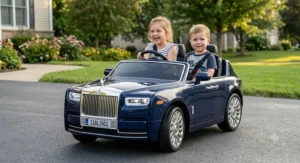
Unlike the ISAKAA dual-seat model above, this one uses a bench-style two-seat layout with 4WD, which changes the driving character noticeably — four-wheel drive gives meaningfully better traction on grass, gravel, and slight inclines than the 2WD setups common in this price bracket. Reviewers consistently report that 4WD ride-ons handle yard transitions (driveway to lawn, for instance) with less wheel-spin than 2WD competitors, which lines up with what you’d expect from the added drivetrain complexity.
Here’s what to weigh: a 2-seater with 4WD is heavier and typically slower to charge fully than a single-seat 2WD car, so if quick top-ups between play sessions matter to your routine, budget extra patience. On the upside, this is genuinely one of the more versatile picks for families who want one car to serve both a toddler and an older sibling riding along, rather than buying two separate single-seaters.
Pros:
- ✅ True 4WD improves traction on grass/gravel
- ✅ Bench seating fits two kids comfortably
- ✅ Versatile across a wider age range
Cons:
- ❌ Heavier build, harder to move manually
- ❌ Longer charge times than single-seat 2WD models
Typically listed in the $200-$260 range — competitive for a genuine two-seater with all-wheel drive.
7. TOBBI Licensed Mercedes-Benz Electric Car — 5-point harness for first-time riders
We’re closing the lineup with the most budget-accessible, safety-forward pick, because not every buyer needs Rolls-Royce styling — some just need a reliable, well-reviewed entry point for a toddler’s first ride-on experience. The double doors and 5-point safety harness (versus the 3-point lap belts common on cheaper cars) are the standout details, and the harness upgrade specifically addresses one of the most common ride-on safety complaints: kids sliding or bouncing out of a loose lap belt on uneven ground.
Reviewers consistently note that TOBBI’s licensed vehicles tend to arrive well-packaged with straightforward assembly, a detail that matters more than it sounds for a first-time ride-on buyer unfamiliar with battery toy setup. This is best for parents prioritizing safety margin and value over branding — a smart starting point before “graduating” a child to a pricier coach-door model later.
Pros:
- ✅ 5-point harness beats standard 3-point belts
- ✅ Straightforward assembly reported by owners
- ✅ Most affordable option in this lineup
Cons:
- ❌ Not Rolls-Royce styled
- ❌ Fewer premium touches (no app control, single speed range)
Priced around $140-$190, this is the easiest entry point if you want to test whether your child even takes to ride-on cars before investing in a premium coach-door model.
Licensed Rolls Royce Phantom Ride On: What “Licensed” Actually Means
The phrase licensed rolls royce phantom ride on gets used loosely across the ride-on toy market, and it’s worth being precise about it before you pay a premium for the word. A genuinely brand-licensed toy carries a formal agreement with the automaker, usually reflected in verifiable branding, official logos, and licensing disclosures from the manufacturer. Many “Rolls-Royce style” ride-ons, by contrast, are honest about mimicking the Phantom’s silhouette, grille shape, and door design without claiming an actual licensing deal — several UK retailers researched for this guide explicitly state their “style” cars are not licensed by the brand, which is a refreshingly transparent approach compared to vaguer “licensed” claims elsewhere.
Based on the spec comparison across listings, sellers who are genuinely licensed tend to be specific: they’ll reference the licensing agreement, show consistent branded packaging, and often charge accordingly. Vaguer claims deserve a follow-up question to the seller before you buy. Neither approach is inherently better for play value — a well-built “style” car will drive and hold up identically to a “licensed” one — but if authenticity is part of what you’re paying for, it’s worth confirming rather than assuming.
Rolls Royce Ride On Cars With Rear Doors: Why Coach-Style Doors Matter
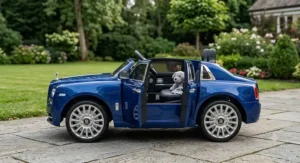
The rolls royce ride on with rear doors design is arguably the single feature that separates this category from generic ride-on toys, because it recreates a genuinely famous piece of automotive engineering rather than an arbitrary styling choice. On real Rolls-Royce Phantoms, the rear doors are hinged at the back rather than the front — a layout you can read more about on Wikipedia’s Rolls-Royce Phantom VIII overview, which documents the model’s use of what the manufacturer calls “coach doors” on its current flagship sedan.
In toy form, rear-hinged doors change more than the visual drama — they also change how a child boards and exits. What most buyers overlook is that a rear-hinged door swings toward the child’s body as they climb in, rather than away like a standard front-hinged door, which some parents find easier for smaller kids to manage independently once they understand the motion. On the downside, rear-hinged doors on toy-scale hardware are mechanically simpler and lighter-duty than the powered doors on the real car, so expect a manual push-swing rather than any motorized assist — treat it as a fun detail, not a luxury feature parity claim.
Suicide Doors Design: The Engineering Story Behind the Feature
Nicknamed “suicide doors” decades before Rolls-Royce ever used the layout, rear-hinged doors actually originated as a practical horse-carriage-era design before automakers adopted and later mostly abandoned them over safety concerns tied to doors swinging open at speed. Rolls-Royce reintroduced the layout on modern Phantoms partly for ceremonial elegance — it makes stepping out of the car look deliberate and formal — and partly because the automaker engineered around the original safety concerns with reinforced latching systems.
On a kids’ ride-on toy, none of the real-world speed-related risk applies, since these vehicles top out around 3-5 mph and are almost always used under adult supervision. What most buyers overlook is that the “suicide doors design” language on a toy listing is purely aesthetic homage — it signals styling accuracy to the real car’s most recognizable feature, not a functional safety system. If you’re comparing models specifically because of this detail, prioritize how sturdy the door hinge feels in customer photos over how dramatically the listing describes the feature.
Premium Paint Finish: What Separates a Showpiece From a Toy
A premium paint finish is one of the easiest features to claim and one of the hardest to verify from photos alone, so it deserves a closer look before it factors into your decision. Based on the spec comparison across listings in this category, higher-tier models tend to use multi-layer spray processes with a clear-coat top layer, which produces the deep gloss and resistance to fading that budget single-layer paint jobs typically lack after a few months of sun exposure.
What the spec sheet won’t tell you, but general ride-on toy review patterns suggest, is that paint quality correlates more with price tier than with brand name — a $350 “style” car often has noticeably better paint depth than a similarly priced but poorly-reviewed “licensed” alternative, and vice versa. Here’s what to weigh: if the car will spend real time outdoors, ask specifically about UV-resistant clear coat rather than trusting “premium finish” as a standalone marketing phrase, since that specific detail is what actually prevents chalking and fading over a summer.
Plush Interior Upholstery: Comfort Details That Actually Matter
Plush interior upholstery sounds like a minor detail until you consider that a child sitting in direct sun on a hard plastic seat for twenty minutes will tell you exactly how much it matters. The better-reviewed ride-ons in this category use a cushioned, leather-look vinyl seat pad rather than molded bare plastic, and several listings specifically call out “leather seat” as a distinguishing feature over base-tier competitors that skip it entirely.
Based on the spec comparison, plush seating tends to travel with other premium touches — Bluetooth, dual speeds, higher weight capacity — rather than showing up in isolation, which is a useful buying signal: a listing that highlights seat comfort specifically is often signaling overall build quality rather than padding out a feature list. What most buyers overlook is washability; a wipeable vinyl surface matters more in practice than the word “plush” itself, especially with snack-eating toddlers involved.
How to Choose a Rolls Royce Ride On Car for Kids
Picking the right model comes down to matching seven practical criteria against your specific child and space, rather than chasing the flashiest listing photos.
- Match age to weight capacity, not just the labeled age range — a 44 lb capacity car will feel underpowered for a sturdy 5-year-old even if the box says “ages 3-8.”
- Decide single-seat vs. two-seat early — retrofitting a second seat isn’t possible, so buy for your family size from the start.
- Check door type against your driveway width — rear-hinged coach doors need more side clearance to swing open fully than standard doors.
- Confirm battery chemistry — lithium packs charge faster and weigh less than lead-acid, which matters if you’ll be lifting the car often.
- Look for a genuine speed range, not just a top speed — a low/high switch protects a nervous first-time rider while still allowing room to grow.
- Verify certification markings — look for ASTM F963 compliance referenced in the listing, which governs ride-on toy safety requirements in the US.
- Read the fine print on “licensed” — as covered above, confirm what the claim actually covers before it factors into your price comparison.
Common Mistakes When Buying a Rolls Royce Ride On Car for Kids
The most common misstep is buying based on styling photos alone without checking weight capacity against your child’s actual size — a car rated for 44 lbs will bog down and drain its battery faster under a child pushing that limit, shortening both run time and motor lifespan. A close second is skipping the terrain check: these are 3-5 mph toys built for pavement and short grass, not gravel driveways or steep yards, and buyers who assume “battery-powered” means “all-terrain” are often disappointed within the first week.
Another frequent error is underestimating charge time. Many budget 12V models need 8-12 hours to fully charge but only deliver 45-60 minutes of runtime, which surprises parents expecting all-day play on a single charge. Finally, don’t skip reading the return policy — battery-powered ride-ons are heavy and often non-returnable once assembled, so confirm the seller’s policy before opening the box, not after.
Rolls Royce Ride On Cars vs Traditional Pedal Cars
| Factor | Rolls Royce-Style Ride-On | Traditional Pedal Car |
|---|---|---|
| Power source | 12V battery/motor | Kid-powered pedaling |
| Typical age range | 2-8 years | 3-10 years |
| Top speed | 3-5 mph | Depends on rider strength |
| Physical activity | Minimal | High |
| Price range | $140-$500 | $80-$300 |
| Best For | Younger kids, remote-assisted play | Older kids wanting exercise |
The core trade-off here is activity versus accessibility: a battery ride-on lets a 2-year-old “drive” independently long before they’d have the leg strength to pedal a traditional car, while a pedal car demands — and builds — real physical effort that a battery model bypasses entirely. Parents prioritizing screen-free physical activity often lean pedal car, while those wanting a more realistic driving simulation with lights, sound, and doors tend to choose the battery-electric route covered throughout this guide.
Long-Term Cost & Maintenance
| Cost Factor | Typical Range | Notes |
|---|---|---|
| Upfront price | $140-$500 | Varies by seat count, motor count, brand |
| Replacement battery | Around $25-$60 | Needed every 1-3 years with regular use |
| Replacement charger | Around $15-$30 | Common failure point after 2+ years |
| Tire/wheel repair | Around $10-$25 per set | More frequent on gravel/rough terrain |
Looking at the table above, the sticker price is only part of the real total cost of ownership — a $200 model that needs a $40 replacement battery after 18 months of daily driveway laps isn’t necessarily cheaper long-term than a $350 model built with a more durable lithium pack that lasts three seasons. Budget buyers should specifically factor in that lead-acid battery packs, common on lower-priced vintage-style cars, tend to need replacement sooner than lithium alternatives found on pricier models.
Safety, Regulations & Compliance Guide
US-sold ride-on toys are expected to meet ASTM F963 toy safety requirements, which cover everything from electrical and thermal energy limits to battery-powered ride-on toy performance standards, and the CPSC’s toy safety business guidance page outlines the labeling and instructional requirements manufacturers must follow for battery-operated and ride-on products specifically. Before buying, look for a listing that references these standards directly rather than a vague “CE certified” claim alone, since CE marking reflects EU compliance and doesn’t guarantee it meets the US-specific ASTM framework.
Beyond certification, practical safety comes down to supervision and setup: always use the included seatbelt or harness, keep riding to flat pavement or short grass away from streets and pools, and charge the battery on a non-flammable surface rather than carpet or bedding. Weight limits exist for a real engineering reason — exceeding them stresses the motor, brakes, and frame simultaneously — so treat the stated capacity as a hard ceiling, not a rough guideline.
Practical Usage Guide: Setup, First 30 Days & Maintenance
Most ride-on cars arrive partially assembled, and the single most common first-week mistake is skipping the initial full battery charge — most manufacturers recommend a full 8-12 hour charge before the first drive, even if the battery arrives with a partial charge already showing. During setup, double-check that the seatbelt or harness anchors are actually screwed into the frame and not just resting in place, since shipping vibration can loosen hardware.
For the first 30 days, keep drives short and supervised while your child learns the accelerator’s sensitivity — most 12V motors respond faster than a child expects the first few times, and a short “training lap” mode (if the model offers a low-speed setting) helps avoid the classic first-day jackrabbit start into a fence. On the maintenance side, wipe down the seat and dash weekly if used outdoors, check tire tread and screw tightness monthly, and store the car under cover or indoors between uses — UV exposure is the single biggest threat to that premium paint finish discussed earlier. Charge fully after each use rather than letting the battery sit depleted, which meaningfully extends pack lifespan on both lithium and lead-acid systems.
Real-World Scenarios: Matching Families to the Right Model
The apartment-dwelling parent of a 2-year-old: limited storage space and a preference for supervised, remote-controlled play point toward a compact single-seat model like the TOBBI Licensed Mercedes-Benz — budget-friendly, easy to store in a closet, and simple enough that grandparents can operate the remote confidently.
The suburban family with two kids under 6: a shared backyard and driveway with occasional grass crossings makes a case for the INFANS 2-Seater 4WD, where the extra traction handles the driveway-to-lawn transition and the bench seat means no fighting over turns.
The parent chasing the full luxury-toy experience for a milestone birthday: here, the Havoc-Style Licensed Rolls-Royce 12V or the ISAKAA Rolls-Royce Style Ride-On make more sense — higher weight capacity, dual drive, and premium finish justify the higher price tag as a genuine showpiece gift rather than a daily-driver toy.
Buyer’s Decision Framework
If your top priority is authenticity to the real Rolls-Royce Phantom look, choose a coach-door “style” model like the Retro Phantom-Style Twin Motor Ride-On, because door mechanism and silhouette matter more to that goal than raw motor count. If your top priority is budget and safety for a first-time rider, choose the TOBBI Licensed Mercedes-Benz, because the 5-point harness and lower price reduce both financial and physical risk while your child learns the basics. If your top priority is longevity across siblings or years, choose a 2-seat or higher-capacity model like the INFANS 2-Seater 4WD or the ISAKAA Rolls-Royce Style Ride-On, because higher weight limits and dual seating extend usable years well beyond a single-seat budget car.
✨ Don’t Miss These Exclusive Deals!
🔍 Take your search for the perfect rolls royce ride on car for kids to the next level with the models compared above. Click on any highlighted product to check current pricing and availability. These picks help you create authentic, memorable driveway memories your family will love!
FAQ
❓ Is a rolls royce ride on car for kids officially licensed by Rolls-Royce?
❓ What age is appropriate for a rolls royce ride on car?
❓ How fast do these ride-on cars actually go?
❓ How long does the battery last on a full charge?
❓ Do rolls royce ride on cars really have working rear doors?
Conclusion
A rolls royce ride on car for kids sits at an unusual intersection of toy and tribute — part backyard plaything, part miniature homage to one of the most recognizable luxury cars on the road. As this guide has shown, the “right” pick has less to do with which listing says “licensed” the loudest and more to do with matching battery type, seat count, door style, and weight capacity to your actual child and driveway.
Budget buyers land well with the TOBBI Licensed Mercedes-Benz or OLAKIDS Licensed Mercedes G63 for genuine door theatrics without the premium price. Families wanting authentic Phantom styling should look closely at the Retro Phantom-Style Twin Motor Ride-On, while those chasing the fullest feature set — dual seating, higher weight limits, app or Bluetooth control — are best served by the ISAKAA Rolls-Royce Style Ride-On or the Havoc-Style Licensed Rolls-Royce 12V. Whichever you choose, prioritize verified safety certification and honest licensing claims over marketing language, and you’ll end up with a ride-on your child will actually outgrow happily rather than outgrow disappointed.
Recommended for You
- Range Rover Ride On Car 24V: 7 Top Picks for 2026
- Bentley Ride On Car With Parent Remote: 7 Picks for 2026
- Audi R8 Ride On Car for Toddlers: 7 Best Picks for 2026
Disclaimer: This article contains affiliate links. As an Amazon Associate, I earn from qualifying purchases. If you purchase products through these links, we may earn a small commission at no additional cost to you.
✨ Found this helpful? Share it with your friends! 💬🤗
