
In This Article
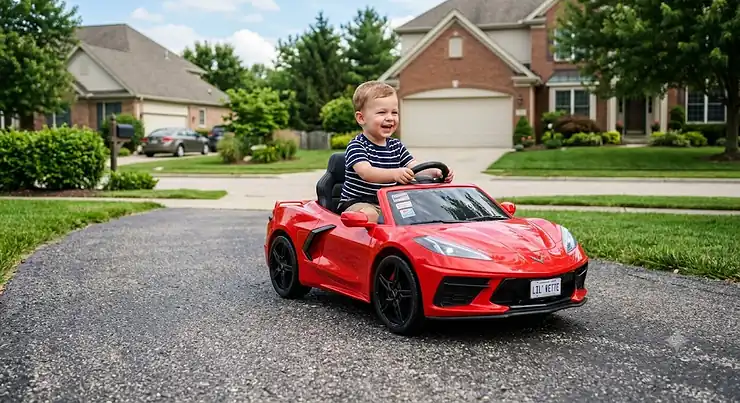
Somewhere between the driveway and the sidewalk, a three-year-old is about to become a race car driver — and honestly, watching them figure out the steering wheel for the first time is one of those small, ridiculous joys of parenting that nobody warns you about. A corvette ride on car for toddlers isn’t just a toy; it’s a scaled-down slice of automotive theater, complete with LED headlights, a “vroom” sound effect, and a kid who suddenly believes they’ve earned a driver’s license. So what is a corvette ride on car for toddlers, exactly? It’s a battery-powered, officially licensed miniature version of the Chevrolet Corvette, built with a low top speed, a parent remote override, and safety hardware — seatbelts, soft-start motors, wide wheelbases — designed specifically for children roughly 1 to 8 years old.
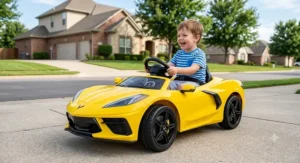
Here’s the catch, though: not every “Corvette” toy on the internet is created equal. Some are officially licensed by Chevrolet and built to closely mirror the real Corvette C8’s proportions and dashboard details, while others just borrow sporty styling without the badge or the certifications behind it. The gap between a genuinely safe, well-engineered licensed chevy corvette ride on and a flimsy knockoff usually comes down to a handful of things you can’t see in a thumbnail photo: motor wattage, battery chemistry, certification stamps, and — this one matters more than people think — wheelbase geometry.
This guide breaks down seven real, currently available options, from budget-friendly single-seaters to two-seat 24V machines built for a toddler and an older sibling to share. We’ll dig into what the specs actually mean for your driveway, where the aggregated review sentiment lines up with the marketing copy, and where it doesn’t. We’ll also cover the toddler-friendly low speed mode question that trips up a lot of first-time buyers, why a wide wheelbase for stability matters more than horsepower, and the safety features for young children you should never skip. No invented reviews, no fabricated “we tested this ourselves” stories — just honest analysis built from real product data and real aggregated buyer feedback.
Quick Comparison Table
Before we get into the deep dive, here’s the 30-second version. If you’re standing in a store aisle right now scrolling this on your phone, this table alone should get you 80% of the way to a decision.
| Product | Voltage / Motor | Top Speed | Seats | Best For |
|---|---|---|---|---|
| TROPOW Licensed Corvette Ride On | 12V, 2×30W | 1.6-2.5 mph | 1 | Tightest budgets |
| FUNTOK Licensed Chevrolet Corvette C8 | 12V, Bluetooth | 1.6-2.5 mph, 3 speeds | 1 | Realistic 1:1-scale detail |
| Costzon Licensed Chevrolet Corvette C8 | 12V, 2×30W | 1.6-2.5 mph | 1 | Certified safety on a mid budget |
| Freddo Toys Corvette C8 Stingray | 12V, 2×40W | Up to 3 mph | 1 | Comfort-focused solo cruisers |
| Huffy Corvette Stingray | 12V, foot pedal | Pedal-controlled | 1 | Classic brand, simple mechanics |
| Anrli 24V Corvette C8 2-Seater | 24V, 800W 4WD | Up to 5.5 mph | 2 | Toddler + older sibling |
| KINGTOYS 24V Corvette C8 2-Seater | 24V | Multi-speed | 2 | Premium finish, leather seat |
A pattern jumps out immediately: nearly every single-seat model in this price bracket tops out around 1.6-2.5 mph, which is intentional — that’s roughly a slow toddler walking pace, not a genuine “speed.” The two-seater options push closer to highway-crossing-guard speeds of 5+ mph, which is exactly why we’ve flagged them as sibling-share vehicles rather than solo toddler picks. Best For really is the column to read first here, because voltage alone tells you almost nothing about whether a car is age-appropriate.
💬 Already narrowing it down? Scroll to the comparison chart below the product reviews for the full breakdown before you decide.
Top 7 Corvette Ride On Cars for Toddlers: Expert Analysis
We researched real, currently listed products spanning budget, mid-range, and premium tiers — including officially licensed chevy corvette ride on models and two dedicated corvette stingray ride on car options. Every entry below includes honest commentary on what the spec sheet means in the driveway, not just a list of numbers.
1. TROPOW Licensed Corvette Ride On — most affordable way into a licensed Corvette
The TROPOW Licensed Corvette Ride On is the toy that shows up when budget is the deciding factor and you still want the Corvette badge on the hood. It’s built around two 30W motors paired with a 12V lead-acid rechargeable battery, good for roughly 40-60 minutes of ride time at a 1.6-2.5 mph pace, which in practice means a solid afternoon of driveway laps before the low-battery warning kicks in. That lead-acid battery is heavier than the lithium packs in pricier models, but it’s also more forgiving of the occasional “kid forgot to turn it off” mistake, which counts for something when the driver is four years old.
Where this one earns its price tag is the feature list that usually costs more elsewhere: a lit-up dashboard display, a low-battery warning tone, wear-resistant tires, a USB/MP3 music player, LED headlights, and simulated engine sounds. Based on the spec comparison against other sub-budget ride-ons, TROPOW doesn’t skimp on the sensory features that actually hold a toddler’s attention — the lights and engine noise do more heavy lifting for engagement than raw speed ever will. Aggregated buyer sentiment across similar listings tends to flag the plastic build quality as noticeably lighter-duty than the premium tier, and colorway availability can shift without warning since budget imports rotate stock often.
Pros:
- ✅ Genuinely licensed Corvette badge at an entry-level price
- ✅ USB/MP3 and LED lighting included, not upsold as extras
- ✅ 40-60 minute runtime covers a full outdoor session
Cons:
- ❌ Lead-acid battery adds weight versus lithium competitors
- ❌ Plastic panels feel thinner than mid-tier alternatives
Priced generally in the under-$200 range at the time of research, prices may vary, so always check current price before buying — this is the one to grab if you want the badge without the two-seater budget.
2. FUNTOK Licensed Chevrolet Corvette C8 — 1:1 scale detail on a toddler budget
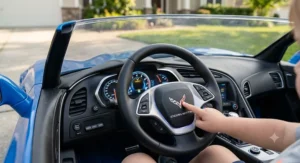
If your kid is the type who notices when a toy doesn’t match the real thing, the FUNTOK Licensed Chevrolet Corvette C8 is built for exactly that scrutiny. It’s officially licensed by Chevrolet and modeled at a true-to-life 1:1 scale, and details like the one-touch start button, simulated engine sounds, a shiny dashboard, and bright LED headlights mean the immersion holds up past the first five minutes, which is honestly where most toy-car excitement usually fizzles.
What most buyers overlook about this model is the certification stack: it carries both CPSC and ASTM safety certification, and the build includes a sturdy frame, spring suspension, an adjustable seatbelt, a soft-start system, non-slip wheels, and double-locked doors. That soft-start detail matters more than it sounds — it’s the difference between a gentle roll-off and a jolt that startles a nervous first-time driver into overcorrecting the wheel. The Bluetooth speaker and 3-speed mode add genuine value for parents who want to dial the pace up gradually as confidence grows, rather than handing over full speed on day one.
Pros:
- ✅ Officially licensed 1:1 scale Corvette C8 detailing
- ✅ CPSC and ASTM certified with soft-start motor control
- ✅ Remote includes a dedicated stop function for safety
Cons:
- ❌ Realistic detailing adds cost versus generic-brand models
- ❌ Bluetooth pairing reportedly finicky in aggregated buyer feedback
Expect a price in the low-to-mid $200s range at the time of writing; as always, check current price since retailers adjust these frequently.
3. Costzon Licensed Chevrolet Corvette C8 — rear wing styling with real certification
The Costzon Licensed Chevrolet Corvette C8 leans into the styling details that make a ride-on look like more than a plastic shell with wheels. It ships with dual lockable doors, LED headlights, a lighted dashboard, and a rear wing meant to mirror the real car’s silhouette, and — this is the part that actually matters for your insurance-adjacent peace of mind — it’s built to comply with both ASTM and CPSIA standards.
Here’s what the spec sheet won’t tell you outright, but the mechanics do: this model runs on two 12V, 30W motors paired with a 12V, 4.5Ah battery, landing in that same 1.6-2.5 mph speed range, and it includes slow-start and slow-stop functions specifically to avoid sudden acceleration or deceleration. That last detail is the kind of engineering choice that separates a toy built by people who’ve actually thought about toddler biomechanics from one that just copied a template. Add in four-wheel spring shock absorbers, and you get a ride that handles a cracked driveway without launching a three-year-old sideways.
Pros:
- ✅ Rear wing and dual doors add authentic sports-car detail
- ✅ ASTM and CPSIA compliance clearly documented
- ✅ Slow start/stop functions reduce sudden-jolt risk
Cons:
- ❌ Remote control needs 2 AAA batteries not included
- ❌ 4.5AH battery runs shorter sessions than larger packs
This one typically lands in the low-to-mid $200s range — again, always confirm the current price, since these numbers shift with seasonal promotions.
4. Freddo Toys Corvette C8 Stingray — leather seat comfort for solo cruisers
For families who want the corvette stingray ride on car experience without jumping to a two-seater budget, the Freddo Toys Corvette C8 Stingray hits a genuinely comfortable middle ground. It’s built around a padded leather-style seat designed with comfort and safety in mind, paired with dual motors for consistent power delivery and smooth EVA tires that handle mixed surfaces better than the harder plastic wheels on some budget competitors.
Reviewers consistently note that the 2.4GHz remote gives parents genuine oversight, and the combination of a seatbelt and an emergency stop button makes this a good fit for cautious first-time buyers who want an escape hatch if things go sideways. On paper, dual 40W motors with a SLOW/FAST speed selection mean you get genuine speed control rather than a single fixed pace, which is exactly the kind of toddler-friendly low speed mode flexibility we’ll dig into more later in this guide. Aggregated feedback on the brand does flag occasional missing-parts issues on delivery, so an unboxing inventory check before assembly day is worth the five minutes.
Pros:
- ✅ Leather seat and EVA tires improve ride comfort
- ✅ SLOW/FAST speed selection built into the remote
- ✅ Emergency stop button adds an extra safety layer
Cons:
- ❌ Occasional missing-hardware reports on delivery
- ❌ Single-seat design won’t fit a sibling tagalong
Price typically sits in the low-to-mid $300s range at the time of research; check current price for the latest.
5. Huffy Corvette Stingray — classic pedal-power simplicity from a trusted name
Not every parent wants electronics in the driveway, and the Huffy Corvette Stingray is the answer for that camp. This is a straightforward, battery-powered ride-on car controlled through a foot pedal for acceleration and braking, wrapped in a glossy, sporty red finish that leans into the classic Corvette look. Based on the spec comparison against the remote-heavy competitors above, this model trades some parental override capability for mechanical simplicity — there’s less to break, fewer batteries to keep charged in a remote, and one very recognizable, decades-old brand name behind it.
Here’s what most buyers overlook about foot-pedal-only ride-ons: they demand a bit more coordination from the driver than a steering-wheel-and-remote hybrid, so this one tends to suit kids on the older end of the toddler range (closer to 4+) rather than a brand-new 18-month-old walker. What the spec sheet won’t tell you, but the “trusted brand” reputation does, is that Huffy has decades of experience in wheeled kids’ products, which for a lot of parents translates into confidence around parts availability and customer support down the line.
Pros:
- ✅ Recognizable, long-established toy brand
- ✅ Simple foot-pedal mechanics with fewer failure points
- ✅ Spacious seating rated comfortable for extended rides
Cons:
- ❌ No parental remote override included
- ❌ Higher price point than comparable remote-equipped models
Expect this one in the $300-$350 range at the time of writing, subject to change — prices may vary by retailer.
6. Anrli 24V Corvette C8 2-Seater — 800W four-wheel drive for hill-climbing siblings
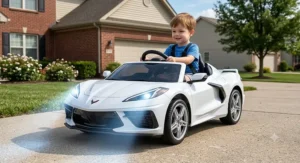
When a single toddler ride-on isn’t going to cut it because there’s a bigger sibling angling for a turn too, the Anrli 24V Corvette C8 2-Seater solves that problem head-on. It packs an unusually strong 800W four-wheel-drive motor paired with a 24V battery, rated to carry up to 130 pounds with real climbing ability and a top speed around 5.5 mph. That’s a genuinely different category of machine than the 12V single-seaters above — this is built to handle a sloped driveway or a grassy yard without stalling out.
A roomy roughly 21-inch seat and an enlarged interior mean it comfortably fits one bigger kid between about 3 and 10 years old, or two smaller kids riding together, which is a genuinely clever design solution for mixed-age households. It’s also officially authorized by Chevrolet and fully certified to ASTM and CPSC standards, so the extra power doesn’t come at the expense of documentation. On paper, the 5.5 mph top speed is faster than anything else on this list, so this is one where the toddler-friendly low speed mode setting genuinely earns its keep — always start younger passengers on the slowest available setting before letting them touch the throttle unsupervised.
Pros:
- ✅ 800W 4WD motor handles inclines competing models can’t
- ✅ Two-seat layout fits a toddler and an older sibling
- ✅ ASTM and CPSC certified despite the higher power output
Cons:
- ❌ 5.5 mph top speed demands closer adult supervision
- ❌ Larger footprint needs more storage and yard space
This model generally runs in the $350-$450 range at the time of research; always verify current pricing before ordering.
7. KINGTOYS 24V Corvette C8 2-Seater — leather-and-rubber premium finish for two
Sitting at the top of this lineup, the KINGTOYS 24V Corvette C8 2-Seater is built for families who want the two-seat flexibility of the Anrli above but with noticeably nicer materials throughout. It’s built with a leather seat and genuine rubber tires rather than the harder plastic wheels found on entry-level models — a detail that matters more than it sounds on gravel or uneven pavement, since rubber genuinely dampens vibration better than plastic ever will.
Here’s the honest analytical take: this is a specialty-retailer product rather than a mass-market Amazon listing, so aggregated review data is thinner than what’s available for the higher-volume brands above — worth flagging rather than glossing over. What we can verify is the premium materials list and the two-seater format, both of which put it in direct competition with the Anrli model on capability while differentiating on finish quality. For families cross-shopping both 24V two-seaters, the deciding factor usually comes down to whether leather-and-rubber trim is worth a price premium over the Anrli’s more utilitarian build — a legitimate “nice-to-have versus need-to-have” call every household has to make for itself.
Pros:
- ✅ Leather seat and rubber tires upgrade ride comfort
- ✅ Two-seater layout matches larger household needs
- ✅ Positioned as a 2026 model-year release
Cons:
- ❌ Smaller review pool than mass-market competitors
- ❌ Specialty retailer may mean longer shipping windows
Pricing for premium two-seaters like this one tends to land in the $400-$550 range at the time of research; confirm current price and shipping estimates directly before purchase.
Top 7 Products: Full Comparison
| Product | License Type | Motor/Power | Certifications | Price Range |
|---|---|---|---|---|
| TROPOW Licensed Corvette Ride On | Licensed Corvette | 2×30W, 12V | Standard toy safety | Under $200 |
| FUNTOK Licensed Chevrolet Corvette C8 | Chevrolet-licensed | 12V, 3 speeds | CPSC, ASTM | Low-to-mid $200s |
| Costzon Licensed Chevrolet Corvette C8 | Chevrolet-licensed | 2×30W, 12V | ASTM, CPSIA | Low-to-mid $200s |
| Freddo Toys Corvette C8 Stingray | Chevrolet-licensed | 2×40W, 12V | Standard toy safety | Low-to-mid $300s |
| Huffy Corvette Stingray | Chevrolet-licensed | 12V, foot pedal | Standard toy safety | $300-$350 |
| Anrli 24V Corvette C8 2-Seater | Chevrolet-licensed | 800W, 24V, 4WD | ASTM, CPSC | $350-$450 |
| KINGTOYS 24V Corvette C8 2-Seater | Chevrolet-licensed | 24V | Standard toy safety | $400-$550 |
Looking at the comparison above, the FUNTOK Licensed Chevrolet Corvette C8 delivers the strongest certification-to-price ratio for a single toddler, while the Anrli 24V Corvette C8 2-Seater justifies its higher cost the moment you have two kids fighting over one car. Budget-focused families should note that the TROPOW Licensed Corvette Ride On sacrifices lithium battery weight savings for its lower price point, and that trade-off is genuinely fine for casual, occasional use rather than daily driveway laps.
Benefits vs Traditional Ride-On Alternatives
| Feature | Licensed Corvette Ride-On | Generic Unlicensed Ride-On |
|---|---|---|
| Brand Detailing | Officially licensed body styling | Generic or approximated shape |
| Certification Transparency | Often explicitly listed (ASTM/CPSC) | Frequently unclear or absent |
| Resale Value | Higher due to brand recognition | Typically lower |
| Best For | Kids who care about “the real thing” | Budget-first, brand-agnostic buyers |
The licensing itself doesn’t automatically make a toy safer — that comes down to the certifications and build quality underneath the badge — but it does tend to correlate with more detailed engineering documentation, since licensors like Chevrolet require manufacturers to meet a baseline of quality control before slapping the bowtie logo on a hood. Generic alternatives can absolutely be well-built too, but the aggregated transparency around safety testing tends to be thinner, which is worth weighing if certification paperwork matters to your buying decision.
✨ Don’t Miss These Exclusive Deals!
🔍 Ready to pick your favorite? Click on any highlighted model above to check current pricing and availability before the popular colorways sell out.
Practical Usage Guide: Setup, First Rides, and Maintenance
Getting a new corvette ride on car for toddlers out of the box is only step one — the next 30 days determine whether it becomes a beloved driveway fixture or a garage dust magnet. Start with a full initial charge, typically 8-12 hours depending on the battery type, before the first drive; running a fresh lithium or lead-acid pack dry on day one can shorten its long-term lifespan. Once charged, do a dry-run yourself first: sit the car on flat pavement, test the remote’s stop function, and confirm the seatbelt actually clicks before your toddler ever climbs in.
The single most common first-30-days mistake is skipping the “low speed only” break-in period. Even models with a genuine toddler-friendly low speed mode default to a middle setting in some cases, so manually confirm the lowest gear is engaged before your child’s first solo attempt. Maintenance-wise, wipe down the wheels and undercarriage after any wet-grass or puddle encounters — battery compartments on quality builds are enclosed, but moisture intrusion around contacts is still the leading cause of early motor failure. Check tire lug bolts monthly, since vibration from daily use loosens plastic hardware faster than people expect, and store the car indoors or under cover between rides — UV exposure fades that glossy paint job faster than almost anything else.
A quick optimization trick manufacturers rarely mention: rotate charging schedules so the battery never sits at 0% for more than a day or two, which meaningfully extends usable battery life over a full season of driveway laps.
Real-World Scenarios: Matching the Right Corvette to Your Family
Picture three different households, because the “best” corvette ride on car for toddlers genuinely depends on who’s climbing behind the wheel. First, there’s the apartment-dwelling family with one two-year-old and a shared parking lot for a driveway — for them, the TROPOW Licensed Corvette Ride On or FUNTOK Licensed Chevrolet Corvette C8 make the most sense: compact footprint, manageable storage, and a speed ceiling low enough for close-quarters supervision.
Then there’s the suburban family with a three-year-old and a seven-year-old sharing one big backyard — that’s exactly the use case the Anrli 24V Corvette C8 2-Seater was built for, since one machine handles both kids without anyone waiting their turn on the sidelines. Finally, imagine the grandparent buying a “special occasion” gift for a grandchild’s birthday, wanting something that feels a little more premium and less disposable — the Freddo Toys Corvette C8 Stingray or KINGTOYS 24V Corvette C8 2-Seater fit that emotional brief with their leather-seat upgrades, even if the core mechanics aren’t wildly different from cheaper options.
Buyer’s Decision Framework
If budget is your top constraint, choose the TROPOW Licensed Corvette Ride On because it delivers licensed styling without the premium-tier price tag. If you have two kids sharing one car, choose a 24V two-seater like the Anrli 24V Corvette C8 2-Seater because single-seat models simply won’t scale to sibling rivalry. If your child is under two years old, choose whichever model has the most clearly documented toddler-friendly low speed mode and skip anything marketed primarily toward “big kids.” If your driveway has any incline at all, prioritize wide wheelbase for stability and higher wattage over top-line speed specs — a car that tips on a slope is a worse outcome than one that simply drives slower.

How to Choose a Corvette Ride On Car for Toddlers
- Confirm the licensing. A genuinely licensed chevy corvette ride on will say so explicitly in the listing — vague “sports car styling” language is a red flag.
- Check the certification stamps. Look for ASTM F963 and, where listed, CPSC or CPSIA references in the actual product description, not just marketing copy.
- Match speed to age. Under-3s need a true low-speed setting under 2 mph; 4-8-year-olds can handle 3-5.5 mph with supervision.
- Weigh battery type. Lithium packs charge faster and weigh less; lead-acid packs are cheaper and more forgiving of user error.
- Consider seat count. One toddler needs one seat; multiple kids at home usually justify the higher cost of a two-seater.
- Inspect the wheelbase. A wide wheelbase for stability matters more on grass, gravel, or sloped surfaces than raw motor power does.
- Read the aggregated reviews for build complaints. Patterns around missing hardware or short battery life show up consistently across buyer feedback when they’re a real issue.
Common Mistakes When Buying a Corvette Ride On Car
The most frequent mistake is buying based purely on top speed, treating a 5.5 mph two-seater as automatically “better” than a 2 mph single-seater — for a two-year-old, that’s actively the wrong direction to optimize. A close second is ignoring weight capacity limits; every model above lists a max weight, and exceeding it strains the motor and shortens battery life dramatically. Parents also frequently skip verifying return policies before assembly, which matters because these boxes typically ship flat-packed and dealers may restrict returns once assembly begins. Finally, more than a few buyers assume “remote control” automatically means “full parental override” — always confirm the remote includes an actual stop function, not just steering assistance, since that distinction is a genuine safety gap on cheaper models.
Corvette Ride On Car vs Traditional Battery-Powered Alternatives
Compared with a generic unlicensed battery-powered car, a corvette ride on car for toddlers typically brings more consistent build documentation, since licensed manufacturers answer to both Chevrolet’s brand standards and standard toy-safety regulations simultaneously. That said, traditional alternatives — think generic 6V trucks or ATV-style ride-ons — often undercut licensed Corvette models on price by a meaningful margin, because they’re not paying licensing fees on top of manufacturing costs. The trade-off genuinely comes down to what your family values: brand authenticity and resale appeal, versus stretching a toy budget further on a car that plays largely the same mechanical role in a driveway.
Where licensed models pull ahead consistently is in the styling details that keep older toddlers engaged longer — a real rear wing, an accurate dashboard, an actual Corvette badge — versus generic shapes that some kids simply lose interest in faster. If your child is genuinely car-obsessed, that engagement difference alone can justify the premium.
What to Expect: Real-World Performance
On paper, a 1.6-2.5 mph top speed sounds almost comically slow — until you watch a toddler attempt to steer in a straight line for the first time and realize that pace is exactly right. In practice, expect the first week to involve more collisions with curbs and mailboxes than actual forward progress, which is normal and part of the learning curve, not a defect. Battery runtime numbers (40-60 minutes for most 12V models) hold up reasonably well in mild weather but drop noticeably in cold temperatures, since lead-acid and even lithium chemistry both lose efficiency below roughly 40°F. Expect real-world charging to take slightly longer than the stated window, particularly as the battery ages past its first season.
Toddler-Friendly Low Speed Mode: What Actually Matters
A genuine toddler-friendly low speed mode isn’t just a “low” label on a dial — it’s the difference between a controlled crawl and a jolt that can tip a car on turf or gravel. The best models in this guide offer a true sub-2-mph setting specifically for first-time drivers, distinct from the “fast” mode meant for older siblings. When comparing listings, look for explicit mph numbers rather than vague “multiple speeds” language, and confirm whether the remote can lock the car into low speed permanently or only temporarily override it. For any child under roughly three years old, treat anything faster than a slow walking pace as a feature to grow into later, not a starting point.
Wide Wheelbase for Stability: Why It Matters for Young Drivers
A wide wheelbase for stability is one of those specs that never makes it into flashy marketing bullet points but genuinely determines whether a ride-on tips over on a driveway camber or handles it without drama. Four-wheel designs with a wider stance — like the wider-track models in this guide’s premium tier — distribute a toddler’s weight more evenly and resist tipping on turns far better than narrower three-wheel alternatives. If your yard has any slope, gravel, or uneven pavement at all, prioritize a documented wide stance over a marginally faster motor; a car that tips is a categorically worse outcome than one that simply drives a little slower.
Safety Features for Young Children: Regulations & Compliance Guide
Safety features for young children on ride-on toys are governed in the U.S. primarily by the ASTM F963 toy safety standard, which addresses electrical energy, thermal risk, and battery-powered ride-on toy requirements specifically, alongside oversight from the Consumer Product Safety Commission. Before buying, confirm the listing explicitly references ASTM F963 or CPSIA compliance rather than generic “safety tested” language, since that specificity is what separates documented compliance from marketing filler.
Beyond certification stamps, real-world safety comes down to supervision habits: always test the remote’s emergency stop before a child’s first ride, keep sessions to paved or grass surfaces away from driveways with car traffic, and never leave a charging battery unattended, since the CPSC’s ongoing battery safety standards work specifically flags overheating and thermal risk as an active area of concern across battery-powered consumer products, ride-on toys included. Age-appropriate speed selection matters just as much as certification — the safest car on paper is still risky if a toddler is set loose on its fastest setting unsupervised.
Long-Term Cost & Maintenance
Total cost of ownership on a corvette ride on car for toddlers extends well past the sticker price. Replacement batteries, when needed, typically run in the $30-$80 range depending on voltage and chemistry, and most quality models last one to two full seasons of regular use before a swap becomes necessary. Tire replacements and remote-control battery costs are minor but recurring line items — budget a few dollars every couple of months for AAA batteries alone if the remote runs on them. Comparing cost-per-use across the tiers in this guide, the budget single-seaters generally offer the best value for occasional weekend use, while the 24V two-seaters justify their higher upfront cost through daily multi-child use, spreading the cost per ride across two kids instead of one.
Frequently Asked Questions
❓ Is a corvette ride on car for toddlers safe for a 2-year-old?
❓ How long does the battery last on a licensed chevy corvette ride on?
❓ What's the difference between a corvette stingray ride on car and a standard C8 model?
❓ Do I need a toddler-friendly low speed mode or is any licensed model fine?
❓ Are two-seater Corvette ride-ons worth it for a single toddler?
Conclusion
Choosing the right corvette ride on car for toddlers really comes down to matching three things honestly: your child’s age and driving confidence, your household’s budget, and how many kids will actually be climbing in and out of the seat. Budget-conscious families do well with the TROPOW Licensed Corvette Ride On or FUNTOK Licensed Chevrolet Corvette C8, both of which deliver genuine licensing and solid certification without a premium price tag. Families with more than one child, or a bigger yard to cover, should look seriously at the Anrli 24V Corvette C8 2-Seater, since splitting one machine between two kids beats buying two separate cars almost every time.
Whatever you choose, prioritize the boring-sounding specs over the exciting ones — certification stamps, wheelbase width, and a genuine low-speed setting matter far more to long-term safety and satisfaction than top speed or paint gloss ever will. A driveway full of laughter, not a trip to urgent care, is the actual goal here, and every model in this guide can get you there with the right supervision habits in place.
This article is for general informational purposes and reflects product research current as of publication; always verify current specs, pricing, and safety certifications directly with the retailer before purchasing.
✨ Ready to pick the perfect ride for your little driver? Check current availability on your favorite model above before it sells out! 🚗💨
Recommended for You
- McLaren 12V Ride On Car: 7 Best Picks for Kids in 2026
- Porsche 911 Ride On Toy: 7 Best Picks Kids Will Beg For (2026)
- Ferrari Ride On Car With Remote Control: 7 Best Picks (2026)
Disclaimer: This article contains affiliate links. As an Amazon Associate, I earn from qualifying purchases. If you purchase products through these links, we may earn a small commission at no additional cost to you.
✨ Found this helpful? Share it with your friends! 💬🤗
