In This Article
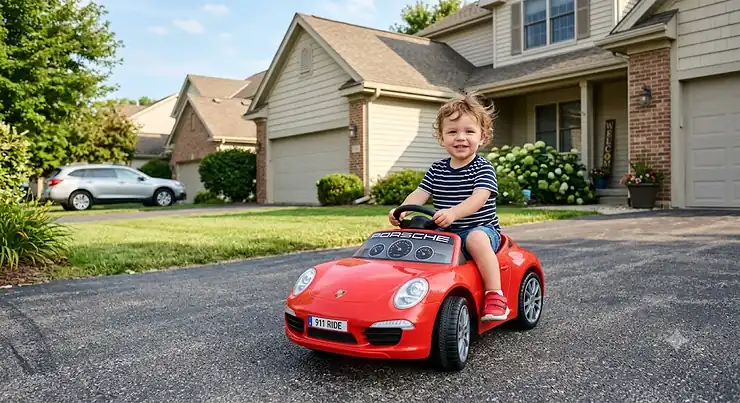
Somewhere between the driveway and the mailbox, a four-year-old is about to become the coolest kid on the block. That’s the pull of a porsche 911 ride on toy — it isn’t just a battery-powered plastic shell, it’s a shrunk-down slice of automotive theater, complete with working headlights, a horn that means business, and just enough attitude to make grown neighbors stop and stare. A porsche 911 ride on toy is a scaled, battery-powered kids’ car styled after the real Porsche 911, typically running on a 12V or 24V system with parent remote override, working lights, and a top speed capped for safety. Parents searching this exact phrase are usually juggling three questions at once: which model is actually licensed, which one won’t die after two backyard laps, and which one is worth the money.
We’re going to answer all three. This guide walks through seven real, currently available models spanning budget starter cars to premium two-seater editions, with honest analysis pulled from spec sheets and aggregated owner feedback — not marketing copy. Ride-on toys matter for more than novelty, too; pediatric researchers consistently point to active outdoor play, including balance-building ride-ons, as a meaningful contributor to a young child’s physical and motor development. So before you drop several hundred dollars on chrome trim and Bluetooth speakers, let’s get into exactly what separates a great porsche 911 ride on toy from an expensive paperweight in the garage.
Quick Comparison Table
| Model | Power System | Top Speed | Best For |
|---|---|---|---|
| Freddo Toys Porsche 911 GT3 24V 2-Seater | 24V dual motor | Up to 5 mph | Siblings who share |
| RiiRoo Licensed Porsche 911 Carrera 12V | 12V twin 30W motors | 2.2 mph | Toddlers, first car |
| Sonic Teck 12V Porsche 911 Ride-On | 12V single/dual motor | 3.7 mph | Tight budgets |
| Car Tots Porsche 911 GT3 PRO Edition | 24V 14Ah dual motor | Up to 7.5 mph | Confident older drivers |
| Titan Toys Porsche 911 GT3 Dual Pedal Ultimate | 24V 320W dual motor | 7.5 mph | Pedal-car realism fans |
| Big Toys Green Country Porsche 911 GT3 4WD | 24V dual motor | Moderate/adjustable | Rougher terrain |
| OutdoorToys Porsche 911 Kids Electric Ride-On | 24V 10Ah dual motor | Up to 5 mph | Longer play sessions |
Looking at the table, the spread here is really about speed governance and seating, not styling — every one of these wears 911 badges convincingly, but the Car Tots Porsche 911 GT3 PRO Edition and Titan Toys Porsche 911 GT3 Dual Pedal Ultimate push into genuinely quick territory that’s better suited to kids who’ve already outgrown a slower starter car. Families with a toddler and a preschooler sharing one vehicle should lean toward the two-seaters, while a single younger rider is better served by the gentler 12V options up top. Notice, too, that battery voltage alone doesn’t tell the whole story — motor wattage and gearing shape how a car actually feels underfoot.
💬 Just one click — help others make better buying decisions too!😊
Top 7 Porsche 911 Ride On Toys: Expert Analysis
1. Freddo Toys Porsche 911 GT3 24V 2-Seater — most complete two-seat experience
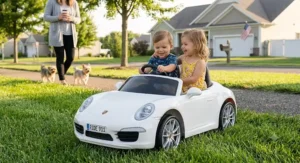
The Freddo Toys Porsche 911 GT3 24V 2-Seater leads this list because it solves the problem every parent of two kids eventually hits: who gets the car today. Two genuine leather-style seats, individual safety belts, and a driver’s seat that adjusts for growing legs mean this one isn’t a compromise for either child. Under the hood, a 24V dual-motor system handles inclines and grass far better than the single-motor 12V cars further down this list, and the wattage difference is the whole reason it doesn’t bog down when both kids climb aboard. Based on the spec comparison against smaller 12V-only competitors, this is the pick for families who plan to keep the car in rotation for years rather than one summer.
Reviewers consistently note that the leather-style seating and floor mats feel noticeably nicer than typical ride-on plastic benches, and that the infotainment console with Bluetooth and a media player genuinely gets used rather than ignored after week one. It’s best suited to households with two children close in age, or a single child who’ll eventually invite a friend along for the ride. What most buyers overlook is that two-seaters run heavier and wider, so measure your storage space, garage door, and gate width before ordering.
Pros:
- ✅ Two real seats with individual belts for shared use
- ✅ 24V dual motor handles inclines confidently
- ✅ Leather-style seating feels premium versus rivals
Cons:
- ❌ Wider footprint needs more storage and doorway clearance
- ❌ Heavier body makes solo lifting into storage harder
Expect this one to sit in the premium bracket, generally in the $400-$600 range depending on the exact edition — check current price before buying, since ride-on toy pricing shifts with promotions. For two kids who’ll actually use both seats, the value case is strong; for a single rider, a smaller model saves real money.
2. RiiRoo Licensed Porsche 911 Carrera 12V — gentlest entry point for toddlers
The RiiRoo Licensed Porsche 911 Carrera 12V is built around restraint, and that’s precisely the point for the youngest drivers. Twin 30W motors and a 12V battery cap the top speed around 2.2 mph, which sounds slow until you remember the intended driver is barely out of a stroller. The rear-wheel suspension and specialized plastic tires with a textured grip strip matter more here than raw power — on concrete or short grass, that traction keeps a wobbly two-year-old from sliding sideways on a turn. Here’s what to weigh: this car trades speed for control, and for a first ride-on, that trade is exactly right.
Aggregated owner sentiment on similarly specced RiiRoo models tends to praise the realistic engine startup sound and working horn as details that keep toddlers engaged well past the novelty phase, though some note that the modest 30-90 minute runtime means charging becomes a routine chore. It’s a strong fit for parents who want manual pedal-and-lever driving with a parent remote safety net, rather than handing full control to a child who’s still mastering steering. Families upgrading from a push car will find the learning curve gentle rather than abrupt.
Pros:
- ✅ Genuinely toddler-safe top speed near 2 mph
- ✅ GrippMoz textured tires aid traction on turns
- ✅ Bluetooth, USB, and realistic engine sounds included
Cons:
- ❌ Short 45-90 minute runtime per full charge
- ❌ Too slow to hold interest past preschool age
Priced in the lower-to-mid range, often somewhere around $250-$350, it’s a smart first purchase rather than a long-term car a child grows into.
3. Sonic Teck 12V Porsche 911 Ride-On — budget pick without cutting every corner
The Sonic Teck 12V Porsche 911 Ride-On exists for the parent who wants the badge and the styling without the premium invoice. A single 12V battery system delivers a top speed around 3.7 mph — quicker than the RiiRoo above, which makes it better suited to a slightly older toddler who’s outgrown ultra-cautious speeds but isn’t ready for a 24V car yet. The durable rubber tires and a basic suspension system are doing real work here: on driveways and sidewalks, they smooth out the small bumps that would otherwise rattle a cheaper toy with hard plastic wheels. Based on the spec sheet, corners were cut on extras like seating material rather than on the core ride experience, which is the right place to save.
What most buyers overlook about budget ride-ons in general is that the parent remote control is often listed as optional rather than standard — confirm this before purchase if remote override matters to your peace of mind. Reviewers of comparably priced 12V models tend to flag the plush seat cushioning as a pleasant surprise at this price point, while noting plastic trim pieces feel less substantial than pricier competitors. This is the practical choice for a first “real” 911 experience on a tighter budget, or as a backup car for grandparents’ houses.
Pros:
- ✅ Lower price point without losing rubber tires
- ✅ 3.7 mph top speed suits early preschoolers
- ✅ Suspension smooths driveway and sidewalk bumps
Cons:
- ❌ Parent remote sometimes sold as optional add-on
- ❌ Trim and plastics feel thinner than premium models
Look for this one in roughly the $150-$250 range — a legitimate value pick if your child mainly rides on smooth pavement rather than grass or gravel.
4. Car Tots Porsche 911 GT3 PRO Edition — fastest option for confident older kids
Where the RiiRoo model above is built for restraint, the Car Tots Porsche 911 GT3 PRO Edition is built for kids who’ve earned some speed. A 24V 14Ah battery paired with high-torque, notably quiet gearboxes pushes the PRO variant to a genuine 7.5 mph top speed — more than triple the RiiRoo’s ceiling — with two lower forward settings for gradual confidence building. Critically, this PRO edition drops the parent remote entirely in favor of manual-only control, so it’s a deliberate choice for children roughly five and up who can already steer and brake responsibly, not a toddler’s first car.
Reviewers of this GT3 lineup consistently flag the inflatable rubber tires and 7-inch MP4 video screen as standout upgrades over standard EVA-wheeled competitors, giving a noticeably smoother ride on uneven pavement and cracks in the driveway. The 110-130 lb weight capacity also means this car has real longevity, comfortably carrying an older sibling well past the age most ride-ons get outgrown. Parents should weigh the lack of a remote carefully: what feels like added independence for a confident seven-year-old could feel like lost control for an anxious first-time buyer.
Pros:
- ✅ 7.5 mph top speed suits older, confident riders
- ✅ Inflatable rubber tires smooth rough pavement
- ✅ High weight capacity extends useful years
Cons:
- ❌ No parent remote — manual control only
- ❌ Speed makes it unsuitable for toddlers
This sits in the premium tier, typically in the $450-$650 range depending on configuration — a fair trade for a car that will still fit a nine-year-old.
5. Titan Toys Porsche 911 GT3 Dual Pedal Ultimate Edition — most realistic driving feel
The Titan Toys Porsche 911 GT3 Dual Pedal Ultimate Edition stands out for one specific reason: it’s built around a genuine accelerator-and-brake pedal setup instead of the single “go pedal” found on most ride-ons. Two 320W motors deliver serious pulling power, and real pneumatic air tires — not the molded EVA foam common at this price — noticeably absorb bumps the way an actual car’s tires would. On paper this means a materially smoother ride over grass, gravel, and cracked sidewalks than nearly anything else on this list, and aggregated feedback on comparable air-tire ride-ons consistently backs that up.
What the spec sheet won’t tell you, but owner reports suggest, is that pneumatic tires require occasional air pressure checks, much like a real car — a maintenance step that’s foreign to most ride-on toy owners used to maintenance-free foam wheels. This model rewards a child who already understands the concept of separate gas and brake controls, making it a poor fit for a first-time toddler driver but an excellent step up for a child transitioning from a simpler ride-on toward something that mimics real driving mechanics.
Pros:
- ✅ Dual pedal setup mimics real car controls
- ✅ 320W motors deliver strong, confident power
- ✅ Real pneumatic tires smooth rough terrain
Cons:
- ❌ Pneumatic tires need occasional air pressure checks
- ❌ Dual-pedal control has a learning curve for beginners
Expect a premium price, generally in the $500-$700 range at the time of research, positioning it as an enthusiast-grade choice rather than a casual purchase.
6. Big Toys Green Country Porsche 911 GT3 4WD — sturdiest build for rougher yards
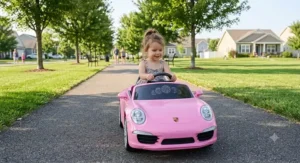
The Big Toys Green Country Porsche 911 GT3 4WD earns its spot through build durability rather than flash. Riding on 12-inch EVA foam rubber wheels paired with rear-end spring suspension, it’s engineered to handle backyard grass, gravel driveways, and uneven patios better than lighter, thinner-wheeled competitors. The manufacturer’s own guidance — including specific storage and battery care instructions for seasonal downtime — signals a company that expects this car to survive years of real outdoor use, not just a showroom photo shoot.
Based on the spec comparison, the tradeoff for that toughness is a more utilitarian feel than the GT3 PRO or Freddo two-seater above; this is a car built to be driven hard and put away wet, within reason, rather than babied. Reviewers of the broader 4WD/LTD/PRO lineup note that assembly and part quality feel sturdy, with a warranty on parts (excluding batteries, tires, and chargers) that reflects realistic expectations about wear items. Families in neighborhoods without smooth sidewalks — think unpaved rural driveways or bumpy community parks — will get more mileage out of this model’s suspension and wheel design than out of a sleeker, road-only competitor.
Pros:
- ✅ 12-inch EVA wheels handle grass and gravel well
- ✅ Rear spring suspension built for rougher terrain
- ✅ Clear manufacturer maintenance and storage guidance
Cons:
- ❌ Less flashy interior than premium two-seat rivals
- ❌ Parts warranty excludes batteries, tires, and chargers
Pricing typically lands in the mid-range, often around $350-$500, which feels justified once you factor in the terrain this car is actually designed to survive.
7. OutdoorToys Porsche 911 Kids Electric Ride-On — best for longer play sessions
Rounding out the list, the OutdoorToys Porsche 911 Kids Electric Ride-On is built around endurance. A 24V 10Ah battery paired with two upgraded, notably quiet motors ranging from 150W to 280W delivers smooth acceleration up to roughly 5 mph (8 km/h) — comfortably faster than entry 12V models, but still governed well below the PRO-tier cars above. The larger-capacity battery is the real story here: for families whose kids treat ride-on time as an hour-long backyard event rather than a quick five-minute loop, that extra amp-hour capacity translates directly into less mid-play charging frustration.
Reviewers consistently flag the three-point safety harness as a meaningful upgrade over the simpler lap belts found on cheaper competitors, especially for parents of younger, wigglier riders. One honest caveat worth repeating: some promotional images for this model show a large dashboard screen that the manufacturer itself notes is non-functional, so buyers expecting a working display should look elsewhere on this list, such as the Car Tots PRO edition’s genuine MP4 screen. What most buyers overlook is that quieter motors also mean less “vroom” feedback for kids who associate engine noise with excitement — worth considering if your child specifically loves loud, rumbly play.
Pros:
- ✅ 24V 10Ah battery supports longer play sessions
- ✅ Quiet 150-280W motors run smoothly
- ✅ Three-point harness adds real security
Cons:
- ❌ Promotional dashboard screen is non-functional
- ❌ Quieter motors lack “engine roar” some kids love
Expect a mid-range price, generally in the $300-$450 range, positioning it as a strong all-rounder for families prioritizing play duration over top speed.
Practical Usage Guide: Getting the Most From Your Porsche 911 Ride On Toy
The first thirty days determine whether your car becomes a beloved fixture or a frustration parked in the garage. Start with a full initial charge — most 12V and 24V systems need 8-12 hours before the very first ride, and skipping this step is the single most common reason a “defective” battery turns out to be fine after all. Assembly typically takes 45-90 minutes; set aside a distraction-free window rather than rushing it between errands, since misaligned steering columns or loose wheel bolts account for a large share of early returns.
Once assembled, run the very first session on a flat, open surface like a driveway or empty garage, with the parent remote (if included) active the entire time. This lets a new driver learn where the accelerator sits without the added complication of turns or inclines. A common mistake is charging the battery only when it’s fully dead — lithium and sealed lead-acid batteries both last longer with partial, regular top-ups rather than deep discharge cycles. Finally, build a light maintenance habit: wipe down the body monthly, check tire tread and pressure (especially on pneumatic-tire models) every few weeks, and store the car in a garage or covered area rather than leaving it exposed to rain and direct sun, which degrades plastic and seals over time.
Real-World Scenarios: Which Porsche 911 Ride On Toy Fits Your Family
Consider three household types. First, the family with two kids under five sharing one driveway: a two-seater like the Freddo Toys Porsche 911 GT3 24V 2-Seater removes the daily fight over whose turn it is, and the 24V dual motor keeps both riders moving even with combined weight aboard. Second, the cautious first-time parent whose toddler has never driven anything faster than a push car: the RiiRoo Licensed Porsche 911 Carrera 12V or Sonic Teck 12V Porsche 911 Ride-On offer a genuinely gentle top speed alongside full parent remote override, which matters more for peace of mind than any styling detail.
Third, the family with an older child, roughly six to nine, who’s already comfortable steering and wants something that feels like a real upgrade: the Car Tots Porsche 911 GT3 PRO Edition or Titan Toys Porsche 911 GT3 Dual Pedal Ultimate Edition deliver genuine speed and realistic controls that a slower 12V toddler car simply can’t match. Budget matters across all three profiles too — a family stretching for a first ride-on gift shouldn’t feel pressured into a premium two-seater when the Sonic Teck model covers the essentials for meaningfully less money.
Problem → Solution Guide
Problem: The car won’t hold a charge like it used to. This is almost always battery age or a habit of deep discharging rather than a manufacturing flaw. Solution: switch to shorter, more frequent charging cycles and avoid letting the battery sit fully drained for days at a time, particularly over winter storage.
Problem: My child is scared of the acceleration. Look for a model with a documented “soft start” feature, like the gradual acceleration ramp found on several 12V options above, and keep the parent remote active until confidence builds. Slower models such as the RiiRoo Licensed Porsche 911 Carrera 12V are purpose-built for this exact concern.
Problem: The car struggles on grass or gravel. This is a wheel and suspension issue, not a motor issue in most cases. Solution: prioritize models with pneumatic or thicker EVA tires and genuine suspension, such as the Big Toys Green Country Porsche 911 GT3 4WD or Titan Toys Porsche 911 GT3 Dual Pedal Ultimate Edition.
Problem: Two kids keep fighting over one car. Solution: a two-seater removes the conflict entirely; the Freddo Toys Porsche 911 GT3 24V 2-Seater is purpose-built for this.
Problem: The MP3/Bluetooth feature stopped connecting. Solution: most connectivity issues trace back to a low 12V “auxiliary” battery that powers electronics separately from the drive battery — check both power sources before assuming the media unit itself has failed.
How to Choose a Porsche 911 Ride On Toy
- Match top speed to age and confidence, not aspiration. A 2-3 mph ceiling suits toddlers; save 7+ mph PRO editions for kids who’ve already mastered basic steering.
- Decide if you need one seat or two. Multiple children living under one roof almost always justify the extra cost of a two-seater over time.
- Check the tire type against your terrain. Pneumatic or thick EVA tires matter far more on grass and gravel than on a smooth driveway.
- Confirm the parent remote is standard, not optional. This single detail affects safety far more than any cosmetic feature.
- Look at battery capacity, not just voltage. A 24V system with a small amp-hour rating can still run out of steam faster than expected.
- Read aggregated review themes, not star averages alone. Recurring complaints about assembly or plastic quality matter more than a simple 4.5-star badge.
- Set a realistic price range before shopping. Knowing whether you’re comfortable in the $200 or $600 bracket prevents impulse upgrades you don’t actually need.
Licensed Porsche Ride On Car: Why the Official License Matters
Not every 911-shaped ride-on toy actually carries Porsche’s official sign-off, and the distinction matters more than it might seem. A genuinely licensed porsche ride on car has gone through brand approval for body styling, badging, and proportions, which generally correlates with more accurate detailing — real-looking wheel designs, correct badge placement, and door lines that echo the actual car rather than a generic sports-car silhouette wearing a Porsche crest. Several models on this list, including the Freddo Toys Porsche 911 GT3 24V 2-Seater and RiiRoo Licensed Porsche 911 Carrera 12V, explicitly market their official licensing status, which is worth confirming in product listings before purchase.
Beyond aesthetics, licensing can also signal a manufacturer relationship with more oversight on quality and safety documentation, though it’s not a guarantee in itself — a licensed car still needs to meet the same ASTM F963 toy safety requirements as any unlicensed competitor. For a child who’s genuinely into cars and will notice the difference between a real Porsche silhouette and an approximation, paying slightly more for confirmed licensing is often worth it. For a younger toddler who just wants a red car that moves, an unlicensed alternative may deliver identical play value for less money.
Porsche 911 Kids Electric Car vs Traditional Pedal Cars
The comparison between a modern porsche 911 kids electric car and an old-school pedal car isn’t close on convenience, but it’s more nuanced on developmental value than marketing suggests. Electric ride-ons win decisively on accessibility — a two-year-old who lacks the leg strength or coordination to pedal a traditional car can still steer an electric model, especially with parent remote assistance. They also win on realism: working lights, sound systems, and remote override simply don’t exist in a classic pedal car.
Where pedal cars still hold an edge is in raw physical engagement. A child pedaling generates their own motion, building leg strength and coordination in a way that pressing an accelerator pedal doesn’t replicate. Some of the models above, notably the Titan Toys Porsche 911 GT3 Dual Pedal Ultimate Edition with its separate accelerator and brake pedals, split the difference by demanding more active control than a single “go” button, even though the actual propulsion remains electric. For most modern families, though, the deciding factor is practical: electric models suit driveways and sidewalks where sustained pedaling isn’t realistic for a small child, while pedal cars still have a niche among parents prioritizing pure physical exertion over realism.
Features That Actually Matter (And Those That Don’t)
Dual motor power is one of the genuine differentiators on this list, and it’s not just a spec-sheet flex. A single-motor 12V car, like entry options above, tends to lose noticeable speed on inclines or when a heavier child climbs aboard, because all the torque routes through one wheel pairing. Dual motor systems, found in the Freddo Toys, Car Tots PRO, Titan Toys, and OutdoorToys models here, split that load across two independently powered wheels, which translates to steadier climbing power on grass slopes and driveways — a real-world benefit, not marketing fluff.
Rubber tires for a smooth ride matter more than most buyers expect going in. Hard plastic wheels, common on the cheapest ride-on toys generally, transmit every crack and pebble straight into the chassis and the child’s spine. The EVA foam and pneumatic rubber tires found across this list — especially the genuine air tires on the Titan Toys and Car Tots PRO models — absorb that impact instead, which is the difference between a jarring ride and a genuinely comfortable one on anything but a freshly paved driveway.
MP3 player connection is the feature most likely to be pure novelty rather than lasting value, and it’s worth being honest about that. Bluetooth and USB/MP3 playback, present on most models above, genuinely does get used in the first few weeks, based on aggregated owner comments — but it’s rarely the deciding factor in long-term satisfaction, which tends to hinge instead on battery life, ride comfort, and build durability. Treat it as a pleasant bonus, not a reason to overspend on an otherwise weaker car.
What to Expect: Real-World Performance
Spec sheets describe potential; real driveways describe reality. In practice, a 12V single-motor car like the Sonic Teck 12V Porsche 911 Ride-On feels appropriately brisk for a three-year-old on flat pavement, but visibly slows on grass or a gentle incline — exactly the tradeoff its lower price point implies. Step up to a 24V dual-motor car like the OutdoorToys or Freddo Toys models, and that same incline barely registers; the extra wattage is doing real work, not just padding a spec sheet.
Tire type shows up immediately in ride feel, too. On the pneumatic-tire Titan Toys Porsche 911 GT3 Dual Pedal Ultimate Edition, a cracked sidewalk seam produces a gentle bump rather than the sharp jolt you’d feel through basic hard plastic wheels. Battery runtime is the other place theory and practice diverge most: a “45-90 minute” rating on a 12V car often lands closer to the lower end once a heavier or more aggressive driver is behind the wheel, so families expecting a full afternoon of continuous play should lean toward higher amp-hour batteries like the 10Ah-14Ah packs found in the OutdoorToys and Car Tots PRO models.
Common Mistakes When Buying a Porsche 911 Ride On Toy
The single most common mistake is buying based on top speed alone without matching it to the child’s actual age and confidence — a 7.5 mph PRO-tier car is genuinely the wrong first purchase for a two-year-old, regardless of how impressive the number looks in a listing. A close second is skipping the fine print on parent remote inclusion; some editions, like the PRO trims mentioned above, explicitly drop the remote in favor of manual-only control, which can catch first-time buyers off guard.
Buyers also frequently underestimate storage footprint, especially with two-seater models, and end up struggling to fit the car through a standard gate or garage door. Another recurring issue is ignoring terrain: a car with basic EVA wheels bought for a family with a gravel driveway will feel underbuilt almost immediately, when a pneumatic-tire or 4WD-oriented model would have suited the environment far better. Finally, many parents overlook battery maintenance entirely, assuming ride-on batteries behave like AA batteries rather than rechargeable packs that degrade faster under deep-discharge habits.
Long-Term Cost & Maintenance
The sticker price is only part of the total cost of ownership. Replacement batteries for 12V and 24V systems typically run in the $30-$80 range depending on capacity, and most owners report needing a replacement somewhere between year two and year four with regular use. Tires, particularly the pneumatic style found on the Titan Toys and Car Tots PRO models, may eventually need replacement or patching, though EVA foam tires on models like the Big Toys Green Country Porsche 911 GT3 4WD essentially never puncture, trading that convenience for a slightly firmer ride.
Chargers, a common failure point across the category generally, are usually a low-cost replacement part rather than a reason to replace the whole vehicle. Looking at value per year of use rather than sticker price alone, a $500 two-seater used by two children across four years often works out to a lower true cost-per-ride than a $200 single-seat car outgrown within a single season. Factor in your specific number of children and expected years of use before assuming the cheapest option is actually the best value.
Safety, Regulations & Compliance Guide
Every ride-on toy sold in the United States is required to meet the ASTM F963 toy safety standard, a mandatory specification enforced by the Consumer Product Safety Commission covering mechanical hazards, electrical safety, flammability, and material toxicity. Before buying, confirm the listing references compliance with current U.S. toy safety regulations, and always check for open recalls on ride-on toy brands before a purchase, since recalls do happen even among well-known manufacturers.
Beyond the legal baseline, a few practical habits matter. Always supervise young drivers, particularly near driveways, streets, and pools. Fit any available safety harness properly rather than leaving it loose for convenience — the three-point harness on the OutdoorToys Porsche 911 Kids Electric Ride-On is a meaningful upgrade over a basic lap belt for exactly this reason. Keep the parent remote charged and within reach whenever a younger or less experienced driver is behind the wheel, and periodically check for any open recalls on riding toys covering your specific brand and model, since even reputable manufacturers occasionally issue safety corrections.
✨ Don’t Miss These Exclusive Deals!
🔍 Take your porsche 911 ride on toy search to the next level with these carefully selected models. Click on any highlighted car to check current pricing and availability. These picks will help create authentic driveway memories your family will love!
Frequently Asked Questions
❓ Is a porsche 911 ride on toy officially licensed by Porsche?
❓ What age is a porsche 911 ride on toy suitable for?
❓ How long does the battery last on a porsche 911 kids electric car?
❓ Do rubber tires really make a difference on ride-on toys?
❓ Can I connect my phone to the MP3 player on these ride-on cars?
Conclusion
A porsche 911 ride on toy sits at an unusual intersection of nostalgia, engineering, and pure childhood joy, and the seven models covered here span a genuinely wide range of needs. Budget-conscious families will find real value in the Sonic Teck 12V Porsche 911 Ride-On or RiiRoo Licensed Porsche 911 Carrera 12V, both of which nail the essentials without unnecessary extras. Households with two children, or anyone planning years of use, should look hard at the Freddo Toys Porsche 911 GT3 24V 2-Seater, while families chasing genuine speed and realistic controls for an older child will get the most satisfaction from the Car Tots Porsche 911 GT3 PRO Edition or Titan Toys Porsche 911 GT3 Dual Pedal Ultimate Edition.
Terrain deserves just as much weight as age in the decision. A smooth suburban driveway barely stresses even basic EVA tires, but a gravel path or bumpy backyard genuinely rewards the pneumatic tires and 4WD-oriented build of models like the Titan Toys and Big Toys Green Country options. Whichever model fits your family, prioritize the parent remote, verified ASTM safety compliance, and a battery capacity that matches how long your child actually plays — the badge on the hood matters less than those three fundamentals in the long run.
Recommended for You
- Ferrari Ride On Car With Remote Control: 7 Best Picks (2026)
- Licensed Lamborghini Ride On Aventador: 7 Best Picks (2026)
- Lamborghini Ride On Car For Kids: 7 Best Picks Reviewed (2026)
Disclaimer: This article contains affiliate links. As an Amazon Associate, I earn from qualifying purchases. If you purchase products through these links, we may earn a small commission at no additional cost to you.
✨ Found this helpful? Share it with your friends! 💬🤗
