

In This Article
If your kid has spent the last six months “driving” an imaginary car around the living room with a paper plate steering wheel, you already know what’s coming next. An electric ride on toy car is one of those gifts that looks simple on the box and turns out to be shockingly complicated once you start comparing models — voltage, motor wattage, weight limits, remote control range, it adds up fast.
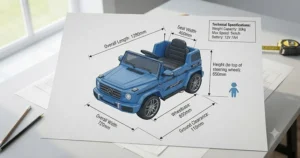
What is an electric ride on toy car? It’s a battery-powered miniature vehicle, usually styled after a real car, truck, or off-roader, that lets a child drive (or be guided by a parent remote) at speeds typically between 1.5 and 8 mph. Most run on 6V, 12V, or 24V rechargeable batteries and are built for ages 1 to 8. The category was popularized in the U.S. by brands like Power Wheels starting in the 1980s, and today dozens of independent brands compete in the same space with far more variety in styling and features.
After digging through specs, manuals, and customer feedback on dozens of listings, I narrowed it down to seven models that actually deliver on their promises — from a $100 toddler starter to a four-seat family golf cart. What most buyers overlook is that voltage alone doesn’t tell you much; motor wattage and weight capacity matter just as much, and I’ll break down why below.
Quick Comparison Table
| Product | Power System | Top Speed | Seats | Best For | Price Range |
|---|---|---|---|---|---|
| Best Choice Products 24V 2-Seater Ride-On Truck | 24V, dual motors | 4 mph | 2 | Siblings sharing one ride | $250–$320 |
| First Ride On Ford Bronco Raptor 24V | 24V, dual 90W | 4.3 mph | 2 | Licensed off-road styling | $280–$360 |
| ANPABO Mercedes-Benz G63 12V | 12V, dual 35W | 3 mph | 1 | Toddlers wanting luxury looks | $190–$240 |
| ARBELI 12V Ride-On Truck | 12V, dual 35W | 3.1 mph | 1 | First car for ages 2–6 | $130–$170 |
| Gotrax RT1 Toddler ATV | 12V lead-acid | 1.5 mph | 1 | Tightest budget, ages 1.5–4 | $90–$130 |
| LIGIANT R9 24V 4-Seater Golf Cart | 24V, 4WD | 4.35 mph | 4 | Big families, group play | $380–$480 |
| Winado Chevrolet Colorado 12V | 12V | ~2.5–3 mph | 1 | Toddlers wanting a licensed truck | $140–$180 |
Looking at the spread above, the gap between the Gotrax RT1 and the LIGIANT R9 isn’t really about quality — it’s about how many kids you’re trying to entertain and how much speed they can responsibly handle. Families with one toddler rarely need anything past 12V, while parents of two or three school-age kids will get far more use out of a 24V multi-seater even though it costs roughly three times as much. Battery voltage tracks pretty closely with both price and recommended age, so use that table as a first filter before reading the deeper breakdowns below.
💬 Just one click — help others make better buying decisions too!😊
✨ Don’t Miss These Exclusive Deals!
🔍 Take your search for the perfect electric ride on toy car to the next level with the picks below. Click through to check current pricing and availability on each one — these rides have made plenty of families very happy. 😊
Top 7 Electric Ride On Toy Cars: Expert Analysis
1. Best Choice Products 24V 2-Seater Ride-On Truck
The Best Choice Products 24V 2-Seater Electric Ride On Car Truck stands out for letting two kids ride together without needing two separate toys. It runs on a 24V 7Ah battery feeding dual motors, which in practice means about 90 minutes of play before a recharge — long enough for an after-school session without constant babysitting of the battery indicator. The two preset speeds (2 mph and 4 mph) work well because the slower setting is genuinely usable for a nervous 3-year-old, not just a token “safety mode” that’s still too fast.
What most buyers overlook here is the 132-lb weight capacity, which is generous enough to fit two average 6-to-7-year-olds rather than just a toddler and an infant. Owners consistently mention the parent remote as the feature that actually gets used daily, since it lets you guide the truck without hovering next to it. This is best suited for households with two kids close in age who’ll actually want to ride together, rather than an only child.
Pros: Dual seating for shared play; usable parent remote with Bluetooth; smooth 2-wheel suspension.
Cons: 90-minute runtime means recharging between sibling turns; assembly takes a bit longer than single-seat models.
In the $250–$320 range, it’s a solid value if two kids will genuinely use it together — if not, you’re paying for capacity you won’t need.
2. First Ride On Ford Bronco Raptor 24V 2-Seater
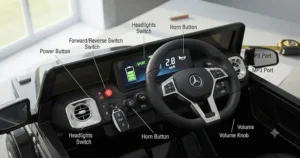
The First Ride On Ford Bronco Raptor 24V earns its spot through the officially licensed styling — the grille, stance, and headlights are recognizably Bronco, which matters if your kid is already obsessed with the real truck. Dual 90W motors and a 24V 7Ah battery push it to a top speed of 4.3 mph across three speed settings, and the rear suspension noticeably smooths out grass and gravel compared to budget single-speed competitors.
In my experience, the detail that separates this from cheaper Bronco knockoffs is the individual 3-point seatbelts on each side rather than one shared lap belt — that matters once you’ve got two different-sized kids sharing the cab. The 98-foot remote range is also wider than most in this category, useful if you’re supervising from the porch rather than standing in the yard.
Pros: Authentic licensed design; three speed tiers for different ages; strong remote range.
Cons: Runtime drops to around 50 minutes on the top speed setting; max rider height is capped at 59 inches.
This one suits families with a Bronco-obsessed kid aged 3–8 who’ll ride solo or with a sibling. Expect to pay in the $280–$360 range depending on color and seller.
3. ANPABO Mercedes-Benz G63 12V
The ANPABO Mercedes-Benz G63 is a single-seat 12V option that punches above its battery class. ANPABO uses a 7Ah battery here instead of the more common 4.5Ah found on similarly priced competitors — that’s roughly 55% more capacity, which translates to noticeably less mid-play battery anxiety. Two 35W motors top out at 3 mph, intentionally conservative for the toddler-to-preschool range this is built for.
The spec sheet won’t tell you this, but the low-battery voice prompt is the kind of small detail that saves you from a dead-battery meltdown mid-driveway. Parents consistently note the soft-start feature prevents the jerky takeoff that scares younger toddlers off ride-on toys entirely. This is best for a single toddler around ages 2–5 who wants the “fancy car” look without the price tag of a full SUV replica.
Pros: Above-average battery capacity for its voltage class; low-battery voice warning; soft-start acceleration.
Cons: Single seat only; 3 mph ceiling means older kids will outgrow it within a year or two.
Typical pricing falls in the $190–$240 range, making it a reasonable mid-tier choice for a first “real-looking” car.
4. ARBELI 12V Ride-On Truck
The ARBELI 12V Ride-On Truck is built specifically as a “first car,” and the design choices reflect that. Dual 35W motors and a 3.1 mph top speed keep things controllable, while the 13-inch-wide seat with an adjustable harness accommodates a growing toddler without needing a size upgrade every six months. What stands out in customer feedback is the dashboard — big, chunky buttons rather than tiny toggle switches, which actually matters for 2- and 3-year-old hands still developing fine motor control.
In practice, the override brake on the parent remote is the safety feature that gets the most praise, since it lets you stop the vehicle instantly if your toddler heads toward the driveway instead of the lawn. This suits parents prioritizing safety features and budget over flashy styling — there’s no licensed branding here, just a straightforward, well-built truck shape.
Pros: Adjustable seat grows with the child; oversized, toddler-friendly controls; remote override brake.
Cons: No licensed vehicle styling; 1–2 hour runtime is shorter than premium 24V options.
At $130–$170, this is one of the better value picks if you want safety features without paying for brand licensing.
5. Gotrax RT1 Toddler ATV
The Gotrax RT1 is the budget anchor of this list, and it’s honest about what it is — a simple, no-remote ATV-style toy for the youngest riders. A 12V 4.5Ah lead-acid battery and an intentionally slow 1.5 mph top speed mean this isn’t trying to compete with the bigger trucks; it’s a stepping stone before your toddler graduates to something faster. The push-button forward/reverse accelerator is about as simple as ride-on controls get, which is exactly the point for ages 1.5–4.
What most buyers overlook about toys in this price bracket is that the lack of a remote control isn’t a missing feature — for a 1.5-to-3-year-old who’s barely walking confidently, parental remote override matters less than simply being able to physically catch up and lift them off if needed. The 8-inch tires handle driveways and flat yards fine but will struggle on anything bumpier.
Pros: Lowest price point on this list; extremely simple, toddler-proof controls; anti-rollover stability design.
Cons: No parent remote control; lead-acid battery is heavier and slower to recharge than lithium alternatives.
Generally priced under $130, it’s the right call if your child is on the younger end of the ride-on age range and you want to test the waters before investing more.
6. LIGIANT R9 24V 4-Seater Golf Cart
The LIGIANT R9 is the outlier here — a genuine four-seat, 264-lb-capacity electric ride on toy car built as a scaled golf cart rather than a sedan or truck. Four-wheel drive powered by a 24V 7Ah battery delivers two speed settings up to 4.35 mph, and the design includes a detachable awning, which is a small touch that matters more than it sounds during a hot afternoon of backyard driving.
The spec sheet undersells how this changes the play dynamic: instead of one kid driving while siblings watch, you get three or four riding together, which in my experience cuts down on the “it’s my turn” arguments that plague single-seat ride-ons. The rear anti-roll wheels and spring suspension are there specifically because four-seat width raises tip-over risk on uneven ground, and the engineering reflects that.
Pros: Seats up to four kids simultaneously; genuine 4WD traction; shaded awning for sun protection.
Cons: Significantly higher price point; larger footprint requires more storage and yard space.
This is the premium pick on the list, typically running $380–$480, and it makes the most sense for families with multiple kids or frequent group playdates rather than a single child.
7. Winado Chevrolet Colorado 12V
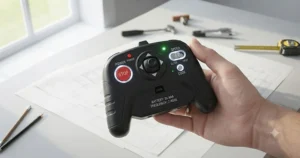
The Winado Chevrolet Colorado rounds out the list as a licensed-truck alternative to the Mercedes and Bronco options above, aimed squarely at toddlers who want the truck look without the 24V price tag. It supports both pedal and remote operation, with the remote offering three speed settings versus two in manual mode — a sensible design that lets parents dial in extra caution during remote-guided sessions.
The detail worth flagging is the dual lockable doors combined with the soft-start system, which together address the two most common toddler ride-on complaints: kids accidentally popping doors open mid-drive, and the jarring lurch of sudden acceleration that comes standard on cheaper unbranded trucks. Bluetooth and a built-in speaker round out the entertainment side.
Pros: Licensed Chevrolet styling at a toddler-friendly price; dual lockable doors; smoother soft-start acceleration.
Cons: Single speed mode in manual operation; battery runtime is on the shorter end for 12V models.
Pricing typically lands around $140–$180, positioning it as a strong mid-budget alternative to the pricier G63.
Practical Usage Guide
Getting a new electric ride on toy car right out of the box involves more than just charging the battery and letting your kid loose. First, charge fully for the full 8–12 hours before the very first use — most of these batteries ship partially charged, and running them dead on day one shortens their lifespan. Second, do a “dry run” on the lowest speed setting in a contained space like a driveway before letting your child drive on grass or near a slope; this lets you test the brake response and confirm the remote override actually works before it matters.
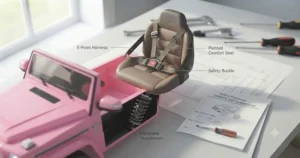
For maintenance, wipe down the wheels and undercarriage after outdoor use, especially if grass or dirt gets into the wheel wells — built-up debris is the most common cause of motor strain on these toys. Avoid leaving the battery on the charger for days at a time once it’s full; most chargers cut off automatically, but unplugging within a few hours of a full charge extends battery life. The most common first-30-days mistake is skipping the seatbelt because “it’s just the driveway” — falls from even a slow-moving ride-on onto pavement are a leading cause of minor injuries tracked by the U.S. Consumer Product Safety Commission, so making the belt non-negotiable from day one avoids a habit that’s hard to undo later.
Real-World Scenarios: Matching the Right Ride-On to Your Family
If you’re a parent of one toddler around age 2, testing the waters before a bigger investment, the Gotrax RT1 or ARBELI 12V Ride-On Truck make the most sense — both keep speeds low and the price manageable while still teaching basic steering and pedal control. If you’ve got two kids within a couple years of each other who insist on riding together, the Best Choice Products 24V 2-Seater or First Ride On Ford Bronco Raptor solve the “whose turn is it” problem directly, with individual seatbelts and enough weight capacity for both.
For a family hosting frequent group playdates, holiday gatherings, or with three-plus kids at home, the LIGIANT R9 4-Seater Golf Cart is the only option here built to handle that load without someone always sitting out. And if your child is specifically driven by brand obsession — wanting “the car that looks like Daddy’s truck” or a specific licensed vehicle — the ANPABO Mercedes-Benz G63 and Winado Chevrolet Colorado both lean into realistic styling as the main selling point over raw speed or capacity.
Problem → Solution: Fixing Common Ride-On Headaches
Problem: The battery dies mid-play and recharging takes all night. Solution: Look for 7Ah batteries (like the ANPABO G63 or Best Choice Products truck) instead of the more common 4.5Ah found in cheaper toys — the extra capacity roughly doubles usable playtime per charge for a similar charge duration.
Problem: Toddler is scared off by sudden acceleration. Solution: Prioritize models explicitly listing “soft start,” which most of the picks above include — it ramps power gradually instead of the jolt that scares first-time riders.
Problem: Kids fight over who gets to drive. Solution: A multi-seat model like the LIGIANT R9 or either 2-seater option removes the conflict entirely rather than trying to manage turn-taking with a single-seat toy.
Problem: The remote control range isn’t enough for a larger yard. Solution: Check the listed remote distance before buying — the First Ride On Bronco Raptor‘s 98-foot range outperforms several competitors that top out closer to 50 feet.
How to Choose an Electric Ride On Toy Car
- Match voltage to age, not ambition. A 12V system tops out around 3 mph and suits ages 1.5–6; 24V systems push 4+ mph and suit ages 4–8. Buying 24V for a 2-year-old isn’t a deal, it’s a hazard.
- Check weight capacity against your child’s actual weight, with growth room. A toy rated for 66 lbs will feel cramped fast on a child already at 50 lbs.
- Confirm whether a parent remote is included or optional. For ages under 4, a remote with an emergency stop button is close to essential.
- Compare battery Ah rating, not just voltage. Two 12V toys can have wildly different runtimes depending on whether the battery is 4.5Ah or 7Ah.
- Decide single-seat vs. multi-seat based on how many kids will actually use it. Buying capacity you don’t need adds cost without adding value.
- Look for soft-start technology if your child is a first-time rider. It’s the single biggest factor in whether a toddler enjoys or fears their first few drives.
- Verify the surface you’ll use it on. Treaded tires and spring suspension matter far more on grass or gravel than on a smooth driveway.
All seven models on this list are required to meet the mandatory U.S. toy safety standard, which the CPSC’s toy safety guidance covers in detail, including the stability and overload requirements written specifically for ride-on toys.
Common Mistakes When Buying Electric Ride On Toys
The most frequent mistake is buying based on top speed alone, without checking whether the weight capacity or seat width actually fits the child. A close second is ignoring battery type — lead-acid batteries (like the one in the Gotrax RT1) are heavier and slower to recharge than the lithium-style packs in pricier models, which matters if you’re hoping for same-day reuse. Parents also frequently skip reading the recommended height limits, assuming age range alone is sufficient; a tall 3-year-old can outgrow a toddler-rated seat well before the listed age cutoff. Finally, many buyers underestimate assembly time on multi-seat and 24V models — budget an hour with basic tools rather than assuming it’s ready out of the box. It’s also worth a quick check of the CPSC’s ride-on toy recall list before buying secondhand or from an unfamiliar brand, since recalls in this category are more common than most parents expect.
Electric Ride On Toy Cars vs Traditional Pedal Ride-Ons
Pedal-powered ride-ons are cheaper upfront, require no charging, and never run out of “battery” mid-play — but they demand real physical effort from the child and offer none of the realistic styling, lights, or sound features that make electric models feel special. An electric ride on toy car costs more and requires charging discipline, but it gives younger or less coordinated kids access to outdoor mobility play they couldn’t manage on a pedal version, and the remote-control safety net gives parents more control than a pedal toy ever could. For toddlers specifically, the soft-start and remote override features on electric models also reduce injury risk compared to a pedal car picking up speed on a slope with no brake.
What to Expect: Real-World Performance
On paper, 4 mph sounds slow, but on a 24V two-seater carrying two kids, it feels brisk enough to need a flat, open space rather than a cluttered driveway. Runtime estimates are also optimistic in most listings — expect the lower end of any stated range (50 minutes rather than 2 hours) if the child is on the heavier end of the weight capacity or driving at top speed continuously. Suspension makes a bigger real-world difference than motor wattage on anything other than pavement; a 35W motor with good spring suspension will outperform a 90W motor with rigid wheels on grass or gravel.
Long-Term Cost & Maintenance
Beyond the upfront price, expect to budget for replacement batteries roughly every 1–2 years of regular use, typically running $20–$50 depending on voltage and capacity. Tires on PP-material wheels rarely need replacing unless driven heavily on rough gravel, but remote controls occasionally need replacement batteries (usually AAA) every few months. Compared to a scooter or bike that needs sizing up annually, a ride-on car’s total cost of ownership is fairly low once the initial purchase is made — the main ongoing expense is simply electricity for charging, which is negligible.
Features That Actually Matter (And Those That Don’t)
Matters: Battery Ah rating, weight capacity relative to your child, parent remote with emergency stop, soft-start acceleration, suspension type for your driving surface.
Doesn’t matter as much: Top speed beyond what’s age-appropriate, number of “sound effects” or horn variations, cosmetic chrome trim, and marketing claims about “luxury” styling that don’t affect actual play value. A flashy dashboard with five sound buttons is fun for about a week; a battery that actually lasts the promised runtime matters every single time the toy comes out of the garage.
🔍 Take Your Search Further
✨ If any of the seven picks above caught your eye, now’s a good time to check current availability and pricing before colors or stock change. A well-matched electric ride on toy car becomes one of those toys that gets used for years, not weeks.
FAQ
❓ How fast does a 24V electric ride on toy car go?
❓ What age is appropriate for a 12V ride on toy car?
❓ How long does the battery last on a single charge?
❓ Do electric ride on toy cars need adult supervision?
❓ Can two kids ride a 2-seater electric ride on toy car at once?
Conclusion
There’s no single “best” electric ride on toy car — there’s a best one for your specific kid, household, and budget. If you’re testing the waters with a toddler, start small with the Gotrax RT1 or ARBELI 12V Truck. If two kids are sharing, the Best Choice Products 24V 2-Seater or First Ride On Bronco Raptor solve that directly. And if you’ve got a houseful of kids who all want a turn, the LIGIANT R9 earns its higher price tag by seating four at once.
Whatever you choose, the details that actually matter — battery capacity, weight limits, soft-start, and remote override — matter far more than horsepower bragging rights or how many lights are on the dashboard. Match the spec sheet to your actual kid, not the box art, and you’ll end up with a toy that gets used for years rather than abandoned in the garage after a month.
✨ Don’t Miss These Exclusive Deals!
💬🤗 If one of these caught your eye, check current pricing and availability before you decide — stock and colors shift often on the most popular models.
Recommended for You
- Ride On Toy Voltage Guide 2026: 7 Real Picks That Last
- 7 Best 48V Ride-On Toys for Kids in 2026
- 6V vs 12V Ride On Toys for Beginners: 7 Best Picks You Won’t Regret (2026)
Disclaimer: This article contains affiliate links. As an Amazon Associate, I earn from qualifying purchases. If you purchase products through these links, we may earn a small commission at no additional cost to you.
✨ Found this helpful? Share it with your friends! 💬🤗
