
In This Article
There’s a particular look every parent knows — the one where a teenager spots something fast, electric, and loud and their eyes go wide. You know the one. The expression that says I need that in my life. And honestly? You can’t blame them.
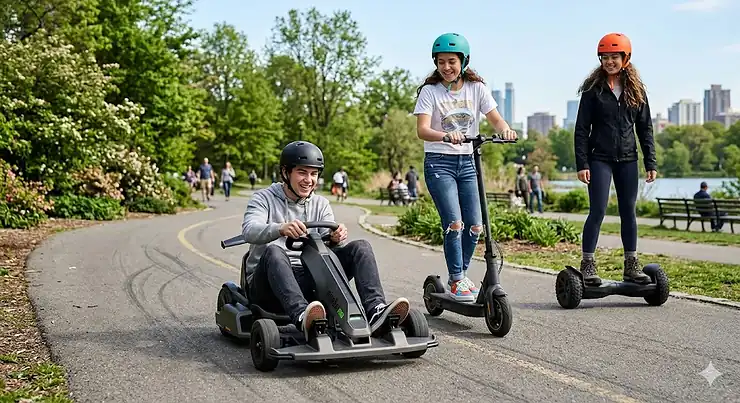
Ride on toys for teens have come a long way from the plastic Power Wheels gathering dust in your neighbors’ garage. Today’s teenage vehicles are proper machines — electric go karts hitting nearly 27 mph, electric dirt bikes with dual suspension worthy of a teenage Supercross fantasy, and self-balancing hoverboards that would have seemed like science fiction a decade ago. They’re not just fun. They’re genuine skill-builders that get kids off screens and into the fresh air.
But here’s the thing — not all ride on toys for teens are created equal, and the wrong choice wastes serious money. That 24V go kart listed at $150 might look tempting until it quits after six rides because the battery can’t handle a 120-pound rider. The electric scooter that looks slick in photos might be underpowered on anything steeper than a gentle slope.
So what actually separates a genuinely great teen ride-on from a glorified disappointment? In this guide, we break down the seven best battery powered ride on toys for teens currently available on Amazon — real products with verified specs, real customer feedback, and the honest commentary that Amazon product pages can’t give you. We also cover how to choose the right type for your teen’s age, size, terrain, and personality, plus the safety and maintenance realities that brands tend to gloss over.
Quick definition for newcomers: ride on toys for teens refers to motorized or self-propelled vehicles designed for riders typically between 12 and 18 years old — including electric go karts, electric dirt bikes, electric scooters, self-balancing hoverboards, and hybrid drift karts. The best ones in 2026 combine genuine performance specs with safety certifications designed for the real-world chaos of teenage use.
Let’s get into it. 🚀
Quick Comparison Table: Best Ride On Toys for Teens in 2026
| Product | Type | Age Range | Top Speed | Weight Limit | Power | Best For |
|---|---|---|---|---|---|---|
| Segway Ninebot Gokart Pro 2 | Electric Go Kart | 14+ | 26.7 mph | 220 lbs | 2400W peak | Speed & versatility |
| Razor MX650 Dirt Rocket | Electric Dirt Bike | 16+ | 17 mph | 220 lbs | 650W | Off-road adventurers |
| Razor Crazy Cart XL | Drift Kart | 16+ | 14 mph | 240 lbs | 500W | Drifting & tricks |
| Razor Ground Force Drifter Fury | Electric Go Kart | 8+ | 12 mph | 140 lbs | 250W (chain-driven) | Younger teens, budget |
| Hover-1 Alpha 2.0 | Electric Scooter | 14+ | 18 mph | 264 lbs | 450W | Commuting & fun |
| Hiboy S2 SE | Electric Scooter | 12+ | 19 mph | 220 lbs | 350W | Daily riders & commuters |
| KIDROCK Modular Ride-On Kit | Multi-model | 5–18 | Variable | ~130 lbs | 800W brushless | STEM builders & variety |
Looking at this comparison, a few things stand out immediately. Older, heavier teens need products rated for 200+ pounds — the 140-lb limit on the Ground Force Drifter Fury is a real constraint that eliminates most 15-year-olds. If top speed is the priority, nothing in this price tier touches the Segway Ninebot Gokart Pro 2 at 26.7 mph. For pure commuting value, the Hiboy S2 SE offers more range and similar speed to the Hover-1 Alpha at a comparable price point.
💬 Just one click — help others make better buying decisions too! 😊
✨ Don’t Miss These Exclusive Deals!
🔍 Take your teen ride-on search to the next level with these carefully selected products. Click on any highlighted item to check current pricing and availability. These picks will help you find the perfect teenage vehicle your kid will actually use for years to come!
Top 7 Ride On Toys for Teens: Expert Analysis 🏎️
1. Segway Ninebot Gokart Pro 2 — The Ultimate Teen Go Kart
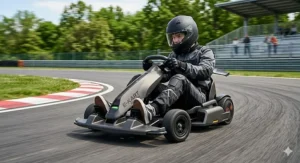
If you’ve ever watched a teenager’s face when they discover a go kart that does nearly 27 mph, connects to a gaming PC, and transforms into a self-balancing scooter — you’ll understand why the Segway Ninebot Gokart Pro 2 is in a completely different league from everything else on this list.
Key specs and what they actually mean: The dual hub motors produce 450W each (nominal) with a peak of 2400W combined — that’s not a typo. That peak power is why this kart can accelerate from a standstill to track speed in a way that genuinely surprises first-time riders. The 432Wh battery delivers a typical range of approximately 15.5 miles, and critically, the charge time is around 4 hours — not the brutal 8-12 hour wait you get with older lead-acid systems. The frame adjusts to fit riders from 4’3″ to 6’2″ and supports up to 220 lbs, which means this kart actually fits a full-grown older teen, not just a 12-year-old.
Four riding modes — Eco (around 5 mph), Sport (about 11 mph), Race (26.7 mph), and Manual with paddle-shifter gear control — mean a nervous 14-year-old and a 17-year-old who grew up karting can both use this without anyone crying or visiting the ER.
Expert take: What most buyers overlook about this kart is the gaming integration. The GoKart Pro 2 connects wirelessly to PCs (compatible with most racing games) and uses 360° haptic feedback — it vibrates through real-world turns and collisions based on your in-game movement. That’s an absolutely wild feature at this price point and one that keeps it relevant even on rainy days. The three-layer front protection system (steel frame, high-polymer shock absorber, TPE outer lip) is also not marketing fluff — it’s a genuinely thoughtful engineering detail for an outdoor vehicle being piloted by a teenager.
The kart is UL-2272 safety certified by TÜV Rheinland, which is worth mentioning to parents who are nervous about speed.
Customer feedback summary: Buyers consistently praise the build quality and drift performance, with the adjustable frame being a standout feature. A few note that setup takes time and the Ninebot app learning curve is real — plan for a 45-minute onboarding session before the first ride.
✅ Blisteringly fast at 26.7 mph with Race Mode
✅ 3-in-1: go kart, self-balancing scooter, gaming controller
✅ Adjustable for riders 4’3″–6’2″ — genuinely fits older teens
❌ Premium price — this sits at the high end of the budget scale
❌ Requires some assembly and an app learning curve
Price range & value verdict: In the mid-to-upper $1,000 range (check current pricing on Amazon). Premium, no question — but this is the only teen ride-on on this list that will still feel exciting at age 18.
2. Razor MX650 Dirt Rocket — Best Electric Dirt Bike for Teens
The Razor MX650 Dirt Rocket is what you get when a brand that genuinely understands teenagers decides to build an electric dirt bike rather than a toy. For any teen who has ever watched motocross videos and felt something stir, this is the ride.
Key specs and real-world meaning: The 650W chain-driven motor runs on a 36V three-battery system and tops out at 17 mph — enough to feel genuinely fast on a dirt trail or backyard circuit, not fast enough to require a medical professional on standby. The front 16-inch and rear 14-inch pneumatic knobby tires are the same type you’d see on an entry-level real dirt bike: they bite into soft dirt, grass, and gravel in a way that solid tires simply cannot replicate. Dual front and rear suspension isn’t a luxury here — it’s what separates a 30-minute ride from a back-bruising three minutes.
Battery life is up to 40 minutes of continuous use, which sounds limiting until you factor in that most first-time trail riders are taking breaks every 10-15 minutes anyway. The 36V system charges in about 8 hours, so a nighttime charge = a full afternoon of riding.
Maximum rider weight is 220 lbs, and it’s recommended for ages 16 and up — this is a bike sized for an actual teenager, not a scaled-down toy with teen branding.
Expert take: The Razor MX650 is the best argument against the “just get them a regular bike” position. This is a real riding experience. The twist-grip throttle and hand-operated dual disc brakes teach genuine control skills that translate to real motorcycles later in life. What’s especially smart about the design is the steel frame with authentic dirt bike geometry — it doesn’t just look like a dirt bike, it handles like a scaled-down version of one. The shatterproof fairings are a realistic concession to teenage crashes without the bike looking cheap.
One honest caveat: the 8-hour charge time is genuinely inconvenient compared to newer lithium systems, and the stock battery is lead-acid rather than lithium — heavier and slower to charge, but more affordable to replace if needed.
Customer feedback summary: Teens and parents alike rave about the authentic feel. The most common note from buyers: “My kid won’t stop riding it.” The dual disc brake upgrade over cheaper models is consistently praised for safety and stopping confidence.
✅ 650W motor handles inclines and rough terrain with authority
✅ Dual suspension + pneumatic tires = comfortable off-road ride
✅ Authentic dirt bike geometry teaches real riding skills
❌ 8-hour charge time is long (lead-acid battery)
❌ For ages 16+ only — younger teens should consider the MX400 instead
Price range & value verdict: In the $350–$500 range depending on availability. For what it delivers — genuine off-road performance with a trusted brand warranty — this is exceptional value.
3. Razor Crazy Cart XL — The King of Drifting for Older Teens
There’s a certain kind of teenager for whom going fast in a straight line isn’t enough. They need to drift. They need to spin. They need to be doing something sideways. The Razor Crazy Cart XL was built in a lab specifically for that teenager — or at least it feels that way.
Key specs with meaning: The 500W high-torque motor is mounted to a 36V system (three 12V batteries) and pushes this full-size drift kart to a maximum of 14 mph. That might sound modest, but context matters here: at 14 mph in a drifting cart with a patented rear-caster drift bar that lets you throw full 180-degree spins and fishy-tail slides, it feels significantly faster than it sounds. Maximum rider weight is a generous 240 lbs — this is genuinely sized for adults and older teens, not stripped-down toy territory.
The powder-coated steel frame is durable enough to handle the inevitable parking lot abuse. High-durability coreless urethane rear wheels are specifically designed for maximum slip: they’re how the drifting works. The pneumatic front tire is the grip point; the urethane rear wheels are the slide point. Understanding that dynamic helps explain why this feels so uniquely fun.
Run time is up to 40 minutes per charge. The 36V system charges in around 12 hours — again, lead-acid, plan accordingly.
Expert take: The Crazy Cart XL is the only product on this list that was designed specifically for teens and adults rather than younger kids who grew up. It’s physically larger than the regular Crazy Cart, with a raised bucket-style seat, lap and shoulder strap, and no remote control option — this is an independent ride for older riders. What most buyers don’t realize until they have it: this kart is most fun on smooth concrete or flat pavement, not grass or gravel. If your teen’s primary outdoor space is a driveway or smooth parking lot, this is an absolute highlight-reel machine. If it’s rough terrain, the MX650 is a better fit.
Customer feedback summary: Owners consistently describe it as “addictive” — the drift mechanics are genuinely different from every other kart and attract neighborhood-wide attention. A recurring note is to wear proper safety gear; the drift mechanics are so precise that even good riders occasionally over-rotate.
✅ Full-size drift kart built for teens and adults up to 240 lbs
✅ Patented drift bar system for precise drifting control
✅ Radar-level cool factor — this one draws a crowd
❌ Best on smooth pavement; not suited for rough terrain
❌ Long charge time (~12 hours)
Price range & value verdict: In the $600–$700 range. Not cheap, but this is one of those products that gets used constantly once it arrives — the ROI is strong.
4. Razor Ground Force Drifter Fury — Best Budget Teen Ride-On Go Kart
Not every family is ready to spend $600 on a drift kart. The Razor Ground Force Drifter Fury is the answer to that problem — a genuinely capable electric go kart with real drifting mechanics, priced where actual humans can afford it.
Key specs and their practical implications: A chain-driven motor runs through a 24V system and hits up to 12 mph — respectable for a vehicle in this category. The standout feature is the Super Slider POM (polyoxymethylene) rear wheels, the same material concept that makes the Crazy Cart driftable. These low-friction rear wheels allow riders to intentionally oversteer through corners, throw fishtails, and practice basic drifting techniques — skills that feel sophisticated for a ride-on at this price. Maximum rider weight is 140 lbs, which makes this best suited for younger teens in the 10–14 range rather than full-size 16-year-olds. Run time is up to 40 minutes.
The Spark Bar variant (the “Fury” edition) adds metal spark-throwing hardware at the rear — it creates sparks during sharp turns. It does nothing functional. Teens love it anyway.
Expert take: The Ground Force Drifter Fury is the product to choose when you want to give a younger teen a taste of real drift-kart mechanics without committing $600+. What the spec sheet doesn’t tell you: the 24V system means charge time is around 12 hours, and the battery is sealed lead-acid, so you’ll want to maintain a regular charging schedule to preserve battery health. The 140-lb weight limit is the real restrictor here — this isn’t a kart for a full-grown 15-year-old, and trying to push it with a heavier rider will noticeably reduce performance and accelerate battery wear.
It’s also worth noting that this kart is purpose-built for flat surfaces — driveways, cul-de-sacs, and empty parking lots. Don’t expect it to handle grass or inclines the way the MX650 handles rough terrain.
Customer feedback summary: Parents of 10–13-year-olds are enthusiastically positive. Common themes: great build quality for the price, the drift mechanics genuinely work, and kids come back to it day after day. The Spark Bar is polarizing — some families love the visual, others find it unnecessary.
✅ Real drifting capability via Super Slider POM rear wheels
✅ Solid entry-level build quality from a trusted brand
✅ Great value for younger teens in the 10–14 range
❌ 140-lb weight limit excludes most full-size older teens
❌ Lead-acid battery with ~12-hour charge time
Price range & value verdict: In the $150–$300 range depending on sales. Excellent entry point into teen ride-on toys for families not ready to invest in premium.
5. Hover-1 Alpha 2.0 Electric Scooter — Best Budget Teen Scooter
Electric scooters are the most practical category of teen ride-ons — they’re commutable, storable, and genuinely useful beyond just being fun. The Hover-1 Alpha 2.0 is the best-selling affordable option that doesn’t embarrass itself with performance.
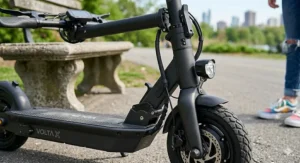
Key specs and what they mean: A 450W brushless motor (with peak output above listed nominal) powers the Alpha 2.0 to 18 mph — genuinely fast for a budget scooter and meaningfully faster than the 10–12 mph models crowding this price range. The Samsung lithium-ion battery provides a range of approximately 12 miles per charge, which is solid for school commutes and neighborhood rides. Air-filled 10-inch tires are a step above the solid tires common on cheaper scooters; they absorb road vibration instead of transmitting every sidewalk crack directly into the rider’s knees. Maximum rider weight is 264 lbs. The scooter folds for storage and transport.
Expert take: The Hover-1 Alpha 2.0 occupies an interesting spot in the market — it’s the fastest scooter you can buy in budget territory, and that top speed is genuinely its main selling point. What most buyers don’t factor in: the Alpha 2.0 is kick-start only (you must kick-push it before the motor engages), and hill climbing performance is average. At a 10% grade, a 165-lb rider will find the scooter struggles. If your teen’s daily route includes significant hills, the Hiboy S2 SE’s extra torque matters more than the Alpha 2.0’s slightly lower price. For flat suburban riding and light commuting, though, this is a strong buy.
The built-in Bluetooth speaker and LED accent lights are pure teen-appeal additions that actually get used — unlike similar features on some scooters that nobody ever connects.
Customer feedback summary: High ratings for speed and the Bluetooth feature. The most common complaint is range falling short of the advertised 12 miles in real-world use with heavier riders (150+ lbs). At 180 lbs you’re realistically looking at 8–9 miles per charge.
✅ 18 mph top speed punches well above budget class
✅ Samsung lithium battery — higher quality than budget alternatives
✅ Bluetooth speaker + LED lights built for actual teen use
❌ Kick-start only — no zero-start capability
❌ Limited hill climbing at higher rider weights
Price range & value verdict: In the $200–$280 range. Best value for a teen who primarily rides on flat terrain.
6. Hiboy S2 SE Electric Scooter — Best All-Around Teen Scooter
The Hiboy S2 SE is the scooter that consistently outperforms its price tag, and in independent testing by outlets like Tom’s Guide and Electric Scooter Guide, it routinely tops “best budget pick” lists. That’s not an accident.
Key specs and their practical importance: The 350W motor hits 19 mph — edging out the Hover-1 Alpha 2.0 — and the rated range of 17 miles is legitimately achievable for lighter riders (under 155 lbs) in ideal conditions. Heavier teens in the 160–180 lb range should realistically expect 12–14 miles, which is still strong for the category. The 15% slope climbing ability means actual hills — not gentle ramps — are manageable, which is the key functional advantage over the Alpha 2.0. Solid 8.5-inch tires mean no flat tire risk, at the tradeoff of a slightly stiffer ride compared to pneumatic alternatives. Dual braking (ABS e-brake + rear pedal brake) and a UL-2272 certification make the safety profile excellent.
Expert take: The spec sheet wins here. 19 mph, 17-mile range, and actual hill capability in one scooter under $300 is a genuine achievement. What I’d tell any parent comparing the S2 SE to the Alpha 2.0: if your teen will be riding this to school regularly, the Hiboy’s consistent real-world range and hill performance will matter more than the Alpha 2.0’s Bluetooth speaker. The tradeoff with solid tires is real — roads with significant cracking or rough pavement will feel noticeably bumpier than pneumatic setups — but for clean suburban roads and bike paths, this is a non-issue.
The S2 SE also charges in about 3.5–4.5 hours — significantly faster than the lead-acid systems on the go karts above, and faster than many competing scooters.
Customer feedback summary: Parents of teen commuters are the happiest buyers — the combination of 19 mph and reliable range fits the school-commute use case perfectly. Multiple reviewers specifically mention how easy it is for teens to assemble and how smooth and quiet the ride is.
✅ 19 mph top speed — best in this price range
✅ 15% hill climbing — handles real terrain
✅ Fast 3.5–4.5 hour charge time
❌ Solid tires = slightly rougher ride on damaged pavement
❌ Heavier riders (180+ lbs) will see significant range reduction
Price range & value verdict: In the $250–$320 range. The best all-around teen scooter under $350 available right now.
7. KIDROCK Modular Electric Ride-On Kit — Best STEM Ride-On for Creative Teens
Most teen ride-ons are finished products. You unbox, charge, ride. The KIDROCK Modular Electric Ride-On Kit does something entirely different: it asks your teen to build what they want to ride, then rebuild it into something else next month.
Key specs and their significance: An 18V 800W brushless motor powers this modular system through a lithium-ion battery rated for over 1,000 charging cycles and a 2–3 hour charge time — dramatically better than the lead-acid systems elsewhere on this list. The system supports 15 distinct configurations including go kart, e-bike, scooter, tricycle, and more, all built from the same core components. The brushless motor itself is a significant specification — it runs quieter, more efficiently, and with significantly lower maintenance requirements than brushed alternatives. Ages 5–18 are listed on the product, and while the lower end of that range represents gentle speeds, the 800W motor means this system genuinely grows with a teenage rider.
Expert take: The KIDROCK’s appeal depends entirely on your teenager’s personality. For the teen who loves taking things apart, building things, understanding how they work, and then modifying them — this is the best ride-on available at any price. For the teen who just wants to get out and go, it’s the wrong choice. What most buyers overlook is that the modular build process isn’t a one-time exercise — it’s meant to be done repeatedly as the teen’s interests shift. A 10-year-old who starts on the tricycle configuration can rebuild it as a go kart at 13 and an e-bike at 16. The battery’s 1,000+ cycle lifespan means this system outlasts most battery-dependent ride-ons by years.
The STEM angle here is genuine: assembling the drivetrain, understanding gear ratios, and configuring different frame geometries are real engineering concepts. This isn’t educational in the condescending “secretly vegetables” way — it’s genuinely engaging mechanical problem-solving.
Customer feedback summary: Reviewers with older, curious kids give this exceptional ratings. The consensus standout: the assembly itself is genuinely engaging for the right kid, and the brushless motor delivers impressive performance once the configuration is complete.
✅ 15 buildable configurations — adapts as teen grows
✅ 800W brushless motor: powerful, quiet, low maintenance
✅ Lithium battery with 1,000+ cycle life — built to last
❌ Build process requires patience and some mechanical interest
❌ Not for the teen who just wants to ride immediately
Price range & value verdict: In the $250–$400 range depending on configuration. Outstanding long-term value for the right personality — essentially multiple ride-ons in one system.
How to Choose the Right Ride On Toy for Your Teen: A Practical Guide 🔧
Walk into this decision blind and you’re likely to spend $300 on something that lives in the garage after three weeks. Here’s how to actually get it right.
Step 1: Match Weight to Specs — Seriously
This is the most consistently overlooked detail in teen ride-on purchases. Every product on this list has a maximum rider weight, and violating it doesn’t just void the warranty — it actively kills performance, strains the motor, and dramatically shortens battery life. The Razor Ground Force Drifter Fury’s 140-lb limit means a 130-lb rider gets full performance; a 150-lb rider is already degrading the system. If your teen is over 175 lbs, your shortlist is the Segway GoKart Pro 2, the Crazy Cart XL, the MX650, or the Hiboy S2 SE.
Step 2: Know Your Terrain
Smooth driveway → go kart or scooter. Grass, dirt, mild hills → MX650 or similar off-road bike. Rough suburban roads → pneumatic tires (Alpha 2.0) beat solid tires (Hiboy S2 SE) for comfort. Steep hills → prioritize motor wattage and specifically look for products that cite slope climbing percentages.
Step 3: Battery Chemistry Matters More Than You Think
Lead-acid batteries (common in go karts and older ride-ons) are heavier, slower to charge (8–12 hours), but cheaper to replace. Lithium batteries (scooters, KIDROCK) charge in 3–5 hours, are significantly lighter, and maintain consistent performance across the charge cycle. If charging overnight is the plan, lead-acid is fine. If your teen wants to recharge at lunch and ride again in the afternoon, only lithium works.
Step 4: Safety Certifications Are Not Optional
Look for UL-2272 certification on any self-balancing or scooter-type device — this is the key U.S. electrical safety standard for personal e-mobility devices. TÜV Rheinland certification (like on the Segway GoKart Pro 2) means independent third-party safety testing. The U.S. Consumer Product Safety Commission maintains guidelines on ride-on toy safety that are worth reviewing before purchase.
Step 5: Age Minimums Exist for Motor, Not Marketing
Razor’s 16+ recommendation on the MX650 isn’t liability-shield boilerplate — a 650W, 17-mph motorcycle requires actual two-wheel balance and throttle control judgment. A 13-year-old might be physically capable of riding it, but emotional judgment about speed and terrain is a different matter. Respect the age recommendations the same way you’d respect the weight limits.
Real-World Scenarios: Which Ride-On Fits Your Teen? 🎯
The Suburban Commuter
Profile: 14–16 years old, rides to school or a friend’s house, mostly flat terrain, parents want something practical.
Best pick: Hiboy S2 SE. The 19 mph speed, 17-mile range, and reliable hill-climbing make it actually functional for real trips. It folds, stores easily, and requires minimal maintenance. The Hover-1 Alpha 2.0 works too if the terrain is flatter and budget is tighter.
The Outdoor Adventurer
Profile: 15–17 years old, loves being outside, backyard has open space, dreams of motocross.
Best pick: Razor MX650 Dirt Rocket. Nothing else on this list replicates the authentic off-road riding experience. The dual suspension and pneumatic knobby tires deliver a legitimate trail experience, and the authentic dirt bike geometry means they’re learning real motorcycle skills.
The Drifting Obsessive
Profile: 16+ years old, watches drifting videos, has access to smooth flat pavement, wants to show off.
Best pick: Razor Crazy Cart XL. The 240-lb weight limit fits actual older teens; the patented drift system delivers exactly what they’re looking for. It’s the most technically distinct product on this list.
The Tech Kid
Profile: 12–17 years old, into building things, curious about how mechanical systems work, gets bored with static toys.
Best pick: KIDROCK Modular Kit. For this personality type specifically, the ability to rebuild the system into 15 configurations is more compelling than any single ride. This one grows with them.
The “I Want Everything” Teen
Profile: 14–18 years old, serious about speed, wants something that isn’t outgrown after one summer.
Best pick: Segway Ninebot Gokart Pro 2. The multi-mode system, gaming integration, and 26.7 mph ceiling combine into the most future-proof product on the list. It’s the premium choice, but it’s the one that’s still exciting at 18.
Ride On Toys for Teens vs. Other Youth Vehicles: Honest Comparison ⚖️
| Feature | Electric Ride-Ons (This List) | Gas-Powered Go Karts | Traditional Bikes |
|---|---|---|---|
| Maintenance | Low — no fuel, minimal moving parts | High — engine, fuel, exhaust service | Moderate — chains, brakes |
| Operating Cost | Very low (electricity) | Moderate (fuel + oil) | Very low |
| Noise | Quiet–moderate | Loud (neighborhood issues) | Silent |
| Regulation | Mostly unregulated for private property | Often requires licensing for road use | Generally unregulated |
| Performance ceiling | 14–27 mph (this list) | 40+ mph | Rider-limited |
| Best For | Fun + commuting + safety-conscious families | Serious racing families | Fitness + independence |
The comparison above reveals something important: electric ride-ons win on almost every practical metric for suburban families. They’re quieter than gas karts — which matters when your teenager wants to ride on weekends without the entire neighborhood involved — and they’re significantly cheaper to operate. The tradeoff is top speed; if your family is into competitive karting with performance above 30 mph, gas-powered vehicles become relevant. For the vast majority of teens, however, the electric options here deliver more than enough speed with a fraction of the operating hassle.
According to research from the National Safety Council, outdoor play and active recreation significantly contribute to physical and cognitive development in teenagers — a real case for investing in quality ride-on toys rather than more screen time.
Common Mistakes When Buying Ride On Toys for Teens 🚫
Mistake 1: Choosing by Speed Alone The Crazy Cart XL’s 14 mph sounds slow next to the GoKart Pro 2’s 26.7 mph — but context is everything. The Crazy Cart’s drift mechanics create an experience that’s genuinely more engaging for most teens than a faster kart that just goes in straight lines faster. Speed is one dimension. Fun is multidimensional.
Mistake 2: Ignoring Battery Chemistry Buying a $250 go kart for a teen who wants to ride after school and again in the evening is a recipe for frustration when they discover the 12-hour charge time. Match the battery chemistry to the intended use pattern.
Mistake 3: Buying the Cheapest Option From an Unknown Brand The off-brand 24V go kart listings on Amazon for $120 are — without exception — compromises on battery quality, motor longevity, and frame integrity that reveal themselves within weeks. Every product on this list comes from brands with established warranty support and replacement part availability. That matters when a battery cell fails 8 months in.
Mistake 4: Underestimating the Importance of Safety Gear No ride-on toy at any price replaces a helmet. The American Academy of Pediatrics recommends helmets for any vehicle reaching speeds above walking pace for young riders — a standard that every product on this list exceeds. (Source: AAP on Helmet Safety.) Budget $30–$50 for a proper helmet as part of the total cost.
Mistake 5: Buying for the Rider’s Age Instead of Their Weight A 14-year-old who weighs 145 lbs has very different options than a 14-year-old who weighs 110 lbs. Always check the weight limit first — it overrides the age recommendation in terms of practical performance.
Long-Term Cost and Maintenance: What Nobody Tells You 💰
Battery Replacement Reality
The biggest hidden cost in teen ride-on ownership is battery replacement. Lead-acid batteries (used in most go karts on this list) typically last 150–300 charge cycles before capacity degrades noticeably — at one ride per day, that’s roughly 6–12 months of heavy use. Replacement batteries run $30–$80 depending on the system. Lithium batteries in scooters and the KIDROCK system last 500–1,000+ cycles — 2–4 years of daily use before meaningful degradation.
Factor in $50–$100 in battery replacement costs over 2 years for lead-acid systems, or roughly $20–$40 for lithium-based systems over the same period.
Tire Maintenance
The POM (drift) wheels on the Crazy Cart and Ground Force Drifter are the highest-wear components on those karts — they’re intentionally designed to slide, which means they wear faster than pneumatic alternatives. Replacement urethane wheels run $20–$40. Pneumatic tires on the MX650 are standard bicycle/motorcycle style and patches or tube replacements are a few dollars from any bike shop.
Keeping It Running Longer: Three Practical Tips
- Never store a lead-acid battery fully discharged. Always charge after each use, even if the session was short. Sulfation from deep discharge is the number one killer of lead-acid batteries.
- Keep electric scooters dry. Most are rated IPX4 (splash resistant, not waterproof) — don’t ride through puddles or leave them out in rain.
- Check the drive chain on chain-driven karts every 30 rides. A drop of bicycle chain lubricant and a tension check takes two minutes and extends motor and sprocket life significantly.
Features That Actually Matter (And Those That Don’t) 🎯
Actually Matters:
⚡ Motor wattage and type — 650W brushless vs. 250W brushed is not a minor difference. It affects top speed, hill ability, heat management, and longevity.
⚡ Battery chemistry — Lithium vs. lead-acid determines your charge time, weight, and long-term replacement costs.
⚡ Weight limit vs. actual rider weight — Operating near the maximum limit degrades every performance metric.
⚡ Frame material and certification — UL-2272 and TÜV Rheinland certifications reflect real safety engineering, not just marketing.
Sounds Important, Isn’t Really:
🙄 Exact top speed claims — Manufacturers test under ideal conditions (smooth flat surface, minimum rider weight, full battery). Real-world speeds are typically 10–15% lower in normal conditions.
🙄 Claimed range on scooters — Always measured at minimum rider weight and optimal speed. Divide claimed range by 1.3–1.5 for a realistic estimate at average teen rider weight.
🙄 Number of LED lights — Aesthetic preference only. Does not affect safety meaningfully.
🙄 Bluetooth speakers on go karts — Nice if it works; irrelevant to the core experience.
According to research on outdoor play and motor skill development published by the American Academy of Pediatrics, active outdoor recreational equipment that challenges coordination and judgment — exactly what quality teen ride-ons provide — contributes meaningfully to physical and cognitive development in adolescents.
✨ Don’t Miss These Exclusive Deals!
🔍 Ready to pick your teen’s next ride-on adventure? Click on any highlighted product above to check current pricing and availability on Amazon. With the right battery powered ride on toy for teens, you’re not just buying a toy — you’re buying a whole summer of memories!

FAQ: Ride On Toys for Teens ❓
❓ What age is appropriate for ride on toys for teens?
❓ How fast do battery powered ride on toys for teens go?
❓ Are teen ride-ons safe for outdoor use?
❓ How long do batteries last on electric ride on toys for teens?
❓ What is the best teenage vehicle for a teen interested in commuting?
Conclusion: Finding the Perfect Ride On Toy for Your Teen 🏁
Choosing the right ride on toy for teens comes down to four things: the rider’s actual weight, the terrain they’ll use it on, how they like to spend their time outdoors, and the battery reality of daily use. Get those four right and you’ll find a match on this list that will legitimately transform how your teenager spends their free time.
For most families, the Hiboy S2 SE or Hover-1 Alpha 2.0 cover the commuting-and-fun use case beautifully at under $300. If your teen is the drifting-obsessed type and weight allows, the Razor Crazy Cart XL is one of the most uniquely fun experiences in any category. For serious outdoor riders, the MX650 Dirt Rocket is the authentic off-road choice that doesn’t compromise. And if budget isn’t the primary concern and you want the ride-on your teenager will still love at 18, the Segway Ninebot Gokart Pro 2 is, quite simply, the best teen ride-on available right now.
Whatever you choose, add a helmet and safety gear to the order. The rides on this list are fast enough to make safety equipment genuinely necessary — which, honestly, is part of what makes them so exciting.
✨ Don’t Miss These Exclusive Deals!
🔍 Take the next step! Click on any of the teen ride-ons above to check current pricing and availability on Amazon. Whether you’re looking for battery powered ride on toys for teens or a high-performance teenage vehicle that grows with them, these picks deliver the real deal!
Recommended for You 📚
- 7 Best Ride On Toys for Older Kids in 2026
- 7 Best Ride On Toys for Big Kids: Ultimate 2026
- 7 Best Ride On Toys for 12 Year Olds – 2026
Disclaimer: This article contains affiliate links. As an Amazon Associate, I earn from qualifying purchases. If you purchase products through these links, we may earn a small commission at no additional cost to you.
✨ Found this helpful? Share it with your friends! 💬🤗
