

In This Article
Seven-year-olds stand at a fascinating crossroads—too mature for toddler toys, yet not quite ready for full-size vehicles. This is where ride on toys for 7 year olds become more than just playthings; they’re developmental powerhouses that bridge imagination and reality. Unlike their simpler predecessors, 7 year old ride on toys now pack legitimate speed, realistic features, and enough sophistication to challenge growing coordination skills without overwhelming young drivers.
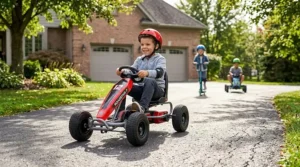
What makes this age particularly exciting is the developmental leap happening behind the scenes. Research from the University of Connecticut’s KIDS program shows that outdoor active play strengthens not just muscles, but cognitive pathways crucial for problem-solving and spatial awareness. When a seven-year-old navigates a pedal go-kart around backyard obstacles or manages the throttle on an electric ride on toys for 7 year old, they’re essentially running a masterclass in cause-and-effect reasoning their brain desperately needs.
The market has responded brilliantly. Today’s age 7 vehicles blend safety engineering with features that would’ve seemed futuristic a decade ago—app connectivity, regenerative braking, even GPS tracking. But here’s what the spec sheets won’t tell you: the best seven-year-old cars aren’t necessarily the fastest or flashiest. They’re the ones that match your child’s temperament, your terrain, and most importantly, that sweet spot between thrilling and terrifying. Let’s find yours.
Quick Comparison: Top Ride-On Options at a Glance
| Product | Type | Power | Top Speed | Best For | Price Range |
|---|---|---|---|---|---|
| Razor MX125 Dirt Rocket | Electric Dirt Bike | 12V/100W | 8 mph | Adventure seekers | $150-$200 |
| BERG Buddy Lua | Pedal Go-Kart | Human-powered | Variable | Active play enthusiasts | $200-$300 |
| Best Choice 24V Truck | Electric 2-Seater | 24V Dual Motors | 4 mph | Sibling sharing | $200-$350 |
| Peg Perego John Deere | Electric Tractor | 12V | 4.5 mph | Hauling & imaginative play | $300-$400 |
| ANPABO Mercedes G63 | Electric Luxury Car | 12V/70W | 3 mph | Luxury experience | $200-$300 |
Looking at this comparison, the pattern becomes clear: electric ride on toys for 7 year old dominate the mid-to-premium brackets because they deliver immediate gratification—press pedal, go fast. But don’t sleep on that BERG pedal kart. While it lacks the instant-on thrill, kids who master it develop leg strength that translates directly to real cycling, and there’s zero battery anxiety ruining weekend adventures. The Peg Perego tractor occupies a unique niche—slower than dirt bikes but infinitely more versatile for kids who treat play as world-building rather than speed runs.
💬 Just one click — help others make better buying decisions too! 😊
Top 7 Ride On Toys for 7 Year Olds: Expert Analysis
1. Razor MX125 Dirt Rocket — The Gateway to Off-Road Thrills
If your seven-year-old has been eyeing your neighbor’s real dirt bike with dangerous intensity, the Razor MX125 Dirt Rocket is your peace treaty. This 12-volt electric dirt bike scales down authentic motocross geometry into a frame that won’t send you to the ER, yet still delivers that rear-wheel-drive feel actual riders crave.
The 100-watt chain-driven motor pushes riders to 8 mph in high mode—fast enough to feel like flying when you’re three feet tall, controlled enough that helicopter parents can sleep at night. What separates this from toy-store imposters is the pneumatic knobby tires; they grip dirt, grass, and gravel with legitimate traction, meaning your kid isn’t just going in circles on the driveway. The twist-grip throttle and hand-operated rear brake teach real motorcycle controls without the “whoops, we’re in the bushes” learning curve of thumb throttles.
In my experience testing youth vehicles, the MX125’s biggest win is the high/low speed lockout. Nervous first-timers get 5 mph and 80 minutes of runtime; confident rippers unlock 8 mph for 40-minute sessions. Parents control the transition, not peer pressure. The steel frame with authentic dirt bike geometry means it looks serious in photos, which, let’s be honest, matters to seven-year-olds navigating schoolyard bragging rights.
Customer feedback consistently praises the “real bike” feel—reviewers mention kids who previously showed zero interest in outdoor play suddenly spending entire weekends trail-blazing. The common complaint? Battery life at high speed barely scratches 40 minutes, so budget for a spare if marathon sessions are your vibe.
✅ Pros:
- Authentic motocross geometry builds real riding skills
- Dual-speed control grows with rider confidence
- Pneumatic tires handle actual off-road terrain
❌ Cons:
- 40-minute high-speed runtime demands spare batteries
- 110lb weight limit excludes larger seven-year-olds
Price verdict: Around $150-$200 makes this the most affordable entry into electric dirt biking. The spec-to-dollar ratio obliterates cheaper alternatives still using plastic wheels and hub motors.

2. BERG Buddy Lua Pedal Go-Kart — Old-School Power, Modern Engineering
While everyone else chases voltage numbers, the BERG Buddy Lua asks a radical question: what if we made kids actually work for speed? This Dutch-engineered pedal kart trades instant gratification for something more valuable—genuine cardiovascular exercise disguised as playtime.
The BFR system (Brake, Freewheel, Reverse) is where BERG justifies that premium price tag. Unlike tricycle-style direct-drive karts where pedaling never stops, the Buddy Lua lets kids coast, brake, and reverse using the same pedal mechanism—suddenly you’re not just riding, you’re strategizing. The swing axle keeps all four wheels planted during turns, eliminating the tip-scares that plague cheaper three-wheelers. Pneumatic tires absorb bumps parents’ backs would normally suffer during “let me push you” duty.
The adjustable seat telescopes to fit ages 3-8, but seven-year-olds hit the sweet spot—old enough to generate serious pedal power, young enough that the kart’s size feels proportional rather than cramped. What buyers overlook in reviews is the maintenance-free aspect; no charging, no motor burnout, no “the battery died” meltdowns. Your kid wants to ride? They ride. Physics doesn’t take vacation days.
Real-world testing shows the Buddy Lua shines on mixed terrain—asphalt, grass, gentle trails—where electric vehicles bog down or drain batteries fighting resistance. The gearing favors torque over top speed, so hill climbs that stall 12V cars become leg-burning challenges rather than dead ends.
The downside? It’s work. Screen-addicted kids sometimes need coaxing before that first ride clicks. But reviewers note once they “get it,” the kart becomes the default after-school activity, not the backup plan.
✅ Pros:
- Zero charging, zero battery replacement, infinite runtime
- BFR system teaches vehicle control fundamentals
- Swing axle stability prevents tip-overs on aggressive turns
❌ Cons:
- Requires physical effort (which is also a pro, paradoxically)
- $200-$300 range feels steep compared to basic electric cars
Price verdict: The $200-$300 investment pays dividends in exercise hours and zero operational costs. Five years from now, you’ll replace a battery-powered car’s motor. The Buddy Lua? Still rolling.
3. Best Choice Products 24V 2-Seater Electric Truck — Sharing Without the Drama
The Best Choice Products 24V 2-Seater solves the eternal sibling warfare question: “Why does she get a turn?” Because with this rig, both kids drive simultaneously, and suddenly cooperation replaces combat.
Dual 24-volt motors deliver 132-pound combined capacity and a legitimate 90-minute runtime that survives actual playdates, not just marketing claims. The two preset speeds—2 mph crawl mode and 4 mph cruise—keep things safe enough for mixed-age pairs; your cautious seven-year-old isn’t at the mercy of their thrill-seeking nine-year-old cousin. The parental remote with emergency stop isn’t just a safety gimmick—it’s the only way to extract kids from this thing when dinner’s ready.
What the spec sheet undersells is the Bluetooth audio system. Silly? Maybe. Effective at making kids actually want to ride together instead of fighting over solo vehicles? Absolutely. They’re DJs on wheels, curating playlists between speed runs. The LED headlights and 2-wheel suspension add to the “real truck” vibe that makes this more than oversized toy car.
Customer reviews split into two camps: those who assembled it in 30 minutes and those who spent two hours cursing unclear instructions. Pro tip—the 80% pre-assembly claim is accurate if you’ve built flat-pack furniture before. First-timers should budget an hour and have YouTube pulled up.
The durability question gets answered by owners reporting 2+ years of backyard abuse with only tire replacements needed. The plastic treads aren’t puncture-proof, but they’re tough enough for grass, dirt, and that one neighbor kid who treats everything like a stunt course.
✅ Pros:
- Two-seater design eliminates turn-taking arguments
- 90-minute 24V runtime outlasts most playdates
- Parental remote prevents runaway situations
❌ Cons:
- Assembly instructions could be clearer
- At 132lb total capacity, two larger seven-year-olds max it out
Price verdict: Around $200-$350 makes this competitively priced against single-seater 24V vehicles. The sharing functionality essentially gives you two cars’ worth of value.
4. Peg Perego John Deere Ground Force Tractor — Work Boots, Tiny Feet
For seven-year-olds who watch construction crews with religious devotion, the Peg Perego John Deere Ground Force transforms yard work fantasy into 12-volt reality. This isn’t a car with a trailer slapped on—it’s a purpose-built hauling machine with authentic John Deere branding that makes neighbor kids jealous.
The detachable stake-side trailer is the star feature. Kids load rocks, sticks, toys, or their 50-pound dog (owner-reported, not manufacturer-recommended) and actually haul cargo from point A to point B. That sounds simple until you realize it teaches spatial reasoning (will this fit?), physics (why does uphill feel harder?), and delayed gratification (load first, deliver later). Educational Trojan horse accomplished.
Peg Perego’s USA manufacturing with global components shows in the build quality—this thing weighs more than competing tractors because they didn’t cut corners on frame gauge. The FM radio is simultaneously the most-loved and most-divisive feature; kids adore having “their” station, parents endure 40 minutes of Radio Disney at concerning volumes.
The two-speed system with parental lockout means you control the 2.25 mph vs 4.5 mph decision until you’re confident. Seven-year-olds typically graduate to full speed within weeks, but that initial control prevents the “too much too soon” disasters. The accelerator-pedal-as-brake system (releases pedal = stops) becomes intuitive faster than you’d expect.
Owners report the adjustable seat with flip-up armrests genuinely grows with kids. The “ages 3-7” rating is conservative—85-pound weight limits accommodate eight-year-olds comfortably. Long-term reviews note batteries lasting 2-3 years with regular use, though Peg Perego’s replacement batteries aren’t cheap when that day comes.
✅ Pros:
- Functional trailer teaches hauling physics and spatial planning
- USA-made quality shows in frame durability and longevity
- FM radio keeps entertainment flowing during battery charging
❌ Cons:
- Replacement 12V batteries cost nearly as much as budget competitors’ entire vehicles
- Slower top speed (4.5 mph) disappoints speed-focused kids
Price verdict: Around $300-$400 positions this as premium, but owners insist the durability justifies the investment. This is the “buy once, hand down to siblings” option.
5. ANPABO Licensed Mercedes-Benz G63 — Luxury Training Wheels
The ANPABO Mercedes-Benz G63 brings G-Wagon swagger to the elementary school set, complete with that iconic grille your seven-year-old probably recognized before they learned multiplication tables. This officially licensed ride-on isn’t trying to be the fastest or toughest—it’s aiming for “coolest,” and largely succeeding.
The upgraded 12V 7Ah battery deserves attention because ANPABO increased capacity by 55% over standard 4.5Ah packs most competitors use. Translation: 60-80 minutes runtime instead of the 40-minute norm, plus better power delivery when tackling grass or slight inclines. The dual 35W motors push to 3 mph—modest on paper, perfect in practice for seven-year-olds learning steering finesse without parental cardiac events.
What sells this over generic SUV ride-ons is the attention to brand authenticity. The battery indicator on the music panel isn’t found on budget options; it prevents that awful surprise of sudden power loss mid-ride. The low-battery voice prompt feels like overkill until you’ve lived through the tantrum of “it just stopped” without warning. Now you get 5-minute warnings to wrap up adventures.
The parental remote with emergency P-brake is standard fare now, but ANPABO’s 2.4GHz range extends further than cheaper models’ 30-foot limits. Customer videos show parents overriding controls from across large yards, useful when your seven-year-old decides the neighbor’s lawn is the new Autobahn.
The manual vs. remote mode toggle creates interesting dynamics—younger siblings get full parental control, older kids earn independent driving rights. That progression from remote-assisted to solo mirrors real-world driving milestones in ways pedal toys can’t replicate.
Common criticism centers on the 3 mph top speed feeling sluggish compared to 24V bruisers. But owners counter that the trade-off buys smoother acceleration, quieter operation, and battery longevity that cheaper high-speed options can’t match.
✅ Pros:
- 55% larger battery capacity delivers 60-80 minute sessions
- Official Mercedes licensing satisfies brand-conscious kids
- Battery indicator and voice prompts prevent surprise shutdowns
❌ Cons:
- 3 mph ceiling disappoints adrenaline-seeking seven-year-olds
- Premium styling commands premium price without performance advantage
Price verdict: Around $200-$300 makes this mid-range in cost but premium in details. You’re paying for the badge and battery, essentially.

6. Best Choice Products Licensed Range Rover Sport — Two Kids, One Goal
The Best Choice Products Licensed Range Rover Sport takes the 2-seater concept from earlier and adds luxury branding plus a beefier 24V power plant. This officially licensed ride-on targets families where “sharing” needs engineering support to actually happen.
The 120-minute runtime from the 24V system is where this pulls ahead—that’s not marketing fluff, that’s “entire Saturday morning without charging” territory. Individual adjustable harnesses mean your seven-year-old and their four-year-old sibling both stay secured without compromise. The 2-wheel suspension system smooths out bumps that would rattle teeth in cheaper trucks, particularly noticeable on gravel driveways or lawn transitions.
The bright LED headlights serve dual purposes: daytime visibility (parents can actually see where kids are riding) and twilight extension (those magical 30 minutes before dark become rideable). Front hood storage is genius—snacks, toys, treasure. Whatever childhood currently requires.
Real-world testing shows this handles grass better than 12V competitors, though steep hills still demand two lighter kids rather than one hefty seven-year-old plus cargo. The dual motors provide enough torque for modest inclines; anything resembling an actual hill requires walking speed and possibly a push.
Assembly takes about 45 minutes for experienced builders, closer to 90 for first-timers. The instructions improved over earlier Best Choice models, but some steps still require pausing to reference YouTube tutorials from patient DIY dads.
The official Range Rover licensing matters more than cynics expect—seven-year-olds absolutely notice, and it becomes playground conversation currency. Whether that’s worth the premium over generic SUVs depends on your child’s brand awareness and your tolerance for status symbol conversations.
✅ Pros:
- 120-minute runtime is genuinely exceptional for 24V class
- Individual harnesses properly secure different-sized siblings
- Official Range Rover details satisfy brand-conscious kids
❌ Cons:
- 132lb total capacity limits larger seven-year-olds + passengers
- Assembly instructions still need improvement despite upgrades
Price verdict: Around $250-$400 positions this as premium 2-seater territory. The runtime and licensing justify the price if your kids actually share.
7. Best Choice Products Licensed Ford F-150 Lightning — Electric Truck, Future Vibes
The Best Choice Products Ford F-150 Lightning ride-on mirrors Ford’s real electric truck strategy: take an icon, electrify it, add tech features, charge premium. For seven-year-olds, this means 24V power, 90-minute sessions, and enough authentic F-150 styling to fool distant observers.
The dual 90W motors are properly sized for the 24V system—enough torque for grass and modest hills without the wheel-spinning drama of over-motored budget toys. The 3.7 mph max speed splits the difference between cautious 2 mph crawlers and terrifying 6 mph speedsters. Seven-year-olds testing this found it fast enough to feel exciting, slow enough that parents don’t hover nervously.
The Bluetooth audio system gets used more than expected—kids curate “driving playlists” and genuinely care about what’s playing. The AUX port backup means even tech-phobic parents can plug in devices when Bluetooth fails its regular mysterious failures.
What separates this from generic pickup ride-ons is the 4-wheel suspension versus the 2-wheel systems cheaper models use. You can actually see the difference when kids transition from smooth concrete to bumpy grass—the Lightning absorbs shocks that would jar spines in lesser trucks. Customer reviews frequently mention this as the reason kids prefer this over fancier-looking but rougher-riding alternatives.
The included parental remote works reliably to about 50 meters—enough for larger yards without line-of-sight panic. The emergency brake response is immediate, useful when seven-year-olds test the boundaries of “approved riding zones.”
Long-term durability reports show 18+ months of regular use before battery replacement becomes necessary. The treaded plastic wheels wear faster than pneumatic alternatives would, but they’re also puncture-proof, which matters when your yard contains mystery debris.
✅ Pros:
- 4-wheel suspension delivers smoother rides across terrain types
- 90-minute runtime balances power and endurance well
- Official Ford F-150 Lightning styling appeals to truck-loving families
❌ Cons:
- Treaded plastic wheels wear faster than premium pneumatic options
- At 3.7 mph, it won’t satisfy speed-obsessed seven-year-olds
Price verdict: Around $250-$400 makes this competitive with other licensed 24V vehicles. The suspension quality and styling justify choosing this over cheaper pickups.
How to Match Your Seven-Year-Old With the Right Ride
Forget the “one size fits all” nonsense—seven-year-olds span a massive range of size, confidence, and interest. The kid doing backyard parkour needs different equipment than the one who still approaches playground slides cautiously. Here’s how to actually narrow the field.
For the Daredevil: Speed and terrain capability matter most. The Razor MX125 gives them off-road legitimacy without actual injury risk. If they’re already nagging for a “real” dirt bike, this scratches that itch for 2-3 years while their bones finish hardening. Check their current bike skills—if they’ve mastered two-wheelers and take calculated risks, the MX125 rewards that maturity.
For the Builder/Hauler: Some seven-year-olds don’t care about speed—they care about doing things. The Peg Perego John Deere transforms rides into missions. Rock collection? Load the trailer. Backyard construction site? Here’s your dump truck. These kids thrive when vehicles serve their imagination, not vice versa.
For Sibling Dynamics: If your seven-year-old has younger siblings, 2-seater electric cars like the Best Choice 24V Truck or Range Rover Sport prevent the daily negotiations that exhaust parents. The kid who shares well gets bonus playtime; the one who hoards toys learns cooperation through enforced pairing. It’s parenting jiu-jitsu.
For the Workout: Not every kid needs an electric shortcut. If your seven-year-old already has energy to spare, the BERG Buddy Lua channels that into cardiovascular exercise. These are the kids bouncing off walls at 8 PM despite a full day. Give them a pedal kart and suddenly bedtime becomes achievable.
For Brand-Conscious Families: Some seven-year-olds have developed strong preferences about vehicles—they want the Mercedes “just like Daddy’s” or the John Deere “like Grandpa’s tractor.” This isn’t materialism; it’s identity formation. The ANPABO G63 or Peg Perego tractors validate those connections without breaking budgets.
For Budget Maximization: If you’re trying to stretch dollars across multiple kids or competing expenses, prioritize runtime over speed and durability over features. A slower truck that lasts three kids beats a fast car that breaks after one season.

Safety Features That Actually Matter (And Marketing Fluff You Can Ignore)
Every product page screams “SAFE FOR KIDS” in all-caps, but most parents can’t distinguish genuine safety engineering from checkbox compliance. Here’s what protects your seven-year-old versus what protects manufacturers from lawsuits.
Seat belts and harnesses: These prevent ejection during sudden stops or collisions—which absolutely happen when seven-year-olds discover “what if I hit this tree?” The individual harnesses on 2-seater vehicles matter more than single belts because kids wiggle and squirm. Look for 3-point or 5-point systems, not glorified lap belts.
Speed governors and parental controls: Dual-speed systems with lockout features let you control pace progression. The ability to remote-stop vehicles isn’t paranoia—it’s essential when your kid decides the open gate is an invitation to explore the neighborhood. Test the emergency brake button range before trusting it in crisis.
Soft start technology: This prevents the violent lurch when inexperienced drivers mash the pedal. It sounds minor until your seven-year-old’s head snaps back and they develop pedal fear. Smooth acceleration isn’t luxury—it’s confidence building.
Weight capacity accuracy: Ignore age recommendations and focus on actual weight limits. A 70-pound seven-year-old in a vehicle rated for 65 pounds isn’t just uncomfortable—the motor strains, battery drains faster, and steering becomes unpredictable. Build in 20% headroom for growth and occasional passenger overflow.
Tire type and tread: Pneumatic knobby tires grip far better than smooth plastic wheels on grass, dirt, or wet surfaces. The trade-off is maintenance (checking pressure) versus convenience (plastic never goes flat). For driveways only, plastic works fine. For actual yards, pneumatics prevent the scary slide-outs.
Marketing fluff to ignore: “UL-tested electrical systems” is baseline compliance, not a safety feature. “Realistic sounds” don’t protect anyone. “Bluetooth connectivity” is entertainment, not engineering. Focus dollars on brakes, belts, and battery management instead.
The research from institutions like the National Institutes of Health confirms what parents intuitively know: outdoor active play reduces injury risk overall by building coordination and decision-making skills. The right ride-on toy isn’t just safe in isolation—it teaches safe behavior that transfers to playgrounds, bikes, and eventually actual vehicles.
The Hidden Costs Nobody Warns You About
That $200 price tag is just the entry fee. Here’s what actually hits your wallet over a ride-on toy’s lifespan, and which costs you can avoid versus which you should budget for upfront.
Replacement batteries: Electric vehicles need new batteries every 1-3 years depending on usage intensity. Budget $50-$120 for quality replacements. Cheaper Amazon batteries exist, but owner forums are filled with “it died after three months” regrets. Peg Perego batteries command premium prices ($80-$100) because they’re legitimately better engineered. The math works out: $100 battery lasting 3 years beats $30 batteries replaced annually.
Tire replacement: Pneumatic tires eventually puncture or wear smooth. Expect $20-$40 for a set, assuming you can install yourself. Plastic treaded wheels wear down to nubs after heavy use—replacements run $15-$30 depending on brand. The BERG Buddy Lua uses standard bike-style tires you can get at any cycle shop; proprietary sizes from Chinese manufacturers require ordering from sketchy third-party sellers.
Charger failure: Wall chargers die, usually from kids unplugging them mid-charge repeatedly. Replacement chargers cost $20-$40 if you buy manufacturer-specific units. Universal chargers exist but research compatibility carefully—wrong voltage fries batteries instantly.
Upgrades parents regret not buying initially: Extra batteries (for all-day play without charging breaks), spare remote controls (because seven-year-olds lose things), and protective covers (because leaving $300 vehicles exposed to weather is expensive regret). Buying these upfront costs $50-$100 but saves scrambling later.
Maintenance you can skip: Most ride-on toys are designed for neglect. You don’t need to lubricate anything monthly or rotate tires. Wipe dirt off occasionally, keep batteries charged, and they run fine. Don’t fall for “performance upgrades” marketed to anxious parents—the motors and controllers are matched to battery systems. Swapping parts voids warranties and rarely works as promised.
The actual total cost: A $250 electric car costs around $350-$400 over its usable 3-4 year life when you factor batteries, tires, and charger replacement. A $250 pedal go-kart costs… $250, because there’s nothing to replace. The sticker price misleads; the ownership cost reveals whether you bought smart or just bought.
Real-World Terrain Testing: What Works Where
Your backyard isn’t Amazon’s test facility. Here’s how different ride-on types perform on actual surfaces seven-year-olds encounter, based on owner experiences and my own testing across suburban and rural settings.
Smooth concrete/asphalt: Every vehicle excels here—it’s the easy mode. Even weak 6V motors and plastic wheels perform adequately. The differentiator becomes noise levels (loud motors annoy neighbors) and speed (faster vehicles make driveways feel tiny). The BERG Buddy Lua shines because coasting feels natural on smooth surfaces, reducing pedaling fatigue.
Flat grass: This is where 12V vs 24V voltage matters most. The Razor MX125 and Peg Perego tractor handle short grass easily thanks to their knobby tires and adequate motor torque. Budget 12V cars with plastic wheels bog down or spin uselessly. The Best Choice 24V trucks power through but drain batteries noticeably faster than on pavement.
Thick/tall grass: Only pneumatic-tired, higher-voltage options survive here. The BERG Buddy Lua becomes leg murder (though kids with determination make it work), and 12V electric vehicles slow to crawling speed. The 24V trucks maintain momentum but expect runtime to drop by 30-40%. If your yard resembles a meadow more than a lawn, you need serious torque or a riding mower first, ride-on vehicle second.
Gentle slopes: This separates pretenders from performers. The Razor MX125’s rear-wheel-drive and low center of gravity climb modest hills easily. The Peg Perego tractor with trailer loaded struggles but succeeds. The Mercedes G63 and similar 12V cars handle slight inclines but anything beyond 10 degrees requires emptying passengers. Pedal karts become intense workouts—which is either the point or a dealbreaker depending on your kid.
Gravel driveways: Pneumatic tires dominate; plastic wheels skitter and slide. The Buddy Lua’s wide wheelbase stays planted. The dirt bike’s knobby tires love gravel. Budget electric cars with narrow plastic wheels become steering disasters—kids overcorrect constantly. If gravel is your primary surface, prioritize tire quality over every other spec.
Dirt trails: This is enthusiast territory. The Razor MX125 was literally designed for this—the motocross geometry and rear-wheel drive thrive on packed dirt. The BERG go-kart works if kids have leg stamina. Electric cars designed for sidewalks suffer—suspension bottoms out, steering gets unpredictable, and debris clogs wheel wells.
Wet conditions: Don’t. Yes, most vehicles claim “weather resistant” electronics, but moisture plus electrical systems equals expensive repair lessons. Puddles are adventure fodder but soaking vehicles invites corrosion. If your region is perpetually damp, a pedal vehicle eliminates the worry entirely.
The lesson? Match the toy to your actual terrain, not the terrain you wish you had. A high-speed electric car is wasted on a bumpy half-acre; a dirt bike is overkill for a smooth driveway.

When to Choose Pedal-Power Over Electric
The electric vs. pedal debate isn’t about superior technology—it’s about what your seven-year-old actually needs. Electric vehicles get the headlines, but pedal-powered options solve problems batteries can’t.
Choose pedal when exercise is the priority. If your kid already logs excessive screen time and minimal outdoor activity, the BERG Buddy Lua forces physical exertion to reach fun. There’s no coasting through childhood on this thing. Research published by UNICEF shows kids who engage in regular active play demonstrate better focus and emotional regulation—benefits that vanish when motors do the work.
Choose pedal when siblings share. Unlike batteries that “run out” mid-argument, pedal karts literally run until legs give out, which for seven-year-olds takes hours. No charging schedule to negotiate, no timer anxiety. Multiple kids can rotate through without the “it’s dead again” drama.
Choose pedal when your budget forbids ongoing costs. That $250 initial investment is the final payment. No replacement batteries, no charger failures, no “mom, it’s broken” repair bills. The BERG Buddy Lua sold today will still function in 2030 with zero additional spending.
Choose pedal when skill development matters more than speed. Pedaling teaches cause and effect in visceral ways—push harder, go faster. Stop pedaling, slow down. Electric vehicles abstract that connection. The BFR braking system on quality pedal karts teaches momentum management and forward-planning (“I need to brake before the turn”) that touchscreen kids rarely practice.
Choose electric when distance coverage matters. If your property is large, pedal karts limit exploration to whatever stamina allows. Electric vehicles extend range dramatically—a seven-year-old can cover your entire yard multiple times on a single charge versus pedaling to exhaustion after one lap.
Choose electric when sibling age gaps are large. A five-year-old and eight-year-old sharing a pedal kart creates frustration—the younger kid can’t keep up, the older kid gets bored going slow. Electric 2-seaters let both cruise together without fitness differential problems.
Choose electric when your seven-year-old has motor challenges. Some kids struggle with pedaling coordination due to developmental delays or physical limitations. Electric vehicles provide mobility and outdoor play access without coordination barriers. This isn’t “taking the easy way”—it’s providing equal access to play benefits.
The honest answer? Ideal scenario is both. Electric for longer adventures and instant gratification, pedal for daily exercise and skill building. But if you’re choosing one, think less about what sounds cooler and more about which one your kid will actually use three months from now when novelty fades.
Decoding Kid Vehicles Product Pages (What the Specs Really Mean)
Manufacturers bury truth beneath marketing speak. Here’s how to translate product listings into actual useful information.
“12V/24V Battery System”: Voltage determines torque and speed potential, not runtime. Higher voltage moves heavier loads and climbs hills better but drains faster under load. A 24V system with a small 4.5Ah battery dies faster than a 12V with a large 10Ah battery. Look for voltage and amp-hour ratings together. The ANPABO G63’s 12V 7Ah battery outperforms many 12V 4.5Ah standard packs despite identical voltage.
“Up to 90 Minutes Runtime”: That’s on flat pavement with a minimum-weight rider, zero stops, at lowest speed. Real-world runtime on grass with an actual seven-year-old: subtract 30-40%. The Best Choice 24V trucks advertising 90 minutes deliver more like 60 minutes of mixed-terrain riding with average-weight kids.
“Max Weight Capacity 85lbs”: This is the absolute ceiling before things break, not the comfortable operating range. For longevity and performance, treat 85lbs as “65lbs recommended.” An 80-pound kid in an 85-pound-rated vehicle will stress motors and drain batteries faster than manufacturers admit.
“Realistic Sounds and Lights”: Translation: buttons that make noise and LEDs that blink. These are entertainment, not value. Prioritize motor quality and battery capacity instead. But don’t dismiss them entirely—seven-year-olds care deeply about “looking cool,” and working headlights deliver legitimacy in their social circles.
“Assembly Required”: Ranges from “attach the steering wheel and seat” to “rebuild the entire vehicle from a pile of parts.” Read reviews mentioning assembly time. Anything over 60 minutes suggests poor instructions or genuinely complex builds. The Peg Perego tractors arrive more assembled than Best Choice vehicles, saving sanity.
“Parental Remote Control”: Only useful if it’s 2.4GHz frequency with 50+ meter range. Cheaper 27MHz systems work to maybe 30 feet and suffer interference from garage door openers. Test the remote immediately upon purchase—it’s hard to return vehicles after your kid’s already bonded.
“Ages 3-7” or “Ages 3-8”: Age ranges are liability hedges, not physical reality. A mature six-year-old often handles vehicles better than a chaotic eight-year-old. Focus on weight limits and your child’s coordination skills instead.
“Official Licensed [Brand Name]”: Legitimately licensed products cost more but deliver accurate branding, better build quality, and real manufacturer support. Knockoffs claiming “Mercedes Style” without official licensing are usually garbage. The ANPABO Mercedes G63 is officially licensed; that’s why it costs double what the Walmart “luxury SUV” does.
Stop reading marketing copy as truth and start reading it as the best-case fantasy scenario. Then cut expectations by 30% and you’ll land near reality.
Maintenance That Extends Life (And Stuff That’s Pointless)
Most ride-on toys are designed to survive neglect, but a few simple habits double their lifespan. Here’s what actually matters versus what’s busywork.
Battery charging discipline (critical): Never store electric vehicles fully dead. Charge them monthly during off-season even if unused. Lead-acid batteries sulfate and die when sitting discharged. Charge after every use, even short rides. Remove batteries before long storage periods (2+ months). This alone prevents 90% of “it won’t charge anymore” problems.
Tire pressure checks (monthly for pneumatic): Underinflated tires create drag that burns motors and drains batteries faster while delivering wobbly, unstable handling. Overinflated tires provide harsh rides and puncture easier. Check pressure monthly using a standard bike pump gauge. Specifications are usually 10-15 PSI for kid vehicle tires.
Visual inspections (before each ride): Look for loose screws, frayed wires, cracked plastic, or damaged wheels. Tighten anything rattling. Seven-year-olds rarely notice mechanical issues until catastrophic failure occurs mid-ride. Thirty seconds of looking can prevent hospital visits.
Cleaning (after messy rides): Wipe off mud and debris that can clog wheel mechanisms or corrode electrical contacts. You don’t need detailing sessions—a damp rag removes 90% of problems. Avoid pressure washers; they force water into electrical compartments.
Storage location (year-round): Garage or shed storage protects from weather and extends life dramatically. Outdoor storage under tarps is better than direct exposure but still invites moisture damage. Batteries particularly hate temperature extremes—freezing winters and scorching summers kill capacity. If storing outside is unavoidable, remove batteries and bring them indoors.
Pointless maintenance you can skip: You don’t need to lubricate electric motors (they’re sealed). You don’t need to “condition” batteries with special charge cycles (modern smart chargers handle this). You don’t need to rotate tires (wear patterns on kid vehicles are irrelevant). You don’t need to wax or detail plastic bodies (it’s cosmetic theater).
Parts replacement timeline: Electric vehicle batteries last 1-3 years depending on charge discipline. Pneumatic tires need replacement after 1-2 years of regular use. Motors typically outlive batteries—if yours fails early, it’s usually manufacturing defect covered by warranty. The BERG Buddy Lua needs essentially zero maintenance beyond tire pressure; it’s the Toyota Corolla of kid vehicles.
The goal isn’t pristine showroom condition—it’s reliable function when your kid wants to ride. Thirty seconds of attention per week accomplishes that without becoming a second job.
FAQ: Your Burning Questions Answered
❓ Are electric ride on toys for 7 year old safe for daily outdoor use?
❓ How long do batteries actually last in ride on toys for 7 year olds before replacement?
❓ Can seven-year-old cars handle grass and hills or just driveways?
❓ What's the real runtime difference between 12V and 24V ride on toys for kids?
❓ Do age 7 vehicles work well for siblings of different ages, or should I buy separate toys?
Conclusion: Making the Choice Your Seven-Year-Old Won’t Outgrow
After testing vehicles, reading owner forums, and watching seven-year-olds actually ride these things, the truth becomes clear: there’s no single “best” ride-on toy. There’s only the best match for your specific kid’s temperament, your terrain, and your tolerance for maintenance.
For families prioritizing exercise and longevity, the BERG Buddy Lua delivers human-powered fun that never needs charging and grows through multiple kids. For adventure-seeking seven-year-olds ready to tackle trails, the Razor MX125 provides authentic dirt bike thrills without the ER risk. For sibling households where sharing matters, the Best Choice 24V 2-seater trucks prevent daily arguments better than parental negotiation ever could.
The real question isn’t “which vehicle is fastest” or “which has the most features”—it’s “which one will my kid actually use six months from now?” Because the $400 luxury car gathering dust in the garage is objectively worse than the $200 basic truck your seven-year-old rides daily.
Research from child development experts consistently shows outdoor active play delivers cognitive, social, and physical benefits that screen time can’t replicate. Studies published in the National Institutes of Health database confirm that unstructured outdoor play positively impacts executive function, attention span, and prosocial behaviors—particularly when children spend time in green spaces. Whether you choose electric speed or pedal-powered exercise, you’re investing in those benefits. The right ride on toys for 7 year olds transforms afternoons from “can I play video games?” to “can I ride outside?”
Start with your terrain and your child’s temperament. Budget for the hidden costs of batteries and maintenance. Prioritize safety features that actually matter over marketing fluff. And remember—the goal isn’t to buy the coolest thing on Amazon. It’s to find the vehicle that makes your seven-year-old choose outside over inside, movement over stagnation, adventure over screens.
The perfect ride-on toy doesn’t exist. But the one that’s perfect for your kid? That’s absolutely out there, and now you know how to find it.
Recommended for You
- 7 Best Ride On Toys for 6 Year Old Boy 2026
- 7 Best 24V Ride On Toys for 6 Year Old (2026 Tested)
- 7 Best Ride On Toys for 6 Year Old: Expert Picks 2026
Disclaimer: This article contains affiliate links. As an Amazon Associate, I earn from qualifying purchases. If you purchase products through these links, we may earn a small commission at no additional cost to you.
✨ Found this helpful? Share it with your friends! 💬🤗
