
In This Article
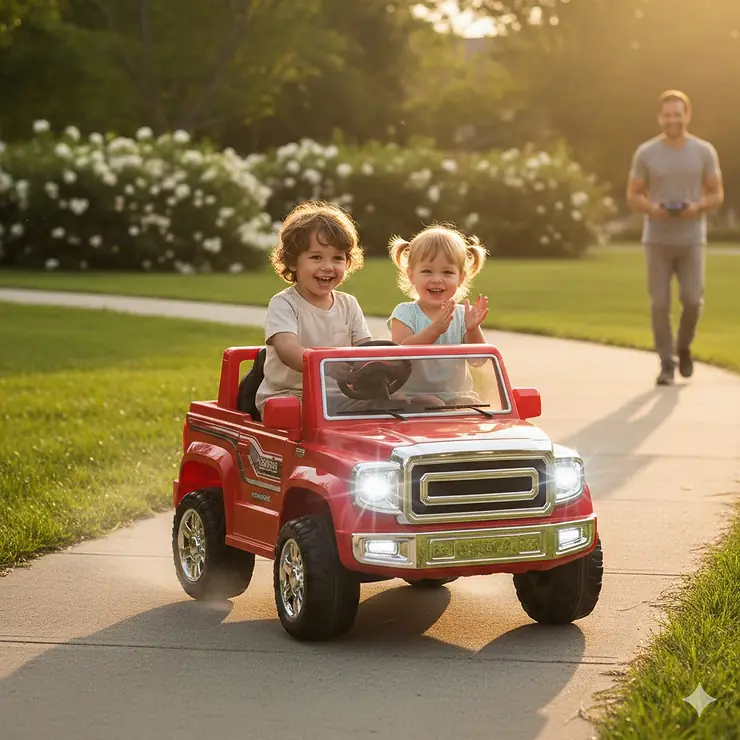
Remember that magical moment when your kid’s face lights up behind the wheel of their very first ride-on toy? Now imagine multiplying that joy by two. That’s exactly what happens with 12 volt ride on toys 2 seater – these aren’t just toys, they’re memory-making machines that bring siblings, cousins, and best friends together for shared adventures.
I’ve spent countless hours researching and testing these double seat kids electric vehicles, and I can tell you that 2026 has brought us some seriously impressive options. Whether you’re watching your twins cruise down the driveway or your little ones taking turns at the “driver’s seat,” these 2 seater ride on toys 12v create those priceless childhood moments that families treasure forever.
What makes these vehicles special? Unlike single-seater models, they encourage social interaction, teach sharing and cooperation, and let your children create their own little world of adventure together. According to research published by the National Center for Biotechnology Information, battery-powered ride-on toys serve as valuable developmental tools that enhance motor skills, spatial awareness, and social interaction in young children.
In this comprehensive guide, we’ll explore the seven best 12 volt 2 seater electric cars for kids available in 2026, covering everything from budget-friendly options to premium models packed with features. Let’s buckle up and dive in!
Quick Comparison Table
Here’s a snapshot of our top picks to help you make a quick decision:
| Product | Battery | Max Speed | Weight Capacity | Price Range | Best For |
|---|---|---|---|---|---|
| Best Choice Products Land Rover | 12V 7AH | 3.7 MPH | 130 lbs | $250-$300 | Licensed authentic design |
| ELEMARA XL Off-Road UTV | 12V 10AH | 4.0 MPH | 135 lbs | $300-$350 | Adventure seekers |
| Costway 2-Seater Truck | 12V 4.5AH | 3.5 MPH | 110 lbs | $200-$250 | Budget-conscious families |
| Aosom Police SUV | 12V 7AH | 3.1 MPH | 132 lbs | $280-$320 | Role-play enthusiasts |
| SEHOMY 2-Seater Truck | 12V 7AH | 3.0 MPH | 110 lbs | $220-$270 | Stylish design lovers |
| Best Choice Products 2-Seater Jeep | 12V | 3.7 MPH | 130 lbs | $260-$310 | Rugged outdoor play |
| Costzon 2-Seater UTV | 12V 10AH | 2.5 MPH | 130 lbs | $240-$290 | Safety-first parents |
💬 Just one click – help others make better buying decisions too!😊
Top 7 12 Volt Ride On Toys 2 Seater: Expert Analysis
1. Best Choice Products 12V Licensed Land Rover
When it comes to sibling ride on toys with two seats, the Best Choice Products Land Rover sits proudly at the top of our list. This officially licensed beauty isn’t just a toy – it’s a miniature luxury SUV that’ll make your driveway look like a premium parking lot.
Key Specifications:
- 12V 7AH rechargeable battery
- Dual-speed settings (1.8 MPH and 3.7 MPH)
- 2-wheel suspension system
- Overall dimensions: 51.25″L x 34″W x 26″H
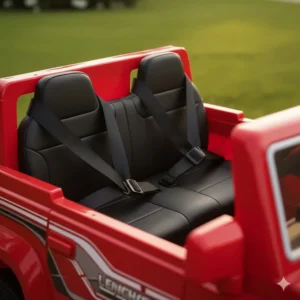
The build quality immediately catches your eye. Crafted from durable PP plastic with a reinforced metal frame, this vehicle can handle the enthusiastic play of two energetic kids without breaking a sweat. The spacious seating accommodates children comfortably, with both seats equipped with safety belts for secure rides.
What really sets this model apart is its realistic driving experience. Kids get working LED headlights, a functional horn, engine startup sounds, and an AUX input for their favorite tunes. The 2.4GHz remote control gives you full command when needed, with forward/reverse controls and speed selection right at your fingertips.
Parents consistently praise its robust construction and long battery life, with one reviewer noting their children enjoyed “nearly 2 hours of continuous play” on a single charge. The price typically ranges from $250-$300, making it a solid mid-range investment.
✅ Pros:
- Authentic Land Rover licensing and design
- Excellent build quality with metal frame
- Long battery life (up to 2 hours)
❌ Cons:
- Heavier than some competitors (assembly requires two people)
- Remote control has limited range (about 30 feet)
2. ELEMARA XL Off-Road UTV
For families who crave adventure, the ELEMARA XL Off-Road UTV is your ticket to backyard exploration. This beast of a 12v ride on toys 2 seater is designed for kids who refuse to let a little rough terrain slow them down.
Key Specifications:
- 12V 10AH high-capacity battery
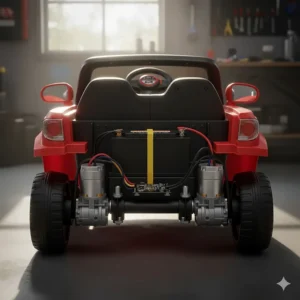
- Four 45W motors for serious power
- Adjustable speeds: 2.4, 2.8, and 4.0 MPH
- Extra-wide 20-inch seat
This model stands out with its impressive 10AH battery – that’s significantly larger than most competitors. What does this mean for you? Extended playtime of 1.5-2 hours and better performance on challenging surfaces like grass, gravel, and slight inclines.
The four-motor design provides genuine four-wheel drive capability, something you rarely see in this price range. Combined with rear spring suspension, your kids can tackle uneven terrain without the constant jarring that smaller wheels create. The seat width of 20 inches comfortably accommodates two children with room to spare.
Entertainment features include Bluetooth connectivity, built-in music, USB port, and vibrant LED headlights and taillights. One parent shared that “my kids love taking this through our backyard forest trail – it handles everything we throw at it.”
Priced between $300-$350, it sits at the higher end but delivers exceptional value for adventurous families.
✅ Pros:
- Superior battery capacity (10AH)
- True four-wheel drive with four motors
- Handles various terrains exceptionally well
❌ Cons:
- Slightly slower charging time (10-12 hours)
- Larger size requires more storage space
3. Costway 2-Seater Kids Ride-On Truck
Budget-conscious parents, rejoice! The Costway 2-Seater Truck proves you don’t need to break the bank for quality. This wallet-friendly option delivers solid performance and features at a price that’ll make your wallet smile.
Key Specifications:
- 12V 4.5AH battery
- Maximum speed: 3.5 MPH
- 110 lbs weight capacity
- Storage compartment in rear bed
Costway has mastered the art of creating value-packed products, and this truck exemplifies that philosophy. Despite its lower price point ($200-$250), you’re still getting essential features like a 2.4G remote control, LED lights, safety belts for both seats, and multiple entertainment options including USB, TF card slot, and AUX input.
The practical design includes a functional storage compartment perfect for toys, snacks, or treasure collected during backyard expeditions. The dual control system lets kids operate it independently or allows parents to take over via remote when needed.
Customer feedback highlights its “easy assembly” and “great value for the price.” Some parents note that while the battery capacity is smaller than premium models, it still provides a respectable 45-60 minutes of play time – plenty for most play sessions.
The only real trade-off at this price point is durability. While solidly built, the plastic isn’t quite as thick as higher-end models, so it may show wear faster with very aggressive use.
✅ Pros:
- Exceptional value for money
- Practical storage compartment
- Easy assembly process
❌ Cons:
- Shorter battery life than premium models
- Plastic components less robust
4. Aosom 53″ 2-Seater Police SUV
Does your little one dream of being a hero in uniform? The Aosom Police SUV transforms imagination into reality with its authentic police-themed design. This isn’t just another 12 volt 2 seater electric cars for kids – it’s a full role-playing experience on wheels.
Key Specifications:
- 12V 7AH battery
- Twin motor rear-wheel drive
- Speed range: 1.9-3.1 MPH
- Four 14.5″ traction wheels with spring suspension
The attention to detail in the police theme is impressive. Complete with realistic police decals, LED light bar, working headlights and taillights, plus authentic siren sounds, your kids will feel like real officers on patrol. The dashboard features illuminated gauges that add to the realistic driving experience.
From a performance standpoint, the twin-motor system provides reliable power, while the spring suspension smooths out bumps for comfortable rides. The elevated suspension design paired with aggressive tread tires means this vehicle handles outdoor terrain better than you’d expect.
Safety features include wide seats with individual safety belts, slow-start technology to prevent sudden jolts, and a parent remote with complete control including emergency stop function. One parent remarked, “My kids spend hours ‘protecting the neighborhood’ in this thing – best purchase we’ve made!”
The music connectivity options (USB, SD card, and AUX) let kids blast their theme music while on their important missions. Priced at $280-$320, it offers excellent value for the entertainment and developmental benefits it provides.
✅ Pros:
- Fantastic role-playing features
- Solid build with good suspension
- Multiple entertainment options
❌ Cons:
- Police theme may not appeal to all children
- Slightly louder motor than some competitors
5. SEHOMY 2-Seater Pink Truck
Style meets function in the SEHOMY 2-Seater Truck, available in eye-catching pink (also comes in other colors). This double seat kids electric vehicle combines modern aesthetics with practical features that both kids and parents appreciate.
Key Specifications:
- 12V 7AH battery
- Dual 45W motors
- Maximum speed: 3 MPH
- Large seater with adjustable safety belt
The SEHOMY stands out with its contemporary design language. The sleek body lines, modern grille, and attractive color options make it a visual standout in any neighborhood. But beauty isn’t just skin deep – this vehicle packs smart features throughout.
The spring suspension system provides a smoother ride than many competitors, absorbing bumps that would otherwise jostle young passengers. The dual motor setup ensures consistent power delivery, whether climbing slight inclines or cruising on flat surfaces.
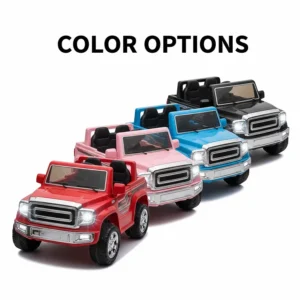
Entertainment is well-covered with built-in music, MP3/USB ports, and an AUX cord input. LED headlights and rear lights not only look cool but improve visibility during evening play. The double lockable doors add an extra safety measure, preventing accidental opens during operation.
Parents appreciate the 8-10 hour charging time that delivers 1-2 hours of riding – a practical ratio for daily play. Customer reviews frequently mention the “stylish appearance” and “smooth operation,” with many noting their kids “absolutely love the design.”
At $220-$270, it represents solid value in the mid-range category, particularly for families prioritizing aesthetics alongside functionality.
✅ Pros:
- Modern, attractive design
- Smooth spring suspension
- Good balance of features and price
❌ Cons:
- Lower maximum speed than some competitors
- Limited color availability in some regions
6. Best Choice Products 12V 2-Seater Jeep
Adventure calls with the Best Choice Products 2-Seater Jeep, a rugged option designed for kids who prefer the road less traveled. This isn’t your typical 12v cars for two children – it’s built for families who embrace outdoor exploration.
Key Specifications:
- 12V battery system
- Three-speed settings
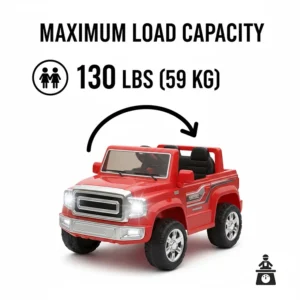
- 130 lbs weight capacity
- 59″L x 35.5″W x 30.75″H overall dimensions
The Jeep-style design immediately evokes adventure, with its open-air feel, grid windshield, and authentic off-road styling. Large traction tires paired with spring suspension create a vehicle genuinely capable of handling grass, dirt paths, and uneven terrain that would challenge lesser models.
The spacious interior comfortably seats two with room for them to bring along toys or stuffed animals for their adventures. Built-in safety features include adjustable seat belts, lockable doors, and slow-start technology that prevents sudden acceleration – crucial for younger drivers still developing their control skills.
The Bluetooth speaker system is surprisingly robust for a children’s toy, letting kids enjoy their favorite songs during their explorations. Working LED headlights help with visibility, while the realistic dashboard with gauges adds to the authentic feel.
Customer feedback reveals high satisfaction with durability, with multiple reviewers noting their Jeep has survived “years of rough play” and still runs strong. Some mention the assembly can be challenging, with one suggesting “watch the YouTube tutorial first – it helps tremendously!”
Priced between $260-$310, it represents excellent value for families seeking a durable, adventure-ready vehicle.
✅ Pros:
- Excellent for outdoor/terrain use
- Very durable construction
- Authentic Jeep styling
❌ Cons:
- Assembly can be complex
- Heavier weight makes portability challenging
7. Costzon 2-Seater Electric UTV
Rounding out our list is the Costzon 2-Seater UTV, a safety-focused option that doesn’t skimp on fun. For parents who prioritize protection above all else while still wanting their kids to enjoy the thrill of driving, this model hits the sweet spot.
Key Specifications:
- 12V 10AH battery
- Maximum speed: 2.5 MPH
- Four-wheel spring suspension
- 130 lbs weight capacity
The Costzon distinguishes itself through an array of safety innovations. The soft-start function gradually increases speed instead of jerking forward, preventing the startled reactions that can lead to accidents. Three-point safety belts for both seats provide secure restraint, while lockable doors stay firmly closed during operation.
The four-wheel spring suspension system isn’t just about comfort – it significantly enhances stability, reducing the likelihood of tipping on uneven surfaces. The lower maximum speed of 2.5 MPH might seem limiting, but for younger children or those just starting with ride-on vehicles, it’s actually ideal for building confidence safely.
Despite its safety focus, fun features abound. Ambiance lights create a cool visual effect, Bluetooth connectivity enables music playback, and the wireless technology supports their favorite tunes. USB port and FM radio provide additional entertainment options.
The 10AH battery capacity ensures extended play sessions, with parents reporting 1.5-2 hours of continuous use. One reviewer shared, “Perfect for my cautious 3-year-old – the slow speed helped him build confidence, and now he’s zooming around like a pro!”
At $240-$290, it’s competitively priced while offering premium safety features typically found in higher-end models.
✅ Pros:
- Exceptional safety features
- High-capacity 10AH battery
- Excellent stability with four-wheel suspension
❌ Cons:
- Lower top speed may not satisfy older/experienced kids
- Takes more time to charge (10-12 hours)
Understanding 12 Volt Power Systems
Let’s demystify the numbers and letters on your 12v ride on toys 2 seater specifications. Understanding voltage, amperage, and battery capacity helps you make informed decisions and set realistic expectations.
What Does 12V Mean?
The “12V” designation refers to voltage – essentially the electrical “pressure” pushing power through the system. Think of it like water pressure in a hose. Most children’s ride-on vehicles use either 6V, 12V, or 24V systems. Here’s how they compare:
6V Systems: Typically for toddlers (ages 2-4), these provide gentler speeds of 2-3 MPH. They’re perfect for beginners but outgrown quickly.
12V Systems: The sweet spot for ages 3-8, offering speeds of 3-5 MPH. They balance fun and safety while providing enough power for varied terrain and dual occupancy.
24V Systems: Designed for older children (ages 8+), these powerful systems reach 5-8 MPH and handle heavier loads and more challenging terrain.
For sibling ride on toys with two seats, 12V strikes the perfect balance. It provides sufficient power to move two children comfortably while maintaining safe, controllable speeds.
Battery Capacity Matters
The “AH” rating (ampere-hour) indicates battery capacity – how much energy it stores. Higher AH means:
- Longer playtime between charges
- Better performance on inclines
- More consistent power delivery as battery depletes
Most 12 volt ride on toys 2 seater use 4.5AH to 10AH batteries. A 10AH battery typically provides 30-50% more runtime than a 4.5AH battery under similar conditions.
Power Consumption Factors
Your battery life depends on several variables:
- Terrain: Grass and inclines drain batteries faster than smooth pavement
- Weight: Two children vs. one affects power draw
- Speed settings: Higher speeds consume more power
- Temperature: Cold weather reduces battery efficiency
- Battery age: Performance diminishes over time (typically 2-3 years)
Understanding these factors helps you manage expectations and maximize your investment’s lifespan.
Safety Features Every Parent Should Demand
Safety isn’t optional when selecting 2 seater ride on toys 12v – it’s paramount. Research from Taylor & Francis Online demonstrates that properly designed battery-powered ride-on toys with appropriate safety modifications significantly reduce injury risks while supporting child development.
Essential Safety Components
1. Seat Belts and Restraint Systems
Quality models include adjustable seat belts for each passenger. Three-point harnesses provide superior protection over simple lap belts, especially during turns or sudden stops. Ensure belts are:
- Adjustable to accommodate growing children
- Securely anchored to the frame
- Easy for parents to fasten but challenging for kids to unbuckle independently
2. Remote Control Override
Parental remote control isn’t just convenient – it’s a critical safety feature. Look for remotes offering:
- Emergency stop function
- Speed control settings
- Directional control
- Range of at least 30 feet
This feature proves invaluable when children drive toward hazards or lose control. You become their guardian angel with an instant “pause button” on their adventure.
3. Speed Governors and Gradual Acceleration
Soft-start or slow-start technology prevents the jarring forward lurch that occurs when kids mash the accelerator. This feature:
- Reduces startled reactions that cause steering errors
- Prevents whiplash-type movements
- Helps younger children build confidence gradually
- Minimizes accidents during initial learning phases
Multiple speed settings let you match the vehicle’s performance to your child’s skill level, starting slow and increasing as their competence grows.
4. Stable Design and Low Center of Gravity
Physics matters in ride-on toy safety. A wide wheelbase and low center of gravity significantly reduce tipping risk during turns. Quality double seat kids electric vehicles are engineered with stability as a primary consideration, not an afterthought.
5. Lockable Doors
Doors that lock during operation prevent children from opening them while the vehicle moves. This simple feature prevents numerous potential accidents where a child might lean out or attempt to exit while rolling.
Creating a Safe Play Environment
Even the safest 12 volt 2 seater electric cars for kids require appropriate supervision and play areas:
Ideal Surfaces:
- Flat, paved driveways
- Smooth concrete patios
- Level lawns (though they drain batteries faster)
- Designated play areas away from vehicle traffic
Hazards to Avoid:
- Swimming pools and bodies of water
- Streets with vehicle traffic
- Steep inclines or stairs
- Areas with extensive obstacles
Supervision Guidelines: Always maintain visual contact, especially with younger children or beginners. Even with remote control capability, active supervision enables immediate intervention and teaches proper driving habits through guidance and coaching.
✨ Don’t Miss These Exclusive Deals!
🔍 Take your child’s playtime to the next level with these carefully selected products. Click on any highlighted item to check current pricing and availability. These vehicles will help you create authentic outdoor adventures your family will love!
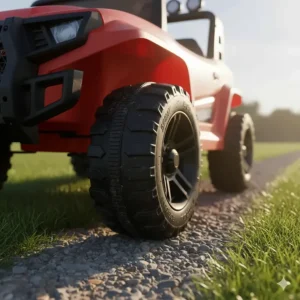
Comparison: 12V vs 24V Two-Seater Vehicles
Choosing between voltage systems can perplex parents. Let’s break down the practical differences to help you decide which suits your family best.
| Feature | 12V Two-Seater | 24V Two-Seater |
|---|---|---|
| Age Range | 3-8 years | 6-12 years |
| Top Speed | 3-5 MPH | 5-8 MPH |
| Weight Capacity | 110-135 lbs | 130-200 lbs |
| Terrain Capability | Smooth to moderate | Moderate to rough |
| Battery Life | 1-2 hours | 1.5-2.5 hours |
| Price Range | $200-$350 | $400-$700 |
| Charging Time | 8-12 hours | 12-18 hours |
When to Choose 12V
Twelve-volt systems excel for:
- Younger sibling pairs (ages 3-7)
- First-time ride-on vehicle owners
- Families with smaller, flatter yards
- Parents prioritizing safety over speed
- Budget-conscious households
The 12v ride on toys 2 seater options provide ample excitement for young children while maintaining speeds that allow quick adult intervention if needed. The gentler power delivery helps build confidence without overwhelming beginners.
When to Consider 24V
Twenty-four-volt systems make sense when:
- Children are older (7+) or have extensive ride-on experience
- You have hilly or challenging terrain
- Frequently carrying two larger/older children
- Kids have “outgrown” slower models
- Willing to invest in longer-term usability
The higher voltage provides noticeably better performance on inclines and rough terrain, essential for properties with varied topography. However, the increased speed demands greater maturity and skill from young drivers.
The Sweet Spot Solution
For many families, the 12V option represents the goldilocks zone – not too fast, not too slow, just right for the primary years of ride-on toy enjoyment (ages 3-8). When children genuinely outgrow their 12V vehicle’s capabilities (usually around age 8-9), they’re often ready to graduate to bicycles, scooters, or other active play equipment anyway.
Maximizing Battery Life and Performance
Your investment in sibling ride on toys with two seats deserves protection. Proper battery care dramatically extends lifespan and maintains performance. Here’s how to get the most from your 12 volt ride on toys 2 seater battery system.
Initial Charging Protocol
The First Charge Matters: Before the maiden voyage, charge your battery for the recommended time (usually 18-24 hours for the first charge). This “conditioning” charge establishes proper chemical processes within the battery cells, setting the foundation for optimal long-term performance.
Never shortcut this initial charge – doing so can permanently reduce battery capacity by 15-20%. I know it’s tempting when excited kids are bouncing around begging to drive, but patience here pays dividends for years.
Ongoing Charging Best Practices
Charge After Every Use: Batteries perform best when kept charged. After each play session, plug in your vehicle even if it wasn’t completely depleted. Lead-acid batteries (used in most ride-ons) don’t suffer from “memory effect,” so partial recharging actually benefits longevity.
Avoid Complete Discharge: Never let your battery completely die during use. When you notice performance declining (slower speeds, weaker acceleration), it’s time to wrap up the fun and recharge. Complete discharge stresses battery cells and accelerates degradation.
Don’t Overcharge: While modern chargers typically include auto-shutoff features, prolonged overcharging can damage batteries. Follow manufacturer guidelines, typically 8-12 hours for standard charges. If your charger lacks automatic shutoff, set a timer as a reminder.
Storage Guidelines
Off-Season Storage: If storing your 12v cars for two children for extended periods:
- Fully charge the battery
- Disconnect it from the vehicle
- Store in a cool, dry location (40-60°F ideal)
- Recharge every 30-60 days to prevent deep discharge
- Clean and inspect the vehicle before storage
Temperature Considerations: Extreme temperatures kill batteries. Avoid storing in uninsulated garages during winter or summer extremes. Room temperature storage significantly extends battery life.
Performance Optimization Tips
Weight Management: While these vehicles support two children, lighter loads mean better performance and longer battery life. Single-rider sessions provide extended playtime and slightly better speed/acceleration.
Terrain Choices: Save battery power by primarily using smooth, flat surfaces. Reserve grass and incline adventures for when batteries are fresh and fully charged.
Regular Maintenance: Keep wheels rolling freely by periodically checking for:
- Debris caught in wheel wells
- Proper wheel alignment
- Adequate tire pressure (for inflatable wheels)
- Clean battery terminals
- Tight electrical connections
These simple checks prevent unnecessary battery drain and maintain optimal performance.
When to Replace Your Battery
Even with perfect care, batteries eventually need replacement. Warning signs include:
- Significantly reduced runtime (less than 30 minutes)
- Slow charging (takes much longer than originally)
- Physical bulging or deformation
- Age exceeding 2-3 years
Replacement batteries for most models cost $30-$60 – a reasonable investment to refresh a beloved toy rather than replacing the entire vehicle.
Age-Appropriate Selection Guide
Not all 12 volt 2 seater electric cars for kids suit every age group. Matching the vehicle to your children’s developmental stage ensures safety, enjoyment, and value for money.
Ages 3-4: Cautious Beginnings
Ideal Features:
- Lower maximum speeds (2-3 MPH)
- Essential parental remote control
- Simple controls
- Sturdy doors and robust safety belts
- Smooth operation on flat surfaces
Recommended Models: The Costzon 2-Seater UTV with its gentle 2.5 MPH maximum speed exemplifies perfect beginner vehicles. The gradual acceleration and comprehensive safety features build confidence without overwhelming young drivers.
Parent Involvement: Expect to primarily use remote control at this age. Children are still developing spatial awareness and reaction times. Think of yourself as their co-pilot, gradually teaching cause-and-effect relationships between their inputs and the vehicle’s responses.
Ages 5-6: Growing Independence
Ideal Features:
- Moderate speeds (3-4 MPH)
- Toggleable parental control
- More interactive features (music, lights)
- Capable of handling varied terrain
- Larger size to accommodate growing bodies
Recommended Models: The SEHOMY 2-Seater Truck or Best Choice Products Land Rover provide excellent middle-ground options. They offer enough features to maintain interest while remaining manageable for developing skills.
Parent Involvement: Transition from constant remote control to periodic oversight. Kids at this age can independently operate vehicles in controlled environments. Use the remote for busy areas or when approaching potential hazards.
Ages 7-8: Confident Drivers
Ideal Features:
- Higher speeds (4-5 MPH)
- Advanced terrain capability
- Robust construction for energetic play
- Entertainment features that maintain interest
- Extended battery life for longer adventures
Recommended Models: The ELEMARA XL Off-Road UTV or Best Choice Products Jeep satisfy the need for adventure at this age. Their superior power and capability match the increased skill and confidence of experienced young drivers.
Parent Involvement: Primarily supervisory at this stage. These confident kids can handle independent operation in appropriate areas. You’re mainly ensuring they stay within designated play zones and follow agreed-upon safety rules.
Maintenance and Longevity Tips
Quality double seat kids electric vehicles represent significant investments. Proper maintenance protects that investment and ensures years of reliable operation.
Post-Use Routine (5 Minutes)
After each play session:
- Quick Clean: Wipe down the body to remove dirt, grass, and debris
- Visual Inspection: Check for any obvious damage or loose components
- Wheel Check: Ensure wheels spin freely without wobbles
- Battery Connection: Plug in for charging if significantly used
- Dry Storage: If wet from dew or rain, towel dry before storing
This brief routine prevents most common issues from developing into expensive repairs.
Weekly Maintenance (15 Minutes)
Thorough Cleaning: Use mild soap and water on exterior surfaces. Avoid high-pressure washing, which can force water into electrical components. Dry completely before storage.
Component Inspection:
- Tighten any loose screws or bolts
- Test all safety features (belts, doors, lights)
- Verify remote control functionality
- Check battery charge status
Wheel Care: Inspect tires for excessive wear. Some models have replaceable tread-style wheels that should be rotated or replaced when worn. Ensure axles aren’t binding and wheels rotate smoothly.
Monthly Deep Maintenance (30 Minutes)
Electrical System:
- Clean battery terminals with a wire brush if corrosion appears
- Verify all electrical connections are tight and corrosion-free
- Test all lights and sounds
- Inspect wiring for any damage or exposed copper
Mechanical Systems:
- Lubricate moving parts (steering mechanism, axle bearings)
- Check structural integrity of frame and body
- Verify seat belts aren’t frayed or damaged
- Ensure parental remote control maintains full functionality
Performance Test: Conduct a complete test drive checking:
- Straight-line tracking
- Smooth acceleration
- Consistent speed
- Responsive steering
- Effective braking
- All features functioning
Seasonal Preparation
Spring Prep (Post-Storage): After winter storage, thoroughly inspect everything before first use. Replace battery if it won’t hold a charge. Test all systems. Clean any dirt or dust accumulated during storage.
Summer Care: During heavy use periods:
- Monitor battery water levels (if applicable)
- Increase cleaning frequency
- Watch for overheating during extended use
- Provide shade storage to prevent UV damage
Fall Transition: As outdoor play decreases:
- Deep clean before reduced use
- Address any needed repairs
- Prepare for winter storage
Winter Storage: Follow proper long-term storage procedures outlined earlier. Proper winter care prevents springtime surprises.
Common Issues and Solutions
Problem: Reduced Speed/Power
- Solution: Fully charge battery, check for stuck wheels, verify weight limits aren’t exceeded
Problem: Won’t Start
- Solution: Verify battery connection, check power switch position, confirm battery has charge
Problem: Steering Difficulty
- Solution: Check for debris in steering mechanism, verify wheels aren’t binding, lubricate steering components
Problem: Remote Not Working
- Solution: Replace remote batteries, re-pair remote with vehicle, check for signal interference
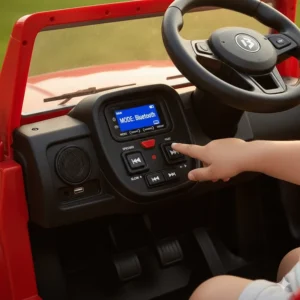
Educational and Developmental Benefits
Beyond pure entertainment, 2 seater ride on toys 12v serve as powerful developmental tools. Research published in the Journal of Assistive Technology demonstrates that battery-powered ride-on vehicles support multiple aspects of child development when used appropriately.
Physical Development
Gross Motor Skills: Operating these vehicles engages large muscle groups in ways that build strength and coordination. Steering requires core stability and upper body control. Pressing foot pedals develops leg strength and coordination. Even getting in and out of the vehicle practices important movement patterns.
Fine Motor Skills: Manipulating smaller controls – adjusting speeds, pressing buttons, turning keys – develops the precise hand movements essential for writing, typing, and countless daily tasks. The repetitive nature of these actions builds muscle memory and control.
Spatial Awareness: Navigating through spaces, avoiding obstacles, and judging distances all enhance spatial reasoning. This crucial skill underpins mathematical thinking, reading maps, and understanding geometry.
Cognitive Development
Cause and Effect: Young children learn that their actions (turning the wheel, pressing the pedal) produce predictable results. This fundamental concept forms the foundation for logical thinking and scientific reasoning.
Problem-Solving: Encountering obstacles requires kids to think critically: “How do I get around this?” or “What happens if I try going backward instead?” These micro-challenges develop analytical thinking skills applied throughout life.
Decision-Making: Constant choices during play – which path to take, how fast to go, whether to stop or continue – build decision-making confidence. The low-stakes nature of play provides safe practice for real-world choices.
Memory and Planning: Remembering where they want to go, planning routes, and recalling previous experiences all exercise memory systems. Advanced play might involve “missions” or “deliveries,” adding layers of planning and sequencing practice.
Social and Emotional Development
Cooperation: Two-seater vehicles inherently require negotiation. Who drives first? Where should we go? These discussions build cooperation and compromise skills essential for healthy relationships.
Turn-Taking: Sharing the driving experience teaches patience and fairness. Children learn that waiting for a turn eventually brings reward – valuable lessons for school and social situations.
Communication: Operating the vehicle together demands clear communication. “Go left!” “Stop here!” Kids develop both expressive and receptive language skills through this interactive play.
Confidence Building: Mastering operation of their vehicle builds genuine competence and self-esteem. Unlike many participation trophies, this achievement results from real skill development, creating authentic pride and confidence.
Emotional Regulation: Experiencing minor setbacks (getting stuck, choosing wrong paths, depleting the battery) in a safe context helps children practice managing frustration and disappointment – crucial emotional skills.
Imaginative Play Enhancement
The Journal of Child Development confirms that imaginative play supports language development, abstract thinking, and creativity. These vehicles become whatever children imagine – race cars, emergency vehicles, safari trucks, or family cars.
This transformative play allows kids to:
- Practice adult roles and responsibilities
- Explore different scenarios safely
- Develop narrative thinking
- Express creativity and individuality
- Process real-world experiences through play
Environmental and Weather Considerations
Your 12 volt ride on toys 2 seater performs best within specific environmental parameters. Understanding these limitations protects your investment and ensures consistent performance.
Temperature Effects on Performance
Cold Weather (Below 40°F/4°C): Battery chemistry slows significantly in cold temperatures. You’ll notice:
- Reduced runtime (potentially 30-50% less)
- Slower acceleration
- Decreased top speed
- Longer charging times
Solution: If possible, store vehicles indoors at room temperature. Charge batteries in warm locations. Consider limiting outdoor use during extremely cold weather, or accept shorter play sessions.
Hot Weather (Above 90°F/32°C): Extreme heat stresses both batteries and plastic components:
- Risk of battery damage or reduced lifespan
- Plastic becoming brittle or warping
- Uncomfortable seat surfaces for children
- Potential electronic component failures
Solution: Provide shaded storage. Avoid leaving vehicles in direct sunlight for extended periods. Test seat temperature before children sit. Consider morning or evening play during peak summer heat.
Optimal Temperature Range: Your vehicle performs best between 50-85°F (10-29°C). Within this range, you’ll experience:
- Maximum battery efficiency
- Longest runtime
- Best acceleration and speed
- Optimal charging performance
Wet Weather and Moisture
Light Moisture: Most double seat kids electric vehicles tolerate light moisture from dew or light rain. However, electronics and water don’t mix well. After exposure:
- Wipe down all surfaces
- Let components air dry completely
- Don’t charge until fully dry
Heavy Rain: Avoid operating in heavy rain or through puddles. Water can:
- Short electrical components
- Corrode connections
- Damage battery systems
- Compromise safety features
Snow and Ice: While some brave kids want to drive in snow, it’s generally inadvisable:
- Extremely reduced traction creates safety hazards
- Cold temperatures severely limit battery performance
- Snow/ice can damage components
- Wet conditions risk electrical damage
Waterproofing Strategies: While vehicles aren’t waterproof, you can enhance protection:
- Apply dielectric grease to electrical connections
- Ensure all access panels close tightly
- Use waterproof covers when stored outdoors
- Consider electrical tape on vulnerable connection points
Terrain Considerations
Ideal Surfaces:
- Smooth pavement (driveways, sidewalks, patios)
- Level concrete
- Short, dry grass
- Compact dirt paths
These surfaces provide good traction, minimal resistance, and don’t excessively drain batteries.
Manageable Surfaces:
- Longer grass (reduces battery life by 20-30%)
- Gentle gravel paths
- Slight inclines (under 10 degrees)
- Packed sand or dirt
Expect reduced performance and shorter battery life on these surfaces. They’re usable but not optimal.
Problematic Surfaces:
- Deep grass or weeds
- Loose gravel or rocks
- Sand or soil
- Steep hills (over 15 degrees)
- Muddy or wet areas
These surfaces risk getting stuck, excessive battery drain, or damage to wheels and motors. Avoid if possible or use sparingly with caution.
Budget Planning: Total Cost of Ownership
The sticker price of 12v cars for two children represents just the starting point. Understanding total ownership costs helps budget realistically and avoid surprises.
Initial Purchase (Variable)
Entry-Level Models: $200-$250 These budget-friendly options include basic features and adequate performance for younger children or casual use. Expect:
- Standard 12V 4.5-7AH batteries
- Essential safety features
- Basic entertainment options
- 1-2 year durability with moderate use
Mid-Range Models: $250-$350 This category offers the best value-to-feature ratio for most families:
- Enhanced battery capacity (7-10AH)
- Superior build quality
- More entertainment features
- Licensed brands or premium designs
- 2-3 year durability expectation
Premium Models: $350-$500+ Top-tier options provide maximum performance and features:
- Highest capacity batteries
- Best terrain capability
- Premium materials and construction
- Extensive feature sets
- Licensed authentic replicas
- 3-4+ year durability potential
Ongoing Operational Costs
Electricity (Minimal): Charging a 12V battery costs approximately $0.05-$0.15 per charge, depending on local electricity rates. Even with frequent use, annual electricity costs rarely exceed $10-$20.
Battery Replacement: Expect to replace batteries every 2-3 years with proper maintenance:
- Replacement batteries: $30-$60
- Professional replacement (if needed): $20-$40
Budget approximately $40 per battery replacement. Some families extend this by purchasing spare batteries for continuous play during high-use periods.
Maintenance Supplies: Annual maintenance costs remain minimal:
- Cleaning supplies: $10-$15
- Lubricants and tools: $10-$20
- Occasional replacement parts (wheels, belts): $20-$40 as needed
Total annual maintenance: $40-$75
Optional Accessories: Many families invest in:
- Vehicle covers: $20-$40 (protects from weather/dust)
- Spare batteries: $30-$60 (extends playtime)
- Replacement chargers: $15-$30 (backup or upgrade)
- Decorative decals/accessories: $10-$50
Value Comparison: Dollars Per Hour
Let’s calculate actual cost-per-use for perspective:
Entry-Level Example ($220 purchase):
- Initial cost: $220
- 2 years typical lifespan
- Average 3 hours use per week = 312 hours total
- One battery replacement: $40
- Maintenance: $100 over 2 years
- Total cost: $360 ÷ 312 hours = $1.15 per hour of play
Mid-Range Example ($300 purchase):
- Initial cost: $300
- 3 years typical lifespan
- Average 3 hours weekly = 468 hours total
- One battery replacement: $50
- Maintenance: $150 over 3 years
- Total cost: $500 ÷ 468 hours = $1.07 per hour
Compare this to:
- Movie theater tickets: $12-$15 per person for 2 hours
- Trampoline park: $15-$25 per person for 1-2 hours
- Theme park visits: $50-$100+ per person for 6-8 hours
The value proposition becomes clear – sibling ride on toys with two seats provide exceptional entertainment value compared to most alternatives.
Resale Value Recovery
Well-maintained vehicles retain surprising resale value:
- Entry-level models: 30-40% of purchase price
- Mid-range models: 40-50% of purchase price
- Premium models: 50-60% of purchase price
Selling your gently-used vehicle when children outgrow it recovers significant investment, further improving the value equation.
FAQ Section
❓ How long do 12 volt ride on toys 2 seater batteries last on a single charge?
❓ Can my 3-year-old and 7-year-old safely ride together in the same vehicle?
❓ What's the difference between 12v ride on toys 2 seater and single-seat models?
❓ Are 2 seater ride on toys 12v safe for use on grass and hills?
❓ How often should I charge the battery, and can I leave it plugged in continuously?
Conclusion: Choosing Your Perfect Two-Seater
Selecting the right 12 volt ride on toys 2 seater transforms from overwhelming to exciting when you know what matters. Throughout this guide, we’ve explored seven outstanding models, each excelling in different areas.
For premium quality and authentic styling, the Best Choice Products Land Rover delivers exceptional value at its mid-range price point. Adventure-seeking families gravitate toward the ELEMARA XL Off-Road UTV with its superior power and terrain capability. Budget-conscious shoppers discover that the Costway 2-Seater Truck proves you don’t sacrifice quality for affordability.
Remember these key principles as you decide:
- Match the vehicle to your children’s ages and skill levels
- Prioritize safety features over flashy extras
- Consider your available play surfaces and storage space
- Factor in total ownership costs, not just purchase price
- Read reviews from verified purchasers
- Verify warranty coverage and customer service reputation
These double seat kids electric vehicles create memories that outlast the toys themselves. Years from now, your children will remember the adventures they shared, the imaginary worlds they explored, and the freedom they felt cruising their neighborhood. You’ll remember their laughter, their excitement, and those precious moments of childhood joy.
Whether you choose a rugged Jeep for backyard expeditions, a stylish truck for driveway cruising, or a realistic SUV for pretend errands, you’re investing in more than a toy. You’re purchasing opportunities for growth, connection, and happiness.
Take your time, consider your family’s specific needs, and select with confidence. The right 12v cars for two children awaits – ready to deliver thousands of hours of adventures, millions of smiles, and memories that will warm hearts for a lifetime.
Happy shopping, and here’s to many joyful journeys ahead! 🚗✨
Recommended for You
- 7 Best 12V Ride On Toys 2026
- 7 Best Ride On Toys for Toddlers 2026: Top Expert Picks
- 7 Best Ride On Toys for 1 Year Old Boy in 2026 – Parent’s Guide
Disclaimer: This article contains affiliate links. If you purchase products through these links, we may earn a small commission at no additional cost to you.
✨ Found this helpful? Share it with your friends! 💬🤗
