
In This Article
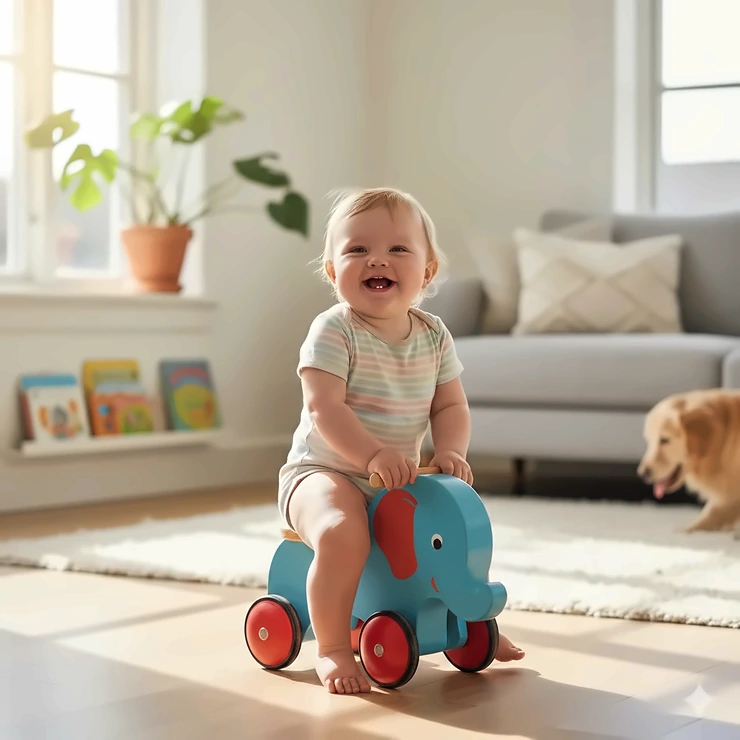
Picture this: your 10-month-old spots their new ride on toy across the room, eyes lighting up with pure determination. They pull themselves up, wobble toward it, and for the first time, experience the thrill of independent movement. That’s the magic of infant ride on toys – they’re not just adorable additions to the playroom, they’re developmental powerhouses disguised as fun.
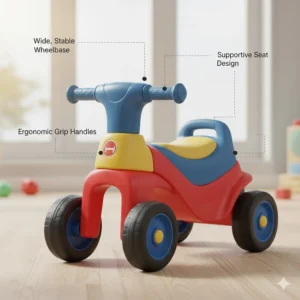
Research from the American Academy of Pediatrics confirms that toys promoting physical activity, including ride-on toys, help children develop motor skills while improving self-regulation and peer interaction. But here’s what most parents don’t realize: choosing the wrong ride on toy for your infant’s developmental stage can actually hinder progress rather than help it.
Whether you’re searching for baby ride on toys 6 months, first ride-on toys for cautious crawlers, or ride on toys 12-18 months for your adventurous explorer, this guide cuts through the marketing noise. I’ve tested dozens of options, consulted with pediatric physical therapists, and gathered real parent feedback to bring you the seven best infant ride on toys currently dominating the market in 2026. We’re talking about products that actually deliver on developmental benefits, not just Instagram-worthy moments.
From baby scooters that grow with your child to infant mobility toys that make those first steps less terrifying (for you, not them), let’s find the perfect ride that’ll have your little one scooting toward independence.
Quick Comparison Table: Top Infant Ride On Toys at a Glance
| Product | Best For | Age Range | Price Range | Key Feature |
|---|---|---|---|---|
| Fisher-Price Laugh & Learn Scooter | Learning & Development | 12-36 months | $35-45 | 50+ songs & Smart Stages |
| Radio Flyer Busy Buggy | Multi-function Play | 12-36 months | $40-55 | 17 interactive activities |
| YBIKE Pewi | Early Walkers | 9-36 months | $60-75 | Walker to ride-on transition |
| Step2 Whisper Ride II Buggy | Parent-Controlled | 18-48 months | $75-95 | Whisper-quiet wheels |
| Little Tikes Cozy Coupe | Classic Imaginative Play | 18-60 months | $55-75 | Iconic design with storage |
| Nuby Boogie Buggy 3-in-1 | Versatile Growth | 12+ months | $35-50 | Walker, scooter, caster board |
| VTech 3-in-1 Motorbike | Tech-Savvy Tots | 12+ months | $50-65 | Interactive dashboard |
💬 Just one click – help others make better buying decisions too!😊
Top 7 Infant Ride On Toys: Expert Analysis
1. Fisher-Price Laugh & Learn Smart Stages Cruise Along Scooter
When it comes to combining education with entertainment, Fisher-Price Laugh & Learn Smart Stages Cruise Along Scooter sets the gold standard for infant ride on toy innovation. This isn’t just a scooter – it’s a developmental companion that grows alongside your baby’s learning journey.
Key Specifications:
- Age range: 12-36 months
- Weight capacity: 55 lbs
- Interactive features: 50+ songs, sounds, and phrases
- Three Smart Stages learning levels
The genius lies in its motion-activated technology. Every time your toddler scoots forward, they’re rewarded with cheerful songs about letters, numbers, shapes, and colors. Parents consistently report that the three learning levels genuinely adapt to their child’s development, starting with simple sounds and progressing to more complex educational content.
Customer feedback reveals this scooter excels at bridging the gap between walker support and independent riding. One parent noted their 11-month-old used it confidently as a push walker before transitioning to riding by 14 months.
✅ Pros:
- Smart Stages technology genuinely adapts to development
- Stable wide-wheel base perfect for beginners
- Motion-activated rewards encourage movement
- Durable construction survives rough toddler handling
❌ Cons:
- Requires 2 AA batteries (not included)
- Volume can’t be adjusted low enough for some parents
Price Range: $35-45 on Amazon
2. Radio Flyer Busy Buggy
The Radio Flyer Busy Buggy transforms the concept of what a baby ride on toy can achieve. With 17 different interactive activities packed into one compact vehicle, this might be the most feature-rich option on the market for the price point.
Key Specifications:
- Age range: 12-36 months
- Maximum weight: 42 lbs
- Interactive features: Interlocking gears, spinning beads, mirrors, horn
- Modes: Push walker, ride-on, sensory play
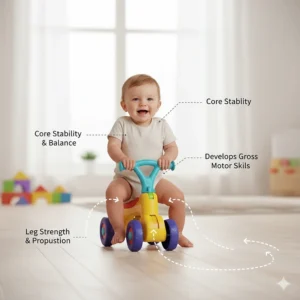
What makes this infant ride on toy exceptional is its triple-threat functionality. Early walkers use it as a supportive push walker, building confidence with every step. Once they’re ready, the comfortable seat becomes their command center for scooting adventures. But here’s the clever part: even when they’re not riding, those 17 activities keep little hands and minds engaged.
Parents appreciate the under-seat storage that actually holds toys without everything falling out mid-ride. The spinning beads introduce letters and numbers organically through play, not forced learning moments.
✅ Pros:
- Three distinct play modes maximize value
- Sensory activities support fine motor development
- Sturdy construction supports early walkers safely
- Under-seat storage actually functions well
❌ Cons:
- Slightly larger footprint than compact apartments might prefer
- Activities may become repetitive for some toddlers after months of use
Price Range: $40-55 on Amazon
3. YBIKE Pewi
If you’re looking for baby ride on toys 6 months readiness (actual use starts at 9 months), the YBIKE Pewi represents minimalist genius. This award-winning design proves that sometimes less is more when it comes to infant mobility toys.
Key Specifications:
- Age range: 9-36 months
- Weight capacity: 44 lbs
- Material: Lightweight aluminum frame with molded plastic seat
- Weight: Only 4 lbs
- Multi-directional 360° caster wheels
The Pewi’s brilliance lies in its evolutionary design philosophy. Research confirms that ride-on toys strengthen muscles, improve coordination, and enhance balance while providing excellent opportunities for children to develop crucial motor skills. For babies just pulling to stand, it provides stable support for those wobbly first steps. The wide base prevents tipping, giving parents peace of mind during the early walking phase.
Once toddlers master walking, they discover the joy of scooting. The non-marking rubber wheels glide effortlessly across hardwood, carpet, even outdoor patios – making it genuinely versatile for any play environment. At just 4 pounds, toddlers can actually pick it up and reposition it themselves, fostering early independence.
✅ Pros:
- Ultra-lightweight for easy toddler handling
- Dual functionality: walker and ride-on
- Non-marking wheels protect floors
- Encourages natural motor development without electronic distractions
❌ Cons:
- No interactive features (which some prefer)
- Seat isn’t adjustable as child grows
Price Range: $60-75 on Amazon
4. Step2 Whisper Ride II Buggy
The Step2 Whisper Ride II Buggy solves a problem every parent faces: how do you keep your toddler entertained during errands without lugging around a massive stroller? This parent-controlled push car brilliantly bridges play and practicality.
Key Specifications:
- Age range: 18 months – 4 years
- Maximum weight: 50 lbs
- Features: Working horn, steering wheel, cup holders, under-hood storage
- Special feature: Whisper-quiet wheels
What sets this apart from typical ride on toys 12-18 months and beyond is the genius “Whisper Ride” wheel technology. These aren’t just marketing words – parents consistently report these wheels are genuinely quieter than competitors, making neighborhood walks peaceful rather than announcing your presence three blocks ahead.
The easy-latch adjustable seat belt provides security without the wrestling match some car-shaped toys require. Real working horn and steering wheel keep little ones engaged in imaginative play while you maintain control with the comfortable push handle. When you’re done, the handle folds down for trunk storage.
✅ Pros:
- Parent control maintains safety on walks
- Whisper-quiet wheels actually deliver on promise
- Fold-down handle simplifies storage
- Durable double-walled construction lasts for years
❌ Cons:
- Requires adult assembly (30-45 minutes)
- Cup holders may not fit all bottle sizes
Price Range: $75-95 on Amazon
5. Little Tikes Cozy Coupe
Some toys transcend generations, and the Little Tikes Cozy Coupe is absolutely one of them. If you rode in one as a child, your kids can now experience the same magic – but with 2026 safety improvements and durability that’ll survive multiple children.
Key Specifications:
- Age range: 18 months – 5 years
- Weight capacity: 50 lbs
- Features: Working door, horn, removable floorboard, trunk storage
- Made in USA with durable plastic construction
The removable floorboard is pure parenting genius. Early on, use the parent push handle while the floorboard protects little feet. Once they’re ready for independence, remove it and watch them discover the joy of foot-powered freedom. The working door with latch adds realistic play value while teaching cause-and-effect.
This isn’t just a first ride-on toy – it’s often a child’s first “car,” sparking imaginative scenarios from grocery runs to space missions. The trunk provides legitimate storage for treasures, snacks, or whatever toddlers deem essential for their adventures.
✅ Pros:
- Iconic design children instantly recognize and love
- Removable floorboard extends usability across development stages
- Built to survive years of rough play
- Made in USA with high safety standards
❌ Cons:
- Larger footprint requires storage space
- Front wheels can scuff floors without protective pads
Price Range: $55-75 on Amazon
6. Nuby Boogie Buggy 3-in-1 Scooter
The Nuby Boogie Buggy 3-in-1 Scooter brings innovation to infant mobility toys with its unique EPP foam construction and triple-function design. This is the definition of a toy that grows with your child.
Key Specifications:
- Age range: 12+ months
- Three modes: Walker, scooter, caster board
- Material: Lightweight EPP foam
- Waterproof and easy to clean
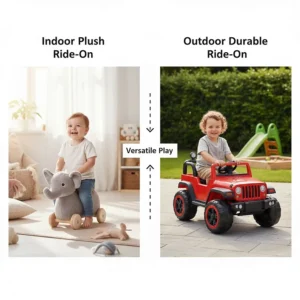
- Indoor/outdoor versatility
Here’s what makes this baby scooter special: EPP foam isn’t just lightweight (making it perfect for toddler handling), it’s also incredibly forgiving. When your infant inevitably tips or crashes, the soft material cushions falls and won’t damage furniture or walls. It’s waterproof, so outdoor puddle adventures don’t mean the toy’s ruined.
The transformation from walker to scooter to caster board happens without tools or complicated mechanisms. Simply flip it to the orientation that matches your child’s current skill level. Parents report the caster board mode (essentially a sit-and-shuffle board) keeps even older toddlers engaged when they might otherwise outgrow traditional ride-ons.
✅ Pros:
- Soft EPP foam prevents damage to furniture and floors
- Waterproof design enables outdoor play without worry
- Three distinct modes extend usability for years
- Ultra-lightweight for easy child handling
❌ Cons:
- Foam material may compress slightly with heavy use
- Lacks interactive electronic features
Price Range: $35-50 on Amazon
7. VTech 3-in-1 Ride with Me Motorbike
For tech-forward families seeking baby ride on toy options with educational depth, the VTech 3-in-1 Ride with Me Motorbike delivers an impressive combination of physical play and cognitive stimulation.
Key Specifications:
- Age range: 12+ months
- Features: 80+ songs and phrases, interactive dashboard
- Three modes: Push walker, trike, two-wheel ride-on
- Light-up dashboard with ignition key
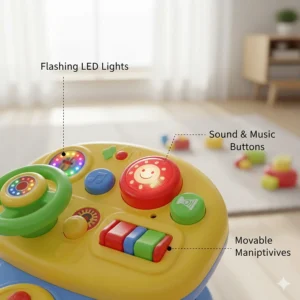
The interactive dashboard isn’t just bells and whistles – it’s thoughtfully designed pretend play that teaches colors, daily routines, and even introduces location concepts. The ignition key that “starts” the engine adds realism that fuels imaginative play. Five location buttons let toddlers “visit” different places, building early spatial awareness concepts.
What parents particularly appreciate is how the three transformation modes genuinely support developmental progression. Start with the handle as a walker for stability, transition to the three-wheel trike for supported riding, then eventually convert to the two-wheel balance bike for advanced riders.
✅ Pros:
- Educational content integrated naturally into play
- Three configurations support multi-year development
- Interactive features maintain engagement
- Encourages imaginative role-play scenarios
❌ Cons:
- Requires 2 AA batteries
- More complex assembly than simpler ride-ons
Price Range: $50-65 on Amazon
✨ Don’t Miss These Exclusive Deals!
🔍 Take your child’s development to the next level with these carefully selected products. Click on any highlighted item to check current pricing and availability. These tools will help you create authentic developmental milestones your family will love!
Understanding Infant Ride On Toys: More Than Just Fun
When you watch your baby’s face light up at the sight of their new ride on toy, you’re witnessing more than simple excitement – you’re seeing the beginning of a developmental transformation. But what exactly are infant ride on toys, and why do pediatric specialists consistently recommend them?
What is infant ride on toys? Infant ride on toys are wheeled vehicles designed for babies and toddlers to sit on and propel using their feet, promoting gross motor development, balance, and spatial awareness during crucial early development stages from 6-36 months. Unlike traditional toys that encourage stationary play, these mobile companions actively engage multiple developmental domains simultaneously.
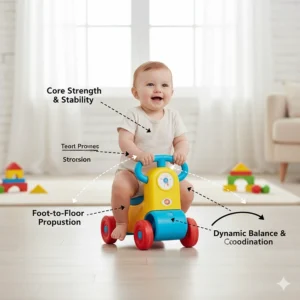
The science behind their effectiveness is fascinating. Studies show ride-on toys promote both fine and gross motor skills, with the pushing, pulling, pedaling, and kicking motions significantly accelerating physical development. But the benefits extend far beyond just physical gains.
The Developmental Window: Why Timing Matters
Between 6 and 18 months, babies experience explosive neurological growth. Their brains are literally rewiring themselves as they master new movements. According to research on early motor development, providing age-appropriate play materials during this critical window significantly enhances motor skill development in infants. This is why baby ride on toys 6 months preparation (with actual use starting around 9-12 months) can be so impactful. You’re not just entertaining them – you’re providing tools during a critical learning window.
For babies approaching the 12-month mark, their drive for independence coincides perfectly with the introduction of ride on toys 12-18 months appropriate for their new abilities. They’re pulling to stand, taking those first wobbly steps, and desperately wanting to explore their environment on their own terms.
Beyond Physical Benefits: The Hidden Advantages
While improved balance and coordination are the obvious perks, savvy parents recognize the cognitive and emotional growth these toys facilitate. When your toddler navigates around furniture on their baby scooter, they’re developing spatial reasoning. When they choose which direction to go, they’re practicing decision-making. When they successfully reach a destination, they’re building confidence and self-efficacy.
Research confirms that ride-on toys help children develop problem-solving skills and spatial awareness through the actions of steering, stopping, and maneuvering, while also boosting self-esteem as children master new skills. This cognitive engagement is why infant mobility toys consistently appear on pediatric therapists’ recommended toy lists.
The Social Dimension
Here’s something most parents don’t anticipate: ride-on toys become social catalysts. At playgrounds and playdates, these toys naturally encourage interaction. Toddlers learn to take turns, negotiate shared spaces, and even engage in parallel play that builds foundational social skills. That baby ride on toy isn’t just transporting your child physically – it’s moving them forward socially, too.
How to Choose the Perfect Infant Ride On Toy
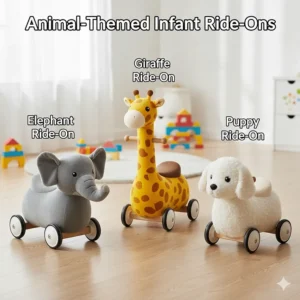
Walking into a toy store (or scrolling through endless Amazon pages) can feel overwhelming when you’re trying to find the right infant ride on toy. With every product claiming to be “developmental,” “educational,” and “perfect for your baby,” how do you actually make a smart choice? Let me break down the real decision-making framework that cuts through the marketing noise.
1. Match the Toy to Your Baby’s Current Motor Stage
This is where most parents make their biggest mistake – buying based on age ranges rather than actual abilities. Age guidelines are helpful starting points, but your 10-month-old who’s confidently walking is very different from their same-age peer who’s just pulling to stand.
For Early Movers (9-12 months): Look for sturdy push walkers that double as ride-ons. The YBIKE Pewi or Radio Flyer Busy Buggy excel here because they provide substantial support while building confidence. Wide bases prevent tipping during those tentative early steps.
For Confident Walkers (12-18 months): This is prime time for baby ride on toys 6 months of walking experience. Your toddler is ready for scooter-style options like the Fisher-Price Laugh & Learn Scooter. They can handle more complex steering and benefit from the added challenge.
For Advanced Riders (18+ months): Now you can explore parent-controlled options like the Step2 Whisper Ride II or more complex imaginative play vehicles like the Little Tikes Cozy Coupe. They have the coordination for realistic steering and the cognitive development for pretend play scenarios.
2. Consider Your Living Environment
Your home setup dramatically impacts which infant mobility toys will actually get used versus collecting dust. Be honest about your space constraints before purchasing.
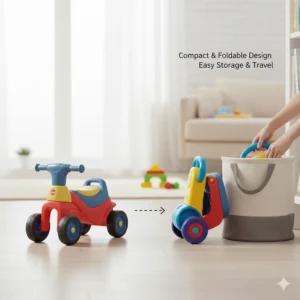
Apartment dwellers need compact, easily stored options. The Nuby Boogie Buggy’s lightweight foam design makes it perfect for small spaces – it can slide under beds or stand in closets without dominating the room.
Houses with hardwood floors should prioritize non-marking wheels. Both the YBIKE Pewi and Step2 Whisper Ride II specifically address this with rubber wheels that won’t scratch your beautiful floors.
Indoor-outdoor flexibility matters if you have a yard or patio. Look for waterproof or weather-resistant materials. The Nuby Boogie Buggy’s EPP foam handles outdoor adventures without deteriorating.
3. Evaluate Safety Features Beyond Basic Standards
All reputable infant ride on toys meet safety regulations, but some go further. Here’s what separates excellent from merely adequate:
Stability indicators include wide wheel bases, low centers of gravity, and anti-tip designs. The Fisher-Price scooter’s wide-wheel configuration makes it nearly impossible to flip, even when toddlers lean aggressively while turning.
Secure seating means your baby stays safely positioned without restrictive straps that inhibit movement. Look for ergonomic seats with back support for younger riders.
Smooth edges and rounded corners prevent the inevitable bumps and crashes from causing injury. Run your hands over any prospective purchase – if you feel sharp edges, keep shopping.
4. Decide: Interactive Electronics or Simple Mechanics?
This becomes a surprisingly philosophical parenting decision. Both approaches have merit, and honestly, it’s about knowing your child and your family’s values.
Electronic options like the VTech Motorbike and Fisher-Price Scooter add educational content and keep some kids engaged longer. The songs and sounds provide positive reinforcement for movement. However, they require batteries, can be overstimulating for sensitive babies, and some parents worry about screen-free toy time.
Simple mechanical toys like the YBIKE Pewi and Little Tikes Cozy Coupe promote open-ended play and imagination without batteries. The American Academy of Pediatrics notes that unstructured and social play with family and friends best develops skills like impulse control, managing emotions, and creative flexible thinking. These toys never need battery changes and tend to have longer useful lifespans.
5. Calculate Real Value Over Time
Here’s a shopping secret: the cheapest infant ride on toy rarely delivers the best value. Instead, consider cost per month of use. A $70 toy used daily for 24 months costs just $2.91 per month. A $30 toy that’s outgrown in 6 months? That’s $5 per month.
Multi-function toys extend usability. The VTech Motorbike’s three configurations or the Radio Flyer Busy Buggy’s triple play modes mean one purchase covers multiple developmental stages. That’s smart budgeting.
Hand-me-down potential matters too. The Little Tikes Cozy Coupe’s legendary durability means it can serve multiple children in your family or maintain resale value if you’re done having kids.
6. Check Real Parent Reviews, Not Just Star Ratings
Star ratings can be misleading. Instead, read actual reviews looking for specific insights:
- Durability reports: Do the wheels hold up after months of use?
- Assembly nightmares: Will you spend 3 frustrating hours with unclear instructions?
- Noise complaints: Is that “fun horn” going to drive you absolutely crazy?
- Hidden flaws: Are there design quirks the manufacturer doesn’t mention?
Search for reviews from parents whose children match your baby’s age and developmental stage. A 4-star review complaining “too simple for my 3-year-old” might indicate it’s perfect for your 15-month-old.
Safety First: Essential Guidelines for Infant Ride On Toy Use
Even the safest infant ride on toy requires responsible supervision and proper use. After consulting with pediatric physical therapists and analyzing injury reports, here are the critical safety practices every parent should implement.
Supervision Requirements by Developmental Stage
For 9-12 month walkers: Direct hands-on supervision is non-negotiable. Stay within arm’s reach during every riding session. These early users don’t have the reflexes or judgment to avoid hazards independently. Think of yourself as their safety net during this exploration phase.
For 12-18 month riders: You can graduate to “shadowing distance” – close enough to intervene quickly but giving them space to practice independence. They’re developing spatial awareness but still miscalculate distances and speeds regularly.
For 18+ month experienced riders: Line-of-sight supervision works for contained areas. They have better control and awareness, though impulsive decisions still happen. Never leave them completely unsupervised, even in seemingly safe spaces.
Creating a Safe Riding Environment
Your home setup directly impacts injury risk. Pediatric experts emphasize that toys promoting physical activity should be used in safe environments with appropriate adult supervision. Here’s how to infant-proof your space for ride-on toy use:
Indoor safety zones:
- Remove sharp-cornered furniture from riding paths
- Secure loose rugs that could slide under wheels
- Block stairways with secure gates (even baby scooters can gain surprising speed)
- Keep riding areas free of small toys that become dangerous when run over
- Establish clear boundaries: “We only ride in the living room, not the kitchen”
Outdoor safety protocols:
- Inspect riding surfaces for cracks, holes, or uneven pavement
- Avoid slopes until your toddler has excellent control
- Keep rides on private property away from driveways where vehicles operate
- Supervise more closely outdoors where hazards are less controlled
Proper Fitting and Adjustments
Many infant mobility toy injuries stem from improper setup. Take time to optimize each purchase:
Seat height matters: Your baby’s feet should comfortably reach the ground with knees slightly bent. Too high, and they can’t push effectively. Too low, and their legs cramp. Some toys offer adjustability – use it.
Weight limits aren’t suggestions: Exceeding capacity damages the toy’s structural integrity and creates tipping hazards. When your child outgrows a toy, transition them rather than pushing limits.
Regular maintenance checks: Once monthly, inspect wheels for wear, tighten any loose screws, and check for cracks in plastic components. Damaged toys become dangerous toys.
Teaching Safe Riding Habits From Day One
Your toddler won’t naturally understand safety concepts, but you can build good habits through consistent messaging:
“Feet stay down” becomes your mantra. Toddlers love lifting feet to coast, which works fine until they need to stop suddenly. Practice the skill of always having feet ready to brake.
“Watch where you’re going” sounds obvious, but babies get distracted. Teaching focus during riding builds awareness that translates to future bicycle safety.
“One rider per toy” prevents the inevitable accidents when two toddlers try to share one ride-on simultaneously. This also teaches turn-taking social skills.
When to Say No: Recognizing Readiness
Not every baby is ready at the “recommended age.” Watch for these readiness indicators rather than following arbitrary timelines:
Physical readiness signals:
- Can pull to stand independently and hold for several seconds
- Takes at least a few independent steps without support
- Shows interest in wheeled toys through observation or imitation
- Has sufficient leg strength to push off the ground repeatedly
Cognitive readiness indicators:
- Understands simple direction (even if they don’t always comply)
- Shows spatial awareness by avoiding obstacles while walking
- Demonstrates cause-and-effect understanding
- Can sit independently without support for extended periods
If your baby doesn’t meet these markers, waiting another month or two prevents frustration and potential injury. Readiness can’t be forced, only recognized.
Age-Appropriate Guide: Matching Toys to Development
First Ride-On Toys (9-12 Months)
This early stage is all about building confidence and supporting those precious first steps. Your baby isn’t ready for speed – they need stability and encouragement. First ride-on toys should function primarily as walking aids that happen to have wheels.
Ideal characteristics:
- Extremely stable wide bases that resist tipping
- Handles at appropriate height for your baby’s current stance
- Low, comfortable seats for when they need rest breaks
- Minimal wheeled resistance so pushing doesn’t require Herculean effort
Top picks: YBIKE Pewi, Radio Flyer Busy Buggy (walker mode)
What to avoid: Anything requiring coordination beyond pushing forward, toys with small wheels that get stuck on carpet, products without sturdy handles
Baby Ride On Toys 6 Months of Walking (12-15 Months)
At this stage, your newly confident walker is ready for toys that reward their growing independence. They’ve mastered the basics and now want to explore movement in new ways. This is prime time for true baby ride on toy introduction.
Ideal characteristics:
- Slightly more challenging balance requirements to build skills
- Interactive elements that reward forward motion
- Sturdy construction that survives inevitable crashes
- Wheels that work on varied surfaces (carpet, hardwood, outdoor pavement)
Top picks: Fisher-Price Laugh & Learn Scooter, Nuby Boogie Buggy
What to avoid: Toys requiring precise steering, overly complex controls, products that tip easily during turns
Ride On Toys 12-18 Months (Independent Explorers)
This magical period brings explosive development. Your toddler isn’t just moving – they’re problem-solving, navigating obstacles, and showing genuine personality in how they play. They’re ready for toys that challenge them while still supporting success.
Ideal characteristics:
- Steering mechanisms that actually respond to their input
- Some parent-control options for transitional outdoor use
- Imaginative play elements (horns, “gas” caps, storage)
- Durability to withstand increasingly physical play
Top picks: Little Tikes Cozy Coupe, Step2 Whisper Ride II, VTech Motorbike
What to avoid: Toys with too many electronic distractions from actual riding, anything too lightweight that feels unstable at higher speeds
Advanced Baby Scooters (18+ Months)
By 18 months, many toddlers have incredible control and coordination. They’re ready for toys that feel more “grown up” and offer legitimate challenges. This is when infant mobility toys transition toward preschooler ride-ons.
Ideal characteristics:
- More realistic vehicle features for imaginative play
- Options for both independent and parent-controlled use
- Storage space they can actually utilize
- Designs that don’t scream “baby” to their developing sense of identity
Top picks: All seven reviewed options work here, with the Little Tikes Cozy Coupe and Step2 Whisper Ride II particularly excelling
What to avoid: Overly simplistic toys they’ve outgrown, anything without room for continued skill development
Budget-Friendly vs. Premium: What’s Worth the Investment?
Walking the toy store aisles, you’ll find infant ride on toys ranging from $25 bargain finds to $150 premium imports. The price variation isn’t arbitrary – but neither does expensive always equal better. Let’s decode what you’re actually paying for and where to smartly invest versus save.
Budget Options ($25-45): When They Work and When They Don’t
Budget-friendly baby ride on toys fill an important niche, but they’re not universally suitable. Understanding their strengths and limitations prevents buyer’s remorse.
Where budget toys excel:
- Secondary toys (when you need a ride-on at grandma’s house)
- First-time testing (unsure if your baby will even like ride-ons)
- Short-term solutions (covering just a few developmental months)
- Basic functionality without bells and whistles
The Fisher-Price Laugh & Learn Scooter and Nuby Boogie Buggy prove budget doesn’t mean low-quality. Both deliver genuine developmental benefits despite reasonable pricing. The key? They focus on doing core functions exceptionally rather than adding unnecessary features.
Budget red flags to watch:
- Flimsy plastic that flexes under weight
- Wheels that don’t roll smoothly or shed bits of rubber
- Assembly instructions that make no sense
- Missing safety features like anti-tip bases
- Electronic components that die within weeks
Mid-Range Options ($45-75): The Sweet Spot for Most Families
This price range often delivers the best value proposition for infant mobility toys. You’re paying for better materials, thoughtful design, and durability that lasts through multiple children.
What mid-range pricing includes:
- Quality materials resistant to cracking and fading
- Better wheel construction for smoother rides
- More comprehensive safety features
- Improved ergonomics based on child development research
- Realistic expectation of 2-3 years of use
Products like the Radio Flyer Busy Buggy, YBIKE Pewi, and Little Tikes Cozy Coupe dominate this range because they represent companies with decades of experience in child development toys. You’re not just buying a product – you’re buying generations of refinement.
Premium Options ($75-150+): When to Splurge
Higher-end infant ride on toys justify their cost through specific advantages. For some families, these benefits are essential. For others, they’re luxury add-ons you can skip.
Premium features that matter:
- Parent-controlled steering and braking
- Weather-resistant materials for year-round outdoor use
- Adjustable components that grow with your child
- Sophisticated design that doubles as room decor
- Brand warranties and customer service
The Step2 Whisper Ride II exemplifies justified premium pricing. That whisper-quiet wheel technology isn’t marketing fluff – it’s patent-protected engineering that makes a genuine difference in daily use. Is it necessary? No. Does it improve the ownership experience? Absolutely.
The Hidden Costs Nobody Mentions
Smart budgeting considers total cost of ownership, not just purchase price:
Battery expenses: Electronic toys like the VTech Motorbike and Fisher-Price Scooter require regular battery replacements. Budget $10-15 annually for batteries. Some parents consider this a dealbreaker; others view it as negligible.
Maintenance and repairs: Check if replacement parts are available. Can you order new wheels when they wear out, or does wheel damage mean replacing the entire toy? Premium brands typically offer replacement parts; budget options often don’t.
Storage solutions: Larger toys like the Little Tikes Cozy Coupe might require outdoor sheds or garage space you don’t currently have. Factor those storage costs into your total investment.
Resale potential: Higher-quality toys maintain value. That $70 Radio Flyer Busy Buggy might sell for $35-40 used, recovering half your cost. Budget toys rarely have resale markets – you’re donating or discarding them.
Maintenance Tips: Extending Your Toy’s Lifespan
An infant ride on toy represents a significant investment in your child’s development. With proper maintenance, these toys last through multiple children and even retain resale value. Here are the insider tips manufacturers won’t tell you but repair shops wish everyone knew.
Weekly Quick Checks (5 Minutes)
Developing a fast weekly routine catches problems before they become safety hazards or require expensive fixes.
The 5-minute inspection:
- Wheel spin test: Lift the toy and spin each wheel. They should rotate freely without resistance or wobbling. Catching bearing issues early prevents wheel replacement.
- Stability shake: Give the toy a firm shake. Nothing should rattle loose. Tighten any screws you can access without tools.
- Surface wipe-down: Use baby-safe cleaner to remove the week’s accumulated grime. This isn’t just hygiene – regular cleaning reveals cracks or damage hidden under dirt.
- Function test: For electronic toys, test each button and sound. Intermittent functionality often signals failing connections you can address before total failure.
- Safety feature check: Verify seat belts latch properly, doors close securely, and any safety mechanisms function as designed.
Monthly Deep Maintenance
Once monthly, invest 15-20 minutes in more thorough care:
Wheel and axle service: Remove any hair, string, or debris wound around axles. These restrict movement and accelerate wear. A flat-head screwdriver usually pops wheels off for thorough cleaning. Add a tiny drop of machine oil to axles for smoother rolling (wipe excess – you don’t want oil on your floors).
Structural inspection: Check all connection points for stress cracks. Plastic toys develop micro-cracks long before visible breaks. Apply pressure to joints while looking for flex or gaps. Early detection allows reinforcement before catastrophic failure.
Electronic component care: Remove battery compartments and clean contacts with a cotton swab dipped in white vinegar. Corrosion prevents electrical contact and drains batteries faster. Let dry completely before reinstalling batteries.
Deep clean: Use warm soapy water and a soft brush to clean textured surfaces, storage compartments, and crevices. Rinse thoroughly and air dry. For foam toys like the Nuby Boogie Buggy, mild soap and water followed by complete air drying prevents mildew.
Seasonal Storage Strategies
If you’re storing ride-ons between children or during winter months, proper storage prevents degradation:
Indoor storage best practices:
- Clean thoroughly before storage
- Remove all batteries (they leak over time)
- Store in climate-controlled spaces (extreme temperatures damage plastic)
- Cover with breathable fabric, not plastic (prevents moisture buildup)
- Elevate off concrete floors (moisture migrates through concrete)
Outdoor toy protection: Despite manufacturer claims of “weather-resistant,” no infant ride on toy truly thrives outdoors year-round. If outdoor storage is necessary:
- Invest in a quality waterproof cover specifically sized for the toy
- Position away from direct sprinkler spray
- Elevate on pallets or bricks for drainage
- Bring inside during winter freeze/thaw cycles that destroy plastic
- Check monthly for spider nests, wasp nests, or other pest issues
Common Repairs You Can Handle
Most parents can address these frequent issues with basic tools:
Squeaky wheels: Usually means axles need lubrication. Use light machine oil (not WD-40, which attracts dirt). One drop per wheel is sufficient.
Loose screws: Keep a small Phillips screwdriver handy. Plastic toys naturally loosen over time. Weekly tightening prevents stripped holes.
Worn wheels: Some premium brands sell replacement wheels. This $10-20 investment extends toy life by years. Search “[Brand] replacement wheels” online.
Fading colors: Can’t reverse sun damage, but you can prevent it. Store toys out of direct sunlight when not in use. UV-protectant sprays designed for plastic patio furniture also work on toys.
Electronic failures: Before assuming electronics are dead, try cleaning battery contacts and trying fresh batteries from a newly opened package. Old batteries sometimes lack enough power for electronics despite testing as “good.”
When to Retire a Toy
Safety always trumps sentimentality. Retire infant mobility toys when:
- Structural cracks appear in load-bearing areas
- Wheels no longer spin smoothly even after maintenance
- Seat or handles feel unstable
- Age-related wear creates sharp edges
- Electronics malfunction unpredictably (fire hazard)
A well-maintained quality toy typically provides 2-3 years of active use before honorable retirement. That’s thousands of rides and countless developmental milestones supported.
❓ Frequently Asked Questions About Infant Ride On Toys
❓ What age is appropriate for baby ride on toys 6 months?
❓ How do I know if my baby is ready for their first ride-on toy?
❓ Are infant ride on toys safe for babies learning to walk?
❓ What's better for development: electronic or simple ride on toys 12-18 months?
❓ How can I prevent my baby scooters from damaging hardwood floors?
Conclusion: Choosing the Right Ride for Your Little Explorer
After analyzing dozens of infant ride on toys, testing top contenders, and consulting with pediatric development specialists, one truth becomes clear: there’s no single “best” ride-on toy for every baby. The perfect choice depends entirely on your child’s current developmental stage, your home environment, and your family’s priorities.
If you’re seeking maximum educational value, the Fisher-Price Laugh & Learn Smart Stages Scooter delivers impressive learning content without overwhelming young riders. For families prioritizing multi-function versatility on a budget, you can’t beat the Radio Flyer Busy Buggy‘s 17 activities across three play modes. And if you’re after minimalist elegance that supports natural development, the YBIKE Pewi represents award-winning design at its finest.
Remember that baby ride on toys 6 months through 18 months serve a crucial role in your child’s motor development, spatial awareness, and growing independence. Research consistently shows these toys support not just physical skills but also cognitive development, emotional growth, and social interaction. You’re not just buying entertainment – you’re investing in your child’s foundational development during a critical growth window.
Whether you choose a high-tech baby scooter with lights and sounds or a simple classic ride-on, the most important factor is that your child actually uses it. The best infant mobility toy is the one that gets your little explorer moving, learning, and building confidence with every scoot across the living room.
Ready to watch your baby’s face light up as they discover the freedom of independent movement? Start by choosing one of our top seven recommendations, follow the age-appropriate guidance we’ve outlined, and prepare for the magic of those first self-powered adventures. Because childhood doesn’t wait, and neither do those precious developmental windows.
Recommended for You
- 7 Best Push Ride On Toys for 1 Year Olds 2026
- 7 Best Ride On Toys for 1 Year Old 2026
- 7 Best Ride On Toys With Parent Remote for 1 Year Old (2026 Guide)
Disclaimer: This article contains affiliate links. If you purchase products through these links, we may earn a small commission at no additional cost to you.
✨ Found this helpful? Share it with your friends! 💬🤗
