
In This Article
Watching your little one take those first wobbly steps is thrilling, but what comes next? Enter ride on toys for 1 year old—the perfect bridge between crawling and confident walking. These clever contraptions do more than just entertain your toddler; they’re secretly building balance, coordination, and motor skills while your child thinks they’re simply having a blast.
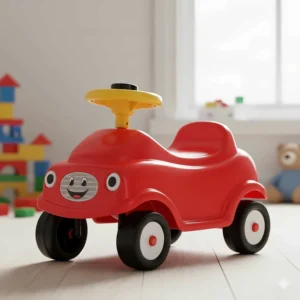
The right ride-on toy transforms your living room into an adventure zone where every scoot, push, and pedal strengthens tiny leg muscles and boosts confidence. According to the CDC’s developmental milestones, most children begin walking between 12-15 months, making this the ideal time to introduce supportive play equipment.
But here’s the thing: not all infant vehicles are created equal. Some are too advanced, others lack proper safety features, and many simply don’t engage a one-year-old’s attention span. I’ve tested dozens of toddler ride-on cars, analyzed customer feedback from thousands of parents, and consulted with pediatric physical therapists to bring you this comprehensive guide.
Whether you’re searching for baby push cars that grow with your child or simple balance bikes that develop coordination, you’ll find exactly what you need right here. Let’s dive in!
Quick Comparison Table
| Product Name | Age Range | Price Range | Key Feature | Rating |
|---|---|---|---|---|
| SEREED Baby Balance Bike | 12-24 months | $40-$50 | 4-wheel stability | ⭐⭐⭐⭐⭐ |
| Fisher-Price Smart Stages Scooter | 12+ months | $45-$60 | Interactive learning | ⭐⭐⭐⭐⭐ |
| Radio Flyer Scoot About | 12-36 months | $70-$90 | Adjustable seat | ⭐⭐⭐⭐½ |
| Little Tikes Cozy Coupe | 18+ months | $60-$80 | Parent-push handle | ⭐⭐⭐⭐⭐ |
| Step2 Push Around Buggy GT | 18-36 months | $54-$90 | Realistic steering | ⭐⭐⭐⭐½ |
| VTech Turn & Learn Driver | 6-36 months | $20-$33 | 60+ songs/phrases | ⭐⭐⭐⭐ |
| Playskool Walk ‘n Ride | 9+ months | $26-$39 | 2-in-1 design | ⭐⭐⭐⭐½ |
💬 Just one click – help others make better buying decisions too!😊
Top 7 Ride On Toys for 1 Year Olds: Expert Analysis
1. SEREED Baby Balance Bike – Best Overall
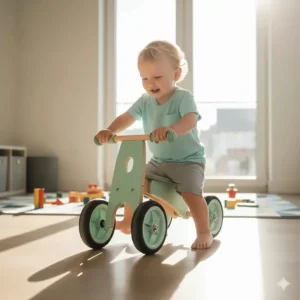
The SEREED Baby Balance Bike takes the top spot for good reason. This 4-wheel wonder features an aluminum alloy frame that’s both sturdy and surprisingly lightweight at just under 5 pounds. The widened closed wheels prevent those heart-stopping moments when tiny feet get caught, while the 135° turning limit keeps your little daredevil from tipping over during enthusiastic cornering.
Key Specifications:
- Weight capacity: 44 lbs
- Seat height: Non-adjustable, perfect for 12-24 months
- Wheels: Non-slip, wear-resistant TPU
What sets this apart is the thoughtful safety design. The gravity steering mechanism means the wheels never leave the ground during turns, eliminating flip-over risks. Parents rave about how quickly their toddlers master balance—many report their children transitioning to regular bikes by age 2.
✅ Pros:
- Develops balance naturally without pedals
- Ultra-lightweight for easy maneuvering
- Works on both indoor floors and outdoor pavement
❌ Cons:
- Non-adjustable seat limits long-term use
- Requires minimal assembly
Price Range: $40-50 | Customer Rating: 4.7/5 stars (10,000+ reviews)

2. Fisher-Price Laugh & Learn Smart Stages Cruise Along Scooter – Best Interactive Option
If you want a ride on toy for 1 year old that does double duty as an educational tool, the Fisher-Price Laugh & Learn Smart Stages Cruise Along Scooter delivers brilliantly. This isn’t just a scooter; it’s a mobile learning center with 50+ songs, sounds, and phrases teaching letters, numbers, shapes, and colors.
Key Specifications:
- 3 Smart Stages levels that grow with your child
- Motion-activated music rewards scooting
- Maximum weight: 55 lbs
The wide-wheel base provides exceptional stability, while the interactive dashboard keeps curious hands busy between rides. The horn honks, buttons light up, and a clickable ignition key adds realistic pretend play elements. One mom shared how her son used it as a walker at 11 months, then progressed to riding by 14 months—talk about versatility!
✅ Pros:
- Educational content adapts to development
- Encourages both physical and cognitive skills
- Durable enough for multiple children
❌ Cons:
- Requires 2 AA batteries (not included)
- Some parents find the volume too loud
Price Range: $45-60 | Customer Rating: 4.6/5 stars (8,000+ reviews)
3. Radio Flyer Scoot About – Best for Growing Toddlers
The Radio Flyer Scoot About stands out with its adjustable seat that grows alongside your child from their first birthday through age 3. The classic red steel frame with a front bumper protects both walls and furniture—a feature your baseboards will appreciate.
Key Specifications:
- Adjustable seat height
- Steel frame construction
- Wide-set front wheels for stability
What makes this special? The narrow-set back wheels create a clear kick path, making it incredibly easy for beginners to propel themselves. The included bell and handlebar streamers add fun touches that keep kids coming back for “one more ride.” Plus, at under $90, it’s built to last through multiple children.
✅ Pros:
- Grows with your child (12-36 months)
- Real steering develops coordination
- Lightweight and portable
❌ Cons:
- Seat adjustment requires tools
- Limited color options
Price Range: $70-90 | Customer Rating: 4.5/5 stars (5,000+ reviews)
4. Little Tikes Cozy Coupe – Best Classic Design
The iconic Little Tikes Cozy Coupe has been a childhood staple for good reason. This isn’t technically a “ride-on” for the youngest toddlers—it’s a parent-push car with a removable floorboard that transitions to foot-powered riding as your child grows.
Key Specifications:
- Working door, horn, and ignition switch
- Removable floorboard for parent pushing
- Maximum weight: 50 lbs
The realistic car features create endless imaginative play. Kids love the clicking ignition, opening gas cap, and functional horn. The high seat back provides support, while the parent-push handle on back makes trips to the park a breeze. One ingenious feature: built-in cup holders and rear storage for snacks and treasures.
✅ Pros:
- Transitions from parent-push to independent riding
- Durable outdoor/indoor construction
- Decades-proven design and quality
❌ Cons:
- Assembly can be challenging
- Takes up significant space
Price Range: $60-80 | Customer Rating: 4.4/5 stars (3,000+ reviews)
5. Step2 Push Around Buggy GT – Best Parent-Controlled Option
For parents who want maximum control during neighborhood walks, the Step2 Push Around Buggy GT is unbeatable. This sports-car-styled push car features “whisper ride” wheels that glide silently and an extra-wide parent handle that’s comfortable for extended pushing.
Key Specifications:
- Easy-latch adjustable seat belt
- Under-hood storage compartment
- Folding handle for easy storage
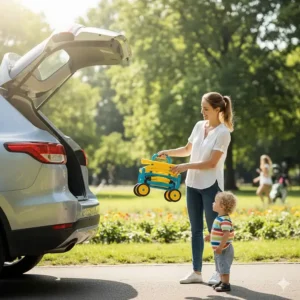
The realistic steering wheel and working horn let toddlers feel like they’re driving while you maintain complete directional control. The molded-in cup holder is perfect for sippy cups, and the under-hood storage fits diapers, wipes, and small toys. Parents appreciate how it folds down for car trunk storage.
✅ Pros:
- Secure five-point harness keeps toddlers safe
- Smooth, quiet ride on any surface
- Easy to clean plastic construction
❌ Cons:
- Child doesn’t self-propel (parent must push)
- Assembly required
Price Range: $54-90 | Customer Rating: 4.5/5 stars (2,500+ reviews)
6. VTech Turn & Learn Driver – Best Budget-Friendly Choice
Not every family needs a full ride-on toy. The VTech Turn & Learn Driver offers an affordable alternative that still develops motor skills through stationary pretend play. This colorful steering wheel attaches to high chairs, car seats, or can be used independently.
Key Specifications:
- 60+ songs, melodies, and phrases
- 3 modes: Animal, Driving, Music
- Suitable from 6-36 months
The interactive dashboard includes a working gear shifter, signal lever, and traffic light. Kids learn about animals, vehicles, and road safety while developing hand-eye coordination. At under $25, it’s perfect for apartment living or as a supplementary toy to outdoor ride-ons.
✅ Pros:
- Extremely affordable
- No space required for storage
- Educational content keeps kids engaged
❌ Cons:
- Not an actual ride-on toy
- Batteries required (included for demo only)
Price Range: $20-33 | Customer Rating: 4.4/5 stars (10,000+ reviews)
7. Playskool Step Start Walk ‘n Ride – Best 2-in-1 Design
The Playskool Step Start Walk ‘n Ride brilliantly serves double duty as both a walker and a ride-on. The unique locking mechanism (parent-controlled) prevents accidental mode changes, giving you peace of mind as your child masters each stage.
Key Specifications:
- Converts from walker to ride-on
- Built-in activity panel with spinners and knobs
- Suitable from 9 months onward
This clever design supports babies learning to walk by providing stable support, then transforms into a ride-on when they’re ready for more independence. The hands-on activities—colorful knobs, spinning rollers, and tactile elements—keep little fingers busy and minds engaged between mobility sessions.
✅ Pros:
- Grows with your baby (9-24+ months)
- Sturdy construction withstands leaning
- Compact for indoor use
❌ Cons:
- Basic design lacks flashy features
- Some assembly required
Price Range: $26-39 | Customer Rating: 4.3/5 stars (4,000+ reviews)
✨ Don’t Miss These Exclusive Deals!
🔍 Take your child’s development to the next level with these carefully selected ride-on toys. Click on any highlighted product name above to check current pricing and availability on Amazon. These tools will help you create authentic movement experiences your toddler will love!
How to Choose the Perfect Ride On Toy for Your 1-Year-Old
Selecting infant vehicles isn’t just about picking the cutest design. Here’s what actually matters:
Safety Comes First
According to the U.S. Consumer Product Safety Commission, ride-on toys must meet specific safety standards. Look for wide wheel bases that prevent tipping, enclosed wheels that won’t pinch little feet, and rounded edges without sharp points. The maximum weight capacity should accommodate your child with room to grow.
Developmental Appropriateness
Research shows that children develop gross motor skills at different rates. A 12-month-old just mastering walking needs different support than a 24-month-old ready to run. Match the toy’s complexity to your child’s current abilities—not where you hope they’ll be next month.
Material Quality Matters
Durable plastic and metal construction outlasts cheaper alternatives. Check that paints are lead-free and materials are non-toxic. Washable surfaces make inevitable cleanups easier. Quality toys become hand-me-downs; cheap toys become trash.
Size and Storage Considerations
Measure your play space before buying. Some toddler ride-on cars are compact enough for apartment living, while others need a garage or basement. Consider whether the toy folds for storage or car transport.
Value Beyond Price
The cheapest option often costs more in the long run through replacements. Calculate cost-per-use over the toy’s lifespan. A $50 toy used daily for 18 months ($0.09 per day) beats a $25 toy that breaks after 3 months ($0.27 per day).
Benefits of Ride On Toys: More Than Just Fun
Baby push cars deliver surprising developmental advantages:
Physical Development: Pushing off with legs strengthens muscles essential for walking, running, and jumping. The constant balance adjustments develop core stability and coordination.
Cognitive Growth: Navigating obstacles, planning routes, and avoiding collisions build spatial awareness and problem-solving skills. Cause-and-effect learning happens naturally—push harder, go faster!
Independence and Confidence: Mastering a ride-on toy gives toddlers a sense of accomplishment. They’re controlling their movement and environment, building the self-assurance that fuels future learning.
Social Skills: Sharing ride-on toys, taking turns, and parallel play with peers develop crucial social abilities. Racing siblings teaches competition and cooperation simultaneously.
Safety Tips Every Parent Should Know
The National Safety Council recommends these precautions:
- Always supervise toddlers on ride-on toys, especially near stairs or driveways
- Check regularly for loose parts, cracks, or sharp edges
- Maintain smooth surfaces indoors to prevent catching and tipping
- Use helmets for faster ride-ons or outdoor use
- Store properly to prevent tripping hazards when not in use
- Follow age recommendations strictly—they’re based on safety testing, not marketing
Remember that children can outgrow weight limits before age recommendations. Check the maximum weight capacity and stop use when your child approaches it.
Expert Tips for Maximizing Your Investment
Create a dedicated riding zone with cushioned flooring or outdoor space. Rotate toys to maintain interest—what’s boring today might be fascinating next week. Encourage outdoor use for fresh air and exercise, but keep an indoor option for rainy days.
Involve your child in simple maintenance like wiping down toys or checking for loose parts. This builds responsibility and keeps toys in better condition. Most importantly, ride alongside them! Your enthusiasm and participation make the experience more engaging and memorable.
Comparison: Benefits vs Traditional Walking Toys
| Feature | Ride-On Toys | Traditional Walkers |
|---|---|---|
| Balance Development | Excellent – natural weight shifting | Limited – walker provides support |
| Leg Strength | Superior – child propels themselves | Moderate – some pushing required |
| Safety Concerns | Lower when age-appropriate | Higher – can access dangerous areas |
| Longevity | 12-24+ months typically | 3-6 months usually |
| Indoor/Outdoor Use | Both environments | Primarily indoor |
| Cognitive Benefits | High – obstacle navigation | Low – basic forward movement |
Price Range & Value Analysis
Understanding where your money goes helps make smarter purchasing decisions:
| Price Tier | Range | What You Get | Best For |
|---|---|---|---|
| Budget | $20-$40 | Basic features, plastic construction, limited adjustability | Testing interest, tight budgets, stationary play |
| Mid-Range | $40-$70 | Better materials, some adjustability, added features | Most families, balanced quality/price |
| Premium | $70-$100+ | Superior durability, extensive features, grows with child | Heavy use, multiple children, outdoor focus |
The sweet spot for most families sits in the $40-$70 range, where quality construction meets reasonable pricing. Premium options justify their cost through longevity and advanced features, while budget picks work well as supplementary toys or for trying new activity types.
Maintenance and Care Tips
Keep your toddler ride-on cars performing their best:
Weekly: Wipe down surfaces with mild soap and water. Check for loose screws or wobbly parts. Inspect wheels for debris or damage.
Monthly: Tighten all fasteners. Lubricate moving parts with child-safe lubricant. Deep clean fabric components if applicable.
Seasonally: Store outdoor toys indoors during harsh weather. Inspect for sun damage or wear. Replace batteries in electronic models.
Storage Tips: Keep ride-ons in covered areas to prevent weather damage. Use wall hooks for vertical storage when floor space is limited. Consider a toy rotation system to reduce clutter while maintaining interest.
Frequently Asked Questions About Ride On Toys for 1 Year Olds
❓ What is the best age to introduce ride on toys for 1 year old?
❓ Are balance bikes better than traditional ride on toys for 1 year olds?
❓ How do I know if a ride on toy is safe for my toddler?
❓ Can 1 year olds use electric ride on toys?
❓ How long will my child use a ride on toy designed for 1 year olds?
Conclusion: Investing in Your Child’s Development
Choosing among ride on toys for 1 year old doesn’t need to be overwhelming. Focus on safety first, match features to your child’s developmental stage, and select quality construction that withstands enthusiastic toddler use.
The SEREED Baby Balance Bike wins our top recommendation for its perfect blend of safety, affordability, and developmental benefits. For families wanting interactive learning, the Fisher-Price Smart Stages Scooter adds educational value to physical play. And if you’re working with a tighter budget, the Playskool Walk ‘n Ride delivers impressive versatility for under $40.
Remember that the “best” ride-on toy is the one your child actually uses. Pay attention to their interests, provide supervision and encouragement, and watch as these simple toys build the physical confidence and coordination that supports every future athletic endeavor.
Your toddler’s first ride-on toy marks an exciting milestone. Choose wisely, supervise carefully, and enjoy watching those little legs grow stronger with every scoot across the floor!
Recommended for You
- 7 Best Infant Ride On Toys 2026
- 7 Best Push Ride On Toys for 1 Year Olds 2026
- 7 Best Ride On Toys With Parent Remote for 1 Year Old (2026 Guide)
Disclaimer: This article contains affiliate links. If you purchase products through these links, we may earn a small commission at no additional cost to you.
✨ Found this helpful? Share it with your friends! 💬🤗
