
In This Article
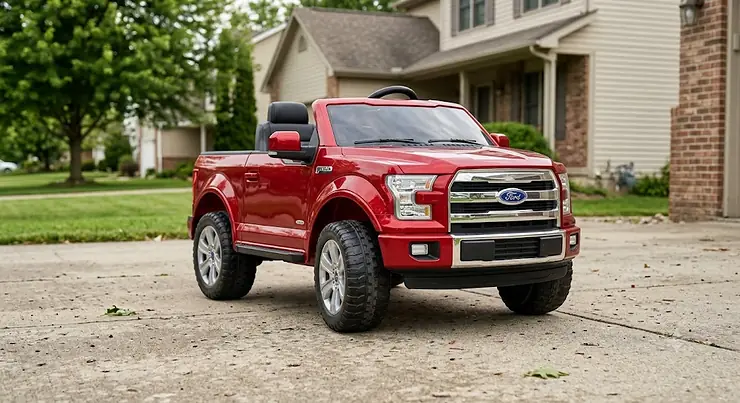
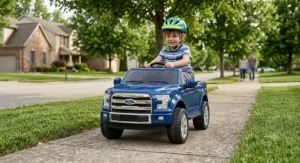
Somewhere in your driveway, there’s a four-year-old who has already decided they’re a truck person. You know the type — boots on the wrong feet, sound effects for every maneuver, absolutely convinced that a plastic steering wheel is a serious piece of machinery. A ford f150 ride on truck for kids is built for exactly that kid, and honestly, for the parent standing behind them grinning like an idiot.
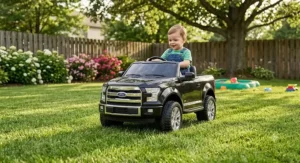
So what is a ford f150 ride on truck for kids? It’s a battery-powered, kid-scaled replica of Ford’s best-selling pickup — usually 12V or 24V, complete with working headlights, a horn, a parent remote, and (on the better models) a functioning tailgate and truck bed. Think of it as a driveway apprenticeship for future truck owners.
The problem is the market is a mess of near-identical listings, vague specs, and marketing copy that reads like it was written by the truck itself. Some of these trucks are genuinely well-engineered little machines with real suspension and metal frames. Others are glorified lawn ornaments that die by Labor Day. This guide pulls apart seven real, currently available models — from a budget-friendly toddler cruiser to a two-seat 4WD monster — so you can figure out which one actually deserves a spot next to your real Ford F-150 in the driveway.
We’ll cover everything from licensed Ford F150 Raptor ride on trims to which trucks can actually pull a trailer, plus the unglamorous but important stuff: working truck bed storage, tailgate function, and that chrome grille detail every kid points at before they even ask about the horn.
Quick Comparison Table
Before we go deep on all seven trucks, here’s the cheat sheet. If you’re skimming this on your phone in a Target parking lot (no judgment), this table is for you.
| Truck | Voltage | Seats | Best For | Price Range |
|---|---|---|---|---|
| Power Wheels Ford F-150 Raptor Extreme | 12V | 2 | Off-road realism & chrome styling | $300–$400 range |
| First Ride On Ford F-150 Raptor 12V | 12V | 1 | Truck bed storage on a budget | $180–$230 range |
| First Ride On Ford F-150 Raptor 24V 2-Seater | 24V | 2 | Siblings who won’t share | $350–$430 range |
| Freddo Ford F-150 24V 4WD | 24V | 2 | True 4-wheel-drive power | $400–$480 range |
| Huffy Ford F-150 Platinum 6V | 6V | 1 | First-time toddler drivers | $130–$170 range |
| Kid Trax Ford F-150 12V | 12V | 1 | Classic mid-range reliability | $200–$260 range |
| Huffy Ford F-150 Raptor 12V (Carbonized Grey) | 12V | 2 | Two-speed flexibility | $220–$280 range |
A quick read of that table tells the real story: voltage and seating are doing most of the work here. The 6V option is squarely a toddler’s first taste of independence, the 12V trucks are the sweet spot for most 3–8 year-olds, and the 24V models are for kids (and honestly, some very committed grandparents) who want real torque and a second seat for a sibling or friend. Price tends to climb with voltage and seat count, which makes sense — more motor, more battery, more plastic to mold into a chrome grille.
💬 Found one that jumped out at you already? Bookmark this page — you’ll want to compare it against the rest before you commit.
Top 7 Ford F150 Ride On Trucks: Expert Analysis
We dug through real listings, real spec sheets, and real aggregated review sentiment to build this list — not a rewritten Amazon description. Each pick below covers a different budget, use case, or kid personality, from the toddler who just wants to press buttons to the eight-year-old who’s already asking about “real 4-wheel drive.”
1. Power Wheels Ford F-150 Raptor Extreme 12V — chrome accents and a lifted body
The standout here is obvious the moment you open the box: this thing looks aggressive. The Raptor Extreme trim gets a taller ride height and genuine chrome grille detailing that catches the sun in a way cheaper trucks just don’t.
Under the hood (well, under the seat), you’re getting a 12V battery with Power Wheels’ Monster Traction system, which is engineered specifically to keep the oversized tires gripping on wet grass and loose gravel rather than spinning uselessly. Top speed runs 5 mph forward and 2.5 mph in reverse, with a parent-activated high-speed lockout for beginners. The roomy bed includes a working tailgate, which turns out to matter more than you’d think for kids who like hauling sticks, buckets, and the occasional unimpressed cat.
Based on the spec comparison against the rest of this list, this is the truck for parents who want the most “real truck” feeling without stepping up to 24V pricing. It seats two kids up to a combined 130 lbs, so it survives sibling rivalry reasonably well. Reviewers consistently note that the FM/MP3 radio (which needs its own C batteries, separate from the ride battery) is a nice touch but can feel like an afterthought compared to the newer Bluetooth-equipped trucks lower on this list.
Pros:
- ✅ Chrome grille and lifted body deliver genuine Raptor styling
- ✅ Monster Traction system handles grass, gravel, and mud
- ✅ Working tailgate for real hauling play
Cons:
- ❌ Radio requires separate C batteries not included in the ride battery
- ❌ Two-person assembly recommended due to size and weight
At around $300–$400, the Power Wheels Ford F-150 Raptor Extreme 12V sits at the premium end of the 12V category, and the styling is genuinely what you’re paying the premium for.
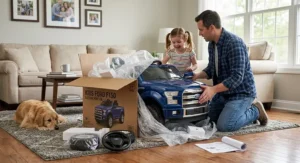
2. First Ride On Ford F-150 Raptor 12V — best truck bed storage on a budget
What most buyers overlook about this model is that it packs a genuinely usable rear storage compartment into a mid-priced 12V truck, which is rarer than it should be at this price point.
The spec sheet lists a soft-start acceleration system, a secure 3-point harness, and raised side panels that add real protection during turns — details that matter more once your kid starts taking corners at actual speed instead of a nervous crawl. Bluetooth connectivity and FM radio come standard, along with an early-learning audio mode that’s a nice bonus for the 2–3 year-old crowd who aren’t purely in it for the horsepower.
This is the pick for parents who want the officially licensed Ford F150 Raptor ride on experience — bold front grille, raised styling, and authentic badging — without paying the 24V premium. Aggregated review sentiment consistently praises the truck bed storage as functional rather than decorative; owners report it easily holding a couple of sand toys or a juice box stash for backyard missions. On the flip side, some reviewers note the single-seat cabin runs a bit snug for kids past the 5-year mark.
Pros:
- ✅ Functional truck bed storage, not just a cosmetic bed
- ✅ Officially licensed Raptor styling and badging
- ✅ Soft-start system smooths out the initial acceleration jolt
Cons:
- ❌ Single seat gets tight for kids over 5
- ❌ Lower top speed than the 24V models on this list
Priced in the $180–$230 range, the First Ride On Ford F-150 Raptor 12V is arguably the best value pick if truck bed storage and Raptor styling are non-negotiable for your kid.
3. First Ride On Ford F-150 Raptor 24V 2-Seater — best for siblings who won’t share
Here’s what the spec sheet won’t tell you outright: this is functionally two ride-on trucks packed into one chassis, which is exactly why it earns its spot as the sibling-negotiation solution.
Dual 90W motors and a 24V 7Ah battery push this truck to a genuinely quicker pace than the 12V options, with roughly 110 minutes of runtime per charge. The 20-inch-wide bench seat comfortably fits two kids up to a combined 132 lbs, and the rear storage trunk (yes, this one also has a working truck bed with cargo space) keeps snacks and toys within arm’s reach during longer driveway expeditions. It’s also one of the easier trucks on this list to hitch a small pull-along wagon or ford f150 ride on truck with trailer accessory to, since the rear hitch point sits low and centered.
Based on the spec comparison, this is the model I’d point toward if you’ve got two kids close in age who are constitutionally incapable of taking turns. Reviewers consistently mention the 70%-pre-assembled build as a genuine time-saver, since you’re really just attaching wheels, the steering wheel, and mirrors rather than building a truck from scratch.
Pros:
- ✅ Two-child bench seating stops the “my turn” arguments
- ✅ Rear truck bed storage plus a low, centered trailer hitch point
- ✅ Ships 70% pre-assembled, cutting setup time significantly
Cons:
- ❌ Heavier overall, making it less portable between yards
- ❌ Higher price bracket than single-seat 12V alternatives
At $350–$430, the First Ride On Ford F-150 Raptor 24V 2-Seater earns its premium through genuinely useful two-kid capacity rather than just badge value.
4. Freddo Ford F-150 24V 4WD 2-Seater — true 4-wheel drive power
The standout advantage is right in the name: this is one of the only trucks on this list with legitimate 4-wheel drive, courtesy of four separate 90W motors (360W combined) rather than the single dual-motor setup most competitors use.
That extra motor count translates directly into torque you can feel — on paper this means better traction on loose dirt, thicker grass, and mild inclines that would stall a 2WD 12V truck. The build includes puncture-proof EVA foam tires (a meaningful upgrade over hollow plastic tires that go flat or crack), leather-style bench seating for two, and Y-style seatbelts rated for a combined 130 lbs. A 2.4G parent remote handles override duties, and the dashboard runs Bluetooth and FM radio with roughly an hour of runtime per charge.
This is squarely the pick for families who camp, have a big or uneven backyard, or just want the most capable machine on the block. Aggregated customer sentiment is unusually consistent here — multiple owners specifically call out the foam tires as quieter and more durable than the “cheap plastic” tires found on lower-tier competitors, and note the truck survived several days of daily use before needing its first charge.
Pros:
- ✅ True 4WD via four independent 90W motors
- ✅ Puncture-proof foam tires outlast typical hollow plastic tires
- ✅ Leather-style two-seat bench with proper Y-harness belts
Cons:
- ❌ Highest price point of the seven trucks on this list
- ❌ Only available in black or white color options
At $400–$480, the Freddo Ford F-150 24V 4WD is the splurge option, and it’s the one that best justifies its price with hardware you can actually measure.
5. Huffy Ford F-150 Platinum Truck 6V — first ride for the toddler crowd
The standout feature is refreshingly simple: this is a genuinely working scaled-down F-150, tailgate included, built specifically for the 3-to-7 age range rather than trying to stretch across every age bracket.
At 6V, this is intentionally the gentlest truck on this list — top speed is capped at 2.5 mph, controlled through a simple push-to-go foot pedal paired with a forward-reverse toggle on the dash. What most buyers overlook is that “slow” is actually the point here; a toddler’s first ride-on shouldn’t feel like piloting a go-kart, and the deep-tread tires and 65-lb weight capacity are tuned for exactly that gentler learning curve. LED headlights, running lights, and a lit-up dashboard add just enough sensory payoff to keep a 3-year-old engaged without overwhelming them.
Reviewers consistently describe the working doors and tailgate function as the detail that sells kids on the “realness” of the truck, even at this lower price point — a small mechanical door latch does a lot of heavy lifting for a toddler’s imagination. On the downside, the 6V motor genuinely struggles on anything beyond flat, packed surfaces, so this isn’t the truck for a heavily sloped or gravel-heavy yard.
Pros:
- ✅ Working doors and tailgate for realistic toddler play
- ✅ Gentle 2.5 mph top speed built for first-time drivers
- ✅ Simple recharge — plug directly into the vehicle, no battery removal
Cons:
- ❌ Struggles with inclines and loose gravel at 6V power
- ❌ Weight cap (65 lbs) means kids age out quickly
At $130–$170, the Huffy Ford F-150 Platinum Truck 6V is the most affordable entry point on this list, and it’s honestly the right call for most 3-year-olds.
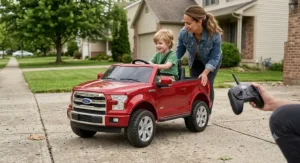
6. Kid Trax Ford F-150 12V Ride-On Truck — classic mid-range reliability
The standout here isn’t a headline feature so much as consistency — this is the truck that’s been a fixture in the ride-on category long enough to build a real reputation, and it shows in the balance of price versus capability.
Kid Trax builds this on a 12V platform tuned for speeds up to roughly 5 mph, which puts it firmly in the “fast enough to be exciting, slow enough to be manageable” zone that most parents actually want. The bodywork borrows realistic F-150 cues — recognizable grille shape, body lines, and proportions — without chasing every premium feature on the pricier trucks above it on this list.
Based on aggregated review sentiment, this truck’s reputation rests on dependability rather than flash: it starts reliably, holds up to rough backyard use, and the realistic engine sound effects hold a kid’s attention longer than you’d expect from a mid-tier price point. The trade-off, honestly reported across multiple sources, is that it can struggle a bit on flat, dense grass and isn’t rated to carry heavier kids as gracefully as the 24V options above.
Pros:
- ✅ Reliable mid-range performance with a recognizable F-150 silhouette
- ✅ Realistic engine sound effects that hold attention
- ✅ Strong reputation for durability through rough backyard play
Cons:
- ❌ Can struggle on flat, dense grass surfaces
- ❌ Less weight capacity headroom than the 24V two-seaters
Landing around $200–$260, the Kid Trax Ford F-150 12V Ride-On Truck is the safe, no-surprises middle-of-the-road choice.
7. Huffy Ford F-150 Raptor 12V (Carbonized Grey) — two-speed flexibility for growing kids
The standout advantage is the two distinct speed settings — a genuinely useful feature that lets one truck grow with a child instead of being outgrown in a single summer.
On Low Speed, the truck tops out around 2.5 mph, ideal for a nervous first-timer navigating a tight driveway loop. Flip to High Speed and it climbs to 5 mph with working forward and reverse gears, letting an older, more confident kid practice actual parking maneuvers and three-point turns. The two-rider design holds a combined 125 lbs, and the styling leans into authentic Raptor detailing — working doors, a full tailgate, and dashboard lighting that mimics the real truck’s instrument cluster.
Here’s what the spec sheet won’t tell you, but the broader Raptor styling comparison across this list does: the carbonized grey finish reads as more premium than the standard red or black trims at a similar price, which matters if you care about the thing not looking like every other ride-on at the block party. This is a strong pick for families who want Raptor badging without stepping up to the 24V price tier, though it shares the same “great on driveways, mediocre on thick grass” limitation common to most 12V trucks in this category.
Pros:
- ✅ Two selectable speeds extend the truck’s useful lifespan
- ✅ Two-seat capacity with authentic Raptor-inspired detailing
- ✅ Distinctive carbonized grey finish stands out visually
Cons:
- ❌ Same grass/gravel limitations typical of 12V trucks
- ❌ Two-rider weight cap (125 lbs) reached sooner than 24V models
At $220–$280, the Huffy Ford F-150 Raptor 12V (Carbonized Grey) is a smart middle-ground pick between the budget single-seaters and the premium 24V machines.
Full Spec Comparison: All 7 Trucks Side by Side
| Truck | Voltage | Top Speed | Weight Cap | Best For |
|---|---|---|---|---|
| Power Wheels Ford F-150 Raptor Extreme | 12V | 5 mph / 2.5 mph rev | 130 lbs | Chrome styling & off-road looks |
| First Ride On Ford F-150 Raptor 12V | 12V | ~3 mph | 66 lbs | Truck bed storage on a budget |
| First Ride On Ford F-150 Raptor 24V 2-Seater | 24V | Higher-speed 2-seat | 132 lbs | Siblings, trailer hitching |
| Freddo Ford F-150 24V 4WD | 24V | 4WD torque | 130 lbs | True off-road capability |
| Huffy Ford F-150 Platinum 6V | 6V | 2.5 mph | 65 lbs | First-time toddler drivers |
| Kid Trax Ford F-150 12V | 12V | Up to 5 mph | Moderate | Dependable mid-range pick |
| Huffy Ford F-150 Raptor 12V (Grey) | 12V | 2.5 / 5 mph, 2-speed | 125 lbs | Two-speed growth flexibility |
Laid out side by side like this, the pattern becomes obvious: voltage predicts speed and weight capacity almost perfectly, while the real differentiators — chrome grille detailing, trailer compatibility, working tailgates — show up mostly in the premium tier. If you’re torn between two trucks in the same voltage class, the tiebreaker usually comes down to whichever one nails the specific feature (storage, styling, or seating) your kid actually cares about.
✨ Don’t Miss These Exclusive Deals!
🔍 Take your ford f150 ride on truck for kids search to the next level with these carefully selected models. Click on any highlighted truck above to check current pricing and availability. These little machines help create authentic backyard memories your family will love!
Practical Usage Guide: First 30 Days With Your Ride-On Truck
Getting the truck out of the box is only half the job — the real work happens in the first month, and this is where most preventable problems happen too. Start by fully charging the battery before the very first drive, even if the manual says it arrives partially charged; a full initial charge conditions most lead-acid or SLA batteries for a longer effective lifespan. Most 12V trucks take 8–12 hours for that first charge, so plan the reveal for the morning after it arrives, not the same afternoon.
During week one, keep the parent remote in high-speed lockout and let your kid get comfortable with the foot pedal before unlocking full speed — nearly every safety issue reported with these trucks traces back to a first-time driver going full speed before they’ve built basic pedal control. Check tire pressure or tread contact weekly if you’re on gravel or uneven ground, since that’s where premature wear shows up fastest.
A common mistake in the first 30 days is leaving the truck outside uncovered overnight; UV exposure fades the chrome grille finish faster than almost anything else, and moisture in the battery compartment is a leading cause of early electrical failures. A cheap tarp or garage spot solves both problems. Finally, tighten any assembly bolts again after the first week — vibration from normal driving loosens hardware faster than you’d expect on a brand-new build.
Real-World Scenarios: Matching the Truck to Your Kid
The cautious first-timer (age 2–4, flat driveway, budget-conscious): This is the Huffy Ford F-150 Platinum Truck 6V territory. Low weight cap, capped 2.5 mph speed, and a gentle learning curve make it the right call for a kid who’s never driven anything faster than a tricycle. Skip the 24V trucks entirely here — the extra torque solves a problem this kid doesn’t have yet.
The sibling duo (ages 4–8, shared backyard, moderate budget): Either the Power Wheels Ford F-150 Raptor Extreme 12V or the First Ride On Ford F-150 Raptor 24V 2-Seater solves the “it’s my turn” standoff before it starts. If your yard has any incline or thick grass, lean toward the 24V option for the extra torque; if it’s mostly flat and paved, the 12V Raptor Extreme’s chrome styling and lower price make it the better value.
The off-road adventurer (age 5–9, uneven yard, higher budget, wants a trailer): The Freddo Ford F-150 24V 4WD is the clear pick, especially paired with a small pull-along trailer for hauling toys across the yard — the low centered hitch point and genuine 4WD torque make this the only truck on this list built to actually tow something without stalling on the first bump.
Problem → Solution Guide
Problem: The truck won’t hold a charge like it did on day one. This is almost always sulfation in a lead-acid battery from repeated partial charges. Solution: let the battery fully drain occasionally, then charge it completely — most 12V and 24V trucks on this list use SLA batteries that respond well to full charge cycles rather than frequent top-offs.
Problem: The tailgate function jams or won’t latch. Dirt and grass clippings build up in the hinge over time on trucks like the Power Wheels Raptor Extreme and the Huffy Platinum 6V. Solution: a quick brush-out of the hinge area every couple weeks, plus a drop of light silicone lubricant, usually solves it without any tools.
Problem: The chrome grille detail is scratched or dulling. UV exposure and rough contact during storage are the usual culprits. Solution: store the truck under cover, and use a plastic-safe polish rather than an abrasive cleaner, which can dull chrome-finish plastic permanently.
Problem: The truck struggles to pull a ford f150 ride on truck with trailer accessory. Most single-motor 12V trucks simply don’t have the torque margin for towing extra weight. Solution: reserve trailer use for the 24V or 4WD models on this list — the Freddo Ford F-150 24V 4WD and First Ride On Ford F-150 Raptor 24V 2-Seater both have the low-mounted hitch points and motor headroom to handle it.
Problem: Truck bed storage items fly out during turns. An open bed with no lip or latch loses cargo on sharp corners. Solution: look specifically at models with a raised bed lip or add a simple bungee net — a two-dollar fix that solves an otherwise annoying problem.
How to Choose a Ford F150 Ride On Truck for Kids
- Match voltage to age and confidence. 6V suits first-time drivers age 2–4; 12V is the sweet spot for most 3–8 year-olds; 24V is best reserved for kids 5+ who want real speed or two-seat capacity.
- Check the weight capacity against your kid’s actual weight — not just their current age. A truck rated for 65 lbs gets outgrown fast if your child is already tall for their age.
- Decide if trailer towing matters to you. If your kid loves hauling toys around the yard, prioritize a 24V or 4WD model with a proper hitch point rather than trying to retrofit a 12V truck.
- Evaluate the terrain in your actual yard. Flat driveway and sidewalk? A 12V single-motor truck is plenty. Grass, gravel, or slight inclines? Step up to dual or quad motors.
- Look for genuine safety certifications, not just marketing language — confirm ASTM F963 compliance and a soft-start acceleration system, which meaningfully reduces jolting for new drivers.
- Consider truck bed storage and tailgate function as real usability features, not just cosmetic add-ons — kids genuinely use these for hauling toys, and a working tailgate holds attention longer than a fixed one.
- Budget for accessories up front, including a spare battery or trailer attachment, since add-on availability varies significantly between brands.
Common Mistakes When Buying a Ford F150 Ride On Truck
The single most common mistake is buying based purely on styling — chrome grille detail and Raptor badging are eye-catching, but they don’t tell you anything about motor torque or weight capacity, which matter far more for actual day-to-day satisfaction. A close second is underestimating terrain: a 12V single-motor truck that looks perfect in photos can genuinely stall out on thick grass, leaving a disappointed kid and a returned box.
Parents also frequently skip checking the weight capacity against realistic growth projections, buying a 6V toddler truck for a child who’s already near the weight cap and will outgrow it within a season. And a surprisingly common oversight: not confirming battery replacement availability before buying — some off-brand trucks use proprietary batteries that become hard to source after the first year, effectively ending the truck’s life once the original battery degrades.
Ford F150 Ride On Truck vs Traditional Pedal & Push Ride-Ons
A ford f150 ride on truck for kids and a traditional pedal car solve genuinely different problems, and the comparison is worth taking seriously before you buy either one.
| Feature | Electric F150 Ride-On | Traditional Pedal/Push Ride-On |
|---|---|---|
| Power Source | Battery (6V–24V) | Kid’s own leg power |
| Realistic Features | Lights, sounds, working doors/tailgate | Minimal, mostly cosmetic |
| Physical Activity | Low — mostly steering and pedal press | High — full leg engagement |
| Maintenance | Battery charging, occasional part wear | Nearly none |
| Best For | Imaginative, tech-curious kids | Building gross motor skills |
The honest analysis here: electric trucks win decisively on immersion and “wow factor,” which is exactly why the licensed Ford F150 Raptor ride on trucks on this list command a price premium — kids respond strongly to authentic badging, lights, and sound effects. But pedal-powered ride-ons still have a real developmental edge in building leg strength and gross motor coordination, since there’s no motor doing the work for them. Most pediatric development resources suggest a mix of both is ideal rather than treating this as an either-or decision.
💬 Not sure which category fits your family? Compare a couple of each type before you commit — it’s a cheap way to avoid buyer’s remorse.
Licensed Ford F150 Raptor Ride On Trucks: What Sets Them Apart
Not every “F150-style” ride-on is actually licensed, and the difference matters more than most listings let on. An officially licensed Ford F150 Raptor ride on truck has gone through Ford’s brand approval process, meaning the grille shape, badging placement, and body proportions are checked against the real vehicle rather than loosely inspired by it. That’s the difference between a grille that just looks chrome-ish and genuine chrome grille detail that mirrors the actual Raptor’s aggressive mesh pattern.
Four of the seven trucks on this list — the Power Wheels Raptor Extreme, both First Ride On Raptor models, and the Huffy Raptor 12V — carry that official Raptor licensing, and it shows in small details: the raised hood scoop styling, the Raptor-specific badge placement, and side graphics that mirror the real truck’s off-road trim. Based on the spec comparison, the licensing itself doesn’t change performance — a licensed Raptor and an unlicensed generic pickup with the same voltage will drive essentially the same. What you’re really paying the Raptor premium for is authenticity that a truck-obsessed kid will absolutely notice, and that a family photo in front of the real thing will actually match.
Truck Bed Storage, Tailgate Function & Chrome Grille: Features That Actually Matter
Marketing copy loves to bullet-point every feature equally, but not all of them earn their keep in actual backyard use. Working truck bed storage is one that genuinely does — kids use it constantly for hauling sand toys, sticks, water balloons, and whatever else counts as cargo that week. The best implementations, like the bed on the First Ride On Raptor 24V 2-Seater, include a raised lip that keeps smaller items from bouncing out on turns.
Tailgate function is the second feature that consistently earns its place. A tailgate that actually drops and latches — not just a fixed plastic panel painted to look functional — adds a layer of pretend-play realism that keeps kids engaged well past the novelty of the first week. Reviewers across multiple models specifically call out the tailgate as a “kids play with this constantly” feature rather than a spec-sheet checkbox.
Chrome grille detail, on the other hand, is mostly aesthetic — and that’s fine, but it’s worth being honest about it. It’s the feature that sells the truck in photos and in the driveway “look what I got” moment, but it doesn’t affect performance, durability, or play value the way storage and tailgate function do. If you’re choosing between two similarly specced trucks and one has nicer chrome detailing, let that be the tiebreaker — just don’t let it be the deciding factor over motor power or weight capacity.
Long-Term Cost & Maintenance
The sticker price is only the entry fee. Over a typical 2–3 year ownership window, expect to budget for at least one replacement battery — SLA batteries in this category generally last 1–2 years of regular use before their runtime noticeably drops, and replacements typically run in the $30–$60 range depending on voltage. Tires are the other recurring cost; foam or EVA tires like those on the Freddo 4WD hold up longer than hollow plastic tires, which can crack or go flat after a season of gravel driveway use.
| Cost Factor | 6V/12V Trucks | 24V Trucks |
|---|---|---|
| Replacement Battery | $30–$50 range | $50–$80 range |
| Typical Battery Lifespan | 1–2 years | 1.5–2.5 years |
| Tire Replacement | $10–$20 per set | $15–$30 per set |
| Resale Value Retention | Moderate | Higher (licensed models) |
Interpreting that table honestly: the 24V trucks cost more upfront and more to maintain per replacement part, but they also tend to hold resale value better, especially the officially licensed models, since demand for gently-used premium ride-ons stays fairly consistent on local marketplaces. If you’re planning to resell once your kid outgrows it, that resale bump partially offsets the higher initial and maintenance costs.
Safety, Regulations & Compliance Guide
Every truck on this list should meet ASTM F963, the mandatory U.S. toy safety standard enforced under the Consumer Product Safety Improvement Act, which covers mechanical hazards, electrical safety, and material toxicity. Before buying any ride-on, it’s worth spending five minutes on the CPSC’s toy safety guidance, which covers age-appropriate riding toy selection and basic supervision recommendations that apply directly to battery-powered ride-ons.
Beyond certification, a few practical habits matter more than any spec sheet. Always supervise young kids on these trucks near driveways, streets, or pools — even a 2.5 mph truck can carry a toddler into traffic faster than you’d expect. Keep the parent remote within reach during the first several weeks of ownership, since the high-speed lockout is genuinely the most effective safety feature most of these trucks include. It’s also worth checking for open recalls before a purchase, particularly on older or secondhand units — the CPSC’s riding toy recall listings are a fast way to confirm a specific model hasn’t had a documented safety issue like a stuck accelerator.
Frequently Asked Questions
❓ What age is a ford f150 ride on truck for kids appropriate for?
❓ Can a ford f150 ride on truck pull a trailer?
❓ Is a licensed Ford F150 Raptor ride on worth the extra cost?
❓ How long does the battery last on a full charge?
❓ Do these trucks work well on grass and gravel?
Conclusion
Picking the right ford f150 ride on truck for kids really comes down to three honest questions: how confident is your kid behind the wheel, what does your yard actually look like, and how much do details like a working tailgate, real truck bed storage, and chrome grille styling matter to your family. There’s no universally “best” pick on this list — the Huffy Ford F-150 Platinum Truck 6V is the right call for a cautious 3-year-old on a flat driveway, while the Freddo Ford F-150 24V 4WD earns its higher price tag for families who actually need serious torque and trailer capability.
What ties all seven trucks together is that the good ones treat the “toy” label loosely — real suspension, real safety certifications, and mechanical details like tailgates and doors that actually function rather than just look the part. Whichever one ends up in your driveway, budget a little time in the first month for setup, charging discipline, and the occasional hinge cleaning, and it’ll pay you back in a genuinely long season of backyard adventures.
✨ Don’t Miss These Exclusive Deals!
🔍 Ready to pick your family’s next ford f150 ride on truck for kids? Click on any highlighted model above to check current pricing and availability, and get ready for a driveway full of engine-sound-effect chaos!
Recommended for You
- 7 Best Jeep Wrangler Ride On Car 12V Picks for Kids (2026)
- 2 Seater Luxury Ride On Car for Toddlers: 7 Best Picks (2026)
- Rolls Royce Ride On Car for Kids: 7 Best Luxury Picks (2026)
Disclaimer: This article contains affiliate links. As an Amazon Associate, I earn from qualifying purchases. If you purchase products through these links, we may earn a small commission at no additional cost to you.
✨ Found this helpful? Share it with your friends! 💬🤗
