
In This Article
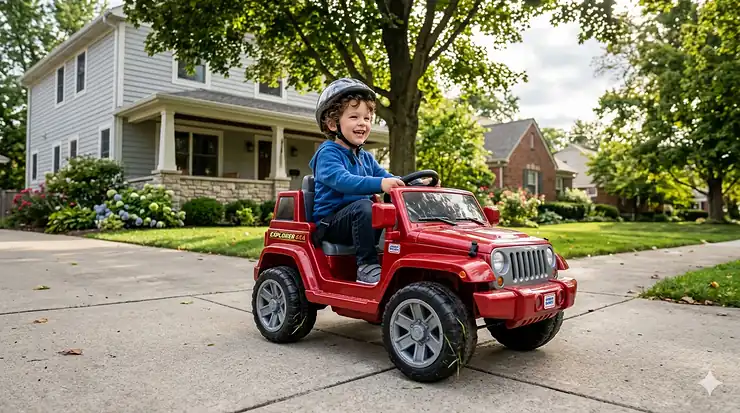
You know that moment when your four-year-old sees another kid cruising down the sidewalk in their own mini Mercedes or tractor, and suddenly everything else becomes background noise? That wide-eyed fascination isn’t just about the cool factor—it’s your child’s brain lighting up with possibility. I’ve watched countless parents navigate the overwhelming world of electric ride on toys for 4 year old, and here’s what nobody tells you upfront: the difference between a toy that gathers dust in the garage and one that becomes part of your family’s daily adventure often comes down to matching the right features to your specific situation.

Research from the University of Delaware’s Physical Therapy Department shows that powered ride-on vehicles function as learning environments that develop spatial awareness, motor planning, and problem-solving skills in ways that traditional toys simply can’t replicate. When you’re investing anywhere from $100 to $400 in battery powered ride on toys for 4 year old, you’re not just buying entertainment—you’re giving your child a tool for development that sneaks learning into pure joy.
But let’s be real: walk into any toy store or scroll through Amazon, and you’ll face an avalanche of options screaming about 12v ride on toys for 4 year old, parental remotes, Bluetooth speakers, and LED lights. Some promise speeds that make you nervous, while others look sturdy enough to survive a demolition derby. So how do you cut through the marketing noise and find what actually works?
This guide breaks down the seven best powered vehicles that real parents swear by in 2026, from budget-friendly picks under $150 to premium options that justify their price tag. We’ll cover everything from 12-volt cars age 4 can handle solo to 24V beasts that grow with your child, plus the safety features that actually matter versus the ones that just look good in photos.
Quick Comparison Table
| Product | Battery | Speed | Age Range | Remote Control | Price Range |
|---|---|---|---|---|---|
| ANPABO Mercedes-Benz G63 | 12V 7Ah | Up to 3 mph | 3-6 years | ✓ 2.4GHz | $210-250 |
| Best Choice Products 12V Truck | 12V | 2.8 mph | 3+ years | ✓ Yes | $150-200 |
| Power Wheels Jeep Wrangler | 12V | 2.5-5 mph | 3-7 years | ✗ No | $250-300 |
| Peg Perego John Deere Tractor | 12V 8Ah | 2.25-4.5 mph | 3-7 years | ✗ No | $350-400 |
| First Ride On Ford Bronco Raptor | 24V 7Ah | 2-4.3 mph | 3-8 years | ✓ 2.4GHz | $350-400 |
| Best Choice Products 12V ATV | 12V | 3.7 mph | 3+ years | ✗ No | $150-200 |
| Best Choice Products 6V Bumper Car | 6V | 1.2 mph | 1.5-6 years | ✓ 2.4GHz | $80-120 |
✨ Just one click – help others make better buying decisions too! 😊
✨ Don’t Miss These Exclusive Deals!
🔍 Take your outdoor playtime to the next level with these carefully selected products. Click on any highlighted item to check current pricing and availability. These electric toys will help you create authentic childhood memories your family will love!
Top 7 Electric Ride On Toys for 4 Year Old: Expert Analysis
1. ANPABO Licensed Mercedes-Benz G63 – Premium 12V Choice
The ANPABO Mercedes-Benz G63 stands out in the crowded field of ride on toys for 4 year old with remote control because it solves the battery life problem that plagues cheaper models. While most 12V cars ship with a standard 4.5Ah battery, ANPABO upgraded to a 7Ah power core—that’s 55% more capacity translating to longer play sessions and fewer frustrating mid-adventure power-outs.
Key Specifications:
- Dual 35W motors with 12V 7Ah battery
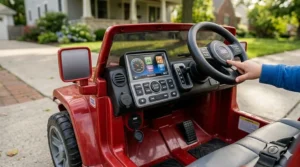
- Real-time battery display on dashboard
- Low battery voice prompt
- Weight capacity: 66 lbs
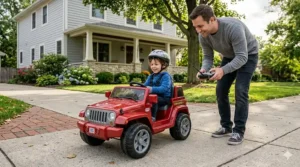
Parents consistently mention two standout features: the intelligent battery indicator that displays real-time power levels on the dashboard, and the soft-start function that prevents that jarring lurch forward when kids hit the gas. The 2.4GHz parental remote includes an emergency P-brake button—not just a suggestion to slow down, but an instant stop that overrides whatever your adventurous four-year-old is attempting.
Customer Insight: One verified buyer noted their four-year-old drives it daily on both concrete and dense grass without the motors struggling, something cheaper alternatives couldn’t handle. The licensed Mercedes styling with authentic grille details means it doesn’t scream “toy”—it looks like a scaled-down luxury SUV.
✅ Pros:
- 55% longer battery life than standard models
- Real-time battery monitoring prevents surprise shutdowns
- Dual control modes grow with child’s confidence
❌ Cons:
- Plastic doors can feel flimsy with rough handling
- Assembly requires 60-90 minutes
Price Range: $210-250
2. Best Choice Products 12V Kids Electric Vehicle – Best Budget Pick
When you need something reliable without the premium price tag, the Best Choice Products 12V Kids Electric Vehicle delivers exactly what four-year-olds need without the bells and whistles they’ll ignore anyway. This is the workhorse that parents buy for backyards and driveways where “good enough” means thousands of happy hours, not cutting corners.
Key Specifications:
- 12V battery with 2-hour runtime
- 2.8 mph safe max speed
- Spring suspension system
- 61 lbs weight capacity
The spring suspension is where this budget option surprises people—it’s not just decorative springs bolted to the wheels. Real shock absorption smooths out those bumps between sidewalk sections and grass-to-driveway transitions that make cheaper rides feel like riding a shopping cart downhill. The 2.4GHz remote gives parents full directional control, which matters more at age four than at six when kids develop better judgment.
What you won’t get: Bluetooth speakers, flashy LED light shows, or premium battery capacity. What you will get: a straightforward electric ride on toy that starts every time, runs for two hours on a charge, and doesn’t need a YouTube tutorial to assemble. The lockable doors and adjustable seatbelt check the essential safety boxes without overengineering.
Customer Insight: Multiple reviews mention this being the second or third ride-on in their household because older siblings wore out the first one through years of use—that’s the durability endorsement that matters more than marketing claims.
✅ Pros:
- Exceptional value under $200
- Real suspension makes rough terrain manageable
- Simple, reliable operation
❌ Cons:
- No Bluetooth or premium audio features
- Shorter battery life than higher-end models
Price Range: $150-200
3. Power Wheels Jeep Wrangler – Classic American Brand
The Power Wheels Jeep Wrangler represents what happens when a brand has spent decades perfecting a single concept: making battery powered ride on toys for 4 year old that can survive the apocalypse. Fisher-Price didn’t become the gold standard in powered vehicles by accident—they built a reputation on toys that outlast childhood.
Key Specifications:
- 12V battery system
- Two speeds forward (2.5 & 5 mph) plus reverse
- Power-Lock brake system
- 130 lbs weight capacity seats 2
The redesigned larger cockpit addresses the number one complaint about previous models—kids outgrew them too fast. Now you’re looking at genuine use through age seven, possibly longer for smaller kids. Multi-terrain traction isn’t marketing speak here; the tire tread and wheelbase genuinely handle wet grass, gravel driveways, and those inevitable puddles that kids can’t resist.
Here’s the tradeoff: no parental remote control. Power Wheels bets that the high-speed lockout feature (which physically limits the vehicle to low speed until you unlock it) combined with Power-Lock brakes gives you enough control without needing a remote in your hand. Some parents love the independence this fosters; others wish they could take over when their four-year-old aims for the flower bed.
Customer Insight: One grandfather mentioned buying this because it was the exact model he’d bought for his own children 20 years ago, just with modern battery technology—that’s generational trust in action.
✅ Pros:
- Legendary durability—often outlasts multiple children
- 130 lb capacity means years of use
- Proven safety record from established brand
❌ Cons:
- No parental remote control option
- Higher price point than newcomer brands
Price Range: $250-300
4. Peg Perego John Deere Ground Force Tractor – Premium Working Vehicle
The Peg Perego John Deere Ground Force occupies a unique space in the 12v ride on toys for 4 year old category—it’s the one that turns playtime into purposeful activity. Kids don’t just drive this; they haul, transport, and build elaborate backyard logistics operations that would make Amazon jealous.
Key Specifications:
- 12V 8Ah battery (100Wh capacity)
- Two speeds: 2.25-4.5 mph plus reverse
- Adjustable seat with flip-up armrests
- Working FM radio
- 85 lbs weight capacity
- Extra-large detachable trailer
The adjustable seat deserves special attention—it shifts between two positions and features flip-up armrests that accommodate growth from age three through seven without feeling cramped. That extra-large stake-side trailer isn’t decorative; it’s sized for actual cargo missions. Leaves need raking? Your four-year-old becomes the hauling crew. Toys scattered across the yard? Cleanup transforms into a farming operation.
Made in America using domestic and global components means you’re paying for manufacturing standards that cheaper imports don’t match. The 2nd gear lockout gives parents speed control without a remote—physically lock it to low speed until your child masters the basics, then unlock the faster setting when they’re ready.
Customer Insight: Multiple agricultural family reviews mention this being tougher than expected, handling real farm terrain that would destroy typical battery powered ride on toys for 4 year old within weeks.
✅ Pros:
- Functional trailer enables creative play scenarios
- Built to commercial playground durability standards
- Adjustable seat extends usable age range
❌ Cons:
- Trailer construction is lighter than the tractor itself
- Premium price point at $350-400
- No remote control option
Price Range: $350-400
5. First Ride On Licensed Ford Bronco Raptor – Top 24V Power Choice
When your four-year-old is already pushing the limits of what 12-volt cars age 4 can handle, the First Ride On Ford Bronco Raptor represents the next tier up. That 24V battery system isn’t just about bragging rights—it’s about delivering consistent power over longer sessions and handling two riders without struggling.
Key Specifications:
- 24V 7Ah battery with dual 90W motors
- Three speed settings: 2.0, 2.7, and 4.3 mph
- 21-inch wide dual seat
- 132 lbs total weight capacity
- 98-foot remote control range
The dual-seat design with individual 3-point harnesses means siblings can share adventures or your child can bring a friend, and the 132 lb combined capacity means it won’t struggle with the extra weight like 12V models do. That matters more than you’d think—underpowered motors fighting uphill with two kids create the kind of whining noise that makes parents regret every purchase decision.
Four-wheel spring suspension paired with anti-slip seats creates a ride quality that mimics real SUVs, not toy cars. The soft-start acceleration prevents that launch-into-the-bushes moment when an excited four-year-old stomps the pedal, and the progressive speed settings let you match velocity to skill level. Start at 2 mph while they’re learning, unlock 2.7 mph when they master steering, save 4.3 mph for when they’re genuinely competent.
Customer Insight: One parent mentioned their 4 and 6-year-old fight over this more than any other toy, specifically citing the authentic Bronco styling and the “real car” feel that cheaper alternatives lack.
✅ Pros:
- 24V power handles two riders effortlessly
- Three distinct speed modes accommodate skill progression
- 98-foot remote range handles larger yards
❌ Cons:
- Premium price at $350-400
- Larger size requires more storage space
- Battery replacement costs more than 12V systems
Price Range: $350-400
6. Best Choice Products 12V ATV – Budget Off-Road Option
The Best Choice Products 12V ATV appeals to that subset of four-year-olds who see a groomed lawn and immediately plot the most destructive path across it. This isn’t about luxury features—it’s about rugged functionality at a price point that won’t make you cry when it gets muddy.
Key Specifications:
- 12V battery with 1.5-hour runtime
- 3.7 mph max speed
- Four-wheel suspension
- Treaded tires for multi-terrain use
- 66 lbs weight capacity
Those treaded tires aren’t just for show—they bite into loose dirt, handle gravel, and maintain traction on grass in ways that smooth plastic wheels can’t match. The four-wheel suspension absorbs the kind of backyard obstacles (tree roots, rocks, that weird bump in the lawn you keep meaning to fix) that turn other electric toys into teeth-rattling experiences.
The Bluetooth connection lets kids ride while their favorite songs play, which sounds like a minor feature until you realize it’s the difference between 20 minutes of interest and two hours of engaged play. The foot pedal accelerator and two-speed selection (high and low) give just enough control without overwhelming young riders.
What’s missing: parental remote control. At 3.7 mph, you’re trusting your four-year-old’s judgment completely, which works fine for experienced riders but might stress parents of more impulsive children.
Customer Insight: Grandparents report this being the gift that gets thanked multiple times, specifically because it handles dirt, grass, and driveway transitions without drama.
✅ Pros:
- True off-road capability under $200
- Bluetooth audio keeps kids engaged longer
- Rugged build tolerates rough play
❌ Cons:
- No parental remote override
- Battery life shorter than premium models
Price Range: $150-200
7. Best Choice Products 6V Bumper Car – Perfect Starter Ride
The Best Choice Products 6V Bumper Car solves a problem most parents don’t realize exists until they’re in it: what do you do with a just-turned-four-year-old who isn’t quite ready for full-speed electric toys but desperately wants to be part of the action?
Key Specifications:
- 6V battery system
- 1.2 mph controlled max speed
- 360-degree spinning capability
- 5-point safety harness
- Surface-friendly bumper ring
- 66 lbs weight capacity
That 1.2 mph top speed sounds ridiculously slow until you watch a four-year-old navigate furniture while you’re scrambling to move coffee cups out of range. It’s exactly fast enough for indoor use without being a disaster, and slow enough that outdoor “crashes” into bushes or siblings are more comedy than catastrophe. The 360-degree turning radius enables spinning in place, which four-year-olds find infinitely entertaining in ways that straight-line driving never matches.
The surface-friendly bumper ring deserves attention—it’s thick rubber-like material that protects walls, furniture, and other riders without leaving marks. The 5-point harness keeps even the wiggliest kids secured, and the seat-mounted control panel with functional lights gives just enough interactive elements to feel sophisticated.
The 2.4GHz remote control gives parents complete override authority, which matters for indoor use where “let’s see what happens if I drive full-speed into the couch” experiments need immediate intervention.
Customer Insight: Multiple reviews mention buying this as a “gateway vehicle” before graduating to faster 12V models, specifically because it builds confidence without creating anxiety.
✅ Pros:
- Safe for indoor and outdoor use
- 360-degree spinning adds play value
- Perfect confidence builder for nervous riders
❌ Cons:
- Limited long-term appeal once child develops skills
- Slow speed may frustrate experienced riders
Price Range: $80-120
Understanding Battery Voltage: 6V vs 12V vs 24V
The voltage number on powered vehicles isn’t just a technical specification—it dictates everything from how long your child plays to whether the thing climbs your driveway slope or gives up halfway. Here’s what actually matters in practical terms.
6V Systems deliver 1-2 hours of runtime at speeds topping out around 2 mph. They’re designed for flat surfaces and children under 50 lbs. Think of these as training wheels for the electric ride on toy world—perfect for developing confidence before graduating to more powerful options.
12V Systems represent the sweet spot for four-year-olds, balancing power and safety. You’re looking at 40-90 minutes of drive time (depending on battery capacity) with speeds between 2.5-5 mph. They handle grass, gentle slopes, and can carry 60-85 lbs depending on the model. This is where most families plant their flag because it matches the physical abilities and attention span of preschoolers.
24V Systems bring serious power—1-2 hours of runtime, speeds up to 5 mph, and the muscle to carry two riders up actual hills without the painful motor-whining that indicates you’ve asked too much of a 12V system. They’re investment pieces designed to grow from age 4 through 8+.
According to research published by the National Institutes of Health, powered ride-on vehicles serve as general learning environments that develop spatial awareness and motor skills when matched appropriately to a child’s developmental stage. Overpowered vehicles overwhelm young reflexes, while underpowered ones frustrate capable riders.
Essential Safety Features That Actually Matter
Walk past the marketing buzzwords and focus on these features that genuinely affect whether your four-year-old stays safe while having fun.
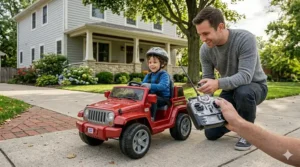
Parental Remote Override ranks as the single most valuable safety feature for four-year-olds. It’s not about helicopter parenting—it’s about having an emergency stop button when your child aims for the pool, the street, or that expensive landscaping you just installed. The 2.4GHz frequency eliminates interference from other devices, and quality systems give you 50-100 feet of reliable range.
Soft-Start Technology prevents that violent forward lurch when excited kids stomp the accelerator. Instead of instant full power, the motors ramp up gradually over the first second or two. This single feature prevents more crashes into garage doors than any other safety innovation.
Seat Belts Matter More Than You Think. That harness keeps your child in position when they inevitably try to grab something mid-drive or get distracted by a butterfly. Five-point harnesses distribute force better than lap belts, though even basic restraints beat nothing.
Speed Limiters let you physically cap the maximum velocity. Some models use a gear lockout that requires a key to unlock higher speeds, while others offer parental settings in the control panel. Either way, you control when your child graduates to faster driving.
Automatic Braking Systems stop the vehicle when kids lift their foot from the accelerator—no coasting into obstacles. This turns every pause into an automatic safety check rather than relying on four-year-old reaction times to find and use a separate brake button. According to toy safety guidelines, age-appropriate design and parental supervision remain the most critical factors in preventing accidents.
The ride-on toy safety guide updated for 2026 emphasizes matching vehicle capabilities to specific child skill levels rather than relying solely on age recommendations. Research on child motor development shows that toys play a crucial role in developing cognitive, motor, psychosocial, emotional, and linguistic skills. A cautious four-year-old might need slower speeds and more parental control than an experienced six-year-old.
How to Choose the Right Electric Ride On Toy for Your 4 Year Old
Step 1: Assess Your Child’s Experience Level
Has your four-year-old already logged hours on pedal trikes, scooters, or borrowed ride-ons? That experience level matters more than age. Confident riders can handle 12V vehicles with 3-5 mph speeds and basic remote oversight. Beginners benefit from 6V models or 12V vehicles with aggressive speed limiting until they develop the spatial awareness to avoid obstacles.
Watch how your child handles their current toys. Do they brake naturally before obstacles, or crash first and ask questions later? Can they steer around corners without panicking and going straight? These observations guide whether you need maximum parental control or can trust more independence.
Step 2: Evaluate Your Terrain
Flat concrete driveways forgive almost any electric ride on toy. Grass, gravel, slopes, and uneven surfaces require more power and better traction. Those “$99 special” deals often ship with smooth plastic wheels that spin uselessly on anything but perfect pavement. If your yard includes grass or gentle slopes, budget for 12V minimum with treaded tires and actual suspension.
Measure your biggest slope. Anything steeper than 15 degrees challenges most consumer-grade ride-ons regardless of voltage claims. The solution isn’t more power—it’s either accepting flat-area play or investing in commercial-grade models that cost considerably more.
Step 3: Consider Long-Term Value
A four-year-old grows fast. That adorable compact car might fit perfectly today but feel cramped by kindergarten. Weight capacities tell half the story—also check whether the seat adjusts and if larger kids will have legroom. Models rated for ages 3-7 justify higher prices by providing 3-4 years of use instead of 1-2.
Battery replaceability matters more than most buyers realize. Check whether replacement batteries are readily available and reasonably priced. Some manufacturers use proprietary designs that cost $80-100 to replace, turning a bargain toy into an expensive commitment.
Step 4: Match Features to Your Priorities
For Anxious Parents: Prioritize remote control override, slow maximum speeds (2-3 mph), and soft-start acceleration. The peace of mind of that emergency stop button outweighs any other feature.
For Adventure Seekers: Focus on power (12V minimum), real suspension, and treaded tires. Skip the decorative features in favor of mechanical capability.
For Multi-Child Families: Two-seater models or higher weight capacities (85 lbs+) let siblings share and extend the useful life as your younger kids grow into it.
For Budget Conscious: Basic 12V models without Bluetooth, LED light shows, or premium styling deliver 90% of the fun at 60% of the cost. Stick with established brands offering warranty support.
Step 5: Don’t Overlook These Practical Details
Assembly Time: Budget 60-120 minutes for most models. Some require only a screwdriver; others demand power tools and mechanical aptitude. Read recent reviews specifically mentioning assembly difficulty before purchase.
Charging Requirements: Most need 8-12 hours for a full charge before first use, then 8-10 hours between sessions. If you don’t have outdoor outlets, hauling batteries inside for charging gets old fast.
Storage Considerations: Electric toys don’t fold up like bicycles. Measure your garage, shed, or storage area before falling in love with that giant two-seater truck. Winter storage in freezing temperatures kills batteries faster than anything else.
Maintenance Tips for Longer Battery Life
Your ride-on toy’s battery is the heart of the system, and proper care makes the difference between two seasons of use versus five. Here’s what actually works, stripped of manufacturer marketing.
First Charge Discipline sets the foundation. Before your child’s inaugural ride, charge the battery for a full 18-24 hours. This initial conditioning cycle establishes the battery’s capacity baseline. Rush this, and you permanently reduce total runtime.
Never Store Dead might be the single most important rule. When the vehicle slows down noticeably, finish the play session and charge it that day. Leaving batteries in a discharged state for weeks or months creates sulfation—irreversible chemical changes that permanently reduce capacity. Even during off-season storage, charge monthly.
Temperature Matters More Than You Think. Batteries hate extreme cold and extreme heat. Storing ride-ons in un-insulated garages where temperatures drop below freezing or climb above 90°F accelerates chemical breakdown. Aim for 40-80°F storage conditions, which often means bringing batteries indoors during winter months.
The 80% Rule extends battery lifespan significantly. When possible, charge when the vehicle still has some power left rather than waiting for complete drainage. Lithium batteries (rare in ride-ons but increasingly common) especially benefit from this approach, though lead-acid batteries tolerate full discharge better.
Connection Point Inspection should happen seasonally. Corrosion at battery terminals creates resistance that manifests as weak performance. A quick cleaning with a wire brush and ensuring tight connections often resurrects vehicles that parents assume need battery replacement.
Charger Matters. Always use the manufacturer-supplied charger or an exact replacement. Generic “universal” chargers might fit the connection, but voltage and amperage mismatches either undercharge (reducing runtime) or overcharge (cooking the battery). That $15 savings on Amazon isn’t worth the $80 battery replacement six months later.
Comparison: Electric Ride On Toys vs Traditional Alternatives
| Feature | Electric Ride-Ons | Pedal Cars | Push/Foot-Powered |
|---|---|---|---|
| Age Appropriateness | 3-8 years | 3-6 years | 2-5 years |
| Physical Exercise | Minimal | High | Moderate |
| Motor Skill Development | Steering, braking, spatial awareness | Full body coordination | Balance, leg strength |
| Parental Supervision Required | Moderate (with remote) | Low | Low |
| Terrain Capability | Multi-terrain with power | Flat surfaces only | Smooth surfaces best |
| Maintenance Needs | Battery care, occasional cleaning | Minimal | Minimal |
| Storage Space | Large | Moderate | Small |
| Typical Lifespan | 3-5 years with care | 5-7 years | 5-8 years |
| Initial Investment | $100-400 | $50-150 | $30-100 |
The research from the University of Delaware’s Infant Behavior Lab demonstrates that modified ride-on toy cars function as general learning environments that develop skills differently than pedal-powered alternatives. Electric vehicles emphasize decision-making and spatial reasoning, while pedal cars build gross motor strength and cardiovascular fitness.
Neither option is objectively “better”—they develop different skillsets. Families with space and budget often maintain both, using electric ride-ons for adventure play and pedal vehicles for active exercise time.
✨ Don’t Miss These Exclusive Deals!
🔍 Ready to give your child the gift of independent outdoor adventure? Click on any highlighted product above to check current pricing and availability. These carefully vetted electric ride on toys for 4 year old deliver years of developmental play while creating memories that last a lifetime!
FAQ Section
❓ How long does the battery last on 12v ride on toys for 4 year old?
❓ Are ride on toys for 4 year old with remote control safer than those without?
❓ What's the difference between battery powered ride on toys for 4 year old rated 12V versus 24V?
❓ Can electric ride on toys handle wet grass or light rain?
❓ How fast do electric toys for four-year-olds actually go?
Conclusion
Choosing electric ride on toys for 4 year old doesn’t have to feel like navigating a minefield of technical specs and inflated marketing claims. The seven options we’ve covered span the realistic range of what works—from the $80 bumper car that builds confidence through that first taste of powered mobility, all the way to the $400 Ford Bronco Raptor that becomes a backyard fixture through elementary school.
Here’s what matters most: match the vehicle’s capabilities to your specific child’s skill level and your family’s actual situation. That cautious four-year-old benefits more from the gentle 6V bumper car with aggressive parental control than from a powerful 12V truck they’re not ready to handle. Meanwhile, that adventurous kid who’s been riding scooters since age two might genuinely need the 24V system to stay engaged.
The battery powered ride on toys for 4 year old market rewards research over impulse buys. Every $50 you spend above budget should translate to tangible improvements—longer battery life, better build quality, higher weight capacity that extends usable years, or safety features that provide genuine peace of mind rather than checkbox marketing.
Don’t forget the broader developmental picture either. These aren’t just toys—they’re tools that develop spatial awareness, decision-making, and motor skills that research shows transfer to other areas of learning. When you invest $200-400 in the right powered vehicle, you’re buying thousands of hours where your child builds confidence, tests limits in safe ways, and creates those backyard memories that stick.
Take measurements of your storage space, honestly assess your terrain, and read recent reviews specifically mentioning your child’s age and size. Then pull the trigger on the model that checks your must-have boxes without paying extra for features your family won’t actually use.
Your four-year-old’s eyes will light up either way. But choosing thoughtfully means that excitement extends beyond the first weekend into years of outdoor adventures.
Recommended for You
- 7 Best Ride On Toys for 4 Year Olds (2026 Guide)
- 7 Best Outdoor Ride On Toys for 3-5 Year Olds (2026 Guide)
- 7 Best Electric Ride On Toys for 3-5 Year Olds (2026 Guide)
Disclaimer: This article contains affiliate links. If you purchase products through these links, we may earn a small commission at no additional cost to you.
✨ Found this helpful? Share it with your friends! 💬🤗
