
In This Article
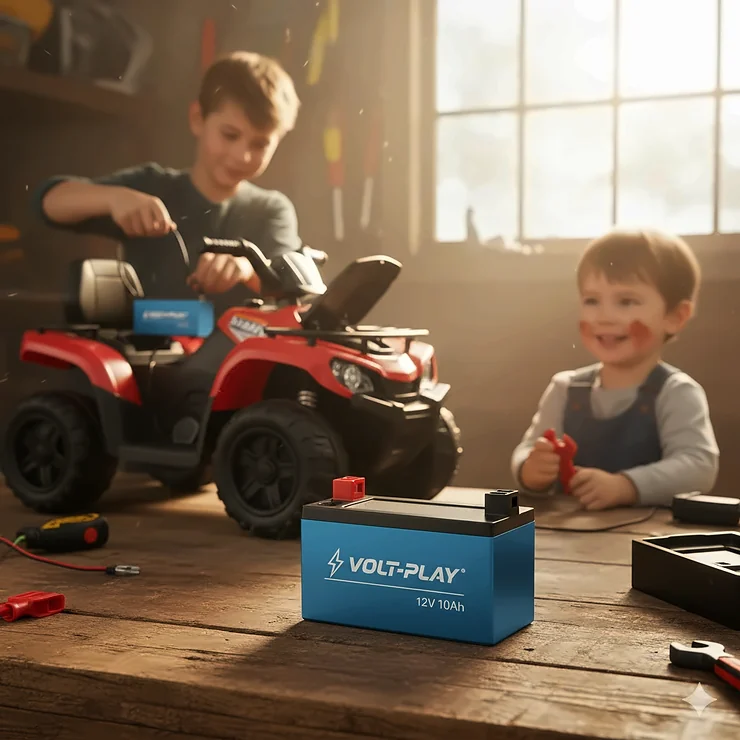
Nothing kills a child’s excitement faster than a dead battery in their favorite ride on toy. You know the scene – your little one’s electric car slows to a crawl mid-adventure, and suddenly playtime turns into meltdown time. If you’re tired of constantly replacing batteries or dealing with short play sessions, you’ve come to the right place.
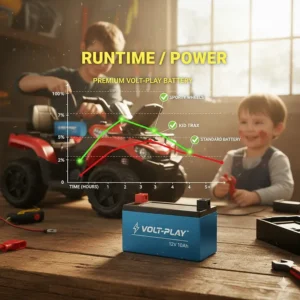
The 12v battery for ride on toys market has exploded in recent years, with options ranging from budget-friendly sealed lead acid batteries to cutting-edge lithium alternatives. Whether you’re replacing an old Power Wheels battery or upgrading to extend playtime, choosing the right battery makes all the difference between 30 minutes of fun and hours of backyard adventures. Studies from battery manufacturers indicate that quality 12V batteries can provide 60-120 minutes of continuous playtime when properly maintained.
In this comprehensive guide, I’ll walk you through everything you need to know about selecting, maintaining, and maximizing the performance of ride on toy 12 volt battery options. From technical specifications to real-world performance, we’ll cover the batteries that actually deliver on their promises. Let’s dive in and find the perfect power source for your child’s favorite toy.
Quick Comparison Table: Top 12V Batteries at a Glance
| Battery Model | Capacity | Type | Runtime | Price Range | Best For |
|---|---|---|---|---|---|
| ExpertPower 12V 7Ah | 7Ah | SLA | 45-60 min | $25-35 | Budget-conscious buyers |
| Mighty Max ML7-12 | 7.2Ah | SLA | 50-70 min | $28-40 | Universal compatibility |
| HWE 12V 7Ah LiFePO4 | 7Ah | Lithium | 90-120 min | $65-80 | Extended playtime |
| Schumacher TB4 12V 12Ah | 12Ah | AGM | 80-100 min | $55-70 | Peg Perego vehicles |
| Power Wheels OEM 12V | 12Ah | SLA | 70-90 min | $60-75 | Fisher-Price compatibility |
| TAMCO 12V 7Ah | 7Ah | VRLA | 45-65 min | $22-35 | Value seekers |
| SEFEPODER 12V 20Ah | 20Ah | LiFePO4 | 150-180 min | $120-150 | Maximum performance |
💬 Just one click – help others make better buying decisions too!😊
Top 7 12V Battery for Ride On Toys: Expert Analysis
1. ExpertPower 12V 7Ah SLA Battery – Best Overall Value
When it comes to reliable performance without breaking the bank, the ExpertPower 12V 7Ah consistently tops my recommendations. This sealed lead acid powerhouse has earned thousands of positive reviews from parents who appreciate its plug-and-play compatibility with most major ride on toy brands.
Key Specifications:
- Capacity: 7Ah/20HR
- Dimensions: 5.94″ x 2.56″ x 3.70″
- Weight: 4.9 lbs
The battery features maintenance-free sealed construction with F1 terminals that fit standard connectors perfectly. Parents report getting 45-60 minutes of playtime on smooth surfaces, with some achieving up to 75 minutes on flat terrain. One customer mentioned their daughter’s Barbie Jeep running for 5 miles without draining the battery completely.
✅ Pros:
- Universal compatibility with alarm systems and ride on toys
- Spill-proof AGM technology
- Affordable price point around $28-35
❌ Cons:
- Heavier than lithium alternatives
- Requires 6-8 hour charging time
Price Range: $25-35
2. Mighty Max Battery ML7-12 – Premium SLA Option
The Mighty Max Battery 12V 7.2AH represents the gold standard in sealed lead acid batteries for ride on applications. With over 30 years of manufacturing experience, Mighty Max has built a reputation for batteries that consistently outlast their rated specifications.
Key Specifications:
- True 7.2Ah capacity
- UL Certified for safety
- F1 terminal type
This battery excels in both float and cyclic applications, delivering robust performance whether your child is cruising on flat pavement or tackling gentle inclines. The characteristic high discharge rate ensures consistent power delivery even as the battery depletes. Customer feedback highlights exceptional cold weather performance, with the battery maintaining efficiency down to freezing temperatures.
✅ Pros:
- Exceptional shock and vibration resistance
- Wide operating temperature range
- Strong warranty support
❌ Cons:
- Slightly higher price than budget alternatives
- Standard 6-8 hour recharge requirement
Price Range: $28-40
3. HWE 12V 7Ah LiFePO4 Battery – Lightweight Champion
Ready to cut your battery weight by 70% while doubling runtime? The HWE 12V 7Ah LiFePO4 battery represents the future of ride on toy power. This lithium iron phosphate marvel weighs just 2.42 lbs compared to traditional 7-8 lb lead acid batteries, yet delivers 4000+ charging cycles versus the typical 300-500 cycles of SLA batteries.
Key Specifications:
- LiFePO4 chemistry for superior safety
- 15A BMS protection system
- Compatible with both F1 and F2 terminals
Parents rave about the extended playtime this battery provides – many reporting 90-120 minutes of continuous use. The built-in Battery Management System protects against overcharge, over-discharge, overcurrent, and short circuits. One reviewer noted their son’s power wheels running nearly twice as long as with the original battery.
✅ Pros:
- 4000+ deep cycle lifespan
- Ultra-lightweight design
- Fast charging capability (3-4 hours)
❌ Cons:
- Higher upfront investment ($65-80)
- Requires LiFePO4-compatible charger for best results
Price Range: $65-80
4. Schumacher TB4 12V 12Ah Battery – Peg Perego Specialist
If you own a Peg Perego ride on vehicle, the Schumacher Electric TB4 12V 12Ah battery deserves serious consideration. Designed specifically to meet rigorous Peg Perego requirements, this battery includes thoughtful features like a replaceable fuse and built-in carrying handle that parents truly appreciate.
Key Specifications:
- 12 Amp Hour capacity
- Sealed AGM lead acid construction
- Replaceable 30A fuse for added safety
The higher 12Ah capacity translates to extended playtime – typically 80-100 minutes depending on terrain and rider weight. The TB4 features a quick-connect harness that simplifies installation, letting you swap batteries in seconds when you have a backup charged and ready. The self-resetting internal fuse provides overcurrent protection during both charging and operation.
✅ Pros:
- Purpose-built for Peg Perego vehicles
- Convenient carrying handle
- Replaceable fuse system
❌ Cons:
- Heavier due to higher capacity
- Best results require Schumacher CR6 charger (sold separately)
Price Range: $55-70
5. Power Wheels 12-Volt Rechargeable Battery – OEM Excellence
Sometimes the original is still the best. The genuine Power Wheels 12-Volt Rechargeable Battery from Fisher-Price delivers the performance that millions of parents have trusted for decades. While aftermarket alternatives exist, this OEM battery guarantees perfect compatibility and maintains your vehicle’s warranty.
Key Specifications:
- 12Ah capacity rated for 12-14 hours initial charge
- Internal self-resetting fuse
- Gray housing with Power Wheels connector
This battery undergoes rigorous testing to meet Power Wheels’ demanding standards for performance, durability, and maximum playtime. The included instruction booklet provides crucial safety information and maintenance guidelines. Customer reviews consistently praise its reliability, with many reporting 2-3 years of regular use before replacement becomes necessary.
✅ Pros:
- Guaranteed compatibility with Power Wheels vehicles
- Maintains manufacturer warranty
- Proven long-term reliability
❌ Cons:
- Premium pricing ($60-75)
- Requires 18-hour initial charge
Price Range: $60-75
6. TAMCO 12V 7Ah VRLA Battery – Budget Champion
Need a reliable replacement batteries for kids cars without spending a fortune? The TAMCO 12V 7Ah valve-regulated lead-acid battery offers impressive performance at an entry-level price point. Don’t let the low cost fool you – this battery has passed UL and MSDS testing for safety compliance.
Key Specifications:
- Model: 6-FM-7 (12V7AH/20HR)
- Dimensions: 151x65x95mm
- Weight: 1.95kg
The spill-proof design features high discharge rate capability and operates reliably in both high and low temperatures. Multiple customers report successful use in various 12V ride on cars, motorcycles, and UTVs. The deep discharge recovery characteristic means the battery bounces back well even if accidentally drained completely.
✅ Pros:
- Excellent value proposition
- Fits wide variety of ride on toys
- Safety certifications included
❌ Cons:
- Basic packaging and documentation
- Shorter overall lifespan than premium options
Price Range: $22-35
7. SEFEPODER 12V 20Ah LiFePO4 – Maximum Performance
For parents who want the absolute best and longest playtime possible, the SEFEPODER 12V 20Ah LiFePO4 battery reigns supreme. This lithium powerhouse delivers jaw-dropping 150-180 minutes of continuous runtime – that’s up to 3 hours of uninterrupted play!
Key Specifications:
- Massive 20Ah capacity
- 2000+ cycle lifespan
- 12.8V nominal voltage
The battery weighs just a fraction of an equivalent 20Ah lead acid battery while providing superior energy density. The built-in BMS protection prevents overcharging, overdischarging, overcurrent, and short circuit conditions. Three replaceable 40A fuse connectors are included for compatibility with all gray Power Wheels batteries.
✅ Pros:
- Exceptional 2.5-3 hour runtime
- Environmentally friendly lithium technology
- Significantly lighter than SLA alternatives
❌ Cons:
- Premium price point ($120-150)
- Requires LiFePO4-specific charger
Price Range: $120-150
Understanding 12V Battery Technology for Ride On Toys
The world of ride on toy batteries has evolved significantly beyond simple lead acid packs. According to Wikipedia’s comprehensive article on lead-acid batteries, these power sources were first invented in 1859 by French physicist Gaston Planté, making them the oldest type of rechargeable battery still in widespread use today. Understanding the technology helps you make informed purchasing decisions.
SLA vs LiFePO4: The Great Debate
Sealed Lead Acid (SLA) batteries remain the most common choice for ride on toys due to their affordability and proven reliability. These batteries use lead dioxide and metallic lead plates immersed in sulfuric acid electrolyte to generate electricity. They’re heavy, typically weighing 5-8 pounds for a 7Ah unit, but offer excellent surge current capability for powering motors.
Lithium Iron Phosphate (LiFePO4) batteries represent the cutting edge of ride on toy power. These modern marvels weigh 60-70% less than equivalent SLA batteries while delivering longer runtime and 5-10 times more charging cycles. The chemistry is inherently safer than other lithium variants, with no risk of thermal runaway or explosion.
Amp-Hour Ratings Explained
Battery capacity measured in amp-hours (Ah) tells you how much energy the battery can store. Think of it like a gas tank – a 12v 7ah battery for ride on toys provides roughly half the runtime of a 12v 12ah battery for ride on toys under identical conditions. However, real-world performance depends on multiple factors including motor efficiency, rider weight, terrain, and speed settings.
How to Choose the Perfect 12V Battery Charger for Ride On Toys
Your battery is only as good as the charger that replenishes it. Using the wrong charger accelerates battery degradation and shortens lifespan dramatically. Here’s what you need to know about selecting the best chargers for electric ride on toys.
Voltage and Chemistry Matching
Critical Rule: Always match your charger to both the voltage AND chemistry of your battery. A standard 12V lead acid charger will undercharge LiFePO4 batteries, leaving capacity unused. Conversely, using a lithium charger on lead acid batteries can cause overcharging and electrolyte loss.
Smart Charging Technology
Modern smart chargers automatically detect battery condition and adjust charging parameters accordingly. Look for chargers featuring:
- Automatic shutoff when fully charged
- LED indicators showing charging status (red = charging, green = complete)
- Overcharge protection circuitry
- Temperature compensation
The typical 12v battery charger for ride on toys delivers 1-1.5A charging current, requiring 6-10 hours for a full charge cycle. Fast chargers offering 2-3A output can reduce this to 3-5 hours but may reduce overall battery lifespan if used exclusively.
Essential Battery Maintenance: Extend Your Investment
Proper care transforms a $30 battery from a 6-month consumable into a multi-year investment. Follow these how to maintain 12 volt toy batteries guidelines religiously.
The Golden Rules of Battery Care
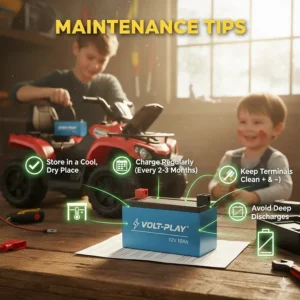
Charge After Every Use – Even if your child only played for 15 minutes, top off the battery. Lead acid batteries particularly suffer from sulfation when stored partially discharged. Think of it like keeping your phone charged – a little maintenance prevents major problems.
Avoid Complete Discharge – Never run the battery until the toy completely stops moving. Most manufacturers recommend recharging when performance noticeably decreases, typically at 20-30% capacity remaining. Deep discharges permanently reduce capacity through sulfation buildup on lead plates.
Store Properly During Downtime – Winter storage or extended breaks require special attention. Charge the battery fully before storage and maintain charge every 2-3 weeks. Store in a cool, dry location – batteries stored above 75°F self-discharge faster and age more quickly.
Temperature Considerations
According to research from battery technology experts, temperature significantly impacts battery performance and longevity. Lead acid batteries lose approximately 50% of their capacity at 0°F compared to 77°F. Store and charge batteries at room temperature (65-75°F) for optimal results. Never charge a battery that’s below 40°F or above 100°F.
Cleaning and Inspection
Check battery terminals monthly for corrosion – that white or blue-green crusty buildup that impedes electrical connection. Clean terminals using a mixture of baking soda and water, applying with an old toothbrush. Rinse with clean water and dry thoroughly before reconnecting. Inspect the battery case for cracks, bulging, or leaks, replacing immediately if damage is found.
Troubleshooting Common Battery Issues
Battery Won’t Hold Charge
Symptoms: Toy runs for only 10-15 minutes despite full charge cycle.
Causes: Sulfation from chronic undercharging, old age (3+ years for SLA), or internal cell damage.
Solutions: Try a desulfation charge cycle if your charger has this feature. For batteries older than 3 years, replacement is typically more cost-effective than restoration attempts. Test with a multimeter – a healthy 12V battery should read 12.6-12.8V when fully charged and at rest.
Charger Shows Green Immediately
Symptoms: Charger indicates “full” within minutes of connection, but battery is actually depleted.
Causes: Internal connection failure, completely dead cells, or charger malfunction.
Solutions: Try a different charger first to rule out charger issues. If problem persists, battery replacement is necessary. This typically indicates catastrophic internal failure requiring professional recycling.
Reduced Speed and Power
Symptoms: Toy moves but lacks the zip and acceleration it once had.
Causes: Aging battery with reduced capacity, corroded terminals impeding current flow, or motor wear.
Solutions: Clean all connections thoroughly. Check battery voltage under load – it shouldn’t drop below 11V during operation. If it does, the battery has insufficient capacity for the application.
Safety First: Handling 12V Batteries Responsibly
While 12V ride on toy batteries are generally safe, they contain potentially hazardous materials that demand respect. The U.S. Environmental Protection Agency provides comprehensive guidelines for safe battery handling and disposal.
Lead Acid Battery Precautions
Lead acid batteries contain sulfuric acid and lead – both toxic substances requiring careful handling. Always wear safety glasses when working with batteries, as acid spray can cause eye damage. If acid contacts skin, immediately flush with copious water for 15 minutes and seek medical attention.
Never attempt to open or modify a sealed lead acid battery. The pressurized cells can rupture violently, spraying acid and creating explosion hazards. Charge batteries in well-ventilated areas away from sparks or open flames, as charging produces hydrogen gas – the same stuff that powered the Hindenburg.
Lithium Battery Safety
LiFePO4 batteries are significantly safer than other lithium chemistries, but still require basic precautions. Never puncture, crush, or expose to extreme heat above 140°F. The built-in BMS provides protection, but physical damage can compromise safety features. Store lithium batteries at 40-60% charge for long-term storage rather than fully charged.
Child Safety Protocols
Keep batteries and chargers out of children’s reach. The low voltage won’t cause electric shock, but batteries present choking hazards for toddlers and acid leaks can burn skin. Supervise charging sessions and teach older children to respect battery safety. Never allow children to replace batteries themselves – this is strictly an adult task.
Compatibility Guide: Will This Battery Fit My Toy?
Not all 12V batteries are created equal in terms of physical dimensions and connector types. Before ordering, verify three critical measurements.
Physical Dimensions Matter
Measure your battery compartment’s length, width, and height. Most 7Ah batteries measure approximately 5.9″ x 2.5″ x 3.9″, while 12Ah batteries typically span 6″ x 3.5″ x 4″. The battery must fit with clearance for the lid to close properly and wiring to route without pinching.
Connector Compatibility
Common connector types include:
- Power Wheels Gray Connector – Proprietary Fisher-Price connector with 40A fuse
- F1 Terminals – Standard 0.187″ spade terminals found on most aftermarket batteries
- F2 Terminals – Slightly larger 0.250″ spade terminals
- Bullet Connectors – Some Peg Perego and generic toys use bullet-style connectors
Many replacement batteries include multiple connector options or adapter harnesses. When in doubt, photograph your existing battery’s connector and compare to product listings.
Voltage Verification
This seems obvious but bears repeating – NEVER install a different voltage battery than specified. A 24V battery in a 12V toy will instantly destroy motors and electronics. A 6V battery in a 12V toy will provide insufficient power and may damage the battery through excessive load. Match the voltage exactly.
Performance Optimization Tips
Tire Pressure and Rolling Resistance
Underinflated tires dramatically reduce runtime by increasing rolling resistance. Check tire pressure monthly and inflate to manufacturer specifications (typically 5-10 PSI for plastic wheels). Properly inflated tires can extend battery life by 15-20%.
Weight Management
Every additional pound of cargo or passenger weight reduces runtime. Remove unnecessary accessories when not in use. For two-seater models, expect 20-30% reduced runtime with two riders versus one. Consider upgrading to higher capacity batteries if your child frequently rides with friends.
Terrain Selection
Smooth, flat surfaces provide maximum runtime. Grass reduces runtime by approximately 20-30% depending on thickness and moisture. Gravel and inclines can cut runtime in half. Reserve battery power for challenging terrain by starting play sessions on pavement.
Budget-Friendly Alternatives and Upgrade Paths
Starting Budget: Under $30
For occasional use (1-2 times weekly), budget SLA batteries like the TAMCO or generic 7Ah options provide adequate performance. Expect 1-2 years of service with proper maintenance. This tier makes sense for younger children who will outgrow the toy before the battery wears out.
Mid-Range Sweet Spot: $35-50
Branded SLA batteries from ExpertPower, Mighty Max, or similar manufacturers offer the best value for regular use. These batteries typically last 2-3 years with good care and provide more consistent performance throughout their lifespan. This range suits families with multiple children sharing toys.
Premium Performance: $60-150
Lithium batteries and high-capacity SLA options justify their premium pricing for power users. If your children play daily or you own multiple toys sharing batteries, the extended lifespan and superior performance pay dividends. Calculate cost per charge cycle – lithium often wins on this metric despite higher upfront cost.
Environmental Impact and Recycling
Proper Disposal Matters
NEVER throw batteries in household trash. Lead acid batteries contain toxic lead and corrosive acid requiring specialized recycling. Most automotive stores, battery retailers, and municipal hazardous waste facilities accept lead acid batteries for recycling – often for free or with a small core charge refund.
Lithium batteries require different recycling channels. Contact local electronics recycling centers or check with Call2Recycle for drop-off locations. Many battery manufacturers now offer mail-back recycling programs.
The Recycling Process
Lead acid battery recycling is remarkably efficient, with over 99% of materials recovered and reused. The lead is melted and purified for new batteries, plastic cases are ground and reformed, and sulfuric acid is neutralized and converted to sodium sulfate for detergents. This closed-loop recycling makes lead acid batteries one of the most successfully recycled consumer products.
Future-Proofing Your Purchase
Emerging Battery Technologies
Solid-state batteries and advanced lithium chemistries promise even better performance in coming years. However, these technologies remain 3-5 years from mainstream ride on toy adoption. Current LiFePO4 batteries represent the cutting edge of practical, affordable technology for the next 5 years.
Dual Battery Systems
Some parents install parallel battery systems for extended runtime. This requires batteries of identical voltage, capacity, and chemistry connected via proper parallel wiring harness. Never mix SLA and lithium or different capacities – this causes imbalanced charging and can damage both batteries.
Smart Battery Monitoring
Bluetooth-enabled battery monitors let you track charge levels, cycle counts, and battery health via smartphone app. While not essential, these tools help optimize charging schedules and predict replacement needs before failure occurs.
❓ Frequently Asked Questions
❓ How long do 12v batteries last in ride on toys?
❓ Can I use a car battery for my child's ride on toy?
❓ How do I know when my 12 volt toy battery needs replacement?
❓ What's better for ride on toys: lead acid or lithium batteries?
❓ How often should I charge the battery even if not using the toy?
Conclusion: Power Your Child’s Imagination
Choosing the right 12v battery for ride on toys transforms frustrating experiences into endless backyard adventures. Whether you opt for budget-friendly SLA batteries like the ExpertPower 7Ah or invest in premium lithium options like the SEFEPODER 20Ah, matching battery technology to your needs and usage patterns ensures maximum value and satisfaction.
Remember the key takeaways: match voltage and chemistry exactly, maintain batteries through regular charging and proper storage, prioritize safety through correct handling procedures, and recycle responsibly when replacement becomes necessary. With proper selection and care, your chosen battery will power countless hours of imaginative play.
The landscape of replacement batteries for kids cars continues evolving, with lithium technology becoming increasingly affordable and accessible. Whether you’re replacing an aging Power Wheels battery or seeking to maximize performance of a Peg Perego vehicle, the options detailed in this guide represent the best available in 2026. Make your selection confidently, knowing you’re equipped with expert knowledge to keep those little motors running strong.
Recommended for You
- 7 Best 12V Ride On Toys Clearance Deals Under $200 – 2026
- 7 Best 12 Volt Ride On Toys 2 Seater That Kids Love (2026)
- 7 Best 12V Ride On Toys 2026
Disclaimer: This article contains affiliate links. If you purchase products through these links, we may earn a small commission at no additional cost to you.
✨ Found this helpful? Share it with your friends! 💬🤗
