
In This Article
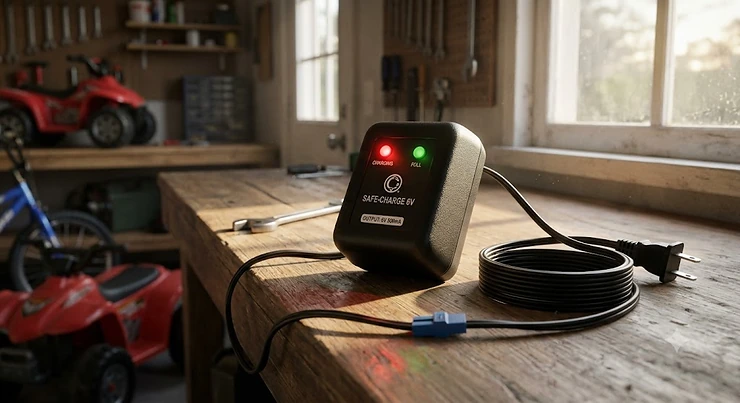
Nothing kills a Saturday afternoon quite like a kid sprinting to the garage, climbing into their little Jeep or Power Wheels truck, and hearing… nothing. No hum. No headlights. Just a dead battery and a very disappointed four-year-old staring you down. If you’ve been there, you already know the real MVP of ride-on ownership isn’t the truck, the trailer hitch attachment, or the working horn — it’s the humble charger for ride on toys sitting in a drawer somewhere, quietly deciding whether today is a good day or a bad one.
What is a charger for ride on toys? It’s a small AC-to-DC power adapter, typically outputting 6, 12, or 24 volts, designed to safely refill the sealed lead-acid or lithium battery inside a kids’ electric vehicle without overcharging, overheating, or frying the wiring. Cheap or mismatched chargers are a documented fire and burn hazard — the U.S. Consumer Product Safety Commission has logged hundreds of overheating incidents tied to ride-on toy battery chargers over the years, which is exactly why picking the right one matters more than most parents realize.
This guide breaks down seven real, currently available chargers spanning 6V, 12V, and 24V systems, from budget alligator-clip adapters to smart automatic units built by established brands. We’ll cover which one fits your kid’s specific vehicle, how battery charger for ride on toys tech has evolved, and where a universal charger for ride on toys genuinely earns its keep versus where it falls short. By the end, you’ll know exactly what to plug in tonight so tomorrow’s driveway grand prix actually happens.
Quick Comparison Table
| Charger | Voltage | Type | Best For |
|---|---|---|---|
| Schumacher Charge ‘n Ride CR7 | 6V/12V | Smart automatic, dual connector | Most families, mixed-brand households |
| Schumacher SCHCR8 | 24V | Automatic SLA | 24V trucks and two-seaters |
| 12V Alligator Clip Charger | 12V | Basic, universal clips | No-connector emergency fix |
| Venshun-Style Square Plug Charger | 12V | Budget, single connector | Exact plug-match replacements |
| Magic Cars Universal 12V Charger | 12V | Retailer-branded smart charger | Buyers who want factory-style support |
| 24V Indicator-Light Charger | 24V | Slow, budget trickle charger | Occasional-use 24V vehicles |
| Best Choice Products Charger | 12V | Brand-matched replacement | BCP-brand ride-on owners |
Right away you can see the split: this isn’t a one-size-fits-all category, and that’s the whole point. A fast charger for ride on toys built for daily driveway laps is a different animal than a slow trickle unit meant for the two-seater that only comes out on holidays. Voltage compatibility is non-negotiable — plug a 24V charger into a 12V system and you risk cooking the battery, the wiring, or both. Price also isn’t flat across the board; expect most of these to land somewhere in the $15-$90 range depending on brand, smart features, and included connectors, though you should always check current price before buying since availability shifts often.
💬 Ready to stop guessing? Scroll down to see exactly which charger matches your kid’s ride — one click gets you there.
💬 Just one click — help others make better buying decisions too!😊
Top 7 Chargers for Ride On Toys: Best Chargers for Electric Kids Cars
1. Schumacher Charge ‘n Ride CR7 — most trusted universal fit for mixed brands
If there’s a “safe default” pick in this whole roundup, it’s the Schumacher Charge ‘n Ride CR7, and that reputation isn’t accidental. Schumacher’s been building automotive-grade chargers for decades, and the CR7 brings that same engineering discipline down to toy scale. Specs-wise, it’s a 3-amp automatic 6V/12V universal battery charger that ships with two separate connector cables — one for 6V vehicles like Kid Trax, Action Wheels, and Rollplay models, another for 12V rigs including Peg Perego and Power Wheels. That dual-cable setup means one charger genuinely covers two households’ worth of ride-on brands instead of forcing you to buy a second unit.
What actually matters here is the automatic multi-stage charging with bad-battery detection and float-mode monitoring, plus reverse hookup protection that prevents damage if a kid or a rushed parent connects the leads backward. Reviewers consistently note that the “3x faster than a stock charger” claim holds up in practice, especially compared to the anemic OEM chargers that ship with budget vehicles. This is the smart charger for ride on toys pick for families juggling more than one brand of vehicle, or for grandparents’ houses where three different grandkids’ trucks all need a home base.
Pros:
- ✅ Dual 6V/12V cables cover two vehicle voltage classes
- ✅ Automatic float mode prevents overcharging over long storage
- ✅ Reverse hookup protection guards against wiring mistakes
Cons:
- ❌ No 24V cable included for larger two-seaters
- ❌ Premium pricing compared to basic single-voltage units
Expect to pay in the $60-$90 range depending on retailer, and for households with two or three ride-on vehicles, the value math works out fast — one charger replacing what would otherwise be two or three cheaper, less protected units.
2. Schumacher SCHCR8 — best automatic charger for 24V trucks and two-seaters
Once a kid graduates from the single-seat 12V Jeep to a proper 24V two-seater truck, charging needs change completely, and this is where the Schumacher SCHCR8 earns its spot. It’s a fully automatic 24V SLA (sealed lead-acid) universal charger, built on the same Charge ‘n Ride platform as the CR7 but tuned specifically for the higher-voltage systems found in bigger ride-on vehicles and some UTV-style toys.
Here’s what the spec sheet won’t spell out plainly: 24V systems draw down faster under real play conditions — two kids riding double, hills in the yard, longer sessions — so an automatic charger that can detect a genuinely depleted battery and step through proper charge stages matters more here than on a lighter 12V unit. Based on the spec comparison with generic 24V adapters on the market, the SCHCR8’s automatic voltage detection and lead-acid-specific charging profile reduces the risk of the slow capacity fade that plagues 24V toy batteries charged with mismatched or non-automatic units. Aggregated buyer feedback across retailer listings tends to praise the “set it and forget it” simplicity, since there’s no manual timer to babysit.
Pros:
- ✅ Purpose-built for 24V lead-acid ride-on battery packs
- ✅ Fully automatic — no manual charge-time guessing required
- ✅ Shares Schumacher’s reliable automotive charging heritage
Cons:
- ❌ Overkill and incompatible for standard 12V single-seaters
- ❌ Narrower compatibility list than dual-voltage models
Priced typically in the $55-$70 range, it’s not the cheapest 24V option out there, but for a vehicle that costs several hundred dollars, protecting that investment with a proper automatic charger is the kind of unglamorous decision that pays off two years down the road.
3. 12V Alligator Clip Universal Battery Charger — best no-connector emergency fix
Sometimes the factory charger dies, the connector cracks, or you’ve inherited a ride-on toy with no charger at all, and that’s exactly the gap the 12V Alligator Clip Universal Battery Charger fills. Instead of relying on a brand-specific plug shape, it uses simple, durable alligator clips that clamp directly onto the battery terminals — bypassing the whole “does my plug match” puzzle entirely.
Output specs land at a modest 12V, 1A, which is gentler than some fast chargers but pairs with an intelligent IC chip that automatically detects a full charge and switches to a maintenance mode, protecting against overcharging, overheating, overcurrent, and short circuits. What most buyers overlook about clip-style chargers is that they only work with standard 12V sealed lead-acid batteries, not lithium packs — so this is very much a battery charger for ride on toys built the old-fashioned way, not a universal fix for every chemistry on the market. Reviewers commonly mention the red-to-green LED indicator as genuinely useful for confirming charge status without guesswork, though a few note that a charger stuck on green from the first plug-in usually signals a battery or circuit problem rather than a charger defect.
Pros:
- ✅ Works on any 12V lead-acid battery regardless of plug shape
- ✅ Clear red/green LED charging status indicator
- ✅ Built-in overcharge, overheat, and short-circuit protection
Cons:
- ❌ Not compatible with lithium-ion battery packs
- ❌ Slower 1A output than dedicated fast chargers
You’ll typically find these in the $15-$25 range, making it one of the most budget-friendly entries here — ideal as a backup unit or a rescue option for orphaned vehicles with no original charger in sight.
4. Venshun-Style 12V Square Plug Replacement Charger — best exact-match budget pick
For parents who just need a straightforward, plug-and-play replacement without overthinking it, the Venshun-Style 12V Square Plug Replacement Charger is the pragmatic choice. It’s built around the common square-plug connector used across a wide swath of budget and mid-tier ride-on brands, including BMX X6, Kid Trax GMC models, and various Walmart-sold ATV and quad-style toys.
The real-world upside of a connector-matched charger like this is fit-and-forget simplicity: no adapters, no clip fumbling, just the original-style plug going into the original-style port. Based on the spec comparison against generic clip chargers, a matched square plug also reduces the chance of a loose or intermittent connection, which is a common (if unglamorous) cause of “my charger isn’t working” complaints in ride-on toy forums. Aggregated reviewer sentiment skews positive on reliability for the price point, though buyers should double-check their vehicle’s exact plug shape before ordering, since “universal” claims in this connector category can still miss oddball proprietary shapes from smaller manufacturers.
Pros:
- ✅ Direct square-plug fit for several popular budget brands
- ✅ No clips or adapters needed for setup
- ✅ Genuinely low price point for a dedicated 12V charger
Cons:
- ❌ Plug shape must match exactly — not universal to every brand
- ❌ Fewer smart-charging safety features than premium models
Expect a price in the $12-$20 range, squarely positioning this as a fast charger for ride on toys on a tight budget, especially for households replacing a single lost or broken cord rather than upgrading the whole charging setup.
5. Magic Cars Universal 12V Battery Charger — best retailer-backed smart option
Buying direct from a company that actually sells the vehicles has a quiet advantage, and that’s the pitch behind the Magic Cars Universal 12V Battery Charger. Sold through a ride-on toy specialty retailer with decades in the space, this charger is built specifically to serve the brand’s own catalog of 12V cars, trucks, tractors, and SUVs, with LED charge-status indicators and built-in smart safety cutoffs baked into the design.
The practical detail worth flagging: the retailer explicitly frames 12V models for lighter, younger riders and pairs charging guidance with realistic expectations — think 8 to 12 hours to fully charge, with an emphasis on a full initial charge before first use for best long-term battery performance. That kind of explicit first-use guidance is something most generic Amazon listings simply don’t provide, and it’s the sort of practical detail that separates a spec sheet from actual usable advice. Reviewers and support documentation both point to the retailer’s parts-availability promise — stocking chargers and batteries for essentially every model they’ve ever sold — as a meaningful long-term reassurance for buyers worried about orphaned hardware down the road.
Pros:
- ✅ Purpose-matched to a wide 12V ride-on toy product line
- ✅ Clear first-charge and maintenance guidance included
- ✅ Backed by a retailer that stocks long-term replacement parts
Cons:
- ❌ Best suited to that retailer’s own vehicle lineup
- ❌ Occasional stock availability gaps reported
Pricing generally sits in the $25-$40 range. For anyone who bought their ride-on toy from a specialty retailer in the first place, sourcing the charger from the same place tends to simplify troubleshooting if something ever goes wrong.
6. 24V Indicator-Light Charger for Ride On Cars — best ultra-budget slow charger
Not every 24V vehicle needs a heavy-duty automatic charger, and that’s where the 24V Indicator-Light Charger for Ride On Cars slots in nicely. It’s a modest, budget-focused 24V adapter with a built-in charging indicator light, originally designed for lighter 24V applications like baby-carriage-style ride toys, putting out around 500mA — noticeably gentler than the multi-amp chargers higher up this list.
Here’s the honest trade-off: what most buyers overlook is that a lower amperage output means a genuinely slower charge cycle, often stretching well past the 8-12 hours typical of faster units. On paper, this means it’s a poor fit for a heavily used daily-driver vehicle, but for an occasional-use 24V toy — the one that mostly lives in the garage and comes out for weekend visits — a slow, gentle trickle charge is arguably gentler on battery longevity than repeated fast-charge cycles. Reviewer sentiment aligns with this use case, generally rating it fine for light-duty charging while flagging that it’s not the pick for families expecting same-day turnaround.
Pros:
- ✅ Very low price point for a 24V-compatible charger
- ✅ Built-in indicator light confirms active charging
- ✅ Gentle amperage is easy on infrequently used batteries
Cons:
- ❌ Slow charge cycle, poor fit for daily heavy use
- ❌ Lower output than dedicated automatic 24V chargers
Pricing typically runs under $20, making it one of the most accessible ride on toy charging solutions on this list for casual, low-frequency 24V setups.
7. Best Choice Products 12V Battery Charger Replacement — best for BCP-brand vehicle owners
Rounding out the list, the Best Choice Products 12V Battery Charger Replacement exists for one clear reason: matching the specific power cord and connector geometry used across Best Choice Products’ own lineup of kids’ trucks, Kidzone-branded vehicles, bumper cars, tractors, motorcycles, and ATVs. If your child’s ride-on came from that brand, a generic universal charger for ride on toys can sometimes be a frustrating game of trial and error — this one skips that entirely.
Because it’s a direct brand-matched replacement rather than a true universal unit, the connector fit tends to be exact rather than approximate, which reviewers consistently flag as the main advantage over cheaper clip-style alternatives. Based on the spec comparison with other 12V options here, it doesn’t bring standout smart-charging features to the table, but for a straightforward “my original charger died, I need the exact same thing” scenario, exact-fit simplicity often beats extra bells and whistles. It’s a solid, no-drama pick specifically for owners already locked into that product ecosystem.
Pros:
- ✅ Exact connector match for Best Choice Products vehicles
- ✅ Straightforward setup with no adapter guesswork
- ✅ Reasonable price for a brand-specific replacement
Cons:
- ❌ Limited usefulness outside the Best Choice Products lineup
- ❌ Fewer advanced safety features than premium automatic chargers
Prices generally land in the $15-$25 range — a sensible, low-friction fix rather than an upgrade, and exactly what most BCP owners are actually looking for.
Practical Usage Guide: Ride On Toy Charging Solutions Setup and Maintenance
Getting the most out of any charger for ride on toys comes down to habits, not just hardware. Before first use, give the battery a full initial charge — most manufacturers recommend 8 to 12 hours — even if the vehicle seems to have some charge out of the box, since a shallow first cycle can shortchange long-term capacity. Always charge on a hard, flat, ventilated surface, never on carpet or bedding, since heat buildup needs somewhere to go.
A simple maintenance rhythm matters more than most parents expect. Charge after every play session rather than letting the battery sit fully drained for days, since deep-discharge storage is one of the fastest ways to shorten a sealed lead-acid battery’s lifespan. Once a month, inspect the charging cable and connector for cracks, fraying, or corrosion — this is exactly the kind of failure point CPSC has flagged in past ride-on toy recalls. In the first 30 days, the most common mistake is unplugging the moment a light changes color without confirming the charger has actually switched to float or maintenance mode; a quick check of the manual saves guesswork. Store the vehicle and charger somewhere temperature-stable — a garage that swings between freezing and sweltering isn’t ideal for either the battery chemistry or the charger’s internal electronics. None of this is complicated, but it’s the unglamorous stuff that actually determines whether a $200 ride-on toy lasts one summer or four.
Problem → Solution Guide: Fixing Common Ride On Toy Charging Issues
Charger plugged in but no light at all? Check the wall outlet with another device first — a surprising number of “dead charger” complaints turn out to be a dead outlet or a tripped breaker instead.
LED stuck on green immediately after plugging in? That typically signals a battery that can’t hold a charge anymore rather than a charger fault, especially on older vehicles; a replacement battery, not a new charger, is usually the real fix.
Vehicle charges but won’t hold power for more than a few minutes of play? This points to battery degradation from age or repeated deep discharges — the kind of wear a smart charger for ride on toys with float-mode monitoring helps prevent going forward, but can’t reverse after the fact.
Connector doesn’t fit the vehicle’s charging port? Resist the urge to force it. A mismatched voltage or polarity can damage the battery or wiring; instead, reach for a universal alligator-clip charger, which sidesteps connector shape entirely by clamping straight onto the terminals.
Charger feels noticeably warm during use? A little warmth is normal, but hot-to-the-touch is not — unplug immediately and inspect the cable for damage, since overheating chargers and wiring are a documented cause of past CPSC ride-on toy recalls.
✨ Still stuck on a charging issue? Compare our top-rated fixes above and get your kid rolling again today!
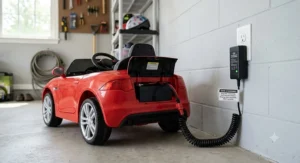
How to Choose a Charger for Ride On Toys
- Match the voltage exactly. A 6V, 12V, or 24V mismatch isn’t just ineffective — it risks battery and wiring damage, so confirm your vehicle’s voltage before anything else.
- Check the connector shape. Square plugs, round plugs, and alligator-clip setups aren’t interchangeable without adapters, so verify against your original charger or vehicle manual.
- Prioritize automatic shutoff. A charger that detects full charge and switches to float mode protects against the slow degradation that overcharging causes.
- Consider amperage versus charge time. Higher-amp fast chargers cut wait time but demand better internal safety circuitry — cheap high-amp units are where corners tend to get cut.
- Weigh brand-specific versus universal. Brand-matched chargers offer exact fit; universal chargers offer flexibility across multiple vehicles, but check compatibility lists carefully.
- Look for safety certifications and protections. Overcurrent, overheat, and reverse-polarity protection aren’t optional extras — they’re the features standing between routine charging and a genuine fire hazard.
- Factor in your usage frequency. Daily riders benefit from faster automatic chargers; occasional-use vehicles can get by fine on slower, gentler trickle units.
Common Mistakes When Buying Chargers for Ride On Toys
The single biggest mistake is assuming “universal” means universal to everything — plenty of so-called universal chargers only cover a specific voltage and a handful of connector shapes, not every ride-on toy on the market. A close second is buying based purely on price without checking the amperage-to-battery-size ratio; an underpowered charger paired with a large battery pack just means agonizingly long, incomplete charge cycles. Parents also frequently overlook connector wear, replacing the charger when the actual fault sits in a frayed cable or corroded battery connector instead. Skipping the manufacturer’s recommended charge time is another common misstep — cutting a charge short “because the light looks close enough” quietly shortens battery lifespan over months of repeated habit. Finally, plenty of buyers assume any lithium-compatible charger works on lead-acid batteries or vice versa, when in reality battery chemistry compatibility is just as important as voltage matching.
Universal Charger for Ride On Toys vs OEM Replacement Chargers
A universal charger for ride on toys trades brand-specific precision for flexibility — one unit, multiple connector options, coverage across several vehicle brands at once. That’s genuinely useful for households juggling more than one ride-on toy or for buyers who’ve lost the original charger and don’t know the exact model number anymore. The trade-off is that universal units sometimes ship with generic connectors that fit “well enough” rather than perfectly, and compatibility claims should always be double-checked against your specific vehicle before purchase.
OEM or brand-matched replacement chargers, like the Best Choice Products pick above, sacrifice that flexibility for exact-fit reliability. There’s no connector guesswork, and manufacturers typically calibrate the charging profile specifically for their own battery packs. Based on the spec comparison across both categories, the practical rule of thumb is this: if you own one ride-on toy and know the brand, OEM-matched wins on simplicity and fit; if you’re managing multiple vehicles or an unknown/orphaned unit, a universal charger for ride on toys is the more practical long-term investment.
Fast Charger vs Smart Charger for Ride On Toys: What Actually Matters
These two terms get used almost interchangeably in product listings, but they describe different priorities. A fast charger for ride on toys is primarily about amperage — more amps generally means a shorter wait between “dead” and “ready to ride.” That matters enormously for daily-use vehicles where downtime translates directly into a frustrated kid.
A smart charger for ride on toys, on the other hand, is about intelligence rather than raw speed: automatic voltage detection, bad-battery recognition, float-mode maintenance, and reverse-polarity protection. What most buyers overlook is that these aren’t mutually exclusive categories — the best chargers in this roundup, like the Schumacher units, combine both fast charging and smart automatic protection in a single package. If you have to choose one priority over the other, though, smart features generally protect your investment longer, while fast charging just gets you back on the road sooner. For a family with one heavily used single vehicle, speed matters more day-to-day; for a household protecting a $300+ two-seater, smart safety features earn their keep over years, not weeks.
Ride On Toy Chargers for Different Household Needs
Consider three real-world profiles. First, the single-vehicle family with one 12V Power Wheels-style Jeep ridden almost daily after school — here, a fast, smart charger like the CR7 pays for itself in reduced wait time and long-term battery protection. Second, picture grandparents with three grandkids’ different-brand ride-ons stored at their house for visits — a true universal charger for ride on toys with multiple connector options solves the “which charger goes with which truck” chaos far better than juggling three brand-specific cords. Third, imagine a family with an occasional-use 24V two-seater that mostly comes out for holidays and birthday parties — a slower, budget indicator-light charger makes far more financial sense than a premium automatic unit that will sit idle most of the year.
The through-line across all three scenarios: matching charger capability to actual usage pattern beats buying the “best” charger on paper. A $90 smart charger sitting unused eleven months a year is worse value than a $18 basic unit that gets the job done for occasional charging needs.
Safe Charging for Battery Toys: Regulations and Compliance Guide
Battery-powered ride-on toys fall under toy safety oversight that specifically addresses charger and wiring risk, and the history here is worth understanding. CPSC engineering analysis tied to toy safety standards has directly identified battery chargers failing and connections overheating as documented causes of past ride-on toy incidents, which is why reputable chargers build in overcurrent, overheat, and reverse-polarity protection as standard rather than optional features.
Practically, this means a few non-negotiable habits: never leave a charging vehicle unattended overnight in an enclosed space, always use a charger rated for your specific battery chemistry (lead-acid batteries and lithium packs are not interchangeable), and stop using any charger immediately if the cord shows cracking, discoloration, or a burning smell. The CPSC’s toy safety education resources are a genuinely useful reference for parents wanting to stay current on recalls tied to specific ride-on toy brands and models. Checking your specific vehicle’s model number against active recall listings before buying a replacement charger takes about two minutes and can save a genuine safety headache down the road.
Long-Term Cost and Maintenance of Ride On Toy Charging Solutions
Thinking in total cost of ownership rather than sticker price changes the math considerably. A $15 basic charger that overcharges a battery into an early death every 12-18 months, forcing a $40-$60 replacement battery purchase, ends up costing more over three years than a $70 smart automatic charger that protects battery health and stretches replacement cycles out to three or four years. Cost-per-use on the premium end genuinely comes out ahead for families using their ride-on toy several times a week.
Maintenance-wise, the ongoing cost is mostly about attention rather than money: periodically checking connector integrity, keeping the charging area clean and dry, and replacing a cable at the first sign of fraying before it becomes a bigger — and pricier — battery replacement problem. Reviewers across price tiers consistently note that the charger itself rarely fails before the battery does when paired with proper charging habits, which reinforces that good technique matters just as much as good hardware.
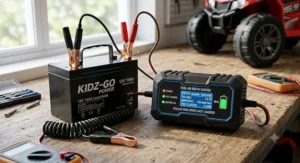
Frequently Asked Questions
❓ What voltage charger does my ride on toy need?
❓ Can I use a universal charger for ride on toys on any brand?
❓ How long does it take to charge a ride on toy battery?
❓ Is it safe to leave a ride on toy charger plugged in overnight?
❓ Why won't my ride on toy charger light turn green?
Conclusion
Picking the right charger for ride on toys really comes down to three questions: what voltage does your vehicle need, how often does it actually get ridden, and how many different brands are you juggling under one roof. The Schumacher Charge ‘n Ride CR7 handles most mixed 6V/12V households with genuine smart-charging confidence, the Schumacher SCHCR8 steps up for bigger 24V trucks, and budget picks like the 12V Alligator Clip Universal Battery Charger or the Venshun-Style 12V Square Plug Replacement Charger solve specific fit-or-price problems without overcomplicating things.
None of these chargers are glamorous. Nobody’s kid ever asked for one on their birthday wish list. But the difference between a charger that quietly does its job for years and one that leaves a battery dead — or worse, poses a real safety risk — is worth the fifteen minutes of research this guide just saved you. Match the voltage, respect the connector, and lean toward smart automatic features whenever your budget allows, and that driveway grand prix will be ready to go all summer long.
✨ Don’t Miss These Exclusive Deals!
🔍 Take your ride-on toy charging setup to the next level with these carefully selected picks above. Click on any highlighted product to check current pricing and availability, and keep those wheels turning all season long!
Recommended for You
- Battery For Ride On Toys: 7 Best Picks & Buying Mistakes to Avoid (2026)
- Ride On Horse Toy Battery Operated: 7 Best Picks 2026
- John Deere Ride On Toys Battery Powered: 7 Best Picks (2026)
Disclaimer: This article contains affiliate links. As an Amazon Associate, I earn from qualifying purchases. If you purchase products through these links, we may earn a small commission at no additional cost to you.
✨ Found this helpful? Share it with your friends! 💬🤗
