
In This Article
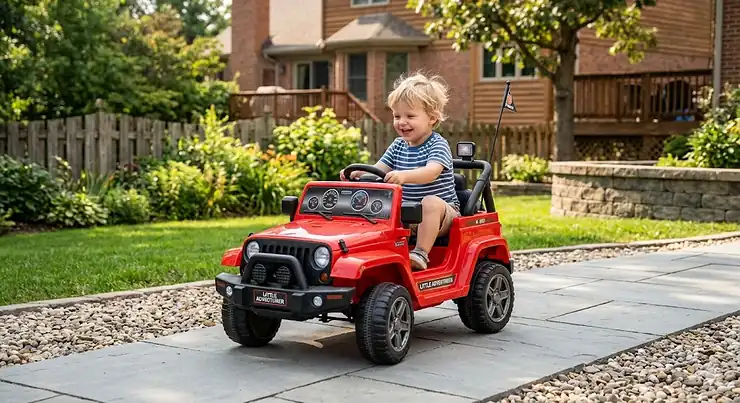
There’s a very specific brand of chaos that descends on a living room the first time a toddler gets behind the wheel of a battery-powered car. Eyes wide. Both fists gripping the steering wheel with an intensity usually reserved for seasoned racing drivers. And then — the slow, triumphant creep across the kitchen floor at 1.5 mph. Pure theater.
If you’re shopping for 6v ride on toys, you’re already in exactly the right voltage category for your little one. The 6-volt segment is purpose-built for children between 18 months and 3 years old — that exquisite developmental sweet spot where independence is blooming fast but actual traffic readiness remains, thankfully, years away. Unlike their 12V and 24V siblings that hit speeds that make parents grip their coffee cups a little tighter, 6 volt ride on toys top out around 1.8–3.1 mph. Fast enough to feel thrilling to a two-year-old. Slow enough for you to stay sane.
What is a 6v ride on toy, exactly? Simply put: a battery-powered miniature vehicle driven by a 6-volt rechargeable motor system, designed for toddlers aged roughly 18 months to 3 years, with weight capacities typically between 44 and 65 lbs. They’re the first experience many children have of independent locomotion — and the developmental value of that moment is genuinely significant.
Here’s what the product listings won’t tell you, though: not all 6v ride on toys perform equally. Battery runtime varies wildly. Build quality swings from “survives three seasons” to “didn’t survive Saturday.” The “parent remote control” feature — which sounds like a parental lifesaver — is genuinely useful on some models and embarrassingly laggy on others. In this expert guide, I’ve cut through the spec-sheet noise across the top 7 6v ride on toys currently available on Amazon, giving you the real-world insight needed to choose confidently. Budget picks, mid-range stars, premium options — all covered. Let’s drive.
Quick Comparison: Top 7 6v Ride On Toys at a Glance
| Product | Age Range | Max Speed | Weight Capacity | Standout Feature | Best For |
|---|---|---|---|---|---|
| Power Wheels Hot Wheels Jeep Wrangler | 2–6 yrs | 2.5 mph | 55 lbs | Multi-terrain traction | Outdoor families |
| Best Choice Products 6V Mini Truck | 1.5–4 yrs | 3.1 mph | 44 lbs | Remote + 4-wheel suspension | Dual-control beginners |
| Best Choice Products 6V Quad ATV | 1.5–3 yrs | 1.8 mph | 44 lbs | Push-button simplicity | True first-timers |
| Bluey 6V Ride On Car | 2+ yrs | ~1.5 mph | 44 lbs | Authentic character audio | Bluey-obsessed toddlers |
| Costzon 6V 2-in-1 Ride On Car | 18–72 mos | ~1.8 mph | 44 lbs | Electric + coasting mode | Budget-smart parents |
| Hikiddo 6V Baby Bumper Car | 1.5–5 yrs | 1.55 mph | 55 lbs | 360° spin + 5-point harness | High-energy kids |
| Kid Trax 6V Glow Motorcycle | 3+ yrs | ~2 mph | 65 lbs | Full-body LED glow effect | Cool-factor seekers |
The table gives you the skeleton, but bones alone don’t tell the story. The Best Choice Products Quad ATV and the Hikiddo Bumper Car sit in a similar price bracket but serve completely different personalities and developmental stages. An 18-month-old true beginner needs forgiveness and simplicity. A curious, confident 3-year-old craves stimulation and creative control. Read the expert breakdown below before you click buy — it’s the part the product page won’t give you.
💬 Just one click — help others make better buying decisions too! 😊
Top 7 6v Ride On Toys: Expert Analysis (2026)
1. Power Wheels Hot Wheels Jeep Wrangler 6V
Check on Amazon →
If brand recognition matters in your household — and with toddlers, it almost always does — the Power Wheels Hot Wheels Jeep Wrangler is the one that makes small children feel like they’ve graduated to something real. Fisher-Price has been building ride-on vehicles long enough to have a clear read on what fails first, and this Jeep carries that institutional knowledge in meaningful, practical ways.
The 6V battery delivers a max speed of 2.5 mph forward and reverse — the higher end of the 6-volt speed range. That extra half-mile-per-hour might sound marginal on paper, but for a toddler zooming across a driveway, it’s the difference between “pretty cool” and “COOL.” More importantly, the multi-terrain traction system handles grass, gravel, and concrete without wheels spinning helplessly in place — a frustrating failure mode you’ll encounter on cheaper models the first time the car hits a wet lawn. The Power-Lock brake stops the vehicle when your child releases the pedal, which is quietly the single most underrated safety feature in this entire category.
Suitable for ages 2–6 with a 55 lb weight capacity, this Jeep outlasts the 44 lb alternatives by a meaningful margin of actual use-years. Parents in reviews consistently note that even cautious two-year-olds figured out the controls within the first session.
Who this is for: Outdoor-focused families with mixed terrain — some driveway, some grass. If your yard has transitions between surface types, this model handles them without drama. It’s the only 6V pick in this roundup specifically engineered for that scenario.
✅ Best multi-terrain handling in the 6V category
✅ Power-Lock brake system — safer than alternatives
✅ 55 lb capacity extends the useful lifespan
❌ No parental remote control included
❌ Driving sounds cannot be switched off (a genuine parental sanity consideration)
Price range: Around $80–$120. Strong long-term value from a brand with a proven durability track record.
2. Best Choice Products 6V Kids Ride On Mini Truck with Parent Remote
Check on Amazon →
Here’s what most buyers overlook about the parent remote control feature on this model: it isn’t just a safety net. It’s a developmental bridge. For children who aren’t yet confident steering independently, the parental remote lets you drive them around while they experience the sensation of being “in control.” You can then dial your involvement back gradually as their confidence builds. That’s genuinely thoughtful product design — not a gimmick.
The Mini Truck runs up to 3.1 mph, making it the fastest model in this 6V roundup. The 4-wheel suspension system — unusual at this price tier — smooths out bumps on uneven driveways in a way that competitors simply can’t match. LED headlights, a functional horn, and a 5-point seat harness with locking doors round out a feature set that feels more premium than the price point suggests. Weight capacity sits at 44 lbs, fitting most toddlers comfortably through age 3. The overall dimensions (34.5″ L × 23.25″ W × 22.75″ H) give it a proportionally satisfying scale — it looks like a real vehicle rather than a scaled-down toy.
Available in black and blue, with enough visual presence to make a statement under a Christmas tree.
Who this is for: Parents who want active involvement in the early riding experience — especially the first weeks of ownership. The dual-control setup means you’re never just watching anxiously from the sideline while hoping your toddler steers away from the garden wall.
✅ Fastest 6V model in this roundup at 3.1 mph
✅ 4-wheel suspension — genuinely rare at this price point
✅ Parent remote with functional emergency override
❌ 44 lb weight capacity on the lower end
❌ Allow 45–60 minutes for assembly — plan ahead
Price range: In the $80–$130 range. The remote control alone justifies the modest premium over simpler alternatives.
3. Best Choice Products 6V 4-Wheeler Quad ATV
Check on Amazon →
Sometimes the best thing you can do is strip everything back to its pure, joyful essence. No remote. No Bluetooth. No character licensing. Just a toddler, a push-button accelerator, and the open road — or, more realistically, the back patio. That’s exactly what this Best Choice Products Quad ATV delivers, and it’s precisely why it consistently tops bestseller charts.
The 1.8 mph top speed is the slowest in this roundup, which sounds like a drawback until you remember who the rider is. At 18–24 months, speed isn’t the point. The point is cause and effect: press the button, car moves; release the button, car stops. That’s active cognitive development dressed up as play. The treaded tires provide decent grip on mixed surfaces, and the rubber handle grips mean small hands don’t slip. The push-button accelerator (no complex foot pedal mechanics to master) makes this the most accessible entry point in the entire 6V category.
Build quality is appropriately robust for its price tier — not luxury-grade, but capable of surviving the drops, corner impacts, and general toddler warfare that these vehicles routinely endure.
Who this is for: A family buying their child’s very first ride-on toy. Forgiving, intuitive, and priced not to sting too much if toddler enthusiasm turns out to have a 3-week shelf life (it occasionally does).
✅ Simplest controls in the lineup — genuinely beginner-proof
✅ Treaded tires handle multiple surface types
✅ Budget entry point into the 6V category
❌ 1.8 mph may feel underpowered by age 3
❌ No parental remote means physical proximity is always required
Price range: Around $50–$80 — the most accessible 6v ride on toy in this group.
4. Bluey 6V Ride On Car for Toddlers
Check on Amazon →
Character licensing in the ride-on world is genuinely hit-or-miss. Sometimes you pay a premium and get a sticker. The Bluey 6V Ride On Car is not that. The interactive steering wheel plays actual voice lines and sound effects pulled from the show itself — not generic beep-boop sounds with a cartoon logo slapped on top. For any parent who has sat through seventeen consecutive episodes of Bluey (we see you, and we respect you), that authenticity is meaningful, because toddlers notice.
The 6V 4AH rechargeable battery powers the vehicle through 1–2 hours of riding, and the body construction — a thoughtful mix of PP, ABS plastic, and metal — gives this car genuine durability for a character-themed product. Rounded corners and careful material selection show that safety wasn’t traded away for visual appeal. There’s even a removable spare tire storage case that older siblings will immediately begin raiding as a snack compartment.
One critical detail the product page buries: the steering wheel requires 2 AAA batteries not included in the box. Buy them before the birthday morning, not after.
Who this is for: The Bluey household. Which, statistically, is a very large percentage of households with children under 4. The character fan experience — the specific delight of hearing Bluey’s actual voice while driving — adds a layer of emotional engagement that no generic car can replicate.
✅ Authentic Bluey audio: actual character voice lines and sound effects
✅ Durable mixed-material body (PP, ABS, metal)
✅ Excellent gift factor — the emotional reaction to the character is part of the value
❌ Steering wheel batteries (2 AAA) not included — easy to overlook
❌ Lower speed (~1.5 mph) compared to some 6V competitors
Price range: Around $60–$100, reasonable for a character-licensed product with genuine interactive features.
5. Costzon 6V 2-in-1 Ride On Car
Check on Amazon →
The 2-in-1 concept could easily be a marketing headline — but on the Costzon 6V Ride On Car, it’s a genuinely useful design decision. In electric mode, the 6V motor drives the vehicle normally. In coasting mode, the motor is disengaged and your child uses their own leg muscles to propel and steer — essentially converting it into an active push toy that builds physical strength alongside electric fun. For parents who want their 18-month-old to stay physically engaged rather than passively riding, this dual-mode capability earns its place.
The height-adjustable seat (10.5″ and 12.5″ from ground level) accommodates children from 18 months to 6 years — a wider useful window than almost any competitor in the 6V space. ASTM and CPSIA certification is prominently listed, and the built-in anti-rollover device is a safety detail most competitors don’t include at this price. LED lights, a horn, and adjustable-volume music (that last part matters more than you’d think at 7 a.m.) round out a feature set that punches above the price tier. Compact dimensions — 28″ × 12″ × 18″ — make it one of the few 6V models that can be used indoors without rearranging furniture.
Who this is for: Budget-conscious parents who won’t compromise on features, and families with multiple children at slightly different ages where the adjustable seat is a practical long-term advantage.
✅ 2-in-1 electric + coasting mode — genuinely functional, not gimmicky
✅ Adjustable seat spans the widest age range in this roundup
✅ Anti-rollover device + ASTM/CPSIA certified — comprehensive safety package
❌ Compact footprint may feel snug for larger 3-year-olds
❌ Battery runtime on the shorter end in demanding electric use
Price range: Around $50–$80 — arguably the strongest value-per-dollar ratio in the entire 6V category.
6. Hikiddo Baby Bumper Car 6V
Check on Amazon →
The Hikiddo Bumper Car is playing an entirely different game than the other six products in this roundup, and understanding that distinction is essential before you buy. It’s not simulating a Jeep or a truck. It’s replicating the elemental joy of a fairground bumper car — 360-degree spinning, deliberate bumping, synchronized flashing lights, and the uninhibited shrieking that follows all of the above. If your toddler gets more joy from spinning in circles than driving in straight lines, this is their vehicle.
The dual 2×30W motors are significantly more powerful than the single-motor setups on most 6V alternatives — and that’s precisely why this bumper car can execute genuine full-rotation spins rather than the awkward three-point turns you see on standard ride-ons. Three adjustable speeds (1.11, 1.33, and 1.55 mph) let you calibrate intensity for different rider confidence levels. The 5-point harness and 9.7-inch heightened seat back provide more security than standard lap belts — a meaningful safety upgrade for the kids most likely to test it. Bluetooth connectivity, built-in music with synchronized LED lights, and USB/MP3 ports make this the most entertainment-dense pick in the lineup. The parental remote includes an actual emergency stop button — which, for the most enthusiastic riders, is a feature you’ll reach for sooner than expected.
Who this is for: High-energy, sensory-seeking toddlers who want maximum stimulation from their ride-on experience. This is not a cruising car. It is a small, spinning, light-up party.
✅ 360° spin via dual 30W motors — unique capability in the 6V category
✅ 5-point harness: most secure restraint system in this roundup
✅ Emergency stop on parental remote — genuinely invaluable
❌ Top speed of 1.55 mph — no straight-line thrills
❌Higher price point reflects the dual-motor, premium-safety spec
Price range: In the $100–$150 range, reflecting the dual-motor setup and enhanced safety engineering.
7. Kid Trax 6V Glow Electric Toddler Motorcycle
Check on Amazon →
The Kid Trax Glow Motorcycle makes an argument that pure specs cannot: it looks absolutely incredible. LED headlights are standard on most ride-ons. Full-body glow — lights built directly into the body panels themselves — is not. Evening driveway sessions become events. Neighborhood walks slow down. Three-year-olds develop strong opinions about whether parents are allowed to park it in the garage.
Beyond the visual theater, there’s practical substance. At 65 lbs weight capacity, this is the highest ceiling in the 6V roundup — critical for toddlers trending toward the heavier end of the spectrum, or for older toddlers (3+) who’ve maxed out the 44 lb limits on other models. The realistic engine sounds lean convincingly into the motorcycle experience. It handles both indoor and outdoor surfaces without drama.
Kid Trax’s specific engineering advantage worth calling out: rubberized traction strips on the rear wheels grip pavement, grass, and gravel more effectively than standard smooth plastic wheels. On wet grass especially, this makes a meaningful real-world difference that standard plastic wheels cannot match. This is not an industry-standard feature — it’s a deliberate Kid Trax design choice.
Who this is for: Older toddlers (3+) who’ve already done the car or Jeep and want something that feels genuinely exciting and different. Also an outstanding gift option — the glow effect has serious unboxing energy.
✅ Highest weight capacity (65 lbs) in the 6V category
✅ Full-body LED glow — beyond headlights, into spectacle
✅ Rubberized rear traction strips — better multi-terrain grip
❌ Motorcycle form factor is less stable than 4-wheeled options — not for the youngest beginners
❌ Sits at the mid-to-upper end of 6V pricing
Price range: Around $70–$110 depending on color and availability.
✨ Don’t Miss These Exclusive Deals!
🔍 Take your toddler’s outdoor playtime to the next level with these carefully selected 6v ride on toys. Click any highlighted product above to check current pricing and availability on Amazon — your little driver’s first great adventure is one click away! 🚗⚡
How to Choose the Right 6 Volt Ride On Toy: 7 Criteria That Actually Matter
Shopping in this category for the first time is disorienting — dozens of options that look nearly identical but perform very differently. Here’s the filter that cuts through the noise.
1. Match the voltage to the age, not the wish list. A 6 volt ride on toy is genuinely the correct choice for 18-month to 3-year-olds. Lower voltage keeps speeds toddler-appropriate and weight capacities align with the age group. Resist the temptation to “buy up” to 12V so they can use it longer — 12V vehicles are significantly faster and the handling demands exceed what most 2-year-olds can manage safely. The CPSC’s toy safety guidelines explicitly require ride-on toys to meet stability and overload specifications calibrated by intended age group.
2. Assess your actual terrain before ordering. Hardwood floors? Nearly any model works. Mixed backyard with grass and concrete transitions? Look specifically for treaded tires or rubberized traction strips — the Power Wheels Jeep Wrangler and Kid Trax Glow Motorcycle are the strongest performers here. Primarily grass? Avoid smooth plastic wheels: they spin helplessly on soft surfaces.
3. Decide upfront whether you want parental control. The remote control isn’t just safety equipment — it’s a parenting philosophy. If you want to actively co-pilot the experience during early weeks, choose the Best Choice Products Mini Truck or Hikiddo Bumper Car. If you’d rather your toddler figure it out independently from day one, simpler push-button models work beautifully.
4. Prioritize ASTM F963-23 and CPSIA certification. These are not marketing language. They represent third-party safety testing that became mandatory federal standard as of April 2024. Every product in this guide carries compliant certification. If a listing you find elsewhere doesn’t list these, look elsewhere.
5. Think honestly about battery runtime. Most 6V models offer 40 minutes to 2 hours per charge. The lower end is reality under heavy use — heavier rider, grass terrain, max speed. Plan charging overnight (8–12 hours recommended), and build around nap time if your toddler is a committed aggressive rider.
6. Factor in assembly time. Several models require 45–90 minutes and tools not included. If this is a birthday or holiday gift, build the time in — don’t attempt it on the morning of the party over a cold coffee.
7. Set a realistic budget bracket. The $50–$80 range buys solid, reliable performance. The $80–$150 range adds parental remote controls, suspension systems, character licensing, or enhanced safety features. There’s very little compelling argument for going above $150 in the 6V category specifically.
6v Ride On Toys vs. Push Cars and Pedal Toys: The Honest Comparison
This debate comes up constantly in parenting communities, and the honest answer is that it depends on what developmental outcome you’re optimizing for.
| Feature | 6V Ride On Toys | Push Cars (Parent-Steered) | Pedal Toys |
|---|---|---|---|
| Physical activity | Low (passenger experience) | Low–Medium | High (active pedaling) |
| Appropriate age range | 18 months – 3 years | 12–24 months | 3–6 years |
| Child independence | High | Low | High |
| Indoor use | Possible | Yes | Rarely |
| Battery / maintenance | Required | None | None |
| Multi-terrain flexibility | Moderate–Good | Good | Limited |
| Primary developmental value | Cause-effect / autonomy | Early sensory exposure | Gross motor / coordination |
Push cars — the kind where parents steer from behind via a handle — are ideal for children under 18 months who lack the coordination to self-direct. Pedal toys build genuine leg strength and coordination but require developmental readiness most children don’t reach until 3+. Battery-powered 6 volt ride on toys hit the middle with precision: independent operation, appropriately low risk, and the confidence-building experience of going where you decide to go.
The American Academy of Pediatrics consistently highlights that play experiences promoting autonomy and cause-and-effect discovery are foundational to healthy development in the 18–36 month window — which maps almost exactly to the 6V ride-on category.
The practical takeaway: for families with multiple children at different ages, consider owning one ride-on and one push-or-pedal option rather than doubling up in the same category.
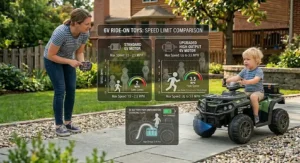
First Ride Setup Guide: What Most Parents Overlook in the First 30 Days
Getting the vehicle assembled and charged is step one. Getting the most out of it in the first month is an entirely different project — and one that most instruction manuals skip entirely.
Before the First Ride
- Charge fully before anything else. The recommended initial charge is 8–12 hours for most 6V models. Skipping or shortening this on lead-acid batteries can reduce maximum capacity permanently. Enthusiasm is not worth compromising the battery.
- Do a quick physical inspection. Manufacturing variability occasionally means a wheel isn’t fully seated or a bolt is finger-tight. A 5-minute check prevents the wobbly-wheel frustration that shows up during the first excited session.
- Choose the right first environment. Smooth indoor surfaces — hardwood, tile — are ideal for session one. Your toddler is learning the controls, not terrain management. Give them one variable at a time.
First Session Tips
- Demonstrate before handing over. Sit beside the vehicle, press the button yourself, let your child watch it move. This eliminates the “terrified of the moving thing” reaction some toddlers have when the vehicle surprises them.
- Cap the first few sessions at 15–20 minutes. Battery dying mid-excitement creates a tantrum situation that serves no one.
- Keep the first space confined. A hallway, patio, or living room works perfectly. Too much open space is cognitively overwhelming when you’re simultaneously figuring out steering and throttle.
The Critical First Two Weeks
- Recharge after every ride, even short ones. Partial-discharge cycling shortens lead-acid battery lifespan significantly. This single habit extends the battery’s useful life more than anything else.
- Watch for steering preferences. Some toddlers go hard left; others spin circles; others drive straight lines with alarming commitment. These tendencies reveal which toy type (cruiser vs. spinner) your child is most suited to — useful context for future purchases.
30-Day Reality Check
If initial excitement dips after week two, don’t panic. Interest frequently resurges once mastery kicks in. The novelty → brief boredom → genuine mastery → sustained enthusiasm arc is completely normal for this age group. If the car seems “slow” or “sluggish” after a month, clean the battery contacts with a dry cloth before assuming the motor is failing — contact oxidation is the most common cause of “broken toy” complaints that aren’t actually broken.
Real-World Scenarios: Matching the Right 6V Ride-On to Your Family
Three families. Three very different situations. Here’s how I’d direct each one.
Profile A: The Apartment Family
Small space. Mostly hardwood. No yard. Two-year-old, 27 lbs.
The Costzon 6V 2-in-1 Ride On Car is the clear answer. Its compact 28″ × 12″ footprint is genuinely apartment-friendly. Coasting mode keeps battery consumption low during indoor sessions. The anti-rollover device prevents wall-collision incidents. Volume-adjustable music keeps downstairs neighbors from filing complaints. The Hikiddo Bumper Car is actually a strong secondary consideration here — its 360° spinning capability is arguably more entertaining in small spaces than in large yards, because the fun comes from spinning rather than going somewhere.
Profile B: The Suburban Backyard Family
Mixed terrain yard. Outdoor-focused. Budget is flexible. Child is nearly 3 and already interested in “big kid” vehicles.
The Power Wheels Hot Wheels Jeep Wrangler wins this profile clearly. Multi-terrain traction engineered specifically for grass-to-concrete transitions. The 2.5 mph speed feels genuinely exciting on a driveway. The 55 lb capacity means they won’t outgrow it immediately. If budget allows, the Kid Trax 6V Glow Motorcycle makes a brilliant second vehicle for variety — evening rides on that bike are legitimately an event.
Profile C: The Safety-First First-Timer
First child. First ride-on. 19 months old. Parent is nervous about speed and control. Moderate budget.
The Best Choice Products 6V Mini Truck with Parent Remote is the right call without debate. The parental remote lets you override instantly if your toddler heads toward anything fragile or hazardous. The 4-wheel suspension absorbs minor terrain imperfections. Start in low speed and transfer control gradually as confidence develops. This setup gives the child a genuine independent driving experience while keeping a safety net firmly in your hands.
What to Expect: Real-World Performance of 6V Ride-On Toys
The spec sheet says “up to 2 hours of riding per charge.” Real life is more complicated — here’s what actually determines your experience.
Rider weight matters more than most buyers expect. A heavier toddler draws more current from the battery, meaningfully reducing session length. A 45 lb child will get noticeably shorter rides than a 28 lb child on the same vehicle, using the same terrain and speed settings.
Terrain is the biggest speed and battery variable. Grass requires dramatically more motor effort than smooth concrete — runtime can drop 30–40% when transitioning from pavement to lawn. If your child spends most of their riding time on grass, factor this into your battery runtime expectations and charging frequency.
The listed top speeds assume optimal conditions. Flat surface, minimum rider weight, new fully-charged battery, moderate temperature. Add real-world variables — weight, incline, grass, cold — and speeds drop. This isn’t a flaw; it’s physics. More importantly, 1.8–2.5 mph feels genuinely exciting to a toddler. You do not need more speed for this age group.
On noise: Motor hum is audible but not intrusive. Music and horn features range from charming (the Bluey car’s authentic show audio) to persistently aggressive (generic beeping on basic budget models). Volume control — available on both the Costzon and Hikiddo models — is a quality-of-life feature whose value becomes clear around day three of use.
According to Wikipedia’s overview of powered ride-on toys, battery-powered children’s vehicles have improved dramatically in safety engineering and motor reliability over the past two decades. Today’s 6V models operate within genuinely robust safety frameworks that the first generation of 1980s power wheels simply didn’t have.
Features That Actually Matter (And Those That Don’t)
The product listings will bury you in buzzwords. Here’s the honest filter.
Features That Genuinely Matter
Battery capacity (Ah rating): A 6V 4.5Ah battery lasts meaningfully longer than a 6V 4Ah battery across a summer of daily use. Always check the Ah rating alongside voltage.
Motor wattage: Higher wattage = more torque, particularly relevant on grass. Single 15W motors struggle; the Hikiddo’s dual 30W setup is why it achieves genuine 360° rotation rather than awkward pivoting.
Traction type: Treaded or rubberized traction strips consistently outperform smooth plastic wheels on grass and gravel. Not optional if outdoor use is your primary scenario.
Safety certification: ASTM F963-23 compliance is mandatory for any toy sold in the U.S. as of April 2024. If it’s not listed in the product specs, that’s a red flag.
Parental remote with emergency stop: If your child is under 2, you will reach for this button within the first week. Its presence is not redundant.
Price & Value Tier Comparison
| Tier | Price Range | What You Get | Who It’s For |
|---|---|---|---|
| Budget | $50–$80 | Basic 6V motor, push-button control, treaded tires | True first-timers, apartment use |
| Mid-Range | $80–$120 | Parent remote, suspension, LED lights, character options | Most families — the sweet spot |
| Premium 6V | $120–$150 | Dual motors, 5-point harness, Bluetooth, advanced safety | Safety-first buyers, high-energy toddlers |
The mid-range tier delivers the best overall value for most families. Premium 6V options are justified when specific safety features (5-point harness, emergency stop, dual motors) or entertainment features (character audio, body lighting) are genuine priorities — not just nice-to-haves.
Features That Are Mostly Marketing Noise
“Realistic engine sounds”: Nearly every listing says this. Some deliver; most produce something vaguely engine-adjacent. Kids love it either way. Adults find it annoying within 48 hours regardless.
“Premium paint finish”: UV exposure plus toddler-grade abuse equals a dull finish by the second summer. Do not factor this into your decision.
“Memory foam seat”: At 1.8 mph on a 20-minute ride, seat comfort is not a limiting variable for your toddler.
Safety Guide: What Every Parent Should Know Before the First Ride
Battery-powered 6V ride-on toys occupy one of the safer categories of powered toys — particularly compared to higher-voltage alternatives — but “safer” isn’t synonymous with “risk-free.”
Supervision requirements by age:
- Under 24 months: Active supervision at arm’s reach, always. Steering is unpredictable and hazard recognition is essentially nonexistent.
- 24–36 months: Active visual supervision. Children understand “don’t go there” but can’t always execute it fast enough.
- 3+ years: Periodic supervision is generally appropriate on familiar terrain.
Protective gear: This gets skipped more often than it should. At 2.5 mph, a fall from a ride-on vehicle can still result in head contact with concrete or pavement. A properly fitted toddler helmet — even for backyard use — is the correct call. The CPSC’s updated ASTM F963-23 toy safety standard, effective April 2024, specifically addresses stability and overload requirements for ride-on toys to minimize fall risk, but it does not replace the protection a helmet provides.
Terrain safety:
- Slopes steeper than roughly 5° are inappropriate for 6V models — most lack sufficient braking for controlled descent.
- Pool edges, curbs, and steps are genuine hazards. Most 6V vehicles coast to a stop rather than braking actively — they don’t stop on a dime.
- Wet grass reduces traction across all models. Save those sessions for dry days.
Battery safety: Use only the charger included with the vehicle and the correct replacement battery specification. Third-party batteries with incorrect voltage ratings have caused incidents in the ride-on category. During off-season storage, remove the battery and store it indoors — cold temperatures accelerate self-discharge and can permanently reduce capacity.
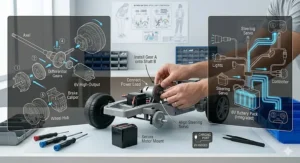
Common Mistakes When Buying 6v Ride On Toys
Mistake 1: Choosing based on aesthetics alone. The excavator shape and the race car shape often run on identical motors at identical speeds. What differentiates products is battery capacity, motor wattage, safety features, and build quality — none of which are visible in the product photo.
Mistake 2: Skipping the terrain assessment. Ordering a smooth-wheel ATV for a predominantly grass backyard is a reliable path to first-week frustration. Match traction type to your actual terrain before purchasing.
Mistake 3: Underestimating assembly time. Several models in this category require 60–90 minutes and tools not provided in the box. Plan accordingly. The birthday morning assembly marathon is a parenting rite of passage best avoided.
Mistake 4: Skipping the initial charge. Lead-acid batteries can lose charge during shipping and warehouse storage. Riding on an uncharged or partially-charged battery on day one can permanently reduce the battery’s maximum capacity. Always do the full initial charge before the first ride.
Mistake 5: Treating 12V as simply “better” 6V. For a toddler under 3, a 12V ride-on is not an upgrade — it’s a different vehicle class with higher speeds and handling demands that exceed young children’s developmental capabilities. The 6V category isn’t a compromise. It’s the correct specification.
Long-Term Value and Maintenance: Making the Investment Last
A 6v ride on toy typically earns 1–3 years of active use before the child outgrows the weight limit or the speed feels underwhelming. Here’s how to maximize that window.
Battery maintenance is the single biggest factor in longevity. Always charge to full. Never leave the battery in a fully discharged state overnight. In winter months, remove the battery and store it indoors — cold temperatures dramatically accelerate self-discharge and can permanently shrink capacity. A well-maintained battery can last the full life of the vehicle; a poorly maintained one might need replacement in year one.
Motor care: Avoid riding in standing water or through mud. Electrical contact corrosion from moisture is a common cause of motor performance degradation. If the vehicle seems slow or sluggish, check and clean the battery connector contacts first — this resolves the majority of “broken toy” situations without any parts replacement.
Resale value is real. Most 6V ride-ons sell for $20–$50 on Facebook Marketplace or at garage sales, assuming they’re in decent cosmetic shape. Timing the resale before your child has fully outgrown the vehicle — rather than after two more years of heavy use — meaningfully increases return. Several children’s charities also accept working ride-on toys in good condition.
Cost-per-month math: A $100 ride-on used for 18 months and resold for $35 costs you effectively $65 total — roughly $3.60 per month. In that context, even the premium options in this roundup represent reasonable value compared to disposable plastic toys that last one season and end up in landfill.
❓ FAQ: 6v Ride On Toys — Real Answers to Real Questions
❓ What age is appropriate for 6v ride on toys?
❓ How long does the battery last on a 6v ride on toy?
❓ Can 6v ride on toys be used on grass?
❓ What is the best 6v ride on toy for a 2 year old?
❓ Do 6v ride on toys need ongoing maintenance?
Conclusion: Choose the Toy That Matches the Child
The best 6v ride on toy isn’t the one with the longest spec sheet — it’s the one that matches how your specific child plays, where they’ll actually ride, and how involved you want to be in the early experience.
Buy the Power Wheels Hot Wheels Jeep Wrangler for outdoor mixed-terrain families who want proven multi-surface performance. Choose the Best Choice Products 6V Mini Truck if you want an active hand in the riding experience during the critical early weeks. Go Costzon 2-in-1 for the widest useful age range and strongest value per dollar. Pick the Bluey 6V Ride On Car if you already know your household — and you definitely do. Opt for the Hikiddo Bumper Car for the high-energy, sensory-loving toddler who’d rather spin than cruise. Upgrade to the Kid Trax Glow Motorcycle for an older toddler who wants something that looks genuinely exciting.
What every great 6 volt ride on toy delivers, regardless of brand or feature set, is something that matters more than any spec: the first experience of going somewhere under your own power. At two years old, that’s not a small thing. That is the very first chapter of independence — “I can do this myself” — and it’s worth getting right.
Match the toy to the child. Match the features to your actual terrain. Buy the AAA batteries in advance. And maybe invest in earplugs alongside any horn-equipped model.
✨ Ready to pick the perfect ride?
Click any highlighted product above to check current pricing and availability on Amazon today! 🛒🚗
Recommended for You
- 7 Best 24 Volt Ride On Construction Toys That Dominate 2026
- Best 24v Battery for Ride On Toys: 7 Top Picks in 2026
- 7 Best 24v Ride On Toys With Remote in 2026
Disclaimer: This article contains affiliate links. As an Amazon Associate, I earn from qualifying purchases. If you purchase products through these links, we may earn a small commission at no additional cost to you.
✨ Found this helpful? Share it with your friends! 💬🤗
