
In This Article
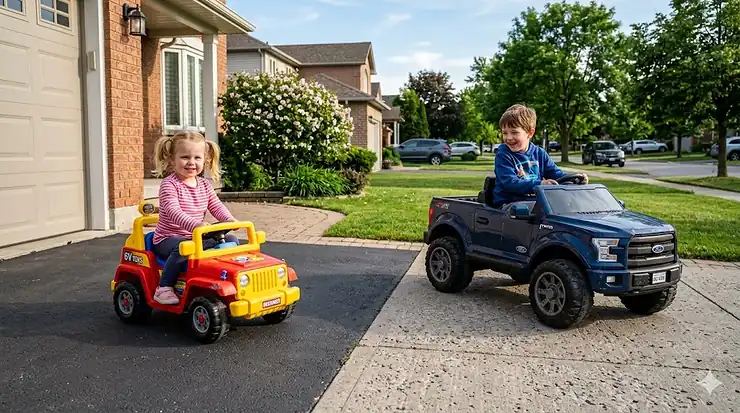
Let’s be honest — standing in the ride-on toy aisle (or scrolling through 47 browser tabs at midnight) trying to figure out the difference between 6v and 12v ride on toys for beginners feels a lot like deciphering a foreign language. Volts, amps, battery life, weight capacity… when all you really want to know is: “Will my three-year-old love it, and will it survive the weekend?”
You’re not alone. This is the single most common question parents of toddlers ask when shopping for their child’s first electric vehicle, and for good reason. The voltage you choose doesn’t just affect speed — it determines how long the fun lasts, what terrain your kid can conquer, and whether the toy grows with them or gathers dust in six months. Think of it like choosing between training wheels and a balance bike. Both get the job done, but the experience is dramatically different.
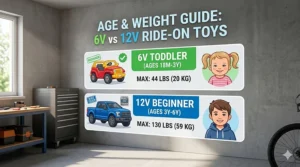
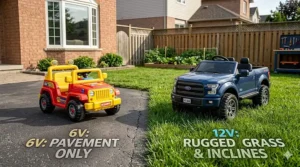
Here’s the quick answer for anyone who just wants the bottom line: a 6v ride on toy is designed for younger toddlers (roughly 18 months to 3 years), tops out around 2-2.5 mph, and works best on flat, smooth surfaces like sidewalks and driveways. A 12v ride on toy is built for kids aged 3 and up, reaches 3-5 mph, tackles grass and mild inclines, and typically offers features like remote control, Bluetooth speakers, and multiple speed settings. In practice, 6v vs 12v ride on toys for beginners is really a question of your child’s age, confidence level, and the terrain in your yard.
But the devil, as always, is in the details. Below, I’ve broken down everything you need to know — including seven real products I’ve researched on Amazon, head-to-head comparisons, practical usage tips, and the mistakes that send most first-time buyers back to the return counter. Let’s get rolling.
Quick Comparison: 6V vs 12V Ride On Toys at a Glance
Before we dive into individual products, here’s a side-by-side snapshot of the core differences. This table is your cheat sheet — bookmark it.
| Feature | 6V Ride On Toys | 12V Ride On Toys |
|---|---|---|
| Best Age Range | 18 months – 3 years | 3 – 7 years |
| Top Speed | 1.5 – 2.5 mph | 3 – 5 mph |
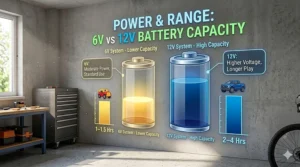
| Battery Run Time | 45 – 90 min | 60 – 120 min |
| Weight Capacity | 40 – 55 lbs | 55 – 77 lbs |
| Terrain | Flat, paved surfaces | Grass, gravel, mild inclines |
| Remote Control | Rarely included | Common |
| Price Range | $50 – $150 | $120 – $350 |
| Best For | Cautious first-timers, younger toddlers | Adventurous kids, longer use lifespan |
The data tells a clear story. If your child is under three and you’re primarily looking for a gentle introduction to motorized play, 6v models are the sweet spot. They’re lighter, slower, and simpler — which is exactly what a wobbly toddler needs. But if your kid is already three or older, has reasonable coordination, and your backyard isn’t perfectly flat, jumping straight to 12v makes more financial sense because you’re buying at least an extra year or two of usability. The price premium for 12v models has shrunk dramatically in the last two years, so the value gap isn’t what it used to be.
💬 Just one click — help others make better buying decisions too! 😊
Top 7 6V vs 12V Ride On Toys for Beginners: Expert Analysis
I spent hours combing through Amazon listings, cross-referencing customer reviews, and comparing spec sheets so you don’t have to. These seven picks span the full voltage and budget spectrum — from a no-frills starter quad to a licensed Mercedes that’ll make your neighbor’s kid jealous.
1. Best Choice Products 6V Kids Ride On 4-Wheeler Quad ATV
This is the ride-on toy equivalent of a Honda Civic — nothing flashy, nothing fancy, but impossibly reliable and priced so well you almost feel like you’re stealing. The 6V rechargeable battery delivers 1-2 hours of run time per charge, and the 1.8 mph top speed is about the pace of a brisk toddler waddle, which is exactly what you want for an 18-month to 3-year-old.
What the spec sheet won’t tell you is why this particular model outsells nearly everything in its category. It’s the simplicity. One push-button accelerator. No multi-speed toggles, no remote control, no Bluetooth — just press and go. For a toddler still figuring out cause and effect, that’s brilliant design, not missing features. The treaded tires with 4-wheel suspension handle driveways and sidewalks confidently, though they’ll struggle on thick grass (a limitation shared by every 6v model on this list).
Customer feedback is overwhelmingly positive, with parents praising the easy assembly and sturdy build. The main complaint? The 8-12 hour charge time feels long when your kid is standing at the door with their helmet on.
✅ Ultra-simple one-button operation perfect for youngest riders
✅ Treaded tires with 4-wheel suspension for stability
✅ Available in 10+ color options
❌ No remote control for parent override
❌ 44 lb weight capacity limits longevity
In the under-$80 range, this is the gold standard for a first ride-on toy. Period.
2. Kid Trax Paw Patrol Toddler Quad 6V
If your toddler currently believes Chase from Paw Patrol is a personal friend, this ride-on will make you a hero for approximately six months. The Kid Trax Paw Patrol Toddler Quad wraps a solid 6V drivetrain in themed graphics that kids go absolutely wild for — and that emotional connection matters more than you’d think when it comes to whether a ride-on toy gets used daily or ignored.
The specs are modest by design: 2 mph forward-only speed, push-button acceleration, and a 44 lb weight limit for riders aged 18-30 months. The Power Trax rubber traction strip tires are a nice touch — they provide noticeably better grip on smooth surfaces than the hard plastic wheels on cheaper models. There’s no reverse function, which sounds limiting until you realize that a 20-month-old with reverse capability is essentially a tiny demolition derby driver.
Parents consistently note that assembly takes about 20 minutes and the ride feels sturdy for its size. The 6V battery and wall charger come included.
✅ Beloved character theme keeps kids engaged
✅ Power Trax rubber traction strips for better grip
✅ Rock-solid build quality from a trusted brand
❌ Forward-only — no reverse
❌ Very limited age range (18-30 months)
Priced in the $60-$90 range, it’s a fantastic gift for the youngest toddlers who are obsessed with the show. Just know they’ll outgrow it faster than most.
3. Huffy Cars Lightning McQueen 6V Ride-On Toy Car
Here’s where 6v models get genuinely charming. The Huffy Lightning McQueen isn’t just a ride-on — it’s a miniature replica with character-inspired eyes, the iconic #95 racing decals, LED headlights, and built-in engine sounds that make your toddler feel like they’re tearing through Radiator Springs. It’s theater on wheels.
Under the Disney magic, though, this is a well-engineered 6V ride-on. Top speed is 2.5 mph — slightly faster than the two quads above — with both forward and reverse driving. The foot pedal accelerator is intuitive for kids aged 3-7, and the wide traction-strip tires provide genuine stability on sidewalks and driveways. Huffy has been making kids’ vehicles for over 130 years, and the build quality reflects that legacy.
The broader age range (3-7) is the real selling point here from a value perspective. Where most 6v quads are outgrown by age three, this car-style ride-on stays relevant for several more years because the enclosed body design gives older kids a more “real car” feeling. Reviewers love the easy tool-free assembly and the fact that it includes a battery and charger out of the box.
✅ Incredible Disney Pixar detailing with lights and sound
✅ Forward and reverse driving
✅ Broader age range (3-7) than most 6V models
❌ Not great on grass — sticks to paved surfaces
❌ No parent remote control
Expect to pay in the $100-$150 range. For a licensed character ride-on with genuine personality, that’s very reasonable.
4. Gotrax RT1 12V Kids Electric ATV
Now we jump to 12 volts, and the Gotrax RT1 is an interesting bridge product. Despite running on a 12V 4.5Ah battery, it intentionally caps speed at just 1.5 mph — making it the gentlest 12v ride-on I’ve seen. That sounds counterintuitive, but here’s the genius: you get the extended battery life of a 12v system (up to 80 minutes of continuous play) with a speed that’s safe enough for kids as young as 18 months.
The 8-inch foam-filled tires are the standout feature. They’re noticeably larger than what you’ll find on 6v quads, which means they roll over grass, dirt, and uneven surfaces without bogging down. Gotrax also built in anti-rollover engineering for extra stability on slopes — something the budget 6v options simply don’t address. Forward and reverse modes are controlled by push-button, keeping things simple.
Gotrax is primarily known for their electric scooters and has a strong reputation for battery quality and customer service. The RT1 has earned a 4.7-star average from buyers, with parents particularly praising the long battery life and rugged tire performance.
✅ 80 minutes of battery life — best in this price class
✅ 8-inch all-terrain tires handle grass and dirt
✅ Anti-rollover safety design
❌ 1.5 mph max speed may bore older kids quickly
❌ No Bluetooth, music, or lights
Priced around $80-$120, the RT1 is the best “tweener” product for parents who want 12v battery life without 12v speed. Perfect if your yard has grass but your kid is still on the younger side.
5. Costzon 12V Kids ATV with LED Lights
This is where 12v models start flexing their muscles. The Costzon 12V ATV packs a 12V 7Ah battery (significantly larger than the Gotrax), dual speed settings (roughly 1.8-5 mph), and the kind of feature list that makes kids feel like they’re driving something legitimately cool — LED headlights, working horn, MP3/USB/AUX input, and built-in music and stories.
What most buyers overlook about this model is the weight capacity. At 77 lbs, it accommodates kids well beyond the toddler stage — some reviewers report their 7 and 8-year-olds still riding comfortably. That’s rare in a single-seat ride-on and makes the Costzon a surprisingly long-term investment. The wear-resistant treaded tires handle multiple terrain types, and the rear-wheel drive with spring suspension provides noticeably better traction than front-drive models in this price range.
The Costzon has ASTM and CPSIA certification, and the soft-start system prevents the lurching acceleration that makes toddlers nervous on cheaper 12v toys. Customer reviews highlight easy assembly (about 15-30 minutes) and strong motor performance on grass.
✅ 77 lb weight capacity — one of the highest in class
✅ Dual speeds with soft-start safety system
✅ ASTM and CPSIA certified
✅ Music, USB, AUX, and working horn
❌ 40-60 minute run time at high speed is below average
❌ No parent remote control
In the $130-$180 range, this is the workhorse pick. It won’t win beauty contests, but it’ll last years and handle real terrain.
6. Best Choice Products 12V Kids Ride-On Electric ATV
Best Choice Products makes our list twice because, frankly, they’re hard to beat at either voltage tier. Their 12V ATV steps everything up from the 6V version: 3.7 mph max speed, Bluetooth audio connectivity, LED headlights, a functional horn, and forward/reverse with foot pedal acceleration. The 12V battery provides roughly 1.5 hours of run time per charge, and the 66 lb weight capacity fits most kids aged 3-7.
The Bluetooth feature is the unexpected winner here. Kids can wirelessly stream their own music while cruising — and yes, three-year-olds absolutely have playlists now. It transforms the ride from simple forward-and-back laps into an actual experience. The treaded tires and 4-wheel suspension tackle grass, dirt, driveways, and sidewalks, and the overall build quality feels genuinely robust.
If you bought the 6V Best Choice quad and your child loved it, this is the natural upgrade path. The controls are similar enough that the transition feels seamless, but the speed, range, and features are in a different league.
✅ Bluetooth audio — surprisingly great feature for kids
✅ 3.7 mph top speed with two speed settings
✅ Treaded tires with 4-wheel suspension
❌ 8-12 hour charge time is standard but still painful
❌ Assembly can be tricky — budget 30-45 minutes
Expect to pay in the $150-$220 range. The Bluetooth alone sets it apart from most competitors at this price.
7. Winado 12V Licensed Mercedes Benz AMG GTR
Time to go premium. The Winado Mercedes Benz AMG GTR is a licensed replica that looks so convincing your HOA might send a parking violation. Opening doors, LED headlights and taillights, a voltage display, Bluetooth/USB/AUX media system, widened seat with adjustable safety belt, and a 2.4G parent remote control with three speed settings — this is the full package.
The parent remote control is the feature that justifies the price premium over basic 12v models. You get complete override capability with three speeds and a brake button, which means you can steer your two-year-old away from the flower bed without leaving your lawn chair. The smooth-start system prevents jolting acceleration, and the 55 lb weight capacity suits kids aged 3-5. Run time is 1-2 hours on a full charge.
In my experience, licensed ride-on cars like this one hold kids’ attention longer than generic models because the realistic details — the grille, the badge, the door handles — spark richer imaginative play. Your child isn’t just riding; they’re driving a Mercedes. That sounds silly until you watch a four-year-old carefully “park” in the garage and lock the doors.
Customer reviews highlight the realistic appearance and smooth ride, though a few note that assembly requires patience and about 45 minutes.
✅ Licensed Mercedes design with stunning detail
✅ Parent remote control with 3 speeds and brake
✅ Smooth-start system for safety
✅ Opening doors, LED lights, media system
❌ 55 lb weight capacity is on the lower end for 12V
❌ Struggles on thick grass — best on paved surfaces
In the $150-$250 range, the Winado Mercedes is the premium choice for parents who want the “wow factor” without spending $400+.
Full Product Comparison: All 7 Models Head to Head
| Model | Voltage | Max Speed | Battery Life | Weight Cap. | Remote | Best For |
|---|---|---|---|---|---|---|
| Best Choice 6V Quad ATV | 6V | 1.8 mph | 1-2 hrs | 44 lbs | No | Budget first-timer |
| Kid Trax Paw Patrol Quad | 6V | 2 mph | ~1 hr | 44 lbs | No | Character-loving toddlers |
| Huffy Lightning McQueen | 6V | 2.5 mph | 1-2 hrs | ~65 lbs | No | Disney fans, 3-7 yr olds |
| Gotrax RT1 12V ATV | 12V | 1.5 mph | 80 min | ~55 lbs | No | Cautious step-up to 12V |
| Costzon 12V ATV | 12V | 1.8-5 mph | 40-60 min | 77 lbs | No | Long-term, all-terrain |
| Best Choice 12V ATV | 12V | 3.7 mph | 1.5 hrs | 66 lbs | No | Bluetooth-loving families |
| Winado Mercedes 12V | 12V | 3 mph | 1-2 hrs | 55 lbs | Yes | Premium gift, youngest 12V riders |
Looking at the numbers side by side, a clear pattern emerges: the Costzon 12V ATV delivers the best long-term value thanks to that 77 lb weight capacity, but if parent control is your priority, the Winado Mercedes is the only model here with a full remote override. Budget-conscious parents who just want a solid entry point can’t go wrong with the Best Choice 6V Quad — it’s the most-reviewed product in this category for a reason.
First 30 Days with a Ride-On Toy: Your Practical Survival Guide
Amazon listings will tell you about motor watts and tire diameter. What they won’t tell you is how the first month actually goes — and that’s where most new parents hit unexpected bumps. Here’s a practical usage guide based on real-world patterns.
Unboxing and Assembly Tips
Most ride-on toys arrive partially assembled, and the process takes 15-45 minutes depending on the model. My biggest tip: charge the battery fully before you start building. The included batteries almost always arrive partially depleted, and nothing kills the excitement faster than finishing assembly to discover you need to wait 8-12 hours before the first ride.
Keep the box. Seriously. If you need to return it or store it for winter, the original box is the only thing that fits these oddly shaped toys.
Battery Care That Actually Matters
Here’s something most parents learn the hard way: lead-acid batteries (used in almost every ride-on toy) degrade faster when stored fully discharged. If you’re not using the toy for more than two weeks, charge it to full before putting it away. The CPSC recommends following manufacturer charging guidelines precisely to prevent overheating and extend battery lifespan. A battery that’s routinely drained to zero and left sitting will lose 30-40% of its capacity within the first year.
Common First-Month Mistakes
The biggest one? Letting your kid ride on grass with a 6v model and then blaming the toy when it stalls. Six-volt motors simply don’t have the torque for anything thicker than a well-mowed lawn. If your yard has uneven grass, skip to 12v from the start. Second most common: forgetting to tighten all bolts after the first few rides. Vibration loosens connections, especially on wheel axles. A quick wrench check after the first week prevents wobbly wheels later.
Which Voltage Fits Your Family? A Real-World Scenario Guide
Products are great, but context is everything. Let me walk you through three common family scenarios to help you match the right ride-on to your actual life.
Scenario 1 — The Apartment Dweller with a Small Patio
You’ve got a 2-year-old, a 10×12 concrete patio, and maybe a smooth sidewalk nearby. A 6V model like the Best Choice Products Quad ATV or Kid Trax Paw Patrol is your best fit. The slow speed means tight spaces are manageable, the small footprint stores easily, and you don’t need terrain capability. Budget: under $100.
Scenario 2 — The Suburban Family with a Grassy Backyard
Your 3-year-old has a big yard with mixed terrain — patio, grass, a slight slope near the fence. This is solidly 12V territory. The Costzon 12V ATV or Best Choice 12V ATV will handle the grass without stalling, and the higher weight capacity means the toy grows with your child through age 6 or 7. Budget: $130-$220.
Scenario 3 — The Gift-Buying Grandparent
You want something that looks incredible under the tree and works flawlessly the first time. The Winado Mercedes Benz 12V checks every box — the licensed design creates instant excitement, the parent remote means you can help navigate from a distance, and the smooth-start system prevents tears on the first ride. Budget: $150-$250.
The Voltage Myth: Why Higher Isn’t Always Better
One of the most persistent misconceptions in choosing first electric car for toddler shopping is the idea that more volts automatically means a better toy. Let me dismantle that.
A 12v motor in a ride-on toy designed for a 2-year-old who weighs 25 pounds is overkill. The acceleration feels jerky, the speed is frightening rather than fun, and the heavier toy is harder for a toddler to maneuver when it inevitably gets stuck against a wall. The Gotrax RT1 understood this perfectly — it uses a 12V battery but caps the speed at 1.5 mph, giving you the battery endurance of 12v with the safety profile of 6v.
Conversely, a 6v model for a confident 5-year-old is painfully slow. They’ll be bored within a week, and the motor will strain under the extra weight, killing battery life and motor longevity. According to the CPSC’s Age Determination Guidelines, children aged 5 and older have the motor skills and coordination for faster, more complex ride-on toys — and they crave the challenge.
The right voltage isn’t the highest one. It’s the one that matches your child’s developmental stage.
How to Choose the Perfect Ride On Toy: 6 Expert Criteria
Choosing between 6v or 12v ride on toy for 3 year old (or any age) comes down to six factors. Here’s how to weigh them.
- Age and weight — Check the manufacturer’s recommended age and weight capacity. Going above the weight limit doesn’t just slow the toy down — it stresses the motor and axles, creating safety risks. The ASTM F963 standard governs toy safety for products sold in the U.S., including electrical systems and weight thresholds.
- Terrain — Flat concrete? 6V is fine. Grass, dirt, or slopes? 12V minimum, and look for treaded tires with spring suspension.
- Speed tolerance — Some toddlers are fearless; others cry if a toy moves too fast. The difference between 6v and 12v ride on toys is essentially the difference between a walking pace and a jogging pace. Know your kid.
- Feature needs — Parent remote control matters if your child is under 3. Bluetooth and music matter if your child is 4+. LED lights matter at dusk. Prioritize features that solve actual problems, not features that look good in listings.
- Longevity — A 6V toy for a 2-year-old gives you maybe 18 months of use. A 12V toy for a 3-year-old can last 3-4 years. Do the cost-per-year math.
- Storage — 12V models are significantly larger and heavier. If you’re storing in a small garage or apartment, measure before you buy.
5 Common Mistakes When Buying Your First Ride-On Toy
Mistake #1 — Buying Based on the Coolest Design
A licensed Lamborghini looks amazing. But if it has hard plastic tires and no suspension, your kid will bounce like a pinball on anything rougher than a bowling alley. Always check the drivetrain before the paint job.
Mistake #2 — Ignoring the Charge Time
Most parents don’t realize that 8-12 hours of charging for 1-2 hours of play is standard across the industry. If this matters to you, buying a spare battery (usually $15-$25) is the single best accessory investment you’ll make.
Mistake #3 — Skipping the Remote on Early Models
If your child is under 3, a parent remote control isn’t a luxury — it’s a safety feature. Without it, you’re chasing a toddler on a motorized vehicle with no way to stop it except physically intercepting. Ask me how I know.
Mistake #4 — Not Checking the Weight Limit
A ride-on toy rated for 44 lbs will work for a child who weighs 42 lbs. But it’ll strain on every incline, drain the battery twice as fast, and the motor will burn out months sooner. Always buy with at least a 10-15 lb buffer.
Mistake #5 — Assuming All 12V Toys Are Too Fast
This is the mistake that pushes nervous parents toward underpowered 6V models when a gentle 12V option (like the Gotrax RT1 at 1.5 mph) would have been perfect. Should i start with 6v or 12v? If your kid is 3+, the answer is almost always 12v — just pick a model with appropriate speed settings.
Safety Essentials: What Every Parent Needs to Know
No voltage guide for young children would be complete without addressing safety, and this is one area where cutting corners can have real consequences.
All ride-on toys sold in the U.S. should comply with ASTM F963 standards, which cover electrical systems, mechanical hazards, and material safety. Look for ASTM and CPSIA certification markings in the product listing — every product on our list above carries these certifications. The Consumer Product Safety Commission (CPSC) maintains a searchable database of recalled products, and I’d recommend checking it before any purchase.
Beyond certifications, practical safety comes down to three things. First, always supervise riding — especially outdoors, near driveways, and on slopes. Second, use the lowest speed setting for the first several rides while your child builds confidence. Third, consider a toddler helmet. Yes, even at 2 mph. It builds the habit early, and the Nationwide Children’s Hospital recommends protective gear for all wheeled toy use.
✨ Don’t Miss These Exclusive Deals!
🔍 Take your child’s outdoor playtime to the next level with these carefully selected ride-on toys. Click on any highlighted item to check current pricing and availability. These vehicles will help create authentic childhood memories your family will treasure!
Long-Term Cost and Maintenance: The Numbers Nobody Talks About
The sticker price of a ride-on toy is only chapter one. Here’s the real financial picture.
Replacement batteries are the main ongoing cost. A 6V replacement battery typically runs $15-$20; a 12V battery costs $20-$35. Most families replace the battery once per year with regular use. A spare charger ($10-$15) is worth having if the original fails — and they occasionally do.
Tire replacements are rare but possible, especially on 12V models used on rough terrain. Most manufacturers sell replacement tire sets for $15-$30. The biggest hidden cost? Buying a second ride-on toy because you chose the wrong voltage and your child outgrew it in six months. An age-appropriate ride on toy power choice upfront saves you $100+ compared to buying twice.
Over a three-year ownership period, budget roughly $30-$60 in maintenance costs on top of the purchase price. That puts even the premium Winado Mercedes at under $100/year — less than most monthly toy subscription boxes.
6V vs 12V: What to Expect in Real-World Performance
Spec sheets are measured in laboratories. Your backyard is not a laboratory. Here’s what each voltage tier actually feels like in practice.
A 6V ride-on on a smooth driveway is pleasant and predictable. Your toddler presses the button, the toy glides forward at a brisk walk, and you can keep up without breaking a sweat. Put that same 6V toy on grass? It slows to a crawl, the motor whines audibly, and on even a gentle incline, it may stall completely. This isn’t a defect — it’s physics. Six volts of power through a small motor simply doesn’t generate enough torque for resistance.
A 12V ride-on on the same driveway feels noticeably quicker. On the low setting, it’s manageable; on the high setting, you might jog a few steps to catch up. On grass? Night and day compared to 6V. Twelve-volt models push through standard lawn grass without hesitation, and most handle mild slopes (up to about 15 degrees) without stalling. The trade-off is that a 12V toy on a smooth surface can feel fast for a nervous child. That’s why dual-speed settings and soft-start systems aren’t gimmicks — they’re essential for age-appropriate ride on toy power management.

❓ FAQ
❓ What age is best for a 6v ride on toy?
❓ Can a 3 year old use a 12v ride on toy safely?
❓ How long do ride on toy batteries last before needing replacement?
❓ Is the difference between 6v and 12v ride on toys just speed?
❓ Should i start with 6v or 12v for my toddler's first ride on toy?
Choosing the Right Voltage Is Choosing the Right Childhood Memory
At the end of the day, choosing first electric car for toddler isn’t about watts and volts and amp-hours. It’s about the look on your kid’s face the first time they press that button and realize they’re driving. That moment is priceless whether it happens at 1.8 mph or 3.7 mph.
The practical takeaway is simple: match the voltage to your child’s age, your terrain, and your budget. Under 3 on a flat surface? The Best Choice Products 6V Quad or Huffy Lightning McQueen will deliver joy without anxiety. Three and older with grass to conquer? The Costzon 12V ATV or Best Choice 12V ATV will last for years. Want the premium experience with full parent control? The Winado Mercedes is worth every penny.
Whatever you choose, remember the two things that matter most — your kid’s safety and your kid’s smile. The voltage is just a number. The memories are forever.
✨ Don’t Miss These Exclusive Deals!
🔍 Ready to pick the perfect ride-on toy? Click on any product name above to check the latest pricing and availability on Amazon. Your child’s next great adventure starts with one click!
Recommended for You
- Best 6V Battery for Ride On Toys: 7 Top Picks That Last in 2026
- 7 Best Cheap 6V Ride On Toys in 2026 — Real Deals Toddlers Will Love
- 7 Best 6v Ride On Toys for Toddlers in 2026: Safe, Fun & Expert-Tested
Disclaimer: This article contains affiliate links. As an Amazon Associate, I earn from qualifying purchases. If you purchase products through these links, we may earn a small commission at no additional cost to you.
✨ Found this helpful? Share it with your friends! 💬🤗
