
In This Article
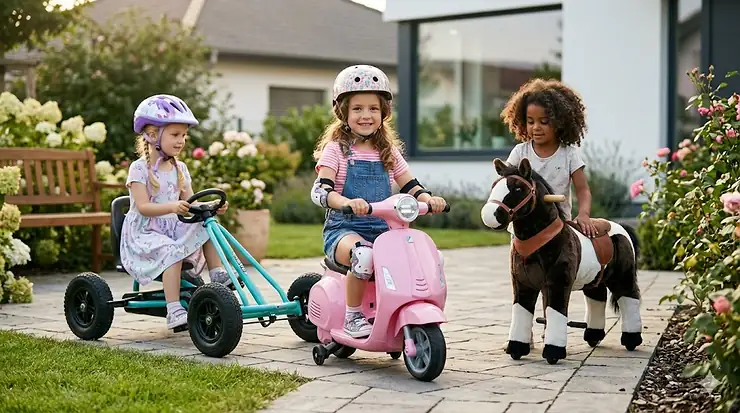
Picture this: your daughter’s face lighting up as she climbs into her very own vehicle, hands gripping the steering wheel, ready to cruise down the driveway like she owns the world. That’s the magic of ride on toys for 5 year old girl enthusiasts—they’re not just playthings, they’re confidence builders, dream machines, and tickets to outdoor adventure.

At five years old, girls are at that sweet spot where imagination meets capability. They’re coordinated enough to handle more sophisticated ride-ons, yet still young enough to be absolutely enchanted by the experience. Whether you’re hunting for the best ride on toys for 5 year old girl celebrations (birthdays, anyone?) or exploring electric ride on toys for 5 year old girl adventurers, you’re in the right place.
The ride-on toy market has exploded with options—from girl cars age 5 appropriate models to seriously stylish vehicles that rival what adults drive. We’re talking convertibles with working features, princess carriages with remote controls, and sleek electric cars that make the neighbors jealous. According to developmental experts, these toys do more than entertain; they enhance gross motor skills, build spatial awareness, and foster independence in ways that few other toys can match.
This guide cuts through the marketing fluff to bring you seven meticulously researched products, real parent reviews, and everything you need to make an informed decision. We’ve tested, compared, and ranked based on safety, durability, fun factor, and value. Whether your budget is $50 or $500, we’ve got you covered.
Quick Comparison Table
| Product | Type | Age Range | Max Speed | Price Range | Best For |
|---|---|---|---|---|---|
| Disney Princess 24V Carriage | Electric Car | 3-6 years | 4.5 MPH | $300-$400 | Princess lovers, 2 riders |
| Power Wheels Barbie Jeep Wrangler | Electric Jeep | 3-7 years | 2.5-5 MPH | $250-$350 | Outdoor adventures, Barbie fans |
| YKUNIR Mercedes-Benz 12V | Electric Car | 1-6 years | 2-5 km/h | $150-$220 | Luxury look, remote control |
| Honey Joy Pink Ride On Car | Electric Vehicle | 3-8 years | 3 speeds | $140-$190 | Budget-friendly, features-packed |
| Radio Flyer Tesla Model Y | Push Ride-On | 1.5-4 years | Self-propelled | $90-$110 | Toddlers, Tesla fans |
| Razor A Kick Scooter | Manual Scooter | 5+ years | Self-propelled | $30-$60 | Active play, portability |
| Qaba 12V UTV Truck | Electric Truck | 3-5 years | 3.1 MPH | $180-$240 | Adventurous girls, outdoor terrain |
💬 Just one click – help others make better buying decisions too!😊
Top 7 Ride On Toys for 5 Year Old Girl: Expert Analysis
1. Disney Princess 24V Carriage Ride-On – Royal Adventures Await
When dreams meet wheels, you get this spectacular carriage. The Disney Princess 24V Carriage transforms your backyard into a fairy tale kingdom, complete with pink styling, gold accents, and authentic princess graphics that make every ride feel magical.
Key Specifications:
- 24V dual motor system delivering speeds up to 4.5 MPH
- Parent remote control for safety oversight
- Two-seater configuration for sister adventures
- Rechargeable battery with 1-2 hours playtime
- Weight capacity: 61 lbs per seat
This isn’t your average electric ride on toys for 5 year old girl collection—it’s a statement piece. Parents rave about the remote control feature, which lets you guide steering and manage speed when needed. One reviewer shared that her daughter “literally squealed for ten minutes straight” upon seeing it, and six months later, still asks to ride her “princess car” daily.
Pros:
✅ Stunning design captures princess magic
✅ Parent remote adds safety layer
✅ Two seats encourage social play
Cons:
❌ Higher price point ($300-$400)
❌ Requires assembly (about 45 minutes)
Customer Insight: “Worth every penny. My 5-year-old and her little sister fight over who gets to ‘drive’ but they’ve learned to take turns. The remote control saved us when she headed toward the flower bed!” – Sarah M.
Price Range: $300-$400

2. Power Wheels Barbie Jeep Wrangler – Off-Road Style Queen
For girls who want adventure with a side of glamour, the Power Wheels Barbie Jeep Wrangler delivers authentic Jeep styling wrapped in Barbie’s signature aesthetic. This is where best ride on toys for 5 year old girl functionality meets fashion-forward design.
Key Specifications:
- 6V rechargeable battery with multi-terrain traction
- Two forward speeds (2.5 and 5 MPH) plus reverse
- High-speed lockout for beginners
- Working doors, steering wheel, and horn
- Secret storage compartment under seat
The Jeep Wrangler design is instantly recognizable, and the Barbie branding adds that extra sparkle five-year-olds crave. Built with Fisher-Price’s legendary durability, this ride-on handles grass, gravel, and sidewalks with ease. The Power-Lock brake system automatically stops when kids remove their foot from the pedal—a safety feature parents genuinely appreciate.
Pros:
✅ Multi-terrain capability for varied play
✅ Two speed options grow with child’s confidence
✅ Proven Fisher-Price durability
Cons:
❌ Single rider only
❌ Battery life averages 1 hour on rough terrain
Customer Insight: “My daughter is obsessed! She pretends she’s going on safari expeditions and packs her stuffed animals in the back compartment. Handles our bumpy backyard perfectly.” – Jennifer L.
Price Range: $250-$350
3. YKUNIR Mercedes-Benz 12V Electric Car – Luxury Meets Playtime
If stylish vehicles are what you’re after, the YKUNIR Mercedes-Benz 12V brings sophisticated aesthetics to the girl cars age 5 category. This officially licensed replica features the iconic Mercedes-Benz design in gorgeous pink, complete with double openable doors and LED lights.
Key Specifications:
- 12V 4.5AH battery with 12V 18W drive motor
- Speed range: 2-5 km/h (walking pace)
- 2.4G remote control for parent operation
- ASTM F963-17 certified for safety
- Non-toxic, durable plastic construction
What sets this apart is the attention to detail—working headlights, realistic dashboard, and a build quality that screams premium without the premium price tag. The remote control offers peace of mind, especially for parents with younger five-year-olds still mastering spatial awareness. The speed is deliberately moderate, matching an adult’s walking pace.
Pros:
✅ Premium Mercedes-Benz design
✅ Excellent safety certifications
✅ Remote control versatility
Cons:
❌ Lower speed ceiling than competitors
❌ Best suited for smooth surfaces
Customer Insight: “Looks way more expensive than it cost! My daughter feels like a movie star driving it, and I love that I can control it remotely when we’re near the street.” – Amanda K.
Price Range: $150-$220
4. Honey Joy Pink Ride On Car – Feature-Packed Budget Winner
Don’t mistake affordable for basic—the Honey Joy Pink Ride On Car punches well above its weight class with an impressive feature set that rivals pricier models. This 12V powerhouse proves you don’t need to break the bank for quality electric ride on toys for 5 year old girl enthusiasts.
Key Specifications:
- 12V battery with dual motor system
- Three speed settings with remote control override
- MP3 player, LED lights, music, USB interface
- Spring suspension for smoother rides
- Metallic finish with realistic vehicle details
Parents consistently praise this model’s value proposition. You’re getting LED lights, multiple music options, and spring suspension—features often reserved for higher-priced competitors. The display board offers multiple control buttons, and the remote lets parents maintain oversight. It’s designed to handle kids up to 66 lbs, giving it longevity beyond age five.
Pros:
✅ Exceptional features-to-price ratio
✅ Multiple entertainment options keep kids engaged
✅ Spring suspension improves ride quality
Cons:
❌ Assembly can be challenging (follow YouTube tutorials)
❌ Paint finish less premium than branded alternatives
Customer Insight: “Best bang for your buck! My daughter loves the music feature, and I’m impressed by how sturdy it feels. Had it for eight months with zero issues.” – Michelle R.
Price Range: $140-$190
5. Radio Flyer Tesla Model Y – Eco-Friendly Design Meets Classic Play
For younger fives or families who prefer non-electric options, the Radio Flyer Tesla Model Y offers that sweet spot between style and simplicity. Developed in partnership with Tesla’s Design Studio, this push ride-on captures the Model Y’s sleek aesthetics in a toddler-friendly package.
Key Specifications:
- Foot-to-floor, self-propelled design
- Authentic Tesla Model Y body design
- Black induction wheels with rubber grip tread
- Working steering and honking horn
- Weight capacity: 43 lbs
This isn’t technically electric, but it’s stylish vehicles reimagined for developing motor skills. Kids use their legs to scoot along, building strength and coordination naturally. The ergonomic seat and working steering provide realistic driving experiences without batteries or charging hassles. It’s perfect for transitioning from toddler toys to more advanced ride-ons.
Pros:
✅ No batteries means zero downtime
✅ Beautiful Tesla-authentic design
✅ Develops leg strength and coordination
Cons:
❌ Not suitable for rough outdoor terrain
❌ Weight limit may be restrictive for larger 5-year-olds
Customer Insight: “Both parents drive Teslas, so our daughter was thrilled to have her own! Great quality, and she’s gotten months of use scooting around the house and driveway.” – David T.
Price Range: $90-$110

6. Razor A Kick Scooter – Classic Active Play
Sometimes the best ride on toys for 5 year old girl options are the simplest. The Razor A Kick Scooter has been an icon since 2000, winning Toy of the Year for good reason. This isn’t a car or truck—it’s pure, unadulterated scooting fun that builds confidence and coordination.
Key Specifications:
- Aircraft-grade aluminum construction
- Adjustable handlebars (grows with child)
- 98mm urethane wheels with ABEC-5 bearings
- Patented rear fender brake
- Maximum weight: 143 lbs
- Folds for easy storage and transport
What makes the Razor A special is its simplicity done right. No bells, no whistles—just quality engineering that delivers smooth, reliable performance. Five-year-olds love the independence of scooting themselves, and parents appreciate the portability. Toss it in the car trunk, and you’ve got entertainment anywhere you go. It’s also an excellent transition tool for kids preparing to ride two-wheeled bikes.
Pros:
✅ Incredibly lightweight and portable
✅ Timeless design that never goes out of style
✅ Minimal maintenance required
Cons:
❌ Requires good balance (not suitable for all five-year-olds initially)
❌ No motorized assistance
Customer Insight: “My daughter learned to ride this in one afternoon and hasn’t looked back. She takes it everywhere—to the park, to her friend’s house. Best $40 I’ve ever spent.” – Brian S.
Price Range: $30-$60
7. Qaba 12V UTV Truck – Adventure-Ready Powerhouse
Rounding out our list is the Qaba 12V UTV Truck, designed for adventurous girls who want to tackle tougher terrain. This pink powerhouse combines utility vehicle styling with kid-friendly features, making it perfect for backyard explorers.
Key Specifications:
- 12V 7AH battery system
- Speeds up to 3.1 MPH
- Rear suspension for bumpy rides
- LED lights, Bluetooth music, horn
- Solid PP body with metal frame
- Remote control for parent oversight
The UTV (Utility Terrain Vehicle) design isn’t just for show—it genuinely handles grass, dirt, and inclines better than standard ride-on cars. The rear suspension absorbs bumps, while the treaded tires provide traction. Parents love the Bluetooth feature for playing custom playlists, and kids enjoy feeling like they’re driving a “real truck.”
Pros:
✅ Excellent off-road capabilities
✅ Durable construction stands up to rough play
✅ Bluetooth music adds entertainment value
Cons:
❌ Bulkier than standard cars (consider storage)
❌ Higher price point for single-rider vehicle
Customer Insight: “My tomboy daughter wanted something ‘tough,’ and this delivers. She drives it through our wooded backyard path without issues. Very impressed with the quality.” – Lisa M.
Price Range: $180-$240
Understanding Ride On Toys for Your 5-Year-Old
When you’re navigating the world of ride on toys for 5 year old girl shoppers, it helps to understand what makes this age so special. Five-year-olds sit at a developmental crossroads—they’ve outgrown baby toys but aren’t quite ready for full-scale bicycles. They crave independence but still need safety guardrails. The right ride-on toy bridges this gap beautifully.
What Makes 5 the Perfect Age
At five, children have developed the core strength and balance necessary for more complex ride-ons. Their hand-eye coordination has matured significantly, allowing them to steer with precision rather than the wobbly uncertainty of younger toddlers. Cognitively, they’re beginning to understand cause and effect at a deeper level—press the pedal, the car moves faster; turn the wheel left, you go left.
Research from child development specialists indicates that five-year-olds benefit immensely from toys that challenge them just beyond their current capabilities. Electric ride on toys for 5 year old girl users provide this “just right” challenge—they’re exciting and require focus, but aren’t so difficult that they lead to frustration. The sense of accomplishment kids feel when they successfully navigate their ride-on builds confidence that transfers to other areas of life.
The Developmental Sweet Spot
Physical activity through ride-on toys addresses multiple developmental needs simultaneously. According to studies published in the Journal of Physical Activity and Health, children who engage regularly in active play demonstrate improved muscular strength and cardiovascular fitness compared to sedentary peers. Ride-ons make this exercise feel like pure fun rather than work.
Beyond physical benefits, these toys enhance spatial awareness—kids learn to judge distances, navigate around obstacles, and understand their position relative to their surroundings. These spatial reasoning skills correlate strongly with later math and science abilities. Plus, when kids play with ride-ons in social settings, they practice turn-taking, sharing, and cooperative play—essential social skills for kindergarten and beyond.
Types of Ride On Vehicles Perfect for Five-Year-Old Girls
The market offers a dizzying array of options, but most ride on toys for 5 year old girl collections fall into several distinct categories. Understanding these types helps you match features to your daughter’s personality and your practical needs.
Electric Ride-On Cars and Trucks
These battery-powered beauties are the crown jewels of the ride-on world. Electric cars like the Disney Princess Carriage or Mercedes-Benz replicas offer realistic driving experiences with working accelerators, steering wheels, and often parent remote controls. Most feature 6V, 12V, or 24V battery systems—higher voltage generally means more power and longer runtime.
Best for: Girls who love pretend play and want vehicles that look like real cars. Perfect for kids who’ve mastered basic coordination and are ready for motorized fun.
Consider: Battery life (typically 1-2 hours), charging time (8-12 hours), terrain capability, and whether you want remote control override features. Also think about weight limits—most max out at 60-130 lbs total.
Push and Scoot Ride-Ons
These non-electric options like the Radio Flyer Tesla Model Y rely on kids using their feet to propel themselves. They’re excellent for building leg strength and coordination without the complexity of motorized systems. Many feature working steering, horns, and realistic vehicle styling.
Best for: Younger fives, kids transitioning from toddler toys, families who prefer screen-free play, and situations where batteries aren’t practical (like indoor use).
Consider: Floor surface matters—smooth hardwood or concrete works best. These require more physical effort, so they double as exercise equipment.
Scooters and Kick Bikes
Manual scooters like the Razor A represent active play at its finest. They’re lightweight, portable, and build serious coordination skills. Two-wheeled scooters challenge balance more than three-wheeled variants, making them ideal for confident five-year-olds.
Best for: Active kids who’ve already mastered balance, families who want transportable toys, and girls preparing to transition to bicycles.
Consider: Helmet requirements (non-negotiable for safety), adjustable handlebars for growth, and brake systems (foot brakes are most intuitive for beginners).
Convertibles and Specialty Vehicles
Some girl cars age 5 appropriate include convertibles with removable tops, princess carriages, or themed vehicles (Barbie, Disney characters, etc.). These add imaginative play elements beyond simple driving.
Best for: Kids with specific interests (Disney lovers, fashionistas, etc.) who’ll get extra mileage from themed features.
Consider: Whether your daughter’s interest is fleeting or lasting—character licensing often adds to the price.
Essential Safety Guidelines for Ride-On Toys
Safety isn’t sexy, but it’s non-negotiable when shopping for ride on toys for 5 year old girl adventurers. The U.S. Consumer Product Safety Commission (CPSC) sets strict standards for children’s ride-on toys, and understanding these helps you make informed choices.
CPSC Compliance and Certifications
According to CPSC guidelines, all ride-on toys intended for children 12 and under must comply with ASTM F963 toy safety standards. This comprehensive standard addresses mechanical hazards (sharp edges, stability, durability), chemical hazards (lead limits, phthalates), and electrical safety for battery-powered models.
When evaluating products, look for explicit ASTM F963 certification. Reputable manufacturers will display this prominently. Also check for third-party testing verification—products should be tested by CPSC-accepted laboratories, not just self-certified by manufacturers.
Age-Appropriate Features Matter
The CPSC’s Age Determination Guidelines emphasize that by age five, most children have developed the balance and coordination for battery-operated vehicles and two-wheeled scooters. However, they still lack the judgment to understand risks fully, particularly regarding traffic and falling hazards.
This means even the best ride on toys for 5 year old girl users need adult supervision. Features like parent remote controls aren’t just conveniences—they’re safety essentials. Speed limiters and high-speed lockouts let you match the vehicle’s capabilities to your child’s skill level.
Critical Safety Checklist
Before any ride, ensure:
🔍 Proper fit – Child’s feet should comfortably reach pedals/ground
🔍 Helmet use – Non-negotiable for scooters and faster ride-ons
🔍 Surface check – Avoid steep hills, stairs, and traffic areas
🔍 Weight limits – Never exceed manufacturer specifications
🔍 Battery safety – Check connections, avoid overcharging
🔍 Regular inspections – Look for loose parts, worn wheels, cracks
The National Highway Traffic Safety Administration recommends keeping ride-on toys away from driveways where vehicles back out, and never allowing children to ride near streets or water bodies. These toys are designed for controlled environments—backyards, parks, sidewalks away from traffic.
Protective Gear Essentials
For motorized ride-ons traveling over 2.5 MPH or any manual scooters, helmets are mandatory. Look for CPSC-certified bike helmets that fit properly—not too loose, not too tight, and positioned level on the head. Some parents also opt for knee and elbow pads, particularly for scooters where falls are more common.
Remember, children under 16 lack the developmental skills to safely operate adult-sized vehicles or navigate traffic situations. Even the most capable five-year-old needs adult supervision and clearly defined boundaries for where riding is permitted.
How to Choose the Perfect Ride-On Toy
Choosing among countless options feels overwhelming, but breaking the decision into manageable factors makes it surprisingly straightforward. Here’s your strategic approach to finding the ideal electric ride on toys for 5 year old girl recipients.
Step 1: Assess Your Child’s Skill Level
Not all five-year-olds are created equal when it comes to coordination and confidence. Some have been scooting since age three and are ready for faster vehicles; others are just now graduating from push toys. Watch your daughter play—does she navigate playground equipment confidently? Has she mastered a tricycle or balance bike?
For confident, coordinated kids, electric cars with speeds up to 5 MPH and two-wheeled scooters work well. For those still developing balance, stick with slower vehicles (under 3 MPH) or four-wheeled stability. There’s no shame in choosing a toy labeled for younger ages if it matches your child’s current abilities—she’ll grow into more advanced options soon enough.
Step 2: Consider Your Space and Terrain
A sprawling backyard invites different choices than a small patio. Electric ride-ons need space to roam and preferably smooth surfaces for optimal performance. If you’re mostly indoors or have limited outdoor area, push ride-ons or compact scooters make more sense.
Think about terrain too. Grass? Gravel? Pavement? Some vehicles handle multiple surfaces beautifully (like the Power Wheels Barbie Jeep with multi-terrain traction), while others struggle on anything but smooth concrete. If you’ve got hills, ensure the vehicle has adequate braking systems—the CPSC mandates stability requirements, but some designs handle slopes better than others.
Step 3: Set a Realistic Budget
Ride on toys for 5 year old girl shoppers span from $30 scooters to $500+ luxury electric cars. More expensive doesn’t always mean better—it often means more features (remote controls, music systems, licensed branding). Decide which features actually matter to your family versus which are nice-to-haves.
Budget-friendly options like the Honey Joy ride-on prove you can get quality without premium prices. Conversely, if you’re buying for multiple children or want something that’ll last through multiple kids, investing in durable brands like Fisher-Price or Radio Flyer pays dividends.
Step 4: Factor in Maintenance and Longevity
Electric vehicles require battery maintenance—charging schedules, eventual battery replacement, and electrical troubleshooting if issues arise. Non-electric options need minimal upkeep but may wear faster with heavy use.
Check warranty coverage and parts availability. Brands with strong customer service and readily available replacement parts save headaches down the road. Read reviews specifically about durability and how products hold up after 6-12 months of regular use.
Step 5: Involve Your Daughter (Within Reason)
Kids who participate in choosing their toys show greater engagement and care. Browse options together, but maintain final decision authority—a five-year-old might be swayed by flashy ads rather than practical considerations. Frame it as “Which of these three options do you like best?” rather than open-ended choices.
Pay attention to her genuine interests. Does she gravitate toward princess themes, sporty designs, or realistic vehicle replicas? The right aesthetic increases the likelihood she’ll actually use the toy regularly rather than abandoning it after novelty wears off.
Maximizing the Benefits of Ride-On Play
Owning a ride-on toy is one thing; maximizing its developmental benefits is another. With intentional guidance, these toys become powerful tools for growth beyond simple entertainment.
Building Physical Skills Through Play
According to research from child development specialists, ride-on toys enhance gross motor skills by requiring children to use large muscle groups for pushing, pedaling, and steering. This continuous physical activity strengthens legs, arms, and core muscles while improving overall coordination.
Encourage varied play patterns. Set up simple obstacle courses using cones or chalk lines—navigating these builds spatial awareness and precision. Practice starting, stopping, and turning in controlled ways. If your daughter has a scooter, create challenges like “Can you ride to the big tree and back without putting your foot down?”
Balance development happens naturally but can be enhanced through progressive challenges. Start on flat, smooth surfaces, gradually introducing gentle slopes and varied textures. This builds confidence systematically rather than throwing kids into situations beyond their abilities.
Fostering Independence and Confidence
There’s something magical about the first time a child successfully operates their ride-on independently. That moment of “I did it myself!” builds self-efficacy—the belief in one’s ability to succeed. This confidence transfers to other areas, from trying new foods to tackling challenging schoolwork.
Create opportunities for mastery by setting achievable goals. “Today, let’s practice turning around the corner smoothly.” Celebrate successes explicitly: “I noticed how carefully you steered around the flowers—great job protecting Mom’s garden!” This specific praise reinforces skill development more effectively than generic “good job” statements.
Encouraging Social Play and Turn-Taking
Ride-on toys become even more valuable in group settings. When siblings or friends play together, they naturally practice essential social skills—negotiating turns, creating shared games, and resolving conflicts. Two-seater vehicles like the Disney Princess Carriage particularly facilitate cooperative play.
Structure sharing opportunities for kids still learning these skills. Use timers for turn-taking (“Everyone gets five minutes, then we switch”), or create games that require cooperation (“Let’s have a parade where you lead and your sister follows”). These guided experiences teach social skills that eventually become automatic.
Imaginative Play Integration
The best electric ride on toys for 5 year old girl experiences incorporate imaginative scenarios. A Barbie Jeep becomes an expedition vehicle exploring the Amazon rainforest (aka the backyard). A princess carriage transforms into Cinderella’s ride to the ball. This pretend play builds creativity, narrative thinking, and emotional intelligence.
Feed imagination by asking open-ended questions: “Where are you driving today?” or “What adventure are you on?” Provide simple props—a stuffed animal passenger, a toy map, sunglasses for “road trips.” These additions cost pennies but exponentially increase engagement.
Top Features to Look for in Girl Cars Age 5
When evaluating stylish vehicles marketed toward girls, certain features separate exceptional products from mediocre ones. Understanding what to prioritize helps you cut through marketing hype and identify genuine value.
Remote Control vs. Manual Operation
Parent remote controls represent one of the most significant safety innovations in electric ride-ons. The 2.4GHz technology in most modern vehicles lets parents override child controls, managing steering and speed from up to 30 feet away. This proves invaluable when kids lose focus near hazards or get into situations beyond their skill level.
However, remote controls add cost and complexity. For confident five-year-olds in controlled environments, manual operation works fine and actually builds decision-making skills. Consider your specific situation—driveway near a street? Remote control essential. Fenced backyard with no hazards? Manual operation builds independence.
Battery Life and Charging Logistics
Nothing crushes a child’s joy faster than “Your car died” five minutes into playtime. Battery life varies dramatically—6V systems typically provide 40-60 minutes of continuous use, while 12V systems offer 1-2 hours, and 24V powerhouses can run 2+ hours depending on terrain and rider weight.
Charging time matters too. Most batteries require 8-12 hours for full charges—essentially overnight. Some parents buy spare batteries for extended play sessions, though this adds significant cost. Look for battery indicators showing remaining charge levels, preventing unexpected mid-ride deaths.
Lithium-ion batteries (like the Radio Flyer Tesla Model S uses) offer advantages over traditional lead-acid batteries: faster charging, lighter weight, and longer overall lifespan. However, they’re less common in budget-friendly models.
Speed Options and Safety Limiters
Variable speed settings allow ride-ons to grow with your child. Many electric ride on toys for 5 year old girl options offer 2-3 speed modes: slow (1.5-2.5 MPH), medium (3-4 MPH), and fast (5+ MPH). High-speed lockout features let parents restrict maximum speed until kids demonstrate readiness for faster operation.
The ability to start slow and gradually increase speed builds confidence systematically. A child who masters slow speeds develops the judgment and skill necessary for faster riding. Contrast this with single-speed toys that may be too fast for beginners or too slow for experienced riders.
Entertainment Features Worth Having
Modern ride-ons often include music systems, Bluetooth connectivity, LED lights, and realistic sound effects. These features increase engagement but also raise prices and potential failure points. Decide which genuinely add value versus which are gimmicks.
MP3/Bluetooth music gets mixed reviews from parents—some kids love cruising to their favorite songs, while others ignore the feature after initial novelty. LED lights increase visibility for dusk playtime and look cool but serve minimal functional purpose. Working horns and engine sounds enhance pretend play.
Realistic details matter more than you’d expect. Features like opening doors, working steering wheels, and dashboard controls help kids immerse themselves in imaginative play. These tactile elements don’t add much to manufacturing costs but significantly boost engagement.
Durability and Build Quality
Pay attention to weight capacity and frame construction. Plastic bodies should feel sturdy rather than flimsy—quality plastics like PP (polypropylene) withstand impacts better than cheap alternatives. Metal frames add weight but dramatically increase longevity, particularly for rough use.
Wheel quality separates toys that last one season from those passed down to younger siblings. Look for rubber or EVA foam wheels rather than hard plastic—they provide better traction, absorb shocks, and wear more slowly. Spring suspension systems (found on premium models like the Honey Joy) further improve ride quality on bumpy surfaces.

Budget-Friendly vs. Premium: What’s Worth the Investment?
The price gulf between a $40 scooter and a $400 electric car raises obvious questions: What are you actually paying for, and is it worth it? Let’s break down value propositions across price tiers.
Budget Tier ($30-$100): Maximum Fun, Minimum Frills
Products like the Razor A Scooter and Radio Flyer Tesla Model Y prove that affordable doesn’t mean cheap. At this price point, you’re getting quality construction without electronic bells and whistles. These toys rely on simplicity—durable materials, proven designs, minimal maintenance.
What you get: Solid construction, basic functionality, proven track records, portability, zero battery concerns.
What you sacrifice: No motorization (in most cases), fewer features, less “wow factor” on first impression.
Best for: Families on tight budgets, kids who’ll outgrow toys quickly, those wanting simple active play, secondary toys complementing other options.
The ROI on budget picks often surprises parents. A $35 scooter used daily for two years delivers better value than a $350 electric car gathering dust because charging is inconvenient. Consider actual usage patterns, not just initial excitement.
Mid-Range ($100-$250): Sweet Spot of Features and Value
This tier includes products like the YKUNIR Mercedes-Benz and Honey Joy ride-on cars. You’re getting motorization, decent battery life, some premium features (remote control, LED lights, music systems), and reasonable build quality.
What you get: Electric operation, parent controls, entertainment features, brand-name aesthetics (often licensed), adequate battery performance.
What you sacrifice: Top-tier durability of premium brands, longest battery life, most advanced features.
Best for: Most families seeking balance between functionality and cost, kids who’ll use vehicles regularly, those wanting “wow” factor without extreme spending.
Mid-range products represent the market’s competitive heart—manufacturers battle fiercely here, resulting in impressive feature sets at accessible prices. The best ride on toys for 5 year old girl shoppers often land in this category because it balances every priority effectively.
Premium Tier ($250-$500+): Luxury Experience, Maximum Features
Products like the Disney Princess 24V Carriage and deluxe Power Wheels models occupy this space. You’re paying for brand licensing, superior battery systems, advanced features, and materials that withstand serious abuse.
What you get: Longest battery life, highest speeds, best suspension systems, premium aesthetics, strongest warranties, brand reputation.
What you sacrifice: Nothing functionally—you’re paying for refinement, not additional capabilities.
Best for: Families planning multiple children, those wanting toys that last years, kids receiving major gifts (birthdays, holidays), buyers prioritizing peace of mind over bargain hunting.
Premium purchases make sense when you factor in longevity and resale value. A Fisher-Price vehicle used by three kids over six years and sold for $100 on the secondary market actually costs less than buying three budget models that break after one season each.
The Real Question: Usage Frequency
The best value proposition depends entirely on usage patterns. A $400 electric car used daily for two years delivers $0.55 per day of entertainment. A $40 scooter used twice and forgotten costs $20 per use. Before buying, honestly assess whether your daughter will use the toy regularly. Factors influencing usage:
- Weather: Year-round mild climate vs. harsh winters affecting outdoor play
- Space availability: Dedicated play area vs. shared spaces requiring setup
- Personality: Active outdoor kid vs. indoor imaginative play preferences
- Social opportunities: Solo play vs. neighborhood friend group engagement
Comparison: Electric vs. Manual Ride-On Toys
The electric versus manual debate divides parents into camps, each with valid arguments. Understanding the trade-offs helps you choose based on your specific circumstances rather than following trends.
The Electric Advantage
Battery-powered ride on toys for 5 year old girl users deliver unmatched “real car” experiences. Kids press pedals and steer like adults, fostering imaginative play scenarios that manual toys can’t quite match. The independence factor runs high—children feel genuinely in control, building confidence and decision-making skills.
Electric vehicles also accommodate longer play sessions with less physical effort. A child can cruise for an hour without exhausting herself, whereas manual riding requires continuous physical exertion. This makes electric options better for extended outdoor playdates or family park outings.
On the practical side, electric ride-ons often include premium features justifying higher prices: remote controls for safety, realistic sounds and lights, higher weight capacities, and multi-terrain capability. They’re genuinely impressive gifts that generate squeals of delight on birthdays.
Drawbacks include: Battery charging logistics (requires planning ahead), higher initial costs, electrical maintenance needs, heavier weight reducing portability, and potential for component failures (motors, controllers, wiring).
The Manual Appeal
Non-electric options like push cars and scooters shine in simplicity. Zero charging means zero downtime—kids can play whenever inspiration strikes. They’re lighter, more portable (toss a scooter in the car trunk effortlessly), and require virtually no maintenance beyond checking wheels and tightening bolts occasionally.
Physically, manual ride-ons provide better exercise. Kids build leg strength, cardiovascular endurance, and coordination through the continuous physical effort required. These toys naturally limit play duration based on fatigue rather than arbitrary battery life, preventing over-reliance on passive entertainment.
Developmentally, manual riding teaches cause-and-effect relationships more directly. Push harder, go faster. Turn sharper, veer more dramatically. This immediate physical feedback helps children understand their environment and their own capabilities.
Drawbacks include: Physical limitations (tired kids can’t continue playing), less “wow factor” compared to motorized alternatives, requires adequate physical space, and may feel “babyish” to kids wanting grown-up experiences.
Which Makes Sense When?
Choose electric if: Your daughter loves realistic play scenarios, you have safe outdoor space, budget allows $150+, you’re comfortable with battery maintenance, and your child has decent attention span for controlled activities.
Choose manual if: Budget is tight, portability matters, you want maximum physical activity, your child is highly active and energetic, or you prefer simplicity and zero downtime.
Ideal solution: Own both. A $200 electric car for special weekend play plus a $40 scooter for daily exercise provides variety that maintains long-term engagement. Each serves different needs perfectly.
Maintenance Tips to Extend Ride-On Toy Lifespan
Quality ride on toys for 5 year old girl collections represent significant investments deserving proper care. Strategic maintenance extends lifespan dramatically, ensuring toys survive multiple seasons and potentially multiple children.
Battery Care for Electric Vehicles
Battery health determines electric ride-on performance more than any other factor. Follow these practices religiously:
Charging protocols: Charge batteries fully before first use—this “conditions” them for optimal performance. Subsequently, recharge after each use rather than waiting for complete depletion. Lead-acid batteries particularly hate deep discharges, which permanently reduce capacity.
Avoid overcharging. Most modern chargers include automatic shutoffs, but older models don’t. Leaving batteries on chargers for 24+ hours damages cells and shortens lifespan. Eight to twelve hours generally suffices for full charges.
Storage matters: When storing vehicles for winter or extended periods, charge batteries to about 50% capacity. Storing fully charged or completely depleted damages cells. Every 30 days during storage, recharge to maintain health.
Temperature considerations: Extreme heat and cold harm batteries. Store in temperature-controlled environments (garages usually work; outdoor sheds in harsh climates don’t). Bring batteries indoors during winter months in cold regions.
Replacement timing: Even well-maintained batteries eventually die. Most last 1-3 years depending on usage frequency. When runtime drops noticeably despite full charges, replacement time has arrived. Buying manufacturer-specific batteries ensures proper fit and performance.
Mechanical Maintenance Basics
Regular inspections prevent small issues from becoming big problems. Check weekly if used frequently:
Wheels and axles: Spin each wheel manually. It should rotate smoothly without wobbling or catching. Tighten any loose bolts securing wheels—vibration gradually loosens connections. Look for cracks in plastic wheels or significant tread wear on rubber ones.
Steering mechanisms: Ensure steering wheels turn smoothly without excessive play. Excessive looseness indicates worn connections needing tightening or replacement. Some squeaking is normal; excessive noise suggests lubrication needs.
Body integrity: Examine the body for cracks, especially near stress points (wheel wells, seat mounts, where frames attach). Small cracks caught early can be repaired with appropriate adhesives before becoming structural failures.
Electronic connections: For electric models, periodically check wire connections, ensuring they’re secure and corrosion-free. Loose wires cause intermittent problems frustrating to diagnose. A quick visual inspection every month prevents headaches.
Cleaning and Appearance Care
Dirt and grime are badges of honor for well-loved toys, but excessive buildup causes problems. Clean vehicles after muddy play sessions:
Plastic bodies: Mild soap and water work beautifully. Avoid harsh chemicals that may damage finish or decals. For stubborn dirt, soft brushes help without scratching surfaces.
Electronics protection: Never hose down electric components or submerge vehicles in water. Use damp cloths around battery compartments and control panels. If vehicles get soaked accidentally, dry thoroughly before attempting use—wait at least 24 hours for complete drying.
Wheel cleaning: Remove debris caught in wheel wells or wrapped around axles. Small rocks, grass, and string accumulate surprisingly fast, affecting performance and causing premature wear.
Sun protection: UV rays fade colors and make plastics brittle. When possible, store vehicles in shaded areas or garages. If outdoor storage is necessary, use covers protecting from direct sunlight.
Seasonal Storage
Off-season storage requires specific steps to ensure vehicles survive unused periods:
Preparation: Clean thoroughly, removing all dirt and moisture. Charge batteries to mid-level as mentioned earlier. Check for loose parts needing tightening.
Location: Choose dry, temperature-stable environments. Basements usually work better than outdoor sheds unless sheds are climate-controlled. Elevate vehicles off concrete floors if possible—concrete transfers cold and moisture.
Protection: Cover with breathable materials (old sheets work well) to prevent dust accumulation while allowing air circulation. Avoid plastic tarps that trap moisture.
Periodic checks: Every 4-6 weeks during storage, inspect vehicles briefly and recharge batteries if needed. This prevents unpleasant surprises when spring arrives.
Beyond the Purchase: Creating Memorable Experiences
The best ride on toys for 5 year old girl experiences extend beyond the physical product itself. How you introduce the toy, structure play, and create associated memories determines long-term value.
The Grand Reveal
First impressions matter enormously. If you’re giving a ride-on as a gift, presentation amplifies excitement:
Build anticipation: Drop subtle hints days before (“I heard a rumor something special is coming…”). Kids who’ve mentally prepared for something exciting experience greater joy upon receiving it.
Document the moment: Photos and videos of that first reaction become treasured memories. Capture not just the initial surprise but also the first ride—these videos bring smiles for years.
Make it ready: Assemble and charge toys beforehand. Nothing deflates excitement faster than “We have to put it together first” or “The battery needs eight hours to charge.” Present ready-to-ride vehicles for immediate gratification.
Structured Play Ideas
While free play is essential, occasionally structuring activities prevents boredom and teaches new skills:
Obstacle courses: Use household items (cones, hula hoops, cardboard boxes) to create navigation challenges. Time trials add competitive elements for kids who enjoy that motivation.
Themed adventures: Create scenarios matching vehicle types—safaris for Jeeps, royal processions for princess carriages, delivery routes for trucks. Supply simple props (stuffed animals, toy groceries) to enhance imagination.
Play dates: Invite friends over for ride-on races or parades. Social play creates memories and reinforces turn-taking skills. Consider borrowing different vehicles so kids experience variety.
Learning integration: Use ride-ons for educational opportunities. “Can you drive to the red flower?” (color recognition). “Let’s count how many laps you can do before getting tired” (counting practice). Learning disguised as play sticks better than formal lessons.
Documentation and Tradition
Some families create traditions around ride-on toys that elevate them from mere possessions to family lore:
Annual photos: Take pictures in the same spot each birthday showing growth. Seeing your daughter age from five to ten with her beloved scooter becomes a powerful visual timeline.
Adventure journal: Keep a simple notebook recording “trips” your daughter takes—”Today I drove to Grandma’s house (end of the driveway and back)” or “Fastest speed ever on my scooter!” These journals become hilarious reading years later.
Passing down ceremony: If you have multiple children, create a special ceremony when a toy passes from older to younger sibling. This honors the object’s significance and teaches generosity.

Frequently Asked Questions
❓ What is the best ride on toys for 5 year old girl beginners?
❓ How long do electric ride on toys for 5 year old girl models typically last?
❓ Are convertibles or open-top girl cars age 5 appropriate safer than enclosed vehicles?
❓ Can stylish vehicles designed for girls work on grass and outdoor terrain?
❓ What age should kids transition from ride-on toys to real bicycles?
Conclusion: Making the Right Choice for Your Daughter
After exploring the comprehensive landscape of ride on toys for 5 year old girl options, one truth emerges: the “perfect” choice depends entirely on your unique situation. The Disney Princess Carriage that makes one family’s daughter squeal with delight might sit unused in another’s garage, while a simple Razor scooter becomes a treasured companion for a different child.
What matters most isn’t finding the objectively “best” product but identifying the best fit for your daughter’s personality, your family’s lifestyle, and your practical constraints. An active, coordinated girl ready for challenges thrives with faster electric vehicles or two-wheeled scooters. A cautious child building confidence needs slower speeds, stability, and parent controls. An imaginative princess-lover transforms a themed carriage into a fantasy world, while a budding engineer might prefer realistic vehicle replicas.
Remember the core benefits driving these purchases: physical development through active play, confidence building through mastery, and pure childhood joy through outdoor adventure. A $40 scooter delivering daily giggles outperforms a $400 car used twice. Choose products your daughter will actually use rather than what looks impressive in gift photos.
Safety remains non-negotiable regardless of price point. Verify CPSC compliance, maintain equipment properly, and supervise play sessions. The best electric ride on toys for 5 year old girl enthusiasts include features like remote controls and speed limiters that give parents peace of mind alongside kids’ independence.
Consider longevity and versatility. Adjustable features, broad age ranges, and durable construction mean toys grow with children and potentially serve multiple kids. Premium investments in brands like Fisher-Price or Radio Flyer often prove more economical long-term than repeatedly replacing cheaper alternatives.
Most importantly, these toys create memories extending far beyond the physical products themselves. Years from now, your daughter won’t remember the exact specifications or price tag—she’ll remember racing her sister in the princess carriage, mastering her scooter after weeks of practice falls, or the freedom of cruising independently in her “own car.”
The right ride-on toy becomes a vehicle (pun intended) for growth, adventure, and countless happy memories. Whether you choose a stylish convertible, rugged Jeep, sleek sedan, or simple scooter, you’re giving the gift of movement, independence, and childhood magic.
✨ Take Action Today
Browse the highlighted products above, check current Amazon prices, and read recent customer reviews. The perfect ride on toys for 5 year old girl adventurers await—your daughter’s next great adventure starts with a single purchase.
Recommended for You
- 7 Best Ride On Toys for 5 Year Old Boy – 2026
- 7 Best Ride On Toys for 5 Year Olds 24v – 2026
- Best Ride On Toys for 5 Year Olds – 7 Top Picks 2026
Disclaimer: This article contains affiliate links. If you purchase products through these links, we may earn a small commission at no additional cost to you.
✨ Found this helpful? Share it with your friends! 💬🤗
